REVIEW · ZURICH
Urban Bike Tour Zurich
Book on Viator →Operated by Rayrider Bike Tours Zurich · Bookable on Viator
Zurich looks different when you’re gliding on two wheels. This Urban Bike Tour Zurich is a practical way to see everyday city life fast, from the Langstrasse scene to calm lake promenades, with guide Ray keeping the group safe and relaxed.
I especially like the small group size (up to 10), which makes it easier to weave through streets without feeling rushed. You also get stops where the “admission” part is basically zero cost, so your time goes to looking, walking a bit, and listening.
One thing to watch: the ride is intentionally leisurely, and the timing can run a bit longer or feel slow if you’re hoping to cover more distance quickly. Build a little flex into your day.
In This Review
- Key highlights worth planning for
- Entering Zurich by Bike: Why This Route Feels Like the Real City
- Price and value: Is $97.51 worth a 3-hour city ride?
- Meet at Konradstrasse 13: How the 3-hour loop is paced
- Langstrasse and Kasernenareal: Nightlife energy plus a quiet oasis
- Helvetiaplatz and the bridge-to-views rhythm you’ll feel all day
- Bluntschlibrunnen to Quaibrücke: Lake Zurich views that actually make sense
- Rathausbrücke and the old town center: Where you can slow down fast
- New district by the main station and Josefswiese: Green where you don’t expect it
- Frau Gerolds Garten and Urban Surf: containers, culture, and a surprise
- The old railway viaduct area: From rails to shopping and walking
- Lettenareal and Flussbad Oberer Letten: Jogging, skating, swimming
- Platzspitz: A central park ending with a story
- Pace, safety, and asking Ray the right questions
- Who should book this Zurich bike tour?
- Should you book this Urban Bike Tour Zurich?
- FAQ
- Is the Urban Bike Tour Zurich offered in English?
- How long is the bike tour?
- What does the tour cost?
- Where does the tour start, and where does it end?
- What group size should I expect?
- Are there admission tickets required at the stops?
- Does the tour require specific weather?
- Can I cancel for a full refund?
Key highlights worth planning for
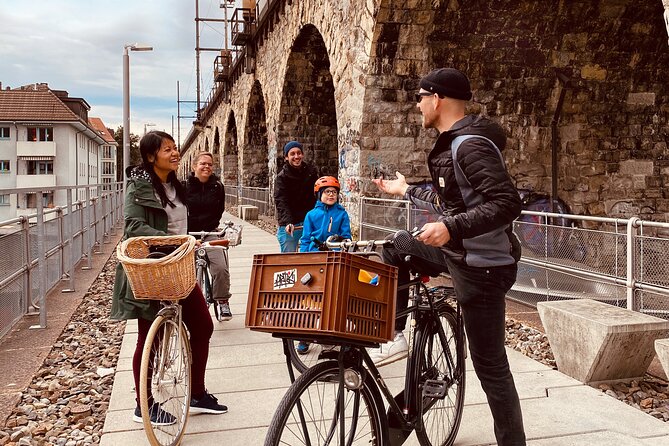
- Langstrasse nightlife-to-dining street energy, connecting districts 4 and 5
- Rapid, no-admission stops like Helvetiaplatz, Quaibrücke, and Rathausbrücke
- Lake + Alps views from the Bluntschlibrunnen area on the promenade
- Frau Gerolds Garten, with old shipping containers, food, concerts, and Urban Surf
- Letten river baths (upper and lower) in the city’s recreation zone
- Platzspitz, an old central park ending with a story you’ll remember
Entering Zurich by Bike: Why This Route Feels Like the Real City
If you want Zurich without the stuffy-tour feeling, this bike tour does that job. You’re not just passing landmarks; you’re riding through working districts and public spaces people actually use—squares for markets and events, a big waterfront stretch, and parks that pull you back from the busy streets.
The format matters. With a guide like Ray, you get pacing and safety help in a city that can be busy and turn-y. And because the group is kept small, you can follow along without feeling glued to the guide’s back wheel.
This tour is also strong for timing. In about three hours, you cover a lot of ground—enough that you’ll start to understand where districts sit, how the river shapes the city, and why certain corners feel like magnets.
Price and value: Is $97.51 worth a 3-hour city ride?
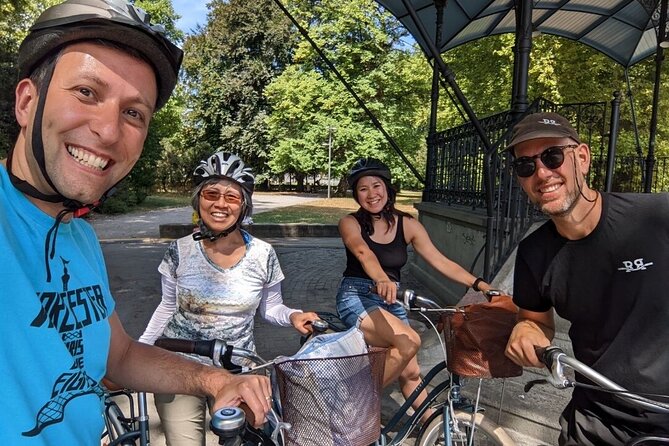
At $97.51 per person for roughly three hours, you’re paying for three things: a guide who knows how to manage traffic, a route that strings together major sights efficiently, and a ride setup that makes the city feel doable.
Here’s why the value can work well:
- You’re not paying entrance fees at the stops. The listed stops show admission ticket free, so you’re not stacking extra costs on top of the tour price.
- You’re getting context on the streets. Instead of only seeing, you’ll understand what makes Langstrasse and the squares politically and culturally important.
- A small group reduces stress. Up to 10 people means fewer bottlenecks at viewpoints and calmer transitions between areas.
Possible value mismatch: if you already plan to spend the day on your own and you’re comfortable mapping Zurich by bike without guidance, you might find cheaper ways to replicate parts of the route. But if you want a guided line through districts with minimal planning time, this price tends to make sense.
Meet at Konradstrasse 13: How the 3-hour loop is paced
The tour meets at Konradstrasse 13, 8005 Zürich, and it ends back at the same meeting point. It’s designed as a loop-style ride, not a one-way bike shuffle, which helps you keep track of where you started.
Plan to move through the city at a leisurely rhythm, with short stops to look around. Many stops are around five minutes, and one longer break is built in for Frau Gerolds Garten (about 20 minutes). If you’re the type who loves to linger in cafés, this structure can be a sweet spot.
One practical note from real-world expectations: you’ll want a little buffer. The advertised time can run long sometimes, so you don’t want to schedule a “must be there by 2:30 pm” event right after.
Langstrasse and Kasernenareal: Nightlife energy plus a quiet oasis
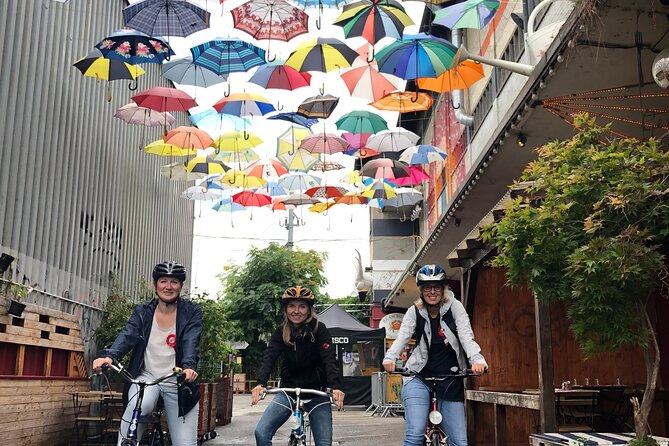
Your first layers of Zurich come quickly. Langstrasse is one of the most interesting streets in the city—known for a mix of nightlife, restaurants, bars, and clubs. It also connects hip districts 4 and 5, and it can get loud and happy on weekends. For many first-timers, this is the moment you realize Zurich isn’t only shiny sidewalks and banks.
Right after, you head to Kasernenareal, the old barracks area turned into a small city oasis. Expect a restaurant and an open-air café, plus seasonal events and concerts in summer. The appeal here is contrast: you start from a street full of energy, then hop to a calmer pocket that still feels central.
This section is short, so your best move is to use it as orientation. I like treating Langstrasse and Kasernenareal as a “map in motion”—you’ll start recognizing the city’s style in different neighborhoods.
Helvetiaplatz and the bridge-to-views rhythm you’ll feel all day
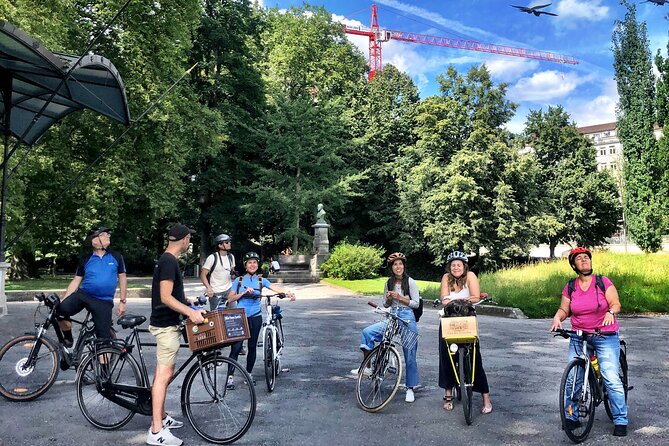
Next up is Helvetiaplatz, one of Zurich’s biggest squares in Stadtkreis 4. It’s not just a pretty open space. You’ll find weekly markets, concerts, and other events here, plus political gatherings and demonstrations that can use it as a starting or ending point.
Two nearby café anchors are commonly used by people watching the square: Cafe Bank and Cafe Campo. Even if you don’t stop for a drink, it helps to notice how public life is built into the plaza.
Then the tour keeps feeding your senses with waterfront views and river-crossing moments. Zurich’s river is the city’s backbone, and this route uses that fact well—squares, then bridges, then the promenade.
Bluntschlibrunnen to Quaibrücke: Lake Zurich views that actually make sense
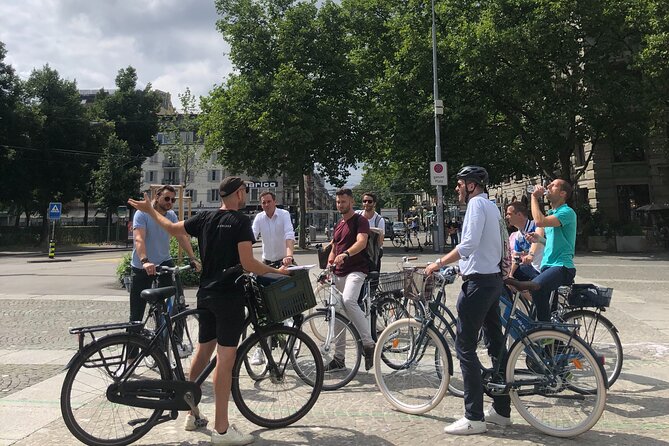
At Bluntschlibrunnen, you’re right by the lake promenade with a view toward the Alps. This is the kind of stop where you’ll understand why people take photos from this stretch—because the view works instantly, even if you only have a few minutes.
Then comes Quaibrücke, a bridge over the Limmat River with one of the classic postcard angles back to Zurich’s old town. You’ll see historic buildings and the river’s shape from a distance that makes it all feel connected. If you’ve been looking at photos all trip, this stop is where it starts to click in real space.
A good way to enjoy these five-minute moments: don’t hunt for the perfect photo first. Look longer than you think you should, then frame the shot afterward.
Rathausbrücke and the old town center: Where you can slow down fast
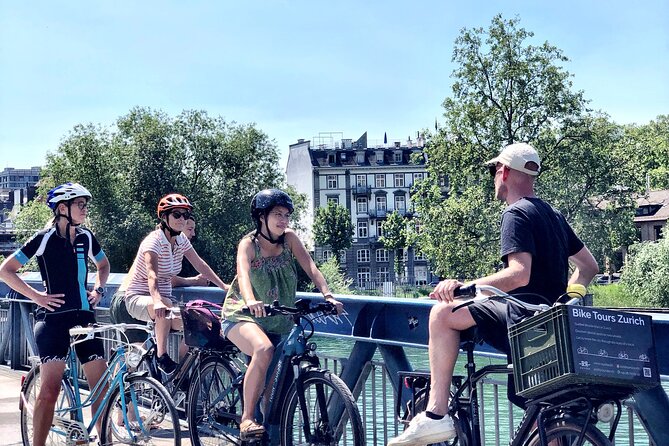
Rathausbrücke puts you right into the old town area with historic buildings and small streets. This is one of those “you’ll want to wander” zones, even if your time is limited.
The bridge itself gives you the big-picture view, while the streets pull you into the details. When you’re on a bike tour, you don’t get to do a full old-town walk. But you do get to identify which streets you’ll want to revisit later—especially for a second pass when you’re not moving as a group.
If you like to shop or browse, this is one of the moments to mentally bookmark streets for later. Short stops are still useful when you use them that way.
New district by the main station and Josefswiese: Green where you don’t expect it
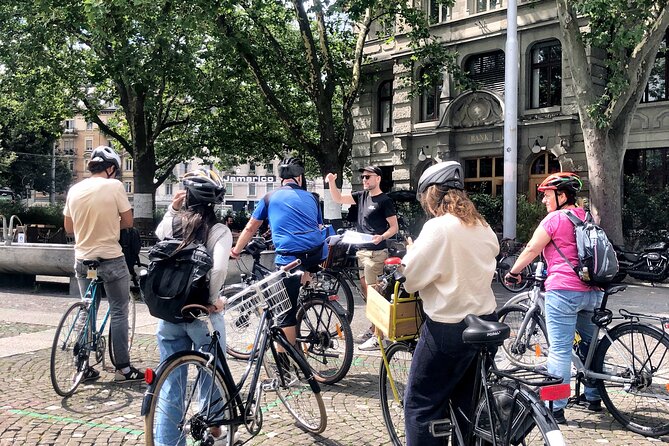
Between old town and the more modern parts of Zurich, the route shifts toward the city’s newer energy near the main train station. You’ll see restaurants and shops in the newest district next to the station—useful if you want a quick sense of where transit meets everyday life.
Then you land at Josefswiese, one of the nicer parks in Zurich in district 5. Parks are not only for resting. They also help you reset your eyes after streets and buildings, and they give you a sense of how locals break up their days.
If you’re planning your days around neighborhoods, these stops help you understand the city’s structure: historic core, transit-adjacent modern areas, then the more lifestyle-heavy districts ahead.
Frau Gerolds Garten and Urban Surf: containers, culture, and a surprise
This is the standout time stop on the route. Frau Gerolds Garten is a hip city garden with plenty of greenery, connected to bars and shops made from old freight containers. On warm days, it’s a place you’ll want to linger—food and drinks pull people in, and the vibe feels intentionally urban rather than museum-like.
It can get really crowded on weekends, and there are concerts and events from time to time. If you’re sensitive to crowds, consider choosing a weekday date for the tour.
The most unusual detail here: Urban Surf, a location with a standing surfing wave, plus a bar and restaurant, and surfboards can be borrowed. Even if you don’t plan to ride, it’s a fun way to see Zurich’s playful side.
This stop is also where the tour becomes more than a sightseeing sprint. You’ll get time to absorb the “how people hang out here” feeling, not just the landmark.
The old railway viaduct area: From rails to shopping and walking
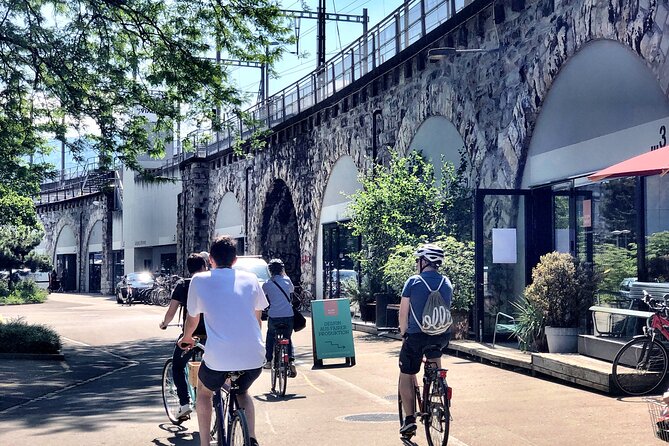
After Frau Gerolds Garten, you ride past an old railway viaduct area that blends shopping street and cultural center. Expect small shops from local brands, restaurants, and a market hall atmosphere.
The key feature is what used to be there: a disused train route that now serves as a footpath and cycle path. You’ll feel how Zurich reuses infrastructure instead of wiping it out and starting over. It’s practical, and it makes the city more walkable and bike-friendly.
If you’re a person who likes to wander after a tour, this is a great zone to plan that second-stage stroll. You’ll see enough that you’ll want to come back without needing to guess where to go.
Lettenareal and Flussbad Oberer Letten: Jogging, skating, swimming
Flussbad Oberer Letten sits in Lettenareal, the city’s recreation zone. This area is built where trains used to run on railway tracks. In other words: you get an active waterfront zone that’s grown out of old transport space.
Here, locals jog, skate, play, and swim, using the water and fresh air as a daily reset. The baths in the upper and lower Letten are meeting places, especially in summer when finding space on the meadow can be tough.
This stop is short, but it’s worth paying attention. Zurich can feel orderly at first glance, and places like Letten show how “rules” can still leave room for fun and sport.
Platzspitz: A central park ending with a story
Finally, you reach Platzspitz, one of Zurich’s oldest parks, right next to the State Museum behind the main train station. It sits between the rivers Limmat and Sihl, so it’s centrally located and easy to imagine as a place where many types of people cross paths.
At the end of the tour, there’s an interesting—but also tragic—story from Zurich to hear. The time you spend here is less about scenery and more about context, which makes the tour feel rounded: it moves from lifestyle and views into something the city clearly remembers.
Even if you’re not a “story person,” ending here changes how you’ll see Zurich afterward. You’ll understand the city’s public spaces as more than pretty backdrops.
Pace, safety, and asking Ray the right questions
This bike tour is built for comfort and safe handling in busy city areas. The guide’s job is to make sure everyone feels at ease before and during the ride, and the experience is designed to be manageable for most people.
At the same time, pace is the biggest variable. If your goal is distance and speed, the leisurely style might frustrate you—especially on cobblestones where ultra-slow cycling can feel unsteady. I’d call this a comfort-first tour, not a fitness test.
A smart way to get the most out of it is to ask your guide one or two practical questions early on, like:
- Which streets are the easiest for first-time city riders?
- Where should I look for the best views if I want to revisit later?
Also, don’t ignore the small-time windows. When you have only a few minutes at a viewpoint, you’ll get more by watching first, then taking photos.
Who should book this Zurich bike tour?
This Urban Bike Tour Zurich fits best if you want:
- A guided orientation to districts 4 and 5, plus old town and key waterfront spots
- An easy way to learn how Zurich neighborhoods actually feel day to day
- A small-group ride that stays calm through public squares and busy streets
It’s also a nice first activity on arrival. The route gives you a working mental map fast, so your second day can be more targeted.
If you’re planning a tight schedule and need a guaranteed exact end time, add buffer. And if you want to bike fast and feel challenged, this might feel too gentle.
Should you book this Urban Bike Tour Zurich?
Yes, I think it’s a strong choice if you value neighborhood vibe + lake-and-river views in one guided loop, with stops where you’re not hit by surprise entry fees. The small group size and the way it uses public spaces—squares, parks, promenades—makes it a practical “first Zurich” move.
I’d book it sooner rather than later if you can, since it’s commonly scheduled about 42 days in advance, and it needs good weather to run. If your schedule is flexible and you’re okay with a relaxed pace, you’ll likely feel like you got your bearings fast.
FAQ
Is the Urban Bike Tour Zurich offered in English?
Yes. The tour is offered in English.
How long is the bike tour?
It’s about 3 hours (approx.).
What does the tour cost?
The price is $97.51 per person.
Where does the tour start, and where does it end?
The meeting point is Konradstrasse 13, 8005 Zürich, Switzerland, and the activity ends back at the meeting point.
What group size should I expect?
The tour has a maximum of 10 travelers.
Are there admission tickets required at the stops?
The listed stops show admission ticket free.
Does the tour require specific weather?
Yes. The experience requires good weather.
Can I cancel for a full refund?
Free cancellation is available up to 24 hours in advance for a full refund.