REVIEW · VALENCIA
Valencia Old Town Private Tour by Bike or Electric Ride
Book on Viator →Operated by Pelican Bike Rentals · Bookable on Viator
Two wheels make Old Valencia feel close. In a private ride of about two hours, you glide between major landmarks while a guide connects the 2000-plus-year story across the streets. It’s the kind of tour where you look up, look down, then realize you’re still moving.
I love the way the route hits big names without turning into a slow, stand-in-line crawl. I also like the blend of rooftop-ish views and everyday life, from Plaza de la Virgen to Mercado Central.
One thing to plan for: entrance fees are not included for several stops, so you may want extra time and some cash for towers, churches, or indoor monuments.
In This Review
- Key highlights worth aiming for
- Why a bike (or electric ride) works so well in Valencia’s Old Town
- Meeting at Carrer de l’Herba: the smooth start you want on day one
- Plaza de la Virgen and Plaça de l’Almoina: where the timeline starts to click
- Valencia Cathedral and Placa de la Reina: baroque facade meets a bell-tower viewpoint
- Santa Catalina Church: a short stop that can reward your legs
- La Lonja de la Seda: medieval trading energy in stone
- Central Market of Valencia: where today’s shopping echoes older markets
- Torres de Quart and Torres de Serranos: the defensive spine of the city
- Price and value: what you’re really paying for at $72.29
- Guide style and pacing: the part that can make or break the tour
- Who should book this Valencia Old Town bike tour
- Should you book it? My practical take
- FAQ
- How long is the Valencia Old Town private tour?
- Is this tour private?
- What’s included in the price?
- Are entrance fees included?
- Is the tour offered in English?
- Where do I meet, and where does the tour end?
Key highlights worth aiming for
- Plaça de l’Almoina as Roman Kilometre 0: a stop that explains why this area mattered long before Valencia’s medieval shine.
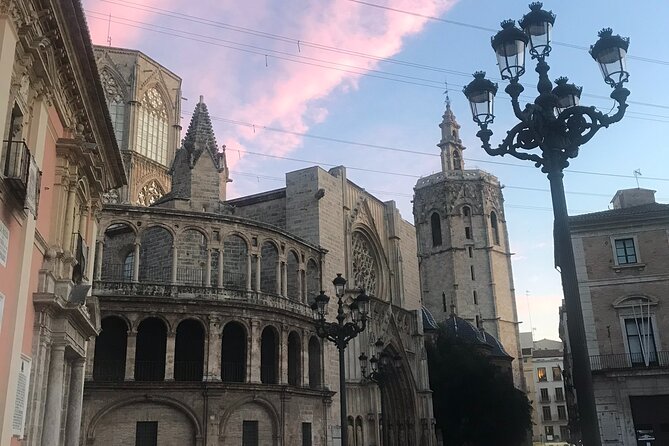
- Cathedral views from Placa de la Reina: close-up baroque facade angles plus the Miguelete bell tower lookout.
- Santa Catalina tower views: a short stop with a payoff if you climb.
- La Lonja de la Seda’s 15th-century stonework: expressive gargoyles and an easy sense of “how they lived then.”
- Central Market scale and location: about 8000 m² inside, on the footprint of an older Arab souk area.
- Private guide energy: tours are tuned to your group, with a mix of humor and clear explanations.
Why a bike (or electric ride) works so well in Valencia’s Old Town
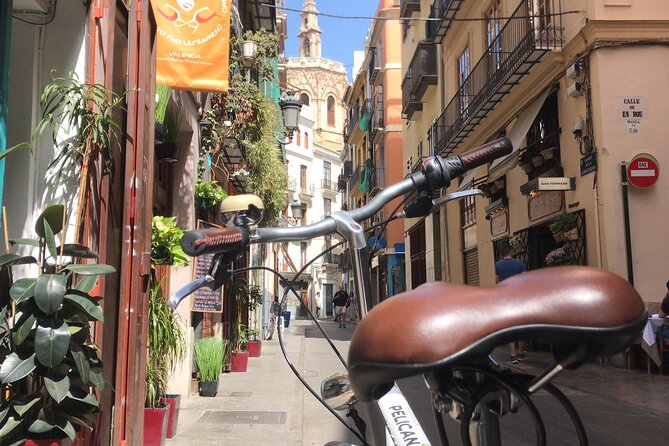
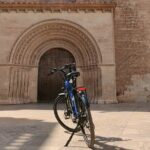
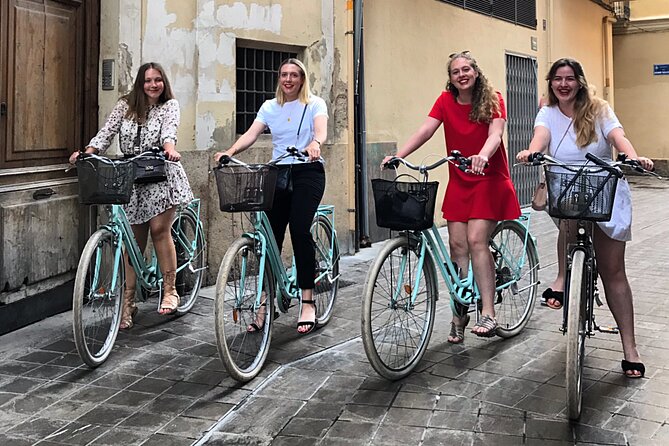
Valencia Old Town can feel like a museum… except it’s still a living neighborhood. Riding helps you cover real distance at a comfortable pace, so you’re not just shuffling from one photo spot to the next. Bikes also make it easier to pause, turn your head, and take in details on facades and doorways as you pass.
The tour is built around short, focused stops, which is smart for a 2-hour window. You get a mix of viewpoints and landmarks, then you roll on before you get tired—or bored. And because it’s private, your guide can adjust how much attention each stop gets based on your group’s energy.
If you’re choosing between a regular bike and an electric option, pick what keeps you confident and relaxed. On this kind of route, you’ll feel the difference quickly: less fatigue means more time noticing things like carvings, tower shapes, and street-level textures.
You can also read our reviews of more tours and experiences in Valencia.
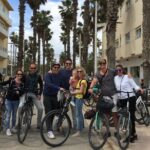
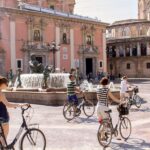
Meeting at Carrer de l’Herba: the smooth start you want on day one
You start and end at Carrer de l’Herba, 4, in Ciutat Vella. That’s an area where you can also walk to other sights afterward, which matters when you’re trying to fit Valencia into a tight schedule. The tour ends back at the same meeting point, so you don’t have to figure out a second pickup.
The tour uses a mobile ticket and you’ll receive confirmation at booking time, which makes it easier than chasing paper vouchers. Bottled water is included, and the bike itself is provided, so your first job is simply showing up with comfortable shoes.
One practical bonus: if you’re arriving early or lugging bags, the bike company has offered suitcase storage as an extra service. It’s not part of the core tour price, but it can save your afternoon if you’re touring light.
Plaza de la Virgen and Plaça de l’Almoina: where the timeline starts to click
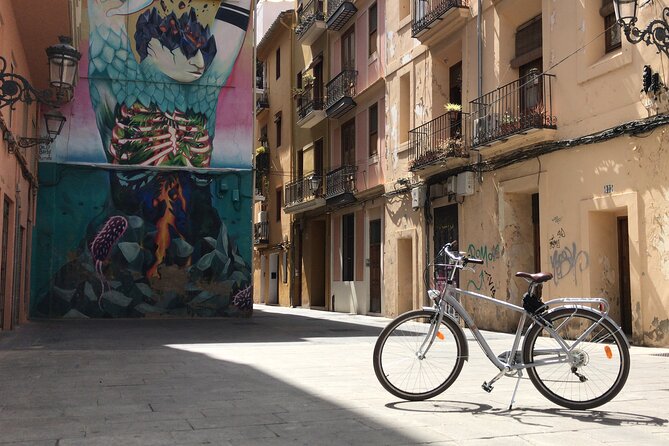
You begin at Plaza de la Virgen, one of the city’s beloved squares. This is one of those places where the ground seems to hold layers of time: different eras overlap visually, and your guide points out how the space changed. Even if you don’t plan to go inside anything, it’s a strong “anchor” stop because it gives context for what you’ll see next.
Right after that, you roll to Plaça de l’Almoina, often described as Roman Kilometre 0. This stop is special because it flips the usual sightseeing pattern. Instead of just looking at impressive architecture, you’re also asked to picture the city in Roman times and understand how this spot functioned as a point of reference in the ancient layout.
Why I like this pair of stops: it gives you a sense of direction. After Plaza de la Virgen, you can start reading the rest of Valencia’s old center like a map, not a checklist.
Valencia Cathedral and Placa de la Reina: baroque facade meets a bell-tower viewpoint
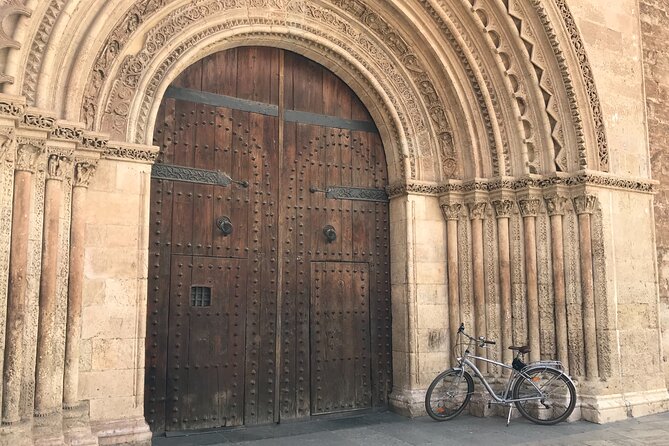
Next comes the Valencia Cathedral, also known as the Metropolitan Cathedral–Basilica of the Assumption of Our Lady of Valencia. You’ll likely spend around a few minutes here, enough to orient yourself and understand why this site matters. Note that entrance isn’t included, so if you want to go in, you should budget for it.
Right across the area is Placa de la Reina, which is an ideal “look and compare” stop. Your guide focuses your eyes on the Cathedral’s baroque facade and points out the Miguelete, the 14th-century bell tower. If you like views, this is the moment to decide whether you want to keep climbing for the lookout (again, entrance depends on what you choose to do at the tower).
This segment is where a bike tour earns its keep. From street level, cathedral architecture can feel distant and complicated. On a bike, you can position yourself faster, then move on before the crowd pressure builds.
Santa Catalina Church: a short stop that can reward your legs
Iglesia de Santa Catalina is one of the founding parishes of Valencia. The time on the stop is brief, but your guide sets expectations well: you’re there for the Baroque character and for the possibility of tower views if you go up.
If your group likes photo angles and elevated perspectives, this stop is worth treating as a “do we climb?” choice rather than a quick look. If you’re already tired, you can still get plenty from where you stand—your guide can usually point out the most meaningful exterior details without turning it into a chore.


La Lonja de la Seda: medieval trading energy in stone
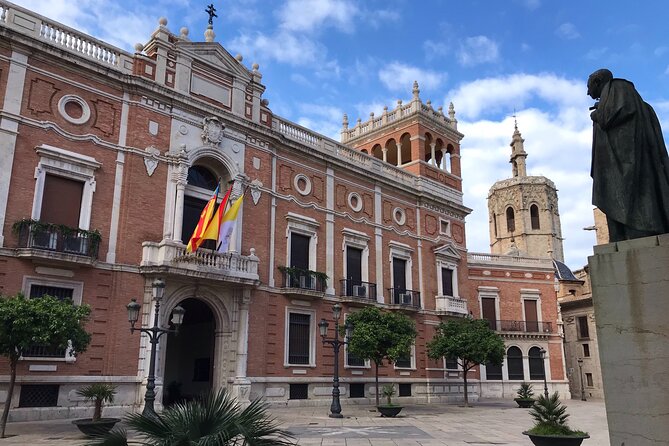
Then you reach La Lonja de la Seda, the Silk Exchange. You don’t just pass by it—you stop long enough to notice how expressive the building is, including those striking gargoyle-like stone figures that give the facade a kind of loud personality for its era. The tour frames it in human terms: this wasn’t just decoration, it was a place where commerce and status played out in public.
Time-wise, this is one of the longer stops (about 10 minutes). It’s also one of the spots where entrance fees are not included, so you’ll want to decide whether you’re going indoors or just enjoying the exterior. Either way, you’ll learn what to look for so the building doesn’t feel like a random landmark.
For me, the value here is pattern recognition. Once you understand what kind of society built something like this, later details in Valencia start to make more sense—why towers are where they are, why certain facades look the way they do, and why the city cared about public spaces.
Central Market of Valencia: where today’s shopping echoes older markets
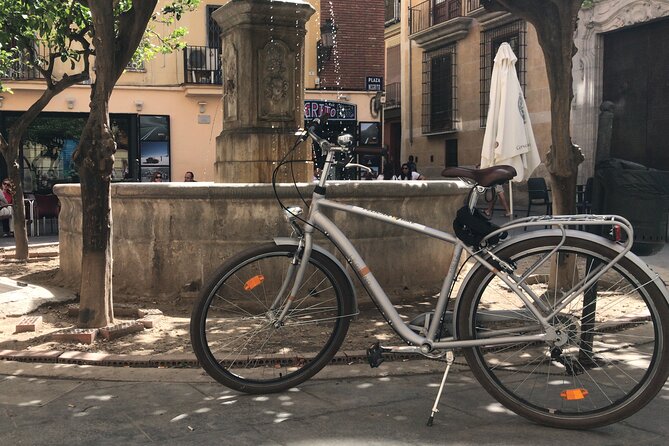
Next is the Central Market of Valencia (Mercado Central), and this is the stop that turns the tour from stone-and-towers into real daily life. It sits in an older trading area that aligns with where the Arab souk of ancient Balansiya once stood. So even if you’ve never visited the region before, you get a sense of how the marketplace role kept coming back through time.
The market is described as roughly 8000 m², one of the largest covered markets in Europe. The time here is short, so treat it as a taste stop: look at stalls, patterns, and what’s being sold. If you go after the market is crowded, you’ll still be able to enjoy the architecture, but shopping and wandering might take a bit longer.
This is also a great place for the kids or teens who get restless. After a couple of religious or monumental stops, the colors, smells, and products make it easy to reset attention without losing momentum.
Torres de Quart and Torres de Serranos: the defensive spine of the city
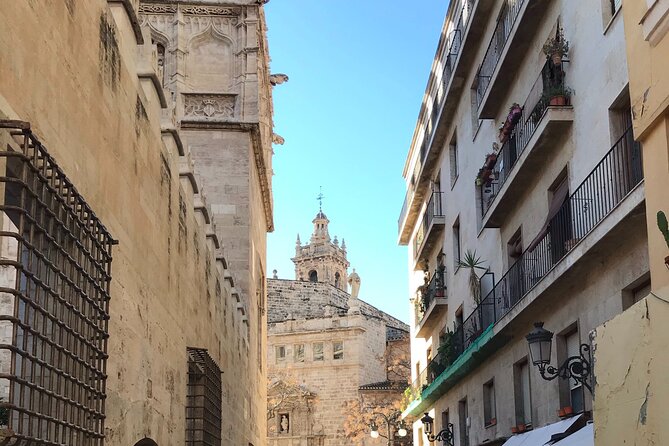
The final stretch leans into fortification. You’ll see Torres de Quart, one of the towers that remained standing after the wall was demolished. The key detail is the tower’s prison use during the wall demolition period, and your guide points out visible marks such as cannon scars left behind by wars.
Then you continue to Torres de Serranos, a Gothic-style main entrance to the city. This wasn’t just a gate for foot traffic. It’s tied to the arrival of kings and ambassadors, which changes how you read its scale and location.
Why I like ending here: it gives Valencia a stronger “why” behind its layout. Many cities have famous plazas and churches. Fewer make it easy to connect architecture to defense and power. Ending at the gates helps your brain file everything into a coherent picture.
Price and value: what you’re really paying for at $72.29
At $72.29 per person for about 2 hours, you’re paying for a private guided route plus bike use and bottled water. That can be excellent value compared to splitting into multiple taxis or trying to stitch together a self-guided loop with timed entries.
The big thing to understand is what you’re not paying for: entrance fees aren’t included. Some stops are listed as free, like Plaza de la Virgen and Plaça de l’Almoina, while others explicitly note that admission isn’t included, such as the cathedral, Santa Catalina, La Lonja, and both towers. If your plan is to go inside multiple buildings, your final spend will rise.
So here’s the practical way to budget:
- If you’re okay with exterior viewing at paywalled sites, you’ll likely keep costs down.
- If you want tower views and indoor monuments, bring extra money and consider whether you want to prioritize just one or two paid entries.
Also, the tour is booked on average about 43 days in advance, which tells me it’s popular. If your dates are fixed, it’s smart to reserve sooner rather than later so you don’t end up with a less convenient time.
Guide style and pacing: the part that can make or break the tour
Most of the guide feedback you’ll see around this company leans positive: people praise guides for being funny without wasting time, and for explaining without drowning you in dates. Guides named David, Santiago, Clem, and Fedor have come up in past experiences, with comments about native-local storytelling and adapting the tour for age and interests.
That said, tone matters. One unhappy account describes a guide using crude sexual jokes, which made the experience uncomfortable and led to a refund dispute. I can’t predict what you’ll get, but you can take control early: if your group includes kids, or if your comfort level is more formal, ask your host about humor style before you start.
On the practical side, bikes are described as high-quality, with smooth gears and brakes, and no major mechanical problems during the ride. Your confidence is the point—Valencia’s lanes are easier when you’re not fighting the bike.
Who should book this Valencia Old Town bike tour
This tour suits you if you want a guided “hit list” that still feels local. It’s a strong choice for first-timers who want direction fast, and for families who prefer motion over long museum sessions.
It’s also a good fit if you enjoy architectural variety: you’ll see cathedral massing, baroque facade angles, market energy, then switch to Gothic gates and defensive towers. And because it’s private, your group can ask more questions and linger slightly where you care most.
You might not love it if:
- You want a full-on museum experience with long indoor time at every major site.
- You’re hoping everything is included entrance-wise (since several key monuments are not).
- Your group needs a completely predictable, formal guide tone and you’d rather avoid any humor risk.
Should you book it? My practical take
I’d book this if you’re aiming to get oriented fast in Valencia Old Town and you like moving between sights rather than waiting at them. The route makes sense for a 2-hour window: history anchor points early, big skyline elements mid-tour, and a finish that ties back to how Valencia controlled access and power.
Just go in with two expectations: you’ll likely pay separate entrance fees if you want to go inside certain towers and monuments, and guide style can vary. If your comfort needs are clear, you can reduce risk by communicating early.
If your schedule is tight, reserve sooner since it’s commonly booked in advance. And if you need flexibility, plan with enough buffer to match your comfort with indoor admissions and climbing.
FAQ
How long is the Valencia Old Town private tour?
The tour lasts about 2 hours.
Is this tour private?
Yes. It is a private tour/activity, so only your group participates.
What’s included in the price?
Included items are bottled water and use of the bicycle. The tour also provides a mobile ticket.
Are entrance fees included?
Entrance fees are not included. Some stops are free, but several key stops (like the cathedral, Santa Catalina, La Lonja, and the towers) list admission as not included.
Is the tour offered in English?
Yes, the tour is offered in English.
Where do I meet, and where does the tour end?
You meet at Carrer de l’Herba, 4, Ciutat Vella, 46003 València, Spain, and the tour ends back at the same meeting point.