REVIEW · VILNIUS
Vilnius: City Bike Tour of Vilnius Highlights
Book on GetYourGuide →Operated by Bike Baltic Velotakas · Bookable on GetYourGuide
Vilnius on two wheels is a fast way to connect the dots. This 2.5-hour highlights bike tour threads together UNESCO Old Town lanes, the Neris riverside, and top photo spots like Subačius Observation Deck, with a guide such as Domas often praised for clear storytelling about Vilnius from medieval times through Nazi and Soviet periods. I especially like that you’re provided a bike, helmet, and water, so you can focus on the sights. One drawback to weigh: it runs rain or shine, so wet streets mean you’ll want to dress for damp weather and stay alert on cobblestones.
The route is also not designed for wheelchair users or visitors with mobility impairments, since it’s built around cycling through historic streets and transfers between stops. If you can comfortably ride a bike for the full session, though, it’s one of the easiest ways to get your bearings fast.
In This Review
- Key Things That Make This Vilnius Bike Tour Worth Your Time
- Where the Tour Starts: West Express and the First Pedal Into Old Town
- Old Town Highlights: How the UNESCO Streets Feel by Bike
- Uzupis: The Art-World Interlude You Get Without Planning
- Heading Toward the Big View: Gedimino Avenue and the City’s Growth Story
- Cathedral Square and Gedimino Tower: A National Symbol Break That Actually Feels Like a Pause
- Subačius Observation Deck: The Panoramic Shot That Ends Up in Most Great Albums
- Gates of Dawn: Why This Photo Stop Works Even If You’ve Seen Similar Places
- Vilnius Ghetto Memorial: A Stop With Serious Context
- Vilnius University and the Presidential Area: Turning Sightseeing Into a Sense of Governance
- Riding Along the Neris River: Where the City Becomes Pleasantly Linear
- Guide Power: Domas, Lina, Tomas, and Why the Storytelling Changes Everything
- Safety, Pace, and Cobblestones: What You Should Expect on a Rainy Day
- Price and Value: Is $34 Worth It?
- Who This Tour Suits Best (and Who Might Want Something Else)
- Should You Book the Vilnius City Bike Tour Highlights?
- FAQ
- How long is the Vilnius Highlights bike tour?
- What does the tour include?
- Where do I meet the guide?
- Does the tour run in bad weather?
- Is the tour available in English?
- Is the tour suitable for wheelchair users or limited mobility?
Key Things That Make This Vilnius Bike Tour Worth Your Time
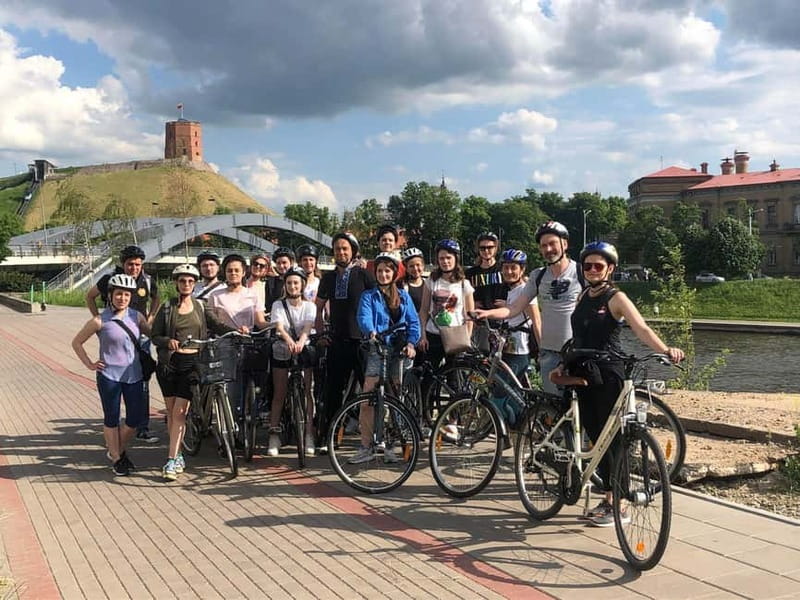
- Old Town UNESCO streets plus smart photo stops so you see the big landmarks without wearing out your legs
- Subačius Observation Deck views that line up perfectly for shots of the Old Town and surrounding districts like Paupys and Uzupis
- Cathedral Square break near Gedimino Tower to pause at one of Lithuania’s national symbols
- A guided story that reaches beyond postcard history, including the 20th-century occupations and the independence story
- Flat, city-friendly riding with bike-path time along the Neris River (so the tour feels efficient)
- A guide who handles questions in English and explains what you’re looking at in plain terms
Where the Tour Starts: West Express and the First Pedal Into Old Town
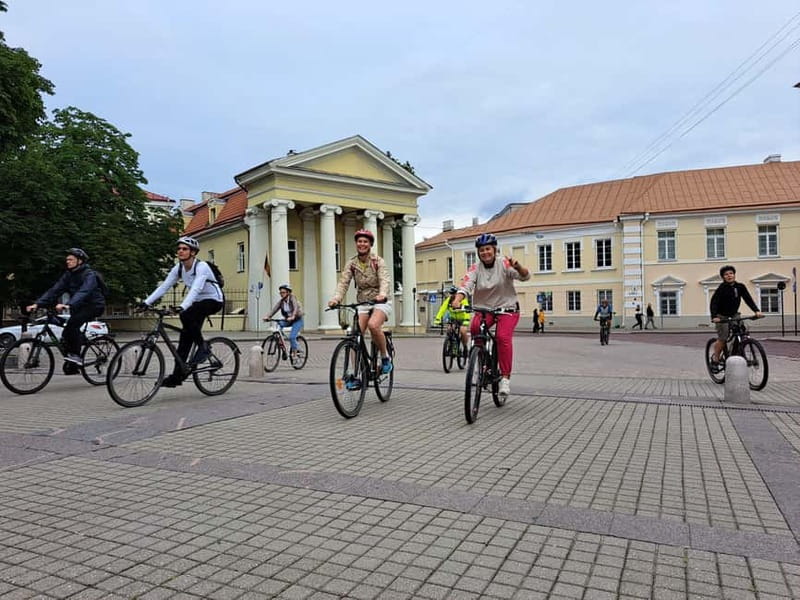
This tour begins at West Express, where you meet your guide and get set up with your bike and helmet. That matters more than it sounds. A good start reduces stress, and here you’re not negotiating rental logistics while your schedule slips away.
Once you roll out, the tour immediately does a useful thing: it helps you understand the city’s layout. Vilnius can feel layered—Old Town tight and stoney, then wider avenues and newer districts beyond. Getting on a bike early means you’re not just looking at places. You’re also learning how they connect geographically, which makes the rest of your trip easier.
The ride kicks off with a short first look around the Old Town area. There’s a quick photo stop feel here, plus guiding time so the route makes sense before you move faster. If you like that first-day orientation energy, you’ll appreciate this timing.
You can also read our reviews of more tours and experiences in Vilnius.
Old Town Highlights: How the UNESCO Streets Feel by Bike
Old Town Vilnius isn’t just scenic. It’s full of corners, viewpoints, and architecture that you miss at walking pace—especially when your legs get tired. Cycling through it keeps your momentum while still slowing down enough for the guide to point out what matters.
This segment focuses on the heart of the UNESCO area. You’ll wind through streets where buildings and street layouts reflect centuries of change, and you’ll stop often enough to absorb details without turning the tour into a slow shuffle.
A big reason biking works here is that you get two kinds of time:
- moving time to cover ground efficiently
- pause time for context so the sights stick
If you prefer your sightseeing with an explanation attached, this format tends to click.
Uzupis: The Art-World Interlude You Get Without Planning
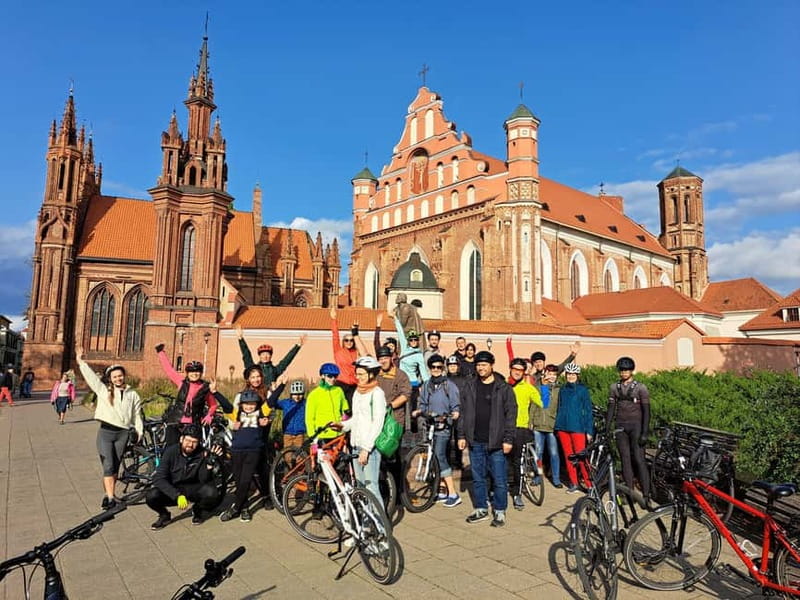
Next you head toward Uzupis, with guided time built into the schedule. Uzupis has a distinct identity compared to the medieval core, and this stop gives you a quick feel for how the city changed and adapted over time.
What I like about adding Uzupis in a highlights tour is that it prevents Vilnius from feeling stuck in one era. You get the old stones, then you get the sense of a city that keeps reinventing itself.
If you’re the type who likes to spot murals, quirky details, and street-level culture, this is the stop where you’ll likely start paying attention to smaller things you might otherwise overlook on a fast walking tour.
Heading Toward the Big View: Gedimino Avenue and the City’s Growth Story
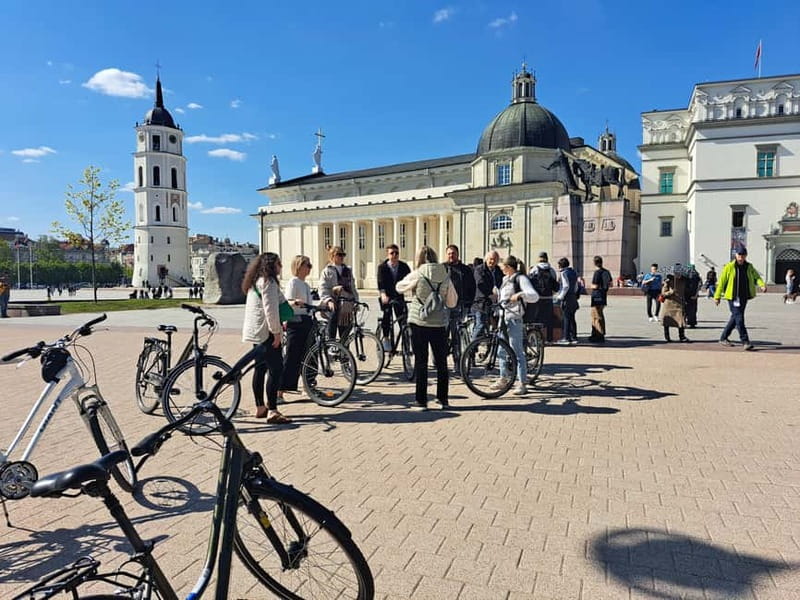
After the Old Town lanes, you transition toward Gedimino Avenue, the main street that shows you how Vilnius has grown. The tour specifically rides down Gedimino Avenue from the Old Town to the Zverynas District.
This is a clever bridge between eras. Old Town shows the long timeline of the city. Gedimino Avenue helps you see how the city expanded—wider streets, more modern scale, and that shift from tight medieval streets into a city that functions at a larger rhythm.
If you’re trying to understand where neighborhoods sit and how daily life likely moves, this portion does the job without turning into a long ride. It’s also a chance to look back at what you already saw, now from a broader angle.
Cathedral Square and Gedimino Tower: A National Symbol Break That Actually Feels Like a Pause
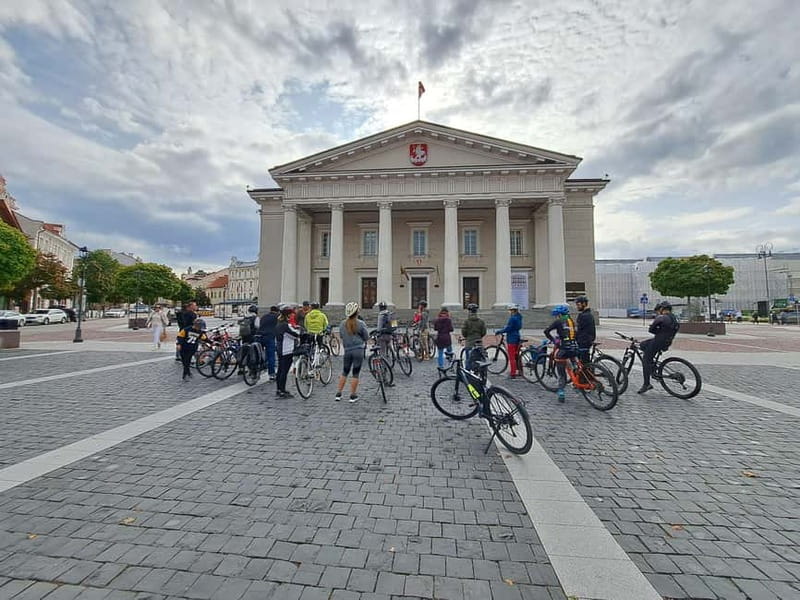
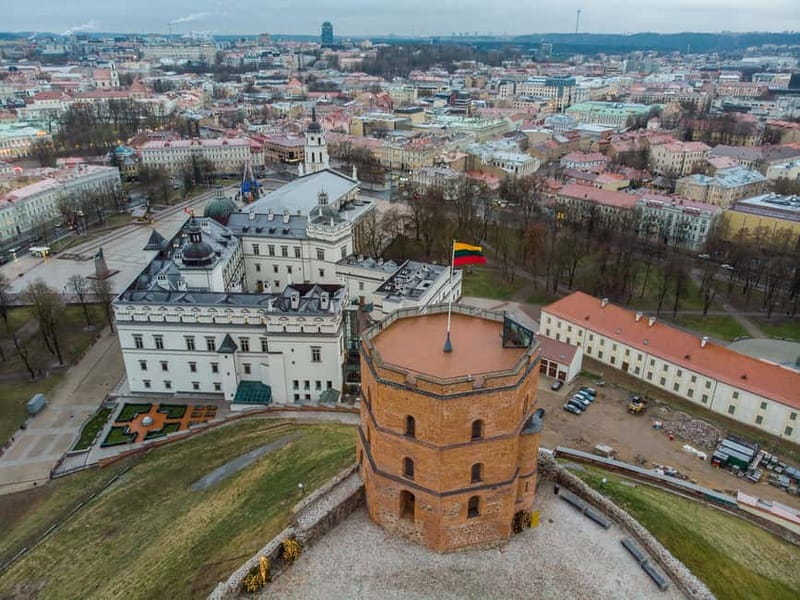
Before you climb toward the best viewpoint moments, you get a break on Cathedral Square, near the Gedimino Tower. Cathedral Square is described as one of Lithuania’s national symbols, and on a bike tour it’s the right kind of stop: long enough to settle, not so long that the day drags.
This part works because it gives your brain a reset point. After moving through small streets and photo stops, you’re suddenly in a big open space. That change helps you take in the architecture and the sense of place.
If your trip includes a lot of churches and historic squares, this stop is particularly useful. It’s not just a quick glance; it’s a moment to breathe and take photos without feeling rushed.
Subačius Observation Deck: The Panoramic Shot That Ends Up in Most Great Albums
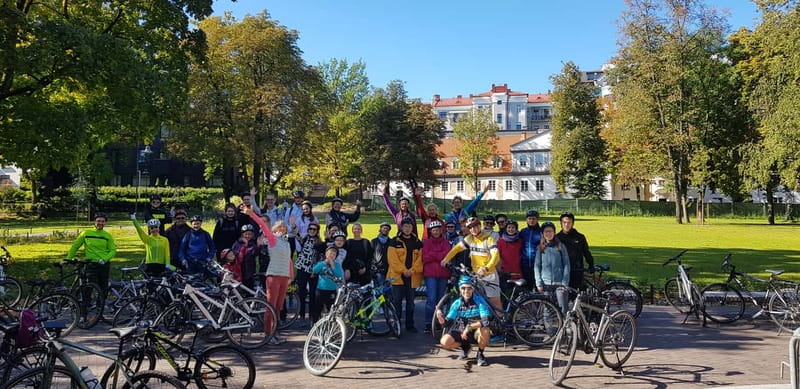
Then comes the star photo moment: the Subačius Observation Deck. You’ll have time to stop, take photos, and get the guided context while you look out over Vilnius.
From here, the city’s layout starts to click. You can see how the Old Town’s character fits into the wider city, and you’ll get specific guidance that helps you identify features and districts. One of the standout photo targets is getting that view that includes Paupys and Uzupis, so you can connect what you just rode through with what you’re now seeing from above.
This is one of those stops where a guide really matters. Without context, you’d just take a picture. With context, you understand what you’re looking at, and you remember the view longer.
Practical note: it’s a short stop, but you’ll want to have your camera ready and your posture comfortable. Wind and cold can make your hands clumsy at the top, especially in shoulder seasons.
Gates of Dawn: Why This Photo Stop Works Even If You’ve Seen Similar Places
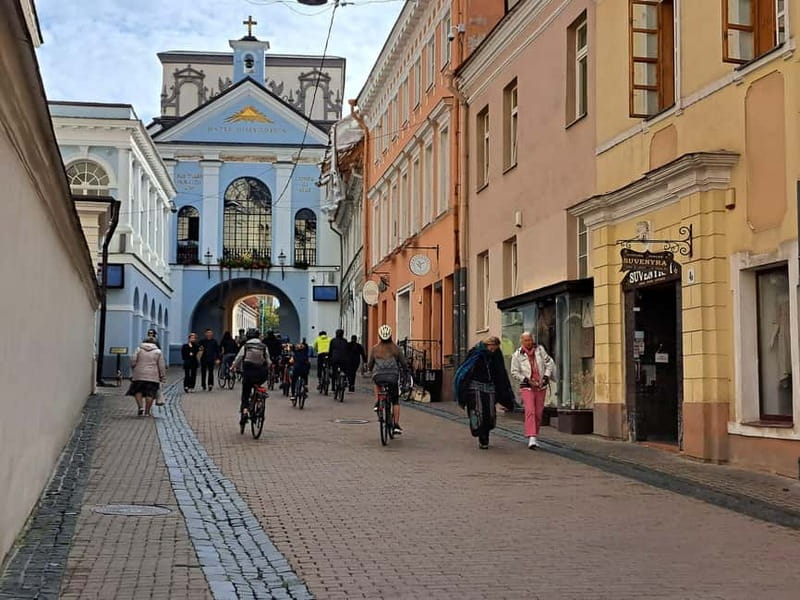
You’ll also stop at the Gates of Dawn, again with time for photos and guided explanation. This is the kind of landmark that people recognize from pictures, but your best photos usually happen when you pause at the right angle and understand what you’re seeing.
On a bike tour, you don’t get the leisurely pace of sitting and people-watching for an hour. Still, the structure helps: the guide gives you the essentials, you photograph, and you move on.
If you prefer your sightseeing to stay efficient, Gates of Dawn fits well here. If you love slow travel and deep museum-style time, you might want to return later after the tour so you can linger.
Vilnius Ghetto Memorial: A Stop With Serious Context
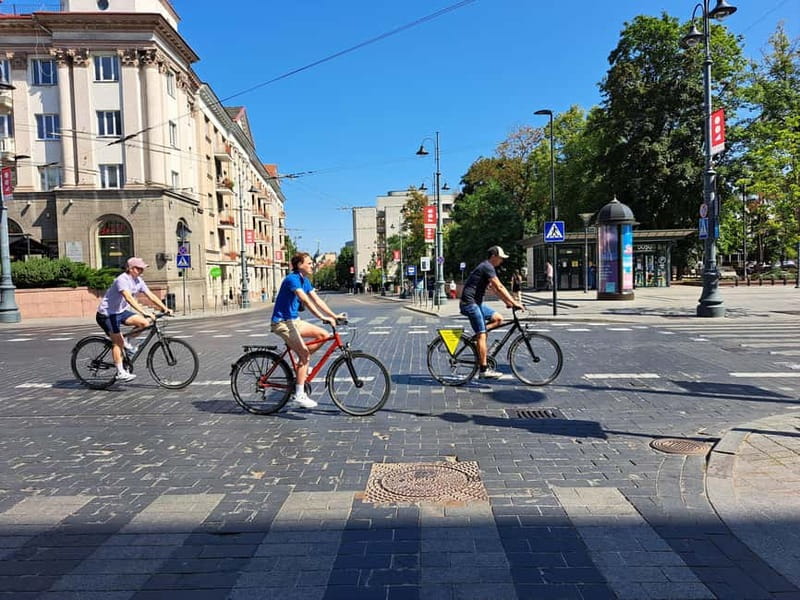
The Vilnius Ghetto Memorial stop adds an important edge to the tour. The city’s story isn’t only medieval glory and architectural beauty. The guide covers the 20th-century occupations, and this memorial is where that material becomes grounded in place.
What matters for you here is tone and timing. You’re cycling through many stops fairly quickly, and then suddenly you’re at a site that asks for respect and focus. A good guide paces the moment so it doesn’t feel like a checkmark.
I’d recommend treating this stop as a pause point for reflection rather than a photo opportunity. You’ll remember it more that way, and you’ll get more out of the explanation.
Vilnius University and the Presidential Area: Turning Sightseeing Into a Sense of Governance
Later you’ll pass by and stop around Vilnius University and the Office of the President of the Republic of Lithuania, with photo stops and guide context.
This part is easy to skip on a short visit, but it’s one of the reasons this tour feels more complete than a simple Old Town circuit. It connects historic Vilnius with institutions that shape modern Lithuania.
When you’re on a bike, the transitions are quick, so the guide’s explanations make these stops meaningful. Otherwise, they can feel like landmarks you recognize but don’t understand.
Riding Along the Neris River: Where the City Becomes Pleasantly Linear
One of the best rides in the tour is cycling along the Neris River, where the experience becomes more relaxed and scenic. This is often where people start appreciating the practical side of biking in Vilnius: you get open sightlines and a calmer pace between denser areas.
From the riverside path, the city looks different. You can see the flow between neighborhoods instead of only the vertical layers of rooftops and towers.
And because this tour is structured for a highlights feel, the riverside segment works like a moving breather—enough beauty to make you smile, enough route efficiency to keep you on schedule.
Guide Power: Domas, Lina, Tomas, and Why the Storytelling Changes Everything
What repeatedly stands out is not just that the guide knows the sites. It’s how they connect them into a story.
Guides named in participant feedback include Domas and Lina, along with others such as Tomas and Dominykas. People consistently highlight guides who answer questions and keep the ride safe, while sharing context about Lithuania and Vilnius across time—medieval eras, Nazi and Soviet periods, and the independence story.
That matters because it turns your photos into memories with captions. You’ll be able to look at a tower or gate later and explain why it’s significant, not just that it looks cool.
If you’re the type who loves history but hates lectures, this format is often a good compromise: you get history in small portions tied to what you’re actually passing.
Safety, Pace, and Cobblestones: What You Should Expect on a Rainy Day
This tour is designed to run rain or shine, so wet conditions are part of the deal. In practice, that means you should expect damp cobblestones and the need for careful braking and steady posture.
Biking through Old Town can include uneven surfaces, and that’s why the helmet and safe group riding matter. Many people mention the ride feels manageable and the route uses bike-friendly paths, and that helps a lot if you’re nervous about cycling in a city.
Also, don’t underestimate weather comfort. Some participants report that ponchos were offered when conditions turned wet, and water is included for the 2.5-hour session. That makes a big difference between feeling miserable and feeling prepared.
Pace-wise, the whole tour is 2.5 hours, and stops are short but frequent. You’ll cover a lot, but you won’t feel like you’re constantly waiting. If you want a slow and linger-heavy plan, this may feel like a sprint. If you want a smart first orientation, it’s a strong match.
Price and Value: Is $34 Worth It?
At $34 per person for about 2.5 hours, the value comes from the bundle: bike rental, helmet, a live English guide, and water.
You’re paying for three things that are hard to line up on your own in a short timeframe:
1) reliable bikes and helmets
2) local route knowledge that strings sights together efficiently
3) guided context so the stops feel more than scenic scenery
If you’re already comfortable renting a bike and navigating yourself, you might think you could do it cheaper. But you’d still be missing the guided explanations that help you understand what you’re seeing and connect neighborhoods.
That’s why this price tends to make sense most for first-time visitors. It compresses learning and sightseeing into one session, so you can spend the rest of your trip walking into places with a better sense of what you’re looking at.
Who This Tour Suits Best (and Who Might Want Something Else)
This is a great fit if you:
- want a first-day orientation to Vilnius
- like your history explained while you move
- can ride a bike comfortably for about 2.5 hours
- want photo stops at major viewpoints without planning them one by one
It’s probably less ideal if you:
- need wheelchair-friendly routes (this tour isn’t set up for that)
- want a slow, long-stay pace at each monument
- can’t do wet-weather sightseeing, since it operates in rain
Should You Book the Vilnius City Bike Tour Highlights?
I’d book it if you want to see a lot of Vilnius quickly and still understand what you’re looking at. The combination of Old Town sights, the Neris riverside ride, Cathedral Square, and Subačius gives you both the postcard angles and the citywide “how it fits together” view.
If you’re worried about weather, pack for rain and expect careful handling on older streets. If you’re comfortable cycling and want a strong overview in one afternoon, this tour is an efficient way to start your Vilnius days right.
FAQ
How long is the Vilnius Highlights bike tour?
The tour lasts about 2.5 hours.
What does the tour include?
It includes a guide, bike rental, water, and a helmet.
Where do I meet the guide?
Meet your guide at the West Express premises.
Does the tour run in bad weather?
Yes, it runs rain or shine.
Is the tour available in English?
Yes, the live tour guide speaks English.
Is the tour suitable for wheelchair users or limited mobility?
No. It is not suitable for people with mobility impairments or wheelchair users.
If you want, tell me when you’re visiting (month is enough) and your comfort level cycling on cobblestones, and I’ll help you decide the best time of day to do this tour.