REVIEW · BARCELONA
Barcelona: 2.5-Hour Bike or E-Bike Historical Tour
Book on GetYourGuide →Operated by City Tours on Bike-eBike-Segway · Bookable on GetYourGuide
Gaudí on an e-bike beats standing in line. You’ll ride through Barcelona’s most famous Modernisme streets with a guide who can explain the buildings as you pass them, and it’s the kind of trip where even Sergio-style bike problems get handled quickly so you keep moving. I love the mix of iconic stops and easy pacing on the electric bike. One thing to plan for: this is not for everyone, since the tour is not suitable for people with heart problems.
My favorite part is how the route builds momentum: you start at Arc de Triomf, then wind through districts that feel different block to block, before hitting the big-name façades. I also like that guides can tailor the feel of the ride—Peter was able to answer tons of questions and adjust to biking comfort for at least one solo rider. Still, you’ll be on streets for 2.5 hours, so if you hate traffic noise and quick photo stops, this might feel like a lot.
Gaudí’s landmarks get close-up attention, from Casa Calvet in El Born-adjacent streets to the unfinished Sagrada Família under construction since 1883. The trade-off is simple: you’re moving, so there’s limited time at each site and you’ll want to save any deep interior plans for another visit.
In This Review
- Quick hits: what makes this Gaudí e-bike tour work
- Starting at Passeig de Lluís Companys and Arc de Triomf
- Arc de Triomf to Parc de la Ciutadella: the ride starts with style
- El Born and Mercat del Born: history you can feel at street speed
- Plaça Sant Jaume: a quick civic pulse before the Modernisme hits
- Casa Calvet and Gràcia: the Gaudí trail shifts neighborhoods
- Passeig de Sant Joan to Casa Batlló and Casa Mila
- Sagrada Família: your big finish, with construction context built in
- How the e-bike changes the experience (and who should choose it)
- What’s included for $28: value beyond the sticker price
- Guide languages and the practical side of asking questions
- Who this Gaudí e-bike tour fits best (and who should skip it)
- Should you book it? My take
- FAQ
- Where do I meet for the tour?
- What’s the nearest metro stop?
- Does the tour include an electric bike?
- How long is the tour?
- Is it suitable for children?
- What languages are available for the live guide?
Quick hits: what makes this Gaudí e-bike tour work
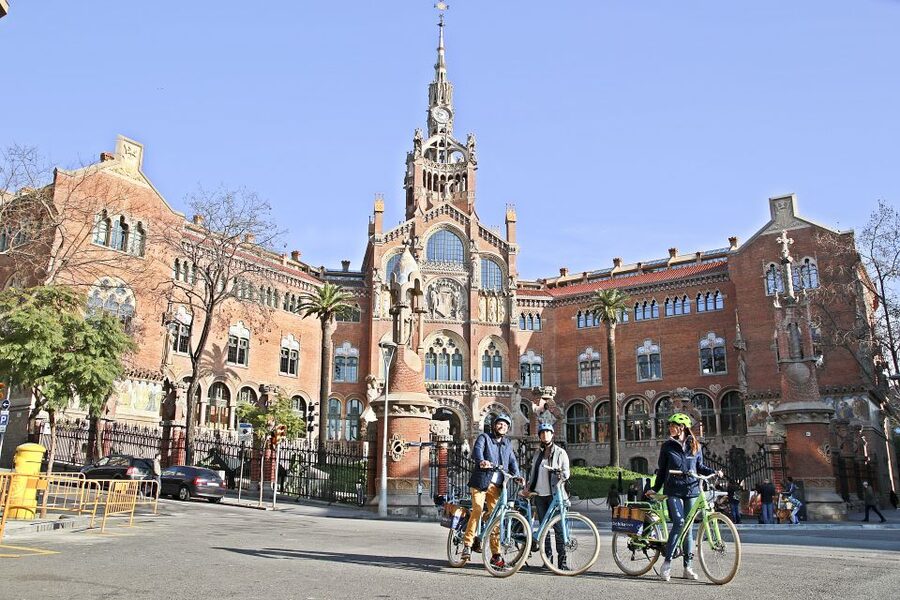
- E-bike help on real city streets: less sweat, more seeing, and smoother hill handling than a traditional bike
- Stops that connect stylistic dots: neo-Mudéjar, Italian-inspired fountains, then Modernisme façades
- Sagrada Família on a timed ride: spires and construction detail viewed from the street with a photo moment and some free time
- Small-group feel (2 to 15): enough guidance without feeling herded
- Guide quality shows up in details: fast response when a rider’s bike had an issue
- Multiple guide languages: English, Spanish, French, German, Italian, Russian, Dutch, and Portuguese
Starting at Passeig de Lluís Companys and Arc de Triomf
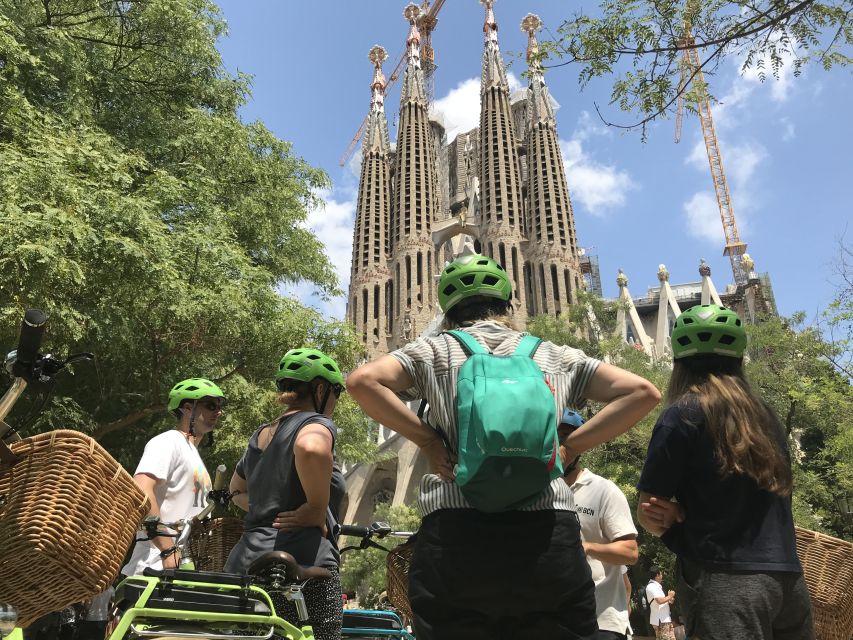
The tour begins at Passeig de Lluís Companys, 10, a practical spot because you can reach it fast from the Arc de Triomf area. If you’re using the metro, take L1 to Arc de Triomf, exit, then walk about 3 minutes along Passeig de Lluís Companys toward Passeig de Sant Joan; the office is on the left. By bus, lines 39, 40, 51, and H14 stop near Arc de Triomf, followed by about a 3-minute walk.
I like that the meeting point area is easy to orient yourself in. Arc de Triomf is a huge landmark, so you don’t waste time searching for the right street before you even start.
You can also read our reviews of more tours and experiences in Barcelona.
Arc de Triomf to Parc de la Ciutadella: the ride starts with style
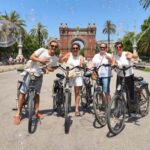
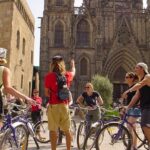
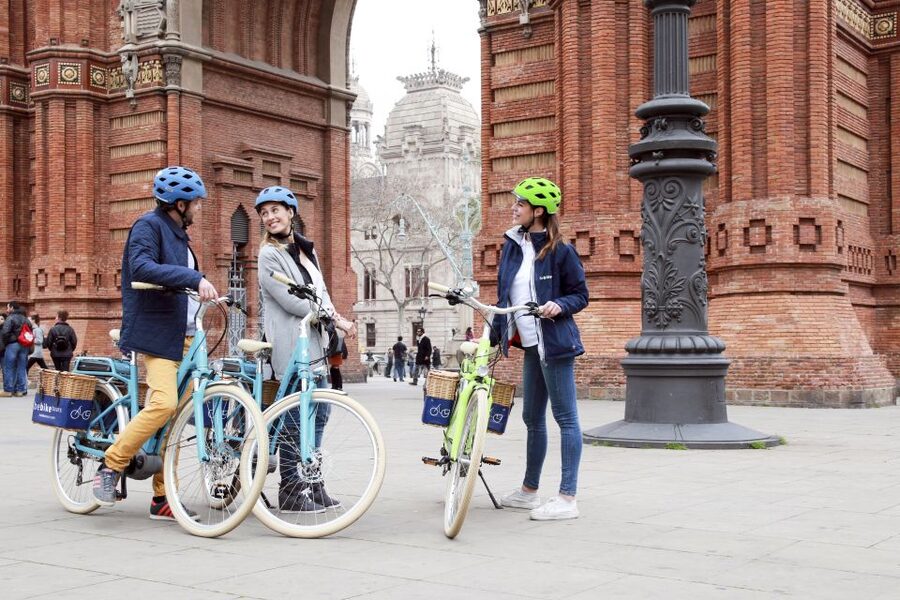
Your first highlight is the Arc de Triomf, where you’ll get a photo stop and guided tour time. This arch has a neo-Mudéjar look, which matters because it sets up the bigger story of Barcelona’s changing architectural tastes before Gaudí’s signature Modernisme takes over.
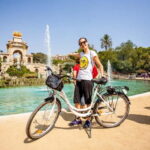
Then you head into Parc de la Ciutadella, a breezy reset from the city’s noise. You’ll see the fountain inspired by Italian design, and the tour notes that a young Gaudí may have had some connection to it. Even if you’re not an architecture nerd, it’s a nice early clue that Gaudí didn’t appear from nowhere.
The ride between these points is also a good test of the bikes. You’ll feel how the route handles turns, curb cuts, and the rhythm of Barcelona streets before you commit to the heavier façade moments.
El Born and Mercat del Born: history you can feel at street speed
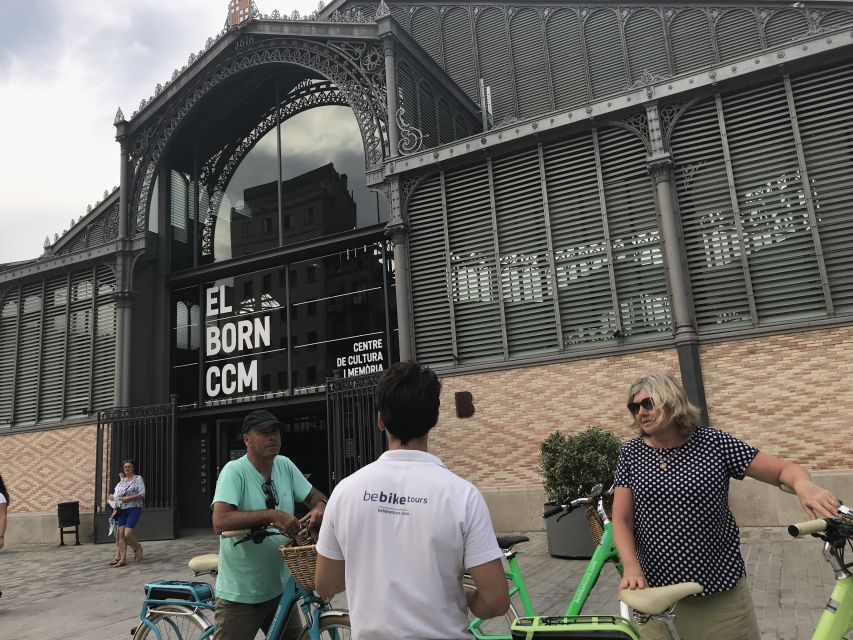
The next area is El Born, once a seaside resort for medieval aristocracy. That phrasing matters because it helps you read the neighborhood: you’re not just seeing pretty streets, you’re seeing a place that has been remade again and again.
You’ll get photo stops and guided commentary around Mercat del Born, plus quick sightseeing moments as you roll through. Mercat areas can be busy on their best day, so being on a bike keeps you moving while still letting you pause for what you came for.
Then you’ll visit St. Mary of the Sea Cathedral (your stop includes a photo moment and guided sightseeing time). This is a good place to slow your head—big church façades and their city surroundings look best when you see them from a few angles, not just one distant photo.
Plaça Sant Jaume: a quick civic pulse before the Modernisme hits
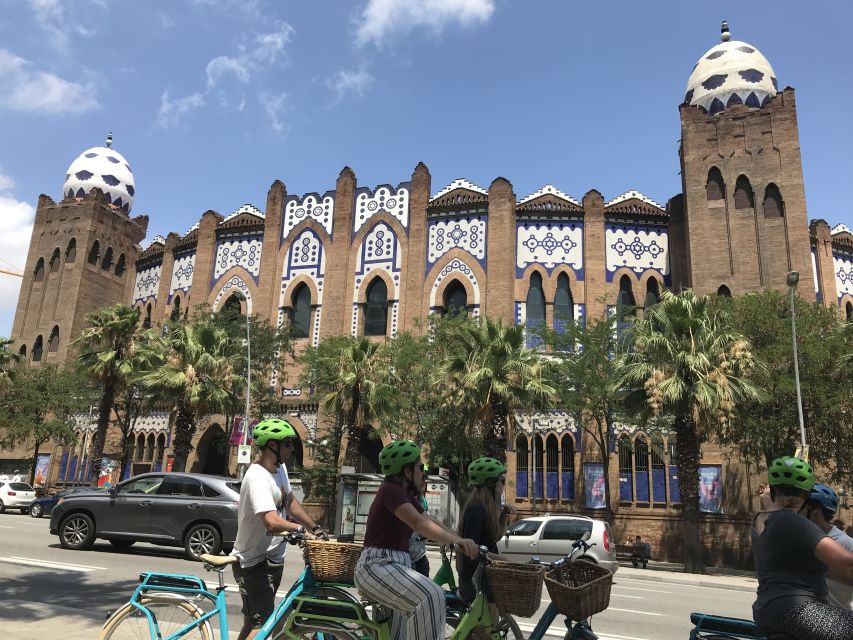
Next up is Plaça Sant Jaume, where you’ll stop for photos, guided sightseeing, and then pass through while continuing the ride. This square is one of those Barcelona anchor points that makes the city feel like a place with a center, not just a collection of sights.
I like keeping this stop in the middle of the route. It’s a mental regroup before the architecture starts stacking up—Casa Batlló, Casa Mila, and the big finale at Sagrada Família.
Casa Calvet and Gràcia: the Gaudí trail shifts neighborhoods
You’ll visit Casa Calvet, a Gaudí-designed building recognized as a Place of Cultural Interest since 1969. The practical value here is that you’re not only chasing fame—you’re seeing a specific work that represents how Gaudí worked within a residential context.
After that, the route shifts into the modern quarter of Gràcia, known for Catalan Modernism. You’ll ride through Vila de Gràcia, described as one of Barcelona’s coolest suburbs and also its administrative and commercial center, so the vibe is different from the more touristy pockets.
One standout here is the 33-meter bell tower, crowned with the famous bell of the Marieta. Even if you don’t go inside anything, the tower gives you a vertical landmark to aim for while you ride, and it helps you understand why locals like this neighborhood even when you’re just passing through.
You’ll also see Casa Vicens, considered one of the first buildings of the Art Nouveau movement and noted as Gaudí’s first house designed. It’s listed as part of the route along Passeig de Sant Joan approach, which means you’ll get it as you’re transitioning from neighborhood streets to the big boulevard energy.


Passeig de Sant Joan to Casa Batlló and Casa Mila
Once you move toward Passeig de Sant Joan, you start getting those classic postcard-to-real-life moments. The tour includes a stop for Casa Batlló, with guided or sightseeing-focused time plus photo opportunity.
I like that Casa Batlló is not treated like a random photo wall. You get the building’s role in the Modernisme story while you’re actively riding, so the design details feel connected rather than memorized.
Then you reach Casa Mila, often called La Pedrera. Your stop includes guided sightseeing and views along the way, with the e-bike making it easier to keep your position for photos. The practical win: with an e-bike, you can spend more effort on looking closely and less on trying to arrive exhausted.
Sagrada Família: your big finish, with construction context built in
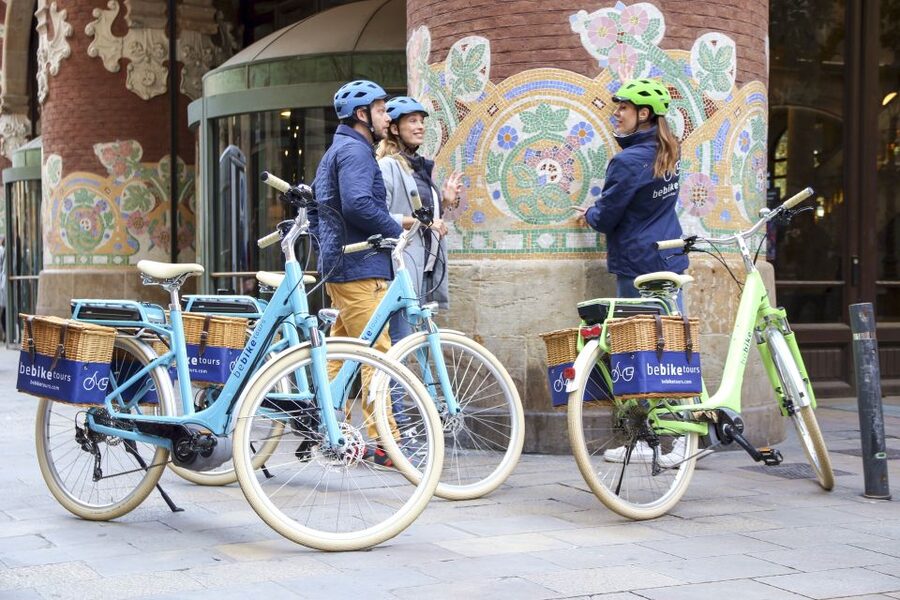
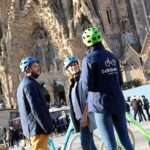
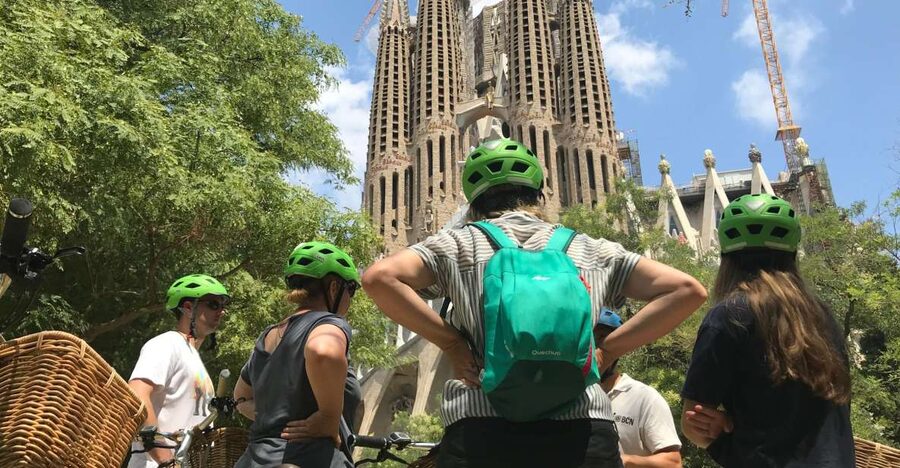
The highlight finale is Sagrada Família, Gaudí’s unfinished basilica, under construction since 1883. You’ll reach it via Passeig de Sant Joan, and your time includes a photo stop and guided tour moments, plus some free time.
This is where the tour earns its keep. Seeing Sagrada Família as an end point of a bike route makes the building feel like part of a bigger arc, not a one-off attraction. You’ll take in spires and façade details from the street, and that exterior focus is exactly what a 2.5-hour tour can do best.
Because there’s free time here, you can decide how to use it. If you’re the type who likes getting one good angle, you’ll do it fast. If you want a slow sweep of façades, you’ll have just enough time to satisfy that habit without losing the rest of the ride.
At the end, you return to Passeig de Lluís Companys, 10 to drop off the bikes.
How the e-bike changes the experience (and who should choose it)
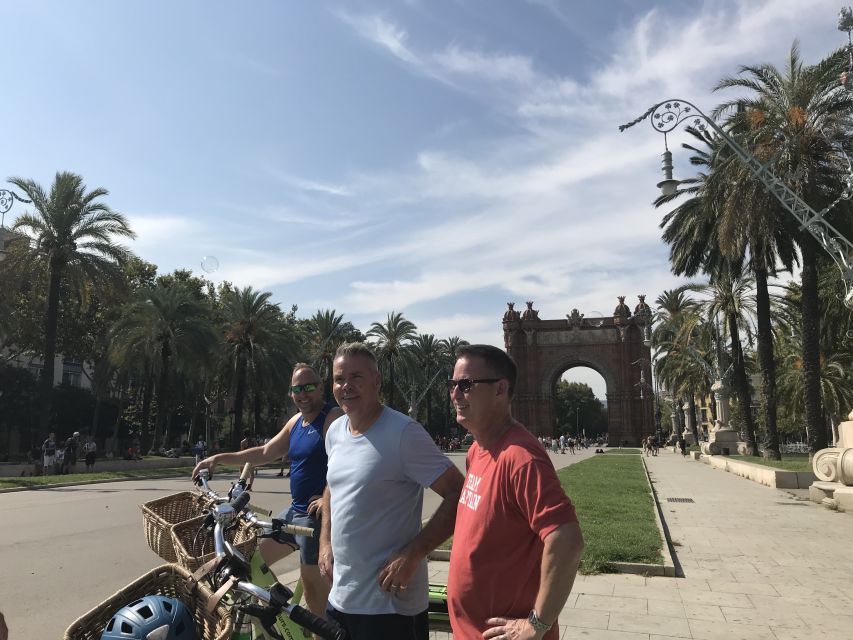
This is designed as a functional way to cruise. The tour specifically calls out that you’ll ride with ease aboard the e-bike, and that matters because Barcelona’s architecture trail has small rises and stop-and-go moments.
From the feedback I’ve gathered, the e-bike experience tends to feel easy even when there are a few uphill stretches. One rider noted that a tour with some uphill sections still felt enjoyable, thanks to the bike support. If you think you might be borderline on stamina, choosing the e-bike option is the simplest fix.
That said, the activity isn’t recommended for people with heart problems. Also, it’s still a bike tour, not a bus tour, so you’ll want to be comfortable riding in an urban environment for 2.5 hours.
What’s included for $28: value beyond the sticker price
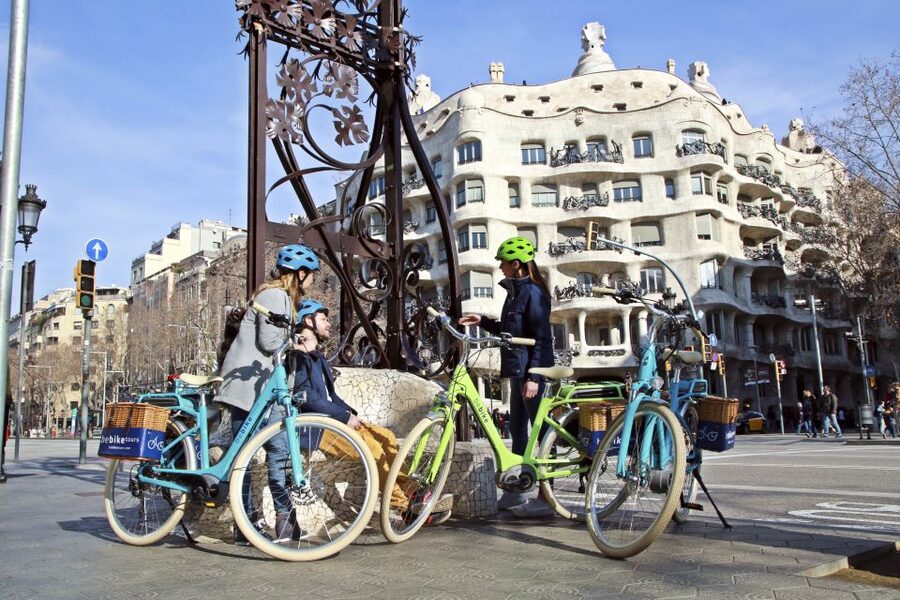
At $28 per person for a 2.5-hour guided ride, you’re paying for four things: a route, a guide, bike support, and “you don’t have to figure it out” convenience.
You get either a regular bike or an electric bike depending on your option, plus a helmet, insurance, and a bottle of water. Insurance and a provided helmet are small items, but they reduce the usual hassles that come with renting equipment on your own.
I also think small groups matter for value. This runs with groups of 2 to 15 per guide, which usually means you can ask questions without waiting for a microphone moment. The tour also offers private or small-group options, so if you’re traveling with a friend or family unit, you might get a more flexible experience.
Guide support is another value lever. One rider shared that when a bike issue came up, the company sent a mechanic and responded quickly, plus they were able to enjoy a coffee nearby. That kind of backup turns a planned tour into a stress-reduced outing.
Guide languages and the practical side of asking questions
You can ride with a live guide in Spanish, English, French, German, Italian, Russian, Dutch, or Portuguese. That’s not just comfort—it’s how you get better explanations. When you can ask follow-ups without a language barrier, the architecture sticks.
It also seems like guides pay attention to rider needs. Peter, for example, tailored pacing and answered a lot of questions for a solo rider, and that’s exactly what you want when you’re mixing big-name sites with smaller “read-the-street” moments.
If you’re the type who enjoys local context—like what an area used to be or why a façade looks the way it does—this format fits you well because you can ask right as you see.
Who this Gaudí e-bike tour fits best (and who should skip it)
This tour is a strong match if you want to see major Gaudí landmarks without spending half your day in transit or in ticket lines. It’s also ideal if you’re not trying to master every detail at every building—rather, you want a guided route that gives you the right mental map for deeper visits later.
Kids can join too, with rules that matter:
- Kids under 6 can join for free and ride in a child safety seat on a parent’s bike.
- Children up to 20 kg and 130 cm can also join at no cost in that child seat.
On the flip side, it’s not suitable for children under 2, and it’s not suitable for people with heart problems.
If you’re dealing with mobility limits or you know you can’t handle riding for 2.5 hours, you’ll likely be happier with a walking or smaller-scope tour instead.
Should you book it? My take
If this tour lines up with your interests, I’d book it. For $28 and 2.5 hours, you get a guided circuit that connects Gaudí-era architecture with Barcelona neighborhoods you might otherwise treat as “just passing through.” The e-bike makes it doable for a wider range of fitness levels, and the route pacing keeps your day moving.
I’d skip it if your ideal day is slow and quiet, with long indoor time at a single site. This is a bike-first format with photo stops and limited site time, and that won’t satisfy a traveler who wants hours of museum-style attention at each building.
FAQ
Where do I meet for the tour?
Meet your guide at Passeig de Lluís Companys, 10.
What’s the nearest metro stop?
Arc de Triomf (L1, red line). Exit the metro and walk about 3 minutes along Passeig de Lluís Companys toward Passeig de Sant Joan.
Does the tour include an electric bike?
Yes. You can choose a regular or electric bike, depending on the option selected. Helmets, insurance, and a bottle of water are included.
How long is the tour?
The duration is 2.5 hours.
Is it suitable for children?
Children under 6 can join for free and ride in a child safety seat on their parent’s bike. Children up to 20 kg and 130 cm can also join at no cost in the child seat. It is not suitable for children under 2.
What languages are available for the live guide?
Spanish, English, French, German, Italian, Russian, Dutch, and Portuguese.