REVIEW · BARCELONA
Barcelona e-Bike Tour: Gaudí & Old Town Small Group
Book on Viator →Operated by Barcelona eBikes · Bookable on Viator
Two wheels beat tired feet fast in Barcelona. This small-group e-bike tour pairs an easy ride with real neighborhood texture, from Roman Barcino streets to Gaudí facades on Passeig de Gràcia. You get the help of an electric bike, so you can focus on scenes and stories instead of struggling up every curb.
What I like most is the relaxed pace and the sense you’re with a guide who actually wants you to understand what you’re seeing. I also like that the route is built for an overview: Gothic Quarter lanes, El Born culture spaces, Parc de la Ciutadella, the waterfront, and then the Gaudí-heavy stretch that people usually have to plan separately. One thing to consider: it’s a city ride in traffic and red lights, so you’ll want to stay attentive and comfortable riding in busy pedestrian areas.
In This Review
- Key Highlights You’ll Care About
- Two Wheels Through Barcelona’s Old Core and Gaudí Avenue
- Price, Time, and What You Get for $38.70
- Meeting at Plaça de Sant Agustí Vell and Getting Set Up
- Gothic Quarter Roots: Barcino, Narrow Lanes, and Street-Level History
- El Born Centre and Santa Maria del Mar: Market Finds and Sea-Worn Stone
- Parc de la Ciutadella to Barceloneta Beachside Ride
- Port Olímpic Views and the City’s Turn Toward the Sea
- Rambla de Poblenou: A Softer Barcelona Beat Away From the Crowds
- Gaudí Focus on Passeig de Gràcia and La Pedrera Stories
- How the E-Bikes Make This Tour Work for Almost Any Fitness Level
- Small Group Dynamics: Staying Together in Busy Intersections
- What to Bring and How to Plan Your Day
- Who Should Book, and Who Might Skip
- FAQ
- Where does the tour start?
- How long is the Barcelona e-bike tour?
- How much does it cost?
- Is it offered in English?
- How many people are in the group?
- What’s included in the price?
- Are attraction tickets included?
- Is food or drinks included?
- What if I need to cancel?
- Should I bring a water bottle?
Key Highlights You’ll Care About
- Electric-bike ease means less strain and more time looking around
- Small group size (max 15) helps the tour feel personal and stay together
- Old Town to the sea: Gothic Quarter, El Born, Parc de la Ciutadella, Barceloneta, Port Olímpic
- Gaudí focus on Passeig de Gràcia, including La Pedrera stops and façade stories
- Multiple departure times let you choose morning light or later city atmosphere
Two Wheels Through Barcelona’s Old Core and Gaudí Avenue
Barcelona has a way of feeling big. Even if you’re only here for a few days, you still want the classics and the real local streets, not just photos from one crowded square.
This tour is designed to give you that big-picture understanding quickly. You start in Ciutat Vella and work outward through historic pockets, then swing by the sea before ending up where Gaudí’s architecture grabs your attention from blocks away. The e-bike does the heavy lifting, so you spend your energy on the fun part: listening, looking, and asking questions.
The best part is the mix. Many Barcelona tours either go full museum mode or full postcard mode. Here, you get city flow plus architecture talk, with short stops that keep the momentum moving.
You can also read our reviews of more tours and experiences in Barcelona.
Price, Time, and What You Get for $38.70
At about 3 hours for around $38.70 per person, this is priced like an activity you should do early in your trip. That’s not marketing talk. It’s logistics: you’ll learn where things are, how neighborhoods connect, and what to return to on foot later.
You’re not just paying for a bike. You’re paying for a guide, a helmet, and a ride plan that strings together viewpoints and streets efficiently. You also get a water refill station, which matters in Barcelona heat and on days when you’re walking less than you expect.
At the same time, set your expectations correctly. This isn’t an all-day Gaudí quest with long ticket lines. Attraction entry tickets are not the point here, so you’ll get mostly street-level and stop-based viewing and explanations rather than full interior museum time.
Meeting at Plaça de Sant Agustí Vell and Getting Set Up
Your tour meets at Plaça de Sant Agustí Vell, 16 in Ciutat Vella. The area is central, and the meeting point is near public transportation, which helps if you’re stitching this into a first-day schedule.
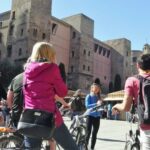
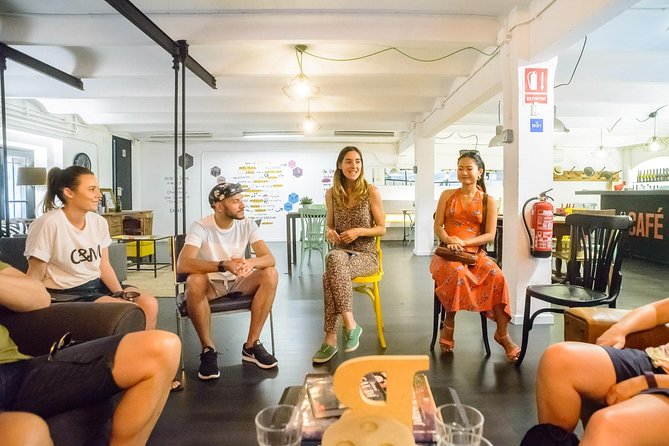
When you arrive, you’ll get the bikes and helmets, then a guide runs through what’s next. This is a small thing, but it’s important. A good e-bike setup and a clear briefing makes the first 10 minutes smoother, especially in old-city streets where pedestrians and bicycles share space.
A lot of the tour quality is tied to comfort. Guides tend to check that you’re correctly positioned on the bike and that the assist level is working for you, so you don’t feel like you’re fighting the machine right away.
Gothic Quarter Roots: Barcino, Narrow Lanes, and Street-Level History
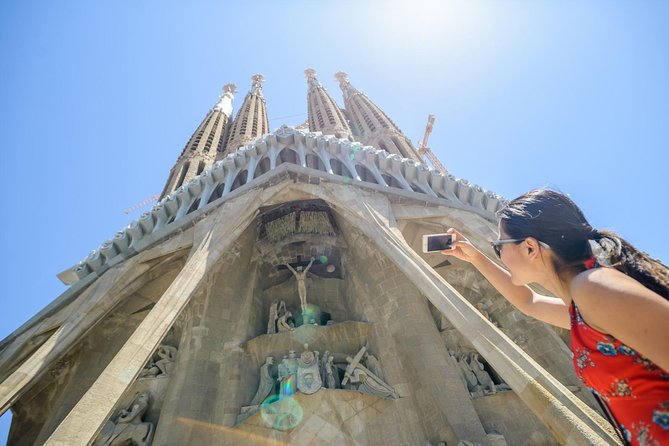
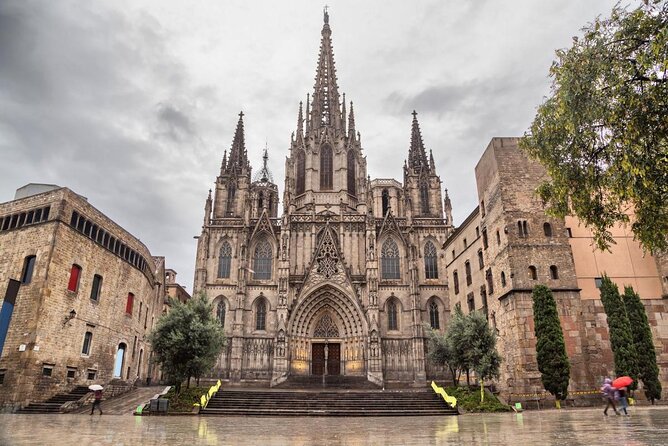
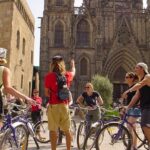
The ride begins in the Gothic Quarter, Barcelona’s oldest core. Here, the guide frames the city in time layers, starting with the Roman settlement called Barcino. It’s a simple idea, but it changes the way you read the streets. You stop seeing buildings as background and start seeing them as evidence.
Then you head into the narrow medieval lanes—exactly the kind of streets you’ll walk later anyway, but on this tour you’re not just wandering. You’re riding through them with context. Expect the route to feel like Barcelona is intimate: fewer big avenues, more corners where history becomes visible in the stone and street shape.
One practical note: these lanes can be crowded with pedestrians and quick turns. If you’re nervous riding a bike in the middle of foot traffic, treat this first segment as your warm-up. Keep both hands ready, stay a comfortable distance behind the guide, and don’t rush to match pace at the first busy intersection.
El Born Centre and Santa Maria del Mar: Market Finds and Sea-Worn Stone
Next you reach El Born Centre de Cultura i Memoria, a space tied to Barcelona’s past as a city of food and daily life. You’ll hear how it used to function as an important food market, and you’ll also get a sense of what makes the area such a magnet for culture today.
This stop works well because it’s short. You’re not stuck in one interior room. You’re getting a taste of a neighborhood identity—where old infrastructure becomes a stage for memory and stories.
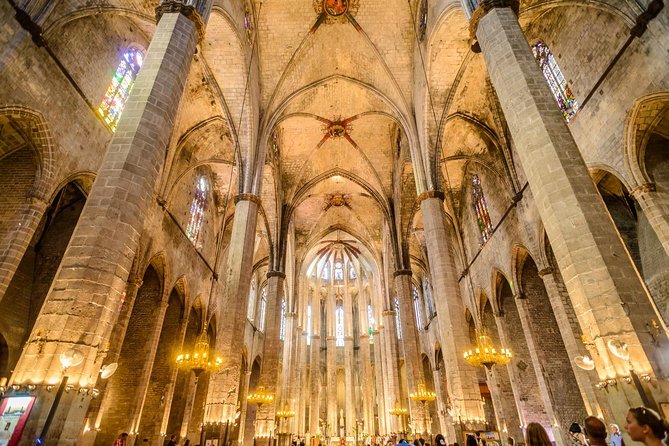
From there, the tour connects to Santa Maria del Mar, described as the sea-facing cathedral for the people of Barcelona. Even if you don’t spend long inside, it’s the kind of landmark that helps you understand how maritime life shaped the city’s pride and architecture. The guide’s framing makes the building feel tied to the coastline instead of floating in the middle of the old town.
If you love atmosphere, this is a strong pocket. It feels like Barcelona in layers: market past, neighborhood energy, and that sea connection that never fully leaves.


Parc de la Ciutadella to Barceloneta Beachside Ride
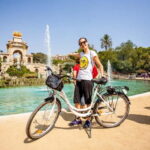
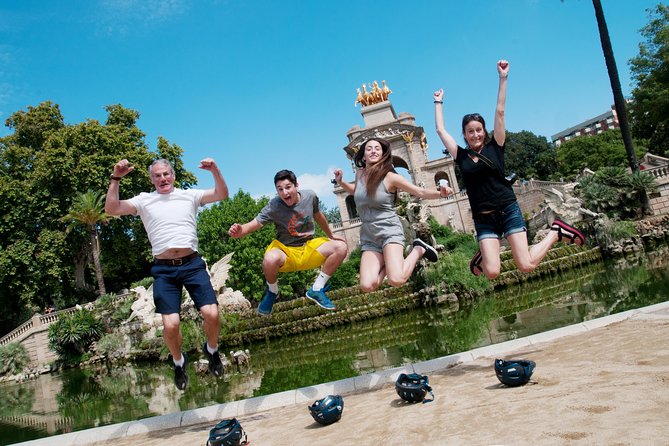
Then you move into Parc de la Ciutadella, a green break inside the city. The tour highlights it as a major oasis and also notes that the park was linked to the 1888 International Exposition.
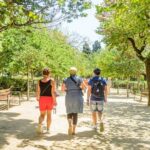
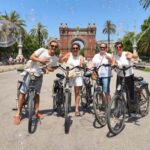
Why this matters on an e-bike tour: parks are where you can slow your breathing. You get a breather after tighter old-town streets, and you also get a clear landmark—there’s even an arch referenced as part of the 1888 exposition story. When guides point these details out, the park stops being generic greenery and becomes a historic space you can actually read.
From Parc de la Ciutadella, you ride toward Barceloneta, the long-time fishing neighborhood. This transition is one of the tour’s smartest moves. You’re not just bouncing between sightseeing sites; you’re watching the city change in real time from inland history to waterfront life.
Port Olímpic Views and the City’s Turn Toward the Sea
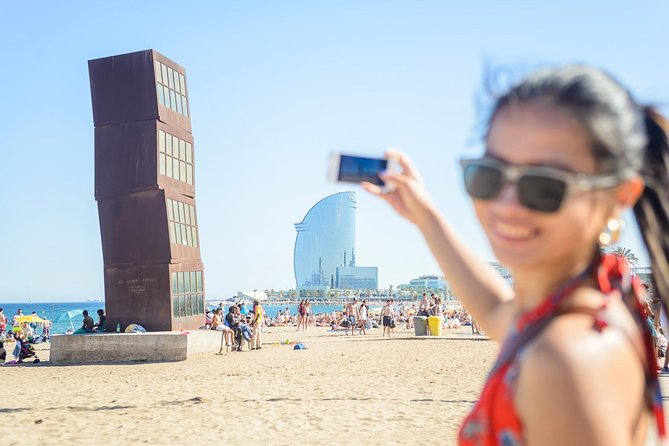
Port Olímpic is where Barcelona looks outward. From the waterfront perspective, you get a view of the skyline and that sense of the city opening toward the Mediterranean.
This stop is brief by design, but it’s a helpful reset. After old streets and formal buildings, you get sea air and visual space. It also makes the rest of the tour feel more coherent. The guide’s story ties together why you’re moving toward water and why Barcelona’s layout isn’t accidental.
If you’re someone who likes photographs but hates spending 30 minutes trying to find the perfect angle, you’ll appreciate this. The goal isn’t to make you hunt for a view. It’s to deliver you to one with context.
Rambla de Poblenou: A Softer Barcelona Beat Away From the Crowds
Next comes Rambla de Poblenou, and here the tour deliberately shifts away from the crowds that most people associate with the Ramblas. The guide frames this stretch as a calmer way to understand what a “rambla” means in daily life—avenues that shape how people move and gather.
This is valuable because it teaches you a geography lesson. Once you’ve seen both the famous and the quieter rambla, you start to understand the city’s rhythm and why different neighborhoods attract different kinds of visitors.
You also get time to breathe on the bike path and absorb the neighborhood vibe without feeling like you’re fighting crowds the whole way.
Gaudí Focus on Passeig de Gràcia and La Pedrera Stories
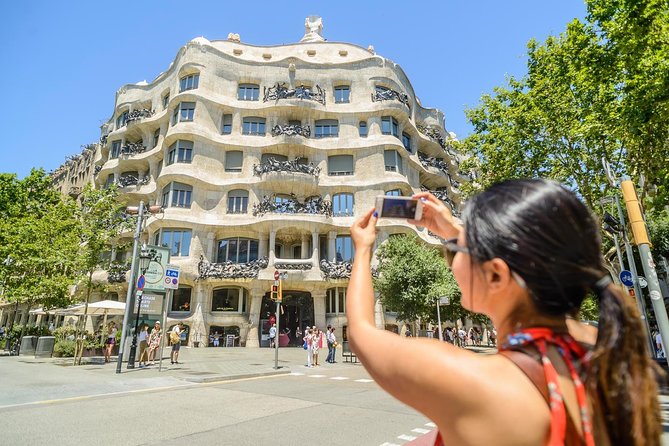
Now for the part most people book for: Gaudí. The tour reaches the famous Passeig de Gràcia area—often compared to Barcelona’s version of a major avenue where the city shows off its best architecture.
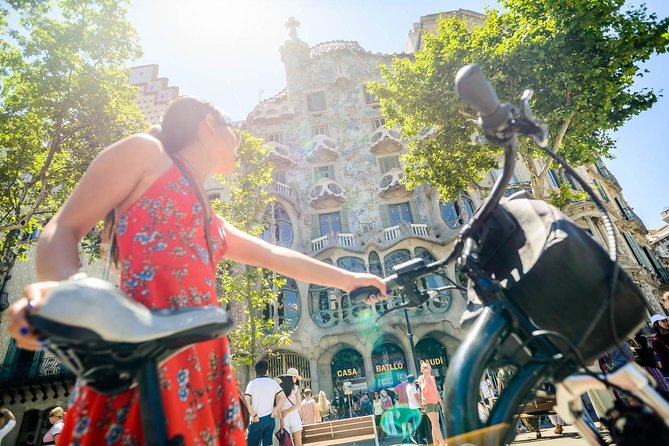
You’ll hear stories tied to the famous modernist houses here, with explanations connecting style to rivalry, wealth, and local status. One of the guide themes is competition among wealthy families, described as neighbors living door by door and pushing each other toward the most dramatic facades.
The tour specifically calls out La Pedrera (Casa Milà) and emphasizes its wavy stone-work as part of Gaudí’s signature thinking. Even on the outside viewing time, the guide tries to help you see the building’s logic, not just its weirdness. The result is that the architecture feels like it’s doing something, not just looking like a sculpture.
A quick practical tip: when you’re in this area, keep your head up as much as you look forward. The facades reward slow looking, and a guide’s pacing helps you catch details you’d otherwise miss while distracted by traffic.
How the E-Bikes Make This Tour Work for Almost Any Fitness Level
Barcelona is fairly flat, which helps. But the e-bike changes the math even more. You don’t need to be a regular cyclist to enjoy this. The electric assist means you can handle more ground than you would on foot, and you can arrive at the Gaudí area without arriving totally fried.
One thing that keeps coming up in the way people talk about this experience is how comfortable the ride feels even in heat. You still feel movement, and the bike gives you a bit of breeze, which is genuinely useful on warm days.
Here’s how to use that advantage: ride smoothly, don’t grind on every small hill or curb adjustment, and save your attention for the guide’s explanations. The bike does the work, but you still control how much you pay attention.
Small Group Dynamics: Staying Together in Busy Intersections
The tour runs with a maximum of 15 travelers. In a city like Barcelona, that’s not just a comfort perk—it’s a safety and clarity perk.
When groups stay tight, you hear more and you don’t lose the guide at every red light. A lot of guides on this kind of route are praised for keeping everyone together, warning about traffic, and patiently waiting when someone falls behind.
Still, it’s a busy city. You should expect that sometimes you’ll have to stop or slow because the bike lane ends or pedestrians press in. If you’re sensitive to noise, note that street traffic can make it harder to hear over time, especially during denser segments. When that happens, you’ll get more from the tour if you stay closer to the front and don’t drift wide.
What to Bring and How to Plan Your Day
Bring a bottle. The tour includes a water refill station, and you’re specifically encouraged to bring your bottle to refill during the ride. That’s the difference between feeling fine for three hours and feeling like you need to hunt for a shop mid-tour.
Plan your timing like this:
- If you want the most classic sightseeing light, choose a morning departure.
- If you prefer later city vibes, a later slot can feel great, but you may lose some daylight views depending on the season.
Also, treat this as your “orientation chapter.” You’ll likely come away with a list of places you want to revisit on foot—especially around Gaudí. Do that. Then use the bike tour’s map-in-your-head feeling to explore on your own.
Who Should Book, and Who Might Skip
Book this tour if you want:
- a fast, efficient way to connect Old Town sights with Gaudí architecture
- an e-bike experience that keeps the pace relaxed and the route easy to follow
- a guide-led walk-through of neighborhoods, not just stand-and-photo stops
- a small-group feel that helps you hear stories and stay oriented
Skip it if:
- you hate riding a bike in mixed pedestrian traffic and traffic-light stops
- you’re looking for long, ticket-based museum time inside major attractions
- you only care about interiors and don’t want street-level viewing as the main format
If you’re doing Barcelona for the first time or you want a strong first-day anchor, this tour is a smart purchase.
FAQ
Where does the tour start?
The meeting point is Plaça de Sant Agustí Vell, 16, Ciutat Vella, 08003 Barcelona, Spain.
How long is the Barcelona e-bike tour?
The tour is about 3 hours.
How much does it cost?
The price is listed at $38.70 per person.
Is it offered in English?
Yes. The tour is offered in English.
How many people are in the group?
The tour has a maximum group size of 15 travelers.
What’s included in the price?
Included are a small-group bike tour with a professional local guide, bicycle and helmet, and a water refill station (bring your bottle to refill).
Are attraction tickets included?
Attraction tickets are not included.
Is food or drinks included?
Food and drinks are not included unless specified.
What if I need to cancel?
You can cancel up to 24 hours in advance for a full refund.
Should I bring a water bottle?
Yes. There is a water refill station, and you’ll be able to refill your bottle during the tour.

![Cortona - eBike tour and wine tasting in the Val di Chiana [+40€] - Meeting at C.a. Barullo and getting your ride sorted fast](https://2.iwantbiketours.com/wp-content/uploads/cortona-ebike-tour-and-wine-tasting-in-the-val-di-chiana-40e-400x267.jpg)