REVIEW · BUCHAREST
Bucharest Half a Day Bike Tour
Book on Viator →Operated by Bike the City · Bookable on Viator
Four hours on a bike makes Bucharest click. This half-day ride mixes big-city landmarks with quieter corners, and it’s paced for real sightseeing instead of rushing from one photo stop to the next. I especially like how the tour ties together churches, politics, and everyday life along the way, and how you get a bike and helmet without having to figure anything out.
You’ll also be in capable hands. Guides like Lucia, Dan, Ed (Eduard/Edward), and Alex have a gift for turning the city’s facts into stories you can remember. The main drawback to consider is that Bucharest is still a city with pedestrians and construction in places, so you’ll want to stay alert and accept that cycling here is not a car-free park.
In This Review
- Key Highlights You’ll Feel Right Away
- Why This 4-Hour Bike Loop Works for First-Time Bucharest
- Strada Operetei 12: Meeting Point and How the Tour Starts
- The Bike Setup: Included Helmet, Included Bike, Optional E-Assist
- Stop-by-Stop: Bucharest’s Story from Bank Streets to Old Monasteries
- The National Bank and Early Bucharest Atmosphere
- Hanul Gabroveni: Oriental Architecture and Old-Bucharest Character
- Manuc’s Inn (Hanul lui Manuc): Where Food and Identity Meet
- The New Civic Center and the Old City Center Contrast
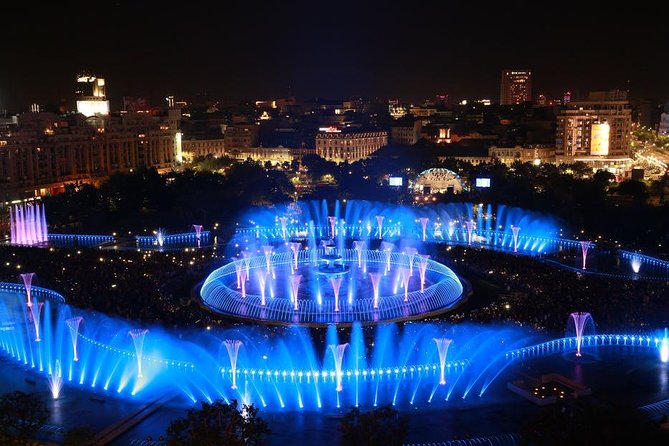
- Palatul Patriarhiei and Antim Monastery: Faith, Politics, and How They Sit Together
- Palatul Patriarhiei and the First Romanian Parliament
- Manastirea Antim: Religion in Romania You Can See
- Palace of Parliament and the Communist City Plan You Pedal Through
- The Palace of Parliament: A Project Meant to Impress
- First Park in Bucharest and Communist Futuristic Architecture
- Old Boulevard, Great Old Architecture, and the Royal Dynasty Thread
- Piaka Revolukiei: Closing with the End of the Communist Regime
- What Guides Like Lucia, Dan, Ed, and Alex Do Best
- Price and Value: Is $45.97 a Good Deal?
- Practical Notes: The Real-World Side of Biking Bucharest
- Should You Book This Tour?
- FAQ
- How long is the Bucharest half-day bike tour?
- What does the tour cost?
- Where does the tour start and when?
- What’s included in the price?
- Are food and drinks included?
- Is the tour in English?
- Is there an admission cost at the stops?
- How big is the group?
- Is cancellation free?
Key Highlights You’ll Feel Right Away
- A route that reads Bucharest in layers: bank and old monasteries to inns, parliament, and the end of the communist era
- Free entry at multiple stops so you’re not stacking costs while you’re out
- Small-group pacing with lots of photo chances and time to ask questions
- Bike comfort built in with helmets included, and e-bikes available if you want extra help
- Guides who teach while you ride—not a lecture, but clear, structured stories with humor and context
Why This 4-Hour Bike Loop Works for First-Time Bucharest
If you’re trying to get your bearings fast, this tour does a smart thing: it focuses on variety in a short window. You’ll cover royal-era sites, major church landmarks, and the political “weight” of communist Bucharest, all while staying in motion. That matters because walking can feel slow here, and driving tours miss the street-level feel.
I like that the ride is set up as an easy, manageable city loop. Based on what people describe, it’s mostly flat, with only a short hill, and the pace leaves room to stop, look, and take photos. That’s a big deal when Bucharest is hot, or when you’re still adjusting to a new country’s rhythms.
And you don’t just “see” things. You get the why behind them. The stops connect into a storyline: who held power, what faith shaped daily life, and how different cultures left their marks on the city’s architecture.
You can also read our reviews of more tours and experiences in Bucharest.

Strada Operetei 12: Meeting Point and How the Tour Starts
The tour begins at Strada Operetei 12, București 030167, Romania. Start time is 10:00 am, and the tour ends back at the meeting point, which makes planning after the ride easier.
It’s also a good sign that the meeting area is near public transportation. That gives you flexibility. If you’re bouncing between neighborhoods that day, you can usually reach the start point without adding taxi time into your schedule.
The Bike Setup: Included Helmet, Included Bike, Optional E-Assist
You’re not renting a bicycle on your own. The experience includes use of a bicycle and use of a helmet, which is the kind of detail that makes day one in a new city go smoother.
Also worth knowing: e-bikes are available. If you’re cycling for the sightseeing but don’t want to work for it, that option can keep the ride comfortable even if it’s warm or you’re not used to city pedaling.
One more practical note: the tour is capped at a maximum of 30 travelers. That size is large enough to run efficiently, but small enough that you should still hear your guide and keep track of the group.
Stop-by-Stop: Bucharest’s Story from Bank Streets to Old Monasteries
This route is built like a history lesson you can ride through. The tour starts with a “city reading” approach, then gradually zooms into power, faith, and the built environment.
The National Bank and Early Bucharest Atmosphere
You kick off with Bike The City at the starting area, then head to the first National Bank. Even if you only glance at the building, it helps frame Bucharest’s modern identity—money, institutions, and how the city organized itself as it grew.
Then you move to one of the oldest monasteries in Bucharest. Monasteries here are not just religious spaces; they’re also cultural anchors. Seeing one early in the ride gives you a reference point for later stops, especially once you start comparing Ottoman, Romanian, and later communist influences.
Hanul Gabroveni: Oriental Architecture and Old-Bucharest Character
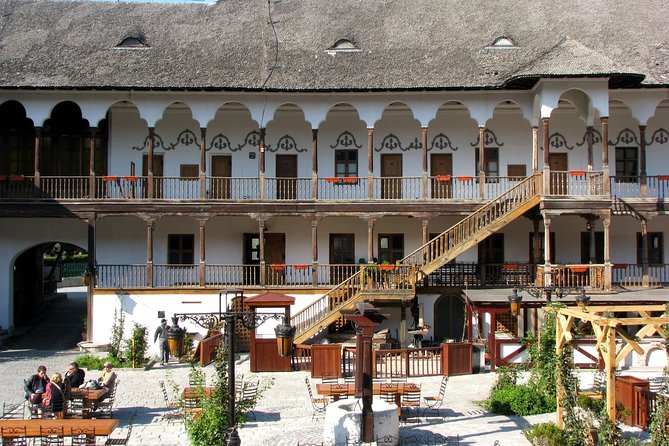
Next is Hanul Gabroveni, with its Oriental architecture and a small photo gallery tied to old Bucharest. This is a great stop because it shifts you from “big monuments” into a more street-level, human-scale feeling.
It’s short, so you’ll want to be ready with your camera. The value isn’t only the photo; it’s the sense of how commerce and everyday life shaped the city.
Manuc’s Inn (Hanul lui Manuc): Where Food and Identity Meet
At Manuc’s Inn, the theme turns to traditions. The stop emphasizes the influences shaping Romanian traditional food, which is a smart way to teach culture without sounding abstract.
You’ll also feel how Bucharest was a meeting point. Inns like this weren’t just lodging. They were where people from different communities intersected—traders, travelers, and locals mixing ideas and tastes.
The New Civic Center and the Old City Center Contrast
As you head toward the newer civic area—described as the alternative to the old city center—the tour starts showing you how political priorities change a city’s layout. You’ll see a different kind of planning logic here than in the older streets.
Two other stops in this stretch keep the tour grounded in real life: there’s a stop tied to the phrase about getting yourself a smart wife or husband, and there’s also a stop connecting to the Romanian Jewish community. These moments matter because they remind you that “history” isn’t only rulers and dates. It’s people and communities living their days.
Palatul Patriarhiei and Antim Monastery: Faith, Politics, and How They Sit Together
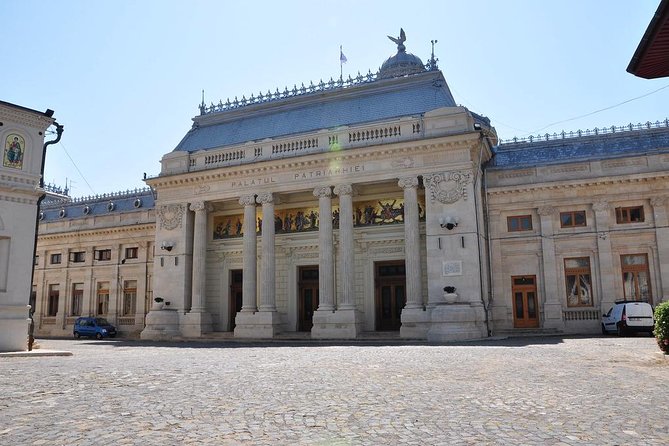
Palatul Patriarhiei and the First Romanian Parliament
At Palatul Patriarhiei, the focus shifts sharply to governance. This stop highlights the first Romanian Parliament, which is a strong pivot after inns and monasteries.
Even if you don’t go deep into official details, the big takeaway is how power and national identity evolved in visible spaces. It helps you understand why later, the communist era gets so heavy at the Palace of Parliament.
Manastirea Antim: Religion in Romania You Can See
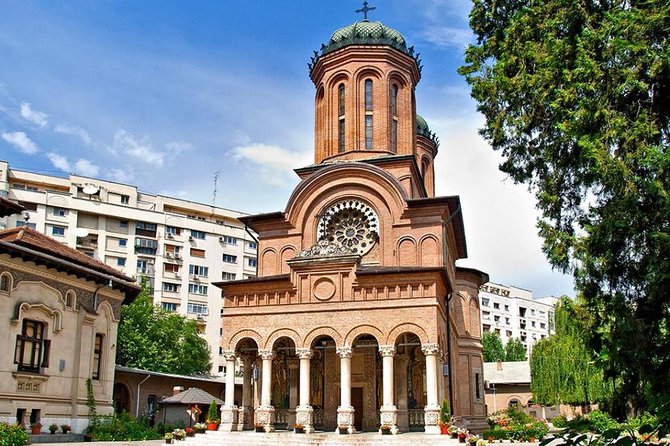
Then comes Manastirea Antim, framed as religion’s role in Romania. This is one of those stops where you’ll likely notice how spiritual architecture sets a tone for an entire neighborhood.
It also gives you a smoother transition into the political architecture you’ll see later, because the tour keeps pairing “belief” with “authority.” By the time you reach communist-era structures, you’ll have context for what changed—and what stayed.
Palace of Parliament and the Communist City Plan You Pedal Through
The Palace of Parliament: A Project Meant to Impress
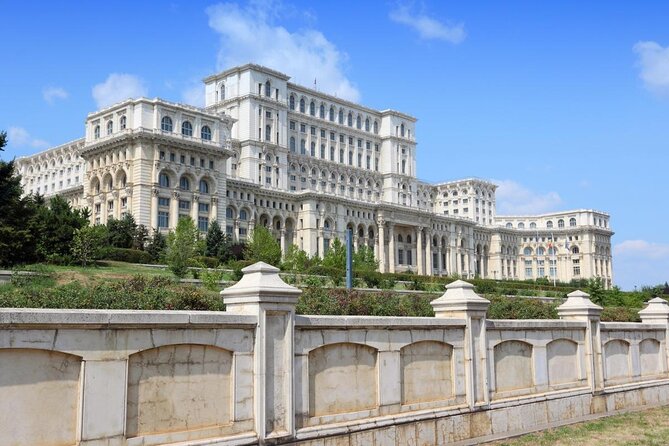
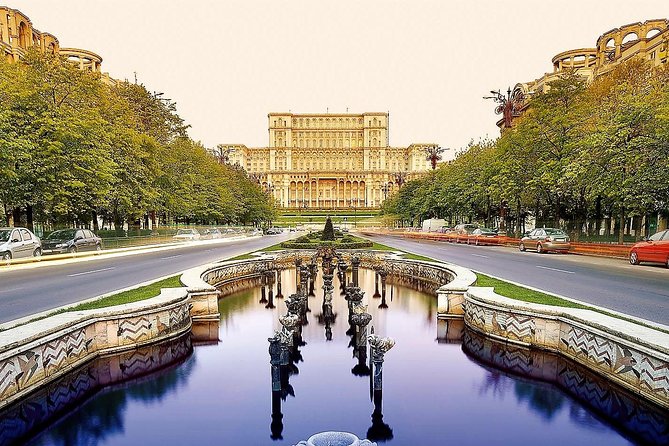
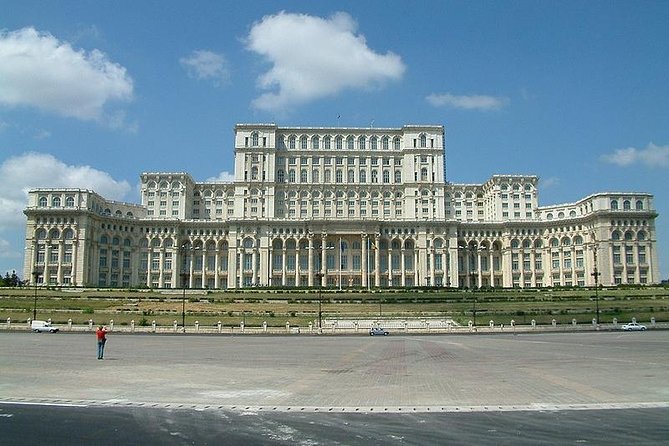
The ride’s headline is Palace of Parliament, described as the final “megalomaniac communist project.” This is the kind of place where scale alone can overwhelm you, even before you absorb the story.
The tour keeps it practical: you get time to look, and you learn how this era tried to reshape public space. If you’re the type who likes understanding how regimes used architecture for messaging, this is where the tour pays off.
First Park in Bucharest and Communist Futuristic Architecture
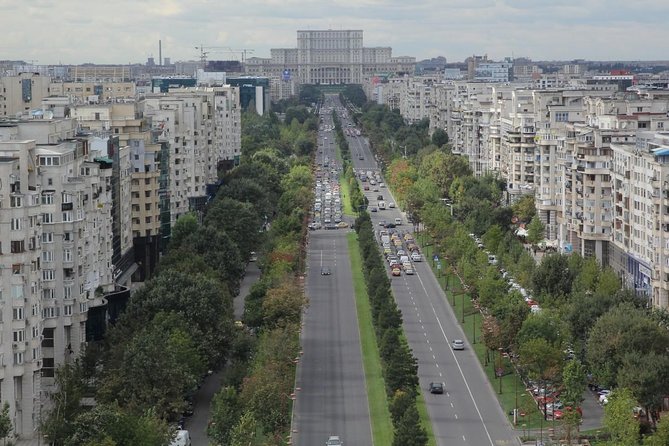
Next, the route moves to the first park in Bucharest, then continues into communist futuristic architecture. That sequence is clever. It shows you that communist planning wasn’t only about buildings—it also aimed to control leisure space and the way people moved through the city.
Parks and “futuristic” designs can feel abstract in a brochure. On a bike, you get the physical sense of distance and the way street patterns funnel you toward certain views.
Old Boulevard, Great Old Architecture, and the Royal Dynasty Thread
From there, you roll along the main old boulevard of Bucharest and toward one of the best old architecture stretches, along with a focus on the royal dynasty.
This part is important because it prevents the tour from turning into a single-theme loop. You’re not only learning about communism’s imprint. You’re also seeing what came before, and how the city’s identity pulls in multiple directions at once.
Piaka Revolukiei: Closing with the End of the Communist Regime
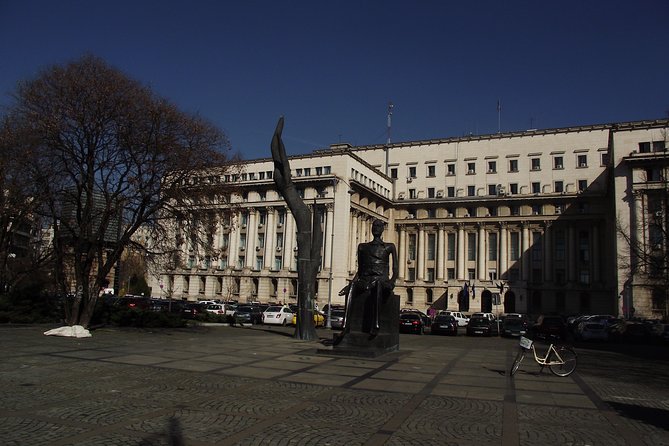
The final major stop is Piaka Revolukiei, framed as the end of the communist regime. You end here because it makes the full tour feel like a timeline, not a set of disconnected sights.
Standing in the right place helps the story land. After the palace and the city-plan sections, this stop gives you a sense of closure—why all those buildings and street choices mattered in the first place.
What Guides Like Lucia, Dan, Ed, and Alex Do Best
A bike tour lives or dies by the guide, and this one has a strong track record. People describe Lucia as funny and friendly, and Dan as turning the ride into a clear, organized history/political science lesson without making it feel heavy. Ed (Eduard/Edward) and Alex also show up repeatedly in the best kind of way: storytelling plus practical city pointers.
You’ll likely get value beyond the ride too. Several people mention small extras like water and even chocolates, plus personal-style commentary that makes Bucharest feel less like a textbook and more like a real city with real routines.
Also, the pace stands out. Multiple descriptions say it’s not too fast, with time for photos and comfortable riding. That’s what you want when you’re mixing biking and culture.
Price and Value: Is $45.97 a Good Deal?
At $45.97 per person for about 4 hours, this tour is priced like a practical “sightseeing workhorse,” not a luxury add-on. Here’s why it can feel like good value:
- Bike + helmet are included, so you’re not paying extra to ride
- You get a local guide and a professional guide, which usually means better context than a basic walking loop
- Multiple stops list admission tickets as free, so your day doesn’t get derailed by extra costs
- You cover a broad stretch of major sights that would take longer by foot or require more planning by transit
The main reason it might not be the best match is if you hate riding in active city conditions. Bucharest isn’t a perfect biking environment, and there can be construction or pedestrian-heavy segments. If that stresses you out, a walking tour or a transit-based day might feel calmer.
Practical Notes: The Real-World Side of Biking Bucharest
Let’s keep it honest. City biking comes with tradeoffs.
- Construction and pedestrians can slow things down in spots, and your guide may adjust the flow
- You should be ready to cycle at times where traffic rules and sidewalks blur in your mind
- Hot weather matters. Some rides are reported as comfortable even in strong heat, but you should still plan water and sun protection
A positive: one review specifically notes no need for an e-bike because the route is manageable. Still, if you’d rather ride with less effort, it’s good to know e-bikes are available.
Should You Book This Tour?
I’d book this if you want an efficient first day in Bucharest that goes beyond “top sights” and actually connects them. It’s a great pick when you like structure—start with orientation, hit the big landmarks, and end with a clear historical conclusion. It’s also ideal if you value a guide who can explain politics, culture, and architecture in a way that stays understandable while you ride.
Skip it if you’re very sensitive to busy streets, construction detours, or if you’d rather move at a slower walking pace with no cycling element at all.
If your goal is to learn Bucharest fast, on wheels, with real stops and a guide who makes the stories stick, this is a strong bet.
FAQ
How long is the Bucharest half-day bike tour?
It runs for about 4 hours.
What does the tour cost?
The price is $45.97 per person.
Where does the tour start and when?
It starts at Strada Operetei 12, București 030167 at 10:00 am.
What’s included in the price?
Included are a local guide and a professional guide, use of a bicycle, use of a helmet, and a private tour format.
Are food and drinks included?
No. Food and drinks are not included.
Is the tour in English?
Yes. The tour is offered in English.
Is there an admission cost at the stops?
The stops listed on the route show admission tickets as free.
How big is the group?
The tour has a maximum of 30 travelers.
Is cancellation free?
Yes, you can cancel for a full refund if you cancel up to 24 hours in advance of the start time.