REVIEW · BUDAPEST
Budapest Historic Downtown Bicycle Tour in small groups
Book on Viator →Operated by BIKE & RELAX - Bike Tours and Bike Rental · Bookable on Viator
Budapest on two wheels beats the usual walking plan. This small-group ride stitches together Andrássy Avenue, Heroes’ Square, and Danube landmarks with guide commentary you can actually hear.
I really like how small the group stays (up to 10 people), which makes it easier to pause, regroup, and feel safe in city traffic. I also like that you’re handed the essentials—bike, helmet, bottled water, and free luggage storage—so you can focus on the sights instead of logistics.
One drawback to note: this is an outside-sightseeing tour. You won’t enter places like the Opera, Basilica, House of Terror, or the synagogues, and it’s not recommended for beginners.
In This Review
- Key Things I’d Plan Around
- Price and Value: What You’re Getting for About $41
- Meet Your Bike and Set the Pace in Madách Imre út
- Rumbach Street Synagogue to Liszt Academy: Street Art Meets Art Deco
- The Long Straight to Heroes’ Square: Andrássy Avenue Energy
- House of Terror and Szabadság tér: Learning the Hard Parts Outside
- City Park Break: Ice Rink, Boating, and the Big Park Feel
- Hungarian State Opera to St. Stephen’s Basilica: Outside Classics on Andrássy
- Parliament, Danube Shoes, and Chain Bridge: The Danube Part You Can’t Miss
- Liberty Bridge, Rudas, Gellért, and the “You’re Really in Budapest” Feeling
- Central Market Area: Where to Eat Next (Without Waiting All Day)
- Synagogue Look-Outside Finale: Great Synagogue at the Jewish Quarter Border
- Guides, Safety, and Bike Comfort: What Makes the Difference
- Who Should Book This Tour (and Who Might Skip It)
- Should You Book This Budapest Historic Downtown Bicycle Tour?
- FAQ
- What’s the duration of the Budapest Historic Downtown Bicycle Tour?
- What time does the tour start?
- Where do I meet the tour?
- How big is the group?
- Is the tour beginner-friendly?
- Are entrance fees included?
- What’s included in the price?
- What’s the cancellation rule?
- FAQ
- Do I need to print a ticket?
- Is the tour offered in English?
- Is the tour near public transportation?
- Is there a weight limit?
Key Things I’d Plan Around
- Up to 10 riders keeps the experience personal and lets the guide manage the pace
- No indoor visits means you should come ready to look, listen, and take photos—no ticket lines
- A guide-led route links big-picture history with what you’re seeing on the street
- City Park stops give you a break from the central sights, with seasonal notes for the ice rink/boating
- Outside views of major icons like the Hungarian Parliament, Shoes on the Danube Bank, and Chain Bridge
- Terrain suited to confident riders (and e-bikes can help if you want less effort)
Price and Value: What You’re Getting for About $41
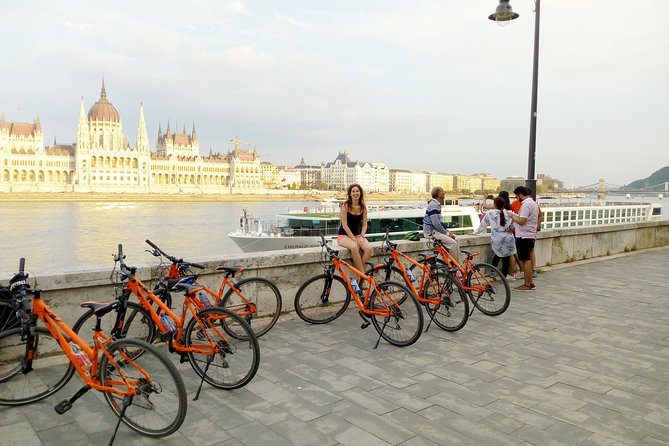
At $41.13 for about 3 hours 30 minutes, this tour is priced like a smart “get-your-bearings-fast” experience rather than a museum day. The value is in the mix: a live guide, a bike waiting for you, and enough sight stops to cover a big slice of central Budapest without spending half your trip on transport and walking.
You also get a few practical perks that matter when you’re moving across town: helmet (included even if it’s not required), bottled water, and free luggage storage while you ride. That last one is underrated. Dropping bags before you start helps you travel lighter and keeps you from dealing with lockers and awkward storage windows mid-tour.
What’s not included is just as important. There are no building entry fees baked in, and several stops explicitly note no interior visit. So if you’re the type who wants to go inside every landmark, you’ll need a second plan for tickets. For everyone else, the outside views still deliver plenty—especially with a guide who explains what you’re looking at.
You can also read our reviews of more tours and experiences in Budapest.

Meet Your Bike and Set the Pace in Madách Imre út
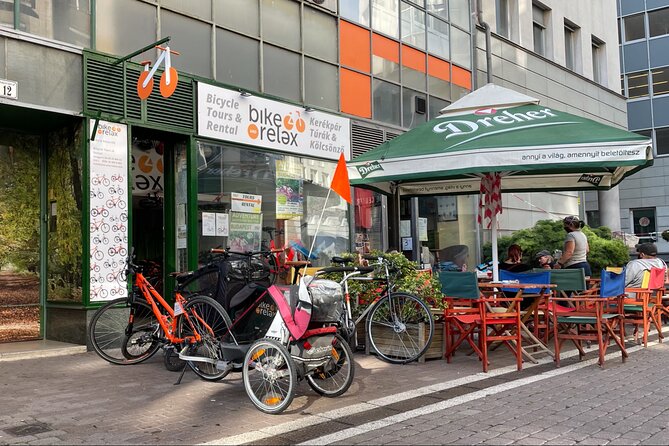
The tour starts at Budapest, Madách Imre út 12, 1075 at 10:30 am, then returns to the same place. The meeting spot is near public transport, which makes it easier if you’re arriving from elsewhere in the city that morning.
You’ll begin at Bike & Relax, where you effectively get a clean start: bikes ready, gear sorted, and a quick reset so you can focus on riding instead of hunting for your rental. Reviews I saw were consistent on one thing: guides work to keep everyone together. People specifically praised the safe, patient pace and the way guides waited so nobody got left behind.
Now for the reality check: this is not recommended for beginners. Even though a lot of the route is workable, you’re still riding through a real city with traffic. One review noted bike lanes that overlap with car lanes, and that can feel a little harrowing if you’re newer to cycling. If you’re nervous, consider pushing your own comfort level first—short practice rides at home, or a slow start with the group.
Rumbach Street Synagogue to Liszt Academy: Street Art Meets Art Deco
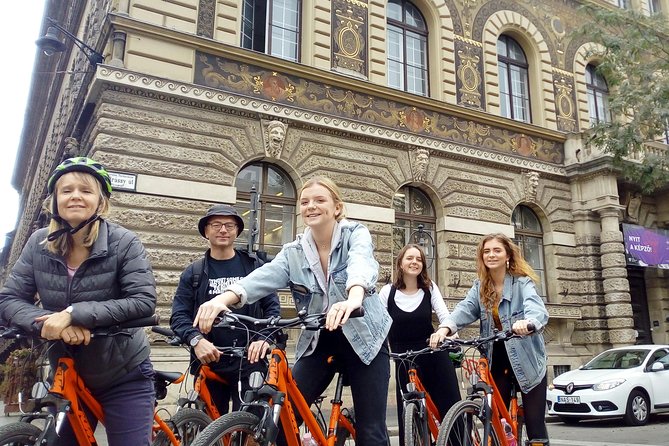
Right after you start, you’ll roll into the Jewish District area for a quick stop at Rumbach Street Synagogue. You’re not going inside, but you’ll get the visual contrast Budapest does so well—street-level creativity like street art, paired with the art deco look of the synagogue from the outside.
A few minutes later comes Liszt Academy (the Music Academy). Again, it’s a look-from-the-street moment, but it’s a good one. You’ll see the architecture right next to the Jewish Quarter and hear what’s happening there: students studying classical music, and performance spaces nearby. For me, stops like this are where a bike tour beats a bus ride—you feel the neighborhood as you pass through it, not just from a window.
Drawback to expect here: since you’re not entering, the payoff is mostly interpretation. If you love learning the story behind details—facades, street layout, why buildings are where they are—this portion will feel satisfying. If you prefer hands-on access, you might wish for more indoor time.
The Long Straight to Heroes’ Square: Andrássy Avenue Energy
This is where Budapest flexes its “grand boulevard” style. You pass along the famous street linking the city center toward Heroes’ Square and City Park. The route takes you past landmarks like Nagymező Street (often described as the Broadway of Budapest) and Liszt Square, then onward into the Ring Road area.
You’ll also pass the House of Terror area without entering it, which sets you up for the next stop. Seeing it from the street first helps, because the guide can put the building’s history into context before you look more closely at the surrounding features.
Then you arrive at Heroes’ Square, one of the most photo-friendly points in town. The guide frames it around its 1896 1000-year anniversary design. Even if you don’t know Central European history yet, the explanation gives you a way to connect the statues and symbolism to the bigger story—King Stephen, then the later revolutionary arc tied to Kossuth.
You’ll likely spend about 15 minutes here. That’s a good amount of time for getting oriented, grabbing photos, and understanding what you’re looking at—without turning the whole tour into a slow standstill.
House of Terror and Szabadság tér: Learning the Hard Parts Outside
Two major “memory stops” land on this ride, and they’re handled with a practical approach: you view and learn rather than pay admission.
First up is the House of Terror Museum area. It’s described as a former GESTAPO headquarters and a communist-era prison—now a museum. You won’t enter, and the guide keeps it oriented on what the place represents. There’s also a specific visual detail to notice: the description includes part of the Berlin Wall shown in front of it. Even without entry, that kind of reference gives your brain something concrete to hold onto.
Next you reach Szabadság tér. Here you get a different kind of stop: one side has the feel of “Wallstreet” style, and the other side is tied to bloody 20th-century history, including memorials connected to the Holocaust and World War II in Budapest. Again, you won’t enter anything—but you do get guided interpretation of the memorials and what they mean.
If you’re sensitive to heavy topics, it helps that these moments are short and guided. You’re not stuck in a long indoor exhibit with nowhere to go; you’re biking, moving, and processing with the group.



City Park Break: Ice Rink, Boating, and the Big Park Feel
After the central sights, you transition into City Park (Városliget). The tour notes that park time connects to seasonal Budapest life: in winter you might see a well-known ice rink area; in summer, there’s an artificial lake that invites boat trips. You won’t be spending a whole day there, but you’ll get that important shift from “downtown monuments” to “big open space.”
You’ll also get time at Városliget/City Park itself—about 10 minutes—where redesigning is underway, but the park remains a popular place for leisure, recreation, and sport. That matters because Budapest’s parks are more than postcard scenery. They’re where locals breathe.
Then come a sequence of City Park landmarks that are easy to appreciate from the street without entry:
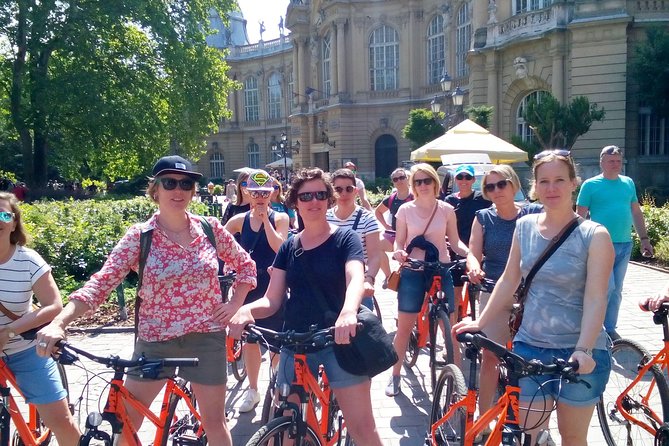
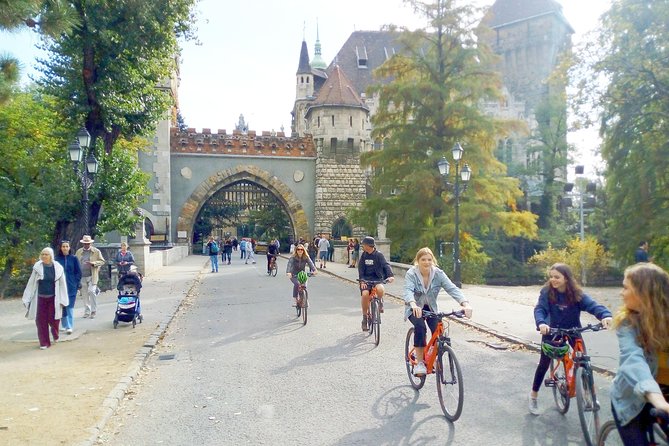
- Vajdahunyad Castle: described as a “fake castle,” and that’s the point. You’ll stop to understand why it exists in this form and why it still feels so memorable. There’s also mention of a statue of Anonymous.
- House of Music Hungary: modern architecture in the park, including a concert hall in a distinctive style.
- Museum of Ethnography: another architectural highlight near the park edge, noted for its unique shape and spectacular views.
These stops give you variety: old-and-imagined medieval styling (Vajdahunyad), modern culture architecture (House of Music Hungary), then another contemporary-looking landmark (Ethnography Museum). It’s the kind of contrast that makes Budapest feel like it’s changing even when you’re standing still.
Hungarian State Opera to St. Stephen’s Basilica: Outside Classics on Andrássy
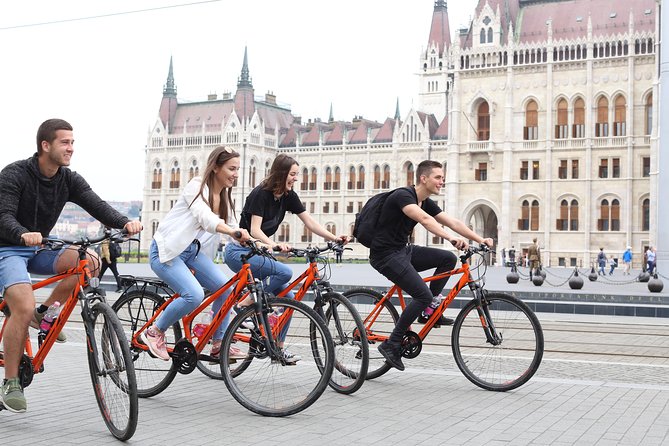
Back toward the showpiece streets, you’ll reach Hungarian State Opera on Andrássy Avenue. You won’t enter, but you’ll see why it’s such a famous facade: it’s tied to architect Michael Ybl, and Andrássy Avenue itself is described as UNESCO protected as a whole ensemble. The guide also explains late 19th-century architectural styles and connects it to the historical M1 subway line.
It’s worth setting expectations: the stop is about 10 minutes, so you’ll get orientation plus highlights—not a full architectural lecture.
Then you’ll reach St. Stephen’s Basilica (Szent István Bazilika). You won’t go inside, but you’ll see a key feature the tour description calls out: the right hand of St. Stephen displayed under glass. Even from the outside, a renovated basilica feels like a “reset button” after earlier memorial sites.
Parliament, Danube Shoes, and Chain Bridge: The Danube Part You Can’t Miss
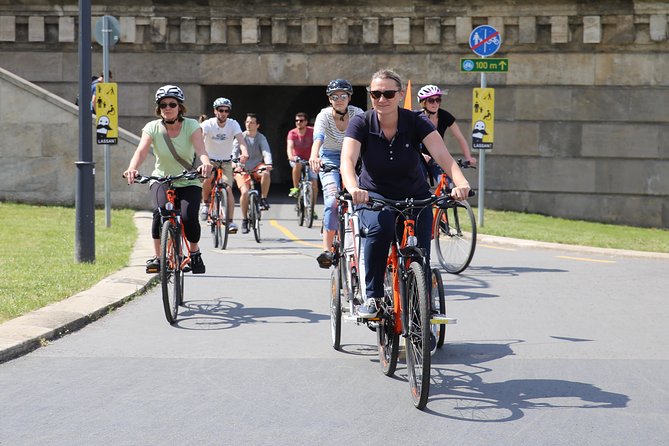
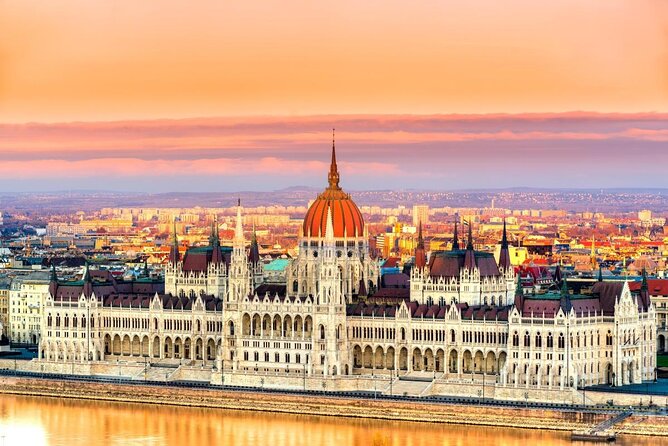
One of the best parts of riding a bike here is that the city’s geometry becomes obvious. You’re moving, so the river relationship snaps into place. You’ll stop for the Hungarian Parliament Building—a key landmark on the river bank. You won’t enter, but the tour highlights that it’s been beautifully renovated and is very much a must-see. You’ll also get a panorama moment as you turn around to look across toward Buda.
Next is the Shoes on the Danube Bank. This is the kind of memorial that lands harder when you know what you’re looking at, and the guide helps you frame it. The tour also notes a practical detail: depending on traffic, direct access can’t always be granted. So don’t assume you’ll be able to step right up to the edge if conditions are tight.
You’ll also pass the Chain Bridge—another essential piece of the Budapest skyline. Even if you’ve seen it in photos before, the sight from the bike lane gives you a better sense of scale and the way the bridge channels street flow.
Liberty Bridge, Rudas, Gellért, and the “You’re Really in Budapest” Feeling
As you continue across toward Buda-side sights, you’ll pass Rudas Baths, described as one of the oldest Turkish baths in Budapest. You won’t enter here either, but the tour points out something useful if you want to add baths later: there are man- and woman-days for the Hammam, so you need to check the schedule.
Then the tour’s last Buda-side stop is at Gellért Baths. These baths are known for their art-deco style, described as dominating the river bank, which makes them easy to spot from the waterline.
You’ll cross at Liberty Bridge (Szabadság hid). This bridge is described as originally named after Austrian Emperor Franz Joseph, then renamed after the monarchy ended. It’s also a hangout point for students and youth looking for views. That “people watching” element matters: it’s not only architecture; it’s the city’s current life.
Central Market Area: Where to Eat Next (Without Waiting All Day)
The route passes by Central Market, and this is a strong strategic suggestion: if you want Hungarian food, you’ll want to return later and go hungry. Since the tour doesn’t include meals or sit-down breaks built around specific restaurants, treating Central Market as your next step keeps your day efficient.
The tour also mentions you pass the National Museum, with a nod that it’s worth visiting if you want deeper interest in regional history and the peoples who lived here.
Synagogue Look-Outside Finale: Great Synagogue at the Jewish Quarter Border
Near the end, you’ll stop to see the Great / Central Synagogue (Nagy Zsinagóga) at the border of the Jewish Quarter. You’ll look at its Moorish style facade from outside, but you won’t enter. From here, you’ll return to the starting point.
This works as a wrap-up because it ties the earlier Jewish District streets to one major icon. You get visual continuity across the ride rather than random stops scattered with no theme.
Guides, Safety, and Bike Comfort: What Makes the Difference
The standout pattern from the experience is the guide. Names like Oliver, Tomas, Valentin, Katalin, Karol/Karoly, Balint, and Dori show up in praised reviews, and the themes are consistent: safe guidance, clear historical commentary, and a pace that keeps the group together.
Practical tip from what people learned the hard way: if you’re riding in windier conditions, plan for it. One piece of advice I’d follow is to wear layers and bring gloves and a hat. Riding makes you feel cooler than standing still, even if the day seems warm.
Also, traffic matters. Budapest bike lanes can be good, but you’re still sharing space at times. A review noted that traffic can be intense but manageable. If you’re sensitive to that, think about timing. One person specifically mentioned booking a weekend for potentially less car traffic.
Who Should Book This Tour (and Who Might Skip It)
This tour is a great fit if you want:
- A fast overview of Budapest’s top sights in one morning
- Guided context that connects monuments to stories
- A bike-friendly way to avoid the “heat + walking fatigue” problem
- A route that balances architecture, memorial stops, and park landmarks
It’s less ideal if:
- You’re a beginner rider or uncomfortable in city traffic
- You need visual access that goes beyond outside viewing (the tour is not built around museum-style entry)
- You want lots of indoor time with tickets and long stays inside buildings
One more note: the tour sets boundaries for comfort and safety, including a 110 kg weight limit and it being not recommended for people with visual impairment.
Should You Book This Budapest Historic Downtown Bicycle Tour?
I’d book it if you’re doing Budapest for the first time and want a structured way to see major sights without locking yourself into museum tickets. The value is strong for the price: you’re buying a short window of time where a guide helps you understand what you’re seeing, while the bike gets you between neighborhoods with less friction than walking.
I’d hesitate only if you’re expecting entry tickets. This is a “look-and-learn” tour, not an “I went inside everything” tour. If that matches your style, this one is a smart choice—and it leaves you with a clear list of where to return later on your own, whether it’s Central Market for food or specific buildings you want to experience from the inside.
FAQ
What’s the duration of the Budapest Historic Downtown Bicycle Tour?
It runs for about 3 hours 30 minutes.
What time does the tour start?
The start time is 10:30 am.
Where do I meet the tour?
Meet at Budapest, Madách Imre út 12, 1075 Hungary.
How big is the group?
The tour has a maximum of 10 travelers.
Is the tour beginner-friendly?
It is not recommended for beginners.
Are entrance fees included?
No. You do not enter buildings, and admissions are not included.
What’s included in the price?
You get bicycle use, a live guide, a helmet (not obligatory), free luggage storage during the tour, and bottled water.
What’s the cancellation rule?
You can cancel for a full refund up to 24 hours before the experience starts. If you cancel less than 24 hours before, the amount paid isn’t refunded.
FAQ
Do I need to print a ticket?
No. You’ll receive a mobile ticket.
Is the tour offered in English?
Yes, it’s offered in English.
Is the tour near public transportation?
Yes, it’s near public transportation.
Is there a weight limit?
Yes, the weight limit is 110 kg.