REVIEW · COPENHAGEN
Copenhagen & Christiania : Guided Bike Tour in French
Book on GetYourGuide →Operated by Mercure · Bookable on GetYourGuide
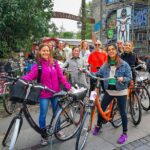
Copenhagen by bike feels like local life. This French-guided ride turns into a story of how Copenhagen works, with Hamid steering you from grand landmarks to Christiania.
I love the social-and-urban lens. You don’t just stop for photos—you learn how Denmark’s welfare model shapes the city and everyday life. I also love the bike-bridge route and practical pacing, with a small group (max 10) and lots of chances for questions and quick photo breaks.
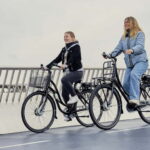
One consideration: you need to bring your own bike and be comfortable cycling. Bikes and helmets aren’t provided, and helmets are only recommended, not included.
In This Review
- Key things you’ll appreciate on this ride
- Meeting at Copenhagen Visitor Service: fast start, clear handoff
- Why Copenhagen’s welfare model belongs on a bike tour
- City Hall to Christiansborg: power buildings and planning lessons
- Blox, Lille Langebro, and the church views: where new design meets old streets
- Freetown Christiania: street art, alternative lifestyle, and bike-smart behavior
- Inderhavnsbroen and Nyhavn: two classic viewpoints, two different vibes
- King’s New Square, Marmorkirken, and Amalienborg: icons with quick context
- Gefion Fountain to the finish at the Little Mermaid
- What you really get for $53: value isn’t just the sights
- Bike rental reality (and the one mistake to avoid)
- Timing and pacing: who the 4-hour loop is built for
- French-speaking guide: why language matters here
- Should you book this Copenhagen & Christiania guided bike tour?
- FAQ
- Do I get a bicycle and helmet with the tour?
- Where do I meet the guide?
- How long is the Copenhagen & Christiania bike tour?
- Is the tour in French?
- How many people are in the group?
- Do I need prior cycling experience?
- What should I know about renting a bike?
- What is the cancellation policy?
Key things you’ll appreciate on this ride
- French guide who explains the city’s “why,” not just the “what”
- Christiania + mainstream Copenhagen in one smooth loop
- Newer bicycle-bridge crossings for a more modern feel of the city
- Photo stops timed for the big sights like Nyhavn and the Little Mermaid area
- Small group size (10 max) so the ride stays friendly and question-friendly
- Teenagers get a half-price discount, so it can be a smart family add-on
Meeting at Copenhagen Visitor Service: fast start, clear handoff
You’ll meet at the Copenhagen Visitor Service in the Axelborg building, right across from the main entrance of Tivoli Gardens, and next to the SAS Radisson Collection Hotel. It’s easy to spot once you know what you’re looking for: your guide wears a distinctive hat or cap and meets you inside if the office is open, or outside if it’s closed. There’s also a bakery right at the meeting point, which is handy if you want a coffee and a quick snack before you roll.
This matters because bike tours in Copenhagen depend on momentum. If everyone finds the meeting point smoothly, you lose less time and you start seeing more. With a 4-hour duration, those early minutes count.
You can also read our reviews of more tours and experiences in Copenhagen.

Why Copenhagen’s welfare model belongs on a bike tour
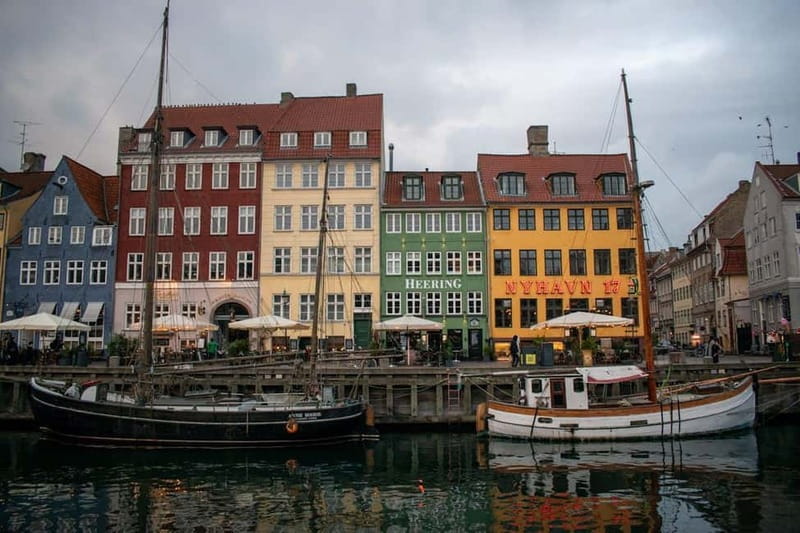
Copenhagen can look like a postcard from street level. But this tour uses biking as the delivery system for something deeper: the Danish social welfare model and how it influenced urban planning and everyday life. That kind of explanation changes how you read what you’re seeing.
Instead of treating the city as a set of monuments, you start connecting the dots: who the city is designed for, how public space works, and why you keep seeing cycling-friendly choices. Hamid’s style, from what I’ve seen from past participants, is also built for understanding—friendly humor, clear historical context, and a focus on how the country thinks about community.
This is one reason reviews rate this tour so highly. People don’t come away with only landmark names. They come away with a framework for what Copenhagen is doing and why.
City Hall to Christiansborg: power buildings and planning lessons
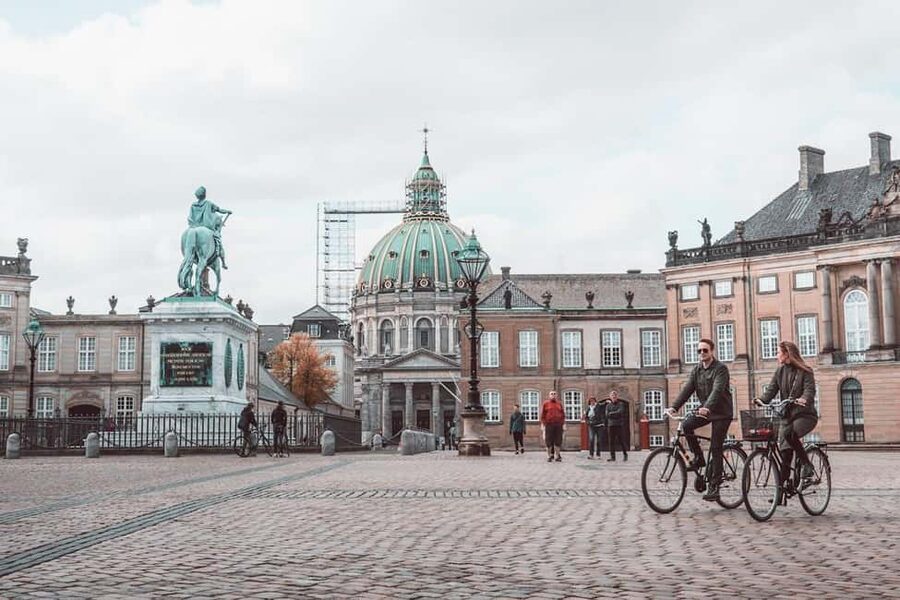
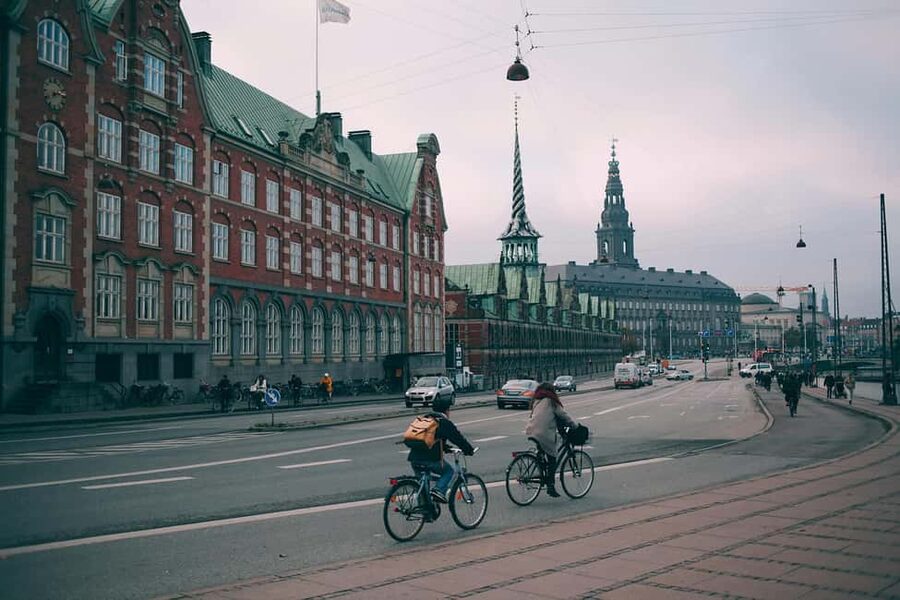
The ride kicks off with a sightseeing stop at Copenhagen City Hall. Even if you don’t linger long, it’s the right first anchor: it sets the tone of governance and civic identity in a city that’s known for practical public systems.
From there, you pass Christiansborg Palace. You’re not meant to turn this into a museum day—think of it as getting your bearings. Seeing it from the bike lane gives you scale and location faster than any map study. Then you move toward the next anchor, Copenhagen Stock Exchange, where there’s another sightseeing moment.
Why these stops work: they’re the “official Copenhagen” side of the story. Then later, you’ll get the “people Copenhagen” side when you head into Freetown Christiania.
Practical reality check: some landmarks on this route are sightseeing stops, while others are pass-by. If you want long indoor visits, plan to add those separately.
Blox, Lille Langebro, and the church views: where new design meets old streets
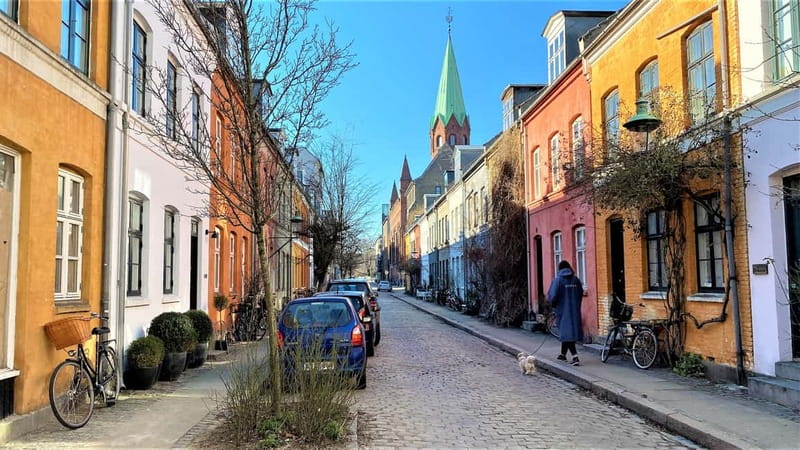
You’ll pass Blox, Copenhagen. That’s a modern stop that gives you contrast—Copenhagen isn’t stuck in one era. After that, you’ll hit Lille Langebro, another sightseeing stop, and this is where the “new bicycle bridges” idea starts to feel real. Copenhagen’s bike infrastructure isn’t just paint on asphalt. It’s engineering. Riding those crossings changes your perspective fast: you feel how the city routes cyclists around water and traffic.
Next up, you pass Church of Our Saviour. You get a look from the saddle rather than a slow climb on foot, which is exactly what you want for a ride that also includes Christiania and multiple canal-side photo moments.
If you like city geometry, this part of the tour delivers. You’re moving through the places where bike infrastructure, architecture, and waterfront access intersect.
Freetown Christiania: street art, alternative lifestyle, and bike-smart behavior
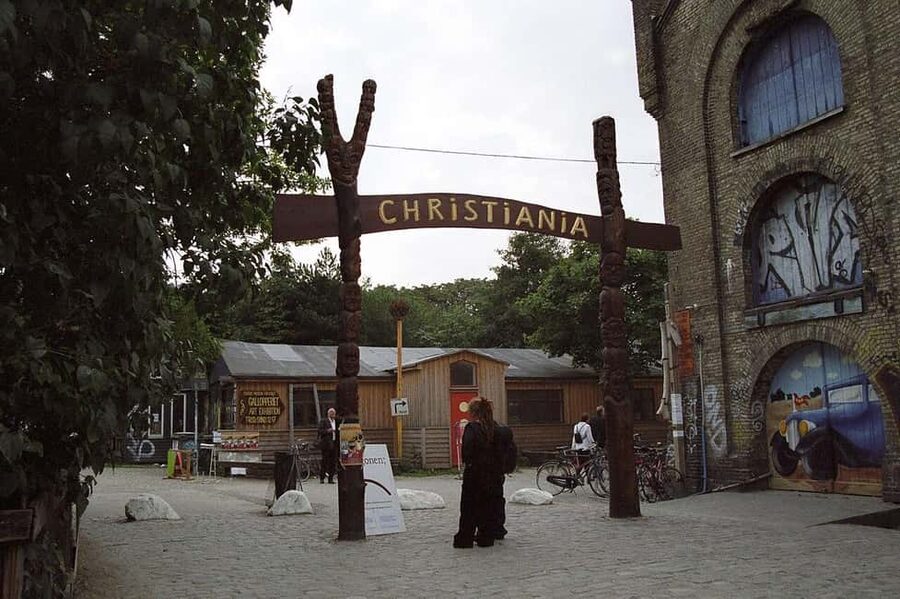
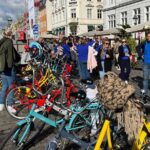
The tour then heads into Freetown Christiania, an autonomous neighborhood known for colorful street art and an alternative lifestyle. This is the stop that turns the “city explanation” into something hands-on.
Because the tour guides you through it as part of a larger route, you’re not stuck waiting around in a single area. The goal is to see how different Copenhagen can be within a single ride, and to understand the concept of spaces that operate outside typical routines.
A couple of practical tips for this portion:
- Keep your eyes up for pedestrians and slower walkers, since this is an area people explore on foot.
- Ride calmly. This isn’t a “race to the next photo” segment—it’s a “look, learn, and respect” segment.
From reviews, Hamid’s approach seems to help a lot here. People feel they come away understanding context rather than just snapping pictures.


Inderhavnsbroen and Nyhavn: two classic viewpoints, two different vibes
After Christiania, you’ll get a photo stop at Inderhavnsbroen. The value here is timing: a bridge stop gives you skyline angles and movement without asking you to dismount for long. It’s also a good reset after the Christiania experience.
Then you hit Nyhavn for a photo stop and pass-by segment. Nyhavn is one of those Copenhagen names you’ll hear constantly, and you’ll understand why once you see it from the bike. The canals and waterfront atmosphere read differently when you’re cycling beside them instead of watching from a single spot.
Important tradeoff: because it’s a photo stop and pass-by, you won’t have hours to wander alleys or pop into cafés. If you want that, plan a follow-up walk when the tour is done.
King’s New Square, Marmorkirken, and Amalienborg: icons with quick context
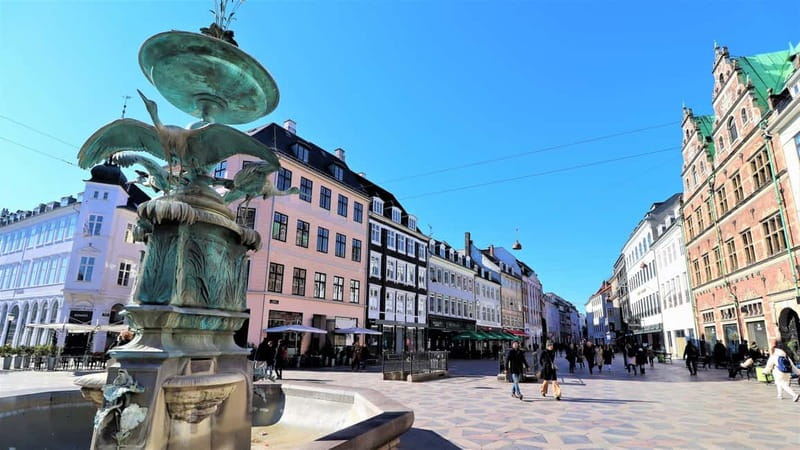
Next is King’s New Square, which includes a break time and photo stop. This is where the tour gives you a chance to breathe, grab water, and regroup without breaking the flow.
After that you’ll have a photo stop at Marmorkirken. It’s another “big-name” site, but the bike route helps you see the church in relation to the city around it—what it looks like in context, not only as a standalone postcard.
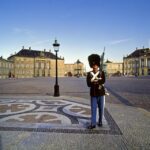
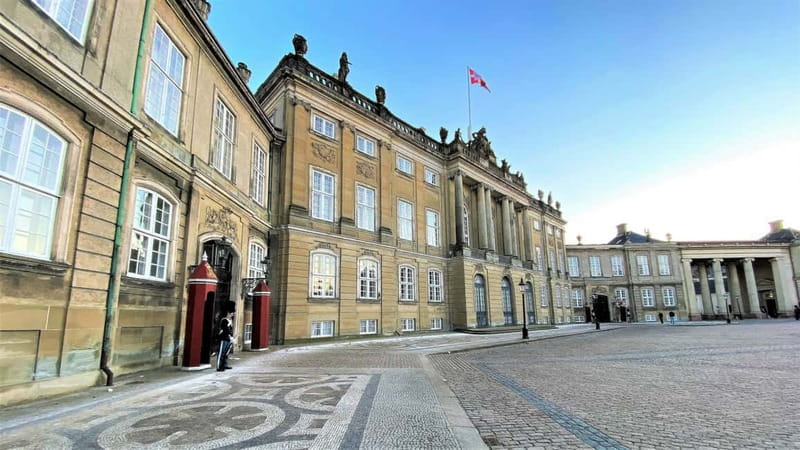
Then comes Amalienborg Palace. You’ll have a guided tour here, which is a step up from simple pass-by moments. For a 4-hour ride, it’s a meaningful inclusion: you get at least some guided interpretation at a place tied to national identity and ceremony.
As you bike through this final stretch, you’ll notice how the tour balances two types of experience:
- Quick landmarks that build your mental map fast
- A few guided moments that add meaning instead of just visuals
Gefion Fountain to the finish at the Little Mermaid
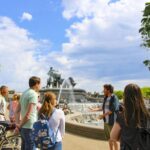
You’ll have a photo stop at Gefion Fountain, followed by the finish near The Little Mermaid. That ending is classic Copenhagen for a reason—it’s a known reference point, and it’s an easy place to branch out afterward.
The real benefit of finishing at a major landmark: you’re not stranded. Once you’ve seen the route, you can decide where you want to spend extra time—walk canals longer, revisit a bridge viewpoint, or continue exploring neighborhoods on your own.
Also, since the tour is on bikes you supply yourself, the finish point being a big “anchor” helps your next move.
What you really get for $53: value isn’t just the sights
At around $53 per person for a 4-hour French-language small-group ride, the value is about more than seeing Copenhagen from the bike saddle. You’re paying for:
- A guide who explains the city’s social and urban logic
- A planned route that hits major landmarks and Christiania without turning it into a full-day marathon
- A small group size (up to 10 participants) that keeps the experience human
A big cost lever is that the tour includes only the guide, not the bike or helmet. So if you rent a bike, your real total depends on that. But bike rentals in the city can be relatively straightforward, and you get to choose the bike that fits you rather than using someone else’s equipment.
If you’re traveling on a tight schedule, this is also a strong “first-day tool.” Reviews highlight that getting this kind of orientation early helps you choose what to explore later.
Bike rental reality (and the one mistake to avoid)
This is a bike tour where the bike situation is part of the deal. The operator doesn’t supply bicycles or helmets. The reason is practical: you’ll be happier on a bike that fits your body and riding style, and you save time because there’s no fiddly fitting session before you start.
You have a few options:
- Rent daily bikes from local shops or hotels; rentals start at €12.
- Bring your own bike (including a cargo bike or e-bike if you prefer).
One warning that matters for your budget: app-based rentals are discouraged because some providers issue fines if bikes are left in unauthorized locations. That kind of fine can erase any “cheap rental” savings instantly. If you do use an app rental anyway, be very strict about where you park.
And please take helmets seriously. Helmets are recommended, even though you won’t get one from the tour. With 4 hours in mixed urban traffic (and bridges), you want every safety advantage you can get.
Timing and pacing: who the 4-hour loop is built for
This tour runs for 4 hours and requires prior cycling experience. It’s not suitable for people who can’t ride a bike. That’s not a small detail—it’s the foundation.
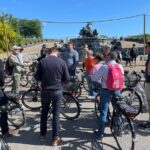
It’s also built for people who like a guided structure but still want room for photos, short breaks, and questions. Since the group stays small, your guide can adjust explanations if someone’s asking a lot.
Based on feedback, it’s especially good on an early trip day. You’ll come out with:
- A fast mental map of Copenhagen
- Clear sense of which neighborhoods feel interesting for a return visit
- A better understanding of Denmark’s approach to public life
If you prefer slow travel with long museum stops and long cafés, you’ll probably want a different kind of day. This ride is about movement and context, not lingering.
French-speaking guide: why language matters here
The tour guide speaks French. If you’re not comfortable in French, you might still pick up plenty from visuals, but you’ll miss a key part of the experience: the social-and-urban commentary and the city history connections.
Where language shines on this tour is exactly where people praise it—clear explanations, humor, and a solid grasp of Copenhagen and Denmark. That mix makes the route more than sightseeing. It becomes a guided way to understand how Denmark runs.
Also, it helps that the guide’s vibe is described as welcoming and attentive. You’re more likely to feel like a person in the group rather than a passenger being rushed past stops.
Should you book this Copenhagen & Christiania guided bike tour?
Book it if:
- You ride confidently and want a structured orientation to Copenhagen.
- You like explanations that connect architecture, policy, and everyday life.
- You want Christiania on the same day as classic Copenhagen sights like Nyhavn and the Little Mermaid area.
Skip it if:
- You don’t ride yet or you’re uncomfortable in bike traffic.
- You were hoping the tour would provide bikes and helmets.
- You want long indoor time at every major landmark. This route is built around movement and short stops.
If you’re staying only a few days, I’d treat this as a day-one or day-two plan. The fastest way to make the rest of your trip feel smarter is to get oriented with a guide who can explain the city’s “why.”
FAQ
Do I get a bicycle and helmet with the tour?
No. The tour includes only the guide. Bikes and helmets are not provided.
Where do I meet the guide?
Meet at the Copenhagen Visitor Service in the Axelborg building, directly across from the main entrance of Tivoli Gardens and adjacent to the SAS Radisson Collection Hotel.
How long is the Copenhagen & Christiania bike tour?
It lasts 4 hours.
Is the tour in French?
Yes, the live tour guide speaks French.
How many people are in the group?
The group is small, limited to 10 participants.
Do I need prior cycling experience?
Yes. This tour requires prior cycling experience and you need to bring your own bike. It is not suitable if you can’t ride a bike.
What should I know about renting a bike?
You can rent daily bikes from local shops or hotels (starting at €12). App-based rentals are discouraged because some providers issue fines if bikes are left in unauthorized locations.
What is the cancellation policy?
You can cancel up to 24 hours in advance for a full refund.