REVIEW · JOHANNESBURG
Guided Bicycle Tour of Soweto with Lunch
Book on Viator →Operated by One Day Africa · Bookable on Viator
Pedal through Soweto’s story in half a day. This guided bike tour links apartheid landmarks like Vilakazi Street to the neighborhoods where people lived, while staying close to everyday city streets. I love that you cover more ground than walking, and I love the traditional kota sandwich lunch that keeps your energy up.
One consideration: Soweto has hills, so even if the bikes have gears on many days, you may still work up a sweat on steeper stretches.
In This Review
- Quick hits before you pedal
- Cycling Soweto from Orlando West: why this format works
- Price, time, and what $45.70 actually buys you
- Bikes, helmets, and the hill reality check
- Phomolong: how apartheid shaped families, then and now
- Mzimhlophe women’s hostel: domestic workers and forced distance
- Nkungu Street and Mama Lillian Mgoyi’s home
- Hector Pieterson Museum and Memorial: the 1976 uprising in context
- Orlando Stadium: from 1959 roots to today’s scale
- Mandela House and Vilakazi Street: the Nobel Peace Prize street
- Biking around the township: the in-between moments matter
- Orlando Police Department: city institutions behind the scenes
- Lunch with a kota sandwich: fuel, comfort, and local flavor
- Guides and the difference between a ride and a story
- Who should book this Soweto bicycle tour (and who might not)
- Should you book this Soweto bicycle tour with lunch?
- FAQ
- How long is the Guided Bicycle Tour of Soweto with Lunch?
- What’s included in the $45.70 per person price?
- Are entrance fees included for all stops?
- Where does the tour start and end?
- Do I need to arrange pick-up or drop-off?
- What is the cancellation policy?
Quick hits before you pedal

- Vilakazi Street with Mandela and Tutu connections: one road, two Nobel Peace Prize winners
- Women’s history is front and center: domestic workers and anti-apartheid leadership
- Hector Pieterson Museum and Memorial: a key stop for understanding the 1976 uprising
- Orlando’s football and community heartbeat: Orlando Stadium’s big story and big scale
- A real lunch break: a deep-filled kota sandwich plus bottled water
Cycling Soweto from Orlando West: why this format works
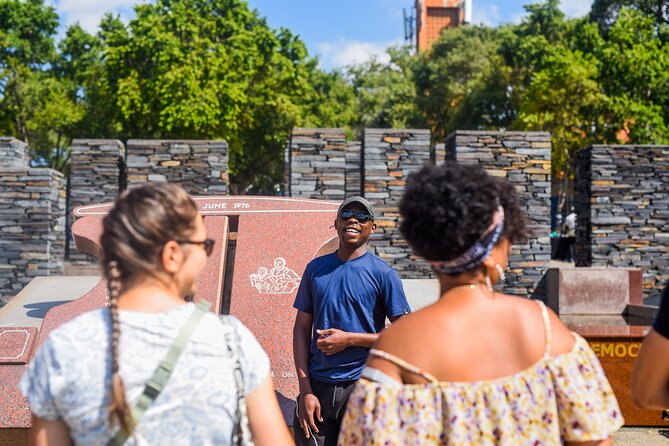
Soweto can feel far away in the mind, but on this tour it’s much more reachable. You ride with a local guide, and the route keeps you close to the city’s main streets so you’re not stuck in only one “photo spot” view.
The bicycle format is the real win. In about four hours, you get to see multiple neighborhoods and landmark sites in a way that beats a slow walking pace. It also means you’re moving at a human speed—enough time to talk, ask questions, and absorb what you’re seeing.
You can also read our reviews of more tours and experiences in Johannesburg.

Price, time, and what $45.70 actually buys you
This tour costs $45.70 per person and lasts about 4 hours. For that price, you’re getting a guided experience plus the practical stuff: bicycle, helmet, bottled water, and lunch (a kota sandwich).
That lunch detail matters more than it sounds. When you’re riding hills, you need real calories, not just a drink and a cookie. You’ll be eating during the tour, not after you’re already drained, which keeps the whole day from turning into a hangry scramble.
Two things to plan for outside the price:
- Mandela House has an entrance fee (R60), and it’s not included.
- Some other stops list admission as not included, so you’ll want a bit of cash or card ready in case your day includes paying entries.
Pick-up and drop-off aren’t part of the deal, either. You’ll start and end at 7346 Kumalo St, Orlando West, Johannesburg, so plan your arrival so you’re not late and stressed.
Bikes, helmets, and the hill reality check
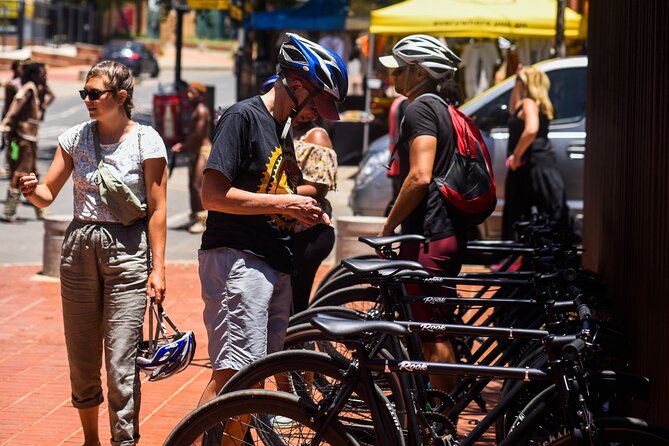
Bikes and gears are the topic that comes up most often. Many rides are described as having upgraded bikes with gears now, which makes the hills more manageable. Still, expect hills in Soweto. Even a geared bike won’t turn steep climbs into an easy stroll.
Also, the ride is guided for safety, and the group stays together—so you’re not out there navigating alone. You’ll still want to bring your common sense: go at the pace your guide sets, and don’t try to sprint up every incline.
My practical tip: if you know you get uncomfortable on climbs, wear proper closed-toe shoes and bring a cap. One review specifically called out sunscreen and a cap, and I agree—that sun can be stubborn, even when you’re moving.
Phomolong: how apartheid shaped families, then and now
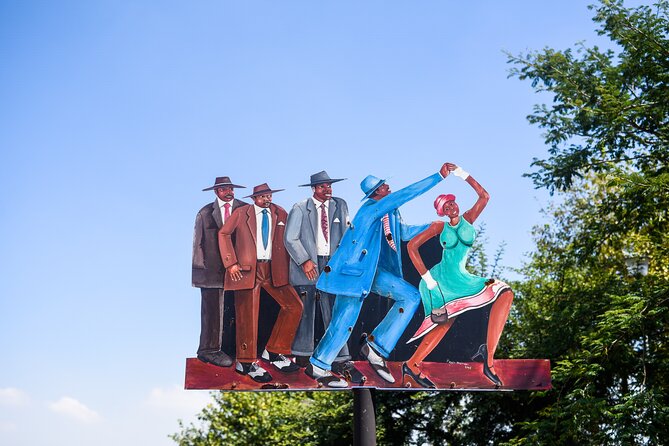
The tour starts with stories in Phomolong, where you’ll hear how apartheid affected different generations within households. This is the part that sets the tone: you’re not just collecting names and dates—you’re learning how policy shows up in everyday life.
What I like about this stop is that it frames change as more than political slogans. You’ll hear about impact across families, then what Soweto looks like today. The goal here is perspective: the places you see are connected to people’s lived timelines.
Potential drawback: because this is an early stop (and it’s the first time you’re getting oriented), you’ll want to stay focused even if you’re still waking up. If you miss the first few minutes, the rest of the tour can feel like separate attractions instead of one story.
Mzimhlophe women’s hostel: domestic workers and forced distance
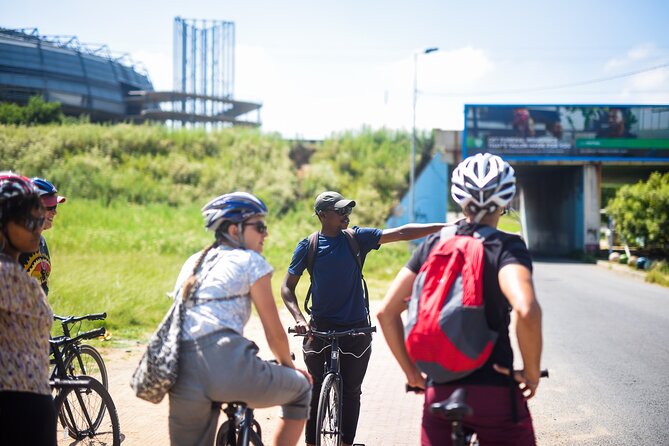
Next comes Mzimhlophe, the former women’s residential hostel tied to domestic workers who worked in Johannesburg’s suburbs. Even if you’ve read about apartheid before, this stop helps it click in a more human way.
It’s one thing to hear about discrimination as a system. It’s another to understand the housing and separation that came with it—where working women stayed, how long they lived away from home, and what it meant to move through apartheid-era rules.
This stop also helps you notice something important about the tour overall: it doesn’t only focus on famous leaders. It spends time on the women who carried daily life and pushed back in their own ways.
Nkungu Street and Mama Lillian Mgoyi’s home
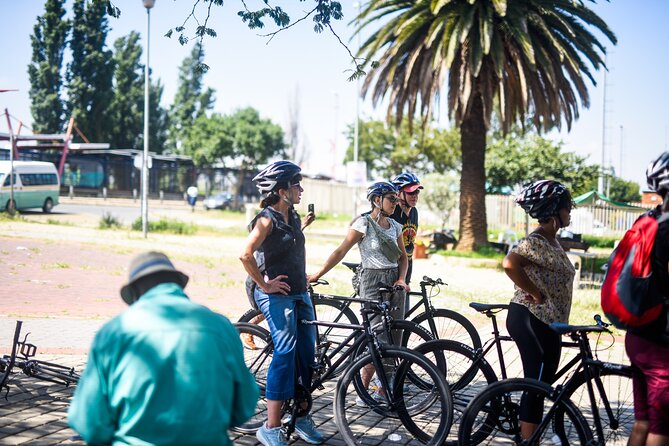
Nkungu Street is where the tour turns sharply toward women’s activism. You visit Mama Lillian Mgoyi’s home, and you learn about her role as an anti-apartheid activist and President of the Women’s League.
One of the most striking parts here is her connection to the women’s march of 20,000 women to the Union Buildings in Pretoria. It was a protest against apartheid pass laws that required women to carry passbooks. That detail gives weight to what you might otherwise file under a general anti-apartheid narrative.
Time here is short, so keep your questions ready. If you want to understand how leadership roles translated into real action, this is the moment to ask.
Hector Pieterson Museum and Memorial: the 1976 uprising in context
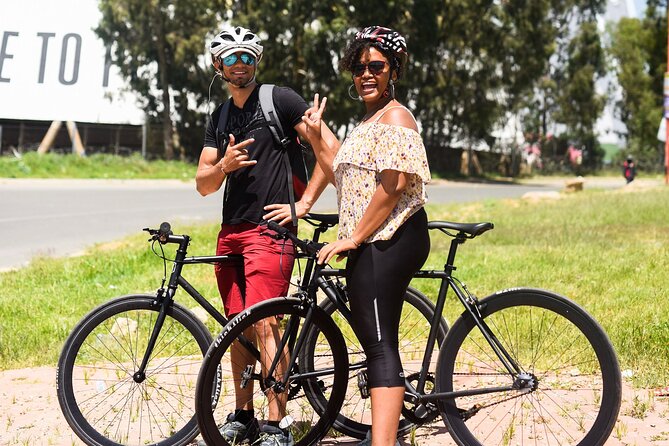
At the Hector Pieterson Museum and Memorial, you focus on the youth uprising connected to 1976. This is one of the sites that most visitors find emotionally heavy, and the tour’s value is how it doesn’t leave you alone with only a memorial feeling—it helps you connect it to the bigger apartheid timeline.
Expect around 30 minutes here. That’s usually enough time to take in the memorial space and hear the guide’s explanation without turning it into a rushed checklist.
Practical note: museums and memorials often make you slow down. If you’re sensitive to crowds or emotion-heavy spaces, give yourself permission to take breaks and breathe between sections.
Orlando Stadium: from 1959 roots to today’s scale
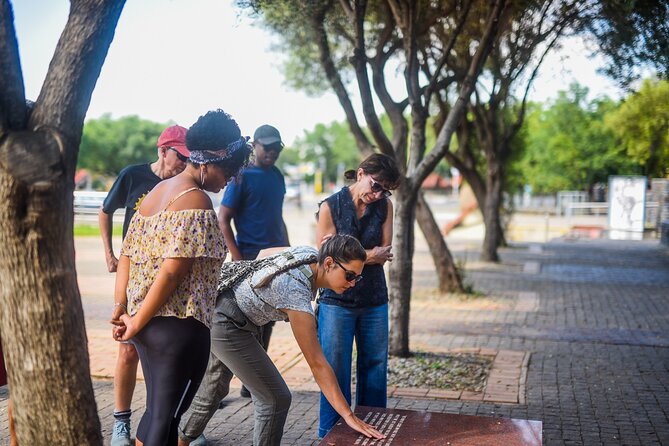
Orlando Stadium is a major stop because it isn’t just a sports venue—it’s described as the heart of Soweto. The story starts in 1959, when the stadium was originally built, then shifts to the modern era after it was demolished and rebuilt from scratch.
The rebuilt stadium cost R280 million, and it now holds a capacity crowd of 37,139 spectators. It also includes features like hospitality suites, open hospitality areas, conference rooms, a gymnasium, and a 200-seater auditorium. Even if you’re not a die-hard football fan, that’s a lot of infrastructure, and it hints at how community life and public pride can grow in the post-apartheid era.
Two things to consider:
- Admission at this stop is not included.
- The stadium area is large, so you’ll want good footing shoes if you plan to walk around more than the group path.
Mandela House and Vilakazi Street: the Nobel Peace Prize street
Mandela House and Vilakazi Street are part of the same theme: the people who became symbols, and the neighborhoods where they were tied to daily life.
At Mandela House, the famous residence of Nelson Mandela is the focal point. Plan for the entrance fee (R60), since it’s not included in the tour price.
Then you’ll ride to Vilakazi Street, where two Nobel Peace Prize winners lived: Nelson Mandela and Desmond Tutu. This street stop is powerful because it turns history into geography. You’re not only hearing about global figures—you’re standing in the line of place names and streets that shaped how their stories became public.
Time here is about 40 minutes, which gives you enough room to read, listen, and take in the street atmosphere without feeling trapped on a tight loop.
Biking around the township: the in-between moments matter
There’s also time set aside for biking around the township itself. This part is crucial, because it’s where you see how the neighborhood functions beyond the headline stops.
Even if the guide is talking most of the time, you’ll notice small everyday patterns: movement, greetings, and how locals react to you cycling through. Several guides are praised for creating a friendly, respectful tone on the ride, and that makes a difference in how comfortable you feel.
This is also where the group format helps. A small group size (maximum 15 travelers) means your guide can manage the route while also checking in on how everyone is doing.
Orlando Police Department: city institutions behind the scenes
Toward the later part of the tour, you’ll pass through the Orlando Police Department area. The guide shares key background: the department was formed in 1875 and has evolved alongside the city’s needs.
The details provided are specific: it employs over 800 sworn officers and more than 150 civilian employees who serve citizens of Orlando through different functions. Admission here is not included, and the stop is brief (about 10 minutes).
I like this stop because it broadens the narrative beyond apartheid-era protests and memorials. It nudges you to see how institutions function now, not only how they failed before.
Lunch with a kota sandwich: fuel, comfort, and local flavor
Lunch is a built-in part of the tour, and it’s not an afterthought. You’ll get a traditional kota sandwich (listed as a local burger/kota) plus bottled water.
If you’ve never had a kota, the style is simple to recognize: it’s a deep-filled sandwich, usually packed enough to feel like a full meal. That matters on a bike tour because you’ll likely still ride after lunch and you don’t want your energy crashing mid-afternoon.
A small but real tip: eat like a cyclist. Go steady with the food, don’t rush it, and drink water. You’re going to be out in the sun and on hills, and lunch is your reset button.
Guides and the difference between a ride and a story
One reason this tour earns such strong ratings is the guides. Names that come up repeatedly include Thabo, Themba, Temba, Trent, and Mulalo. The pattern is consistent: guides explain the sites clearly and keep the group feeling safe and welcome.
I especially like how the guides connect the dots between places and people. You’re not only learning about Nelson Mandela and Hector Pieterson—you’re also hearing about figures like Desmond Tutu and the women who fought apartheid, including Lillian Mgoyi.
For many first-timers, that kind of explanation turns Soweto from a collection of landmarks into a coherent day of understanding.
Who should book this Soweto bicycle tour (and who might not)
This tour is a great fit if you want:
- A guided introduction to Soweto that covers multiple key sites in a half-day
- More ground than walking while staying close to the city streets
- A mix of political history and everyday neighborhood context
- A lunch that’s substantial enough to keep you going
It may be less ideal if:
- You hate hills or you need an easy pace with zero climbs
- You’re planning to skip entrances entirely, since Mandela House has a fee and some other stops also list admission not included
Most travelers can participate, but honestly, your comfort on climbs will decide how enjoyable it feels.
Should you book this Soweto bicycle tour with lunch?
If you want a practical, guided way to understand Soweto without turning the day into a rush, I’d book it. The combination of bicycle coverage, multiple meaningful stops, and a real kota sandwich lunch is strong value for the price.
I’d especially recommend it if it’s your first time in Johannesburg and you want context beyond the usual headline names. The stops on women’s activism and domestic worker history add depth, and Vilakazi Street gives you a clear, memorable connection between Mandela and Desmond Tutu.
Just go in with two expectations: the ride has hills, and a couple of entrances cost extra—so plan for the R60 Mandela House fee.
FAQ
How long is the Guided Bicycle Tour of Soweto with Lunch?
It runs for about 4 hours.
What’s included in the $45.70 per person price?
The tour includes bicycle and helmet, bottled water, and lunch (a kota sandwich).
Are entrance fees included for all stops?
No. Entrance fees are not included for Mandela House (R60), and some other stops list admission as not included.
Where does the tour start and end?
It starts at 7346 Kumalo St, Orlando West, Johannesburg, 1804, South Africa, and ends back at the meeting point.
Do I need to arrange pick-up or drop-off?
Pick-up and drop-off are not included, so you’ll need to get to the meeting point on your own.
What is the cancellation policy?
You can cancel for a full refund if you cancel at least 24 hours before the start time. If you cancel within 24 hours of the start time, the amount you paid is not refunded.