REVIEW · MARRAKESH
Marrakech: Cultural Bicycle Tour with Pastry and Tea
Book on GetYourGuide →Operated by Pikala bikes · Bookable on GetYourGuide
Cycling in Marrakech feels like street theater. This 3-hour cultural bike tour takes you from the medina to modern boulevards, with stops built around real daily life and artisan work. I especially liked how guides such as Rabab and Ayoub explain what you’re seeing in plain, human terms, not just dates and plaques.
Two things I genuinely like: the clay-oven bakery stop where you taste fresh Moroccan bread and learn why bread runs the rhythm of meals; and the zellige tile work, where craft details suddenly make sense when you see how those patterns get made. One drawback to plan for: the roads can feel chaotic at first, and you need to be road-aware—especially in the first stretch through narrow lanes.
In This Review
- Key highlights at a glance
- Starting at Pikala Bikes: the ride gets real fast
- Zawiya of Sidi Bel Abbas and the first photo-stop rhythm
- A local bakery: clay-oven bread and why it matters
- Off-the-route corners: short passes that add up
- Place des Ferblantiers: the break that clears your head
- Zellige tile craft: seeing the math behind the patterns
- مشور البراني and the pause with local context
- Koutoubia Mosque: one stop, lots of perspective
- Church of the Holy Martyrs: a surprising cultural stop
- Royal Palace gardens (Dar El-Makhzen): architecture from the public side
- Pikala Café: tea, juices, and Moroccan pastries
- Cycling through Marrakech traffic: what to expect and how to stay calm
- Old medina to Gueliz & Hivernage: the contrast ride
- Value check: is $34 worth it?
- Who this tour suits best
- Should you book this Marrakech cultural bicycle tour?
- FAQ
- How long is the Marrakech cultural bicycle tour?
- Where does the tour start?
- What languages are the guides speaking?
- Do I need hotel pickup?
- What is included in the price?
- Is there food and tea during the tour?
- Is the bike ride suitable for beginners?
- Is the ride flat or hilly?
- Is free cancellation available?
- Can I reserve now and pay later?
Key highlights at a glance
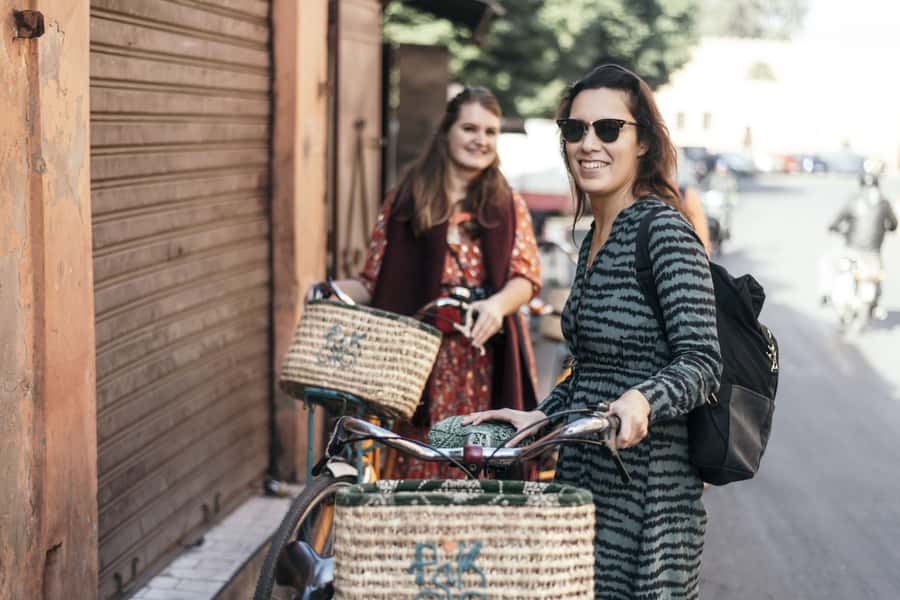
- Clay-oven Moroccan bread: watch baking, then taste, with context on everyday bread culture
- Zellige tile-making: see how the patterns that dress palaces and mosques are created
- Royal Palace gardens (Dar El-Makhzen): admire the architecture from the public side
- Hammam tradition: understand the bathhouse as a social ritual, not just a facility
- Old medina plus modern Marrakesh: compare the old walls with Gueliz and Hivernage boulevards
- Tea and pastries break: juices plus Moroccan pastries at a cultural café to reset your brain and legs
Starting at Pikala Bikes: the ride gets real fast
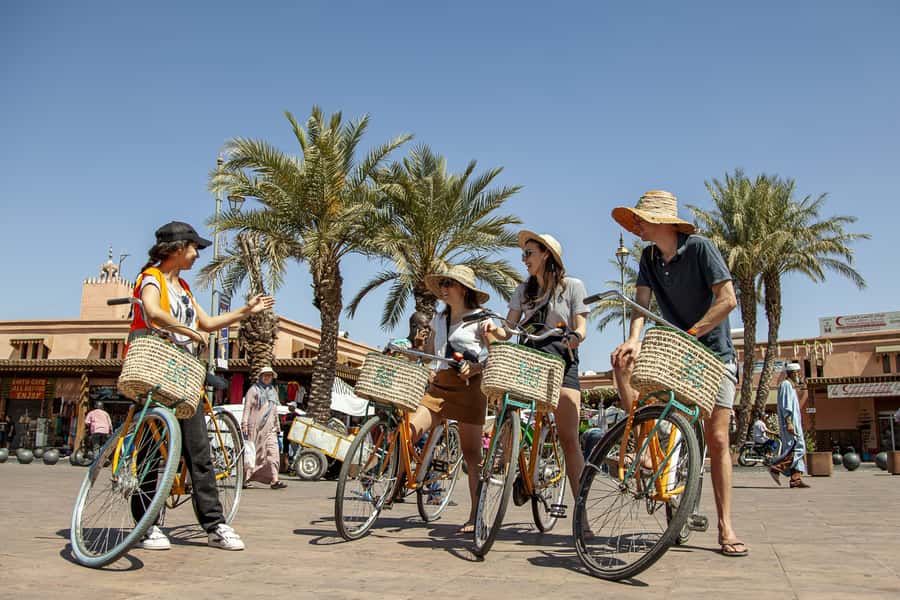
The tour starts at Pikala Bikes, where you get your bike, water, and a quick setup before the city throws its usual mix at you. The bikes are described as solid (and a bit on the heavy side), but the saddles are comfortable and the pace is relaxed. That matters, because Marrakech rewards attention: you’re not sprinting anywhere.
The first hour is the “pay attention” part. You’ll be navigating mopeds, pedestrians, and all the cross-current chaos that comes with living streets. Then, once you’ve matched your speed and line to the flow, it becomes easier—more like learning a local language than fighting the road.
English and French guides lead the tour, and the best part is how they connect places to daily life. Guides I’ve seen praised include Hamid, Khalil, Yassir, Sayid, Jazmin, Kenza, and Yassir (spelling varies by guide bio). You’ll hear different styles, but the common thread is practical explanations and group care.
You can also read our reviews of more tours and experiences in Marrakesh.

Zawiya of Sidi Bel Abbas and the first photo-stop rhythm
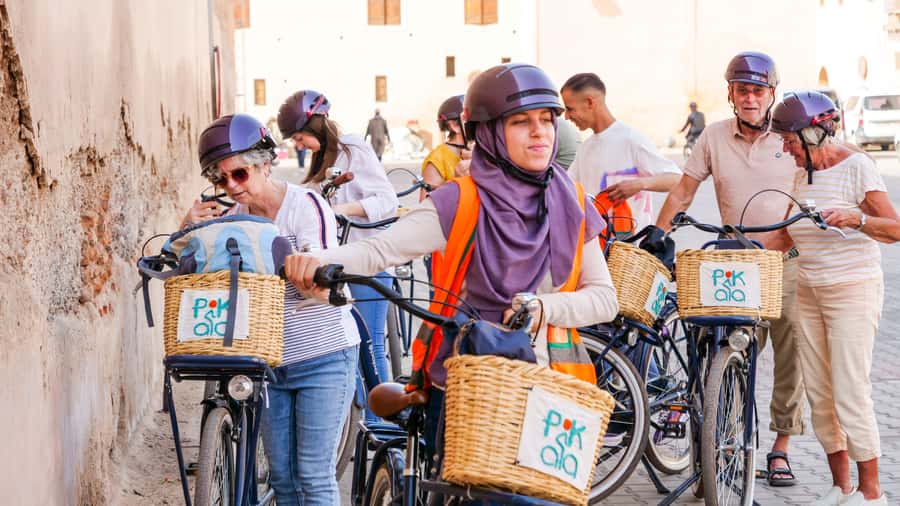
Early on, you’ll pass by and stop at the Zawiya of Sidi Bel Abbas for photos and a short visit. Even if you only spend around 15 minutes there, it works well as a “tone-setter.” The zawaia (a religious shrine space) helps you understand that Marrakech isn’t only about landmarks you can photograph from a postcard angle.
Expect a quick orientation: where you are in the neighborhood maze, what the place represents, and how locals relate to it. It’s not a long lecture. It’s the kind of explanation that helps you later when you see more religious and craft spaces.
A local bakery: clay-oven bread and why it matters
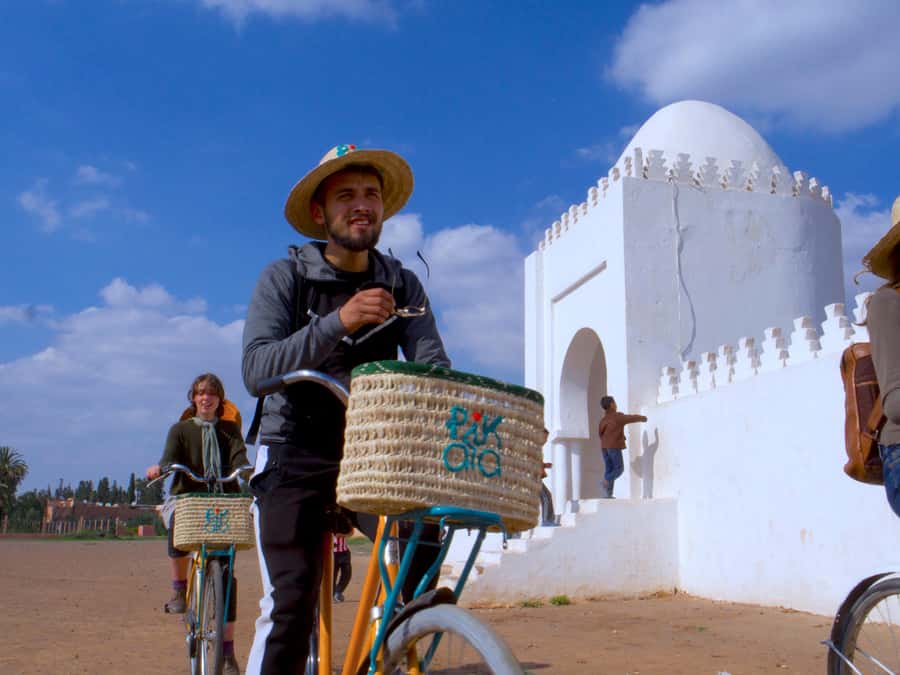
Then you step into a traditional Moroccan bakery—the kind locals use, not a showpiece. You watch bread baked in a clay oven, and you taste fresh Moroccan bread right after. This is one of the most satisfying stops on the route because you combine senses with meaning: smell, heat, texture, and a real reason bread shows up in daily conversation.
Bread in Morocco isn’t only food. It’s social. It’s habit. It’s part of how people plan meals and share time. The tour connects that idea to what you’re seeing at the bakery and how clay-oven baking fits into everyday routines. You’ll leave with more than crumbs—you’ll understand why bread culture is worth noticing in the first place.
Practical note: if you’re sensitive to flour dust or strong oven smells, give your nose a second. But honestly, the smell is half the point.
Off-the-route corners: short passes that add up
Between the bigger stops, you’ll make quick breaks—photo stops and short passes through lesser-seen corners. Some segments are only around 10 minutes, but they’re designed for pattern recognition. You start noticing how neighborhoods change by a few streets: shopfronts, workshop doors, small squares, and everyday movement.
These short moments are also how you learn Marrakech’s scale. The medina looks chaotic from street level, but from a bike you start to see the structure: where foot traffic funnels, where vehicles slow, and how the city keeps moving without ever looking perfectly calm.
If you want a single reason this tour feels different from a walking-only day, it’s this rhythm: stop, look closer, then ride again before you lose the thread.
Place des Ferblantiers: the break that clears your head
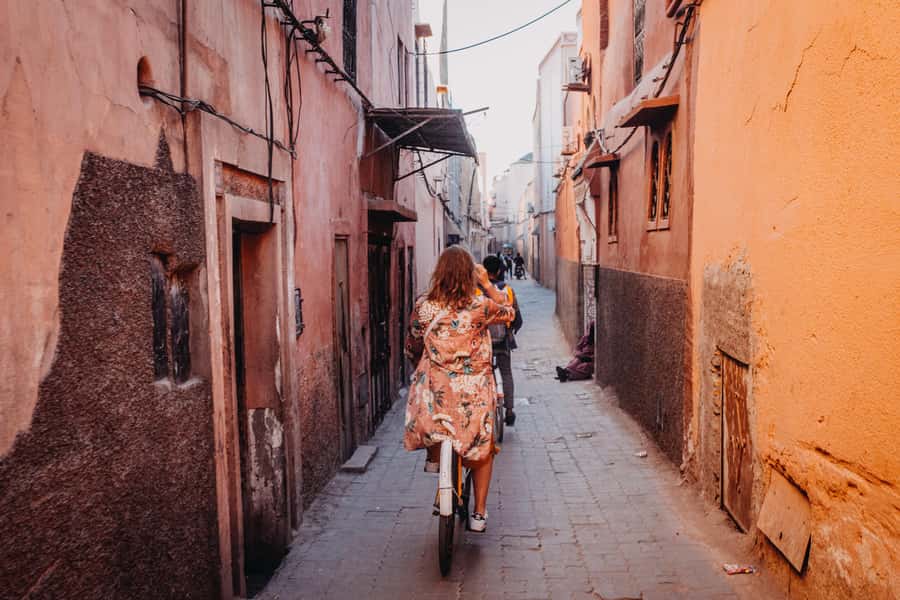
At Place des Ferblantiers, you get a pause: break time, photos, and a bit of free space to regroup. The area is useful because it’s an “in-between” zone—old-world craft energy without being stuck in one doorway all morning.
This is also where the tour smartly resets you. Between narrow lanes and traffic navigation, a real break makes the second half much more enjoyable. And you’re not left wandering. You’re guided to the right next move.



Zellige tile craft: seeing the math behind the patterns
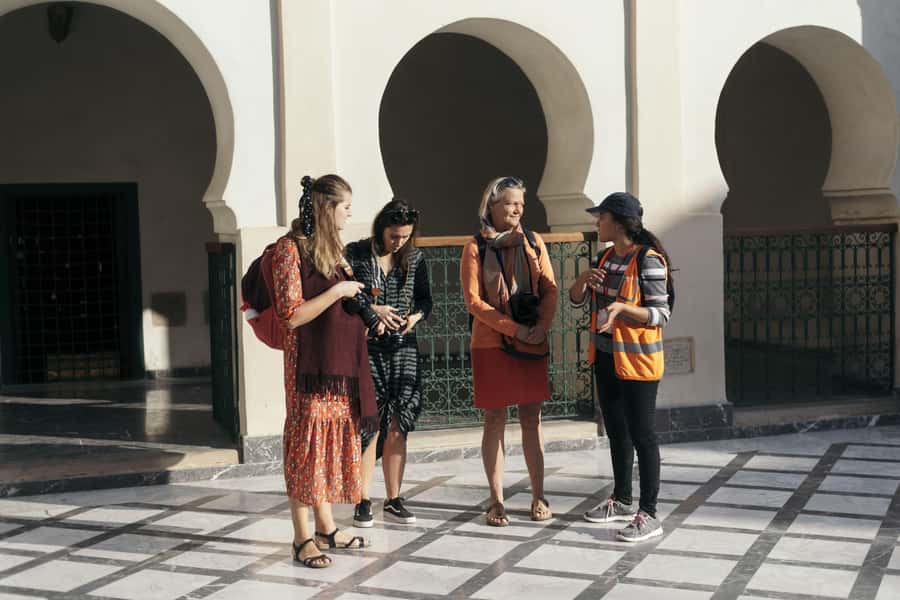
One of the best cultural stops is the zellige tile workshop (zellige is the famous Moroccan mosaic tile tradition). You don’t just see finished surfaces. You meet artisans and watch the tile-making process closely enough to understand how those patterns become art.
This is where the city’s beauty gets a practical explanation. Zellige designs look decorative, but the craft is a system: repeated geometry, careful cutting, and a finishing process that makes each piece look like it belongs to the same visual language. When you learn that, later you can recognize the technique behind many buildings and interiors.
It’s also a good pause for the mind. Tile craft makes you slow down a little, and that helps after medina navigation.
مشور البراني and the pause with local context
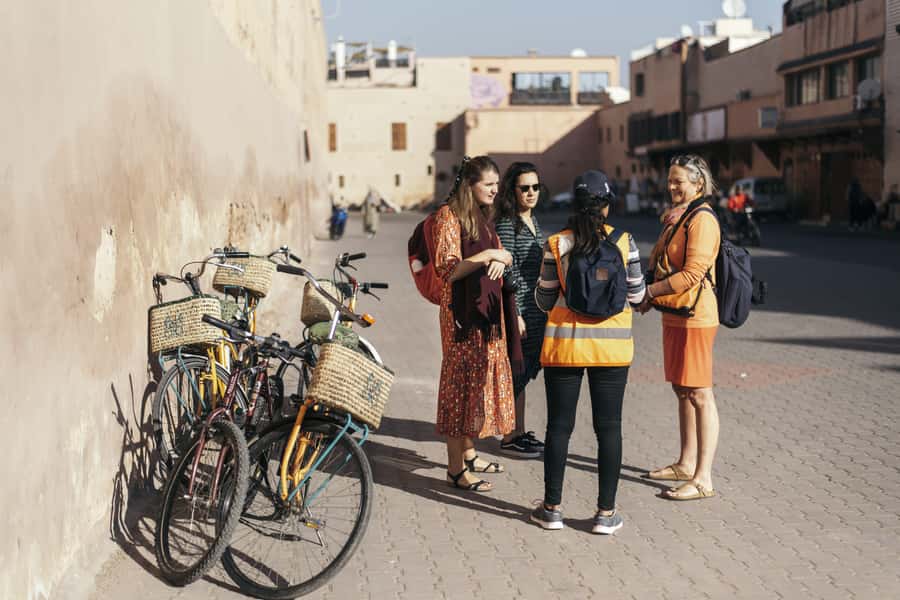
You’ll make another stop at مشور البراني (photo stop and sightseeing time). This is the kind of place that works especially well on a bike tour because you’re not just “passing a point”—you’re arriving with context from earlier stops.
Even when the time is short, your guide uses it to connect architecture and culture with everyday meaning. You start to see how public spaces, religious heritage, and artisan work overlap in Marrakech.
Koutoubia Mosque: one stop, lots of perspective
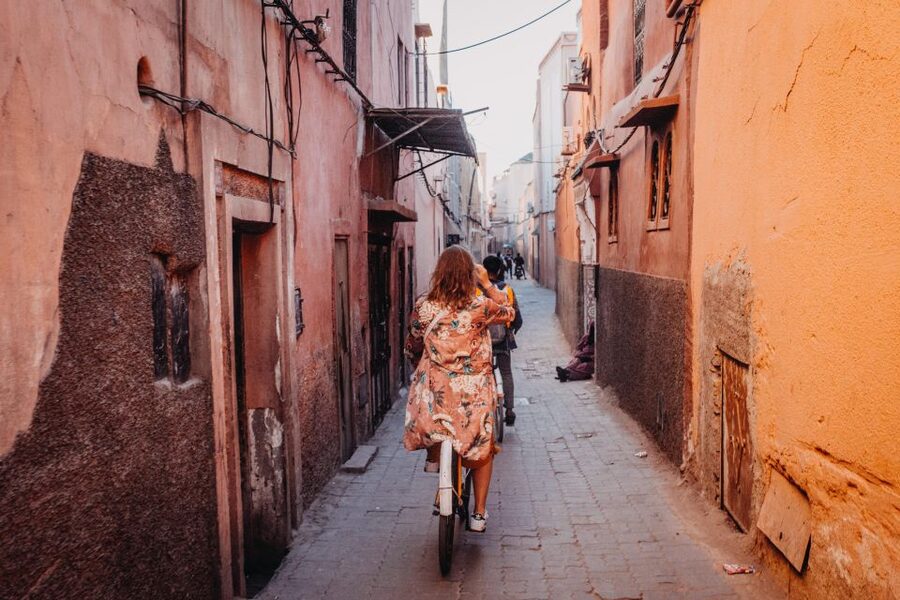
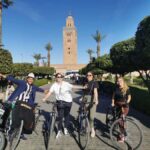
At Koutoubia Mosque, you’ll do sightseeing and pass by for a quick look. It’s a major landmark, but here’s why it still feels worthwhile: you’re seeing it after learning how religious spaces sit inside a living neighborhood. That sequence helps. You’re not meeting the mosque as a standalone monument. You’re meeting it as part of a city that actually works.
Take a few minutes to look at proportions and surrounding building lines. On a bike tour, you can’t linger forever, but you get enough time to notice what makes the building feel so “anchored” in the cityscape.
Church of the Holy Martyrs: a surprising cultural stop
You’ll also stop for photos at the Church of the Holy Martyrs. It’s a nice contrast because Marrakech has layers of faith and history. Seeing a church on the same ride as mosques and craft spaces reminds you the Red City isn’t one single story.
It’s also a good chance to step back from the densest lanes. You get a viewpoint and a moment that feels calmer—even if you’re still in the flow of Marrakech.
Royal Palace gardens (Dar El-Makhzen): architecture from the public side
Next comes the Royal Palace gardens surrounding Dar El-Makhzen. You admire the architecture from the outside and learn why the place matters in Moroccan monarchy and history.
This stop is valuable for two reasons. First, you get an architectural payoff without paying for a full inside visit (the tour includes free entrance for local stops; the palace gardens are approached as a public-view experience). Second, your guide frames what you’re seeing so it doesn’t feel like a distant royal bubble.
Even from the public side, the gardens and the way the complex sits in its environment leave an impression.
Pikala Café: tea, juices, and Moroccan pastries
After all that movement, you’ll reach Pikala Café for coffee, tea, and local snacks. This is a real buffer zone before you head back. Juices and Moroccan pastries are part of the included refreshment, plus you’ll have water and fruit earlier in the experience.
In reviews, people mention spiced cookies and mint lemonade as welcome perks. Either way, the logic is the same: you’re fueling up at a proper café stop instead of hunting food on your own while everyone else is also hungry.
Bring your appetite. You’ll earn it.
Cycling through Marrakech traffic: what to expect and how to stay calm
Let’s be honest about the “road reality.” Marrakech traffic is often described as organized chaos. In the first stretch, you’ll be among mopeds, pedestrians who dart, and even slow-moving animals and carts. That can feel intense.
The good news: the guides manage the group like it’s a team sport. People praise how guides check that everyone stays together, and how they help you cross tricky moments as a unit. You’ll also get frequent stops, so the ride stays manageable.
My practical advice:
- If you’re an average cyclist, you’ll still be okay if you can brake smoothly and hold your line.
- Wear comfortable casual clothing. Avoid long dresses or skirts that can snag on the bike.
- If you get nervous, don’t fight the speed. Match the traffic flow. Keep your eyes up, not down.
One review even called it not for the faint-hearted—but also said it turns into fun once you learn the rhythm. That’s the right attitude.
Old medina to Gueliz & Hivernage: the contrast ride
The route doesn’t stop at the old walled maze. You cycle through modern Marrakech, including areas like Gueliz and Hivernage. This contrast matters because it gives you a more complete picture of daily life.
The old medina is close, tight, and intensely local. Modern Marrakesh is wider streets, trendy cafés, and the feel of a city that’s growing and responding to visitors and residents alike. When you see both in one morning, you stop thinking of Marrakech as one thing.
That’s also why this tour works well as an early activity. You return to your hotel with a mental map of how the city is organized.
Value check: is $34 worth it?
At about $34 per person for 3 hours, this tour is priced like a budget-friendly cultural activity, not a premium private experience. The value comes from the mix: several real stops (including bread and tile craft), entrance access to local sites, plus snacks and drinks.
What you also get is less easy to price: a local guide who connects places to daily life, and a social program that supports training Moroccan youth to lead tours. That turns a “sightseeing ride” into something more purposeful without turning it into a lecture.
If you want to do one hands-on, city-specific activity that doesn’t feel generic, this is a strong contender.
Who this tour suits best
This bike tour fits you if you:
- want a culture-focused ride (food, craft, religion, and daily rituals)
- enjoy active sightseeing with real stops rather than long time in one place
- feel comfortable riding a bicycle in traffic at street level, especially in the medina lanes
It might not fit you if:
- you’re not confident in close spaces or you don’t like sudden interactions with pedestrians and mopeds
- you need a slow, strictly pedestrian-style pace
Should you book this Marrakech cultural bicycle tour?
I’d book it if you want Marrakech with context. The bread stop alone is worth it. Add zellige craft, hammam culture, and a ride that compares old medina life with modern boulevards, and you get a day that teaches you how the city works—not just what to photograph.
If you’re unsure about cycling in traffic, choose a morning time when streets are a bit calmer, wear practical clothing, and lean on the guide for group safety. Once you settle into the rhythm, the experience feels fun, not stressful.
FAQ
How long is the Marrakech cultural bicycle tour?
The tour lasts about 3 hours.
Where does the tour start?
You meet at the Pikala Bikes headquarters.
What languages are the guides speaking?
The live guide is available in English and French.
Do I need hotel pickup?
No. Hotel pickup and drop-off are not included.
What is included in the price?
The tour includes water and fruits, juices and Moroccan pastries at a cultural café, sunscreen, and free entrance to the local stops.
Is there food and tea during the tour?
Yes. There’s a café stop with coffee or tea and local snacks, plus juices and Moroccan pastries as part of the included refreshments.
Is the bike ride suitable for beginners?
You should be comfortable cycling. The route includes narrow alleys and traffic, so road awareness matters, especially early in the ride.
Is the ride flat or hilly?
The route is described as being on the flat, with regular stops.
Is free cancellation available?
Yes. You can cancel up to 24 hours in advance for a full refund.
Can I reserve now and pay later?
Yes. You can reserve your spot and pay later.