REVIEW · JOHANNESBURG
Soweto: Bike Tour with a Local Tour Guide
Book on GetYourGuide →Operated by Cycles in Soweto · Bookable on GetYourGuide
Pedaling through Soweto tells stories on every corner. You get a tight 2-hour loop that links the 1976 Hector Peterson moment to everyday township life on Vilakazi Street, with chances to talk with locals and pass by important landmarks connected to Nelson Mandela and Archbishop Desmond Tutu. One thing to consider: the bikes can vary a bit, so take 30 seconds to check the seat and brakes before you roll.
I like that this isn’t a long, distant “history lecture.” It’s active, eco-friendly, and you’re moving through real neighborhoods at a human pace, in a small group capped at 10. You’ll also get an English-speaking guide and a helmet, which makes the whole thing feel straightforward and safe.
Because it’s only 2 hours, you’ll need to manage your energy and stay sun-smart. Food or drink isn’t included, so come prepared with a plan for water and snacks, and bring sunscreen and a hat.
In This Review
- Key things you’ll notice on this Soweto bike tour
- Why 2 hours on two wheels beats a rushed stop
- Meeting at Cycle in Soweto and getting set to ride
- Hector Peterson Memorial: learning 16 June 1976 with context
- Vilakazi Street: the most famous stretch, paced for real seeing
- Orlando Stadium area: the sports landmark as a township reference point
- Nelson Mandela and Desmond Tutu’s homes: history in residential space
- Interacting with locals and supporting small businesses
- The ride quality: helmets help, but bikes may vary
- Pace and group size: why you’ll likely feel informed, not rushed
- What to bring for a comfortable, sun-smart ride
- Price and value: is $34 fair for this Soweto experience?
- Who this tour suits best (and who should think twice)
- Should you book this Soweto bike tour?
- FAQ
- FAQ
- Where is the meeting point for the tour?
- How long is the Soweto bike tour?
- How much does the tour cost?
- What’s included in the price?
- Is museum entrance or food included?
- Who can join the tour?
Key things you’ll notice on this Soweto bike tour
- Hector Peterson Memorial as your anchor point: you start with the story of 16 June 1976 and Hector Peterson’s killing during student protests, then you ride on with context.
- Vilakazi Street time on the ground: this is the most famous street on the continent, and the tour gives it real attention instead of a quick photo stop.
- Home-site views, not just monuments: you pass Nelson Mandela’s and Archbishop Desmond Tutu’s homes, so history sits in everyday residential space.
- Local conversations built into the route: you’re not locked in your own bubble; you interact with people along the way.
- Support for small businesses: the route includes stops where small change or items you want to donate can help.
Why 2 hours on two wheels beats a rushed stop
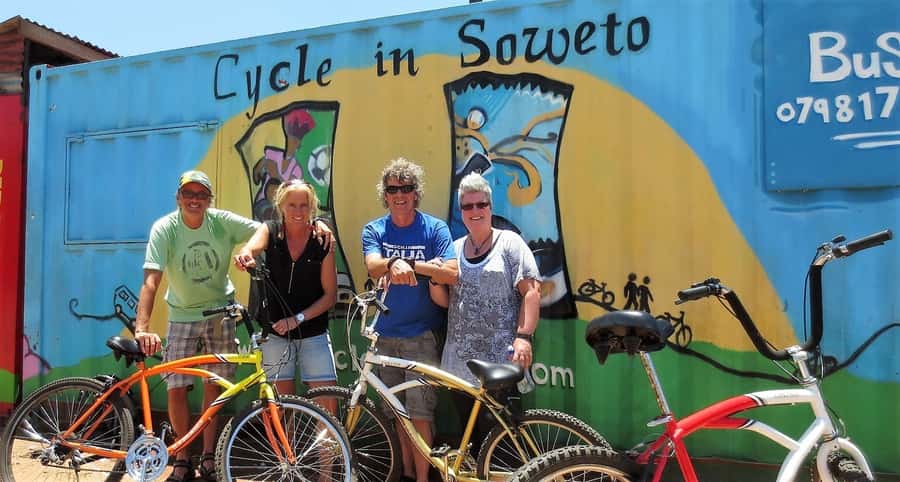
Soweto can be a lot to process. What makes this tour work is its timing: 2 hours is long enough to understand what you’re seeing, but short enough that you’re not mentally exhausted before the important parts.
I also like the format. A bike ride forces you to slow down and notice details—street layout, daily routines, how people live around the landmarks—without needing you to interpret everything on your own. It’s a bit of exercise too, which helps the stories stick.
The price, $34 per person, makes it feel like a “real access” tour rather than a premium-only experience. You’re paying for a guided route, a bicycle, and a helmet—while the major museum-style costs are left as optional extras.
You can also read our reviews of more tours and experiences in Johannesburg.

Meeting at Cycle in Soweto and getting set to ride
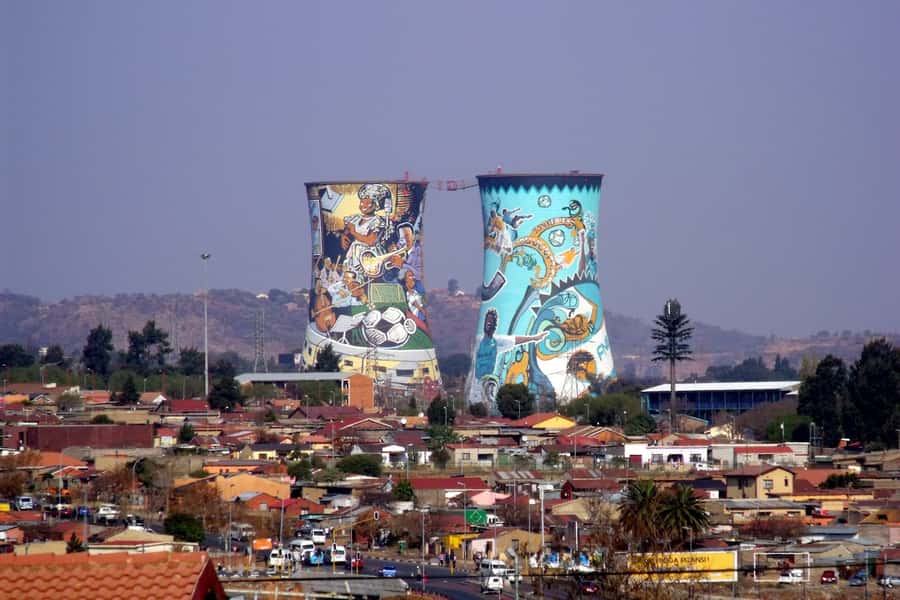
You meet at the Cycle in Soweto shop, based behind the Hector Peterson Museum, next to the bus parking area. That’s a helpful detail because it keeps the tour start close to one of the most important stops, and you’re not starting your day with a long scramble across town.
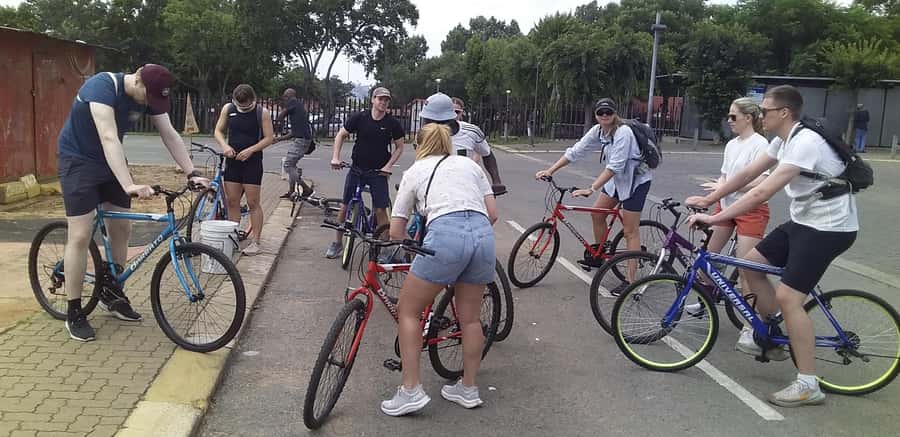
From there, you’ll begin cycling with an English-speaking guide. Expect a small group setup (maximum 10 participants), which matters: you can actually hear explanations and still move at a steady pace without feeling like you’re herding people.
One small practical tip: if you’re worried about comfort, dress for movement, not for looking perfect. Comfortable clothing, sun protection, and a quick check of your helmet fit will make the whole ride feel calmer.
Hector Peterson Memorial: learning 16 June 1976 with context
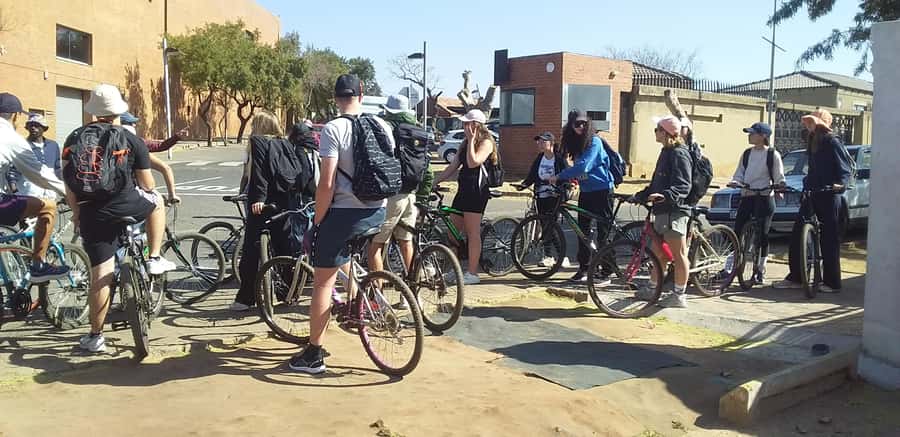
The Hector Peterson Memorial is more than a landmark—it’s the emotional center of the story. The tour explains what happened on 16 June 1976, when student protests turned deadly and Hector Peterson was shot and killed by police.
Here’s what you’ll likely appreciate: you’re not just seeing a name on a sign. You’re receiving the key event context first, so when the tour later passes other meaningful places, you can connect what they represent.
A thoughtful drawback to keep in mind: sites like this can feel heavy, even if you came hoping for a lighter “photo tour.” If you prefer upbeat sightseeing only, you might find you need a slow moment after the memorial before riding onward.
Vilakazi Street: the most famous stretch, paced for real seeing
Then you’re out on Vilakazi Street, often described as the most famous street on the African continent. The reason that matters isn’t the hype—it’s that this street concentrates layers of life, memory, and identity in a way a checklist can’t capture.
On a bike, your view changes constantly. You’ll pass the street’s key areas at a speed that lets you read the surroundings: storefronts, residences, and the everyday movement that continues alongside historic recognition. It’s not just “standing and staring,” and it’s not just “snap and go.”
Also, this is where the tour’s local interaction matters most. You’re more likely to get a normal conversation than a stage-managed performance, and that’s when your understanding shifts from facts to feel.
Orlando Stadium area: the sports landmark as a township reference point
The tour includes Orlando Stadium. Even if you’re not a die-hard sports fan, stadiums often act like navigation anchors in cities. In Soweto, that kind of landmark helps you understand how neighborhoods orient around big public spaces and shared events.
What makes this stop useful on this tour is how it sits within the broader ride. You’re not treating it like a standalone detour. You see it as part of the township’s everyday geography—another reason the bike format helps.
If you’re sensitive to noise or crowds, keep expectations in check. The stadium area can feel active depending on timing, but your guide can keep you moving through the most practical viewing spots.
Nelson Mandela and Desmond Tutu’s homes: history in residential space
One of the strongest highlights is seeing the homes of Nelson Mandela and Archbishop Desmond Tutu. This is where the tour does something valuable: it shifts the idea of famous leaders away from distant museums and into real, lived-in neighborhoods.
Why that matters for you: when history is placed inside a residential setting, it stops feeling abstract. You can look at what surrounds those homes—street life, the scale of the neighborhood, the relationship between public recognition and private life—and it makes the stories feel more grounded.
A practical consideration: you may not get the kind of access you’d get inside a paid attraction. The value here is seeing, understanding, and moving on with your guide’s explanations—not expecting entry or a long indoor visit.
Interacting with locals and supporting small businesses

This tour is built to include interaction with locals as part of the experience. That usually means you’ll get a more honest picture of daily life than you would from purely “look-but-don’t-talk” sightseeing.
You’ll also have a chance to support local small businesses along the way. The tour notes that you can bring small change or items you’d like to donate, which is a simple way to keep your visit connected to the community rather than extracting photos only.
One thing to consider before you bring anything: donations can be personal and sensitive. If you’re unsure what to give, bring small change rather than guessing at items.
The ride quality: helmets help, but bikes may vary
The tour includes a bicycle and a helmet, and that’s exactly what you want to see listed. It takes the pressure off the logistics side, and it helps you focus on the route.
But there’s a real consideration from experiences shared: some bikes may not be in perfect condition. Before you start, quickly check:
- brakes feel responsive
- seat height works for your legs
- tires look properly inflated
This is a short tour, so a tiny adjustment can save you from a sore back later.
Pace and group size: why you’ll likely feel informed, not rushed
This is a small group tour limited to 10 participants. In practice, that kind of cap tends to mean better listening conditions. You can hear the guide’s explanations, ask a question, and still keep moving.
The pace also matches the theme. Soweto’s stories deserve attention, but you don’t need hours and hours of walking to begin understanding them. Two hours on a bike gives you that first meaningful pass through multiple key points: Hector Peterson memorial, Vilakazi Street, Orlando Stadium area, and the Mandela and Tutu home-site views.
What to bring for a comfortable, sun-smart ride
You’ll be outside, cycling, and learning. Pack like it’s a warm day in Gauteng because the sun will do its job even if you’re focused on history.
Bring comfortable clothing plus a hat and sunscreen. If you want to support local small businesses, bring small change or an item you’re comfortable donating.
Food or drink isn’t included, so plan around that. Even if you’re only on the bike for 2 hours, having water and a light snack plan can keep the ride from turning into a low-energy drag.
Price and value: is $34 fair for this Soweto experience?
At $34 for 2 hours, you’re paying for several things at once: a guide in English, a bicycle, a helmet, and a route that strings together the most important stops in a concentrated way.
What keeps the value strong:
- Included gear means less hassle
- A guide adds meaning to the memorial and historical stops
- The small group size helps you actually hear and participate
- You get eco-friendly transportation and light exercise, not just sightseeing
What keeps expectations realistic:
- Entrance fees for museums aren’t included (and some attractions you might see discussed nearby may be separate)
- Food and drink are not included
- You’re not buying deep museum time; you’re buying a guided, meaningful route
If you want a short, guided introduction to Soweto with context at each landmark, the price makes sense.
Who this tour suits best (and who should think twice)
This tour is a great fit if you:
- can ride a bicycle confidently
- want an active, informative way to see major Soweto landmarks in a short window
- prefer a local guide and interaction over only monuments
- like learning something important while still moving through the neighborhood
It may not be the best fit if you:
- don’t like cycling or aren’t comfortable on a bike
- want purely light, entertainment-style sightseeing
- get overwhelmed easily by emotionally heavy topics like 1976 student protests and Hector Peterson’s death
Also, you must be at least 8 years old to join, so it’s not a fit for every family schedule.
Should you book this Soweto bike tour?
I think you should book it if you’re looking for a focused, guided introduction to Soweto that goes beyond surface photos. The combination of the Hector Peterson Memorial context, time on Vilakazi Street, and passing the Mandela and Tutu home sites makes this feel like a “see and understand” route, not just a ride around town.
If you do book, do three things to make it smoother: check your bike before you start, wear sun protection, and plan for food or water since nothing is included. And if the weight of 16 June 1976 hits you hard (it can), give yourself a quiet moment afterward before you continue.
FAQ
FAQ
Where is the meeting point for the tour?
Meet your guide in the Cycle in Soweto shop, based behind the Hector Peterson Museum next to the bus parking area.
How long is the Soweto bike tour?
The duration is 2 hours.
How much does the tour cost?
The price is $34 per person.
What’s included in the price?
The tour includes a bicycle, a helmet, and an English-speaking guide.
Is museum entrance or food included?
Entrance fees for museums are not included, and food or drink is not included.
Who can join the tour?
You must be at least 8 years old and able to ride a bicycle.