REVIEW · GOTHENBURG
Bike Tour Gothenburg, Guided Bicycle Tours
Book on Viator →Operated by Bike Tour Gothenburg · Bookable on Viator
Gothenburg clicks into place on two wheels. In about two hours, you pedal through Gustav Adolfs Torg, Gotaplatsen, and the older streets of Haga and Linné, while your guide explains what you’re seeing in Swedish and English. I love the mix of big-city landmarks with neighborhood vibes, and I especially like the Gotaplatsen stop, where you learn about Albert Einstein’s visit to Gothenburg for his Nobel Prize. The main drawback is simple: it’s short, so you might not have time to shop as much as you’d like in Haga Nygata.
You’ll meet at Skeppsbron 3 and get a mobile ticket for easy check-in. With a maximum group size of 20, the ride stays friendly and manageable, and the route is designed for real sightseeing rather than racing from one photo op to the next.
One more note before you commit: Gothenburg can have hills. Even though the ride is generally described as easy and straightforward, you’ll still want to bring good spirits and take it at your pace.
In This Review
- Key highlights you should care about
- Getting oriented fast around Skeppsbron
- Price and value: why $68.84 makes sense for two hours
- What to expect from the ride: gear, pace, and small-group dynamics
- Stop-by-stop: Gustav Adolfs Torg to Andra långgatan
- Stop 1: Gustav Adolfs Torg (the rise of the city)
- Stop 2: Gotaplatsen (world exhibition and Einstein’s visit)
- Stop 3: Näckrosdammen (the park shaped by the exhibition)
- Stop 4: Vasastaden (cute architecture and local atmosphere)
- Stop 5: Haga Nygata (older houses, shops, and landshövdingehus)
- Stop 6: Linnégatan (local charm by day, food-and-drinks by night)
- Stop 7: Andra långgatan (Second Long Street, creative energy)
- Einstein, water lilies, and why the tour tells a story
- Guide style: Nils on penny-farthing and the friendly humor factor
- Neighborhood vibes you can actually use
- Who should book this bike tour
- Should you book this tour?
Key highlights you should care about
- Bike and helmet included so you can focus on the route, not the gear
- Einstein at Gotaplatsen tied to a major world-exhibition story
- Nä c krosdammen water lilies linked to the World Exhibition design
- Haga Nygata and landshövdingehus architecture plus independent shops and cafés
- Small-group feel (up to 20) and guides who keep the mood light
- Creative-street stop at Andra långgatan with restaurants, bars, galleries, and record shops
Getting oriented fast around Skeppsbron
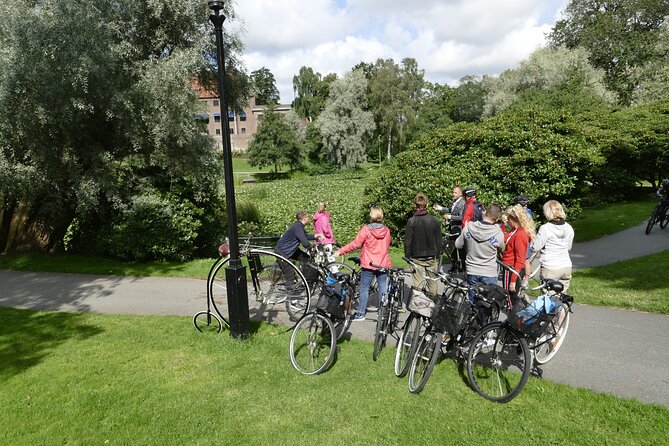
If you only have a small window in Gothenburg, this tour helps you get your bearings quickly. You start at Skeppsbron 3, right where many visitors naturally begin exploring the city, and you end back at the same meeting point. That loop format matters because it keeps your first day from turning into a map workout.
The pacing is built for learning while moving. Stops are long enough to absorb the story, but not so long that you feel stuck waiting for the next segment.
Price and value: why $68.84 makes sense for two hours
At $68.84 per person for roughly two hours, this isn’t the cheapest thing you’ll do in Gothenburg. But it’s also not trying to be a long, ticket-heavy day. You’re paying for guided context, a planned route, and the convenience of having a bicycle and helmet supplied.
The best value angle here is efficiency. You cover multiple distinct areas—central squares, parks, and older neighborhoods—without needing to figure out transit, parking, or routes on your own. And because most stops are free to access, your money goes mostly to the guide-led experience rather than entry fees.
Also, the tour is offered in English and Swedish. That increases comfort if you’re traveling with mixed language skills, or if you prefer one language for listening while you ride.
What to expect from the ride: gear, pace, and small-group dynamics
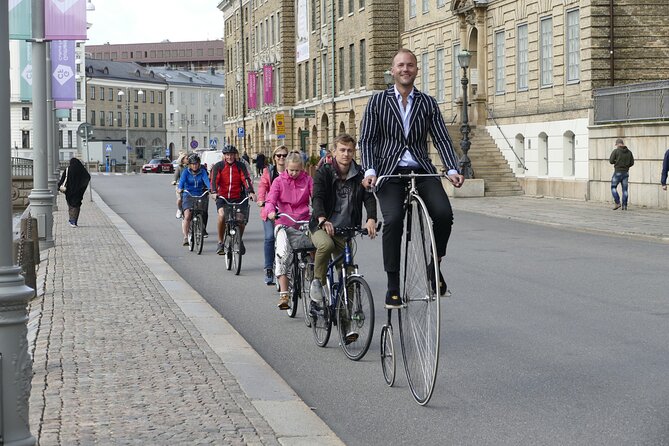
Bikes and helmets are included, which removes two common hassles: finding rentals and borrowing safety gear. The small group size helps too. With a maximum of 20 travelers, it’s easier for a guide to keep everyone together and adapt the pace when streets get busy.
How hard is it? The honest answer is you should plan for some effort. One review calls out that Gothenburg is a bit hilly, while others describe the ride as manageable with no hills to speak of. Your best bet is to assume it’s not flat-flat, then keep your effort level comfortable. If you’re the type who rides a bike regularly, you’ll likely feel fine; if you don’t bike often, you’ll still probably manage, just slower on steeper bits.
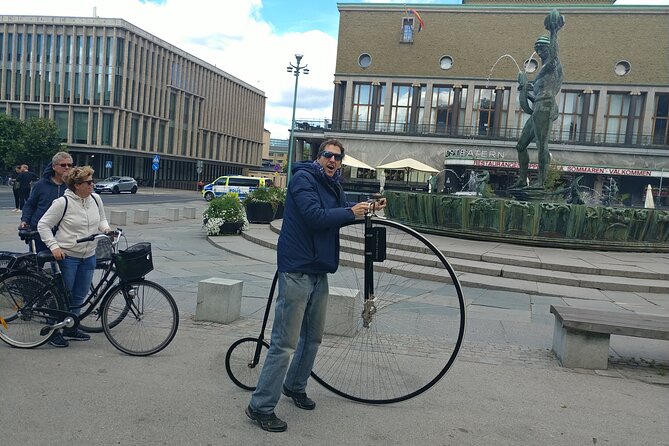
Finally, language and guide style can change the feel of the experience. One standout was Nils, who guided with a penny-farthing and drew smiles from people watching along the route. Another guide, Mike, stepped in during a holiday period and kept the tour friendly and informative.
Stop-by-stop: Gustav Adolfs Torg to Andra långgatan
This tour reads like a guided walk around Gothenburg’s layers—only faster.
Stop 1: Gustav Adolfs Torg (the rise of the city)
You start with a history lesson anchored at Gustav Adolfs Torg. The focus here is Gothenburg’s rise—its historical, war, and trading background. It’s a smart first stop because it gives you a frame for everything you’ll see afterward.
Expect a quick burst of context and then movement. This stop is about understanding why Gothenburg looks and feels the way it does, not about waiting around.
Stop 2: Gotaplatsen (world exhibition and Einstein’s visit)
Gotaplatsen is the headline stop. You’ll get facts about the world exhibition and Gothenburg’s biggest events in history, including the striking detail that 4.2 million visitors came. Then the story connects directly to Albert Einstein: he visited Gothenburg to receive his Nobel Prize.
This is the kind of stop that makes the whole tour click. It turns the city from a set of buildings into a place with international milestones. If you like learning facts that feel oddly specific (like Einstein showing up in an unexpected way), you’ll enjoy this one.
Stop 3: Näckrosdammen (the park shaped by the exhibition)
After the big historic signal, the tour shifts to a quieter scene at Näckrosdammen. This park was built for the world exhibition, and the theme here is water lilies—1,000 of them. Even if you’re not a “plant person,” that number sticks.
The practical value is that you get a calmer pause. It’s a chance to reset your eyes after squares and monuments.
Stop 4: Vasastaden (cute architecture and local atmosphere)
Next is Vasastaden, known for its architecture and relaxed local vibe. This is the stop where the tour starts to feel less like a lecture and more like neighborhood wandering—just on a bike.
One advantage of this placement is timing. You’ve already learned the big-picture history, so seeing everyday streets and building styles feels more meaningful.
Stop 5: Haga Nygata (older houses, shops, and landshövdingehus)
Haga Nygata is one of those streets you’ll understand instantly, even if you’ve never been to Gothenburg. It’s a pedestrian street in one of the oldest neighborhoods, lined with well-preserved houses, many in the characteristic Gothenburg style called landshövdingehus. The description is simple and memorable: one floor is brick, and the rest is wood.
The tour also emphasizes why this area feels alive today: independent shops and cafés. If you want souvenirs, coffee, or a casual meal plan for later, Haga Nygata is where you’ll want to zoom in with your camera and then come back on foot.
Here’s the trade-off to keep in mind: because the tour is only about two hours, you may not have long enough to browse every store window at full speed. I’d treat it as a tasting menu, then revisit.
Stop 6: Linnégatan (local charm by day, food-and-drinks by night)
Linnégatan is part of Linnéstaden, commonly called Linné. It’s described as laid-back with local charm, and the rhythm changes by time of day. By day, you get independent shops and cafés; by night, it shifts toward eateries and bars.
This stop is useful because it helps you picture Gothenburg after the monuments. You’ll leave with ideas for where to go when you’re done with sightseeing and want something more casual.
Stop 7: Andra långgatan (Second Long Street, creative energy)
Andra långgatan, or Second Long Street, runs from Järntorget to Masthuggstorget. It’s known for restaurants, bars, galleries, and record shops. The story includes a past described as dodgy, but the reputation is said to have improved, with the street becoming a magnet for creative types.
There’s also a practical “spot the difference” angle. It’s more small venues and less big chain presence, with no major corporations like McDonald’s or H&M. That kind of detail matters when you’re trying to experience a city with its own voice rather than importing global sameness.
This is a great finish because it’s social and sensory. By the time you reach Andra långgatan, you’re in the mood to wander a bit more—especially if you like street-level culture.
Einstein, water lilies, and why the tour tells a story
The standout strength of this route is that it doesn’t just point at sights. It builds a storyline.
It starts with how Gothenburg grew at Gustav Adolfs Torg. Then it moves to the world exhibition era at Gotaplatsen, where you learn about 4.2 million visitors and Einstein’s Nobel Prize visit. After that, the tour connects the history theme to something physical and visual at Näckrosdammen through the water-lily detail.
This matters because it makes the city feel less random. Instead of collecting ten unrelated stops, you walk away with one thread: Gothenburg’s international moments, then how those eras shaped what you can still see in parks and public spaces.
Guide style: Nils on penny-farthing and the friendly humor factor
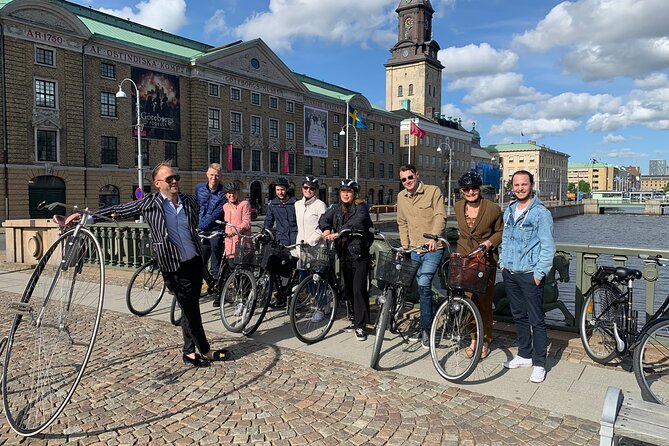
A bike tour lives or dies by the guide. Here, the guide energy is a big part of why the rating is so high.
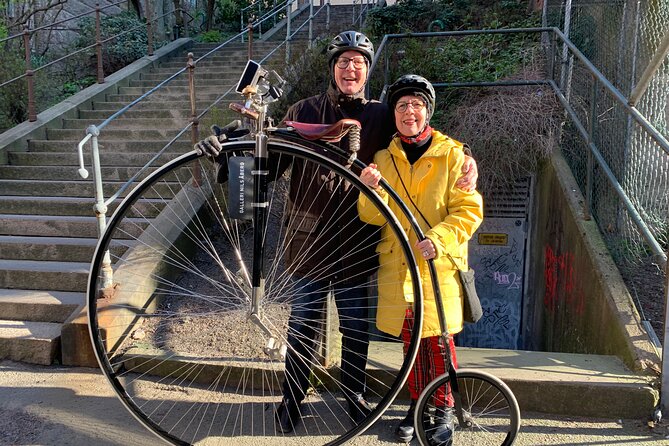
Nils is a special case. He’s known for guiding on a penny-farthing and adding a soundtrack using a Bluetooth speaker, with music described as Etta James classics and similar selections. The result is a tour that feels playful rather than stiff. If you enjoy a bit of circus-meets-history energy, Nils is worth trying to catch.
Mike (as a substitute guide during a holiday period) also comes up for being friendly and knowledgeable, keeping a relaxed tone while still covering the important facts. That combination is key: you want accurate history, but you don’t want a lecture voice.
Even when you don’t get Nils specifically, you can still expect an upbeat, casual pace. The small group size helps the guide keep things light and personal.
Neighborhood vibes you can actually use
I like tours that help me plan. This one gives you three areas that are practical for what you’ll want next.
- Haga Nygata: best for browsing, cafés, and that specific landshövdingehus architecture look.
- Linnégatan / Linné: good for figuring out where the day-to-night shift happens.
- Andra långgatan: useful if you want restaurants, bars, and record shops that feel local.
So even if the tour ends before you’ve shopped or eaten, you’re leaving with a shortlist of where your evening could go. That’s value.
Who should book this bike tour
Book it if you want:
- a first-day orientation that covers multiple neighborhoods without stress
- a guided route with Swedish or English explanations
- a bike-friendly way to learn about Gothenburg beyond the postcard squares
It’s also a good match if you like stories tied to specific places, like Einstein at Gotaplatsen and the world exhibition details.
I’d be a bit cautious if:
- you’re very sensitive to hills (even if the ride is often described as manageable)
- you expect a long shopping crawl, since the total time is about two hours
Should you book this tour?
I think it’s an easy yes for most visitors who want a smart start in Gothenburg. You get guided context, bikes and helmets handled, and a route that mixes landmarks with neighborhoods you’ll actually revisit later. The Einstein and world-exhibition stops give the tour a memorable theme, not just sightseeing.
If your main goal is deep shopping time in Haga, plan the tour early, then come back on foot after. Otherwise, book it and use the ride to learn the city’s logic fast.