REVIEW · MADRID
Madrid’s River Side & Casa de Campo Electric Bike Tour
Book on GetYourGuide →Operated by Wonder Tours Spain · Bookable on GetYourGuide
Madrid’s green escape starts fast. This 2-hour electric bike tour whisks you from near Plaza Mayor out to one of Europe’s biggest urban parks, with an expert guide pointing out city architecture, Civil War leftovers, and photo spots you’d miss on foot. Casa de Campo is the payoff: you glide under trees with pedal help, not sore legs.
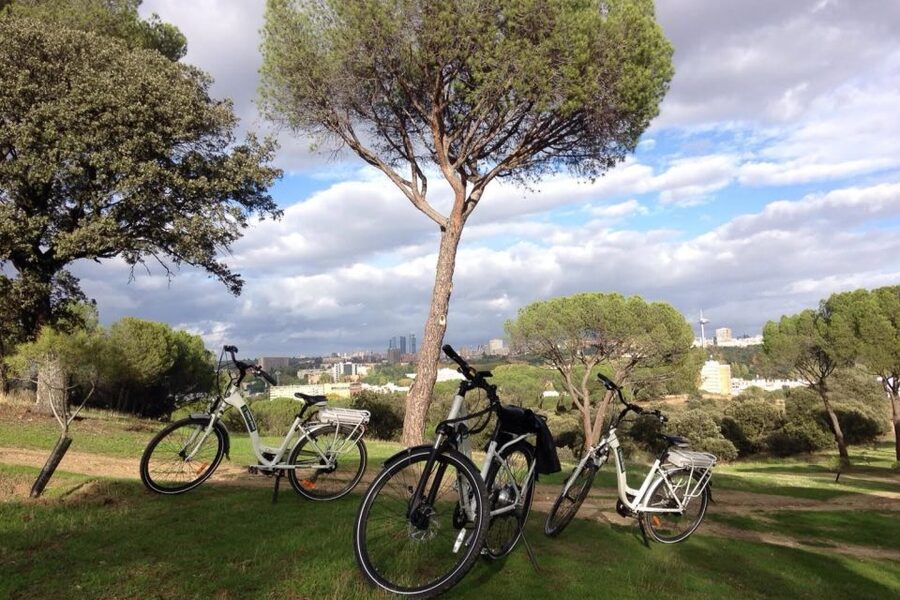
What I like most is the mix of big-city Madrid and real park time. You’ll get views from a hilltop skyline moment, cross the Manzanares River, and spot landmarks along the way like the Serpents Bridge. It’s not just pretty scenery; the guide ties it to how the park and river area evolved.
One thing to consider: bike comfort and maintenance can vary. A few people noted sizing issues (one had to stop to adjust the seat) and at least one reported an e-assist battery hiccup mid-route, including near the end—so if you’re sensitive to gear fit, speak up early.
In This Review
- Key things to know before you ride
- From Plaza Mayor to Casa de Campo on Electric Wheels
- The Seven Bridges Factor and Civil War Clues
- Sabatini Gardens and the San Vicente Hill View Payoff
- Casa de Campo Lake Days: Boats, BBQ Energy, and Tree Shade
- E-Bike Climb, Skyline Rest, and the Huerta de la Partida View
- Price and What Your $46 Buys in Real Value
- Bike Fit, Road Traffic, and the Smooth- vs. Rough-Ride Reality
- Guides Who Set the Tone: Clear Storytelling and Calm Control
- Who This Tour Suits Best (and Who Might Want Another Option)
- Should You Book This E-Bike Tour?
- FAQ
- How long is the Madrid River Side & Casa de Campo electric bike tour?
- Where do I meet for the tour?
- Is the tour offered in English?
- Are helmets provided, and are they required?
- What’s included in the price?
- What should I bring?
- What’s not allowed during the tour?
- Will I ride through the park and see landmarks like the river and bridges?
Key things to know before you ride
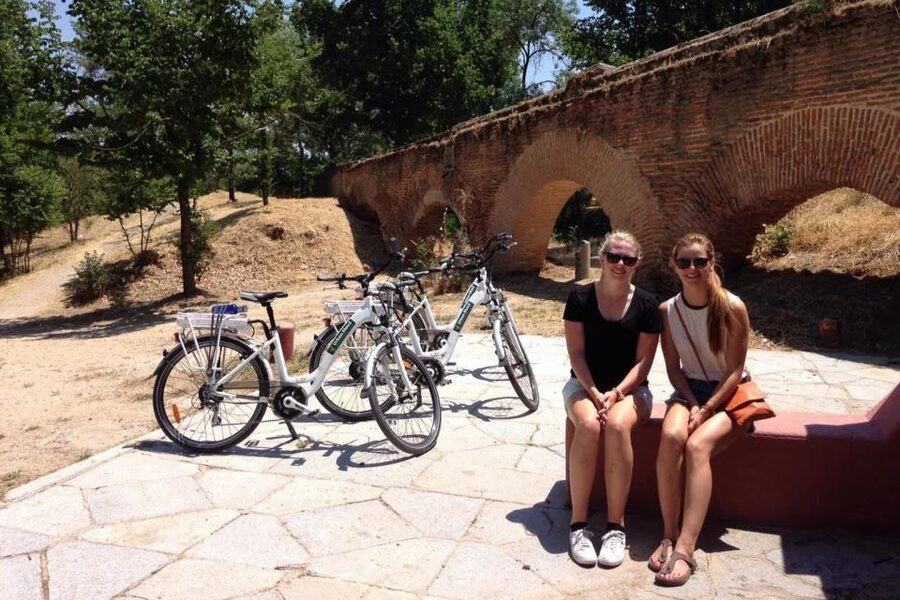
- Electric-assist effort control: You’ll climb hills with pedal help, so the tour feels relaxed even when the route tilts up.
- History you can see, not just hear: Expect Civil War trenches and other park constructions, plus stories tied to specific spots.
- Bridge-and-view route: You’ll admire Madrid’s major bridges and then earn skyline views from the highest hill area.
- Casa de Campo is the main stage: Forest once reserved for kings becomes a weekend hangout with a lake and boats.
- Safety reality: Helmets aren’t mandatory, and you may still ride through some road traffic—so comfortable cycling skills help.
From Plaza Mayor to Casa de Campo on Electric Wheels
The tour begins in Madrid’s old-city area, close to Plaza Mayor, then you ride toward Plaza de Oriente. Right away, you’re in the right mindset: this isn’t a workout-first ride. It’s more like a guided “greatest hits” route that gradually swaps street noise for park air.
You’ll pass by Plaza de Oriente, where the Royal Palace and the Opera House make their big, dramatic presence felt. Then the route continues along the Sabatini Gardens. Even if you’ve seen palace photos before, riding past them with your guide’s context helps you notice details you’d ignore from a distance—like how the view opens and closes as you move through the city blocks.
After that, the ride leans into the terrain. You’ll take the long and steep San Vicente Hill. The key here is the bike’s electric assistance: it turns what could be a tiring slog into a manageable climb, so you arrive at the river area without looking like you lost a fight with the pavement.
You can also read our reviews of more tours and experiences in Madrid.



The Seven Bridges Factor and Civil War Clues
One of the tour’s most satisfying surprises is how much architecture you’ll rack up in just two hours. The highlight list promises Madrid’s seven major bridges, and the route is set up to let you enjoy them without rushing. If you like cities that reward repetition—different angles of the same structure—this is your style.
You’ll also encounter park features tied to Spain’s Civil War era, including trenches built during that time. The guide’s job is to make those remnants make sense in context: why they’re where they are, what they meant, and how the landscape became something people used for leisure later on.
And yes, there’s the Serpents Bridge. Even if you don’t obsess over bridge design, it’s the kind of structure that makes you stop pedaling for a second just to take in the shape. It’s also a reminder that Casa de Campo isn’t just “trees and trails.” It’s a planned, designed landscape with history tucked into the physical details.
Sabatini Gardens and the San Vicente Hill View Payoff
Sabatini Gardens are a strong early anchor because they bridge two worlds: the formal feel of central Madrid and the calmer pace heading outward. Your guide uses that stretch to set up the day—what you’ll see next, where you’ll likely take photos, and which turns lead you toward better viewpoints.
Then comes San Vicente Hill. This is where the electric bike earns its keep. The bike’s assist helps you keep your rhythm up, which means you can actually enjoy the climb instead of watching your breathing and your feet only.
Once you’re near the river, the ride starts to feel like a different plan entirely. You’ll cross the Manzanares River to reach Casa de Campo. On a normal bike, that transition can feel like a commute. On an e-bike, it feels like you’re entering a separate chapter of your Madrid day.
Casa de Campo Lake Days: Boats, BBQ Energy, and Tree Shade
Casa de Campo is the main attraction, and it’s a big one. The park was once reserved for kings and noblemen for hunting, and now it’s one of the places locals actually use. That matters. You’re not just touring an empty scenic area. You’re cycling through a living public space.
You’ll see the small lake where weekend scenes can shift quickly—rowing boats out on the water, and barbecues showing up as the day warms. The vibe is casual and social, which is a nice contrast to the concentrated historic sights from earlier in the ride.
The forest feel is the real win. This is where the “green escape” promise becomes tangible. Tree shade cools you down, and the route feels less like traffic and more like travel.
E-Bike Climb, Skyline Rest, and the Huerta de la Partida View
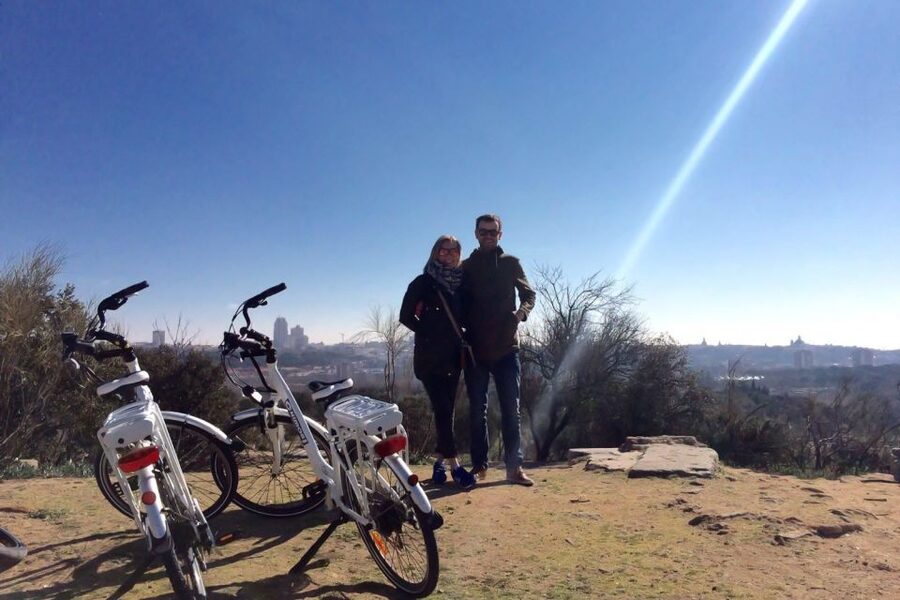
The tour includes a climb inside Casa de Campo where you can rest for a few minutes and admire the skyline. Even if you’re not chasing a strenuous workout, that rest pause is still worth it. On an assisted bike, the route stays comfortable, but you still get the reward of height—so you come away with that top-of-Madrid feeling.
After the hill moment, you’ll descend toward the river. This is also where you’ll get one of the most dramatic visual angles of the day: views of the Cathedral and the Royal Palace from the Huerta de la Partida area. From ground level, those buildings can feel distant or incomplete. From here, they line up with your ride so you can appreciate scale.
Then the tour begins its return ride to the center of town. The fun part is that you’ll notice the route changing again—less park atmosphere, more city texture—as you pedal back toward your starting area.


Price and What Your $46 Buys in Real Value
At $46 per person for about 2 hours, the value is mostly in what you don’t have to manage: renting an e-bike, figuring out a route, and sourcing a guide who knows what to point at.
Your inclusions do a lot of the heavy lifting:
- Electric bike and lock
- Helmet (though it’s not mandatory)
- Bilingual guide (English/Spanish)
- A map of the center of Madrid
- Raincoats, plus baskets for small items
For a short tour, this matters. You spend less time coordinating and more time moving and seeing. Also, the guide’s role is practical: they help you spot bridges, structures, and viewpoints in the right order, so the time doesn’t get eaten by indecision.
The “without effort” promise is mostly about the e-assist. But don’t confuse assisted riding with zero effort. You’ll still pedal and you’ll still be on a bike for two hours, including climbs. The big difference is that you’re less likely to feel wrecked halfway through.
Bike Fit, Road Traffic, and the Smooth- vs. Rough-Ride Reality
Here’s the honest part. Several riders loved how easy the e-bike made the route feel, including people in their 60s and early 70s. That’s a strong signal that the overall design of the tour works for mixed fitness levels.
Still, watch for two practical issues:
- Bike sizing: One rider said the frame was too small and seat height adjustments took stops to fix. If you’re tall, short, or have strong preferences for seat position, tell the team right away at the start.
- Battery/e-assist glitches: At least one account described an e-assist stoppage in a tunnel and needing a bike switch to finish the tour comfortably. This isn’t something you can fully prevent, but you can reduce risk by starting with a proper fit, riding smoothly, and letting the guide know early if your bike’s assist feels weak.
Traffic expectations: the tour is designed for park time, but you might still ride on some busy streets with vehicle traffic. Helmets aren’t required, though they’re provided. I’d still wear it for peace of mind, especially when you’re mixing with cars.
One small but smart tip from the day’s pattern: on hot days, guides can push water reminders and even stop where bottles can be refilled. Bring a refillable bottle if you can.
Guides Who Set the Tone: Clear Storytelling and Calm Control
A big part of this tour is the human factor. Multiple guide names pop up as a highlight: David, Andrea, Jonny, Osmani, Pablo, Bo, Gloria, Borja, and Nicholas. Common threads show up in the way they handle the ride:
- friendly, calm energy
- clear explanations at each stop
- good problem-solving when the group had issues
I also like that many narratives emphasize the guide as part instructor, part coordinator. When you’re cycling, a good guide doesn’t just talk at you. They time the story beats to the scenery—so you’re looking out, then hearing why it matters, then moving on.
That balance is also useful if you’ve already seen some major Madrid sights. Even then, the ride helps you connect the dots across bridges, rivers, and park zones rather than treating each stop like a separate checklist item.
Who This Tour Suits Best (and Who Might Want Another Option)
This is a great match if you want:
- A short, easy introduction to the Madrid outside-the-center side
- A guided route with enough structure to feel efficient
- Scenic payoffs—bridges, Civil War remnants, and skyline views
- The chance to pedal through Casa de Campo’s tree cover without suffering
It may be less ideal if:
- You’re picky about bike fit and can’t stand seat or handlebar adjustments
- You’re nervous about riding anywhere near traffic
- You expect a fully off-road, no-street portion (the ride can include some road segments)
If you’re an active senior, traveling with friends, or meeting Madrid for the first time, it’s a strong way to get oriented fast. If you’re a die-hard cyclist and want long climbs or rugged trails, you might find the time a bit tight for that style.
Should You Book This E-Bike Tour?
I’d book it if you want a two-hour Madrid highlight ride that mixes park calm with city architecture. The route gives you real variety—bridges, river crossing, a big urban-park experience, and a hilltop skyline moment—without turning the day into a grind.
Skip it or choose another option if you’re sensitive to bike sizing or you hate any riding near cars. In that case, I’d ask the operator how they handle frame selection and what to do if assist feels weak.
Bottom line: if your goal is easy, scenic, guided movement through Madrid’s river and biggest park, this tour is a solid value at $46—especially because it saves you from route planning and adds context at every meaningful stop.
FAQ
How long is the Madrid River Side & Casa de Campo electric bike tour?
The duration is listed as 2 hours, though it’s noted that the timing is approximate and the tour can run slightly longer or shorter.
Where do I meet for the tour?
You meet at the local partner’s office. The exact address isn’t provided in the details you shared.
Is the tour offered in English?
Yes. The guide provides English and Spanish.
Are helmets provided, and are they required?
Helmets are included, but they are described as not mandatory.
What’s included in the price?
The tour includes an electric bike, a helmet (not mandatory), a map of the center of Madrid, an English/Spanish bilingual guide, raincoats, baskets, and locks.
What should I bring?
Bring comfortable shoes, a sun hat, and sunscreen.
What’s not allowed during the tour?
Pets, smoking, and luggage or large bags are not allowed.
Will I ride through the park and see landmarks like the river and bridges?
Yes. The route includes going from the city center to Casa de Campo, crossing the Manzanares River, and seeing bridges such as the Serpents Bridge, plus Civil War-era trenches and viewpoint stops.