REVIEW · MARRAKESH
Marrakech: Bicycle Tour with a Local Guide
Book on GetYourGuide →Operated by MoroccoToubkalAdventure · Bookable on GetYourGuide
Two wheels beat walking in Marrakech. I love how this route links Medina alleys and major monuments in a short time, and I especially like the way guides such as Ziad and Salma help you understand what you’re seeing. One caution: parts of the ride can feel intense, with bikes mixing among cars, motorbikes, horse carriages, and donkey carts.
For about $34 for 3 hours, you’re paying for a bike plus a local guide, not just pictures. You’ll want a backpack (the bikes don’t have baskets), and in cooler months you should dress for chilly morning starts.
In This Review
- Key Takeaways Before You Pedal Off
- A Bike-Based Way to Size Up Marrakech in 3 Hours
- Meeting Point, Bikes, and What to Bring
- Gueliz and Hivernage: A Quick Look at the Modern City
- Koutoubia Mosque and the Gardens Behind It
- Saadian Tombs and Bahia Palace: Royal Stops on Two Wheels
- Jemaa el Fnaa Photo Stop: Getting Your Bearings Fast
- Kasbah, Jewish Quarter, and Medina Alleyways: The Real Marrakech Test
- How the Guides Make or Break This Tour
- Price and Value: What You’re Really Paying For
- Safety and Comfort: Traffic Reality Check
- Who Should Book This (and Who Should Skip It)
- Should You Book the Marrakesh Bicycle Tour?
- FAQ
- How long is the Marrakech bicycle tour?
- How much does the tour cost?
- What’s included in the price?
- Are entrance fees included for the monuments?
- Where do I meet the guide?
- What should I bring for the ride?
- What time does the morning tour start in winter?
- What languages is the live guide available in?
Key Takeaways Before You Pedal Off
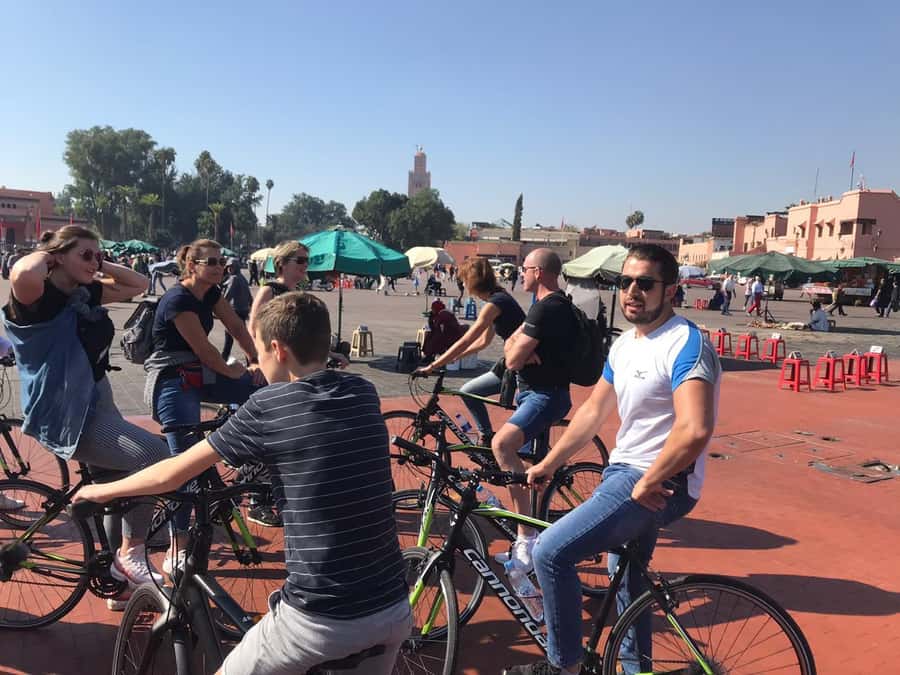
- Medina navigation with a guide: You’ll follow someone who knows where the interesting turns and photo stops are.
- Major sights in a compact loop: Stops include Koutoubia Mosque, Saadian Tombs, Bahia Palace, and Jemaa el Fnaa.
- Old city walls and historic districts: You’ll pass along the medieval red-clay city walls and through areas like the Kasbah and Jewish Quarter.
- Gueliz and Hivernage time: You get a look at Marrakech beyond the Medina.
- Small-group feel: Expect a manageable group size, but narrow lanes can still be tight.
- Traffic can be the real challenge: It’s not a gentle ride, so don’t treat it like a casual spin.
A Bike-Based Way to Size Up Marrakech in 3 Hours
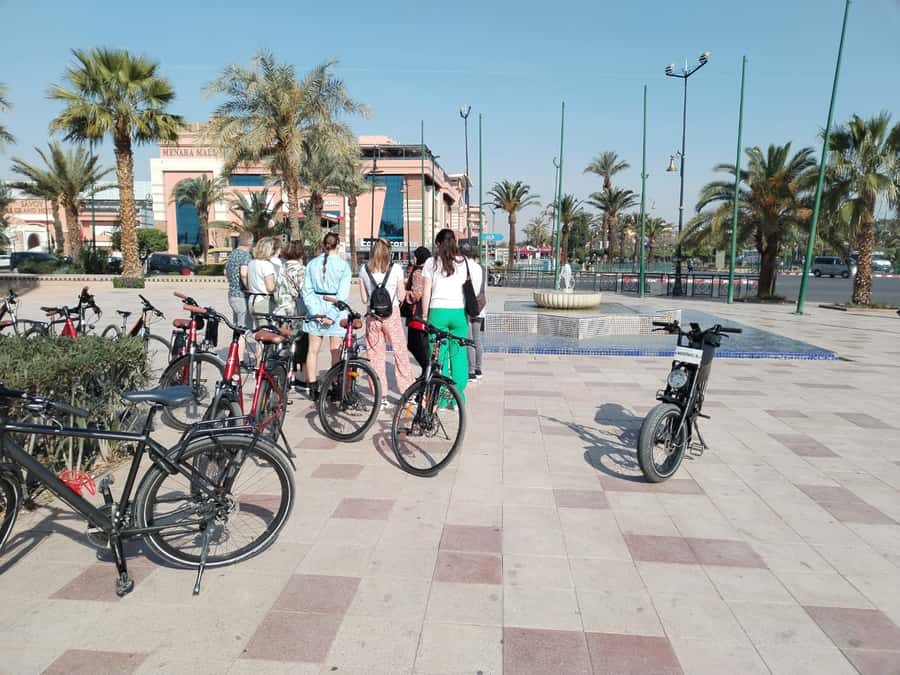
Marrakech can hit you like a wall of sights and sounds the moment you step outside. This tour is built for fast orientation: you ride through the old imperial core, then swing into the newer parts so the city starts making sense.
What I like most is the pacing. In a few hours, you’re exposed to architecture, neighborhood vibes, and everyday street life, so later visits don’t feel like guesswork. And because you’re on a bike, you cover ground that would take much longer on foot.
You can also read our reviews of more tours and experiences in Marrakesh.

Meeting Point, Bikes, and What to Bring
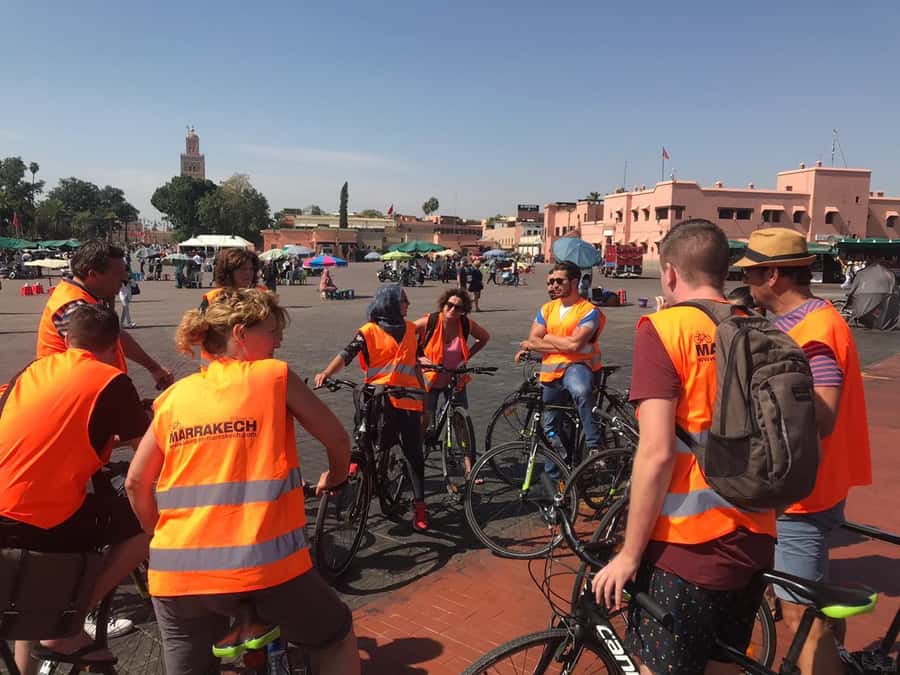
You meet your guide at the Morocco Toubkal Adventure shop. The ride is offered in multiple languages, including English, Dutch, French, Spanish, German, so you should be able to follow the explanations without straining.
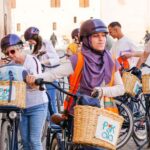
Plan on riding without baskets. The tour specifically asks you to bring a backpack, which is the simplest way to handle water, a layer, and any small purchases you make.
If you’re visiting in winter (from Nov 1 to Mar 31), morning departures start at 10:00 AM, and you’ll meet at 9:45 AM. Cooler mornings in Marrakech can still feel brisk on a bike, especially before you’ve warmed up.
Gueliz and Hivernage: A Quick Look at the Modern City
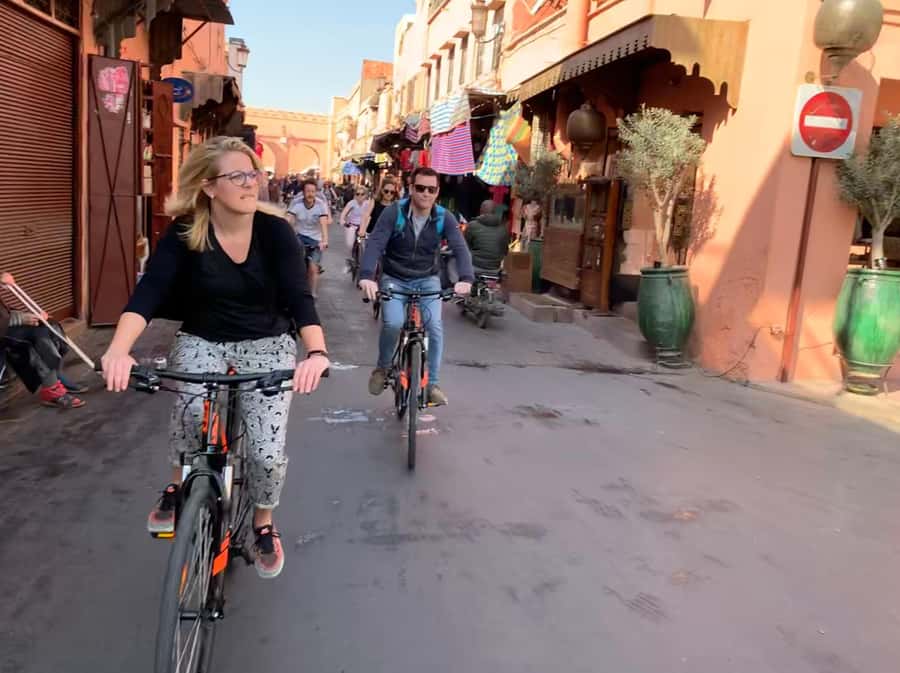
Your ride includes time in Gueliz and Hivernage, the areas that feel more like modern Marrakech. This is the part that helps you stop thinking only in terms of the Medina’s maze, because it shows you how the city breathes outside the old walls.
I find these neighborhoods useful because they give you a visual contrast. After seeing the monuments and thick history of the old city, the newer streets help you understand the layout you’ll be walking through later.
This segment isn’t a long lesson. It’s short, but it’s a smart primer for the rest of the day.
Koutoubia Mosque and the Gardens Behind It
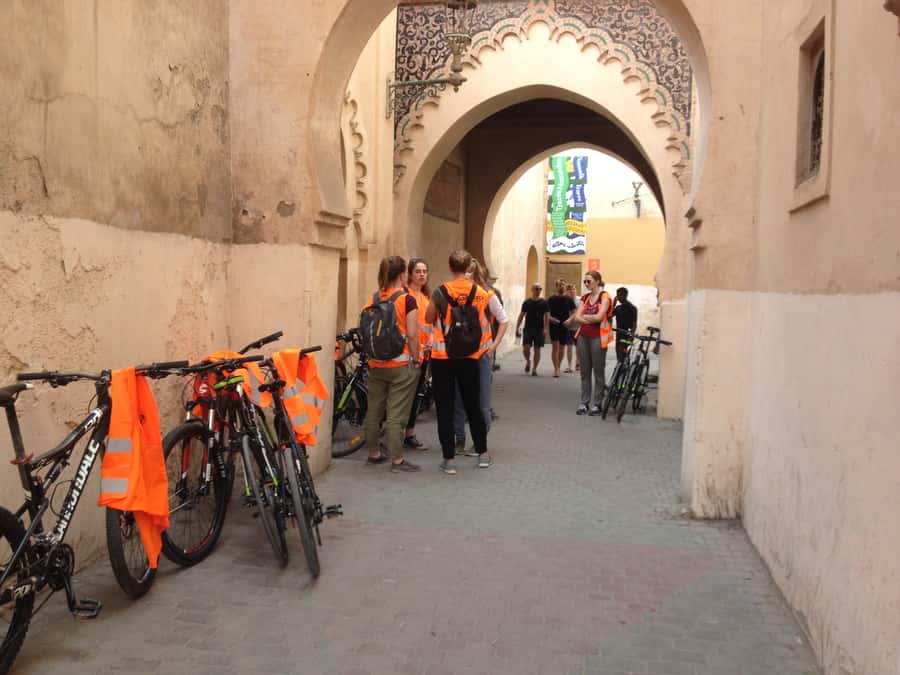
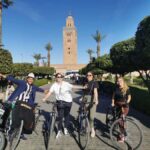
Koutoubia Mosque is one of those Marrakech landmarks you’ve probably seen in photos. Here, you experience it from street level, with the angle of the ride helping you see how the area works—where people move, where the open spaces sit, and why this place anchors the surrounding district.
The tour also includes gardens behind the mosque. That matters because it gives you a breather from the denser streets. Even if you don’t go inside any monuments, the garden stop can help you reset your eyes before you return to busier neighborhoods.
Expect a guided photo moment here too. It’s not just for a picture; it’s where you start building mental reference points for the rest of the ride.
Saadian Tombs and Bahia Palace: Royal Stops on Two Wheels
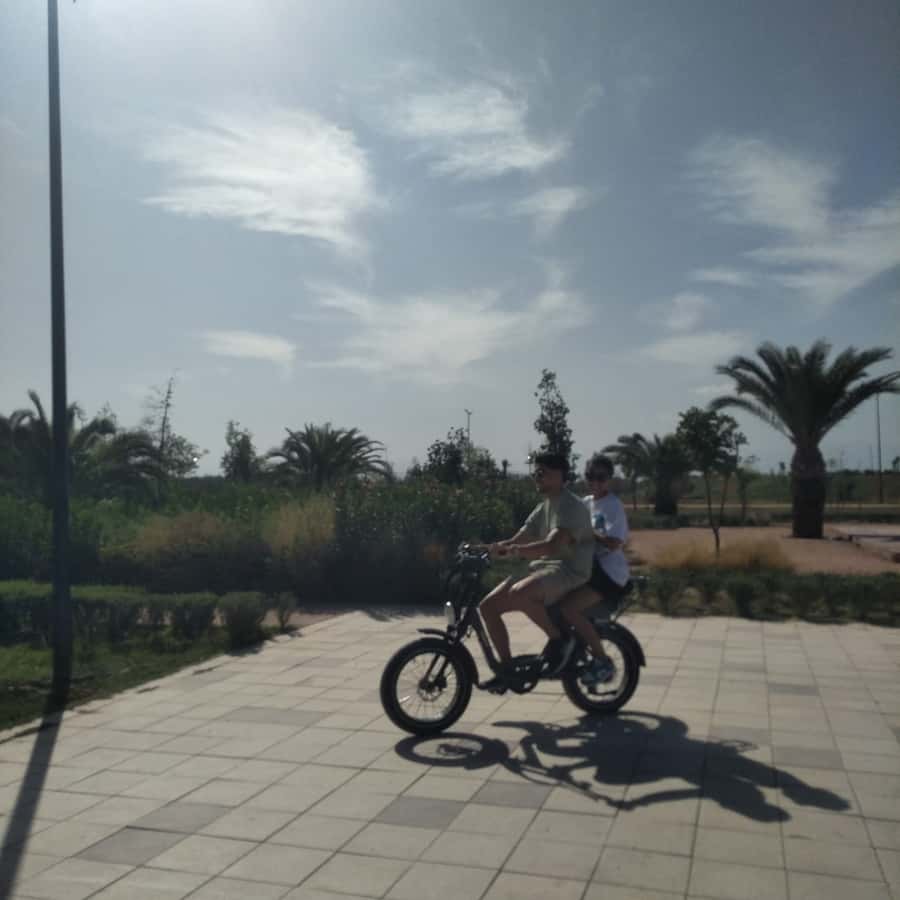
Two major palace-and-heritage stops are built into the route: Saadian Tombs and Bahia Palace. These are the kinds of places where you’ll want your bearings, because the details are the whole point—materials, proportions, and the way the rooms and courtyards connect.
Since entrance fees aren’t included, you should think of these stops in two layers. First, you’ll get the “see and understand” value from the ride itself. Second, if you want to go inside, you’ll need to budget for tickets on your own.
The bike format helps here. You’re not spending hours transferring between far-flung sites. You’re moving as you learn, which makes it easier to remember what you saw.


Jemaa el Fnaa Photo Stop: Getting Your Bearings Fast
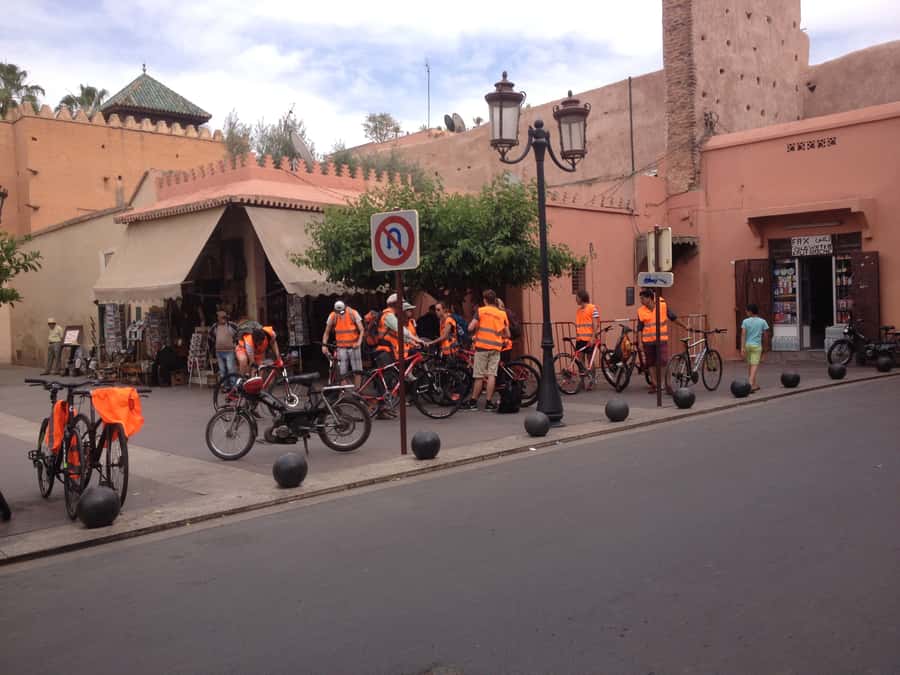
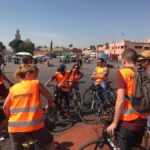
You’ll finish your tour with time near Jemaa el Fnaa, Marrakech’s best-known square. Even if your visit is mostly a photo-and-orientation stop, it’s a helpful moment to connect the city’s story to a real meeting point.
This is where the tour becomes more than sightseeing. After riding through corridors and alleyways, seeing an open, central space makes you feel like you can finally map the city in your head.
If you want to turn this into a fuller evening later, you’ll be able to find your way more confidently. That’s one of the biggest practical wins of doing the ride early in your trip.
Kasbah, Jewish Quarter, and Medina Alleyways: The Real Marrakech Test
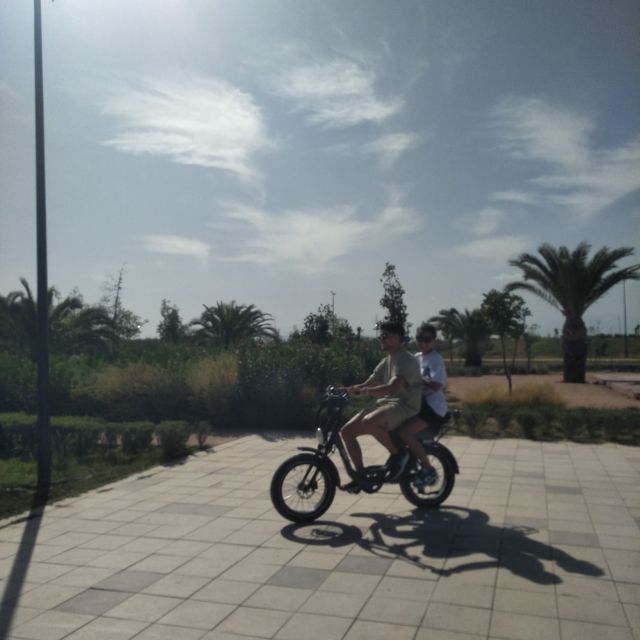
The most memorable part for many people is the ride through the Kasbah and the Jewish Quarter, plus the small alleyways of the Medina. This is where the tour earns its reputation as a true city-experience, not a loop around the obvious spots.
But let’s be honest about the main consideration: the streets can be chaotic. Reviews describe heavy interaction with traffic—cars, motorbikes, horse carriages, buses, and donkey carts—plus tense moments at intersections. The good news is that guides manage the flow and keep the group together, and many guests say they felt safe once they followed instructions closely.
A few practical points I’d take from the experience:
- Follow the guide’s line and spacing. In narrow lanes, there’s little room for hesitation.
- If you feel nervous, tell the guide early. Several guests noted guides adjusted for comfort and helped them through busy sections.
- Don’t assume helmets are provided. Some guests said helmets weren’t offered, so if you’re picky about protection, bring your own.
Also, note the clothing rule: short skirts aren’t allowed. It’s not about judgment; it’s about keeping things comfortable and practical for riding and moving through crowded areas.
How the Guides Make or Break This Tour
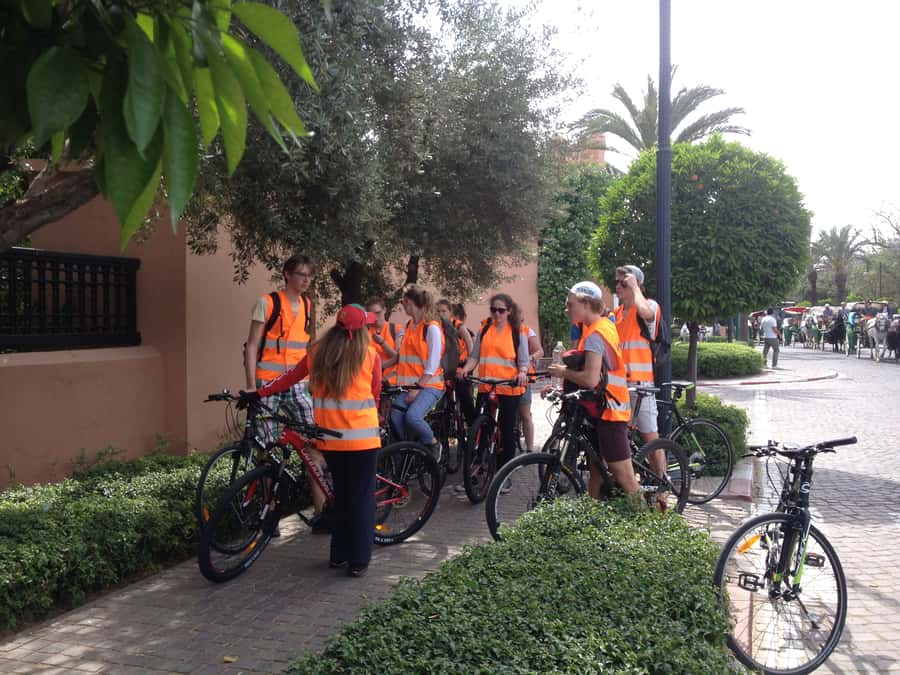
This tour’s star is the guide. Many guests highlighted the same pattern: friendly personality, strong storytelling, and clear safety guidance when the streets get hectic.
Names you’ll see again and again include Ziad, Miriam, Tarik, Salma, Helma, Abdou, Adil, Hanan, and Maream. Regardless of the name, the common thread is that the guide’s job isn’t just to point. They help you interpret what you’re passing—why certain buildings matter, how neighborhoods connect, and what to watch for as you ride.
A couple of small issues came up too. Some people wished the guide wore a more visible marker (like a colored vest), especially when you’re surrounded by other bikes, motorbikes, and pedestrians. There’s also mention that keeping track of everyone at intersections would be easier with more visible positioning—so you should stay close and don’t drift.
In the best cases, the guide also turns the ride into a mini cultural tour beyond the big monuments. Some routes reportedly include stops where you can see or talk about local crafts, like tile work and mosaics, or meet people baking bread. Others mention spice shops, tea breaks, and even argan oil explanations at a place you can trust.
Price and Value: What You’re Really Paying For
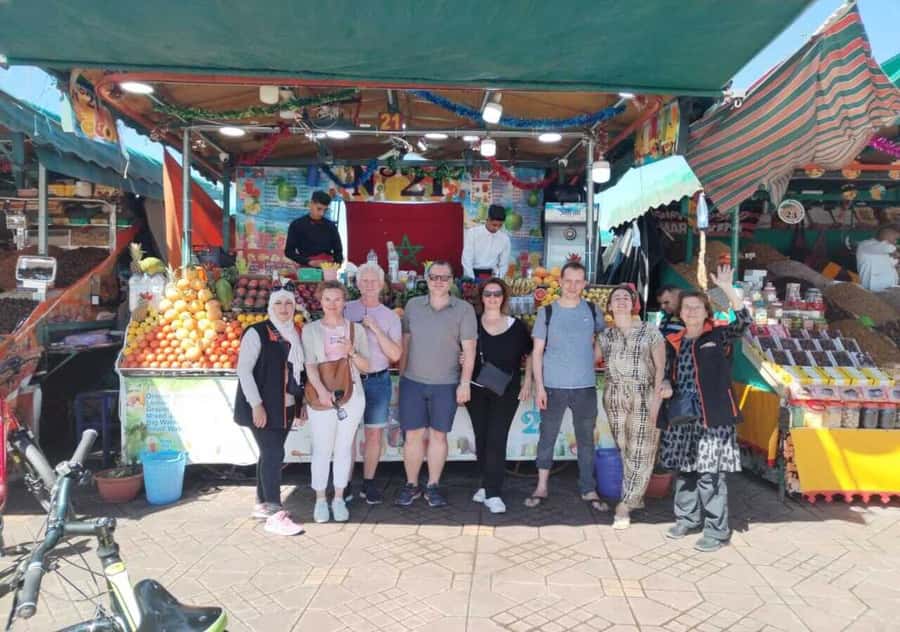
At $34 per person for 3 hours, the price is mainly about two things: the bike and a local guide. That’s good value if you want more than a casual wander and you care about learning how Marrakech fits together.
A few costs to plan for:
- Entrance fees for monuments are not included. If you want to go inside Saadian Tombs and Bahia Palace, you’ll need to buy tickets separately.
- Beverages aren’t included. Bring a plan for water, and budget for a refreshment break if you want one.
One reason this tour is worth it for me is timing. If you do it early, the map in your head improves fast. Later, even simple walks feel easier because you recognize landmarks and routes you already rode.
Safety and Comfort: Traffic Reality Check
This is not a slow bike path. It’s a street ride through a working city where rules can feel different than what you’re used to.
That’s why the guide’s role matters so much. Reviews describe guides instilling confidence, giving instructions before heavy traffic segments, and waiting at tricky points so everyone stays together.
Still, I’d treat it like an active street challenge:
- If you can’t ride confidently, skip this.
- If you’re on a nervous side, sit with the idea that the guide is there to help you through the hardest crossings.
- Consider bringing a helmet even if one isn’t provided; and bring a bell if you think it would make you feel more visible, since one guest mentioned they’d like a bell option.
Who Should Book This (and Who Should Skip It)
This tour fits best if you:
- Can ride a bike comfortably.
- Want an efficient introduction to Marrakech old and new parts.
- Like city motion and don’t mind street-level chaos in exchange for authenticity.
It’s probably not the right choice if:
- You’re not comfortable riding in busy traffic.
- You need a fully calm, low-stress outing.
- You don’t like moving through crowded, narrow areas on a tight schedule.
If you’re the type who wants to get your bearings early, this is a strong option. It’s also a great choice for first-time visitors who’d rather learn from someone on the ground instead of trying to navigate the Medina alone.
Should You Book the Marrakesh Bicycle Tour?
Yes, you should book it if you’re ready for a real street ride and you want a fast, guided way to understand Marrakech. For the money, you’re getting more than transport—you’re getting perspective, landmarks, and a route you’ll feel comfortable repeating later on your own.
Skip it if you’re expecting a gentle ride or if busy intersections would stress you too much. If you can handle that part, this tour is one of the best ways to turn Marrakech from a confusing blur into something you can actually name and remember.
FAQ
How long is the Marrakech bicycle tour?
The tour lasts 3 hours.
How much does the tour cost?
The price is $34 per person.
What’s included in the price?
Your bike and a local guide are included.
Are entrance fees included for the monuments?
No. Entrance fees for historical monuments are not included.
Where do I meet the guide?
You meet your guide at the Morocco Toubkal Adventure shop.
What should I bring for the ride?
Bring a backpack, since the bikes do not have baskets.
What time does the morning tour start in winter?
From November 1st to March 31st, the morning tour starts at 10:00 AM, and you meet the guide at 9:45 AM.
What languages is the live guide available in?
The guide is available in Dutch, English, French, Spanish, and German.