REVIEW · MARRAKESH
Marrakech:Guided City Cycling Tour – Culture, Colors & Charm
Book on GetYourGuide →Operated by Marrakesh Green Wheels · Bookable on GetYourGuide
Two wheels make Marrakech make sense. This 3-hour bike ride threads the Medina with Gueliz so you see the city’s full personality, from souks to wide boulevards, with young Moroccan guides leading the way. I love that it’s not just monuments on autopilot; it’s people, craft, and neighborhood pace.
The two things I liked most are the chance to ride through the souks like a local (including iconic stops such as the Koutoubia Mosque area) and the way the tour builds in real conversation and small breaks, like Moroccan mint tea and fresh juice at the end. You’ll also get hands-on culture time at places such as a traditional ceramics workshop and the Zaouia Al Abassiya sanctuary.
One heads-up: Marrakech traffic and foot traffic can be intense, especially in narrow lanes, so you’ll want to be a confident rider. And since headphones aren’t allowed, you’ll rely on your guide and the group around you.
In This Review
- Key things that make this tour worth your time
- Why a 3-hour Marrakech bike tour is the sweet spot
- Meeting up in front of Hotel Les Borjs de Kasbah (and how to spot it)
- The Medina ride: souks, neighborhood lanes, and Koutoubia vibes
- Bab Agnaou, the walls, and how the city reads from a bike
- Zaouia Al Abassiya and the ceramics workshop: craft you can see
- Royal Theatre interior stop: modern Marrakesh with real style
- Gueliz on bikes: wide roads, parks, and everyday modern life
- Safety and riding level: what to expect when traffic is real
- What $32 gets you: real value, not just sightseeing
- Tour highlights mapped to your interests (and who it suits)
- Should you book this Marrakech cycling tour?
- FAQ
- How long is the Marrakech guided city cycling tour?
- What does it cost?
- What is included in the price?
- Are entry fees included?
- Where do I meet the group?
- What languages do the guides speak?
- Are headphones allowed during the tour?
- Who is this tour not suitable for?
Key things that make this tour worth your time
- Local-youth guiding with guides such as Hanan, Ayoub, Tariq, Selma, and Salah (names vary by day)
- Medina-to-Gueliz contrast: tight souks plus calmer parks and boulevards
- Kasbah and ramparts photo moments that explain how the city evolved
- Zaouia Al Abassiya + ceramics workshop where craft feels personal
- Royal Theatre interior photo stop and a quick look at modern Marrakesh
- Small-group ride plus a tea-and-juice break for rest and recommendations
Why a 3-hour Marrakech bike tour is the sweet spot
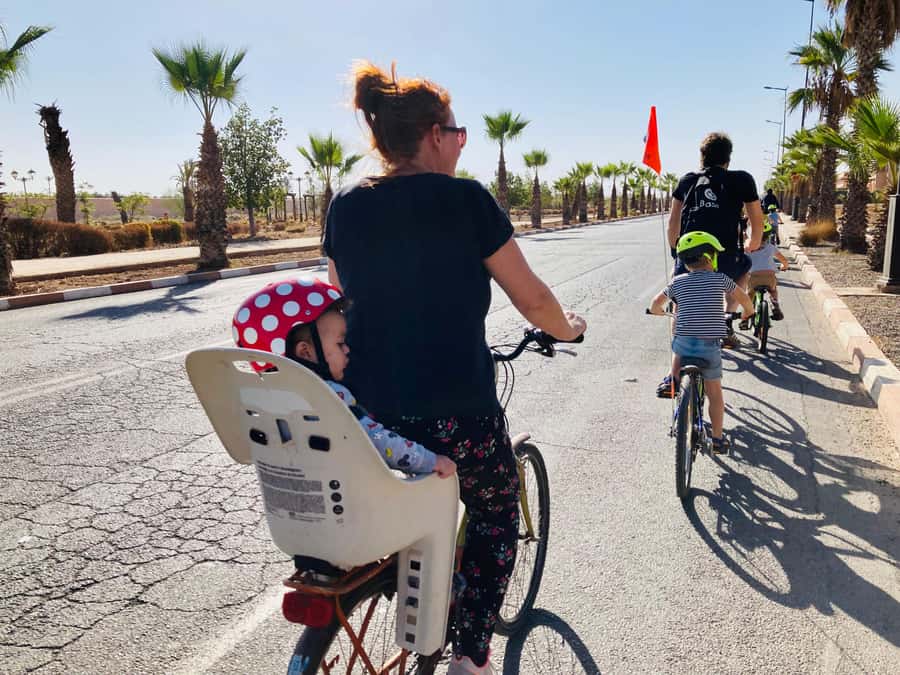
Marrakech is one of those cities where walking can feel like a constant dodge-and-cope job. A bike tour solves that problem by letting you cover real distance without losing the street-level experience. In about 3 hours, you get enough structure to understand what you’re seeing, without exhausting your legs.
This tour also does something smart: it mixes “big recognizable landmarks” with “everyday local scenes.” You’re not only ticking off places like the Koutoubia Mosque area and Mellah quarter; you’re also moving through artisan quarters, family-run shops, and community spaces where life is still happening at human speed.
I also like that the rhythm is built for city riding: short segments, frequent look-backs, and photo pauses when it matters (like the walls/ramparts). That keeps the tour feeling fluid instead of forced.
You can also read our reviews of more tours and experiences in Marrakesh.

Meeting up in front of Hotel Les Borjs de Kasbah (and how to spot it)
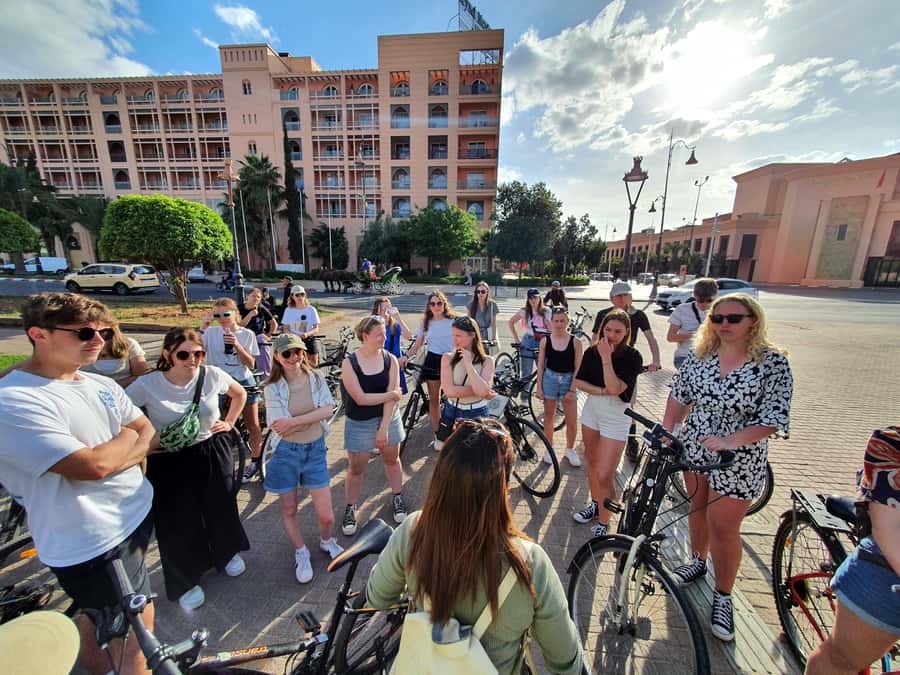
Start is easy if you know what to look for. Your meeting point is in front of Hotel Les Borjs de Kasbah, marked by an orange flag that has the word CYCLING on it.
Go a little early. Marrakech can be busy, and you’ll want a minute to get your bearings, meet your guide, and ensure your bike fits comfortably before you roll. The tour includes a quality bike and helmets, which helps, but you still control how relaxed you feel once you’re moving.
If you’re meeting a group for the first time, don’t assume everyone will be in one obvious cluster—sometimes the sign/flag is the best anchor. Once you locate the orange flag, you can handle the rest quickly.
The Medina ride: souks, neighborhood lanes, and Koutoubia vibes
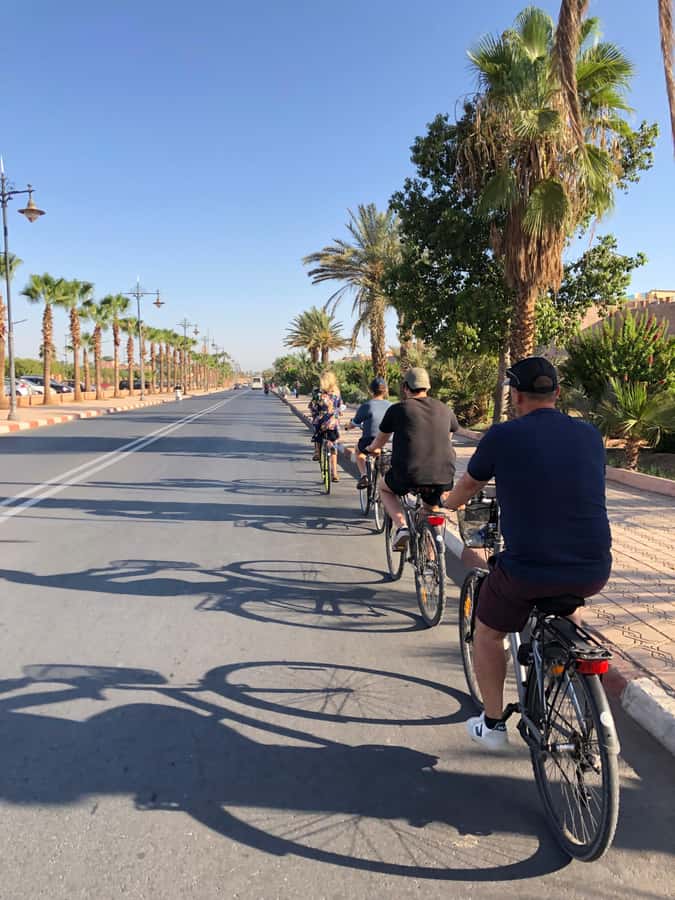
The heart of the tour is the Medina section—winding streets where the energy is loud, visual, and close-up. Expect narrow lanes, lots of pedestrians, and shop fronts that turn into mini-displays of textiles, crafts, spices, and everyday goods.
The biggest payoff of biking here is scale. From a bicycle you can actually move through the souks without losing the thread of where you are. The guide helps you connect what looks similar—why some streets feel different, how neighborhoods function, and where specific historic areas sit in relation to each other.
Stops and sights you’re likely to cover along the way include landmark areas such as Koutoubia Mosque, Riad Zitoun, and the Mellah quarter. The most memorable part, though, is the street-level “how people live” vibe: family shops, artisan blocks, and the way the Medina keeps its identity while you pass through.
What to watch for: you may slow down more than you expect in the tightest parts. That’s normal here. The route is designed so you’re not fighting the crowd by yourself—your guide manages the group through the trickier segments.
Bab Agnaou, the walls, and how the city reads from a bike
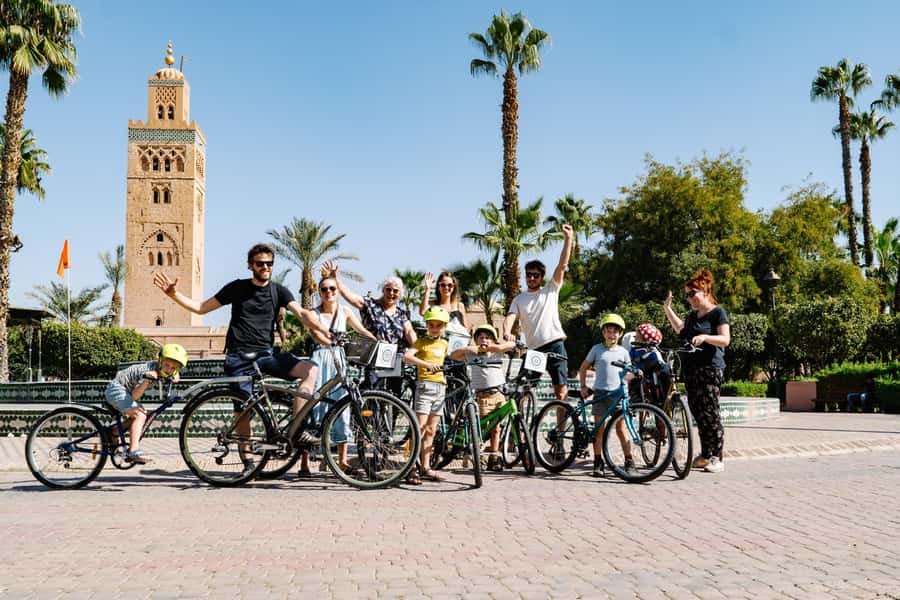
After the souks, you shift into a different feel—more open sightlines and a clearer sense of city planning. Bab Agnaou is a classic highlight in this zone, and the ride-by/passing stop is timed so you get the idea without turning the tour into a long queue situation.
Then comes one of the most useful parts for first-time visitors: the ramparts. Riding near the 12th-century walls gives you a “map in motion.” You can see the city’s shape and how older Marrakech connects with newer neighborhoods outside the walls.
This is also where photos tend to work better. You’re not always squeezed between doorways. You get moments where the city opens up, and you can look at how centuries of development sit on top of each other.
If you’re the type who likes history but hates long monologues, this section hits the balance. You’ll get the story in shorter bursts while still moving.
Zaouia Al Abassiya and the ceramics workshop: craft you can see
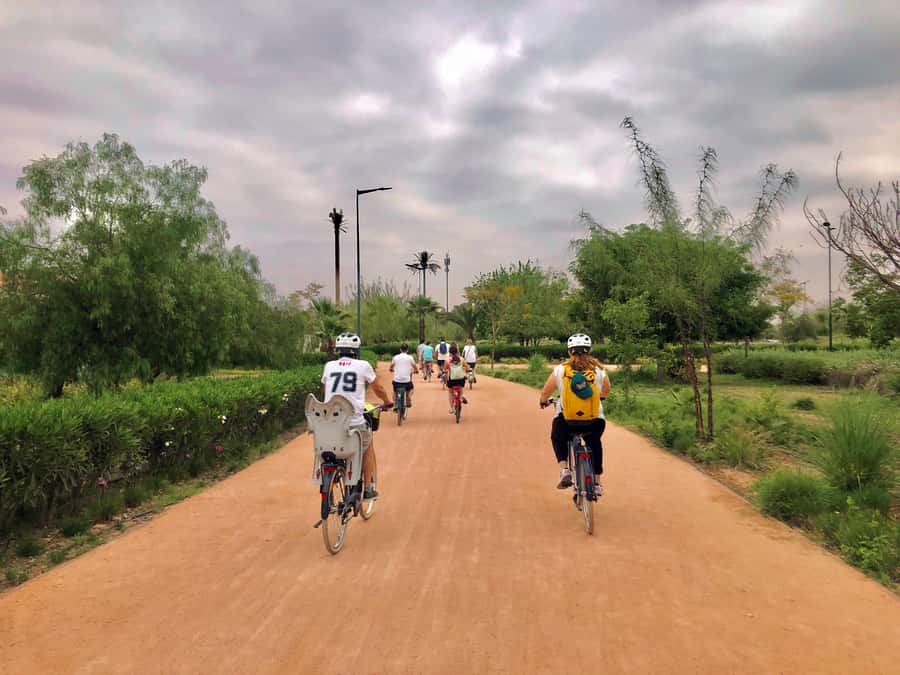
One of the smartest choices in this itinerary is the shift to calmer, more reflective spaces. The tour includes Zaouia Al Abassiya, described as a serene 16th-century spiritual sanctuary still cherished by locals. Even if you’re not a “temple person,” this stop helps you slow your brain and reset after the Medina’s noise.
Right after, you get a hands-on craft stop: a traditional ceramics workshop where artisans shape clay using techniques passed down through generations. You’re not just watching finished products behind glass. You see the process—how skilled work looks when it’s being done for real, not as a staged demonstration.
This is where the “culture” part becomes tangible. Marrakech craft is a big deal, but it can feel vague when you only shop for souvenirs. Seeing the making helps you understand what you’re buying, and why certain colors, patterns, and textures look the way they do.
A quick consideration: these stops can be quieter and more focused. If your group gets restless, your guide’s role matters. The best tours keep you attentive without turning it into a lecture.


Royal Theatre interior stop: modern Marrakesh with real style
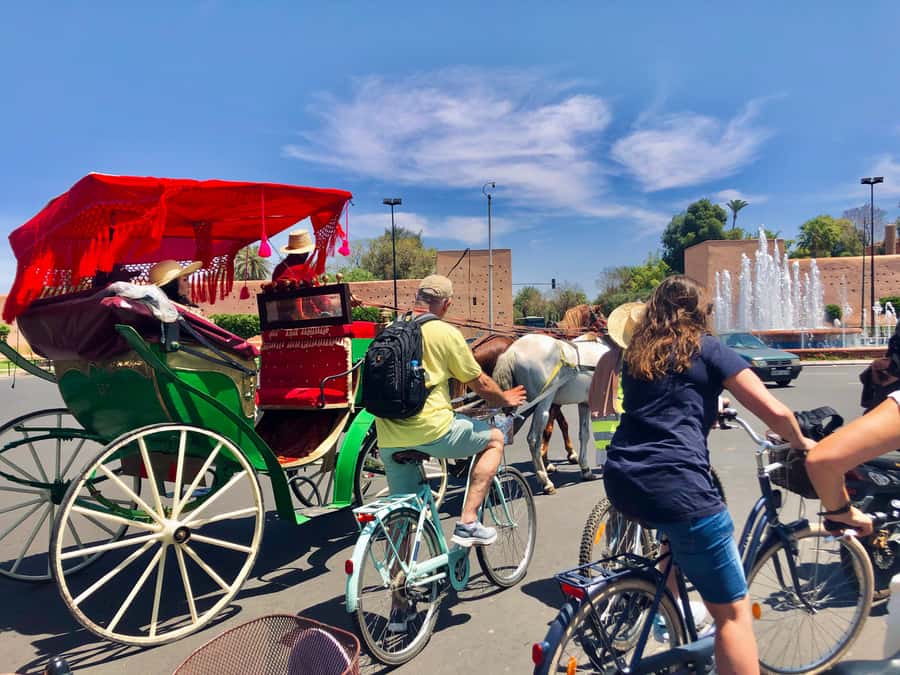
Marrakech isn’t only old walls and souks. The tour also includes a stop at the Royal Theatre for photos and a guided look inside. The interior is the headline here, and it’s a nice contrast to the narrow stone streets you’ve already ridden through.
Why this matters for you: it gives you a fuller picture of the city’s creativity. Even if you’re mainly visiting for traditional sights, it helps to also see how modern institutions express design and culture.
Practically, this is a quick segment rather than a long sit-down visit. That keeps the overall ride-and-see formula intact, especially since you’ll still cover more ground afterward.
If you care about photography, bring a phone/camera you can keep secure while riding earlier. The theatre stop gives you a clean chance to use it without chasing the perfect angle in a moving crowd.
Gueliz on bikes: wide roads, parks, and everyday modern life
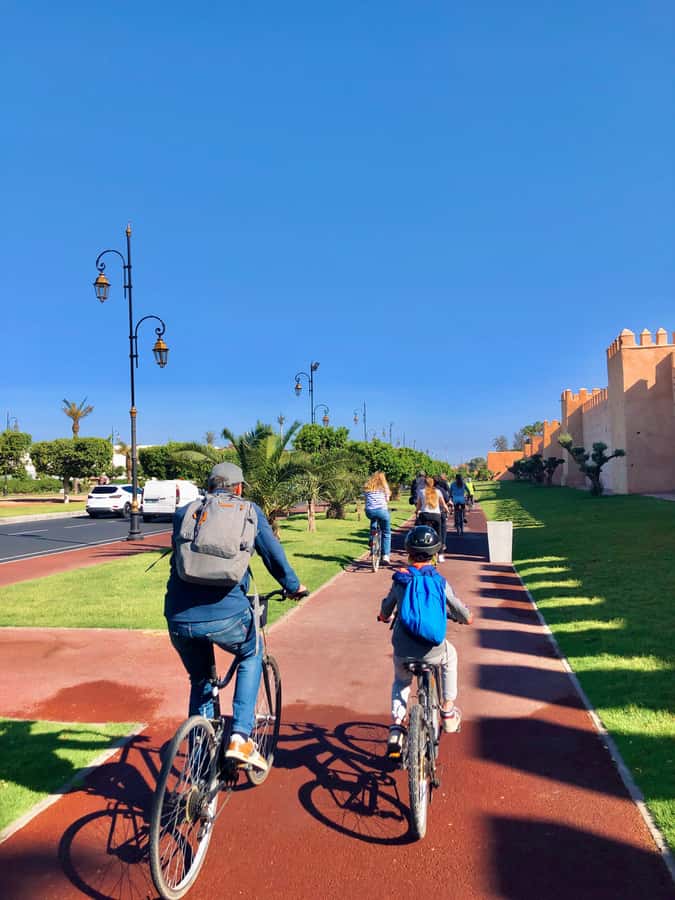
As you head toward Gueliz, the city changes. Built in the early 1900s, this neighborhood feels more open: wide boulevards, green parks, and big public spaces. It’s the part of Marrakech that helps you understand what life looks like beyond the Medina.
Here you’ll ride among places like the train station area and around the Royal Theatre zone you already saw. The vibe is more “local daily routine” than “tour route,” with cafés and neighborhood life that looks like it belongs to people who live here year-round.
The value of this section is simple: it teaches you where the city’s energy goes after you leave the Medinas’ walls. Many first-time visitors spend all their time in the old center. This tour gives you a measured dose of the other side, so your later independent exploring feels more confident.
One note: since Gueliz is wider, you may feel relief. That’s not a gimmick; it’s a chance to regain rhythm and enjoy the ride rather than constantly scanning for pedestrians.
Safety and riding level: what to expect when traffic is real
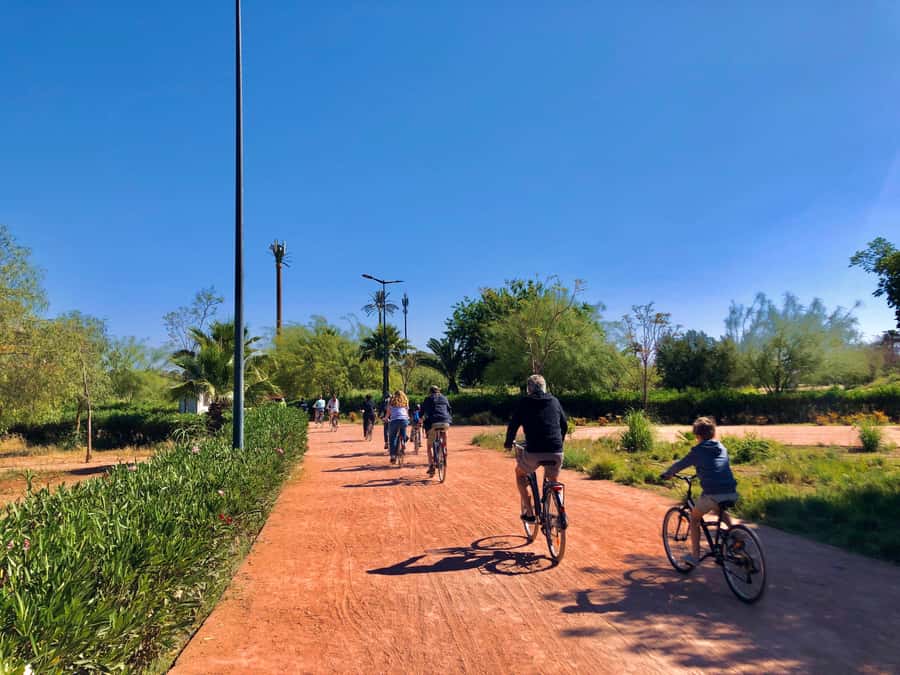
Marrakech cycling is not “car-free paradise.” Reviews and guides consistently emphasize that you’ll be weaving through busy streets and lively pedestrian zones. The good news is that the ride is paced and managed with safety in mind, with helmets provided and guides positioned to keep the group together.
If you’re an average rider who can start, stop, and steer smoothly, you’ll likely be okay. If you’re nervous about riding in traffic, choose this tour only if you’re willing to trust your guide’s timing. One family noted it can feel intimidating at first, but the guide can make it doable when you follow instructions closely.
Small tips that help a lot:
- Keep your eyes up, not down.
- Expect sudden stops in tight spots and don’t yank the handlebars.
- Stay calm when pedestrians cut across your path; your guide handles the flow.
Also note a rule that affects your experience: headphones aren’t allowed. That’s actually good in a city like this. You stay aware of your surroundings and can listen when your guide calls out transitions or explains a stop.
What $32 gets you: real value, not just sightseeing
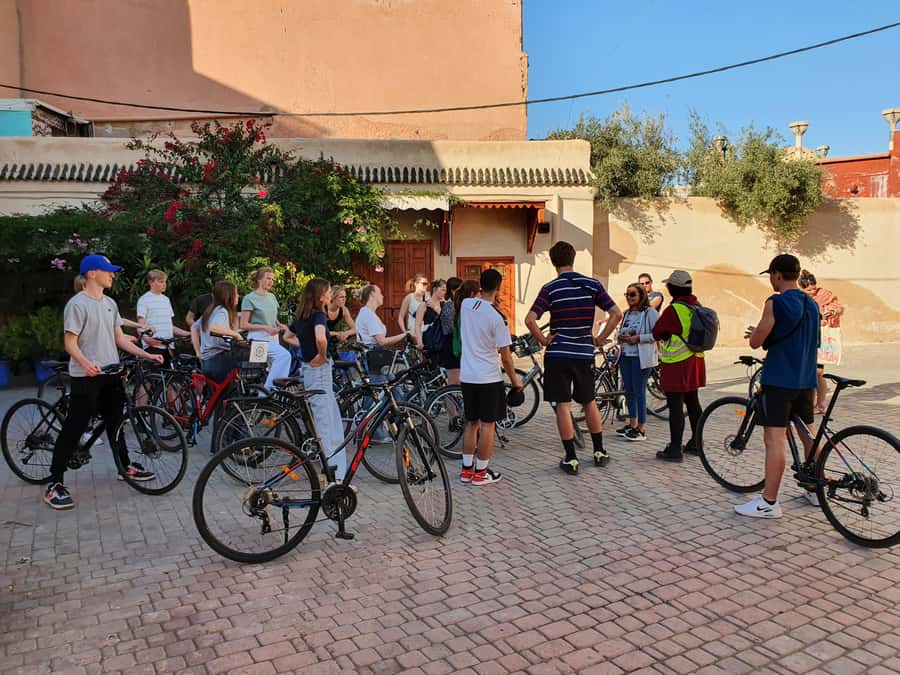
At $32 per person for a 3-hour guided ride, you’re buying more than a route. You’re getting:
- A quality bike
- Helmet for safety
- Bottled water
- Mint tea and fresh juice as refreshments
- An experienced local cultural guide in English, French, or Dutch
- Entry fees are not included, so if you want ticketed attractions, that’s extra
This is where value shows up. A guided bike tour costs less than many private excursions, but it saves you time and reduces the stress of figuring out where to go and how to navigate traffic. You also get structured stops instead of wandering in circles, which is a big deal in the Medina.
The social-impact angle is part of the value too. This tour is run with training and youth support in mind, so your money helps local young people gain skills and guides work. Guides you may meet can include names like Hanan, Ayoub, Tariq, Selma, Salah, Nana, and Abdo, and the consistent theme is friendly guidance and care for group comfort.
Tour highlights mapped to your interests (and who it suits)
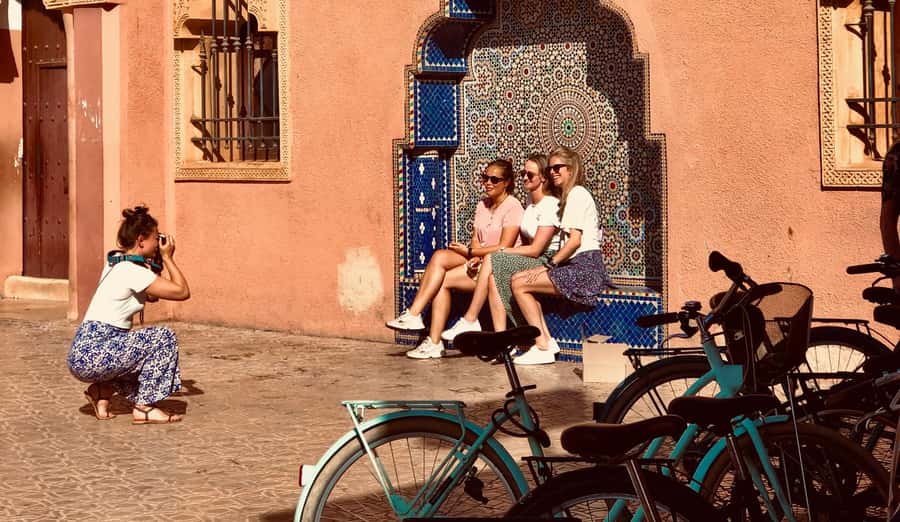
If you love:
- History without heavy lectures, you’ll like the ramparts, Bab Agnaou, and the way the guide connects landmarks.
- Craft and local life, the ceramics workshop and Zaouia Al Abassiya are worth the ride time.
- City contrast, you’ll enjoy the switch from the Medinas’ lanes to Gueliz parks and boulevards.
Who it suits best:
- First-timers who want a strong orientation fast
- People who don’t want to spend days figuring out the Medina
- Cyclists who are comfortable enough to ride through real street conditions
Who might want to skip it:
- Anyone who is not comfortable riding in busy traffic situations
- Pregnant women (not suitable)
- Babies under 1 year (not suitable)
Should you book this Marrakech cycling tour?
If you want Marrakech in one efficient shot—old streets, historic sights, artisan craft, and a taste of modern neighborhoods—this is a strong choice. I’d book it if you like guided context and you want the Medinas’ energy without turning your day into sore-feet chaos.
Skip it only if biking in traffic stresses you out too much. If you can ride confidently, this tour turns Marrakech’s chaos into a navigable adventure, with a tea-and-juice pause that gives you time to breathe and plan your next day.
FAQ
How long is the Marrakech guided city cycling tour?
The tour runs for 3 hours.
What does it cost?
It’s priced at $32 per person.
What is included in the price?
You get a quality bike, a helmet, bottled water during the ride, Moroccan mint tea and fresh juice, and an experienced local cultural guide.
Are entry fees included?
No. Entry fees to attractions are not included.
Where do I meet the group?
The meeting point is in front of Hotel Les Borjs de Kasbah. Look for the standing orange flag with the word CYCLING written on it.
What languages do the guides speak?
The live tour guide is available in English, French, and Dutch.
Are headphones allowed during the tour?
No. Headphones are not allowed.
Who is this tour not suitable for?
It’s not suitable for pregnant women and babies under 1 year.