REVIEW · MARSEILLE
Marseille: Sightseeing E-Bike Tour
Book on GetYourGuide →Operated by Station Bee's · Bookable on GetYourGuide
Marseille looks best from moving feet. This 3-hour e-bike tour strings together the city’s biggest sights fast, with a guide who helps you ride smarter and spot what matters. I love how much ground you cover without burning your whole day, and I also like the way stops like Notre-Dame de la Garde come with real context, not just a quick photo. One thing to consider: you will mix in some city riding, so you need real bike confidence even with electric help.
You meet at 2 Rue de la Loge, right by the bike shop, and the start is practical. You get a helmet, a safety briefing, and a short test ride so the bike fits and the assist feels right before you roll out. In the feedback I saw, guides such as Greg, Matt, Mathieu, Tiou, and Cyril are described as attentive and patient, even repeating details so everyone hears the story at the right moment. Small group size (up to 10) also helps: it stays organized when you thread through busy areas.
In This Review
- Key things I’d plan around
- Getting started at 2 Rue de la Loge: helmets, fit, and a short test ride
- MuCEM, Villa Méditerranée, and the Cosquer cave concept: starting with Marseille’s big cultural face
- La Major Cathedral: a quick stop that helps you understand the city’s “north” side
- Le Panier and Place de Lenche: old streets, real photos, and a sense of the city hall-to-hospital story
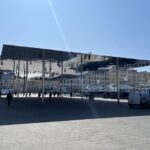
- L’Ombrière and the Vieux Port: design by Norman Foster meets the port’s nonstop energy
- Pharo via the Bassin du Carénage: a scenic stretch that sets up the Corniche
- Corniche John Kennedy, Catalans, and the colonial armies + Château d’If story
- Notre-Dame de la Garde: the ride ends with the view you remember
- How hard is it, really? (Easy/medium plus city confidence)
- Price and value: why $58 for 3 hours can make sense
- What to bring (and what to do before you roll out)
- Should you book this Marseille e-bike tour?
- FAQ
- FAQ
- How long is the Marseille sightseeing e-bike tour?
- How far do you ride?
- Where is the meeting point?
- Is the e-bike included?
- What safety gear do you get?
- Do you need to be an experienced cyclist?
- What are the main stops during the ride?
- Are inside visits included or optional?
- Is there a break for using the restroom?
- Is food included in the price?
- What languages are the guides?
- Is it suitable for children or strollers?
Key things I’d plan around
- E-bike setup first: helmets on, safety briefing, then gear and assist practice before sightseeing starts
- Big-sight order: MuCEM and the major waterfront sights early, then the views and basilica later
- Norman Foster stop: you’ll get a quick presentation of L’Ombrière, designed by Norman Foster
- Corniche John Kennedy time: you get a longer scenic section plus a brief break window
- Photo-focused pacing: frequent stops with guided history and optional inside visits
- A real hill payoff: the ride ends with the climb up to Notre-Dame de la Garde’s views
Getting started at 2 Rue de la Loge: helmets, fit, and a short test ride
This tour begins at 2 Rue de la Loge (13002 Marseille). It’s a simple setup: you show up at the shop, your guide checks you in, and you’re not thrown onto a bike until the basics are covered.
Before you even hit the streets, you’ll get:
- A safety briefing (about 20 minutes)
- Helmet distribution
- A quick “how the e-bike works” talk, including gears and electrical assistance
- A test drive and final checks (saddle height, brakes, and riding advice for the city)
That matters more than you might think. Marseille has normal city chaos—pedestrians near corners, cyclists weaving, cars that don’t always follow the rules you grew up with. Starting with a test ride helps you get comfortable with the bike’s feel, especially when the route includes a climb toward the basilica at the end.
Also, they provide saddlebags, which is a small detail but useful. You can keep a daypack closed and your essentials handy without juggling a backpack on your back the whole time.
You can also read our reviews of more tours and experiences in Marseille.
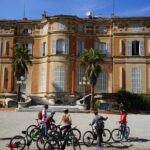
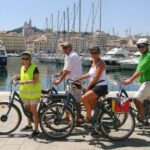
MuCEM, Villa Méditerranée, and the Cosquer cave concept: starting with Marseille’s big cultural face
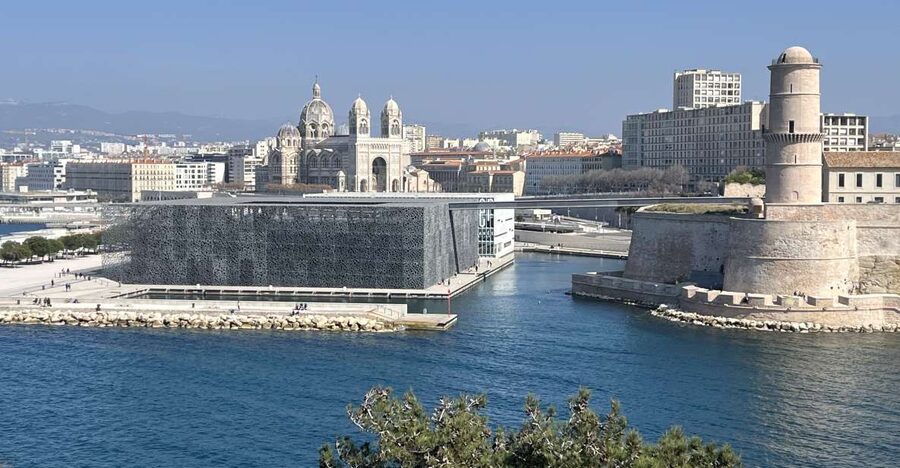
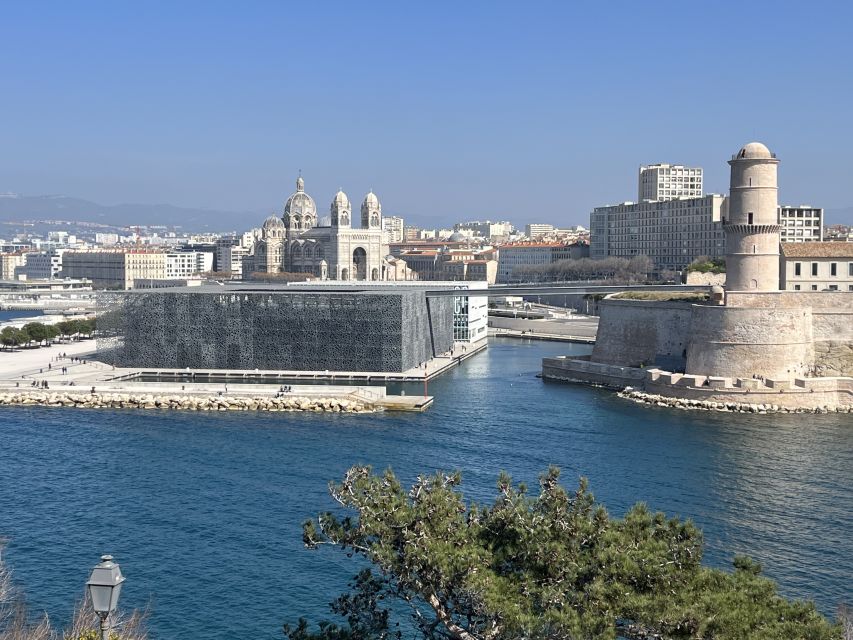
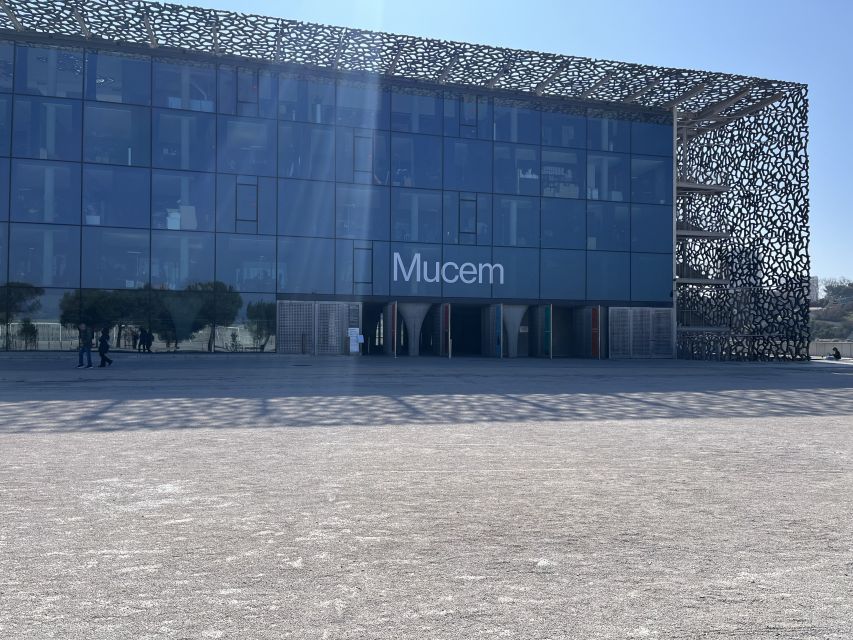
The first major stop is at the Museum of European and Mediterranean Civilisations (MuCEM). You’ll have a short guided introduction plus a photo stop, then a quick guided visit window (around 10 minutes).
Even if you don’t go deep into museum galleries, this is a smart first stop because it sets the tone for the day: Marseille as a port city shaped by the Mediterranean and by waves of influence. The route also includes presentations connected to the area, including the Villa Méditerranée and the Cosquer cave.
Why I like this as an early anchor: you’re still fresh, your bike handling is comfortable, and you can understand what you’re looking at along the waterfront. Later, when you ride the Corniche and see the views toward the islands and sea, those first ideas help the scenery make more sense.
La Major Cathedral: a quick stop that helps you understand the city’s “north” side
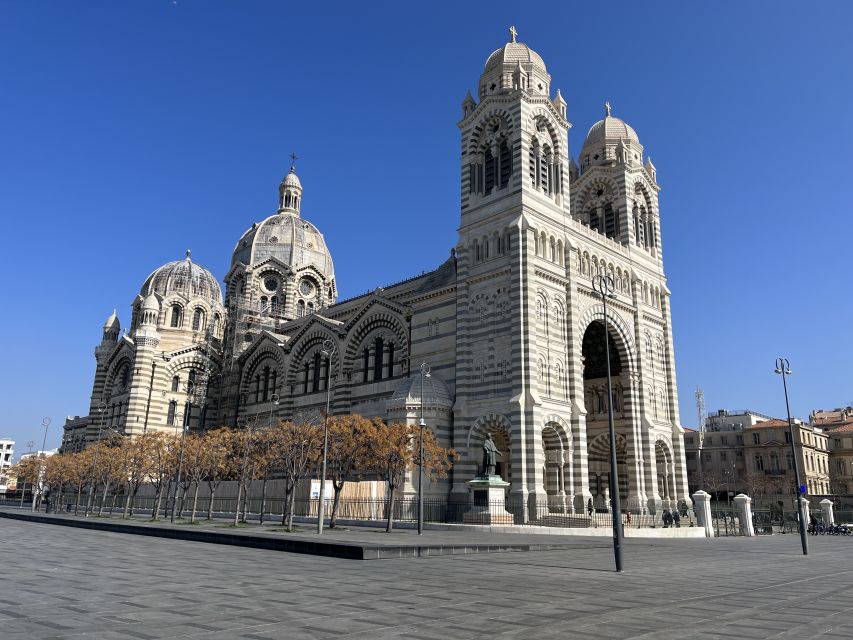
After the MuCEM area, the ride is short to La Major Cathedral (about 0.8 km). You’ll get:
- A ride-and-photo moment at the esplanade area
- A guided explanation of the cathedral’s history
- The option to visit inside (it’s described as possible and optional, with a visit window)
This is one of those stops that’s easy to skip on a rushed day. Don’t. A guided look at La Major gives you a framework for Marseille’s layers—religious sites, waterfront wealth, and how the city grew outward.
Practical note: the inside visit is optional, so if your group wants to keep momentum, you may just enjoy the exterior and move on. Either way, you’ll come away with a better feel for the area than if you just treat it as another photo backdrop.
Le Panier and Place de Lenche: old streets, real photos, and a sense of the city hall-to-hospital story
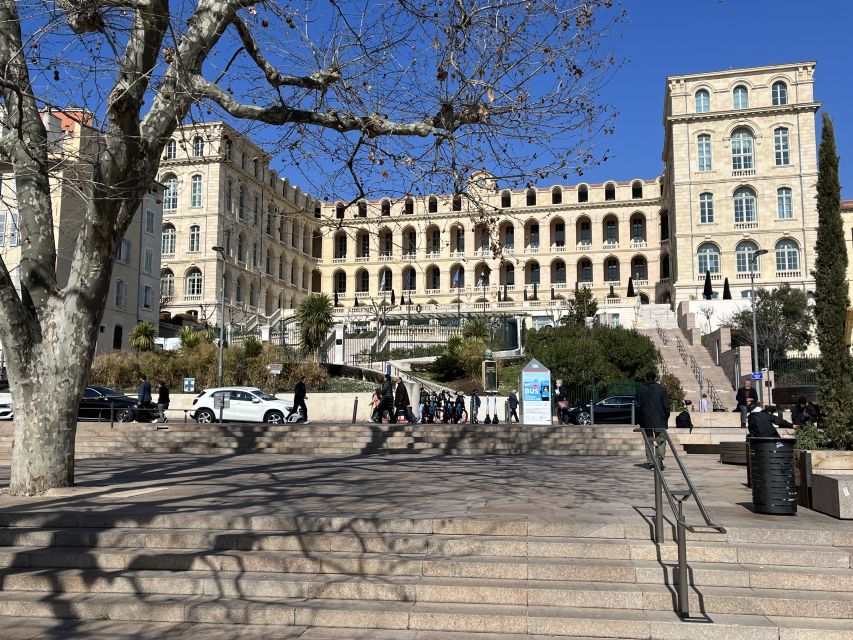
Next you head toward the old quarter area around Le Panier, plus Place de Lenche (about 1.2 km). This is where Marseille starts feeling less like a grid and more like a patchwork of neighborhoods.
You’ll have guided time that includes photo stops and a guided walk/visit window (about 20 minutes around this cluster). You’ll also hear history tied to several recognizable landmarks, including:
- Hôtel Dieu (including the InterContinental Marseille–Hotel Dieu)
- La Maison Diamantée
- Marseille City Hall
Why this section works on an e-bike tour: you can look like you’re doing something spontaneous and exploratory, but you still stay oriented. The guide helps you connect what you see—buildings, plazas, and street patterns—to the city’s development.
If you like neighborhoods with texture (street views, architecture, small squares), you’ll appreciate this part. If you only care about the biggest panoramic points, it still helps to understand what you’re riding through on the way there.
L’Ombrière and the Vieux Port: design by Norman Foster meets the port’s nonstop energy
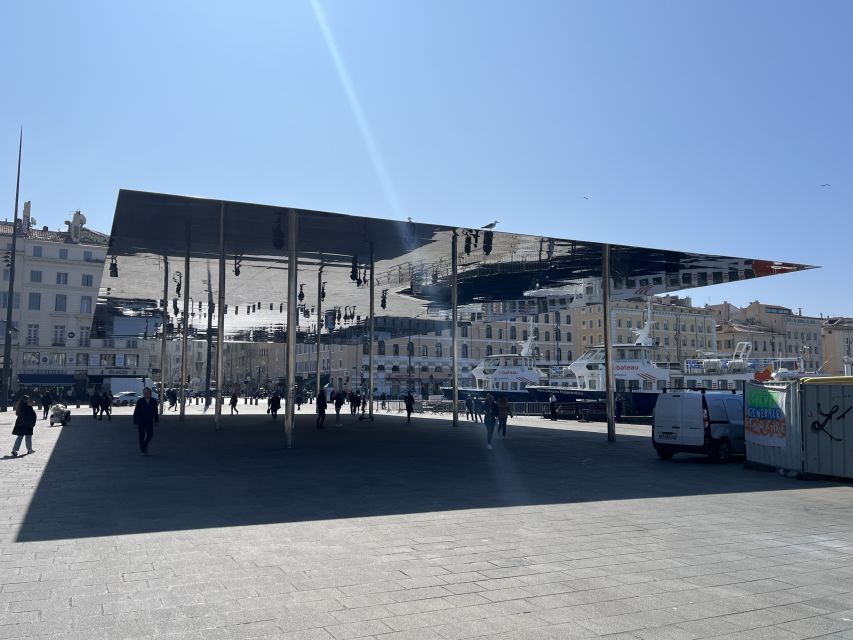
Then you’ll move toward L’Ombrière (about 0.8 km), with a guided presentation about the structure designed by Norman Foster.
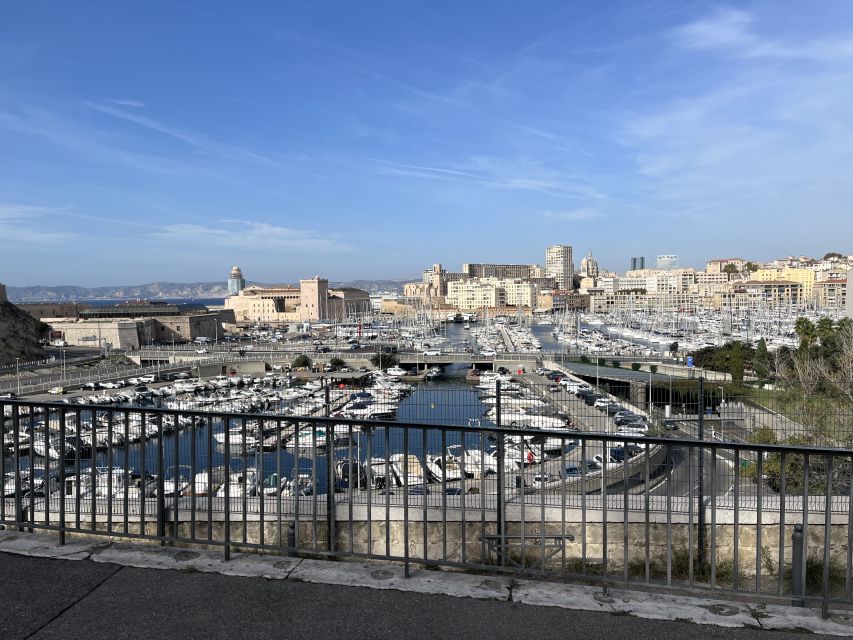
Right after that, the Old Port (Vieux Port) becomes a major focus, with time for guided viewing and photos (about 15 minutes).
This is a strong pairing:
- L’Ombrière is about modern design making sense of an outdoor public space.
- The Vieux Port is about Marseille’s core identity: maritime commerce, daily life, and the energy you can feel even when you’re just standing still for a photo.
For me, these stops add balance to the day. You’re not only chasing viewpoints. You’re seeing how Marseille builds places where people gather—sometimes with sleek modern architecture, sometimes with old waterfront rhythm.
Pharo via the Bassin du Carénage: a scenic stretch that sets up the Corniche
Once you leave the port cluster, you ride toward Le Pharo via the Bassin du Carénage (about 2.2 km). The stop at Palais du Pharo comes with guided background plus scenic viewing time (around 15 minutes).
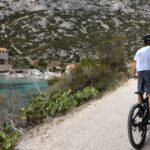
This part of the route is where the e-bike really earns its keep. The assistance helps you maintain a smooth pace without getting stuck in fatigue. That means you can actually enjoy the views rather than spending the whole ride trying not to overheat.
The guide also covers the story of Pharo and ties it back to the waterfront identity. It’s short, but it makes the coastline feel less random.
Corniche John Kennedy, Catalans, and the colonial armies + Château d’If story
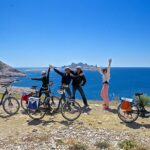
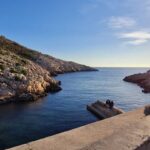
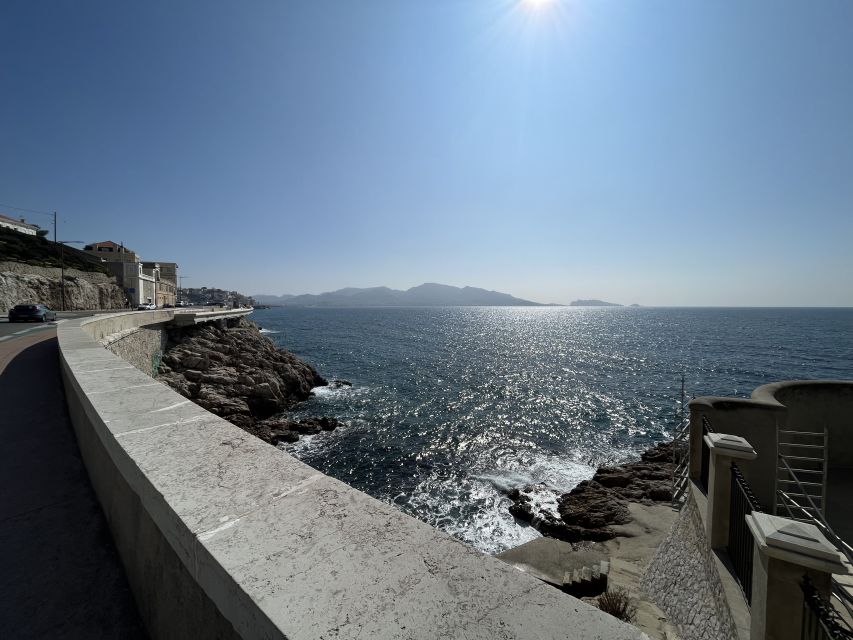
Now comes the long scenic run along the Corniche John Fitzgerald Kennedy (often just called the Corniche John Kennedy). You’ll have a longer time window here (around 35 minutes), with:
- Photo stops
- Guided history along the way
- Scenic views from the route
- A short toilet break (about 5 minutes) at Catalans
- A free-time window built into the time block
Along this stretch, you’ll also learn about key landmarks:
- The monument to colonial armies (Armée d’Orient et des Terres Lointaines)
- A presentation and history of Château d’If
- A presentation of the Hélice de César sculpture
There’s also an optional break at a French bakery (about 20 minutes). If you want coffee or a quick bite, this is your moment. Meals aren’t included, so this stop gives you an easy way to refuel without planning your own detour.
What I like here: you’re getting sea air, long lines of sight, and a chain of stories that relate to what you can see from the bike. Château d’If, for example, becomes more than a faraway landmark when you know what you’re looking at and why it matters.
Notre-Dame de la Garde: the ride ends with the view you remember
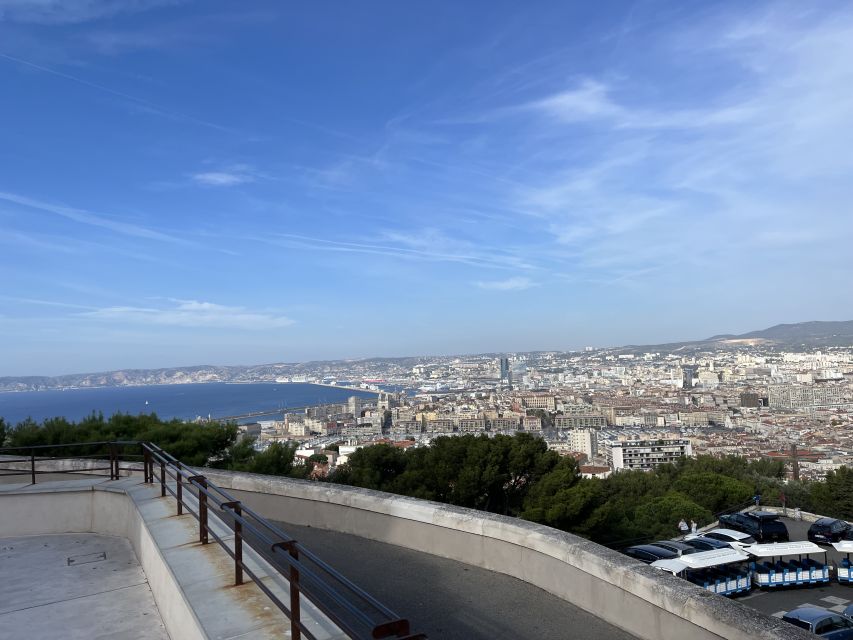
The final main climb goes back toward Notre-Dame de la Garde, using Avenue des Roches (about 3.4 km). This is the payoff stop.
The tour includes:
- A guided presentation and history of the basilica
- Time for possible inside visit (about 20–30 minutes)
- A bathroom break and a water fountain mentioned as part of the stop
- Scenic time so you can take in the wide Marseille views
This is where the earlier work pays off. By the time you reach the basilica area, you already understand the waterfront, the port, and the neighborhood context. So the view isn’t just pretty—it’s a map of the city’s story.
One practical note: this is the part that tests your bike confidence the most. The e-bike assistance helps on hills, but you still need to handle the bike steadily and keep your speed controlled near other people and traffic.
How hard is it, really? (Easy/medium plus city confidence)
The tour is rated easy/medium and runs about 20 km in roughly 3 hours. That’s a comfortable distance for an e-bike day, especially because the bike assistance reduces the uphill strain.
But Marseille riding has its own demands:
- You’ll encounter traffic sections and busy intersections at times.
- You need to be comfortable stopping, starting, and riding predictably.
- It’s not positioned for people who can’t ride a bike.
Also, there are clear limits:
- Not suitable for children under 12
- Not suitable for people who can’t ride a bike
- Weight limit is listed as 243 lbs (110 kg)
- Baby strollers aren’t allowed
If you’re already a confident cyclist, this feels like an efficient sightseeing day, not a workout torture session. If you’re nervous on bikes, practice beforehand or choose a slower, more pedestrian-focused option.
Price and value: why $58 for 3 hours can make sense
The tour price is listed as $58 per person, and the local value line shows 50€ excluding tips. Either way, you’re paying for more than transportation.
You’re getting:
- A quality e-bike with electric assistance
- Helmet and saddlebags
- A guide who controls pacing and adds history at each major stop
- A route that covers multiple parts of Marseille quickly (museum area, Old Port, Pharo, Corniche, and the basilica)
That matters if you’re short on time. In a big city, it’s hard to chain major monuments without wasting hours on transport. Here, you’re riding between them, and the guided stops keep you from missing what’s in front of you.
Food isn’t included, so plan on either the optional bakery break or bringing a snack. But for most people, that’s not the dealbreaker; the deal is time saved and context provided.
What to bring (and what to do before you roll out)
Keep it simple. The tour notes you should bring:
- A credit card
- Cash
- Comfortable clothes
- A daypack
I’d also add your usual “ride day” basics, like sunglasses and water if you tend to run dry, even though the basilica area includes a water fountain mention.
Before you set off, take the safety briefing seriously. Adjust your posture on the bike. Ask the guide to show you how the assist responds when you change gears. That small minute spent up front can prevent slowdowns later when the route turns into the scenic Corniche stretch or the hill toward Notre-Dame de la Garde.
Finally, use the guide. In the feedback I saw, guides like Greg, Matt, Mathieu, and Cyril are described as taking time to help everyone feel comfortable, and they often share restaurant and area recommendations. If you want Marseille advice that isn’t generic, this is the easiest way to get it.
Should you book this Marseille e-bike tour?
I’d book it if you want a first-pass Marseille overview without spending the whole day in transit. It’s especially strong if you like:
- Scenic waterfront views along the Corniche
- Historic stops with short, guided explanations
- A smooth ride aided by electric assist, including hills
- A small group vibe (up to 10) that keeps the tour controlled
I wouldn’t book it if:
- You don’t ride bikes confidently in cities
- You’re traveling with kids under 12
- You want a slower day that’s mostly museum interiors and long stays
If your time is limited—like a cruise day—this kind of structured e-bike loop is one of the most efficient ways to see the big highlights.
FAQ
FAQ
How long is the Marseille sightseeing e-bike tour?
The tour runs for about 3 hours.
How far do you ride?
The route covers about 20 km.
Where is the meeting point?
You meet at 2 Rue de la Loge, 13002 Marseille, at the bike rental shop.
Is the e-bike included?
Yes. Electrically assisted bicycles are included.
What safety gear do you get?
Helmets are provided, and you also get saddlebags.
Do you need to be an experienced cyclist?
You need to be able to ride a bike. The tour is rated easy/medium, but it still involves city riding.
What are the main stops during the ride?
Key stops include MuCEM, La Major Cathedral, Le Panier, Hôtel Dieu/InterContinental, Marseille City Hall, the Old Port, Palais du Pharo, the Corniche John Kennedy area, Hélice de César, and Notre-Dame de la Garde.
Are inside visits included or optional?
Inside visits are described as possible and optional at La Major Cathedral, and Notre-Dame de la Garde has a stop with a visit window (about 20–30 minutes).
Is there a break for using the restroom?
There is a short toilet break (about 5 minutes) at Catalans during the Corniche section, and there is also bathroom access noted at Notre-Dame de la Garde.
Is food included in the price?
No meals are included. There’s an optional bakery break on the route.
What languages are the guides?
The live tour guide speaks English and French.
Is it suitable for children or strollers?
It’s not suitable for children under 12, and baby strollers aren’t allowed.