REVIEW · MARSEILLE
Marseille: Sightseeing E-Bike Tour 2
Book on GetYourGuide →Operated by Station Bee's · Bookable on GetYourGuide
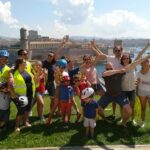
Marseille makes you choose fast: you either walk until your calves file a complaint, or you get smart. This 2-hour e-bike tour lets you glide through the city’s big sights with cool electric help and a clear game plan. I especially like how you get both the postcard stops and the “what am I looking at?” context—plus a quick chance to visit Notre-Dame de la Garde if timing works. One thing to keep in mind: you still need to be comfortable riding in real city traffic, even with a guide up front.
What really sets this up is the start. You meet at 2 Rue de la Loge, get helmets, do a short bike test, and learn the gears/e-assist before you roll. Guides like Mathieu (often called Mat) come across patient and tuned in to how everyone’s bikes are set, so the ride feels less like a chore and more like a smooth way to get your bearings.
In This Review
- Key Points That Matter Before You Book
- Entering Marseille by E-Bike: Why This Route Works
- Meeting at 2 Rue de la Loge and Getting Set Up Right
- MuCEM and Villa Méditerranée: The Museum Stop Without the Museum Pressure
- Old Port and City Hall: Where Marseille’s Energy Shows Up
- L’Ombrière and Le Pharo: Norman Foster’s Shadow and the Sea Road
- Corniche Kennedy: The View Ride with a Quick Reset
- Colonial Armies Memorial and Château d’If: How the Story Gets Bigger
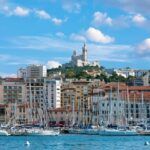
- Notre-Dame de la Garde: The Stop That Turns a Ride Into a Memory
- Pace, Timing, and What Easy/Medium Really Means Here
- Price and Value: Paying for Time, Not Just Transport
- Practical Tips So You Feel Comfortable From Minute One
- After the Ride: How the Tour Sets Up Your Next Hours
- Should You Book This Marseille E-Bike Monuments Tour?
- FAQ
- What’s the meeting point for the Marseille e-bike tour?
- How long is the tour?
- What’s included in the price?
- Are meals or drinks included?
- What sights will we see on the ride?
- What difficulty level is the ride?
- Is the tour suitable for kids or larger riders?
Key Points That Matter Before You Book
New e-bikes + short test drive so you can get comfortable before you hit the main viewpoints.
Historic stops without dragging your feet at MuCEM, the Old Port, Pharo, and the Corniche Kennedy.
The “views + meaning” combo with explanations at monuments like L’Ombrière and the Armée d’Orient memorial area.
Smart pacing for a small group (limited to 10) with photo stops and brief breaks, including a short toilet stop.
A payoff climb to Notre-Dame de la Garde with a quick optional visit window.
You leave with a plan for more after the ride—suggestions for Panier, Tour St Jean Gardens, or a MuCEM visit.
Entering Marseille by E-Bike: Why This Route Works
Marseille is spread out. That’s the catch. If you try to do the top sights on foot, you end up moving more than sightseeing. This tour is built to fix that by linking key areas along the coast and viewpoints—so you spend time looking, not just traveling.
The route is also set up for variety. You get a harbor-and-city sequence (MuCEM area, Old Port), then a sea-facing drive along the Corniche Kennedy, then the high point at Notre-Dame de la Garde. Even if you’ve been in Marseille for a day already, this kind of loop is a fast way to connect the dots.
And because the bikes are electrically assisted, the “easy/medium” difficulty label makes sense. You’ll still pedal, but the e-help takes the edge off hills and long stretches. Reviews repeatedly mention how the bike power makes the experience enjoyable even when Marseille terrain isn’t flat.
You can also read our reviews of more tours and experiences in Marseille.

Meeting at 2 Rue de la Loge and Getting Set Up Right
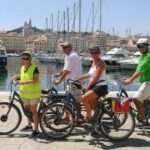
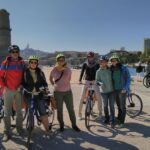
Your tour starts at the bike shop at 2 Rue de la Loge (13002 Marseille). Expect a real pre-ride briefing rather than a rushed handoff.
Here’s what you should look for at the start:
- Helmet distribution and safety equipment before you mount up
- A guide-led explanation of how to use gears and electrical assistance
- A short test drive plus a final bike check (saddle height, brakes)
That small “check everything” routine matters more than it sounds. On a city bike route, comfort equals confidence. If your saddle height is off or your brakes feel wrong, you spend the ride worrying instead of enjoying the scenery.
The group is capped at 10 participants, and that smaller size shows in how the guide can adjust the experience. Reviews highlight attention to whether everyone feels comfortable and set for the ride.
MuCEM and Villa Méditerranée: The Museum Stop Without the Museum Pressure
The first major sight stop centers around the Museum of European and Mediterranean Civilisations (MuCEM) area. You’ll get a photo stop and a guided orientation (and you’ll hear about nearby references like the Villa Méditerranée and the Cosquer cave).
This part is ideal if you’re:
- short on time but want to understand Marseille’s modern identity tied to the sea and Mediterranean culture
- curious about the architecture you’re passing, not just the view behind it
A key practical point: you’re not stuck waiting in a long line or spending half a day inside. The format is more about placing MuCEM into the story of the waterfront, then moving on while the light and energy are right.
Old Port and City Hall: Where Marseille’s Energy Shows Up
Next you cycle toward the Old Port (Vieux Port) and continue into the area near Marseille City Hall. You’ll get another photo stop and guided explanation.
Why this section works:
- It’s where you can feel Marseille’s maritime rhythm.
- You’re riding through the “center of gravity,” so the city makes more sense as you connect waterfront monuments to inland viewpoints.
If you like to photograph architecture and water together, this is your stretch. You’ll also build momentum: the ride isn’t just a straight line. It’s a sequence of story points spaced for short pauses.
L’Ombrière and Le Pharo: Norman Foster’s Shadow and the Sea Road
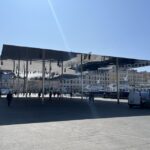
One of the more interesting moments on the route is the stop and presentation for L’Ombrière, designed by Norman Foster. You’ll also head toward Le Pharo for a guided look.
This is the sort of stop that’s worth slowing down for. L’Ombrière isn’t just a structure you see from a distance—it changes the feel of the promenade space, and the guide’s context helps you notice details you might miss if you were just clicking photos.
From there, the ride continues toward the Corniche. This is where the e-bike really earns its keep. The views start to open up, and the pace stays comfortable because the assist helps you keep effort consistent.
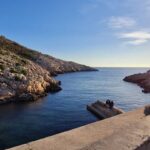
Corniche Kennedy: The View Ride with a Quick Reset
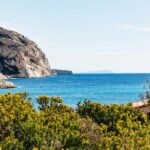
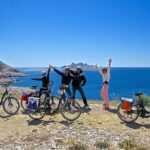
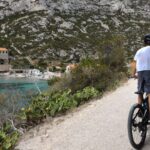
The tour includes a longer scenic stretch along Corniche John Fitzgerald Kennedy, with guided commentary and multiple photo/view moments. Plan on about 30 minutes here in the itinerary flow.
There’s also a practical 5-minute toilet break at Catalans. It’s short, but in a 2-hour ride format, small logistics like this matter. You’re not spending a half hour wandering a restroom quest, and it keeps the rest of the route smooth.
If you’re sensitive to heat, this part helps too. Even when it’s warm, cycling along the coast tends to feel cooler than inland streets, and the motion reduces the “standing around sweating” problem.
Colonial Armies Memorial and Château d’If: How the Story Gets Bigger
As you continue along the Corniche, you reach a monument related to the Armée d’Orient et des Terres Lointaines. From there, the guide brings in the history of Château d’If and ties it back into what you can see from the coastline.
This section is strong if you like history that comes with geography. You’re not just told a date—you’re looking out from where the city’s stories played out.
Also, the stop at the Hélice de César sculpture adds a modern art punctuation mark between viewpoint sections. It’s brief, but it breaks up the ride nicely before the final climb.
Notre-Dame de la Garde: The Stop That Turns a Ride Into a Memory
The tour eventually brings you to Notre-Dame de la Garde. The itinerary includes a stop for photos and a guided presentation, then time for a short visit if you want.
You’ll have about 10–15 minutes for this visit window, plus time for a bathroom break and water fountain. That’s a helpful combination because this is the kind of place where it’s easy to want to stay longer—so having a set, short option prevents the tour from running late for everyone.
This is also the emotional payoff moment. The basilica setting gives you a panoramic perspective over Marseille, and arriving by bike makes it feel earned. You get the sense of height without spending the whole tour climbing on foot.
Pace, Timing, and What Easy/Medium Really Means Here
The experience is designed for an easy/medium difficulty level. That doesn’t mean zero effort—it means you’re supported. Expect a steady ride with short stops, not a continuous race.
The format typically follows a structure like this:
- brief photo/guided stops (often around 10 minutes per anchor point)
- a longer scenic stretch along the Corniche
- a final concentrated stop at Notre-Dame de la Garde
- return to the shop for wrap-up around 13:00
One detail worth noting: the “duration” shown can vary between 2 hours and the full historic loop described as about 2h30. In practical terms, you should treat it as a half-morning commitment with a few planned stops, rather than a strict sprint.
Price and Value: Paying for Time, Not Just Transport
The price is listed at about $46 per person, and the historic-monuments loop is described as 39€ excluding tips. If you’re comparing to DIY travel, the value comes from what’s included:
You get:
- an electricly assisted bicycle
- a helmet
- saddlebags
- the guide’s route knowledge and structured stops
- a small-group size capped at 10 participants
- multiple photo-stop moments and timed breaks
Where this becomes good value is in efficiency. This route hits a lot of big-sight areas without you having to solve bike logistics, route planning, and “where do I stop next?” on the fly.
And reviews back up that the guide quality is part of the price. People highlight how the guides adjust to the group, take time to explain, and keep everyone feeling comfortable on the bikes.
Practical Tips So You Feel Comfortable From Minute One
Even with e-bike help, you’ll enjoy this more if you show up prepared.
Wear:
- comfortable shoes (non-negotiable for bike pedals and walking a bit at stops)
- comfortable clothes you can move in
Bring:
- water if you tend to run warm, since meals/drinks aren’t included
Then do the easy stuff:
- Ask the guide during the briefing if you’re unsure about gear shifting or assist level.
- Use the early bike test drive seriously. That’s when you should set your comfort and confirm brakes and saddle position.
If you’re worried about riding in the city, this kind of guided setup is exactly what you want. The whole start is designed to build confidence before you roll into more complex streets.
After the Ride: How the Tour Sets Up Your Next Hours
This isn’t just a bike-and-go experience. The end of the tour includes a debrief and suggestions for what to do next, such as:
- Tour St Jean Gardens
- a chance to visit MuCEM
- exploring the historic neighborhood Le Panier
- or shopping at Terrasses du Port
That matters because it helps you avoid the common trap of burning your best day on the first big sights and then running out of steam.
If you want to add one more cultural stop, you’ve got the right leads. If you’d rather just wander, the guide’s pointers help you wander with purpose.
Should You Book This Marseille E-Bike Monuments Tour?
Book it if you want an efficient, good-looking overview of Marseille with real explanations and an e-bike that makes the route enjoyable. It’s a strong choice for couples or small groups who want to cover the waterfront, Corniche viewpoints, and the Notre-Dame de la Garde area without turning your day into a long uphill slog.
Skip it if you don’t feel comfortable cycling in city areas, or if you’re traveling with children under 10 or you’re over the listed weight limit (110 kg). Also, since meals and drinks aren’t included, plan for a snack or drink after the ride.
FAQ
What’s the meeting point for the Marseille e-bike tour?
You meet your guide at the bike shop at 2 Rue de la Loge, 13002 Marseille.
How long is the tour?
The experience is listed as 2 hours, and the historic monuments loop description notes about 2h30 with the full set of stops.
What’s included in the price?
Included items are an electrically assisted bicycle, helmet, saddlebags, and guided tour support (plus guided stops along the route).
Are meals or drinks included?
No. Meals and drinks aren’t included.
What sights will we see on the ride?
You’ll pass by or stop near MuCEM, the Old Port, Marseille City Hall, L’Ombrière, Le Pharo, the Corniche Kennedy, Château d’If (via viewpoint context), the Hélice de César sculpture, and Notre-Dame de la Garde.
What difficulty level is the ride?
The difficulty is described as easy/medium and the bikes are electrically assisted to help with the ride.
Is the tour suitable for kids or larger riders?
It’s not suitable for children under 10, and it has a weight limit of 243 lbs (110 kg).