REVIEW · SICILY
Mount Etna: All around E-bike
Book on Viator →Operated by Into Etna - Bike and Hike experience · Bookable on Viator
Etna by e-bike feels like a nature lesson. This 6-hour ride circles Mount Etna on off-road Enduro e-bikes, staying mostly away from the usual crowds while you roll past lava shapes, green woods, and volcanic surprises.
What I love most is that it’s not just about getting a workout; the electric assist helps you actually enjoy the views and the terrain on the Altomontana route.
The other big win is the guide setup. With a nature guide and an e-bike instructor in your group of up to 8, you get help that matches different riding levels, like the care shown by guide Raffaela in the reviews. You also get specific Etna stops like the Galvarina Refuge area with Hornitos and the volcanic tunnel at Grotta of Monte Nunziata.
One heads-up: this is off-road riding. You’ll want solid, closed or trekking shoes (mandatory), you need moderate fitness, and you must know how to ride a bike. If any of that feels borderline, you might find the day more tiring than you expected.
Key things that make this Etna e-bike tour worth your time
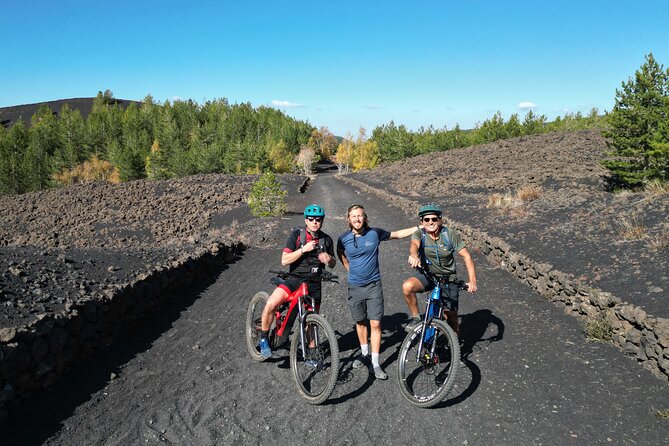
- Altomontana 37 km off-road trail with a mix of lava textures and woodland
- Enduro full-suspension e-bikes for comfort and control on rougher ground
- Hornitos at Galvarina Refuge plus volcanic landmarks that explain Etna’s story
- Grotta of Monte Nunziata lava tube and possible extra climb to Monte Nunziata top
- A small group (max 8 travelers) with both a nature guide and an e-bike instructor
- You’ll cross the 1981 lava flow near the area that threatened Randazzo
In This Review
- Altomontana: Why the route feels different from standard Etna tours
- Enduro e-bikes, helmets, and the small-group setup that keeps it fun
- Getting to the ride: Trecastagni meeting point and how transfers work
- Grotta dei Lamponi: Starting where geology shows up fast
- Galvarina Refuge and Hornitos: the highest-feeling part of the trail
- Haystack traditions, then a lava tube: the ride becomes a timeline
- The 1981 lava flow near Randazzo: where the adrenaline has context
- Lunch on the path: how to plan your fuel without losing the day
- What you learn: volcano, plants, and animals in one working day
- Price and value: what you’re really paying for
- Should you book this Mount Etna all-around e-bike ride?
- FAQ
- How long is the Mount Etna all-around e-bike tour?
- What’s included with the e-bike experience?
- Do I need to bring shoes?
- Is lunch included?
- How many people are in the group?
- What if the weather is poor or I need to cancel?
Altomontana: Why the route feels different from standard Etna tours
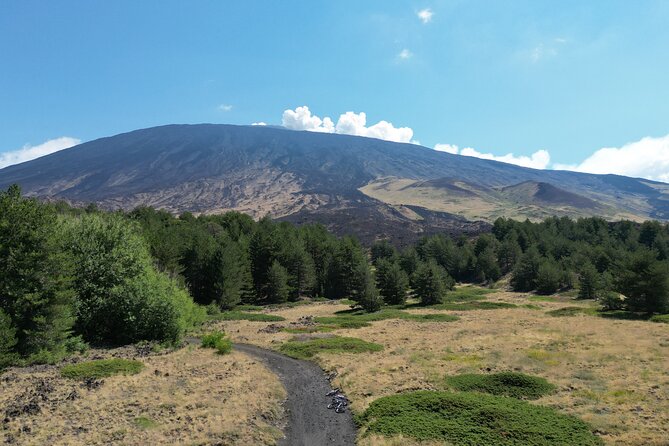
If you’ve seen Etna tours that mostly skim the edges, this one hits a more “follow the terrain” feeling. The core of the experience follows the Altomontana trail, described as a 37 km off-road path. Even if you don’t ride the entire distance in one go, the spirit is the same: you’re on a real track where volcanic shapes and vegetation show up side by side.
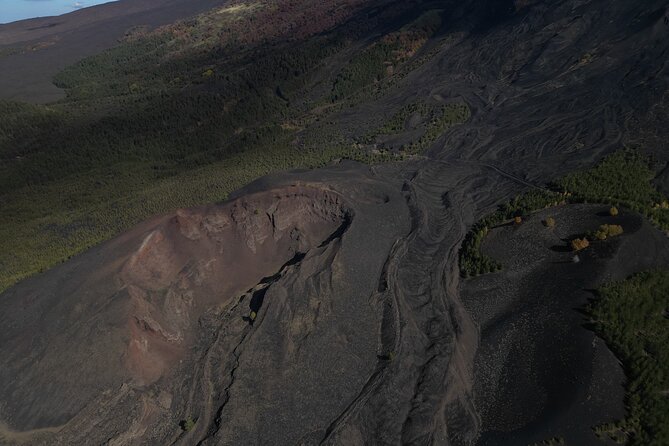
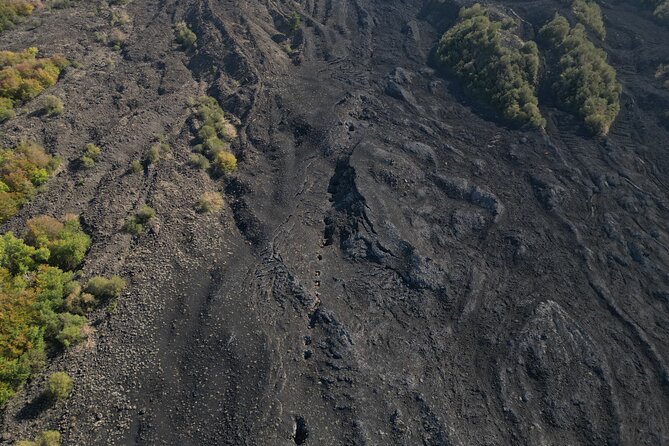
Here’s what that means for you during the ride. You’re not just looking at Etna from one viewpoint and calling it a day. You move through contrasts: dark, ancient lava forms against greener patches where plant life takes hold. The guide will point out local flora and fauna and connect it to what the volcano has been doing over time.
And because you’re on e-bikes with electric assist, you get to cover more ground without turning the day into a slow slog. You still feel the adrenaline of off-road riding, but it’s more controlled than trying to muscle a traditional bike up every uneven section.
The tour’s structure also helps you stay engaged. You start early at 9:00 am, ride for a full stretch, and then the van meets you after the off-road part to bring you back. That rhythm keeps the energy up without dragging the day out.
Enduro e-bikes, helmets, and the small-group setup that keeps it fun
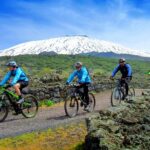
This experience uses Enduro Full-Suspension bikes. That detail matters. Full suspension isn’t just for comfort; it also helps you stay in control when the surface gets rough or bumpy. In plain terms: you’ll spend less of your attention white-knuckling the handlebars and more of it enjoying the route and listening to the guide.
You’re not going out alone either. The included package covers:
- Helmet and a backpack
- A nature guide plus an e-bike instructor with you during the experience
- Air-conditioned vehicle support and transport
Group size caps at 8 travelers, which is a sweet spot. Large groups can turn into a line you can’t control. Here, you’re more likely to get practical adjustments and pacing that fits the group.
The reviews are especially strong on this guidance piece. One standout theme: Raffaela helped riders with different skill levels stay confident, not just tolerated. That’s a big deal on a mixed terrain ride, because the goal isn’t to punish beginners or punish advanced riders by going too slow.
You’ll still need to be ready for off-road riding. The tour expects moderate physical fitness and asks that you know how to ride a bicycle. The e-bike helps, but it doesn’t erase gravity or rocks. If you show up prepared, the day feels like controlled adventure, not chaos.
You can also read our reviews of more tours and experiences in Sicily.
Getting to the ride: Trecastagni meeting point and how transfers work
The meeting point is Piazza Sant’Alfio, 27, 95039 Trecastagni CT, Italy, at the Into Etna – Bike & Hike experience. The start time is 9:00 am, and the activity returns you back to the meeting point.
There’s also a smart connection to the cable car. The tour includes a transfer from Into Etna Point (the Cable car Etna south) to the starting point of the experience. So if you’re using the cable car to reach the right elevation area, your biggest “how do I get there?” question is already handled.
If you’re coming from other places, there are optional transfer add-ons:
- Catania/province: 30€/person
- Taormina and Giardini Naxos: 50€/person, with a 4-person minimum
If you’re trying to minimize stress on vacation, that’s the best approach: plan your morning so you’re not rushing across towns with bags and maps. Start early, meet at the planned spot, and let the operators handle the movement.
Grotta dei Lamponi: Starting where geology shows up fast
The first stop is Grotta dei Lamponi. Even without a long explanation at the start of the day, the name alone points you toward a theme you’ll keep seeing: Etna isn’t just an outside mountain. It has tunnels, caves, and volcanic structures you can study up close.
In practice, that stop sets the tone. You’re on the bike, but you’re also learning how volcanic activity shaped what you’re seeing. Caves and tunnels are part of how lava behaved as it moved and cooled. They help explain why Etna produces not just craters and flows, but also voids and channels.
This is also where your guide’s style matters. A nature guide who can connect rocks, plants, and animal life makes the ride feel like one continuous lesson instead of disconnected facts. And since the tour includes both a nature guide and an e-bike instructor, you get both the “what is it?” and the “how do we ride this safely?” side of the day.
Galvarina Refuge and Hornitos: the highest-feeling part of the trail
One of the clearest anchors in the route is the arrival at the Galvarina Refuge. From there, you visit Hornitos, described as a volcanic conic structure and also as the highest area of this trail.
Hornitos are exactly the kind of detail you want on Etna. They’re not just dramatic in shape; they also help you understand volcanic processes. If you’ve ever looked at volcanic terrain and wondered why it looks so “sculpted,” structures like this are a big part of the answer.
The ride is described as moving after this point into a descent. That matters because your energy level changes through the tour. Going down often feels faster, but it also demands smooth handling. This is where the full-suspension setup and the instructor’s presence become extra valuable—especially if you’re still figuring out your comfort on off-road surfaces.
Also, being at a higher point tends to make the geology feel more legible. You can often see patterns better when you’re up a bit, and you’re in the right zone to compare what’s above from what’s below—lava forms, vegetation patches, and different textures of the ground.
Haystack traditions, then a lava tube: the ride becomes a timeline
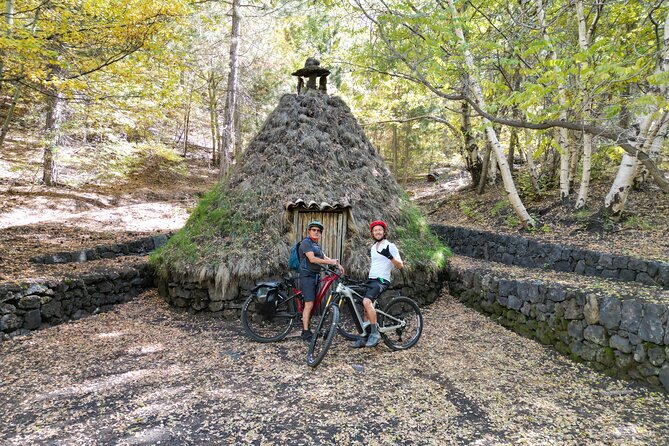
After Hornitos, the description shifts from volcanic structures to cultural traces and then back to geology again. You’ll descend and find an haystack, described as evidence of ancient shepherd tradition on Etna. It’s a small detail, but it adds an important layer: this mountain is not only volcanic. People adapted to it.
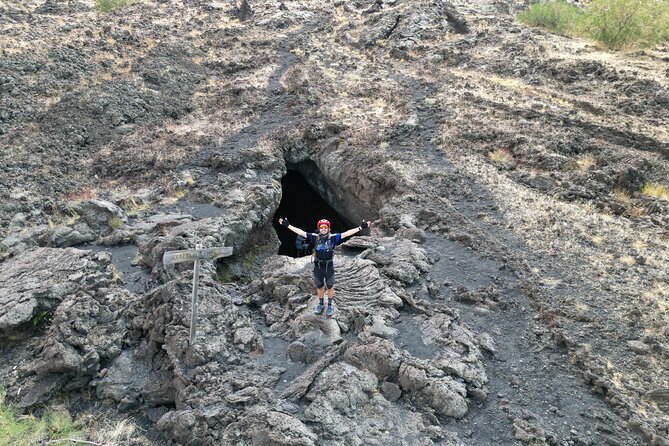
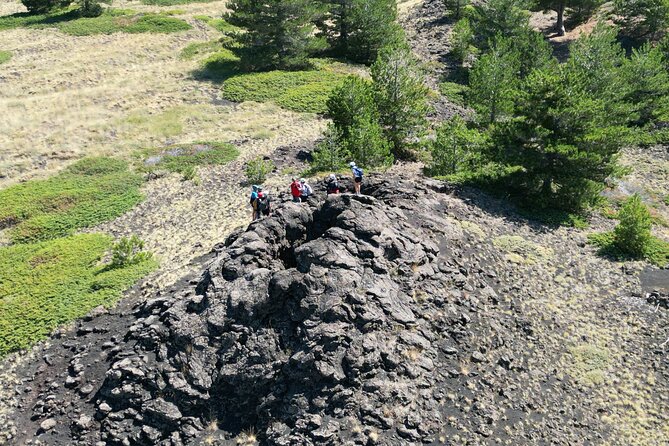
Then, about one kilometer later, you reach Grotta of Monte Nunziata, a lava tube. A lava tube is one of those Etna elements that makes the whole mountain feel physical and real, not just myth and photos. Lava tubes form when molten rock moves, and the top cools while the inside continues flowing. Later, the tube can leave behind an underground passage or void.
The tour also says that depending on time, you may reach the top of Monte Nunziata to admire the view from there. That optional part is worth paying attention to. If timing works, you get that classic Etna viewpoint—plus you’ll be able to mentally connect the stops you saw earlier to the broader mountain.
If timing doesn’t allow it, don’t treat it like a failure. Even without the summit moment, the ride already includes the high-point structure at Hornitos and the lava-tube stop. The “timeline” of Etna is still happening.

The 1981 lava flow near Randazzo: where the adrenaline has context
Midway through the off-road portion, the route crosses the lava flow of 1981. It’s described as a quick and powerful eruption that seriously threatened the village of Randazzo.
This is one of the most grounded parts of the day. Etna can feel like a giant natural landmark, but the 1981 reference pulls it back into real-world consequences. You’re not just studying rocks—you’re riding near the kind of terrain that once moved fast enough to threaten homes and livelihoods.
How it feels depends on the ride conditions that day, but in general, crossing lava flow zones can mean irregular ground, changes in traction, and shifts in how the surface feels under your tires. That’s where your earlier choices matter: shoe traction, comfort with off-road handling, and listening when the instructor gives guidance.
This is also a good point to remember that safety and enjoyment are linked here. With e-bikes, it’s easy to think you can “go harder.” But this tour is designed for control and learning. You’ll get more out of the day if you ride smoothly and let the guide lead you through the story.
Lunch on the path: how to plan your fuel without losing the day
Lunch is available but not included. Depending on time, you’ll have a chance to have lunch along the path, and if you want it organized, lunch can be arranged at a restaurant for 40€/person (only for a whole group).
For you, the best strategy is simple: bring snacks you can eat during breaks if you’re hungry easily. The tour duration is around 6 hours, and you’ll be out riding. Even if the official lunch option exists, having a backup plan keeps you from getting cranky mid-ride.
The ride also includes a return by van after finishing the off-road section. That means the itinerary is designed to prevent you from thinking about transportation once you’re done riding. You can focus on the last stretch and then relax during the ride back.
What you learn: volcano, plants, and animals in one working day
One reason this tour earns top marks is the “two-track” learning. You’re not only learning about volcano shapes and volcanic structures. The tour explicitly promises education about local flora and fauna as well as the volcano itself.
That combination helps you “see” more than rocks. You start noticing how plants survive in volcanic soils, how landscapes change with lava age, and how the guide connects ecology to geology. It’s a practical approach. Instead of memorizing facts, you’re building an understanding of how one system affects the other.
And because you have both a nature guide and an e-bike instructor with you during the experience, the education doesn’t turn into a lecture you have to tune out while riding. The guide can stop and explain things while you’re positioned safely, and the instructor can keep the group moving in a way that works for everyone.
The reviews also highlight that the guide made sure riders felt comfortable with the right equipment. That matters because feeling safe leads to better attention. When you aren’t fighting your bike, you’re more open to absorbing what the guide is telling you.
Price and value: what you’re really paying for
At $360.07 per person for a roughly 6-hour guided e-bike experience, the price isn’t “cheap.” But value isn’t only cost. It’s what you get for the money, and here you get a lot of the right ingredients:
- A guided ride focused on a specific off-road route (Altomontana)
- Enduro full-suspension e-bikes plus helmets and a backpack
- Both a nature guide and an e-bike instructor with you
- Air-conditioned vehicle support and private transportation
- Transfer support linked to the cable car Etna south area
You’re also paying for a small-group format (max 8). In adventure activities, group size affects how personal the experience is. If you’ve ever been stuck behind a slow rider or worried about falling behind with no real help, you know why this matters.
One more practical detail: the tour is booked on average 89 days in advance, which suggests demand stays steady. If you’re traveling in peak season, booking early helps you lock in the time you want.
Should you book this Mount Etna all-around e-bike ride?
You should book if you want Etna in motion, not just from a bus window. This tour is built for people who like riding, want off-road excitement with safety support, and also care about why the mountain looks the way it does. The mix of lava structures (Hornitos, Grotta of Monte Nunziata), the 1981 flow near Randazzo, and the shepherd-tradition detail makes the day feel like a connected story.
Skip it or think twice if you don’t feel ready for off-road conditions. The requirements are clear: moderate physical fitness, you must know how to ride a bike, and you need to wear closed or trekking shoes (mandatory). Also, if you’re mainly after leisurely strolling views, the bike-based format may feel like more activity than you want.
If you check your shoes, show up ready, and pick a morning that fits your schedule, this is the kind of Etna day that teaches you while you move.
FAQ
How long is the Mount Etna all-around e-bike tour?
It’s about 6 hours.
What’s included with the e-bike experience?
The tour includes an Enduro full-suspension e-bike, helmet and backpack, a nature guide plus an e-bike instructor, transfer from Into Etna Point (Cable car Etna south) to the starting point, an air-conditioned vehicle, and private transportation.
Do I need to bring shoes?
Closed or trekking shoes are mandatory. If you need them, shoes are available for hire during reservations, with specified sizes and quantities.
Is lunch included?
Lunch is not included. You can organize lunch for the whole group at a restaurant for 40€/person.
How many people are in the group?
The maximum group size is 8 travelers.
What if the weather is poor or I need to cancel?
The experience requires good weather. If it’s canceled due to poor weather, you’ll be offered a different date or a full refund. There’s free cancellation up to 24 hours before the start time for a full refund.