REVIEW · VIENNA
Vienna Private Bike tour
Book on Viator →Operated by Velopold Vienna · Bookable on Viator
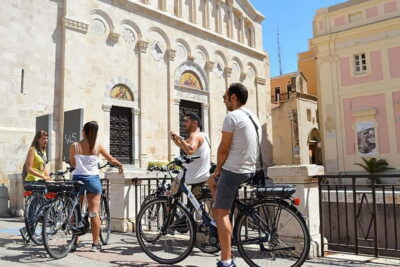
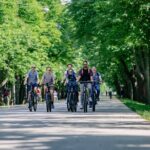
Vienna speeds up when you pedal. This private Vienna Private Bike tour is a smart way to cover huge chunks of the city in about 3 hours, starting with a real bike setup and a bottle of water at Velopold Vienna. I like the way it mixes famous stops (Prater, Opera area, Stephansplatz) with less-obvious pieces like graffiti along the Danube Canal and the Hundertwasserhaus. I also like the guide style—names like Jeremy, Horst, and Lothar show up in feedback, and you’ll see a pattern: clear stories, plus humor that keeps you alert.
One thing to watch: many major sights have tickets marked as not included, so you should expect a mix of sightseeing, photo moments, and guided context rather than a full ticket-based museum day. Also, the tour needs good weather, and the stops are brief, so it rewards people who are happy to move, look, and learn in tight bursts.
In This Review
- Key highlights worth planning for
- Why a private bike tour works so well in Vienna
- Getting started at Velopold Vienna (and why the first 10 minutes matter)
- Prater, Ferris wheel views, and the fun side of Vienna
- Urania Sternwarte and the Danube Canal: where the scenery turns artsy
- Michaelerplatz and the old-city feel of Vienna’s center
- Wiener Staatsoper area: music history without the heavy commitment
- Hundertwasserhaus and Karlskirche: two styles of Vienna in one ride
- Stephansplatz: going inside and why it’s worth the short pause
- Museum power on two wheels: Naturhistorisches and Kunsthistorisches areas
- Rathaus and Burggarten: the civic face and a calmer breath
- Judenplatz Holocaust Memorial: the tour’s serious turn
- Price and value: what $216 buys you (and what it doesn’t)
- Language, timing, and booking for a smooth ride
- Who this Vienna Private Bike tour fits best
- Should you book this Vienna Private Bike tour?
- FAQ
- FAQ
- How long is the Vienna Private Bike tour?
- Where does the tour start?
- Is this tour private?
- Is the tour available in English?
- Are tickets included for all stops?
- Does the tour run in any weather?
- Are service animals allowed?
- What is the cancellation window?
Key highlights worth planning for
- Private group pace: you’re only with your group, so the guide can adjust what matters to you.
- Velopold Vienna setup: bikes, water, and a smooth start at Obermüllnerstraße 11.
- Danube Canal photos: graffiti art along the canal adds color to the ride.
- Quick hits at big landmarks: you get guided context plus chances to take photos.
- Art and architecture stops: Hundertwasser and Karlskirche bring variety beyond the central squares.
- Guide energy: Jeremy, Horst, and Lothar are highlighted for humor and story-telling.
Why a private bike tour works so well in Vienna
Vienna is built for walking, sure. But the bike version is faster in exactly the places where you want distance without stress. You cover a long sweep of sights without the constant stop-start feel you get on foot, and you still pause often enough to actually see what you’re riding past.
This is also a private setup, which changes the vibe. You’re not trying to keep up with a large mixed group. Your guide can shift attention toward the parts you care about—history, architecture, or photo stops—while still hitting the big “Vienna essentials” that most first-timers want.
You should go into it with the right mindset, though. Think orientation and guided overview, not a slow, deep museum marathon. If you love lingering, you can always plan a longer follow-up on your own after the ride.
You can also read our reviews of more tours and experiences in Vienna.
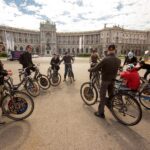
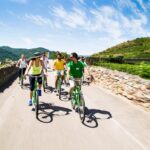
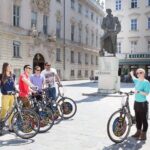
Getting started at Velopold Vienna (and why the first 10 minutes matter)
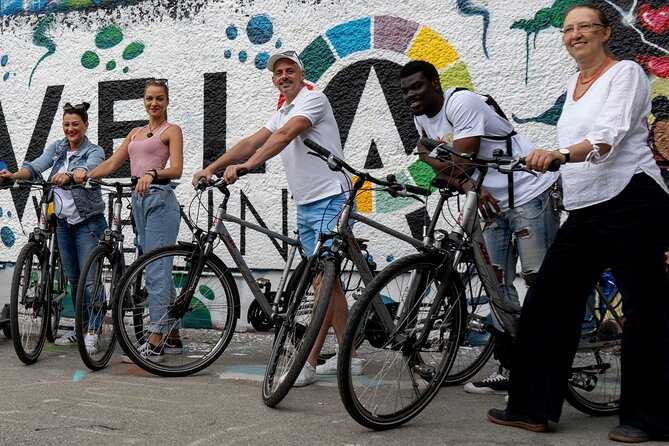
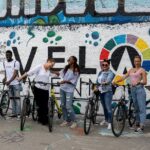
Your tour begins at Velopold Vienna at Obermüllnerstraße 11. This matters more than it sounds. Meeting right at the rental and service hub usually means you’re not wasting energy searching for gear or figuring out how bike rentals work in a city you’re still learning.
At the start, everyone gets their bike plus a bottle of water. You also get the first short orientation and a basic warm-up for how the ride will flow. That’s the difference between a pleasant city spin and an exhausting pedal-and-pray situation.
The “service + rental” setup also signals that your bike should be in working condition for the tour window. From what’s been described by people who booked private rides, the bike quality is a selling point—so you’re not just paying for a route, you’re paying for a ride that feels stable and safe.
Practical tip: wear comfortable shoes and dress for the weather. This one is explicitly dependent on good weather, and Vienna can go from nice to brisk quickly.
Prater, Ferris wheel views, and the fun side of Vienna
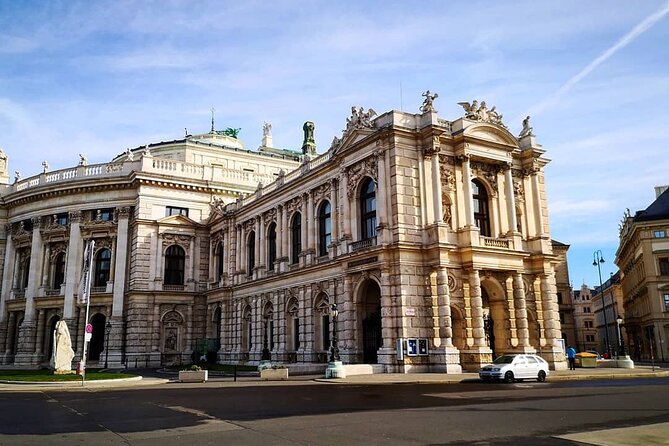
The first real sightseeing stop is the Prater, with a short photo and explanation pause for the Ferris wheel, the amusement park, and the Kaiserallee. Even if you’re not planning to ride anything, this stop is about context: why this part of the city feels like a break from the grand buildings of the center.
It’s a quick stop, but that’s useful. You get the story, you get a few minutes to frame photos, and then you move on. For many people, Prater is where Vienna stops feeling like a museum city and starts feeling like a lived-in place.
If you like amusement-park energy, you’ll enjoy this. If you hate crowds, you’ll still appreciate it because the tour doesn’t trap you there for long.
Urania Sternwarte and the Danube Canal: where the scenery turns artsy
Next you’re at Urania Sternwarte, right by the Danube Canal area. The key here is location. You get to combine a landmark stop with the feeling of being alongside the water, with the canal acting like a visual guide for the rest of the route.
Then the ride continues along the Danube Canal (Donau Kanal) itself, where there’s time for photos and guidance about the area’s graffiti art. This is one of the most “Vienna right now” parts of the experience. The street art isn’t a random detour; it’s tied to the neighborhood character.
Why this works on a bike: graffiti works are often best seen slowly enough to notice details, but not so slowly that you lose the rhythm of the day. The bike pace lets you look closely without turning your tour into a long slog.
If you’re a photographer, bring your patience. Even a short stop can take a few tries to get the angle right.
Michaelerplatz and the old-city feel of Vienna’s center
At Michaelerplatz, you get the classic city-center mood: old buildings, tight streets, and architecture that feels like it’s been there forever. The guide gives a short talk, and the pause is just long enough for you to register what you’re looking at.
This is also a mental reset in the route. After the canal’s visual texture, the center offers a cleaner, more formal style. The contrast helps you remember the city in sections—canal mood, central squares, grand monuments, and museum area—rather than as one endless street.
The stop is brief, so if you want to study façades closely, take photos and save your deeper investigation for later walking tours.
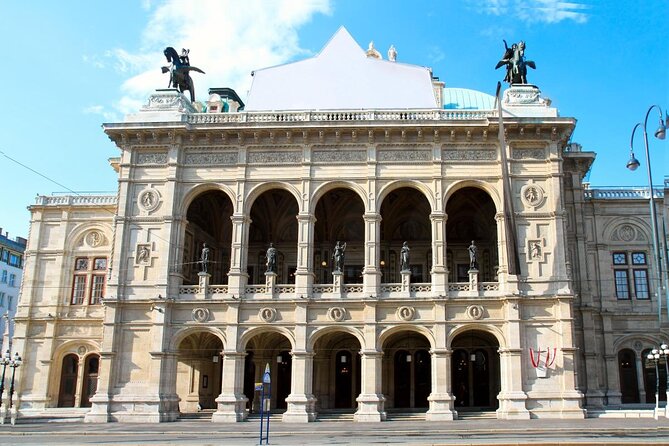
Wiener Staatsoper area: music history without the heavy commitment
The tour stops at the area of the Wiener Staatsoper, and the focus is music history in Austria. This isn’t just a photo stop; it’s a “why this place matters” moment.
Even if you’ve never attended an opera in your life, the Staatsoper area is one of those Vienna touchstones. It helps to hear the context while you’re there, rather than trying to Google it later from memory.
One consideration: the tour information lists admission for this stop as not included. So expect the experience to be about the storytelling and your views from the street, not a full internal visit.
Hundertwasserhaus and Karlskirche: two styles of Vienna in one ride
Then you roll into the world of Hundertwasserhaus. At this point you’ll receive information about Austrian artist Hundertwasser. The value isn’t only the building itself; it’s the guided explanation that helps you see why his style reads the way it does.
A lot of people remember Vienna for imperial palaces and grand squares. Hundertwasser pushes that memory sideways into something more playful, more human, more unexpected.
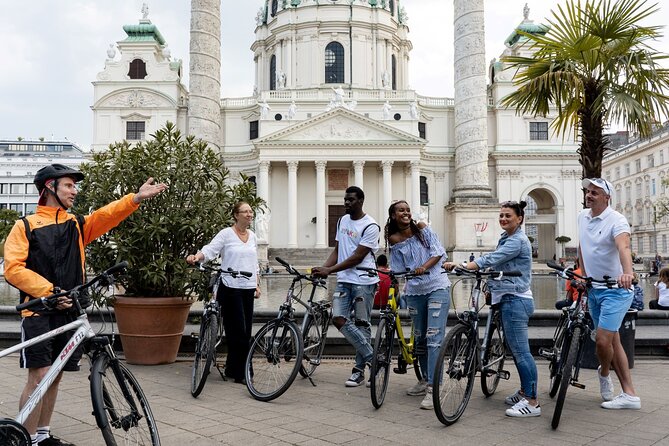
After that comes Karlskirche, where the guide shares the history and how it was created. Churches in Vienna can blur together if you just pass them. Here, the context helps you understand the structure and significance, even with a short stop.
If you love architecture, this stretch is a highlight because you get a modern artistic voice and then a landmark religious monument, linked by the pace of bike travel.
Stephansplatz: going inside and why it’s worth the short pause
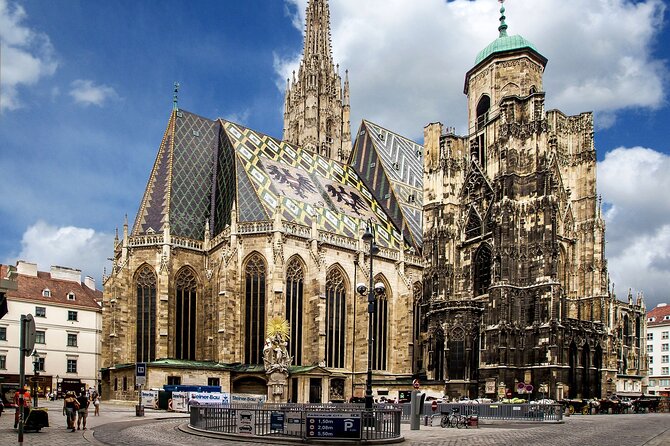
At Stephansplatz, one of the most visited places in Vienna, you have a chance to go inside, take photos, and get guide input. This is one of the few moments where you get more than street viewing.
Inside stops can be tricky on a bike tour because you don’t want the logistics to eat all your time. The tour keeps this efficient: you get access, you get context, and you’re back on the bike before the day drifts.
If you care about Vienna’s signature image-making spot, this is where you’ll likely feel the payoff most. Stephansplatz anchors the route in the city’s center identity.
Museum power on two wheels: Naturhistorisches and Kunsthistorisches areas
The next stops are the Naturhistorisches Museum Wien and the Kunsthistorisches Museum Vienna areas. Both are described as among the most important museums worldwide, and the tour gives you time for pictures plus guide information.
Here’s the best way to think about these stops: you’re using them for orientation. You’re seeing where these “big deal” museums sit in Vienna’s geography and hearing the basics that help you decide if you want a deeper museum day later.
Admission is marked as not included for these stops. So don’t expect a long interior visit. Instead, enjoy it as a guided museum-area walk-through, seen from the street and brief viewing moments.
If you’re a museum person, plan a separate ticketed visit afterward when you have more time to wander freely.
Rathaus and Burggarten: the civic face and a calmer breath
The route includes a short stop at Rathaus. You get information and time for pictures, which helps you place the building in the broader story of Vienna’s identity.
Then comes Burggarten, described as located in the city center. You get a short stop to go inside, enjoy the view, and learn more about it.
This part of the tour works because it balances grandeur with a bit of breathing room. Burggarten gives you a pause that feels less traffic-heavy than some of the earlier streets. It’s also a good moment to sit with what you’ve learned so far and decide what you want to chase on foot after the tour ends.
Judenplatz Holocaust Memorial: the tour’s serious turn
The final stop is Judenplatz Holocaust Memorial, with a short stop where the guide explains some of the history of the Holocaust. This is not about sightseeing in the usual sense. It’s a grounded, respectful moment that changes the tone of the day.
Bike tours can sometimes feel light simply because they’re active and fast. This stop ensures the tour covers more than architecture and photo angles. It’s also one of the most meaningful parts of the route because it connects Vienna’s landmarks to real human history.
If you’re sensitive to heavy topics, take your time here. Even a short stop can hit hard, and you’re allowed to pause and absorb instead of rushing for the next photo.
Price and value: what $216 buys you (and what it doesn’t)
At $216.04 per person for a tour lasting about 3 hours, the value depends on what you want from the day.
If you want an efficient, guided overview, the price makes sense. You get a private experience, a full bike setup at Velopold Vienna, and guided context across a lot of major sights without the constant planning on your side.
You also get group discounts mentioned as available, and you’ll receive a mobile ticket. That helps reduce friction.
What you should not assume: this doesn’t read like an all-in ticket tour. Several stops list admission as not included, including big-name places like Urania Sternwarte, the Wiener Staatsoper, museum stops, and more. You’re paying mainly for route coverage and guided storytelling, not for a stack of museum admissions.
If you’re okay with that, the cost feels fair for what you’re getting. If you want a heavy schedule of paid entrances and long museum time, you’ll likely want to pair this with separate tickets later.
Language, timing, and booking for a smooth ride
The tour is offered in English, and most travelers can participate. It’s also listed as near public transportation, so you’re not forced to rely on a car to get to the meeting point.
The tour is typically booked around 64 days in advance on average. I wouldn’t ignore that trend. Vienna is popular, and private slots can fill.
Timing-wise, you should think in short segments. Many stops are set up as about five minutes each, which is great for a highlights loop. It does mean you’ll move quickly between photo and explanation moments. If you prefer deep reading time at a single location, plan to do that after the tour.
Who this Vienna Private Bike tour fits best
This tour is a strong match if:
- you want a first-pass orientation to Vienna’s geography
- you like mixing famous sights with smaller, more unusual moments like canal art and Hundertwasser
- you enjoy an active format that still includes stories and photo breaks
- you want a private guide for your group’s interests
It might be less ideal if:
- you want long museum time during the same session
- you need lots of ticketed interior access as part of the core plan
- you’re visiting only when weather is uncertain, since the tour requires good conditions
Should you book this Vienna Private Bike tour?
Yes, if you want a practical, guided overview that covers a wide sweep of Vienna in a short amount of time. The combination of private pace, real bike setup at Velopold Vienna, and the route’s mix of canal art, major squares, music and opera context, and the serious stop at Judenplatz makes it feel like more than a standard highlights loop.
If you’re the type who hates rushing, consider using this tour as your starting point, then extend your day on your own with the specific sights that pull you in. The tour helps you decide fast—then you can spend real time where you want it.
FAQ
FAQ
How long is the Vienna Private Bike tour?
It lasts about 3 hours.
Where does the tour start?
The meeting point is Obermüllnerstraße 11, 1020 Wien, Austria.
Is this tour private?
Yes. It’s a private tour/activity, and only your group participates.
Is the tour available in English?
Yes, the tour is offered in English.
Are tickets included for all stops?
No. Some stops are free, some include admission, and others have admission marked as not included (for example, Urania Sternwarte and Wiener Staatsoper).
Does the tour run in any weather?
The experience requires good weather. If it’s canceled due to poor weather, you’ll be offered a different date or a full refund.
Are service animals allowed?
Yes, service animals are allowed.
What is the cancellation window?
You can cancel for free up to 24 hours in advance for a full refund. If you cancel less than 24 hours before the start time, the amount paid won’t be refunded.