REVIEW · PORTO
Private e-Bike Tour in Porto – Explore Riverside, Beaches & Parks
Book on Viator →Operated by Biclas & Triclas - Rent a Bike and Tours · Bookable on Viator
Pedal Porto’s coast and river on easy power. This private 3-hour e-bike tour pairs a licensed guide with stops that reach far beyond the usual city-center highlights.
What I like most is the practical variety: you glide through riverfront history, then trade cobblestones for ocean air and big parks. Your guide can also tailor the ride to how you’re feeling, and names like Eduardo and Javier come up a lot.
One thing to consider: this is city biking. Even with e-bike help, some stretches can feel busy, and you’ll mix in sidewalks, pedestrians, and a bit of road/tram-track riding depending on the day. Keep that in mind if you’re not comfortable in crowds.
In This Review
- Key highlights at a glance
- Why this Porto e-bike route beats sticking to the center
- The morning start: Biclas & Triclas and getting on the bike quickly
- Miragaia, Alfândega, and the Porto that sits just outside the postcard trail
- Tram museum to Arrábida Bridge: river engineering and river drama
- Foz do Douro: gardens, fortress views, lighthouse angles, and beach time
- Matosinhos Beach and the big urban parks: a breather after the coast
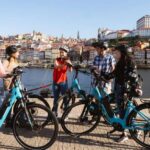
- Ribeira and Dom Luís I: the historic center, but with time to watch
- Price and practical tips so you get the best value
- So should you book this Porto e-bike tour?
- FAQ
- FAQ
- How long is the Porto e-bike tour?
- Is this tour private?
- What language is the guide?
- Where does the tour start and end?
- What’s included in the price?
- Are entry fees included for the stops?
- Is food included?
- Do children need anything special?
- What if the weather is bad or you need to cancel?
Key highlights at a glance
- Small-group feel with a guide who sets the pace and keeps you moving comfortably
- Douro-to-ocean route: Miragaia and Ribeira on the river, then Foz and Matosinhos for the Atlantic
- Real Porto neighborhoods: tram museum, fishermen areas, and viewpoints, not only photo stops
- Gear included: e-bike, helmet, and bottled water
- Most stops are free to enjoy, with plenty of looking time rather than museum marathons
Why this Porto e-bike route beats sticking to the center
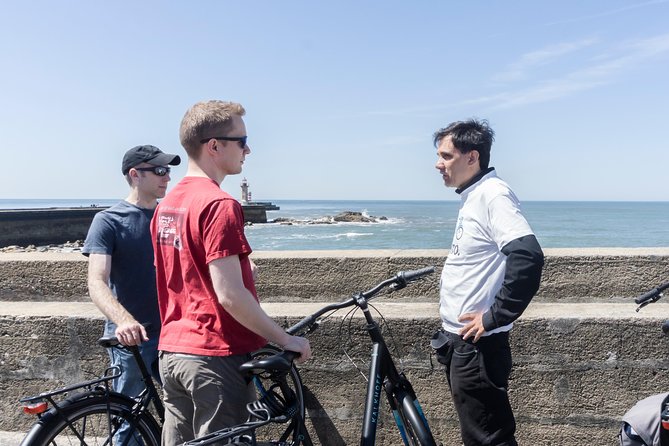
Porto can be great on foot, but the city has a habit of turning your calves into a souvenir. This is where an e-bike earns its keep. You still get the sight-seeing rhythm—stop, look, listen, roll again—but hills feel less like a test and more like a short detour.
The route is also built for contrast. You start in the older riverside fabric near Miragaia, then keep moving along the Douro. After that, the tour swings toward the ocean at Foz and down to Matosinhos Beach. That switch from river views to Atlantic breezes is one of the reasons this tour feels different from the usual “highlights only” loop.
You can also read our reviews of more tours and experiences in Porto.

The morning start: Biclas & Triclas and getting on the bike quickly
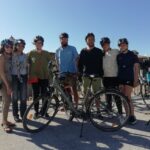
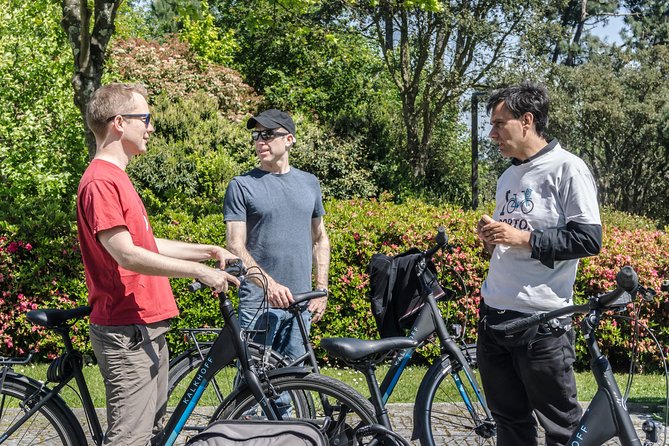
The tour meets at Biclas & Triclas in Porto (R. Nova da Alfândega 108 R/C). From there, you ride out as a group and cycle with a local guide who explains what you’re seeing along the way.
Gear is included, which matters more than you’d think. You’ll get the e-bike, a helmet, and bottled water. That’s a small thing that removes friction—no hunting for rentals, no worrying about comfort, no forgetting water until you’re already sweaty and thirsty.
If you’ve never ridden an e-bike before, don’t panic. The ride is designed around comfortable movement speeds, and the power helps on the parts that would normally slow people down on a regular bike. Still, treat this as practical city cycling: watch for pedestrians and be ready for a few tighter moments where everyone shares space.
Miragaia, Alfândega, and the Porto that sits just outside the postcard trail
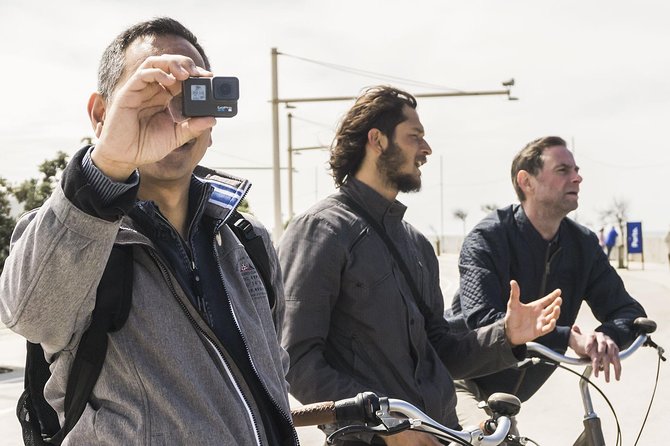
The first stretch gives you a quick hit of classic Porto charm. Miragaia is all cobbled lanes, villas, and small places to eat typical Portuguese dishes. It’s the kind of neighborhood where you see real street life without needing a strict itinerary plan.
Then you move to the Alfândega Porto Congress Centre, which sits at the edge of a huge, 19th-century waterfront change. The key idea here is transformation: the development that shaped the pier platform and the Customs area replaced an older Miragaia beach. This is the tour’s pattern—less “look at a building,” more “understand why this place looks like it does now.”
After that, you head to the Museu do Carro Electrico in Massarelos. It’s in a former thermoelectric power station, which gives the area a strong industrial feel. The museum focuses on the history of trams in Porto, and even if you don’t plan to go deep inside, the stop helps you connect today’s city movement to how Porto used to power and transport itself.
Tram museum to Arrábida Bridge: river engineering and river drama
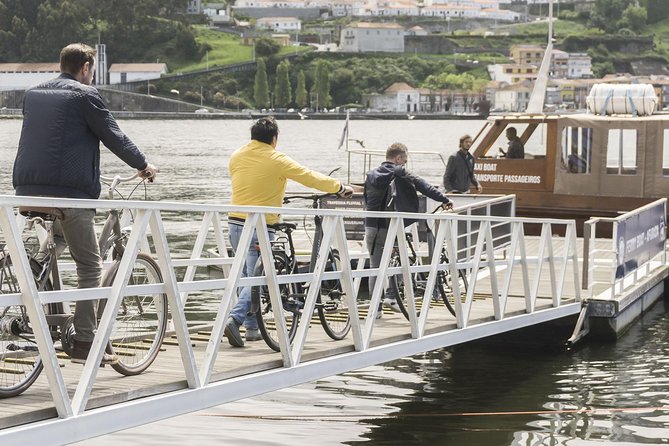
From trams and industry, the ride turns toward a bigger engineering moment: Ponte da Arrábida. The bridge is an arched crossing over the Douro that connects Porto (Arrábida area) to Vila Nova de Gaia (Candal node). When it was built in 1963, it carried the distinction of having the largest reinforced concrete arch of any bridge in the world.
That sounds like trivia, but your guide’s job is to translate it into something you can actually see. Standing by the crossing gives you scale. It also helps you understand why bridges matter in Porto: the river isn’t just scenery here, it’s the structure of the city’s day-to-day life.
Next comes Cantareira, a riverside area tied to its name and the old tradition of people fetching water with pitchers. Today it still feels anchored to water life—an area associated with fishermen, with shelter for small boats and storage of gear. It’s a calmer stop, and it’s great for taking in the view lines toward areas like Afurada and Cabedelo across the water.
Foz do Douro: gardens, fortress views, lighthouse angles, and beach time
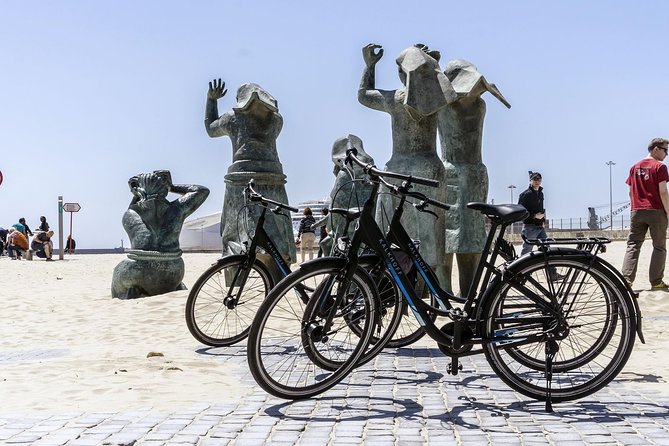
The best part of this tour for many people is the shift into Foz do Douro, where Porto meets the sea. You’ll pass through the Jardim do Passeio Alegre, a well-sited garden in Foz do Douro with heritage nearby. It’s one of those spots where your bike ride turns into a slow moment for looking—good if you want a break from “always moving.”
Then you’ll reach the Fortress São João Baptista (also called São João da Foz Fortress). The fortress sits in a dominant position by the Douro river bar and gives you a clear sense of how this coastline controlled river access. If you like coastal fortifications, this stop is a smart use of time because you’re not just seeing a wall—you’re seeing the positioning.
After that, the ride continues with Farolim de Felgueiras, a lighthouse on the right bank of the Douro at the tip of a pier. Lighthouses can be just a quick photo, but here the setting helps you understand the logic of the coast.
Next you roll through Pergola da Foz and then toward Praia do Castelo do Queijo. That beach takes its name from the shape of the rocky hill—cheese-like—and the idea of coastal defense. The fort built in the 17th century was meant to protect against pirate raids from North Africa. It’s a short stop, but it gives the coastline a story beyond swimming and sunbathing.


Matosinhos Beach and the big urban parks: a breather after the coast
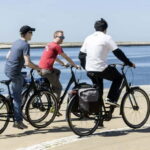
Once you reach Matosinhos Beach, the mood turns wide and sandy. This beach is known as one of the largest with easy access from central Porto, and it’s also a surfing-friendly place because of the waves.
If you want your legs to recover a little, this is a good point to breathe. The next part of the ride moves you inland into the green space of Porto.
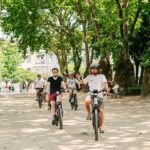
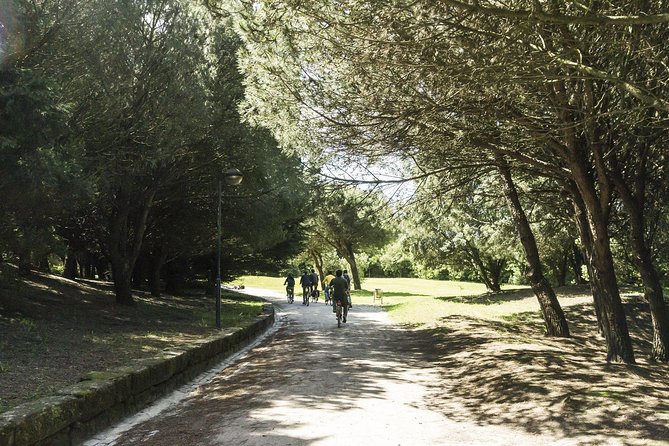
You’ll then cycle through Parque da Cidade, Porto City Park, the largest urban park in Portugal at about 83 hectares with around 10 km of paths. The park is planned with lakes and integrates flora and fauna into the city fabric. It’s a good reminder that Porto’s coast isn’t the whole story—Porto has breathing-room too.
After that, you can expect Parque Urbano da Pasteleira, a public park spread over forested areas and split by Afonso de Paiva Street, connected by wooden pontoons. The goal isn’t a long hike here. It’s a visual reset: watch the water, watch the trees, then get back into the ride rhythm.
A final garden-like stop in this inland-to-river arc is Jardim do Cálem, near the mouth of the Douro. Even without a long stay, the views are the point, especially with tall black poplars framing river sightlines.
Ribeira and Dom Luís I: the historic center, but with time to watch
The tour finishes by returning to the historic core with Praça da Ribeira. This square sits right by the quay and is one of Porto’s oldest, referenced in royal letters dating back to 1389. The key context is the connection between Ribeira and the Douro River—this is where the city’s early commercial growth took off.
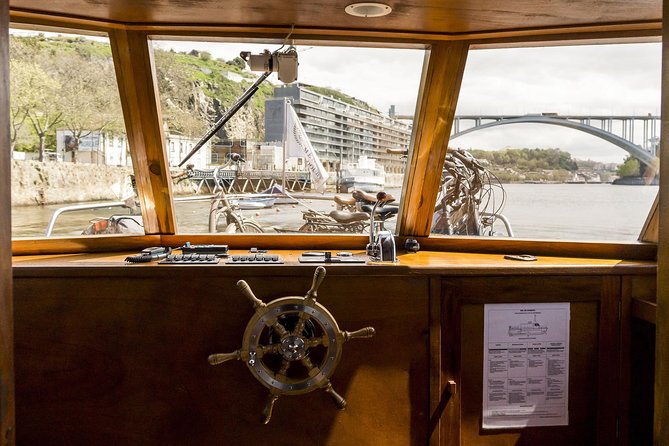
From there, you’ll reach Dom Luís I Bridge (the UNESCO-listed bridge). This is one of Porto’s defining ex-libris moments. Your guide can also explain the naming: people often call it D. Luís I, but the bridge’s real name is Luiz I.
In a short stop, the value is how you see it from the river corridor instead of only from a viewpoint above street level. The bridge makes the whole day click: river crossings, waterfront changes, and why Porto grew where it did.
Price and practical tips so you get the best value
The price is $71.20 per person for about 3 hours, and you get a lot of structure inside that time. What makes it feel like value is the mix: e-bike + helmet + bottled water + a local guide, plus stops that are mostly free to enjoy. You’re not paying for a list of pricey entries—you’re paying for time saved, comfort provided, and interpretation delivered.
A quick tip: book early if you can. This tour is commonly reserved around a month ahead (about 27 days), which is a hint that the route is popular for a reason.
For first-time city cyclists, here’s the balanced way to think about it:
- The e-bike helps on hills, and the ride is generally designed for comfortable pacing.
- Still, Porto is busy. Some stretches can be crowded with pedestrians, and you may encounter road segments and tram tracks.
- If you’re timid around traffic or dense footpaths, you might find the ride more stressful than relaxing.
If the weather turns, the plan is simple: this experience requires good weather. If it’s canceled for poor weather, you’ll be offered another date or a full refund.
So should you book this Porto e-bike tour?
If you want a fast way to understand Porto’s geography—river, coast, neighborhoods, and parks—this tour makes a lot of sense. It’s especially strong for couples and small groups who want a guided overview without spending half the day climbing hills.
I’d book it if:
- you want more than just the city-center landmarks,
- you like beaches and parks as much as historic streets,
- you’d rather ride than fight Porto’s slopes on foot.
I’d think twice if:
- you’re very uncomfortable cycling in crowded city spaces,
- you need a totally car-free, totally relaxed ride with long stops.
FAQ
FAQ
How long is the Porto e-bike tour?
It runs for about 3 hours.
Is this tour private?
Yes. It’s a private tour/activity, so only your group participates.
What language is the guide?
The tour is offered in English.
Where does the tour start and end?
It starts at Biclas & Triclas – Port Rent a Bike and Tours at R. Nova da Alfândega 108 R/C, 4050-431 Porto, Portugal. The tour ends back at the same meeting point.
What’s included in the price?
You get the e-bike, a helmet, bottled water, and a local guide, plus all taxes, fees, and handling charges.
Are entry fees included for the stops?
Admission is listed as free for the stops included in the route.
Is food included?
Food and drinks are not included unless specified.
Do children need anything special?
Children up to 5 years of age must use a child seat.
What if the weather is bad or you need to cancel?
This tour requires good weather. If it’s canceled due to poor weather, you’ll be offered a different date or a full refund. You can cancel up to 24 hours in advance for a full refund.