REVIEW · SANTIAGO
Private San Cristobal Hill Mountain Bike Tour
Book on Viator →Operated by Huaso Tours & Bike Rental Santiago · Bookable on Viator
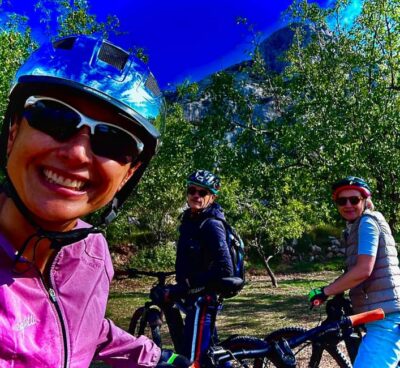
San Cristobal Hill by bike beats the couch. This small-group ride stacks a cable-car ascent with real mountain-bike riding and big panoramic views over Santiago. I especially like how it blends city convenience with the kind of trail time you actually want.
Two things I’d put at the top of my list: the guided route includes dirt and gravel trails (not just a casual spin), and the guides work with your comfort level. In particular, Francisco helped adjust the route to match different skills, and Balthazar pitched in with an alternate line when the mountain-bike section felt tough.
One consideration before you book: you do pedal uphill to get to the top areas, and the ride can be technical in spots, especially if you’re less experienced. The good news is the trails are described as XC-style and hard-tail friendly, but you still need moderate physical fitness and confidence on narrower paths.
In This Review
- Key things to know before you ride
- Why this San Cristobal Hill mountain bike tour feels different
- Price and value: what $138.67 buys you in 3 hours
- What to expect physically: uphill effort and trail difficulty
- Meet-up at El Comendador 2060 and your first bike check
- Cable-car climbs to San Cristobal Hill: faster altitude, less wasted energy
- The summit zone: viewpoints, sanctuary, and a quick breather
- Parque Metropolitano riding: Mirador Bellavista Terraza to the trail network
- Bicentennial Park and the lagoons moment (yes, it’s part of the biking day)
- Parque de las Esculturas: an outdoor art breather
- Guides make or break it: Francisco and Balthazar’s adaptive approach
- Gear and what’s included (and what you’ll still need)
- Who should book this tour (and who might want a different option)
- Should you book the Private San Cristobal Hill MTB Tour?
- FAQ
- How long is the San Cristobal Hill mountain bike tour?
- Where does the tour start and end?
- What’s included with the tour price?
- Is food included?
- Does the tour include the cable car ride?
- What kind of physical fitness level do I need?
- Are there age and height requirements?
- How big is the group?
- What if I need to cancel?
Key things to know before you ride
- Cable-car lift when possible helps you gain altitude fast, so your energy goes into riding, not only climbing.
- Hard-tail friendly XC trails use narrow dirt and gravel sections with different difficulty levels.
- Mirador Bellavista Terraza is where the views over Santiago really land.
- Sanctuary + parks + sculpture stops add culture without turning the day into a museum marathon.
- Small-group max 7 means you’re not lost in a crowd, and the guide can tailor pacing and lines.
Why this San Cristobal Hill mountain bike tour feels different
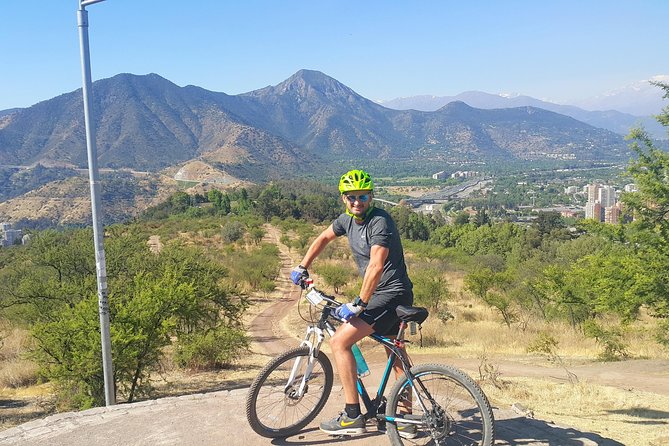
Santiago is a city with a view. And San Cristobal Hill is the place where that view becomes the main event. This tour gives you a fast route upward via the cable car system, then shifts you onto trail—so you get the best of both worlds: skyline views and genuine riding on uneven ground.
What makes it work especially well is that it’s not trying to be a stunt ride. The trail time is built around XC-style riding and hard-tail capability, which matters because a lot of “mountain bike tours” are either too gentle to feel like biking or too intense to feel safe and fun for the average rider.
Also, the small group size (up to 7) changes the vibe. You spend more time riding with your guide watching the route, and less time waiting for others to catch up. That adds up fast, even in a 3-hour tour.
You can also read our reviews of more tours and experiences in Santiago.
Price and value: what $138.67 buys you in 3 hours
At $138.67 per person for about 3 hours, you’re paying for three things: local guiding, mountain-bike equipment, and the cable-car assisted ascent. The bike gear isn’t an add-on. You get the mountain bike, helmet, and gloves, plus a water bottle and an emergency kit.
For me, the value comes from how much of the time is active. You’re not spending the day traveling long distances by car. The meeting point is in Providencia, you climb by cable car, and then you ride down through Parque Metropolitano de Santiago.
The tour also includes a bilingual guide (English or Spanish depending on the option you select). That sounds small on paper, but on a technical trail it’s the difference between following instructions you can understand and riding with extra uncertainty.
If you’re the kind of rider who wants real trail time, this price starts to make sense. If you’re expecting a leisurely downhill with no effort, you might feel the uphill challenge more than you planned.
What to expect physically: uphill effort and trail difficulty
This isn’t a couch-to-trail fantasy. You should be ready for an uphill grind as part of getting to the top and lining up for the descent. The tour asks for moderate physical fitness, and the itinerary includes technical routes with dirt, gravel, and some paved segments.
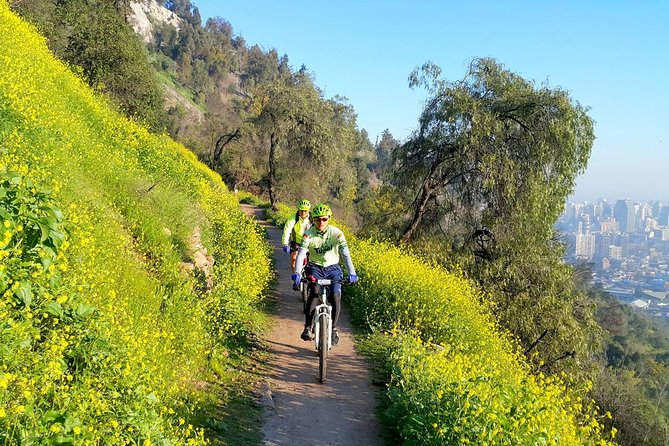
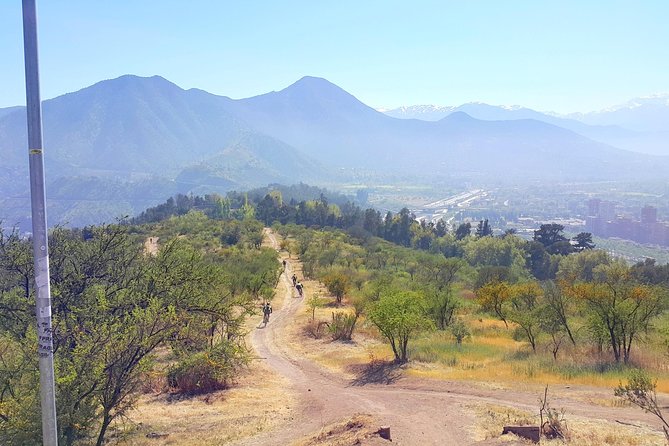
The route through the park includes narrow trail sections—about 1 meter (3 ft 3 in) wide—and the difficulty can change depending on where you ride. The good part is that the trails are described as XC style and applicable for a hard-tail bike, so the design is more “ride-able” for normal riders than for only-race-ready athletes.
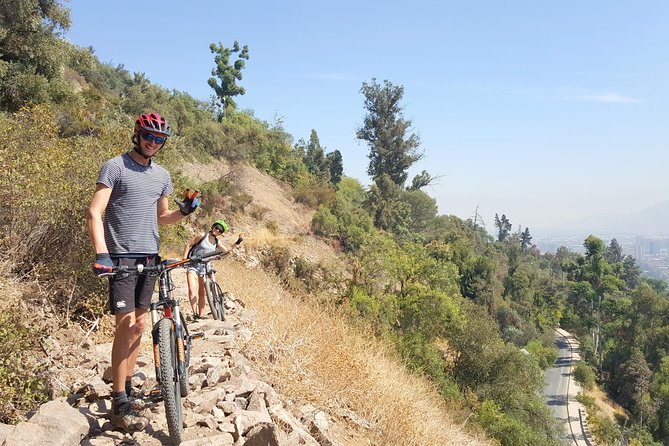
Still, if you’re nervous on narrow paths, or you haven’t ridden in uneven terrain before, take that seriously. One review highlighted how a rider wasn’t skilled enough for the mountain-bike portion, and the guide helped them find an alternative route down. That’s exactly the kind of support you want to have, but it’s smart to show up prepared.
Meet-up at El Comendador 2060 and your first bike check
You start at El Comendador 2060, in Providencia (Santiago). The first stop is simple: meet your guide, get introduced to the tour, and check out the bike you’ll ride.
This early chunk matters more than it sounds. When you’re about to switch from cable-car altitude into trail riding, the bike fit and comfort help. You’ll be using either a Trek 3900 or a Mongoose mountain bike, and you’ll have your helmet and gloves ready for the ride.
The tour is designed with that rhythm in mind: quick orientation, then you head into the lift system.
Cable-car climbs to San Cristobal Hill: faster altitude, less wasted energy
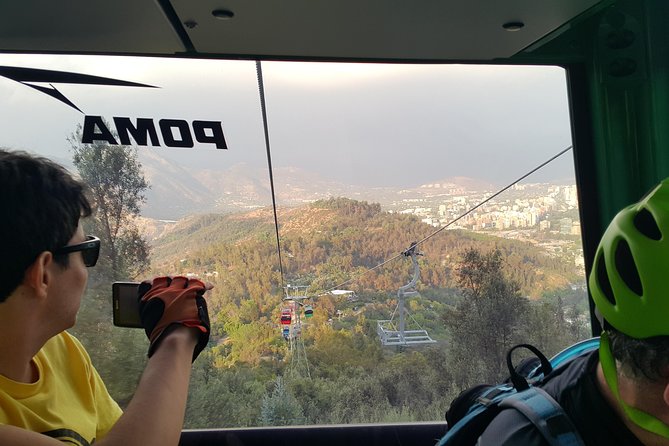
The tour uses the cable car system as a major shortcut. When it’s operating, you ride up to San Cristobal Hill, where you gain the height that makes the downhill meaningful.
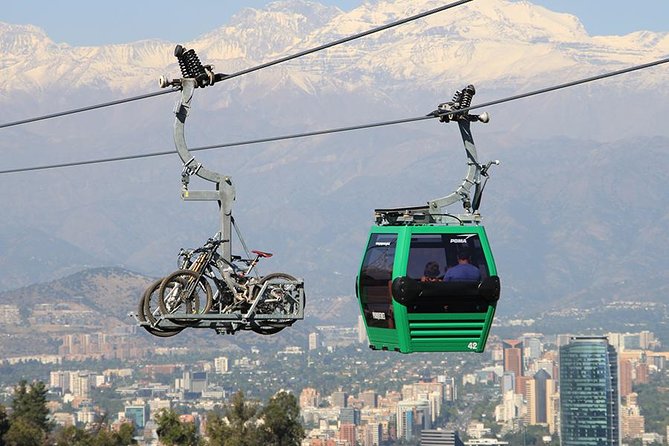
Important detail: the cable car is operating, but it no longer carries bicycles inside the cabins. Instead, the plan is to move your mtb using a bike rack and then hop on the cable car yourself. The itinerary includes two cable-car phases, including a stop at Estación Cumbre on the Turistik line.
Why this is valuable: it changes what you feel during the ride. You’re still going to pedal uphill, but the heavy work of getting altitude happens for you. That means you can spend more energy on trail control—braking, steering, and choosing lines—rather than just leg-burning climbs.
The hill’s high point is listed as 880 m (2900 ft). Even if you don’t obsess over the numbers, you’ll feel the height once you’re up there. The air can feel different, and the views become immediate.
The summit zone: viewpoints, sanctuary, and a quick breather
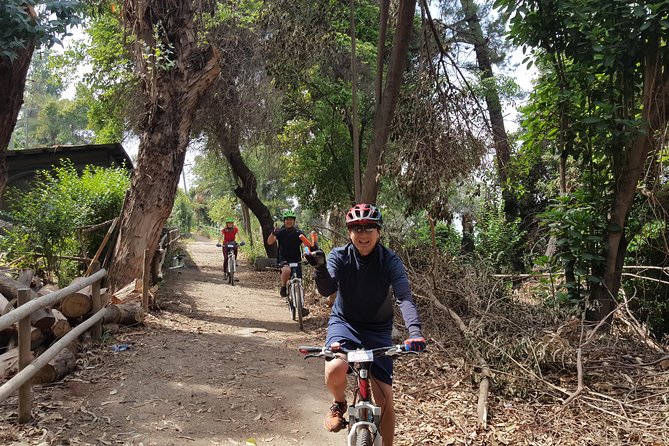
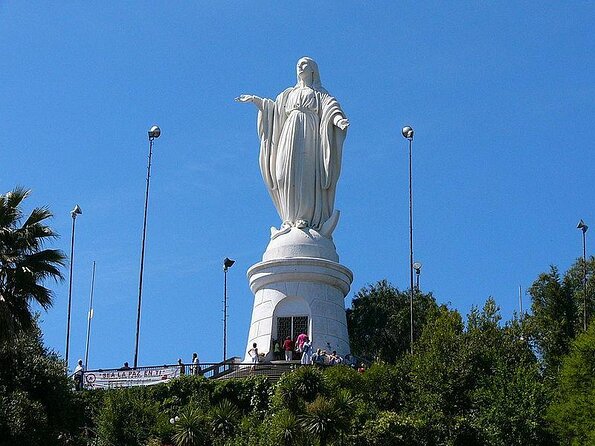
Once you’re up on San Cristobal Hill, you don’t rush past the scenery. There’s time to enjoy the summit area and then stop at the Santuario de la Inmaculada Concepcion, including the Virgin Mary statue.
This isn’t a long sightseeing detour. It’s a pause that works well after altitude, giving you a moment to reset before the descent begins. It also keeps the tour from feeling like only “ride, ride, ride.”
The sanctuary stop also gives context to the hill itself. San Cristobal isn’t just a place to get a view; it’s a landmark for Santiago, and that shows in how people use the space. Even with a short stop, it adds texture to the day.
Parque Metropolitano riding: Mirador Bellavista Terraza to the trail network
After the summit area, the tour moves into Parque Metropolitano de Santiago. This is where the ride becomes uniquely “MTB,” not just transport between viewpoints.
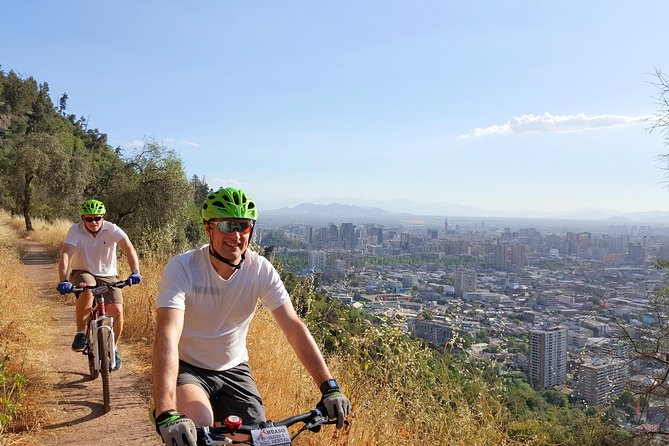
The route includes a viewpoint stop at Mirador Bellavista Terraza. That’s your payoff moment: you get panoramas over Santiago, framed by the vegetation and the urban parks and squares below. Then you leave the paved road and enter alternative MTB trails along the hill.
The description of the trail network matters if you’re deciding whether this is your kind of ride:
- Trails are about 1 meter wide.
- They can vary in difficulty levels.
- They’re described as XC style.
- They’re applicable for a hard-tail bike.
So, you should expect controlled riding rather than an all-out downhill session. Think steering and traction on gravel and dirt, plus switching your speed and braking technique when the terrain changes.
And because the group stays small, the guide can manage pacing. In one case, Francisco was described as accommodating and adaptive, which is what you want when the trail gets sketchy and you need clear guidance fast.
Bicentennial Park and the lagoons moment (yes, it’s part of the biking day)
The itinerary doesn’t just end at the hill. After the trail descent, you exit the park from the modern side toward Vitacura, and you pass by the Parque Bicentenario area.
This stop is short but memorable because it’s not a random add-on. You get a glimpse of the park’s lagoons and even the presence of flamingos and koi fish. It’s a soft landing after the mountain-bike intensity: a calmer setting where your brain can stop focusing on the next turn.
Then you get a bit of time in Parque Bicentenario. The pacing here feels smart: you’re not racing to cram more exertion into the last minutes, and you’re not stuck in a long transfer. It keeps the tour moving toward a satisfying finish.
Parque de las Esculturas: an outdoor art breather
Before heading back, there’s a quick stop at Parque de las Esculturas, which functions like an outdoor sculpture park featuring Latin American sculpture art.
This is the kind of stop I appreciate on an active tour. It doesn’t require long walking through indoor spaces. It gives you a cultural moment while you’re already in the area and moving toward the end point.
It’s also a nice contrast to the riding. After gravel and narrow trail lines, sculpture art and open spaces can feel like a natural exhale.
Guides make or break it: Francisco and Balthazar’s adaptive approach
Two names came up in the tour’s feedback: Francisco and Balthazar. Both are described as attentive and accommodating, especially when riders face a skill mismatch.
That’s huge for you if you’re on the fence about your biking level. A technical tour isn’t only about the route on the map. It’s about what happens when conditions aren’t what you expected—fatigue hits, confidence drops, or a trail section feels harder than you planned.
The best-case scenario is that the guide adjusts your route so you still finish feeling proud, not wrecked. If you’re willing to ride with instructions and communicate what feels manageable, this tour seems built for that teamwork.
Gear and what’s included (and what you’ll still need)
Included with the tour:
- Mountain bike (Trek 3900 or Mongoose)
- Helmet and biking gloves
- Water bottle
- Professional English or Spanish-speaking guide (based on your option)
- Emergency kit
What’s not included:
- Food and drinks, unless specified
- Hotel pickup and drop-off
What you should wear:
- Athletic clothing is recommended
Given the included helmet and gloves, you don’t need to worry about finding those items locally. You do want to arrive ready to ride, since you won’t be stopping for supplies mid-tour.
Also, if you rely on pickup, you’ll need to get yourself to the meeting point. The tour ends back at the same place.
Who should book this tour (and who might want a different option)
This is a great fit for you if:
- You want a real mountain bike ride with dirt and gravel trail time.
- You like city views that feel earned rather than viewed from a bus window.
- You’re comfortable with uphill effort and basic technical terrain.
- You value a small group and a guide who can adjust pacing.
It might be less ideal if:
- You’re not ready for uphill pedaling and narrower, varied trail sections.
- You expect the cable car to be a simple ride with no changes to bike handling.
- You’re mainly looking for a purely scenic, flat, beginner-friendly outing.
The rider requirements are also clear: minimum age is 18, and there’s a height range from 4 ft 5 in to 6 ft 6 in (1.37 m to 2 m). If you’re outside that, the tour won’t be a match.
Should you book the Private San Cristobal Hill MTB Tour?
I’d book it if you want a Santiago experience that mixes altitude views with actual biking, in a format that stays manageable for normal riders. The combination of cable-car assisted climbing, hard-tail appropriate trails, and a guide who can adapt makes it feel like a tour you can enjoy even if you’re not a downhill wizard.
I’d hesitate only if you know you dislike uphill effort or you want a low-skill ride with minimal technical bits. In that case, you might spend more time thinking about what’s ahead than enjoying where you are.
If your goal is: get outside, ride dirt and gravel near a world-famous viewpoint, and still be back in a few hours—this tour lines up nicely.
FAQ
How long is the San Cristobal Hill mountain bike tour?
The tour is about 3 hours.
Where does the tour start and end?
It starts at El Comendador 2060, Providencia, Santiago, and ends back at the meeting point.
What’s included with the tour price?
You get a mountain bike (Trek 3900 or Mongoose), helmet, biking gloves, a water bottle, a professional guide (English or Spanish depending on the option), and an emergency kit.
Is food included?
Food and drinks are not included unless specified.
Does the tour include the cable car ride?
Yes, the ride to San Cristobal Hill by cable car is included when possible. The cable car is operating, but it no longer carries bicycles, so the bikes are handled via a bike rack.
What kind of physical fitness level do I need?
You should have a moderate physical fitness level.
Are there age and height requirements?
The minimum age is 18. Height requirements are 1.37 m to 2 m (4 ft 5 in to 6 ft 6 in).
How big is the group?
The maximum group size is 7 travelers.
What if I need to cancel?
This experience is non-refundable and cannot be changed for any reason.