REVIEW · SANTIAGO
Santiago Evening Bike Tour
Book on Viator →Operated by Huaso Tours & Bike Rental Santiago · Bookable on Viator
Night in Santiago has a different mood, and biking through it makes the city feel close up. I like that this tour mixes illuminated landmarks with real commentary, so you’re not just coasting past buildings. The guide-led storytelling (names you may hear like Tomás, Balthazar, Andreas, Jaime, Andres, and Jenni) is a big part of what makes the ride feel personal.
I also love the structure: you get scheduled stops for photos and quick introductions, from Plaza Baquedano through La Moneda and over to Bellavista. It’s set up for practical sightseeing—short views, context, then back on the bike without dragging.
One consideration: you need moderate fitness. The ride is manageable if you can bike confidently, but it includes some hills and a longer stretch of riding for a 3-hour total. Also, there’s no food or drinks included, so plan your timing for before or after.
In This Review
- Key things to know before you ride
- Why biking at 7:30 pm feels like the smart choice
- The ride setup: mountain bikes, lights, gloves, and a guide who talks
- Meeting in Providencia: where your night ride begins
- Providencia to the city center: parks first, then history
- Plaza Baquedano (Plaza Italia): the city’s split in one landmark stop
- Forestal Park paths and the Santiago Fine Arts Museum stop
- Plaza de Armas and the colonial core: where the guide brings it to street level
- Central Post Office, City Hall, and the Cathedral Metropolitana
- Bulnes Avenue to La Moneda: illuminated politics you can actually see
- Plaza de La Constitución: a quick square stop with big-picture framing
- New York Street and the justice zone: the commercial center on wheels
- Central Market from outside, then Lastarria and Bellavista at night
- Casa Museo La Chascona: the Neruda add-on you can choose
- Plaza de La Aviación: the fountain light show before you head back
- How hard is the Santiago night ride, really?
- What to bring (and what not to bring)
- Price and value: is $88 worth a private night bike tour?
- Who should book this Santiago Evening Bike Tour
- Should you book it
- FAQ
- What time does the Santiago Evening Bike Tour start?
- How long is the tour?
- Is this tour private?
- Where do I meet the guide?
- What’s included in the price?
- Are food or drinks included?
- Are there age or fitness requirements?
- What is the cancellation policy?
Key things to know before you ride
- Private tour, personal attention: Only your group rides, so you can ask questions and adjust at the pace of your group.
- Night-focused setup: Helmet, bike lights, and even biking gloves are included for a safer evening cruise.
- Downtown + neighborhoods, not just one zone: You’ll connect Providencia, the historic center, and areas like Lastarria and Bellavista.
- Commentary with political and cultural context: Stops like Plaza de Armas and La Moneda come with clear historical framing.
- A Neruda house stop is optional: Casa Museo La Chascona is a quick add-on, but admission isn’t included.
Why biking at 7:30 pm feels like the smart choice
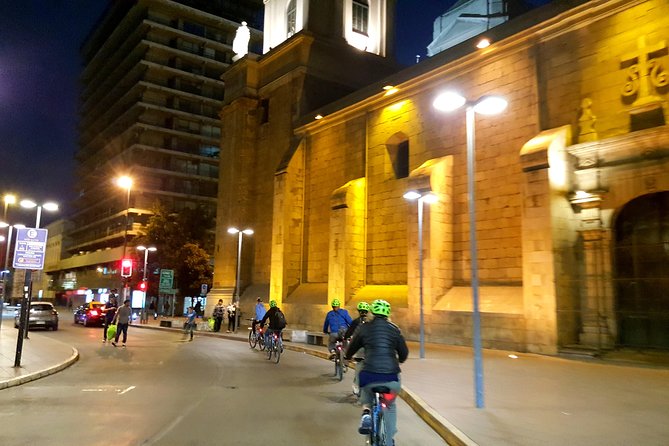
If you only do Santiago by car or bus, you miss the way the streets connect. On this ride, you move at a human speed through key areas—parks, government buildings, old squares, and nightlife zones—so you actually feel how the city is laid out.
The timing matters too. Starting at 7:30 pm means the big sights are lit up. That lighting turns plazas and civic buildings into photo-friendly backdrops without the daytime rush. And because you’re on a bike, you get to “pause” at multiple points instead of settling for one long stop.
Most of all, it’s a good way to get your bearings fast. You’ll see the city’s shape: modern versus historic, the downtown core around Plaza de Armas, and the transition toward more bohemian areas later on.
You can also read our reviews of more tours and experiences in Santiago.
The ride setup: mountain bikes, lights, gloves, and a guide who talks
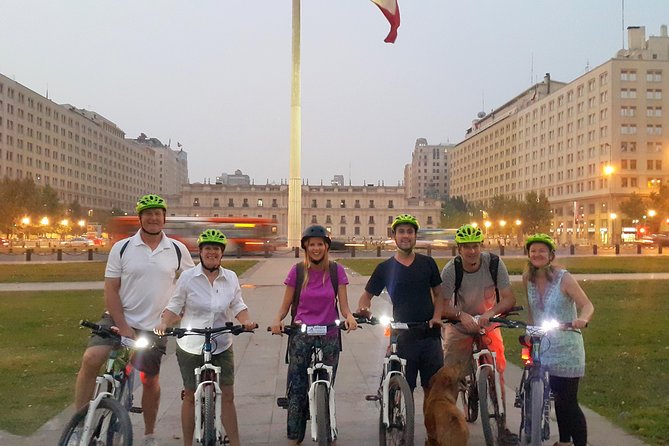
This tour provides a proper mountain bike (Trek 3900 or Mongoose), plus the gear you need for evening riding: helmet, bike lights, and biking gloves. You also get a water bottle and an emergency kit.
That added support is more than “nice to have.” Evening bike tours live and die by comfort and safety, and the included lights and gloves remove two common travel headaches. You don’t have to hunt for gear when your plans are already packed.
The private format is another practical advantage. When the tour is only your group, the guide can keep you together more easily and answer questions in the moment—whether you’re curious about Chilean history, street life, or why a particular building matters.
In the feedback you’ll find a recurring theme: guides like Tomás and Balthazar are praised for being personable and for explaining Chilean history in a way that lands. Andreas, Jaime, Andres, and Jenni also show up in positive comments for clarity, flexibility, and good pacing.
Meeting in Providencia: where your night ride begins
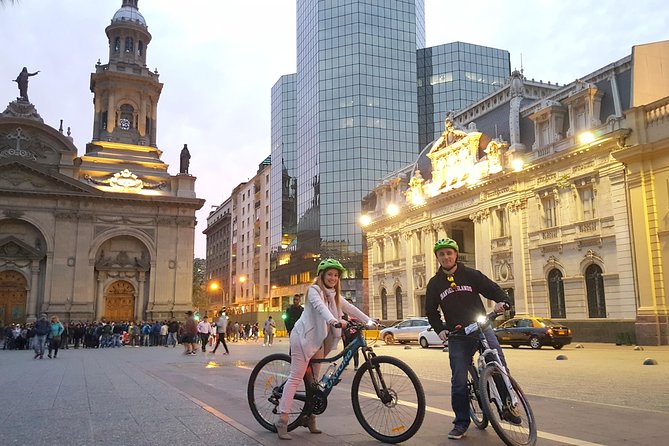
You meet at El Comendador 2060 in Providencia, and the tour ends back at the same meeting point.
This matters because Providencia is a real neighborhood, not a generic tourist bus-stop area. One practical note from experience on this kind of meet-up: the starting point can feel like a residential house rather than a storefront. So give yourself a little extra time to confirm you’re in the right place.
You’ll get a short introduction on the bikes right before rolling out. Expect a quick briefing, then you’re on the move alongside the parks of Providencia—an easy first warm-up that sets the tone for the night.
Providencia to the city center: parks first, then history
After you mount up, the ride heads from Providencia toward the city center along park-adjacent paths. This opening stretch is smart. It’s not the part where you need to concentrate hardest; it’s the part where you settle into the bike and start noticing how the city connects green space to busy streets.
From here, you’re already building a mental map. You’ll feel the shift from calmer areas into the more formal “main sights” zone as the evening continues.
Plaza Baquedano (Plaza Italia): the city’s split in one landmark stop
Your first official landmark stop is Plaza Baquedano (also known as Plaza Italia).
Why this matters: it’s described as the place where the city divides into modern and historic areas. Even without a long explanation, just being there helps you understand Santiago’s logic. You can see why guides use this as a starting point for context—people orient themselves quickly once they have that dividing line in mind.
You’ll get a short stop here (about 5 minutes) plus some guidance from the guide on what to look for and how the rest of the ride fits together.
Forestal Park paths and the Santiago Fine Arts Museum stop
Next, you’ll ride along Forestal Park paths and pass the Santiago Fine Arts Museum as you make your way toward the main square area.
This is a good transition moment. Forestal Park routes can feel like a mental breather after the early plazas. Plus, it’s a reminder that Santiago isn’t only stone and politics—there’s a strong arts-and-public-space thread running through the city.
The museum pass is brief, but you’re not just snapping a random building. This stop is part of a planned approach: you’re being moved from landmark to landmark with commentary that ties each one to the broader Santiago picture.
Plaza de Armas and the colonial core: where the guide brings it to street level
When you reach Plaza de Armas, you’ll stop at Santiago’s principal square. This is one of the longer viewing points on the route (around 15 minutes).
This is also where the tour leans into explanation. You get an introduction to Chilean history and how this place relates to it—while you observe important historical buildings around you.
If you like tours where you don’t just read a plaque and move on, this is where the guide earns their fee. The benefit is simple: you leave the square understanding why it’s a meeting place, not just where it is.
Central Post Office, City Hall, and the Cathedral Metropolitana
From Plaza de Armas, the ride continues with a sequence of quick stops:
- Central Post Office (short stop, about 5 minutes)
- City Hall building
- Metropolitan Cathedral (Catedral Metropolitana) (short stop, about 5 minutes)
These are classic “downtown civic Santiago” sights. Because each stop is short, you’ll get just enough time to look up, take photos, and absorb the context the guide provides—then you’re back on the bike.
A practical way to think about it: you’re building a full picture of power and public life in the city, without losing your evening to long museum lines.
Bulnes Avenue to La Moneda: illuminated politics you can actually see
Then comes one of the anchor moments: cycling along Bulnes Avenue toward La Moneda, the presidential palace.
You’ll pass the Bulnes Promenade, which is noted as charming in its illumination. The tour includes an introduction to the years of military coup in Chile, plus a look at the current state of the country. That kind of commentary changes the experience. The palace isn’t only a landmark photo; it becomes part of a larger story about how Chile got here.
You also have a stop near the La Moneda Museum building, still focused on the same zone of civic meaning. The time is brief (for example, La Moneda is part of a 10-minute segment), but it’s enough for orientation and context.
Plaza de La Constitución: a quick square stop with big-picture framing
Next is Plaza de La Constitución, with another 10-minute segment.
This is where the tour keeps its rhythm: you’re moving through civic and governmental Santiago, but you’re also getting a scaffold. The guide’s explanations help you connect plazas and buildings into something more than a photo wall.
By the time you’re leaving this area, you’re not guessing which direction is which. You’re following a route that makes sense as an overview of the city’s political center.
New York Street and the justice zone: the commercial center on wheels
After Plaza de La Constitución, you ride through the commercial center of Santiago—specifically mentioning New York Street, one of the city’s oldest streets—until you reach the area near the Supreme Court and the former National Congress buildings.
You’ll stop at the Supreme Court building (about 5 minutes). You’ll also be guided past the Precolombian Art Museum zone during this portion.
This stretch works well for two reasons:
- It keeps the pace lively while you learn.
- It shows you that Santiago’s “history” isn’t locked away. It lives in streets you’ll keep walking later.
If you’re the type of traveler who likes to know what you’re seeing before you arrive, this section will feel satisfying because the guide connects street names and major institutions to the story of the city.
Central Market from outside, then Lastarria and Bellavista at night
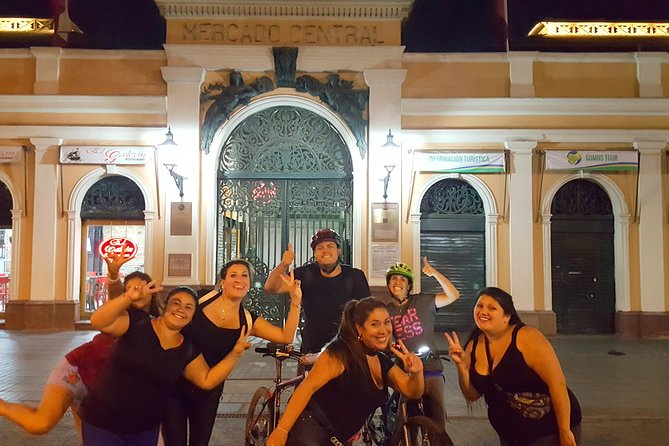
As the tour moves into the later stage, you’ll head toward the Central Market (Mercado Central) area, but you’ll see it from outside on the evening ride. The time allocated here is about 5 minutes.
This is one of those smart compromises. Central Market is easier to appreciate from the street at night than to fully explore on a bike tour, and the guide keeps you moving through the neighborhoods where the energy shifts.
From there, you pass through Lastarria, described as famous for art and nightlife, and then you ride on toward Bellavista—the city’s bohemian nightlife area.
Bellavista is a great finale zone for an evening tour because the streets feel more social. You’re finishing your ride with scenery that matches the time of day: colorful streets and lively atmosphere, still paced for safety and group movement.
Casa Museo La Chascona: the Neruda add-on you can choose
At Bellavista, the tour includes a stop at Casa Museo La Chascona, the house of Pablo Neruda.
Important detail: this stop has admission not included. So think of it as a “quick stop and look” rather than a guaranteed indoor museum experience unless you decide to pay on the spot.
If you’re a Neruda fan, this can be a memorable bonus because it adds a personal cultural thread to all the civic history you’ve just seen. If you’re not planning extra museum entry, you can treat it like a chance to spot the location and keep enjoying the evening ride.
Plaza de La Aviación: the fountain light show before you head back
Your final stop is Plaza De La Aviación and its fountain, where you get a nice light show at night before returning to the meeting point.
This timing is intentional. After a lot of city-center looking, the fountain moment helps you close the tour on something lighter and more atmospheric. The ride ends back at El Comendador 2060, so you don’t have to worry about transport from a far-off drop-off.
Also, one practical note: the route can include a bit of hill effort. In the feedback, a couple specifically called out a “challenging hill ride” near the end for panoramic views. So if you’re booking for someone who’s new to biking, ask the provider what to expect for hills before you go.
How hard is the Santiago night ride, really?
This tour is listed for moderate physical fitness, with a minimum age of 12.
That usually means:
- You should be comfortable staying seated and pedaling for stretches of time
- You should be able to handle short stops and then remount quickly
- You should not expect a flat, leisurely promenade the entire way
On the plus side, your bike setup is provided, and the route is broken into short timed segments with stops throughout. That pacing helps more than people think.
There are also height limits: 1.37 m to 2 m. If you’re outside that range, you’ll need to look for another option.
What to bring (and what not to bring)
Because the tour includes helmet, lights, gloves, a water bottle, and an emergency kit, you can travel light on the equipment front.
Two things you should plan for:
- Food and drinks are not included, so you’ll want a plan for dinner before you meet or a plan to grab something after the tour.
- Dress for active movement. The tour runs for around 3 hours, and you’ll be riding continuously between stops.
Price and value: is $88 worth a private night bike tour?
At $88 per person for about 3 hours, the value comes from what’s wrapped into that price. You’re not just paying for a bike. You’re paying for:
- A real guided route through multiple neighborhoods
- Evening safety equipment (lights, helmet, gloves)
- A structured sequence of stops for photography and context
- Private group attention, not a crowd experience
When guides are doing good work, the difference shows in how the city becomes understandable. In feedback, guides like Tomás and Balthazar were praised for making Chilean history feel like it connects to daily life, not like a lecture you forget.
So is $88 cheap? No. But it’s also not an “only for extreme bike fans” price. If you want an efficient, guided way to see major Santiago sights at night without wrestling with navigation, it can be a strong deal.
Who should book this Santiago Evening Bike Tour
This is a great fit if you:
- Want an evening orientation to Santiago
- Like history explanations tied to landmarks like Plaza de Armas and La Moneda
- Prefer active sightseeing over standing in lines
- Are comfortable biking with a few stops and some uphill work
It’s also well matched for solo travelers and couples, since a private tour format can feel extra attentive without the social friction of a mixed group.
If you’re visiting with limited time and want to cover a lot of ground across districts, this tour’s “connect-the-city” approach is exactly the kind of plan that makes a first night in Santiago easier.
Should you book it
I’d book this if you want a structured Santiago evening bike tour that mixes iconic sights, photo opportunities, and guide storytelling with a calm-night pace. The high rating (about 4.8) and strong recommendation rate (about 96%) suggest most people feel the guide quality and route planning hit the mark.
I’d think twice if:
- Your group lacks moderate riding comfort, or you’re worried about hills
- You need food/drinks included in the experience
- You’re outside the height range (1.37 m to 2 m)
If those check out, this is one of the smarter ways to see Santiago after dark: you get the city’s illuminated “greatest hits,” but you also get the why behind the buildings.
FAQ
What time does the Santiago Evening Bike Tour start?
The tour starts at 7:30 pm.
How long is the tour?
It runs for about 3 hours.
Is this tour private?
Yes. It’s a private tour, so only your group participates.
Where do I meet the guide?
You meet at El Comendador 2060, Providencia, Santiago, Región Metropolitana, Chile.
What’s included in the price?
Included items are a mountain bike (Trek 3900 or Mongoose), helmet, bike lights, biking gloves, a water bottle, a 3-hour guided tour, and an emergency kit.
Are food or drinks included?
No. Food and drinks are not included.
Are there age or fitness requirements?
The minimum age is 12 years, and the tour is described as suitable for travelers with moderate physical fitness.
What is the cancellation policy?
You can cancel up to 24 hours in advance for a full refund. Less than 24 hours before the start time is not refunded.