REVIEW · SANTIAGO
Santiago Center Cultural Bike Tour
Book on Viator →Operated by Huaso Tours & Bike Rental Santiago · Bookable on Viator
Santiago looks different at bike speed. This Santiago Center Cultural Bike Tour gives you a guided way to cover a lot of ground in just about 3 hours, mixing city highlights with everyday neighborhoods. I love the small-group setup (up to 15) and the fact you ride on proper paths along parks, so the day feels efficient without feeling rushed.
The main thing to think about is comfort: you’ll be biking at an easy pace, but you do need to feel fine riding in and around people, handling curbs, and staying alert for short stretches that share space with cars.
In This Review
- Key reasons this bike tour is worth your time
- Why biking Santiago’s center makes instant sense
- Getting rolling at El Comendador 2060 (and what you should expect)
- Along the Metropolitan Park: the ride starts where the city breathes
- Bellavista and La Chascona: bohemian streets with Neruda in the background
- Mercado Tirso de Molina: where you smell the city before you see it
- Mercado Central: fish-market energy and a classic Santiago stop
- Plaza de Armas and the Metropolitan Cathedral: the civic heart, up close
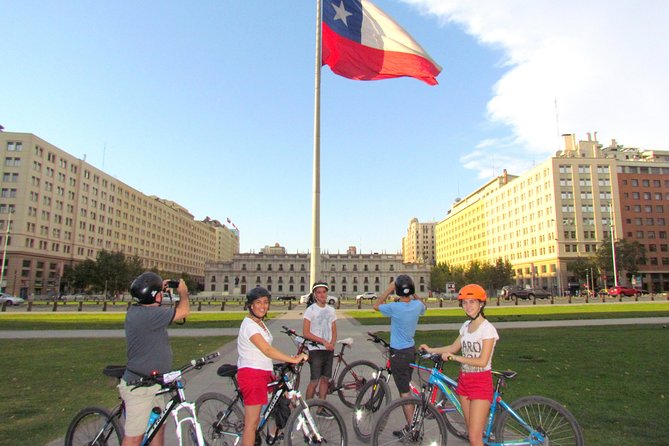
- La Moneda and Plaza de la Constitución: politics explained where it happened
- Ex Congreso Nacional, the Supreme Court area, and the quick institutional sweep
- Forestal Park and the Fine Arts Museum: a calmer pivot
- Lastarria and Plaza Italia: where the city feels lived-in
- What the guide really adds (and why group size matters)
- Price and value: what $88 covers (and how to make it worth it)
- Small comfort checks before you book
- Should you book Santiago Center Cultural Bike Tour?
- FAQ
- How long is the Santiago Center Cultural Bike Tour?
- What is the price per person?
- Where do I meet the guide?
- Is hotel pickup included?
- How many people are in the group?
- What’s included in the price?
- What admission fees are not included?
- What are the age and height requirements?
- What is the cancellation policy?
Key reasons this bike tour is worth your time
- Up to 15 riders means more chances to ask questions and get help
- Quality mountain bikes plus safety gear (helmet, gloves, water) keep you comfortable
- Markets are built into the route, not just the big monuments
- Neruda and civic Santiago both show up, so it’s not a one-note sightseeing ride
- Traffic can feel lighter on some days—a Sunday can turn the streets into a bike-and-walker scene
- You end back in Providencia area, so the experience fits easily into your day
Why biking Santiago’s center makes instant sense
Santiago’s downtown can be a tough way to “see it all” by foot. Distances add up fast, and walking between neighborhoods can chew through your energy before you even reach the main sights. This tour solves that with a simple idea: use a bike to connect the key areas while your guide keeps the route practical.
You’ll also get a nice mix that actually helps you understand the city. One moment you’re gliding along biking trails near a major park; the next you’re in markets where the smells and colors do the talking; later you’re standing in front of the political heart of Chile. It’s the kind of routing that helps your brain build a map, fast.
At $88 per person for roughly 3 hours, it’s not just a “cheap ride.” You’re paying for a local guide, a bike in good working condition, and the planning that puts the stops in a logical order—so you don’t burn time figuring things out on your own.
You can also read our reviews of more tours and experiences in Santiago.
Getting rolling at El Comendador 2060 (and what you should expect)
The meeting point is El Comendador 2060, Providencia, and the tour ends back near there. You start with a brief introduction and then you’re set up with the equipment: a mountain bike (Trek 3900 or Mongoose), helmet, biking gloves, and a water bottle. There’s also an emergency kit, which is the kind of small detail that matters once you’re out in traffic-adjacent areas.
Bring the usual comfort items: close-toed shoes you can pedal in, sun protection, and a little patience for stops and starts. The pace is designed for moderate physical fitness, not racing. You’re on a bike for most of the tour, so if you’re planning around jet lag, schedule it when you’re likely to feel steady on your legs.
One more practical detail: there’s no hotel pickup. You’ll want to be sure you can reach the meeting point without stress, especially if you’re arriving from a hotel outside Providencia.
Along the Metropolitan Park: the ride starts where the city breathes
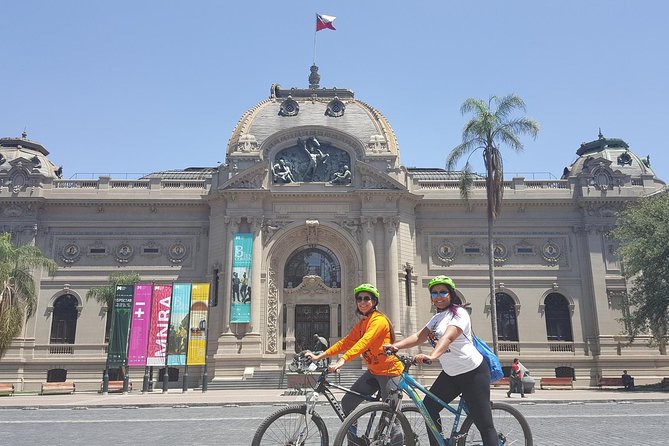
After pickup and a quick intro, you head out toward the city center along biking trails bordering the Metropolitan Park of Santiago. This is a smart start because it gets you rolling on bike-friendly routes instead of immediately dumping you into complicated downtown blocks.
This portion also gives you a “feel” for Santiago: big green space nearby, wide open sight lines, and that in-between vibe where the city isn’t all concrete and storefronts. It helps you relax into the rhythm of the tour before you hit the tighter neighborhoods.
If you’re worried about biking in a new country, this first stretch matters. You can settle into how the group pedals, how your guide handles traffic transitions, and how the stops work—without the pressure of having to perform right away.
Bellavista and La Chascona: bohemian streets with Neruda in the background
Next you roll into Bellavista, a neighborhood known for culture and a more artistic, local flavor than you’d get from a “only monuments” route. The time here is short, but it’s enough to reset your eyes—murals, street life, and a different tempo than the formal downtown core.
Then comes Casa Museo La Chascona, tied to Chile’s national poet Pablo Neruda. You’ll explore the home with a focus on learning about Neruda’s life. The stop includes a view from outside, and admission isn’t included, so don’t count on this being free if you choose to go in.
What I like about including La Chascona is that it adds a human layer to the day. Santiago’s story isn’t only political and architectural. Neruda’s presence—through a home and setting connected to him—adds a quieter, more personal thread.
Mercado Tirso de Molina: where you smell the city before you see it
This is one of the most “real life” segments of the ride: you bike along vivid streets toward Patronato and Tirso de Molina, arriving at a popular fruit and vegetable market. You’ll also have time to appreciate the murals along the way, which keeps the experience from turning into a checklist.
The big win here is the food focus. You get the chance to try fresh natural juices, and the market environment is exactly the kind of place where your understanding grows just by watching people shop and talk.
Potential drawback: markets mean you should expect active spaces. Wear comfortable shoes, keep your bike handling smooth around crowds, and keep your attention on your guide’s cues. If you’re the type who gets distracted by photos, treat this stop like a sensory moment first—then take pictures after.
Mercado Central: fish-market energy and a classic Santiago stop
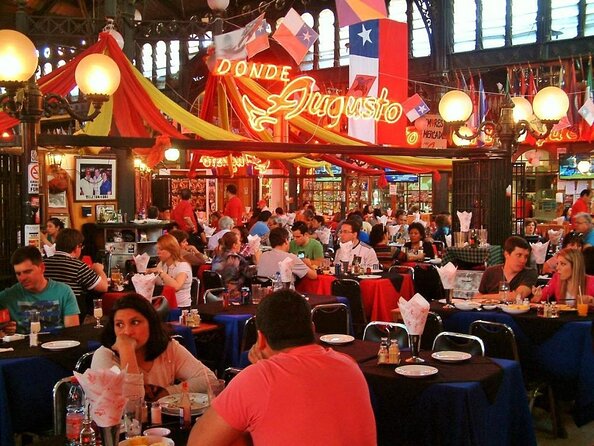
After Tirso de Molina, you head to Mercado Central, the city’s main fish market. Even if you don’t plan to buy anything, this stop adds texture you can’t get from looking at buildings from far away.
You’ll have about 15 minutes here. That’s a good window: long enough to take in the atmosphere and notice the practical side of the place, short enough that you’re not stuck waiting in lines or rushing through the important bits.
This segment works especially well after Tirso de Molina because the theme continues: food, daily life, and local rhythm. Together, these two market stops help the day feel grounded.
Plaza de Armas and the Metropolitan Cathedral: the civic heart, up close
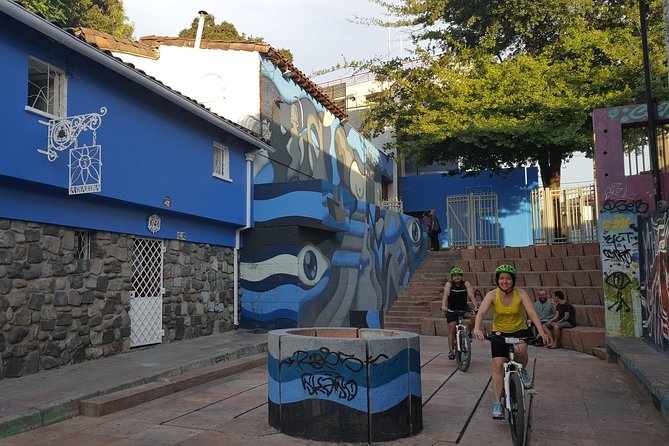
From the markets, you roll into Plaza de Armas, Santiago’s main square. This is where the tour earns its “center” label. It’s the kind of place that helps you orient yourself—big open space, key buildings, and the feeling that the city has a formal center and a more everyday outer ring.
You’ll also have time for the Metropolitan Cathedral (Catedral Metropolitana), with admission listed as free. Depending on your comfort with quick walking around the plaza, you’ll likely get a meaningful look rather than a photo-only stop.
A small note: plazas can be windy and bright. If you’re doing this in the warmer part of the year, start early in the day if you can. One guide-led experience I read emphasized that the ride gets hot later on, so timing matters for comfort.
La Moneda and Plaza de la Constitución: politics explained where it happened
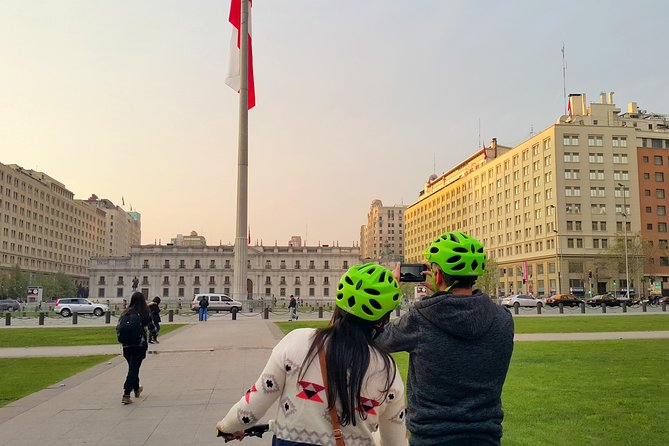
Then you head into the stretch along the commercial center until you reach La Moneda, the Presidential Palace. You’ll hear stories tied to Chile’s military coup era. Admission isn’t included here, so think of this more as an interpretation stop than a paid-entrance one.
Your next key viewpoint is Plaza de La Constitución, right in front of La Moneda. You’ll pause for about 10 minutes to take in the view and hear about Chilean political situation. This is where the tour stops being only about what things look like and starts focusing on why things changed.
If you want a travel day that teaches you something without turning into a lecture, this is the section that usually delivers. It’s also a good time to ask your guide questions—this is exactly the kind of moment where a good explanation makes the architecture and history make more sense.
Ex Congreso Nacional, the Supreme Court area, and the quick institutional sweep
The ride continues past major institutions:
- Ex Congreso Nacional (about a 5-minute stop)
- Palacio de Tribunales de Justicia (Supreme Court building area, with admission not included)
These are short stops, so the goal isn’t a deep visit—it’s recognition. You’re training your eyes to notice what kind of buildings represent government power, and you’re learning why they sit where they do.
If you prefer lots of museum time, you might wish for longer here. But if your goal is to understand Santiago’s structure in one day, the quick sweep actually works.
Forestal Park and the Fine Arts Museum: a calmer pivot
After the downtown institutional zone, the route shifts toward Forestal Park and then the National Museum of Fine Arts (Museo Bellas Artes). You’ll stop for about 10 minutes for a brief visit at the museum, with admission listed as free.
This change of pace is important. After civic squares and palace stories, a park-and-museum segment gives your brain a breather. It also helps balance the day: you get both public power and cultural expression.
If you like art but hate long museum marathons, the short stop is a plus. If you want to go deep on art, you’ll probably want to follow up later on your own time.
Lastarria and Plaza Italia: where the city feels lived-in
Next you cycle through Barrio Lastarria, known for art, culture, and nightlife energy. The stop is brief (around 10 minutes), but it’s enough time to sense the neighborhood vibe and see how Santiago shifts from formal center to a more creative, street-level identity.
Then there’s Plaza Italia, and from there you start the return ride back toward Providencia, using major parks in the area as the link back.
This closing stretch matters because it turns the end of the tour into a decompression period. You’re not sprinting to “see everything.” You’re just riding, noticing storefronts and streets, and letting the day’s information settle.
What the guide really adds (and why group size matters)
The biggest difference between a basic bike ride and a cultural bike tour is the human layer. In the experiences I read about, guides like Augustin, Tomas, Claudio, Balazar, Luis, Sebastian, and Jenni were singled out for making the pace feel right and turning stops into explanations you could actually use later.
A few things stood out across guides:
- They keep the ride well paced, so you don’t feel cooked by the time you reach the big sights.
- They respond to questions and adjust to interests.
- With small groups, you’re less likely to get stuck at the back watching others move on.
One specific tip worth noting: a guide-led Sunday ride can feel easier because some main roads can be car-free. That means fewer complicated crossings and more of the city’s street energy—bikes, runners, walkers—without that constant car pressure.
Price and value: what $88 covers (and how to make it worth it)
At $88 per person, you’re paying for a lot that would cost extra if you DIY:
- A bike (not a rental you have to manage)
- Helmet and gloves
- A guided route that keeps stops organized
- Water and an emergency kit
- The small-group experience, with up to 15 travelers
You’ll also notice what you’re not paying for. A few places list admission as not included, including Casa Museo La Chascona, La Moneda, and the Supreme Court building area. The cathedral, markets, Plaza stops, and the Fine Arts Museum are marked as free, which helps keep costs down overall.
So here’s my value logic for you: if you’re the type who would otherwise spend time walking between downtown zones (and maybe taking taxis when you’re tired), this tour often saves you money and fatigue at the same time.
Small comfort checks before you book
This tour is a great match if you’re:
- Comfortable with biking at an easy pace for a few hours
- Interested in both highlights and local neighborhoods
- Looking for an organized route without paying for private guides all day
It may not be ideal if:
- You want a completely car-free route the entire time (the tour can include short shared stretches)
- You’re hoping for long museum time at each site
- You’d rather not deal with the timing of short stops
Also check the practical requirements. There’s a minimum age of 12, plus height limits between 1.37 m and 2 m. And you should aim for moderate fitness, since the bike is the main “transport.”
Should you book Santiago Center Cultural Bike Tour?
I’d book it if you want to understand Santiago quickly and enjoy the city beyond the obvious postcard stops. The combination of markets (Tirso de Molina and Mercado Central), key civic sites (Plaza de Armas, Cathedral, La Moneda), and neighborhood flavor (Bellavista and Lastarria) makes this more than a simple route—it’s a way to build a working picture of Santiago in one morning or afternoon.
You should also book it if you can meet at El Comendador 2060 without hassle and you’re ready for a bike day with short crowd moments and curb handling. If you’re sensitive to that, plan on choosing a calmer day and keep an easy pace in your head.
One last practical nudge: it’s commonly booked around 9 days in advance, so reserve early if you’re traveling during peak times.
FAQ
How long is the Santiago Center Cultural Bike Tour?
The tour is about 3 hours.
What is the price per person?
It costs $88.00 per person.
Where do I meet the guide?
You meet at El Comendador 2060, Providencia, Santiago, Región Metropolitana, Chile.
Is hotel pickup included?
No. Hotel pickup and drop-off aren’t included.
How many people are in the group?
The tour has a maximum of 15 travelers.
What’s included in the price?
You get a guided 3-hour tour, a mountain bike (Trek 3900 or Mongoose), helmet, biking gloves, a water bottle, and an emergency kit. A private option is also available.
What admission fees are not included?
Admission isn’t included for Casa Museo La Chascona, La Moneda, and the Palacio de Tribunales de Justicia area.
What are the age and height requirements?
The minimum age is 12. The height range is 1.37 m to 2 m.
What is the cancellation policy?
This experience is non-refundable and cannot be changed for any reason.