REVIEW · SEOUL
Seoul: City Highlights eBike Tour
Book on GetYourGuide →Operated by We Ride Korea · Bookable on GetYourGuide
Three hours, and Seoul clicks into focus. This e-bike tour strings together royal landmarks, hanok neighborhoods, and riverside paths with a local guide who keeps the route moving at a comfortable human pace. What makes it interesting is how much you fit in without turning it into a sprint, plus the snack breaks and photo moments along the way.
I especially like the mix of big-name sights and smaller street scenes. One stop leans romantic with Seochon and the West Village vibe, and another centers on the traditional market for Korean bites you can actually taste, not just look at. The other thing I like is the photo service plus guide follow-up, which makes it easier to remember what you saw (and where to go next).
Here’s the main drawback to consider: it’s still a bike tour, and you need to be comfortable riding for the full time. It’s not suitable for people who can’t ride a bike, and it comes with footwear rules (no sandals/flip-flops, and above-the-ankle socks are required), so plan accordingly.
In This Review
- Key things you’ll like about this Seoul e-bike tour
- Why this 3-hour Seoul e-bike loop works so well
- Getting started at WeRide Korea (Le Meilleur Jongno Town) and getting comfortable fast
- Cheonggyecheon to Gwanghwamun Square: Seoul’s river energy and first skyline hits
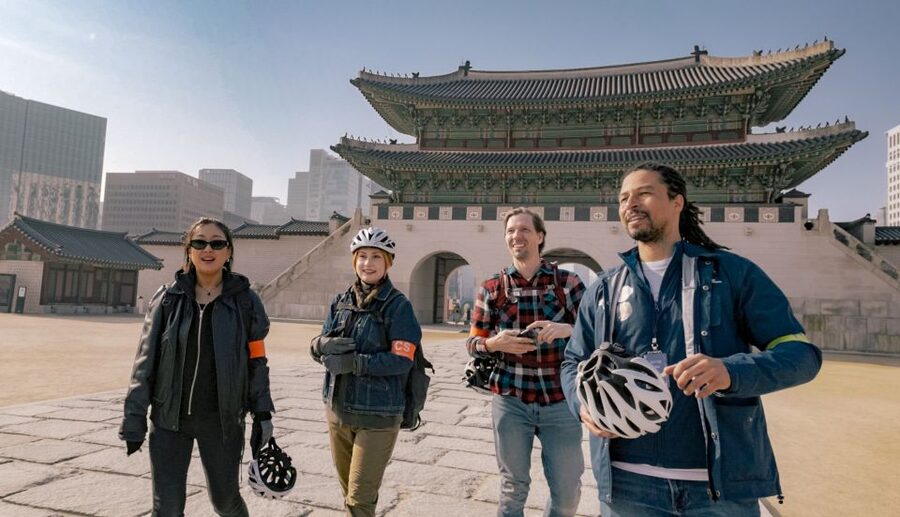
- Gyeongbokgung Palace: the royal core and photo-worthy moments
- Seochon and the West Village vibe: hanok lanes with romantic energy
- Tongin Traditional Market snack time: what you get from stopping to eat
- Blue House brief stop, then Bukchon Hanok Village viewpoints
- Jogyesa Temple and the ride through Insadong back toward Cheonggyecheon
- The guide team, safety style, and why people keep rating this so high
- Price and value: what $119 really buys you in Seoul
- Who this Seoul e-bike tour suits (and who should skip it)
- Should you book this Seoul e-bike tour?
- FAQ
- How long is the Seoul e-bike tour?
- What’s included with the price?
- Where do I meet the guide?
- What should I bring and wear?
- Is this tour suitable for kids or pregnant travelers?
- Is it wheelchair accessible?
- What happens if the weather is extreme?
Key things you’ll like about this Seoul e-bike tour
- E-bike assist on hills and streets helps you keep a steady pace without stressing your legs
- A guided route through palace, hanok villages, and temples so you get both highlights and off-main-street moments
- Traditional snack stops that break up the riding and add real flavor to the sightseeing
- Photo support after the ride to help you get pictures where you want them
- Riverside cycling along Cheonggyecheon for a scenic, easy finish after the historic sites
Why this 3-hour Seoul e-bike loop works so well
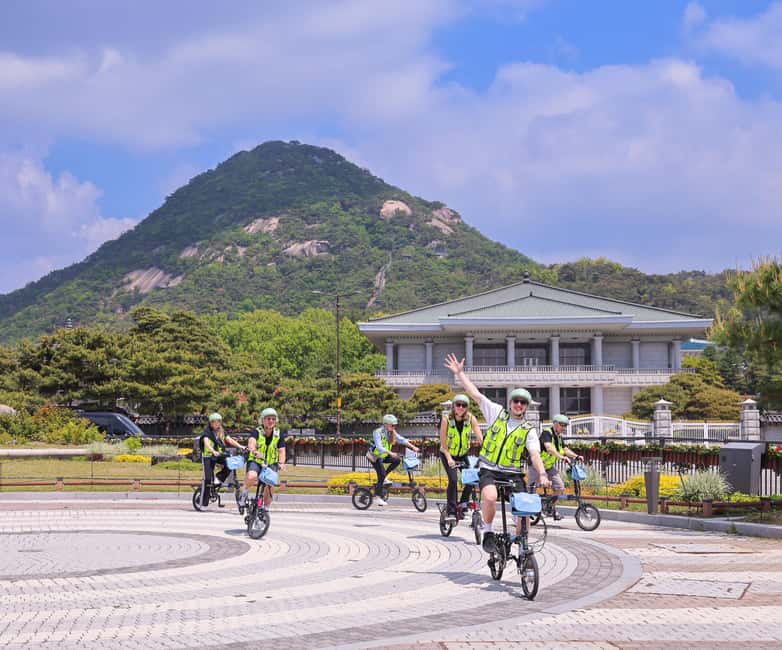
This tour is built for that first-day-in-Seoul feeling: you want the famous places, but you also want the lived-in streets and views that make the city click. Three hours sounds short, yet the route is packed because the e-bike removes the usual time drain of walking between neighborhoods.
The pacing is the secret sauce. You get guided stops where it makes sense to slow down, and riding time where it makes sense to cover distance—so you don’t end up spending your day stuck in transition.
At $119 per person, it’s not a budget “grab-and-go” option. But you’re paying for more than transport: local guiding, insurance, safety gear, snacks via market time, and the added photo service experience. If you like tours that feel like a small concierge plan rather than a conveyor belt, this one matches that style.
You can also read our reviews of more tours and experiences in Seoul.
Getting started at WeRide Korea (Le Meilleur Jongno Town) and getting comfortable fast
Meet at the WeRide shop on the 2nd floor of Le Meilleur Jongno Town (Le Meiller Jongno Town on the address info). It’s on Jong-ro Boulevard in the old city center, between Jonggak Station (Line 1, Exit 1) and Gwanghwamun Station (Line 5, Exit 4). The quick way to find it: walk along Jong-ro until you see the statue of a man on a horse, then look for the building right next to it and enter through the big glass doors.
Before you roll, there’s a safety check and fitting, plus a short test ride. The tour is led in English, and the guide team emphasizes safety on busy roads—more than once, riders praised guides for staying organized, keeping the group together, and clearing the road when needed.
What the e-bike feels like matters here. In one rider account, the bike uses a pedal-assist system (no throttle), and riders select different levels of power. The same account described foldable bikes with gears and about five electric speed levels, which is useful because you can dial it to your comfort.
If you’re new to e-bikes, this setup is a good sign. Pedal-assist usually feels intuitive, and the lack of a throttle also means the bike behavior stays predictable when you’re learning.
Cheonggyecheon to Gwanghwamun Square: Seoul’s river energy and first skyline hits
Your ride starts near Cheonggyecheon, one of Seoul’s most famous urban river corridors. Even if you’ve seen photos, cycling the river stretch gives you a different angle—wider views, more sky, and a sense of how the city flows between neighborhoods.
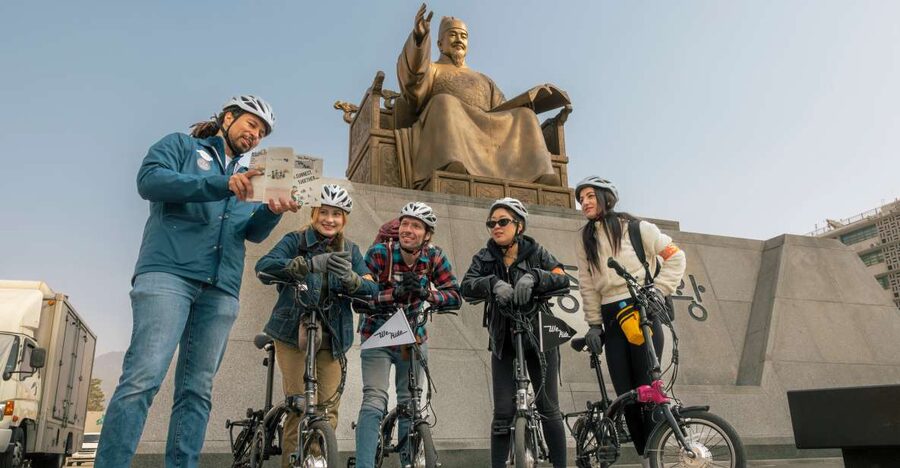
You’ll then work toward Gwanghwamun Square, a key crossroads near major government and palace-area sights. This section is where the tour gives you context fast: where you are, why this area matters, and how the old city lines up with the modern city around it.
A smart part of this early stretch: it’s close enough to start building confidence. By the time you’re heading into the more historic blocks, you’ve already done the “how do I ride this comfortably” part.
Gyeongbokgung Palace: the royal core and photo-worthy moments
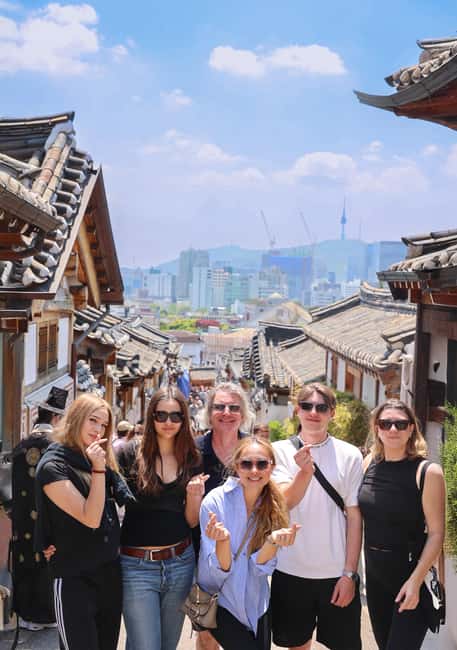
From Gwanghwamun, the tour moves to Gyeongbokgung Palace, with a guided stop and a bit of time for seeing the palace grounds area. You’ll get a short, structured visit rather than a full museum-style sweep, which makes sense in a 3-hour program.
The palace timing can be a big deal. Multiple riders specifically mentioned catching the changing of the guards during their tour, and that it was a highlight with great photo opportunities. If you’re a details person, this is one of the moments where you’ll feel like the guide’s timing choices paid off.
There’s also a practical angle: because you’re biking, you can reach the palace area without wasting time fighting Seoul’s walking distances. The tour includes a “loosely explore neighborhoods around the palace” style segment, which helps you connect the buildings with the streets around them.
Seochon and the West Village vibe: hanok lanes with romantic energy
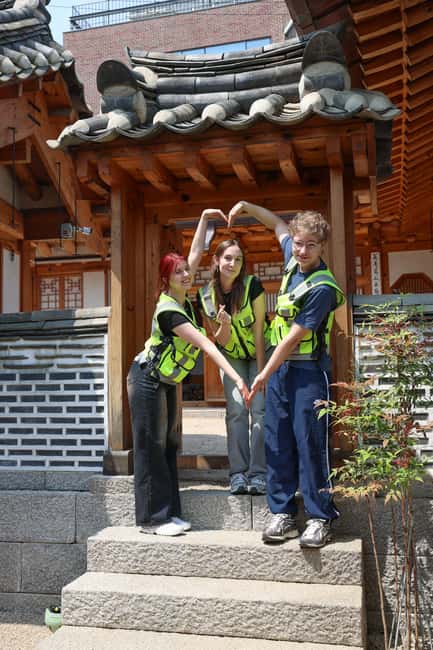
Next comes a more neighborhood-feeling part of the route: Seochon Hanok Village and the romantic West Village area. This is where Seoul looks less like a postcard and more like a lived-in fabric of alleys, small lanes, and traditional architecture.
You’ll have time for sightseeing while riding at an easy human pace. Riders have praised how guides tell stories tied to what you can actually see in front of you, not just facts thrown out like a slideshow. If you care about how cities feel, this is the segment that often makes people remember Seoul beyond the big attractions.
One drawback to keep in mind: this is still city riding. Even with an e-bike helping you, your feet and balance need to be ready for short street turns, stops, and transitions. Comfortable shoes help here more than you’d expect.
Tongin Traditional Market snack time: what you get from stopping to eat
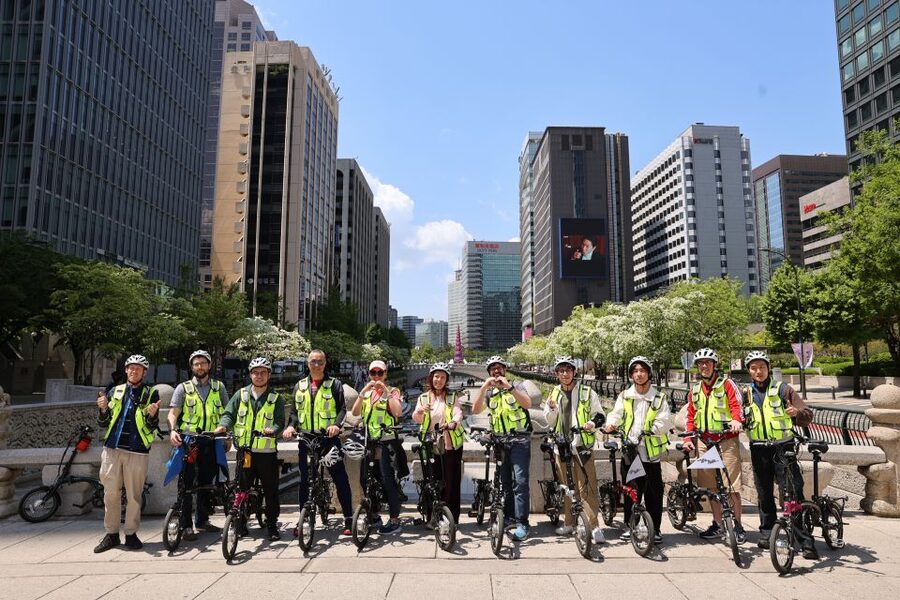
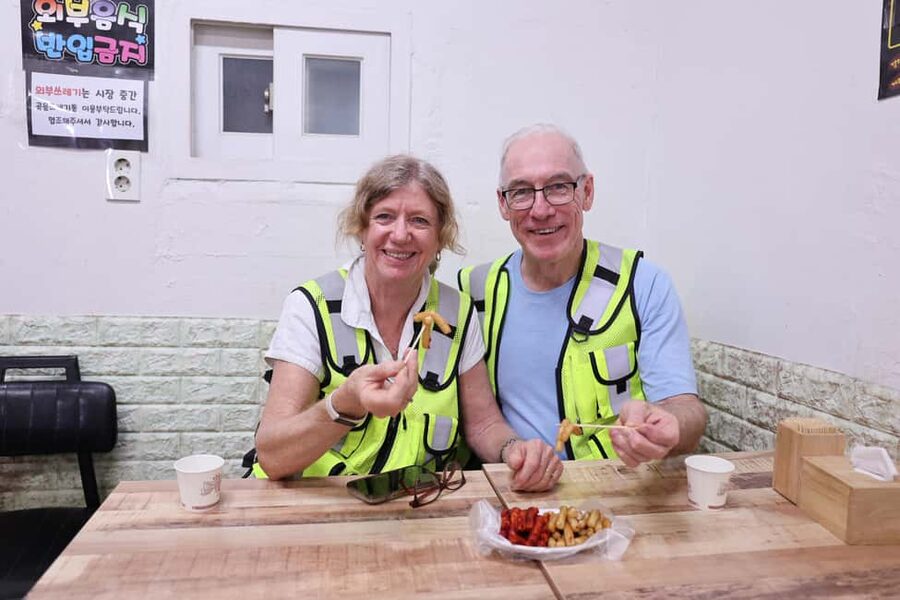
At Tongin Traditional Market, the tour shifts into tasting mode. This is the point where the tour turns from “look around” into “taste and learn,” with time included for market visiting and food tasting.
That matters because Korean street food is a language of its own. A guided market stop can help you avoid the common beginner mistake: buying something you don’t recognize and missing how locals order, share, and eat casually.
Riders praised the food tasting as a strong part of the experience, and one person specifically called out that the snacks were perfectly timed. Another mentioned a local bakery stop (Scoff Bakery) as part of the ride experience. Even if your day’s exact tasting mix varies, the intent stays consistent: give you real local bites during the ride so you’re not starving when you’re sightseeing.
Also, there’s a nice practical inclusion: mineral water is provided. In hot weather, that small thing becomes a big thing.
Blue House brief stop, then Bukchon Hanok Village viewpoints
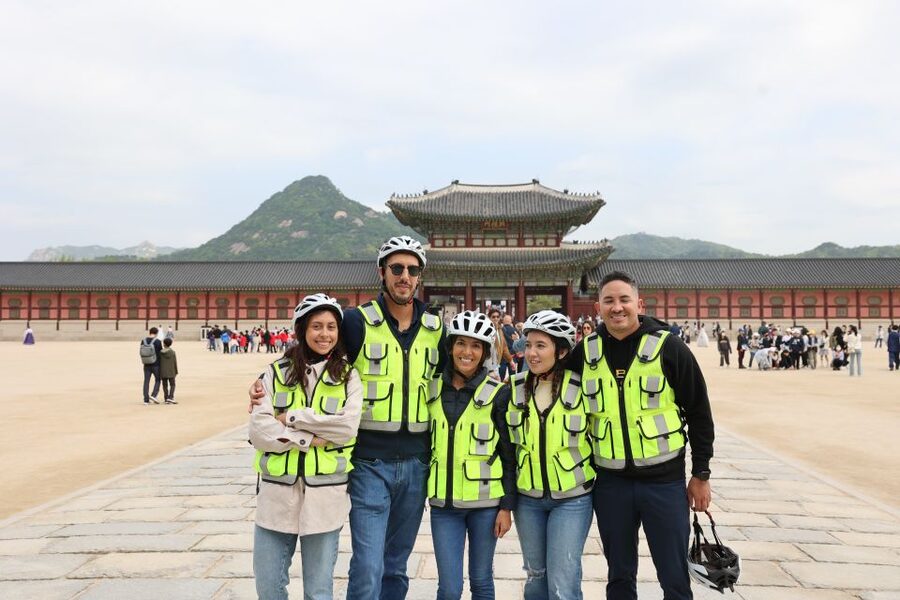
You’ll also make a brief stop near the Blue House (presidential area). It’s a short moment, but it’s part of the tour’s effort to connect the political center to the surrounding old city districts.
Then the route brings you to Bukchon Hanok Village, one of Seoul’s most iconic traditional neighborhoods. This is a place where walking alone can be exhausting, because the lanes can be steep and maze-like. On an e-bike, you can get more viewpoint time and still move through the area efficiently.
The key here is viewpoints. Riders repeatedly highlighted how the guide led them to spots where the city layout and architecture made sense together. You’re not just passing through—you’re being pointed to angles and sightlines.
Jogyesa Temple and the ride through Insadong back toward Cheonggyecheon
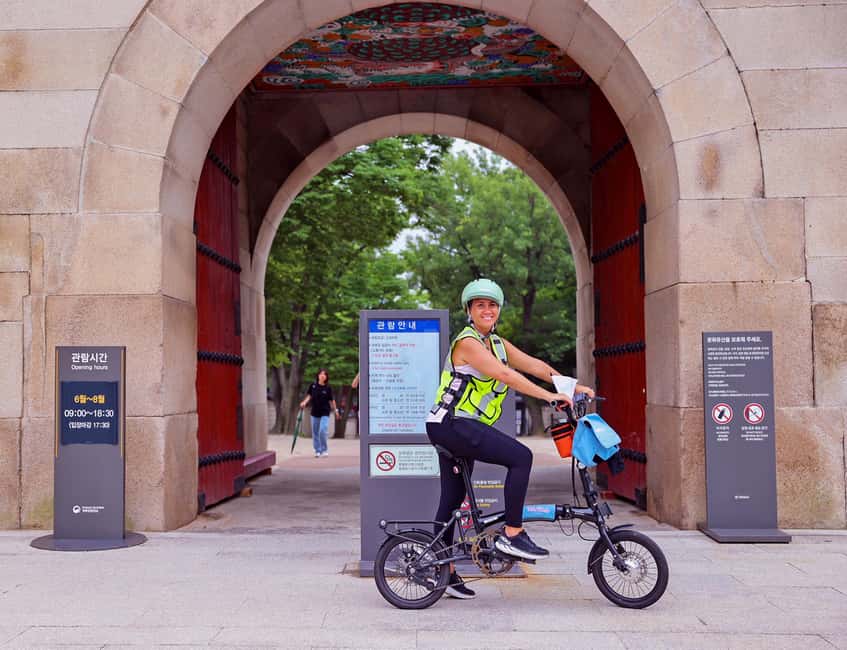
After Bukchon, you ride through Insadong and reach Jogyesa Temple. This section is a nice change of pace: you go from traditional neighborhood lanes and busy shopping streets into a calmer spiritual space.
The temple stop is guided and not treated like a quick photo-only checkpoint. You’ll get time to see and understand what you’re looking at in a way that fits the overall tour rhythm.
Then you finish with a ride along the Cheonggyecheon bike path. Ending here works well because it lets you come down from the intensity of the palace/hanok segments and just enjoy the ride and skyline light.
The guide team, safety style, and why people keep rating this so high
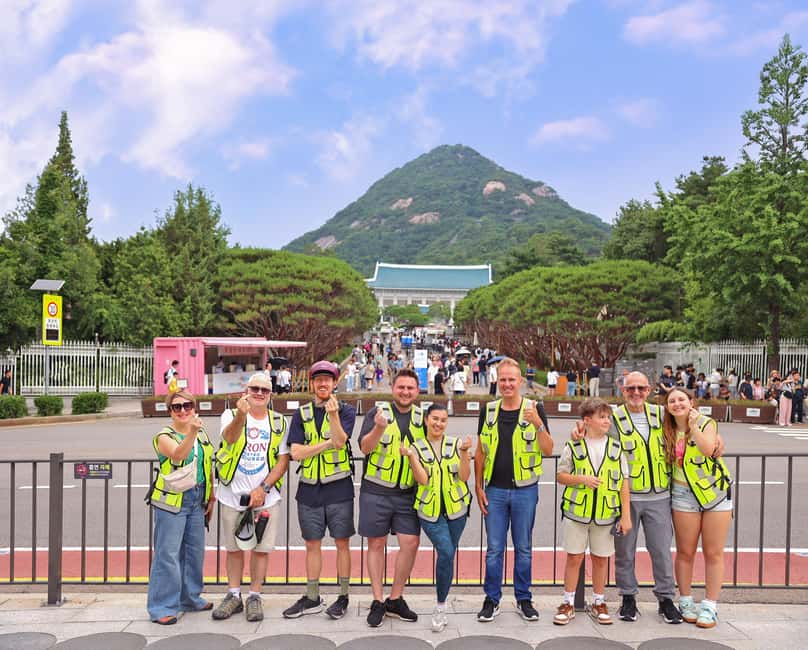
Across the guide names shared in riders’ experiences—Taejin, Jun, Vincent, Kevin, TJ, Tom, Thomas, Hahn, Han, and Hagar—the praised pattern is consistent: friendly, organized guidance and stories that connect to street-level details.
Safety is a standout theme. Many riders said they felt safe even on busier roads, and that at least one guide positioned themselves in ways that helped the group move smoothly. That matters because Seoul traffic can be busy, and a calm, controlled ride is what turns an e-bike tour from stressful to fun.
You’ll also get practical support that goes beyond the ride itself. The tour description emphasizes concierge-style help before and after, and riders praised restaurant and activity recommendations. There’s also mention of guides making photo moments easier, plus photo service follow-up that helps you build a proper album from the day.
Two small “quality of life” points show up in multiple accounts:
- Guides watched out for hydration and breaks on hot days.
- The group experience was described as comfortable and interactive, not rigid.
Price and value: what $119 really buys you in Seoul
At $119 per person for about 3 hours, you’re paying for a package, not just “bike rental.” Here’s what that package includes:
- E-bike rental plus helmet
- Professional local English-speaking guide
- Insurance
- Mineral water
- WiFi and a power bank during the ride
- A raincoat if needed
Then there’s what’s harder to price but easy to feel:
- A planned route through major sights and smaller neighborhoods
- Food time built into the loop
- Photo help and a photo album experience after the ride
Compared to piecing together a DIY day (transport, tickets, route planning, and figuring out where to eat), the value lands best if you want your time in Seoul to feel efficient and guided. If you already know exactly where you’re going and you’re a confident rider who loves planning, it could feel pricey. But if you want a local plan that gets you to the right places at the right time, this price often looks fair fast.
Who this Seoul e-bike tour suits (and who should skip it)
This tour is ideal if you want a first-time Seoul overview that still includes traditional neighborhoods, markets, and temples. It also works well for people who want an active day without overdoing it, thanks to e-bike assist and frequent, planned stopping points.
It may not be your best fit if you:
- Can’t ride a bike
- Need a tour that’s fully stroller-friendly or wheelchair-oriented (the data says wheelchair users aren’t suitable, even though the activity is marked wheelchair accessible)
- Are traveling with children under 13
- Are pregnant (pregnant women are listed as not suitable)
- Want to wear footwear like high heels, sandals, or flip-flops (those are not allowed)
If you’re visiting in clear weather, you’ll especially appreciate the ride style. The tour is described as shining on Seoul days with clear skies and fluffy clouds, when skyline views and riverside light look their best.
Should you book this Seoul e-bike tour?
Book it if you want the biggest Seoul highlights with less walking stress, plus real snack stops and guide-led street-level context. The route choice—Cheonggyecheon, palaces, hanok villages, a market tasting, and Jogyesa—hits a wide slice of the city in just 3 hours, and the guide team’s safety focus is a big part of why the ratings are so strong.
Skip it if biking for a few hours sounds like a chore rather than a fun challenge, or if your trip needs a more seated, fully wheelchair-friendly experience. Also, keep the footwear rules in mind: bring comfortable shoes and plan for above-the-ankle socks.
If your goal is a memorable Seoul intro day that feels local, this is a strong pick.
FAQ
How long is the Seoul e-bike tour?
The tour lasts 3 hours.
What’s included with the price?
You get e-bike rental, a safety helmet, a professional local guide, insurance, mineral water, WiFi and a power bank during the ride, and a raincoat if necessary.
Where do I meet the guide?
You meet at the WeRide shop on the 2nd floor of Le Meilleur Jongno Town, located on Jong-ro Boulevard between Jonggak Station (Line 1, Exit 1) and Gwanghwamun Station (Line 5, Exit 4). The address given is 서울, 종로구, 종로 19 (르메이에르종로타운), 206-2호.
What should I bring and wear?
Bring comfortable shoes and sunscreen. Above-the-ankle socks must be worn. Avoid high-heeled shoes, sandals, or flip-flops.
Is this tour suitable for kids or pregnant travelers?
No. The tour data says it is not suitable for children under 13 and not suitable for pregnant women.
Is it wheelchair accessible?
The information lists wheelchair accessible, but it also says not suitable for wheelchair users. If you use a wheelchair, you should double-check fit before booking.
What happens if the weather is extreme?
The tour runs in most weather conditions, but in extreme cases you’ll be offered either a refund or an alternative date.