REVIEW · BERLIN
Berlin: Cold War & Berlin Wall History Guided Bike Tour
Book on GetYourGuide →Operated by Berlin on Bike BoB Fahrradtouren GmbH · Bookable on GetYourGuide
Berlin’s border history comes alive on two wheels.
You’ll ride past real Berlin Wall traces and famous Cold War stops with a guide who turns facts into stories. I especially like how the tour links major sights like Brandenburg Gate with lesser-seen border details, and how guides such as Isabelle and Jacob bring the era to life through human stories, not just monuments.
Two things I’m particularly happy about: the route is built to move you through several key moments of the Cold War, and the bike format makes the day feel efficient without rushing you. The included helmet and gloves on request plus practical extras like trouser clips help you stay comfortable and focused on the ride.
One drawback to plan for: this is still a real bike outing. You’ll cover about 15 km, and Berlin weather can shift fast, so bring layers and expect rain gear to matter.
In This Review
- Key highlights to look for
- Pedal Berlin Wall history, not just photos
- Starting at Kulturbrauerei: the brewery that sets the tone
- Tracing the old border: Bernauerstraße, Bornholmer Straße, and wall fragments
- Checkpoint Charlie and Cold War symbols in plain view
- Escape stories from the last watchtower
- Mauerpark to Brandenburg Gate: the ride ends with a lesson
- How the bike portion works: 15 km, relaxed pace, and comfort gear
- Price and value: what $41 includes for 3.5 hours
- Who should book this ride and who should skip it
- Finding the Kulturbrauerei bike depot near Eberswalder Straße
- Should you book this Berlin Cold War bike tour?
- FAQ
- How long is the Berlin Cold War & Berlin Wall history guided bike tour?
- About how far will I ride?
- Where is the meeting point?
- What is the nearest metro station?
- Which languages are available for the live guide?
- What major sights will I pass or visit?
- Are bikes, helmets, or gloves included?
- Is rain gear provided?
- Is the tour suitable for children?
- Is alcohol allowed during the tour?
Key highlights to look for
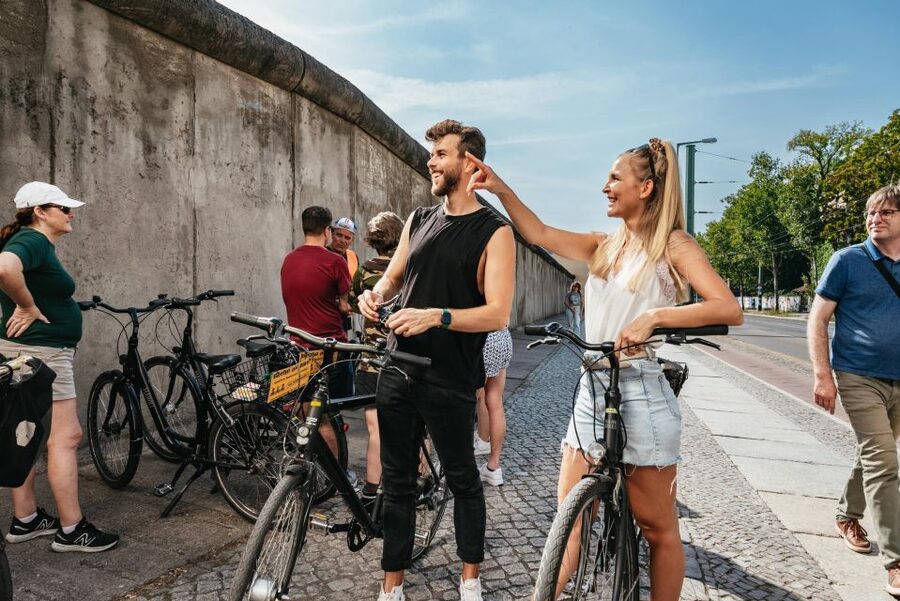
- Brandenburg Gate plus wall fragments in one connected route
- Bornholmer Straße and Bernauerstraße border-area details you’d miss alone
- Checkpoint Charlie and Cold War symbols you can actually see up close
- A last watchtower viewpoint paired with escape-attempt stories
- Kulturbrauerei start in Prenzlauer Berg for a great “day begins here” feel
- Mauerpark to the finish so the ride ends with big-picture perspective
Pedal Berlin Wall history, not just photos
Berlin can be overwhelming because the city is full of layers: imperial eras, WWII scars, postwar politics, and then the long years when two Germanies faced each other across a controlled divide. This tour helps you make sense of that by using movement as your timeline. You’re not standing still reading plaques. You’re traveling through the geography of the Cold War, mile by mile.
What makes this format work is the mix of famous landmarks and concrete border leftovers. You’ll see the headline sites like Brandenburg Gate and Checkpoint Charlie, but the tour is really about how the Wall shaped streets, crossings, and daily life. And when your guide explains why certain places mattered, the city stops being a postcard and becomes a map of choices and consequences.
You can also read our reviews of more tours and experiences in Berlin.
Starting at Kulturbrauerei: the brewery that sets the tone
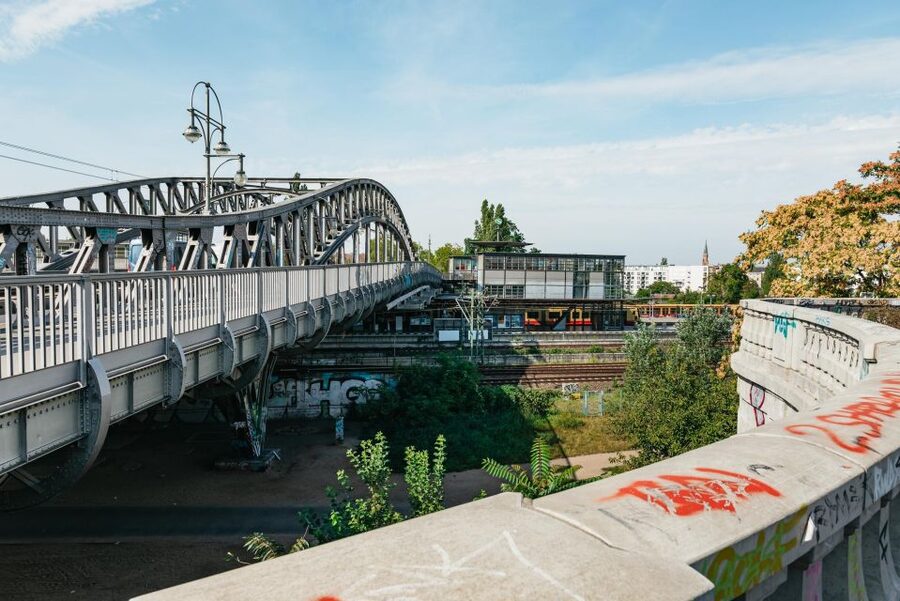
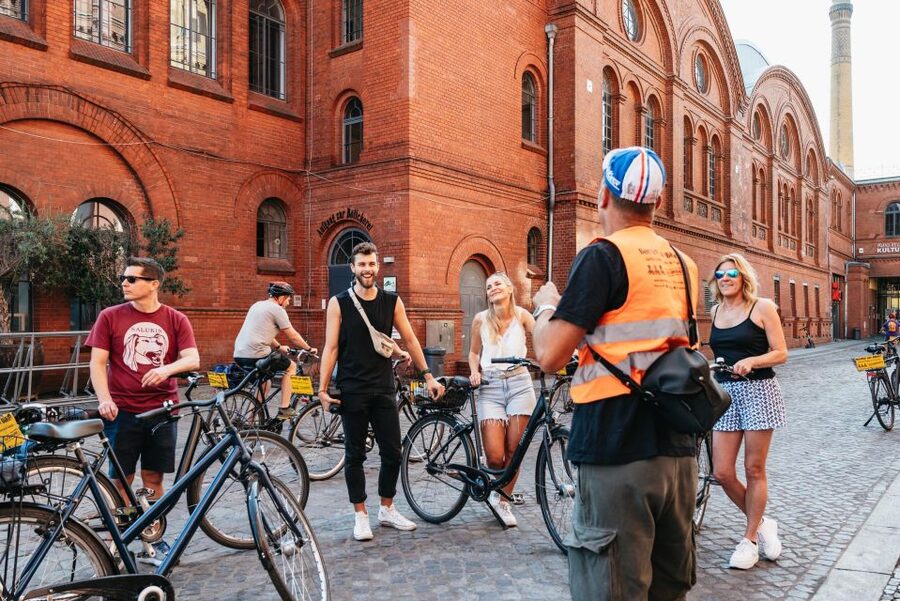
The ride begins at the Berlin on Bike depot inside the Kulturbrauerei complex in Prenzlauer Berg. That matters more than you’d think. Starting at a lively historic brewery gives you a calmer entry point than meeting at a random street corner. It also places you in a neighborhood that feels distinctly Berlin rather than purely museum-ified.
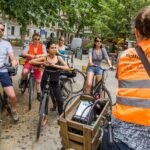
Before you roll, you’ll get your bike from a large fleet. If you’re picky about comfort, this is your moment to test-fit and choose something you’ll ride well for about 3.5 hours. You can also request a helmet and gloves. Even if you already wear a helmet on principle, it’s useful that this tour has the option ready.
Practical tip from experience: if you’re selecting your bike, pay attention to the brakes and shifting. One past participant advised avoiding a bike with a coaster brake unless you already know how you like to ride that style. It’s the kind of small detail that can prevent a sore, annoyed finish.
Tracing the old border: Bernauerstraße, Bornholmer Straße, and wall fragments

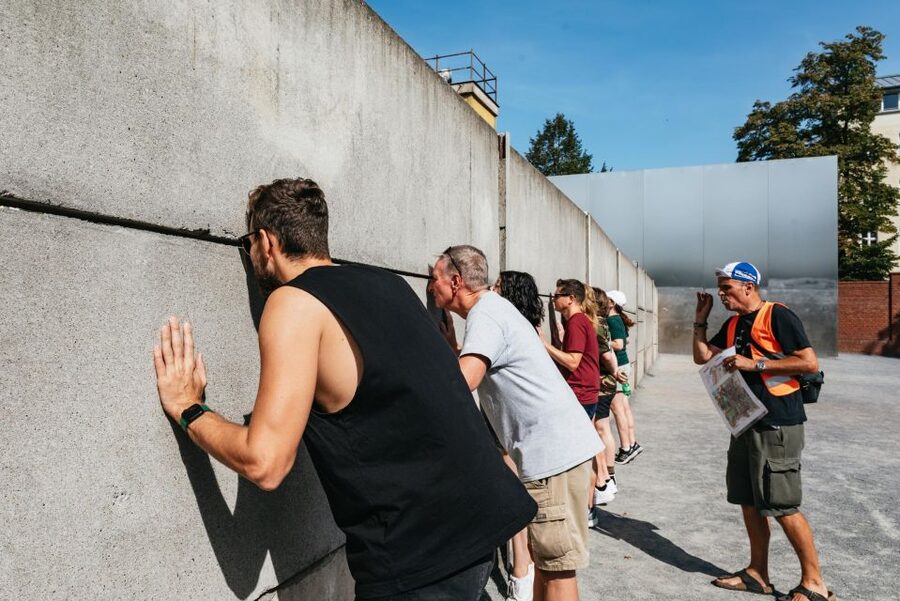
Once you start rolling, you’ll head toward the former border belt that separated East and West Berlin. This is where the Wall stops being an idea and becomes a line with real street-level consequences. You’ll ride along the corridor area where remnants and markers still help you picture how people moved—and where they couldn’t.
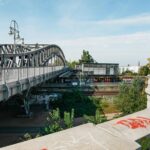
Two stops especially help you connect the dots: Bernauerstraße and Bornholmer Straße. These aren’t just “Wall locations.” They’re places where the border was experienced in real space: the arrangement of streets, the direction of sightlines, and the friction points where control was most visible.
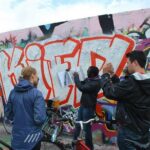
You’ll also see fragments of the Berlin Wall. Those pieces are short, but the meaning is long. A wall fragment is like a sentence fragment from history: tiny on the surface, but it forces you to reconstruct the full paragraph. Your guide’s job here is to do that reconstruction—how the border worked, how it tightened over time, and why escape attempts took such focused shape.
Checkpoint Charlie and Cold War symbols in plain view
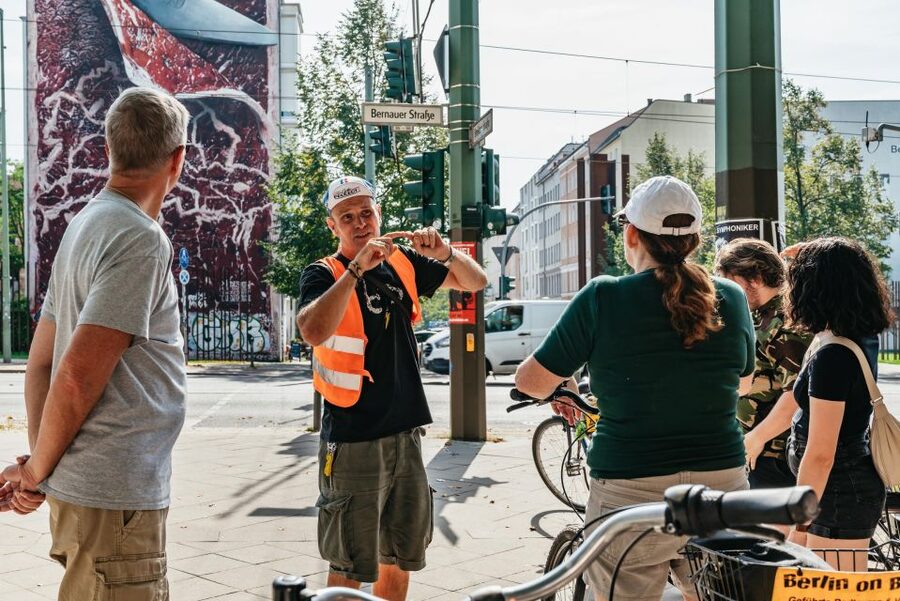
Next, the tour moves toward Checkpoint Charlie, one of the world’s best-known Cold War images. The interesting thing isn’t just seeing the landmark itself—it’s what the guide uses it to explain. Checkpoint Charlie represents more than a location. It represents the system of surveillance, permission, negotiation, and propaganda that defined everyday crossings.
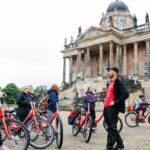
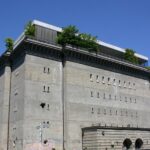
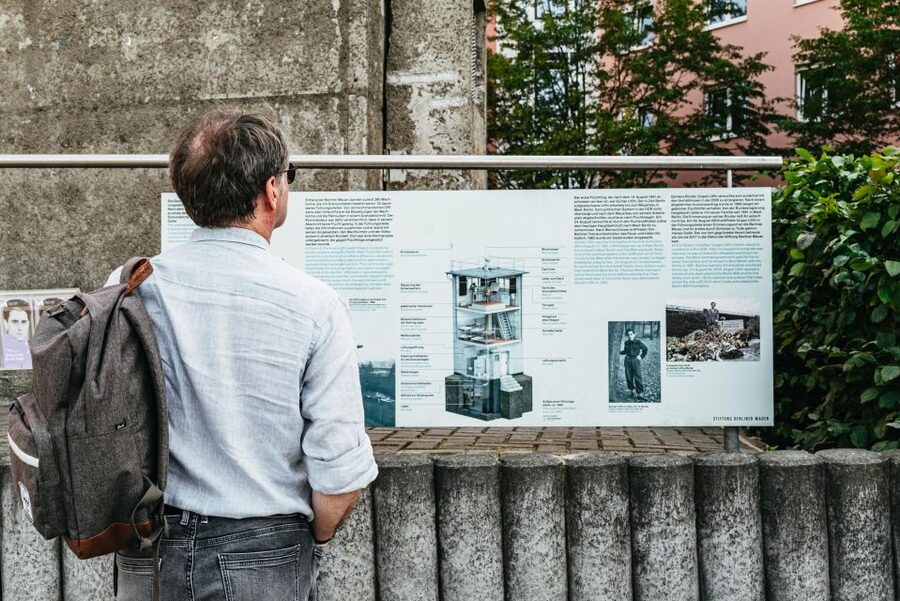
Along the way, you’ll also notice how your guide points out Cold War symbols and remnants, including a last watchtower. When you stand near one of these structures (even from a bike), it changes how you understand the Wall. It’s harder to think of it as just concrete. You start seeing it as a technology of control.
The best part of this section is that your guide keeps connecting these symbols back to people. The Cold War can sound abstract until someone explains how policy decisions became personal risk.
Escape stories from the last watchtower
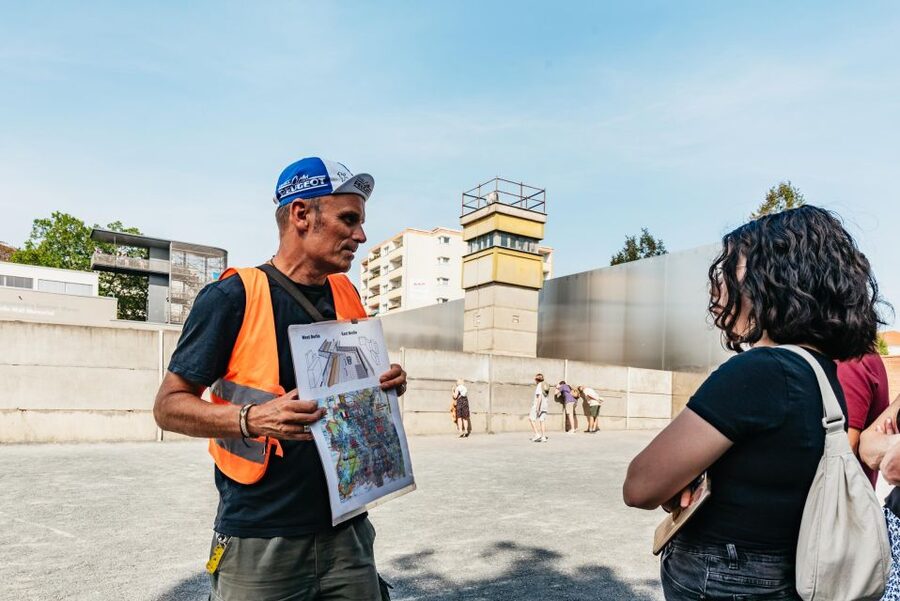
The tour doesn’t treat escape attempts like trivia. It treats them as human stories shaped by the rules of the border. At the watchtower viewpoint, you’ll hear accounts of both successful and tragic escapes, plus what those stories teach about surveillance and desperation.
That tone matters. This is not a “Wall horror movie” tour, and it’s not a purely triumphalist story either. The Wall had a legacy that mixed fear, courage, and lasting trauma. You’ll hear how the Berlin Wall came down overnight after almost 30 years, and you’ll also learn why the decades-long division still affected Berliners long after the concrete fell.
If you care about understanding history in a way that feels grounded, this is a standout part of the ride. You leave with a more accurate emotional map of the era, not just a timeline.
Mauerpark to Brandenburg Gate: the ride ends with a lesson
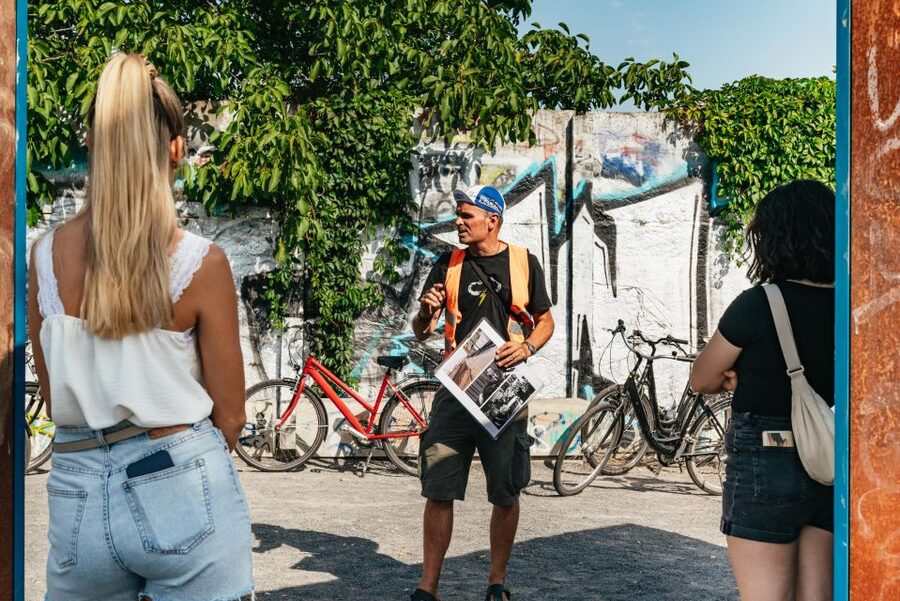
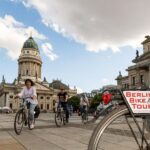
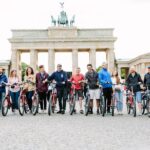
A big chunk of the tour takes you through Mauerpark and Bernauerstraße, then onward toward the Brandenburg Gate. This arc is smart. Starting near Prenzlauer Berg border-area sites sets the context, and ending at Brandenburg Gate gives you a sweeping view of how Germany’s capital reshaped itself after division.
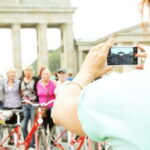
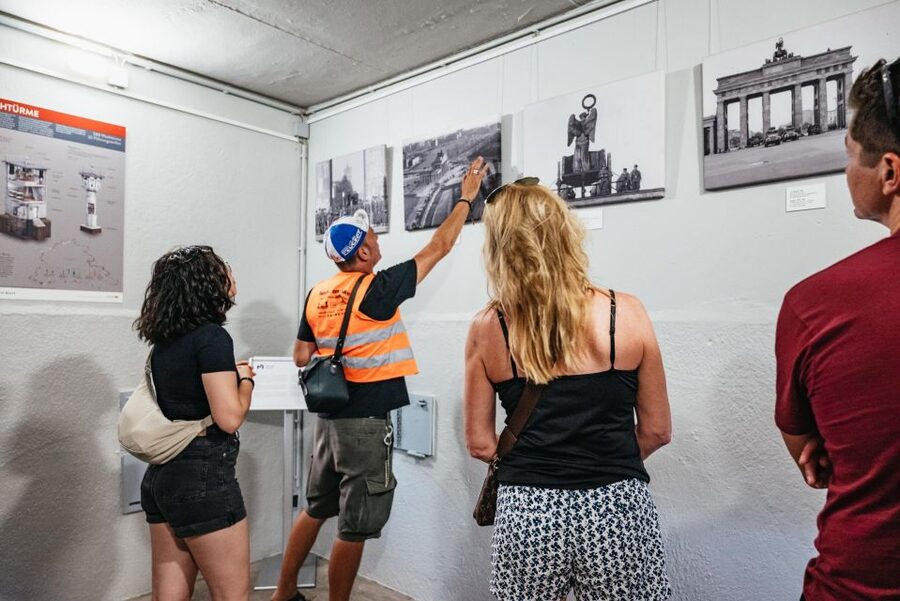
When you arrive at Brandenburg Gate, your guide explains its origins and why it became such a powerful symbol. The “symbol” part matters here: because you’ve been riding through the border system for hours, you notice what Brandenburg Gate means in contrast to the years it stood on the edge of something divided.
This is also a nice bike-ride rhythm. As you move farther from the most controlled zones and toward the city’s major landmarks, you feel the Wall’s presence shift from immediate barrier to historical reference point. That’s exactly the kind of perspective change that makes a guided ride worth the money.
How the bike portion works: 15 km, relaxed pace, and comfort gear
The tour is about 210 minutes and covers roughly 15 kilometers at a relaxed pace. That’s a sweet spot. It’s long enough to feel like you covered meaningful ground, but short enough that most people can enjoy it without turning the day into a workout.
The tour also helps you plan for comfort:
- Bring comfortable shoes and clothes
- Use included rain ponchos if weather turns
- Sunscreen is provided, which is a nice touch even in shoulder seasons
- Trouser clips help keep pant legs from interfering with riding
Berlin is generally very bike-friendly, but it’s still smart to keep your expectations realistic. You’ll be pedaling through real streets, sometimes busy ones. The relaxed pace helps, but you’ll still want to be alert and comfortable on your chosen bike.
Finally, there’s a safety element: you’ll have a live guide, and the group stays together as you move between major stops and border-area viewpoints. Past riders specifically praised guides for navigating safely and adjusting routes as needed, even when city conditions made things tricky.
Price and value: what $41 includes for 3.5 hours
At $41 per person for about 3.5 hours, this is strong value if you want more than a basic “ride past landmarks” loop. You’re paying for the guide’s ability to connect the geography to the story, plus the gear and practical support that makes the day easier.
Here’s what you get that most self-guided options would cost extra time to recreate:
- A bicycle
- A guide
- Helmet and gloves available on request
- Sunscreen
- Trouser clips
- Rain ponchos if needed
When the tour is done well, those extras aren’t just perks. They reduce friction. Less friction means you spend more of your attention on the history itself and less on figuring out logistics while you’re already tired.
Languages are also a plus. You can find tours in French, English, Dutch, and German, so language shouldn’t be a barrier.
Who should book this ride and who should skip it
This tour fits best if you want:
- A guided explanation of the Berlin Wall and Cold War sites
- A way to see places connected to the border without getting lost
- A bike-based format that covers real ground in a half-day
It’s also a good choice if you’re the kind of person who likes asking questions. Several guides in the lineup are described as story-driven and patient, and the format leaves room for you to clarify details.
Skip it if:
- You’re traveling with kids under 8 years old (this one isn’t suitable)
- You want a purely relaxed sightseeing day with no pedaling at all
- You’re hoping for a nightlife-focused afternoon (alcohol and drugs are not allowed)
If you’re new to Berlin and want to get your bearings fast, this can be one of the best first-history activities you do.
Finding the Kulturbrauerei bike depot near Eberswalder Straße
You meet at the Berlin on Bike depot at Kulturbrauerei. The nearest metro station is Eberswalder Straße, about three stops from Alexanderplatz.
If you’re starting at Alexanderplatz:
- Take the U2 (red line) toward Pankow and get off after 3 stops at Eberswalder Straße
- Exit from the side opposite the direction of travel, signposted for Kulturbrauerei
- Walk toward Danziger Straße on the left side of the overhead railway line, then go about 150 meters on the right-hand side
- Turn right onto Knaackstraße, go about 50 meters, then turn right through the large doorway into the Kulturbrauerei complex
- Follow the yellow signs to the bicycle depot
Should you book this Berlin Cold War bike tour?
Book it if you want a guided ride that helps you understand the Wall as a system—streets, crossings, escape attempts, and symbols—without making you spend your day bouncing between separate museums. With 15 km and a relaxed pace, the format is approachable, and the included gear (helmet/gloves on request, ponchos, trouser clips) makes it easier to handle Berlin’s weather.
Don’t book it if you want the most child-friendly sightseeing or if you’re hoping for a stop-at-every-corner photo spree with minimal effort. This is history on a bike, not a casual stroll.
If you’re planning a Berlin trip where you want the Cold War to feel real, this one is a smart use of half a day.
FAQ
How long is the Berlin Cold War & Berlin Wall history guided bike tour?
It runs for about 210 minutes.
About how far will I ride?
The tour covers approximately 15 kilometers at a relaxed pace.
Where is the meeting point?
Meet at the Berlin on Bike depot inside the Kulturbrauerei complex.
What is the nearest metro station?
Eberswalder Straße is the closest station, about three stops from Alexanderplatz on the U2.
Which languages are available for the live guide?
Tours are offered in French, English, Dutch, and German.
What major sights will I pass or visit?
You’ll see highlights such as Brandenburg Gate, Mauerpark, Checkpoint Charlie, and wall-related sites along the former border, plus a last watchtower.
Are bikes, helmets, or gloves included?
A bicycle is included. Helmets and gloves are available upon request.
Is rain gear provided?
Rain ponchos are available if weather is bad.
Is the tour suitable for children?
It is not suitable for children under 8 years old.
Is alcohol allowed during the tour?
No. Alcohol and drugs are not allowed.