REVIEW · HANOI
Hanoi City Bike Tour through Banana Island & Food Tasting
Book on Viator →Operated by Vietnam Travelers Tour · Bookable on Viator
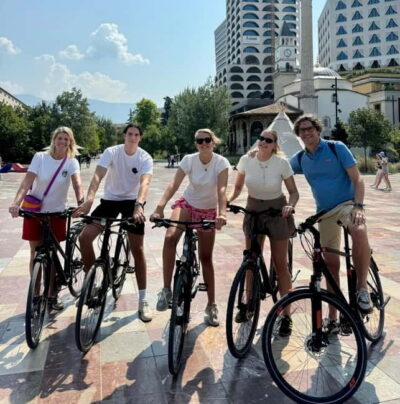
Two wheels cut Hanoi’s noise down fast. This half-day ride has a smart mix of Banana Island and classic city landmarks, plus tasty stops with an English-speaking guide who talks you through daily life. I especially liked the way the guide keeps you moving safely through heavy road traffic, and how the route mixes big sights with real street scenes; the main drawback is the biking can feel intimidating if you are new to riding in busy conditions.
You also get real value for the price: a bike, bottled water, coffee/tea, snacks, and time for traditional Vietnamese food stops during the 4-hour loop. The group stays small (up to 20), and you can often pick the morning or afternoon option to match your schedule.
Expect plenty of street motion: narrow Old Quarter alleys, the century-old Long Bien Bridge crossing, the railway-track area where trains still run, and lakes tied to Vietnam War stories. You’ll also want to plan for this being weather-dependent, and you may not be picked up if you’re staying outside Hanoi’s Old Quarter area.
In This Review
- Key things I’d plan around
- First impressions: it’s part sightseeing, part street-sense training
- Getting set up: bike choice and the smooth start
- Stop 1: Long Bien Bridge and why riding it changes everything
- Banana Island: the Red River detour that feels like a side of Hanoi few see
- Old Quarter lanes: narrow streets, real traffic, and fast context
- Railway-track stop (Duờng Tau): trains still shape café culture
- Ho Chi Minh Mausoleum area and West Lake: big landmarks with a slower tone
- Huu Tiep Lake and the Downed B-52: why Lake B52 matters
- Food tasting: what you’ll likely taste and how it’s used in the tour
- Price and value: why $45 makes sense for what’s included
- How to prepare so Hanoi traffic feels doable
- Who this bike tour is best for (and who should skip it)
- Should you book this Hanoi city bike tour?
- FAQ
- How long is the Hanoi City Bike Tour with Banana Island and food tasting?
- How much does the tour cost?
- Does the tour offer morning and afternoon options?
- Is hotel pickup included?
- What’s included in the price?
- What key stops are on the route?
- What is the guide language?
- How big is the group?
- Do I get a mobile ticket?
- What happens if the weather is bad?
Key things I’d plan around

- Busy-road confidence matters: the tour is designed for bikes in city traffic, and the guide sets the pace.
- Banana Island and the Red River area: a more unusual detour than the usual downtown sights.
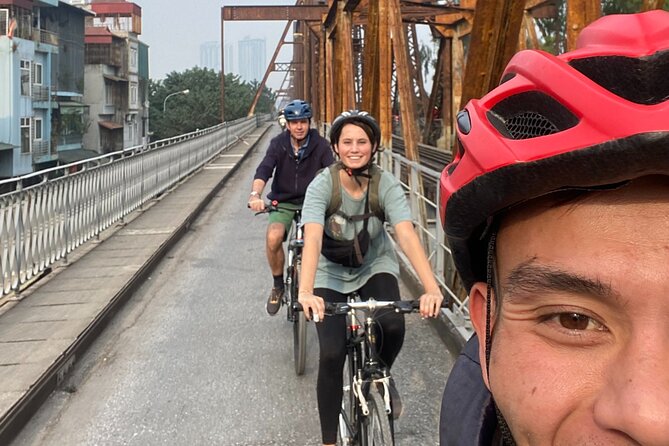
- Long Bien Bridge (over 100 years old): a classic crossing you’ll ride across, not just photograph.
- Railway-track cafés: a distinctive stop where train life still shapes the neighborhood.
- Lake B52 story stop: you’ll hear the meaning behind the name while you’re there.
- Food + coffee/tea included: snacks and traditional bites are part of the experience, not an add-on.
First impressions: it’s part sightseeing, part street-sense training
This is not a quiet, back-alley “take photos and float” kind of tour. It’s Hanoi on wheels, with you riding alongside the city’s flow—scooters, cars, and all. The upside: you’ll see corners that bus routes and walking tours just can’t reach at the same speed.
What I liked most is how much the tour focuses on understanding what you’re riding through. Your guide explains daily life and what makes places feel different from typical tourist areas. And you’re not stuck guessing how to interpret things like the narrow traffic lanes or the railway-track neighborhood—you get context as you go.
The only real caution: if you are an inexperienced cyclist, you may feel tense at first. One of the best bits of advice from people who took the ride is to accept that Hanoi traffic works a little differently, and to follow your guide’s cues so you don’t freeze.
You can also read our reviews of more tours and experiences in Hanoi.

Getting set up: bike choice and the smooth start
The tour begins with pickup from your hotel lobby, then a transfer to the bike shop where you choose a suitable bike. That step matters more than it sounds. The faster you feel comfortable on your bike, the easier it is to handle Hanoi’s intersections and tight road edges later.
It also helps that the tour includes an air-conditioned vehicle for parts of the transfer. You get a more relaxed start, especially if you’re coming from a hotel outside the center or you’re arriving at the meeting time a bit warm and flustered.
Your tickets are mobile, and you get confirmation at booking time. With a small group size (max 20), it’s easier for the guide to keep everyone together.
Stop 1: Long Bien Bridge and why riding it changes everything
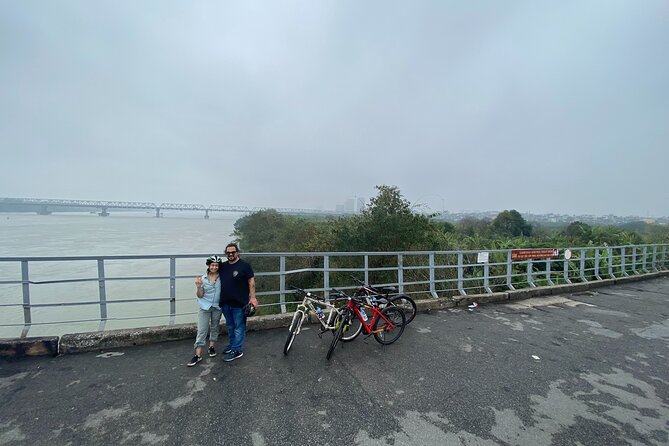
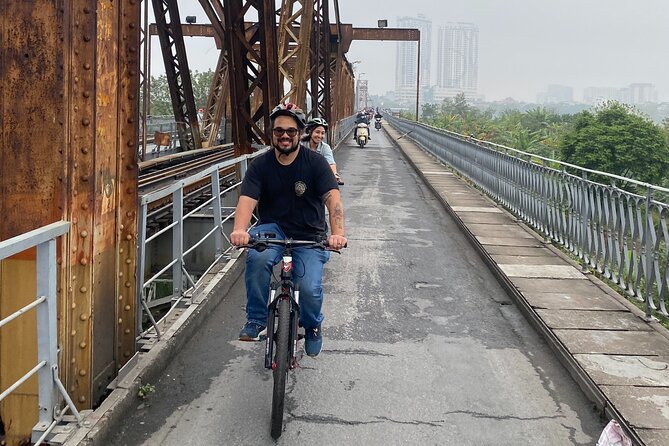
Riding Long Bien Bridge is a big deal because it’s not a postcard moment. It’s motion. You’re crossing the river on a bridge that’s over 100 years old, so you get a sense of scale and structure that you simply don’t get from looking at it from the shore.
This bridge stop also acts like a reset button. You’re leaving one kind of Hanoi behind and heading toward another. The rhythm of the city shifts, and you start paying attention to how the river area connects neighborhoods.
The possible drawback: if you’re uncomfortable in open-road stretches or you don’t like riding with wind, plan for that. It’s still part of the whole experience, but it’s easier if you’ve already had a moment to get used to your bike.
Banana Island: the Red River detour that feels like a side of Hanoi few see
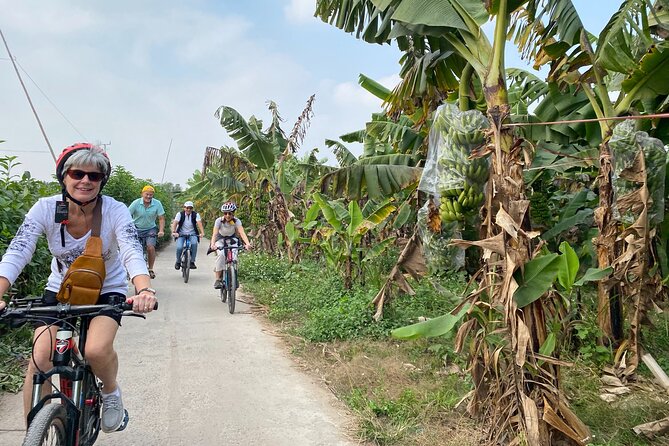
After the bridge, the route heads toward the Red River Delta area known locally as Banana Island. The name alone makes you curious, but what makes the stop worthwhile is the contrast. This is the kind of place that feels more like local life than a scripted attraction.
This is one of the points I’d describe as a perspective-changer. Instead of only seeing the Hanoi that’s built for visitors, you’re getting a glimpse of a more everyday setting, where the river and city edges shape daily routines.
The practical part: you’re still on a bike during this transition. So keep it simple—stay focused, ride predictably, and let the guide call out what to pay attention to. That’s how you get the payoff without stressing out.
Old Quarter lanes: narrow streets, real traffic, and fast context
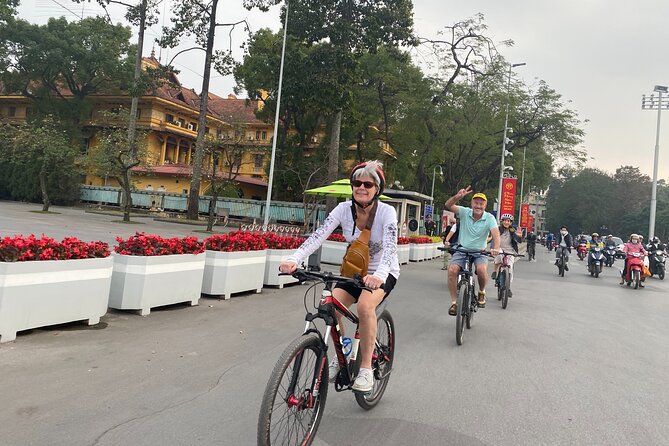
Once you’re back toward the Old Quarter area, the streets narrow and the riding gets more “real.” This is where you’ll join the city’s traffic and also see how Hanoi handles movement in tight spaces. You’ll cruise through back alleys that feel lived-in, not staged.
This is also where the guide’s English explanations help a lot. Instead of just saying “this is old,” your guide connects sights to daily life—how people move, what you’re seeing from the road, and why the area has such a distinct feel.
The main consideration here is cyclist comfort. The best way to handle this part is mindset: you’re not trying to ride like you’re in a calm suburban neighborhood. You’re following the guide’s pace, holding your line, and staying calm when scooters weave around you. If you go in tense, it’s harder. If you go in ready, it’s manageable.





Railway-track stop (Duờng Tau): trains still shape café culture
One of the most distinctive parts of the route is the railway-track area, where trains still run through the city every day. You’ll visit these tracks and see the beautiful cafés that sit in this unusual setting.
This stop works because it’s visual and practical at the same time. You’re not just hearing about Vietnam’s rail history; you’re literally observing how trains pass through an active neighborhood and how cafés and everyday life share the same space.
The drawback is simple: it can be busy around the tracks, and the timing depends on the train schedule. The tour route includes the stop as part of the ride, so you’ll experience it as part of the flow, not as a long, flexible hangout. If you’re the kind of person who needs lots of time for photos, set expectations accordingly.
Ho Chi Minh Mausoleum area and West Lake: big landmarks with a slower tone
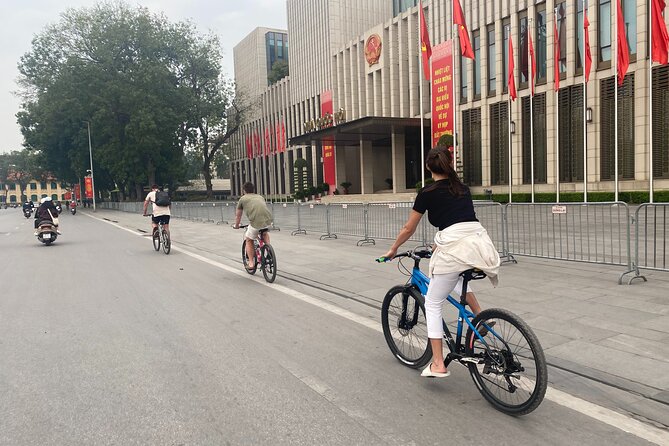
After the train area, the route passes by the Ho Chi Minh Mausoleum. Even if you’re not going inside, it’s a major marker in the city’s geography and political memory, so it adds weight to the half-day itinerary.
Then the tour shifts toward West Lake, including the street described as the Street of Youth, where the atmosphere tends to feel more poetic than the tight Old Quarter lanes. For me, this section works as contrast: you get a breather from the narrow traffic intensity and some open-air rhythm from the lake area.
You should still expect riding, not strolling. But it’s a calmer-feeling transition compared with the earlier turns and alley navigation.
Huu Tiep Lake and the Downed B-52: why Lake B52 matters
The final stop centers on Huu Tiep Lake and the downed B-52 area, and it ties into the conversation about why the area is called Lake B52. You’ll talk through the meaning behind the name and the U.S. military shelling connected to that history.
This is the most emotionally heavy part of the tour, and it’s also one of the most memorable because it connects a physical place to a specific story. The guide explains the context while you’re there, so you’re not relying on reading plaques later.
The practical consideration: this isn’t a museum-style experience where you can control how long you spend. It’s an on-the-ground conversation as part of a ride timeline, so come ready to listen rather than expecting full immersion time.
Food tasting: what you’ll likely taste and how it’s used in the tour
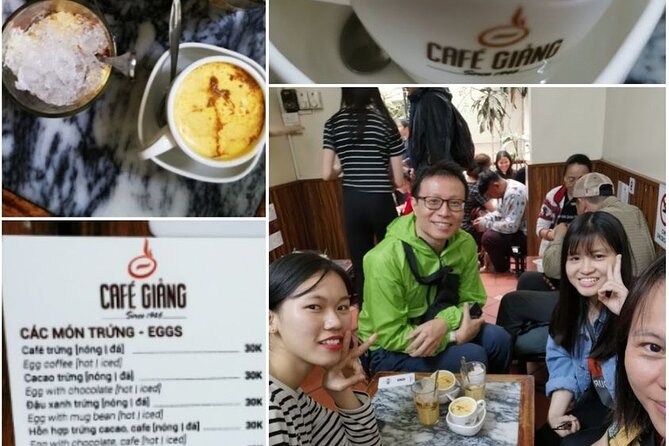
Food is built into the tour experience rather than being a last-minute scramble. You’ll have snacks and coffee or tea along the way, plus time connected to traditional Vietnamese food stops. Bottled water is included too, which is a small detail but genuinely helps on a warm afternoon ride.
Here’s how to think about it for planning: the food component supports the route, not competes with it. You’re not sitting for a long meal. Instead, you get small tastings that keep your energy up while your guide takes you from one area to the next.
If you’re picky, you’ll want to tell the guide what you avoid when you start. The tour includes snacks and drinks, so there’s some flexibility, but the itinerary is designed as a guided loop.
Price and value: why $45 makes sense for what’s included
At $45 per person, the tour isn’t trying to be the cheapest way to see Hanoi. It is, however, a strong value if you add up what you receive:
- Bike use
- Snacks and coffee/tea
- Bottled water
- An enthusiastic English-speaking guide
- All fees and taxes
- Air-conditioned vehicle for transfers
- A route that takes in multiple key areas in a single half day
You’re paying for convenience and for local interpretation. Without a guide, you could bike some streets, but you probably wouldn’t get the same coherent sequence—Banana Island, Long Bien Bridge, Old Quarter lanes, rail tracks and cafés, mausoleum area, West Lake, and the Lake B52 story stop—plus food stops timed into the journey.
The other value piece is group size. With up to 20 people, it’s easier to stay together and get attention when traffic gets tight.
How to prepare so Hanoi traffic feels doable
Even if you’re nervous, you can make this tour easier on yourself with a few basics. None of these require special gear you have to buy in advance.
- Wear comfortable shoes you can pedal in for 4 hours.
- Dress for heat, then bring a light layer if you get chilly in the ride break points or vehicles.
- If you’re new to cycling, keep your expectations simple: start with the goal of getting through the traffic rhythm safely.
- Listen carefully when the guide signals the route; confidence comes from predictability.
One more practical note: guides like Nathan and Minh are specifically praised for putting riders at ease and helping people feel safe in busy street conditions. That’s exactly what you want—someone who leads rather than someone who expects you to figure it out alone.
Who this bike tour is best for (and who should skip it)
I’d recommend this tour if you want to cover a lot of ground in half a day and you like the idea of seeing Hanoi as a working city, not only as monuments. It’s also great if you enjoy learning context while moving—traffic flow, local routines, and why specific places carry particular names and stories.
It’s less ideal if you have a strong fear of riding in active city traffic. If you’re truly uncomfortable on two wheels in busy conditions, the experience might feel too stressful for your comfort level. The guide can help, but it can’t remove the reality of traffic.
Should you book this Hanoi city bike tour?
If you’re aiming for an efficient half-day with real guidance, I think it’s an excellent pick. The included bike, water, coffee/tea, snacks, and food stops make it more complete than many “just ride around” options. And the route gives you a balanced mix: classic landmarks, the Old Quarter’s tight streets, railway-track cafés, West Lake, and the Lake B52 conversation.
Book it if you’re okay with biking in a busy city environment and you like your sightseeing with a story attached. Skip it if cycling in traffic is a hard no for you.
If you do book, pick the morning or afternoon slot that matches your energy, and go in with the mindset that the guide is leading your line through the city. That’s the difference between worrying the whole time and enjoying the ride.
FAQ
How long is the Hanoi City Bike Tour with Banana Island and food tasting?
The tour lasts about 4 hours.
How much does the tour cost?
It costs $45.00 per person.
Does the tour offer morning and afternoon options?
Yes, you can choose either a morning or afternoon tour to fit your schedule.
Is hotel pickup included?
Pickup is offered, but pick up from a hotel is not included if you are staying outside Hanoi’s Old Quarter area.
What’s included in the price?
The tour includes the bike, snacks, coffee and/or tea, bottled water, and an enthusiastic English-speaking guide. It also includes all fees and taxes, plus an air-conditioned vehicle.
What key stops are on the route?
The route includes Long Bien Bridge, Huu Tiep Lake and the downed B-52 area, Duờng Tau (railway tracks), the Ho Chi Minh Mausoleum area, and stops around Hanoi including West Lake and the Lake B52 conversation.
What is the guide language?
The guide is English speaking.
How big is the group?
The maximum group size is 20 travelers.
Do I get a mobile ticket?
Yes, the tour offers a mobile ticket.
What happens if the weather is bad?
This experience requires good weather. If it’s canceled due to poor weather, you’ll be offered another date or a full refund. You can cancel for a full refund up to 24 hours before the experience starts.