REVIEW · GDANSK
Sopot Private City Walking or Bike Tour with a local architect
Book on Viator →Bookable on Viator
Sopot has a way of surprising you fast. This private architect-led walk links grand hotels, spa architecture, and small side streets into one easy route. You get a locally grounded lens on why Sopot looks the way it does, not just what to photograph.
I love the architectural focus—you’ll notice details you’d normally miss on your own. I also like the story rhythm, with historical photos that make the street scenes feel like a time machine.
One thing to consider: the route is mostly on foot, and the lighthouse finish involves steps—worth it, but it’s not a zero-effort ending.
In This Review
- Key Things to Notice on This Sopot Architect Tour
- Why This Sopot Walk Feels Like It Has a Local Brain Behind It
- Price and What You’re Really Paying For (Not Just the Number)
- Start Point: Getting Oriented Fast at Bohaterow Monte Cassino
- Dworek Sierakowskich: A Quiet Courtyard That Feels Like a Secret
- Passing the Ravine Bridge to Villas Street and Poland’s Montmartre
- Goyki 3 Art Inkubator: Alpine Resort Style Far From the Alps
- Sopot’s Spa Architecture Walk: From Health Trend to City Identity
- Haffner Monument and Sofitel Grand Sopot: Power, Leisure, and Choosing a Place Early
- Skwer Kuracyjny and the Changing Rooms Area: Where the Riviera of the North Energy Shows Up
- The Pier Tease and Lighthouse Finish: Pick Your Effort Level
- What You’ll Enjoy Most If You Like Architecture and Stories
- Tour Logistics That Actually Matter While You’re There
- Should You Book This Private Architect Tour in Sopot?
- FAQ
- How long is the Sopot private city walking or bike tour?
- How much does the tour cost?
- Is this tour private?
- What language is the tour offered in?
- Are there pickup and a mobile ticket?
- Where does the tour start?
- Where does the tour end?
- Is the lighthouse visit included?
- Do you pay for entry to the stops?
- Is cancellation free if plans change?
Key Things to Notice on This Sopot Architect Tour
- Historical pictures at multiple stops to see how Sopot’s center changed over the centuries
- Dworek Sierakowskich with a calm back-garden feel and a likely Chopin connection
- Villas Street and the Poland’s Montmartre vibe, where classical façades tell stories
- Goyki 3 Art Inkubator and the Alpine Resort-style “why” behind the spa-era influence
- Spa architecture highlights, especially the 1905 Changing Rooms area
- A choose-your-own-adventure lighthouse finish where you decide on the steps
Why This Sopot Walk Feels Like It Has a Local Brain Behind It
This is the kind of tour where your eyes start working differently. Instead of bouncing between famous points, you learn how Sopot was shaped—by the sea road, the spa boom, wealthy summer life, and the way people built for health and leisure. The best part is that it feels practical: you leave with a mental map of what to look for next on your own.
What makes it stand out is the guide’s architectural training and how she uses it. The stories stay readable, not lecture-mode. In past tours, Agnieszka Lasota has been praised for sharing exactly what you need to enjoy the buildings, then adjusting when people want a break for coffee or just a moment to look. That “listen and pace it” style matters on a 1.5 to 2 hour walk.
Also, the route is private for up to 9 people. That keeps things comfortable, and it means you’re not stuck listening at the back or shuffling with a big crowd.
You can also read our reviews of more tours and experiences in Gdansk.

Price and What You’re Really Paying For (Not Just the Number)
The cost is $204.04 per group for up to 9 people, lasting about 1 hour 30 minutes to 2 hours. That pricing structure is a big deal in Sopot, because it turns the experience from a single-person expense into something you can share with friends or family.
Here’s the practical way to think about it:
- If you’re traveling as a small group, the per-person cost drops quickly.
- You’re not only buying “sightseeing time.” You’re buying a licensed guide plus free access to many key spots, and help turning architecture into something you can actually see and understand.
- The tour doesn’t rely on paid museums. Many buildings and stops are free, with a lighthouse entrance included at the end.
If you like guided walks where you go home with sharper eyes, this can feel like good value.
Start Point: Getting Oriented Fast at Bohaterow Monte Cassino
The tour begins at Restauracja McDonald’s, Bohaterów Monte Cassino 21 in Sopot. It’s a solid meeting spot because it’s easy to find and there’s good public transport nearby, so you’re not stressing about where to stand.
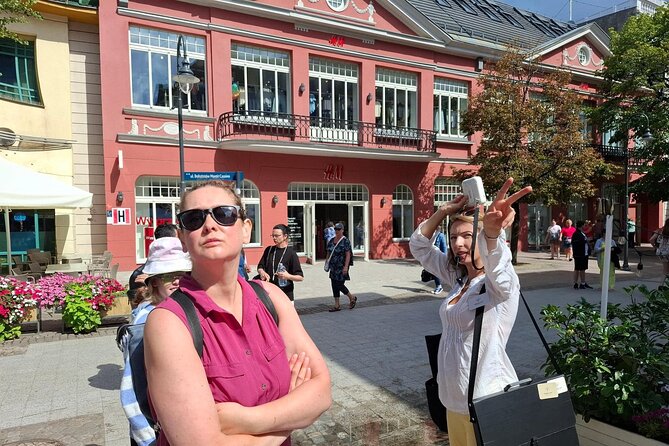
Your first stop is Bohaterow Monte Cassino, described as the first pedestrian street in Poland. The guide ties it to the sea route—back when fishermen from the small village used this road to reach the water. Even if you’ve walked Sopot streets before, this gives you a new baseline: you start by understanding the street as a working path, not just a pretty promenade.
Expect a quick, story-led intro with historical pictures so you can see how the center has shifted through the centuries. That format—photo first, then present-day details—keeps it from feeling like a facts dump.
Dworek Sierakowskich: A Quiet Courtyard That Feels Like a Secret
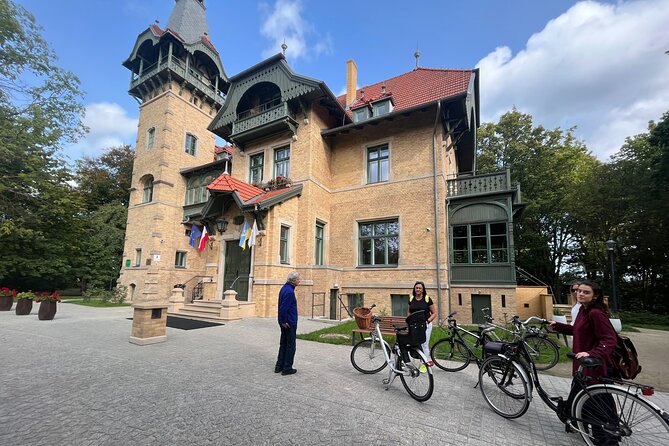
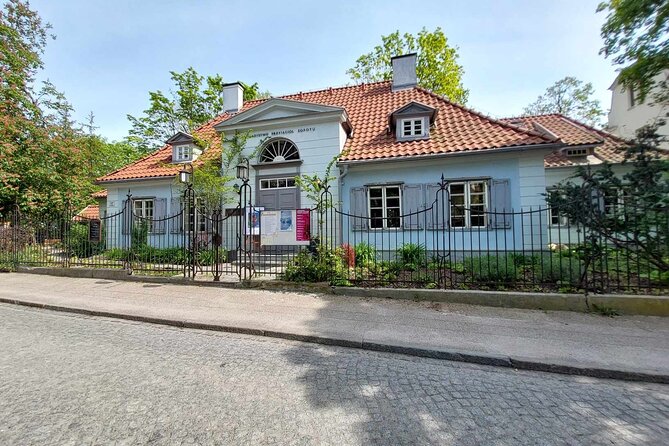
Next you’ll visit Dworek Sierakowskich, an 18th-century building and former guest house tied to a larger manor complex. This is one of those stops that changes your pace. The setting is calm, and the interior is said to have interesting elements.
The back garden is a nice touch because it gives your group a break from street-level motion. And there’s a cultural hook here too: a bust of Fryderyk Chopin, and the story that he may have stayed here and played piano. Even if you don’t obsess over composer history, it adds a human layer to an otherwise architectural stop.
A possible drawback: because it’s more intimate and calm, it can feel like a slower beat compared with the more “walk-and-look” sections. If your group likes fast moving photo stops only, you might want to lean on the guide to keep the timing comfortable.
Passing the Ravine Bridge to Villas Street and Poland’s Montmartre
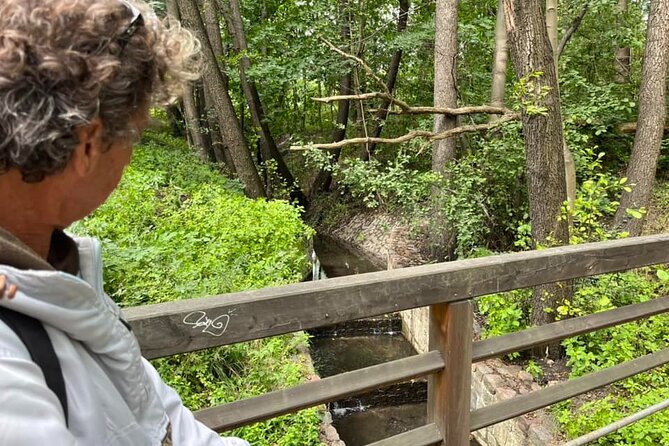
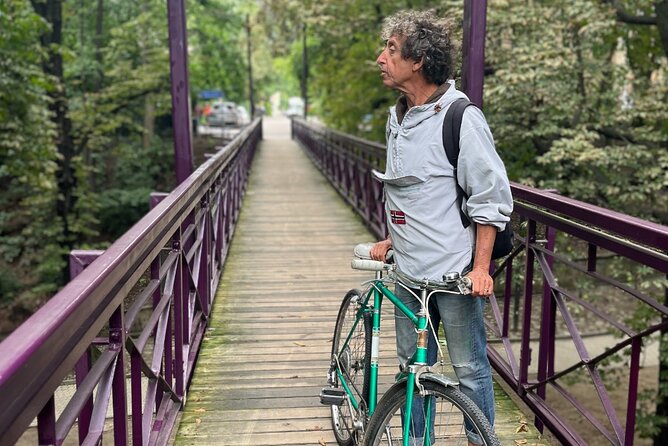
There’s a transition moment built into the walk: you cross a picturesque bridge over a deep ravine. That little shift in scenery matters. It prevents the tour from feeling like a flat stroll and helps you notice the town’s topography as part of its design.
Then you reach a street that once had the name Villas Street. The tour spotlights classical architecture here, with the oldest house dated to 1881. That time marker gives you a clear line to follow: late 19th century façades that still define the street character.
The guide also connects the area to a nickname from the second half of the 20th century: Poland’s Montmartre. That label hints at an artistic vibe, and your job is to look for the kind of details that attract artists—proportions, ornament, and the sense that buildings can carry personality.
Goyki 3 Art Inkubator: Alpine Resort Style Far From the Alps
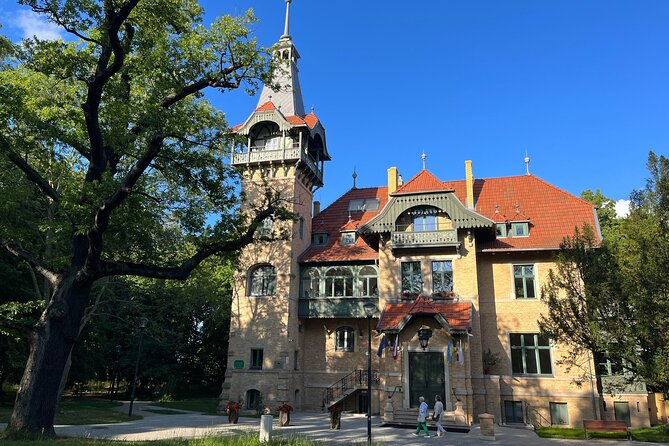
At Goyki 3 Art Inkubator, you’ll see why this tour is more than just “pretty exteriors.” One of the key buildings here is the Tower Villa from the late 19th century. The guide brings up a long, rather sad story paired with music, and today the building functions as an art institution.
Then comes a very smart architectural question: why does the building reference an Alpine Resort style when it’s far from the Alps and in a seaside resort? The answer ties directly into a broader European trend. The spa resort fashion started in the 18th century, and it spread far beyond the mountains where you’d expect health tourism to begin.
This stop is where you’ll start connecting dots:
- The coast gave Sopot visitors a reason to come.
- Spa culture gave Sopot a design language: parks, leisure, and buildings that look like health destinations.
- Art culture later re-used those structures, keeping the town’s identity alive.
If you’re the kind of traveler who likes learning one good “why” and then seeing it everywhere, this is a highlight.
Sopot’s Spa Architecture Walk: From Health Trend to City Identity
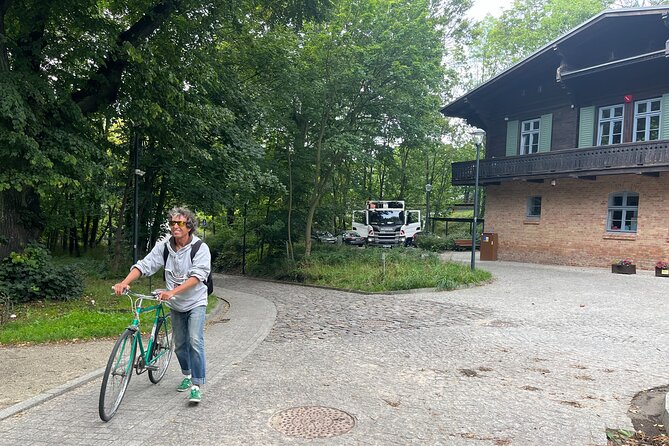
Sopot is known for spa architecture, and this part of the tour turns that phrase into something visual. You’ll take a walk through the area and discover what that means—what the architecture looks like and how it’s expressed in public space.
The tour uses a simple approach: show the design features, then anchor them to the spa story. In Sopot’s case, the park-and-health tradition isn’t vague. It has visible form, and the guide helps you read it without needing a history degree.
This is also where the tour connects architecture to culture, not just tourism. The neighborhood is associated with artist Per Oscar Gustav Dahlberg, who moved to Sopot in 1996 after falling for the place. He’s Swedish, and you can find mention of his work presenting Sopot and Gdańsk architecture.
The crooked house in Sopot is directly linked to him—its design is said to be inspired by his drawings. So as you keep walking, you’re primed to see the difference between normal building quirks and intentional artistic distortion.
Tip: if you’re curious about buying an album or graphics, the guide may be able to coordinate something, but that’s best handled openly during the tour if it interests you.
Haffner Monument and Sofitel Grand Sopot: Power, Leisure, and Choosing a Place Early
The tour then moves to Jan Jerzy Haffner Monument, where the guide sets Sopot’s “why this town matters” story in human terms. You’ll hear about Haffner as a kind of town godfather—he had been a surgeon in Napoleon’s army and later chose Sopot as a home long before it became famous.
It’s a good reminder that resort towns aren’t just built by weather. People decided, invested, and took chances. That decision-making thread continues near the beach at Sofitel Grand Sopot, where you’ll get a look at the majestic grand-hotel setting.
Here, the guide explains how it wasn’t just a natural evolution. In the 1920s, Sopot made the decision to invest in that kind of development. The building isn’t only about luxury. It’s about how the city wanted to place itself on the European map.
One practical note: because this section is more “look at big landmarks,” it’s ideal if your group likes grand scale. If you prefer small details, ask the guide to point out the architectural textures that make the big buildings interesting.
Skwer Kuracyjny and the Changing Rooms Area: Where the Riviera of the North Energy Shows Up
At Skwer Kuracyjny, you’re in a beautiful plaza created in 1925. The guide uses old photos to show what Sopot looked like during its heyday as the Riviera of the North, famous across Europe.
This stop is great for understanding how Sopot moved from local seaside life to international destination status. You’ll see the town’s spirit in layout: what’s kept open, what’s centered, and what feels designed for gathering.
Then you finish around the Changing Rooms built in 1905. There are funny stories tied to this structure, and the guide’s style—short, visual, and story-first—helps these “less famous” sites feel memorable.
You’ll also pass near a plaza with small fishermen’s houses that were gently relocated in 1905. This detail adds depth: the spa-town upgrades weren’t only about building new attractions. They affected everyday life too.
As you walk here, keep your camera ready, but also pause. This is the part of town where it’s easy to take in the architecture without realizing you’re also reading a social change.
The Pier Tease and Lighthouse Finish: Pick Your Effort Level
At some point, the route passes by the famous pier. The guide doesn’t just point it out—she explains what you should know so you can visit it after the tour with better context.
Then you reach Sopot Lighthouse. The steps might be tiring, and the tour makes it clear you’ll decide whether to climb. That choice is a smart design feature for a private walk. If your group has energy, go up and enjoy the view. If not, you still get the value of reaching the site.
This ending works well because it ties the whole tour together:
- The sea is the origin story.
- Spa and leisure architecture shaped the town.
- The pier and lighthouse give you the payoff view-wise.
And because the lighthouse entrance is included, you don’t have to scramble for tickets at the end.
What You’ll Enjoy Most If You Like Architecture and Stories
This tour is ideal if you enjoy these travel habits:
- You like architectural details but don’t want a dry lecture.
- You prefer human stories—artists, investors, and famous people—over random facts.
- You want a route that helps you explore afterward without needing another guide.
The strongest recurring praise is about the guide’s ability to keep information engaging and paced. Agnieszka Lasota has been commended for humor and enthusiasm, plus a good rapport with visitors. People also mention that even in colder or windy conditions, the walk didn’t feel exhausting because the stories stayed absorbing and the guide adjusted to the group.
Tour Logistics That Actually Matter While You’re There
This is offered in English, and it’s a private tour for your group only. You’ll get a mobile ticket, and pickup is offered, which helps if you don’t want to arrive early and figure out the start point area on your own.
Many stops have free admission tickets listed, and the lighthouse entrance is included. That means you’re not surprised by costs as you go.
Also, the tour duration is flexible—about 1 hour 30 minutes to 2 hours—so you can expect a steady pace rather than a long day hike.
Finally, it’s designed for most travelers and service animals are allowed.
Should You Book This Private Architect Tour in Sopot?
Book it if you want Sopot to make sense. This is a good choice when you enjoy architecture, spa-era design, and a guide who can connect street corners to larger historical ideas without overloading you.
Don’t book it if your only goal is a quick checklist of the biggest photo spots. This tour earns its value by teaching you how to see the town. If that’s your style, you’ll walk away with far more than images—you’ll leave with a sharper understanding of why Sopot looks and feels the way it does.
If you’re traveling in a small group, the per-group price is especially attractive. And if you’re the type who appreciates a guide who listens and adjusts—like Agnieszka is praised for—you’ll likely find the experience both informative and genuinely fun.
FAQ
How long is the Sopot private city walking or bike tour?
It lasts about 1 hour 30 minutes to 2 hours.
How much does the tour cost?
The price is $204.04 per group, for up to 9 people.
Is this tour private?
Yes. It’s private, so only your group participates.
What language is the tour offered in?
It is offered in English.
Are there pickup and a mobile ticket?
Pickup is offered, and you’ll receive a mobile ticket.
Where does the tour start?
It starts at Restauracja McDonald’s, Bohaterów Monte Cassino 21, 81-706 Sopot, Poland.
Where does the tour end?
The tour ends in a different location in Sopot. The exact end details are provided at booking.
Is the lighthouse visit included?
Yes. The lighthouse stop includes admission.
Do you pay for entry to the stops?
Many stops list free admission, and the tour suggests you visit any museums separately.
Is cancellation free if plans change?
Yes, you can cancel up to 24 hours in advance for a full refund.