Lisbon clicks into place on an e-bike. I love how this electric bike tour strings together major neighborhoods with clear historical stories, and I also like the practical meal ideas the guide shares along the way. The one thing to think about first: you must already know how to ride a bicycle, and the tour expects a moderate fitness level even if the route is designed to be manageable.
Starting in Alfama and working your way toward Lisbon’s best viewpoints gives you a fast, organized feel for the city. You’ll hit big-name squares like Praça do Comércio and Praca Dom Pedro IV, then glide to miradouros where the views finally make the whole morning feel worth it. Group size stays small, and it’s offered in English.
If you’re hoping to wander off on your own at every stop, this isn’t that kind of tour. You’ll follow a set route and timings, with lots of stops for photos and explanations—but it’s still a guided ride, not freeform exploring.
In This Review
- Key highlights worth planning for
- Why This Lisbon Electric Bike Morning Is Such a Smart Starter
- Meeting Point to Ride Start: What to Expect at 10:00
- Alfama Kickoff: Old Lisbon’s Narrow Streets Without the Guesswork
- Campo das Cebolas: Roman Port Ruins in a Short, High-Impact Stop
- Praça do Comércio and the 1755 Tsunami Story You’ll Actually Remember
- Rossio and Praça Dom Pedro IV: Squares, Theater Energy, and Historic Landmarks
- Santa Justa Elevator and the Miradouro Shift: When the Views Finally Pay Off
- Feira da Ladra: Market-Time Energy and Icon Views Over the Tagus
- Guide Style, Food Pointers, and Safety That Feels Real
- Price and Value: When $28.83 Makes Sense
- Who This Tour Fits Best (and Who Might Want a Different Option)
- Should You Book The Heart of Lisbon by Electric Bike?
- FAQ
- What’s included in The Heart of Lisbon by Electric Bike?
- How long is the tour, and what time does it start?
- Is the tour offered in English?
- Do I need to know how to ride a bicycle?
- Is the tour suitable for children?
- How big is the group?
- Where does the tour start?
- What happens if the weather is bad or I need to cancel?
Key highlights worth planning for
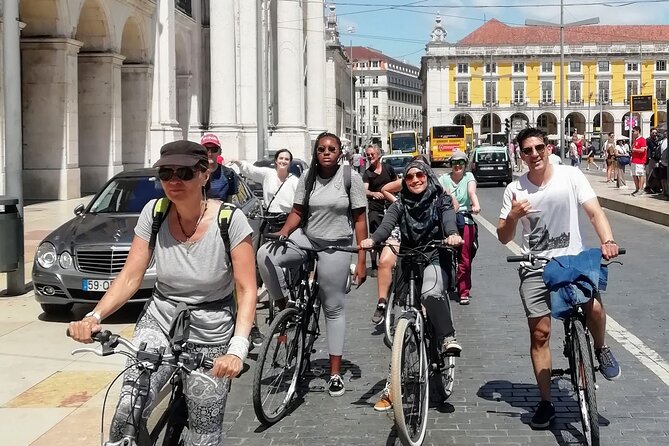
- Alfama first: you start in Lisbon’s oldest, most traditional streets instead of jumping straight to the trendy parts.
- Roman port ruins at Campo das Cebolas: a quick history stop that adds depth beyond the usual postcard views.
- Praça do Comércio + 1755 tsunami context: architecture and city design tied to a real turning point in history.
- Miradouro stops for maximum payoff: Senhora do Monte and Graça deliver classic city views without you hunting for them.
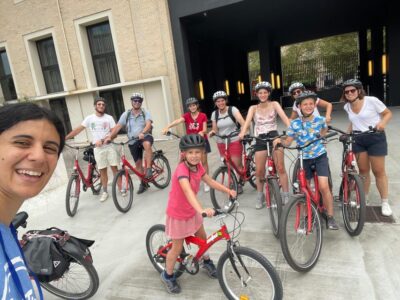
- Small groups: max 12 people, so you get time to hear the guide and ask questions.
Why This Lisbon Electric Bike Morning Is Such a Smart Starter
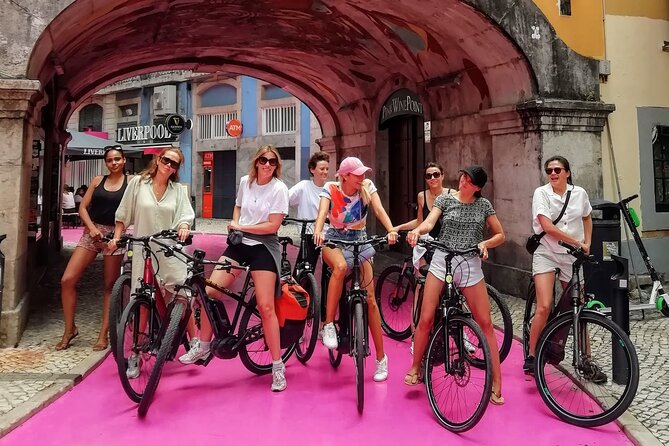
This is the kind of Lisbon tour that helps you stop guessing. In about 3 hours, you get a guided circuit through several of the city’s most important squares, viewpoints, and historic zones, without needing to plan bus lines or memorize a route map.
The value is in the pairing: big visual moments plus short, focused explanations. You’re not just being dropped at landmarks—you’re hearing why they matter, including stories like the devastating 1755 tsunami and how it changed Lisbon’s social and architectural life. That makes the places feel connected, not random.
I also like the practical side. The tour isn’t only history talk; it’s built for active sightseeing—then it points you toward food plans. Highlights specifically mention meal ideas around Time Out Market and Praça dos Restauradores, and guides (including André and Rodrigo) are known for sharing extra tips. If you’re trying to get your first day right, that’s a big deal.
You can also read our reviews of more tours and experiences in Lisbon.


Meeting Point to Ride Start: What to Expect at 10:00
The tour meets at Rua dos Caminhos de Ferro 62, 1100-108 Lisboa, Portugal. It starts at 10:00 am, and it ends back at the same meeting point.
Plan to arrive a few minutes early. Even if you’re familiar with bikes, you’ll want a moment to get fitted, settle in, and feel comfortable on the e-bike before you roll into Lisbon’s older streets. The tour provides a helmet, which is included and makes you feel like the operator is thinking about safety rather than speed.
One more practical point: the tour is near public transportation. That helps if you’re staying outside the city center or you’re mixing this with tram or metro time.
Finally, keep expectations aligned with the format. This is a small-group ride (max 12). The pacing works best if you’re happy to keep moving, stop for photos, and listen during short landmark breaks.
Alfama Kickoff: Old Lisbon’s Narrow Streets Without the Guesswork
The first stop is Alfama, Lisbon’s oldest and most traditional neighborhood. Starting here is a smart move because Alfama sets the tone for the city. Instead of beginning with broad squares, you start in the kind of street pattern that shaped how Lisbon grew—tight lanes, historic character, and a neighborhood identity that feels distinct from downtown.
This portion is designed as an orientation. You get about 30 minutes to explore the area with context, and admission is free for the stop itself. It’s the kind of start that helps your brain understand what you’re seeing: why the city looks the way it does, and how the historic center developed.
A possible drawback is also tied to Alfama: it’s still an older street fabric, and you’ll be on a bike. The good news is that the tour format and e-bike support keep it manageable. In the feedback, people specifically praised the ride as not too difficult and said there wasn’t a hill-climbing focus—but that depends on your comfort level behind the handlebars.
If you’re nervous about biking in older streets, practice briefly before you go, and give yourself time at the start to feel confident.
Campo das Cebolas: Roman Port Ruins in a Short, High-Impact Stop
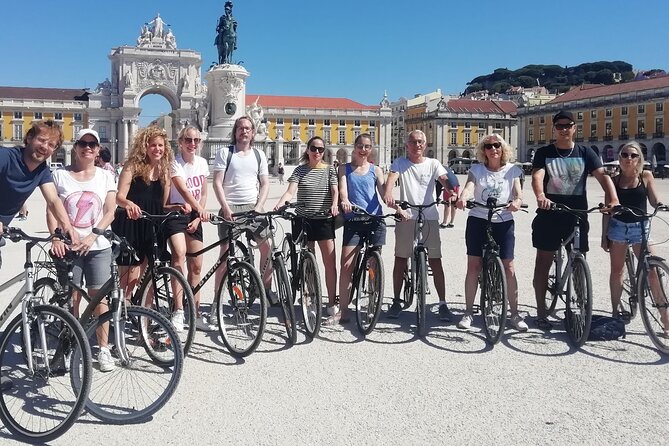
Right after Alfama, you reach Campo das Cebolas, an area with high historical value: the ruins of the ancient Roman port. This is one of those “wait, Lisbon had this?” moments that you don’t always get on a basic highlights walk.
You’ll spend about 15 minutes here, and the stop is free. The explanation focuses on Roman influence and why their presence mattered for Lisbon and Portugal centuries ago. It’s short, but it adds real depth—especially if you’ve been thinking of Lisbon as mostly medieval or modern.
What I like about this stop is its contrast. You get older Lisbon (Alfama), then you shift back further in time (Roman port ruins). That jump gives the morning variety and keeps the tour from feeling repetitive.
The only real consideration: because the stop is brief, you won’t have time to linger endlessly for photos the way you might on your own. If you’re the type who loves to slow down and study details, you may want to come back later after the tour ends.
Praça do Comércio and the 1755 Tsunami Story You’ll Actually Remember
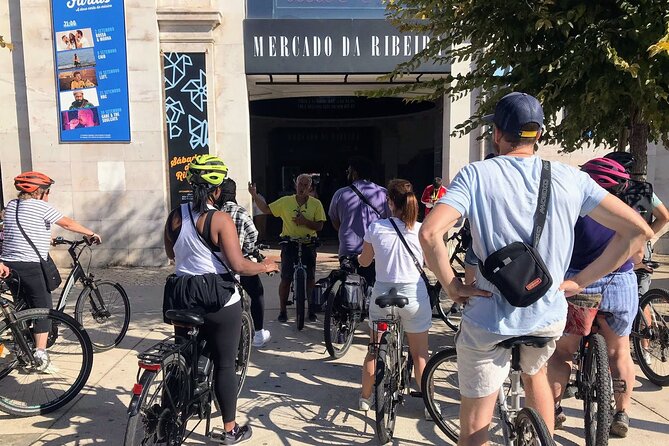
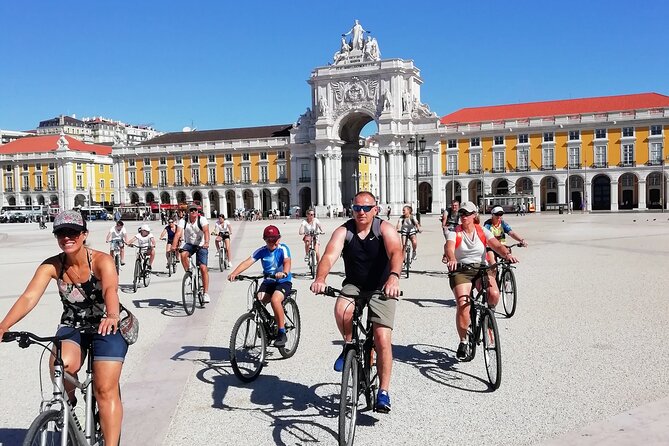
Next comes Praca do Comercio, a monumental square facing the Tagus River and described as Lisbon’s ancient gateway. This is also where the tour gets especially memorable. You’ll get around 20 minutes here, and the guide explains why the square is so important and connects it to the devastating tsunami of 1755, including the social and architectural consequences.
This is a rare pairing: big public space plus a clear cause-and-effect story. It helps you understand the city as something built, damaged, and rebuilt, not just a set of pretty backdrops.
A practical note: Praça do Comércio is a major open square. It’s generally easier for sightseeing than tight lanes, so it’s a good stretch in the schedule. It’s also a natural moment to take stock—water, photos, and regrouping before you move on to the next cluster of downtown squares.
If your goal is understanding Lisbon beyond surface-level sightseeing, this stop is one of the strongest on the route.




Rossio and Praça Dom Pedro IV: Squares, Theater Energy, and Historic Landmarks
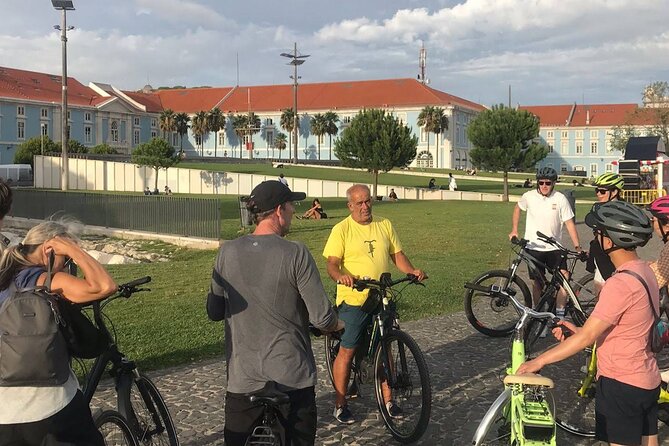
After Praça do Comércio, the route cycles for about 10 minutes through downtown Lisbon to reach another major area: Rossio, which connects with the bigger stop description around Praca Dom Pedro IV.
You’ll spend about 20 minutes here, and it’s a classic crossroads of Lisbon landmarks. The tour highlights include the National Theater, Lisbon’s first major train station, and the São Domingos Church. There are also mentions of older, legendary stores—exactly the kind of detail that helps you picture what everyday life in the city has looked like over time.
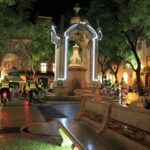
Then the itinerary continues to Praça dos Restauradores a few hundred meters away. This stop lasts about 15 minutes and centers on a monument marking Portugal’s restoration of independence in 1640. You also get the reason Portugal lost independence for 60 years, which turns the square from a photo stop into a quick historical puzzle solved.
One practical upside: these squares are easy to orient around. After this segment, you’ll have a better sense of how Lisbon’s grand avenues connect to the older districts.
Santa Justa Elevator and the Miradouro Shift: When the Views Finally Pay Off
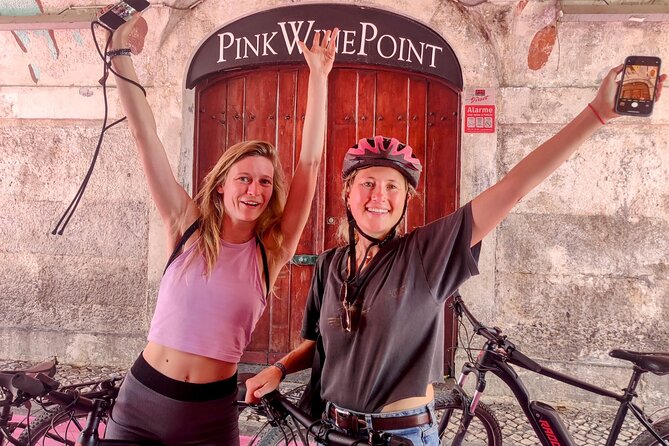
From the downtown squares, you cycle to the famous Elevador de Santa Justa. The stop here is brief—about 10 minutes—but it’s packed with explanation about why it was built and why it mattered. Santa Justa is one of Lisbon’s best-known symbols, so it works well as a mid-tour “spotlight” moment.
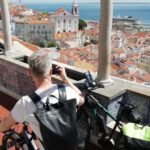
Then the tour moves into viewpoints, and that’s where you feel Lisbon’s geography. First up is Miradouro da Senhora do Monte, described as the highest point in old Lisbon. This stop takes about 20 minutes and is built around one thing: views over the entire city.
Next is Miradouro da Graça (Sophia de Mello Breyner Andresen), which takes about 30 minutes. This viewpoint is next to the Church and Convent of Graça, and the highlight is a view over São Jorge Castle. The tour also notes you may take the opportunity to visit the church.
If you like photo breaks with a purpose, this section is excellent. You’re not just stopping because it’s pretty—you’re stopping where the city rewards altitude and sightlines.
The main consideration is timing. These are popular viewpoints, and you’ll want to be ready with your camera. Also, your ability to enjoy the moment depends on your comfort on the bike immediately before the viewpoint. If you feel tense during the ride, it can steal some attention from the view.
Feira da Ladra: Market-Time Energy and Icon Views Over the Tagus
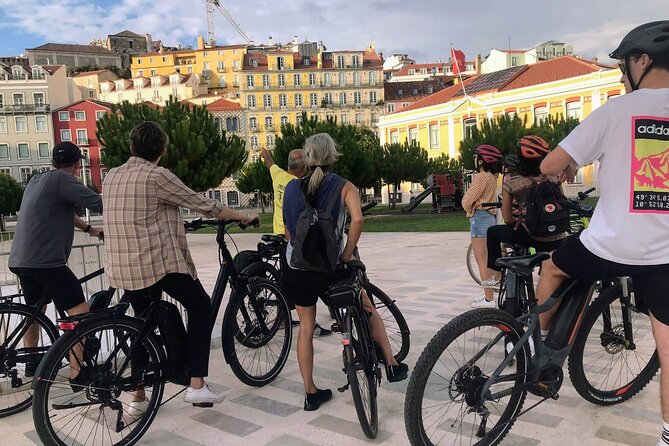
The final major viewpoint stop is Feira da Ladra (Campo de Santa Clara). This is where Lisbon’s most famous street market takes place on Tuesdays and Saturdays.
The tour description includes 20 minutes here, plus two important sight anchors: views of the Monastery of São Vicente and the National Pantanal, along with a fantastic view over the Tagus River. Even if your travel dates don’t line up with market day, the location still gives you strong visual payoffs.
This stop also has a nice emotional finish. After squares and viewpoints, the market area adds a different Lisbon texture—something closer to daily life than monument culture.
One caution: market conditions change the scene. If it’s market day, you may see more crowds and activity than usual. If you’re planning to come back later for shopping or snacks, this is a great place to get oriented.
Guide Style, Food Pointers, and Safety That Feels Real
A big part of why this tour lands well is the guide. In the feedback, people praised guides like André and Rodrigo/Rodriguez for friendly energy, super clear English, and history knowledge. What I find useful is that guides also share extra tips, not just talk facts at you.
That matters because Lisbon is a city where your first few meal choices can make or break your day. The tour highlights specifically mention ideas for your next meal near Time Out Market and Praça dos Restauradores. Combine that with the guide’s restaurant recommendations, and you’ll likely feel less stuck when it’s time to eat.
Safety is handled in a straightforward way: the tour includes a helmet. Add the e-bike and the fact that the route is described as not overly difficult in feedback, and you get a setup that fits people who want to bike without turning the day into a workout challenge.
What’s not included is bottled water and snacks. So bring a little cash for a drink if you expect a long morning, or plan to buy something at your next break.
Price and Value: When $28.83 Makes Sense
At $28.83 per person for about 3 hours, this tour is priced like a practical city orientation. The key is that you’re paying for more than movement—you’re paying for guided interpretation plus an e-bike and helmet.
That’s why the value holds up for first-timers. If you only do open-air walking, you still need time and stamina to connect multiple neighborhoods and viewpoints. Here, the bike does the linking work, while the guide does the explaining work.
The other value factor: small group size (max 12). You’re more likely to hear the guide and ask questions than on giant bus tours. In a city where details matter, that’s not a small thing.
If you’re on a tight schedule, this tour is also a strong use of time. You’ll cover a lot of ground in one morning, and you’ll leave with ideas for what to do next.
Who This Tour Fits Best (and Who Might Want a Different Option)
This tour fits you if you’re an active sightseeing type who likes history, architecture, and food planning. You’ll appreciate the mix of squares, monuments, miradouros, and quick “why it matters” stories.
It also fits if you have basic bike control. The tour states that all participants must know how to drive a bicycle, and it recommends moderate physical fitness. The e-bike helps, and feedback supports the idea that the ride isn’t focused on brutal climbing, but you should still feel comfortable steering, starting, and stopping smoothly.
This may not fit you if:
- you want long, unscheduled time in one museum or one shop,
- you don’t ride bikes yet,
- or you’re traveling with kids who fall outside the age rules.
On the kids note: children 5 to 12 can’t participate. Children 0 to 4 can participate with baby seats on the bike, if available through the operator.
Should You Book The Heart of Lisbon by Electric Bike?
If you want an easy way to get your bearings fast, I’d book this. The route hits core Lisbon sights in a tight time window, and the guide-led storytelling is the difference between a photo run and a real city understanding. The included e-bike and helmet also make it a smart comfort choice for a first Lisbon morning.
I’d think twice only if you’re not confident riding a bicycle or you need a flexible, choose-your-own-adventure schedule. For everyone else, it’s a solid start that sets up your next day of walking, eating, and wandering—especially once you’ve learned what to look for around Praça do Comércio, Rossio, and those miradouros.
FAQ
What’s included in The Heart of Lisbon by Electric Bike?
The tour includes an electric bike and a helmet. Bottled water and snacks are not included.
How long is the tour, and what time does it start?
The tour lasts about 3 hours. The listed start time is 10:00 am, and it returns to the meeting point.
Is the tour offered in English?
Yes, the tour is offered in English.
Do I need to know how to ride a bicycle?
Yes. All participants must know how to drive a bicycle.
Is the tour suitable for children?
Children ages 5 to 12 can’t participate. Children ages 0 to 4 can participate with baby seats on the bike.
How big is the group?
The tour has a maximum of 12 travelers.
Where does the tour start?
The tour starts at Rua dos Caminhos de Ferro 62, 1100-108 Lisboa, Portugal.
What happens if the weather is bad or I need to cancel?
The tour requires good weather. If it’s canceled due to poor weather, you’ll be offered a different date or a full refund. You can cancel for a full refund up to 24 hours in advance.