REVIEW · TORONTO
Toronto Islands: Morning or Twilight 3.5-Hour Bike Tour
Book on GetYourGuide →Operated by Toronto Bicycle Tours · Bookable on GetYourGuide
Ferry first, then a car-free escape. A guided bike ride that starts with a harbor ferry turns Toronto’s skyline into something you can enjoy slowly, with big views and real local stories. You’ll also get the practical stuff handled—bike and helmet ready when you arrive, plus water and snacks.
I especially like the car-free neighborhoods on the islands, where the pace can finally drop. An easy rhythm of quiet streets, park paths, and bike lanes makes it doable even if you’re not training for a cycling event, and guides like Sydney and Ryan tend to keep safety front and center.
One thing to consider: the first part can involve riding from the parking garage into city cycling lanes to reach the ferry. If you’re truly uneasy on busy roads, plan on taking extra care and follow your guide’s lead position closely.
In This Review
- Key things worth knowing before you ride
- The tour’s smart format: ferry + bike + island time
- Finding the meeting point under Dundas (and avoiding frustration)
- What the ferry ride adds (beyond just transport)
- Cycling on quiet island streets at an easy pace
- Car-free Toronto Islands: the real reason this tour works
- Gibraltar Point Lighthouse and the beach-and-bay scenery
- Royal Canadian Yacht Club: history and waterfront texture
- Stories that move at a human pace (not a lecture)
- Twilight vs morning: how timing changes the experience
- What to bring (and what to plan for)
- Who this tour suits best (and who should think twice)
- Price and value: why $99 feels fair here
- Should you book Toronto Islands by bike?
- FAQ
- How long is the Toronto Islands bike tour?
- Is the ferry ride included?
- What’s included in the price?
- Is the riding pace easy?
- Where do I meet the tour?
- Do I need to bring a helmet?
- Is the tour language English only?
- Are children allowed?
Key things worth knowing before you ride
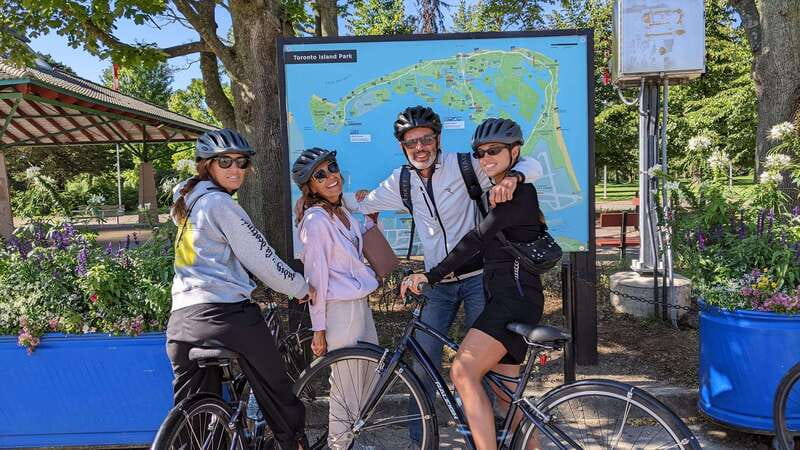
- Car-free island time where you can hear the water instead of traffic
- Ferry included so you cover more ground without battling the shoreline on a bike
- Gibraltar Point Lighthouse and the yacht club area for classic Toronto-beside-the-water scenery
- Beginner-to-advanced friendly with an easy pace and frequent stops
- Photo-friendly stops and guides who actively help you get pictures (Oscar is one name that shows up here)
- Real safety focus with helmets mandatory and short safety briefings before you set off
The tour’s smart format: ferry + bike + island time
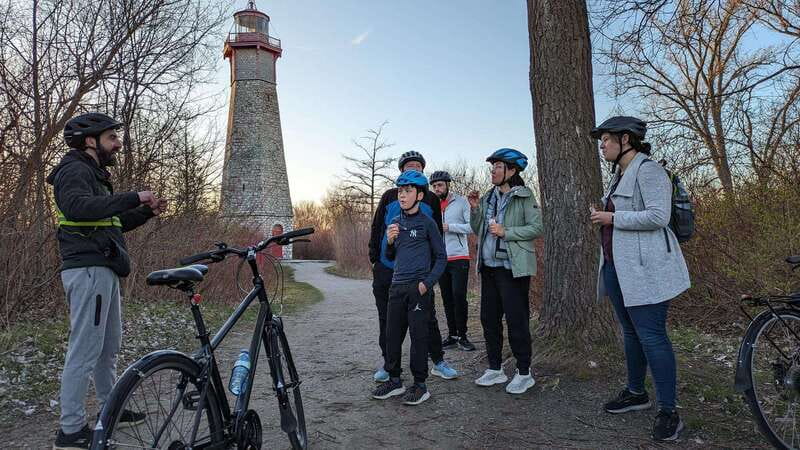
This is one of those Toronto experiences that makes the most of a short window. You start by crossing the harbor on a ferry, then you switch gears to an easy-paced bike ride across the islands. That combo matters because it saves time and keeps your effort matched to the reward—views, beaches, and photo stops without turning the day into a grind.
The tour runs about 210 minutes (around 3.5 hours), which is long enough to feel like you explored, but short enough to keep it fun. You’re not stuck commuting around the city; instead you’re guided to the quieter side of Toronto, where cars are mostly not part of the equation.
For value, the ticket is not just the guide. You also get the bike and helmet, a ferry ticket, and water plus snacks. For many visitors, that’s the practical win: less worrying, more riding.
You can also read our reviews of more tours and experiences in Toronto.


Finding the meeting point under Dundas (and avoiding frustration)
Your biggest logistics moment is where you meet. The tour uses a parking garage as the starting hub: meet in the parking garage about 50 meters south of Dundas on the west side. You enter the garage, follow the yellow signs down to P2 level, then look for section H.
That setup is totally workable, but it catches people who arrive expecting street-level signage. I’d treat this as the one place to give yourself a little extra time—especially in cloudy weather or if you’re walking without clear street markers. One traveler even described using a compass app to find the correct garage on a dull day, which tells you the key to success here is patience plus a plan.
Once you’re inside, the welcome tends to be smooth: equipment is set up, and guides help with bike choice and helmet fitting when needed. People have singled out how helpful staff can be—Sydney, for example, is mentioned for quick adjustments and friendly assistance.
What the ferry ride adds (beyond just transport)
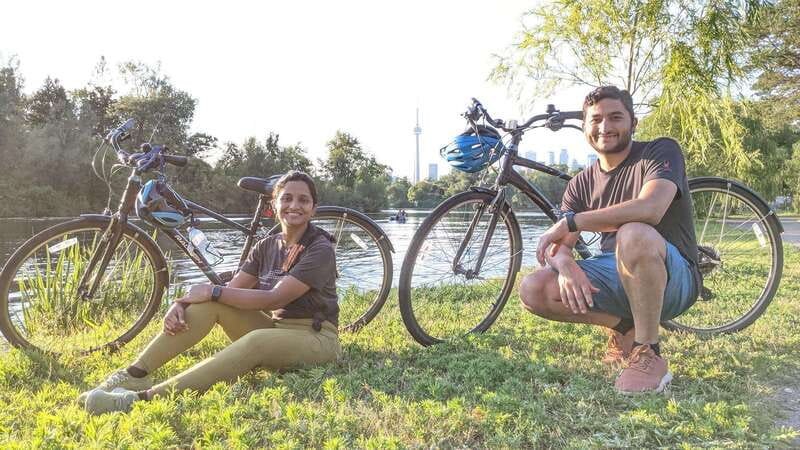
The ferry crossing is short, but it sets the mood. You get a water-level perspective of Toronto before you start pedaling, and it helps you shift from city mode to island mode. Think of it as your visual warm-up: you’re seeing the skyline and harbor environment in a way that’s harder to catch when you’re only on foot or only on land.
Another practical benefit: the ferry helps you cover distance without forcing your legs into long stretches right away. That means more energy left for the easy-paced riding once you’re on the islands.
Also, there’s something psychological here. You step onto the ferry in the city, then you step off into a quieter world. That change of sound and pace is part of why the islands feel like a break, not just another “thing to do.”
Cycling on quiet island streets at an easy pace

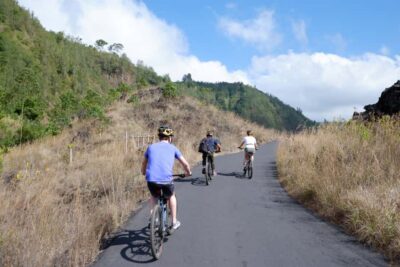
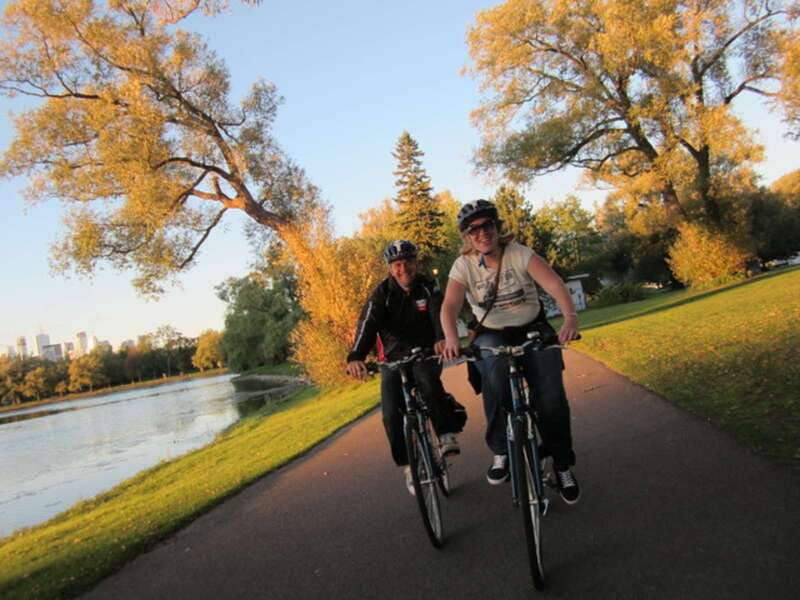
Once you’re off the ferry and on the eastern islands, the vibe changes fast. The tour focuses on routes that are quiet streets, park paths, and bike lanes, which is exactly what you want when you’re trying to relax and take photos instead of white-knuckling every intersection.
The riding pace is described as easy, with plenty of stops. That’s not a small detail. Frequent pauses let you actually enjoy what you’re passing—harbor views, cottages, beach edges, and skyline frames—rather than racing the group and missing it all.
Your guide stays in charge. Several people mention guides riding at the front with others organized behind, which is a classic structure for keeping cyclists comfortable and predictable in traffic. If you’re new-ish to biking, that structure can be a relief. If you’re more confident, you still benefit because it keeps the group moving efficiently while stopping for the good stuff.
Car-free Toronto Islands: the real reason this tour works
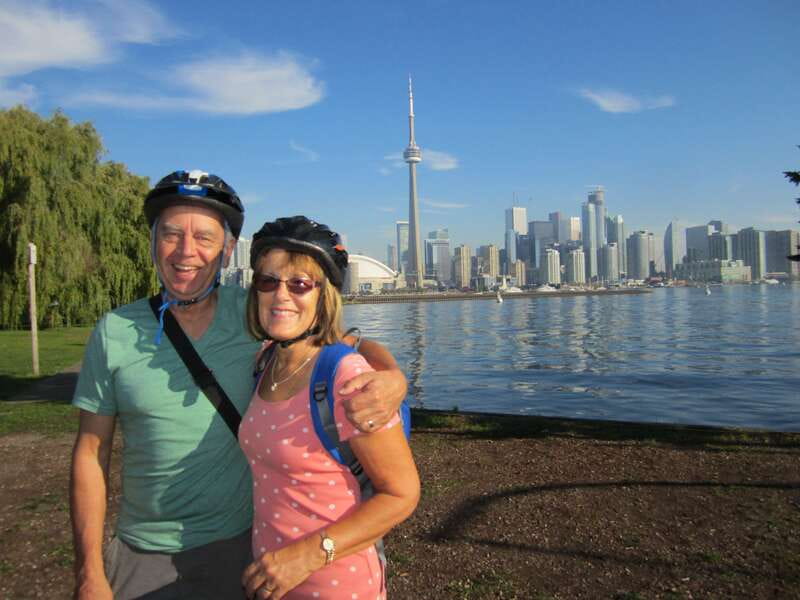
The Toronto Islands are famous for their calm, and this tour uses that advantage well. One of the standout facts in the highlights is that the islands include the largest car-free neighborhood in North America. That’s a big claim, but you feel it immediately once you’re off the busy side of Toronto.
For your day, this matters in three ways:
- You can hear the water and birds more than engines.
- You get safer photo moments near paths and beach edges.
- You spend less time scanning for cars and more time enjoying the skyline.
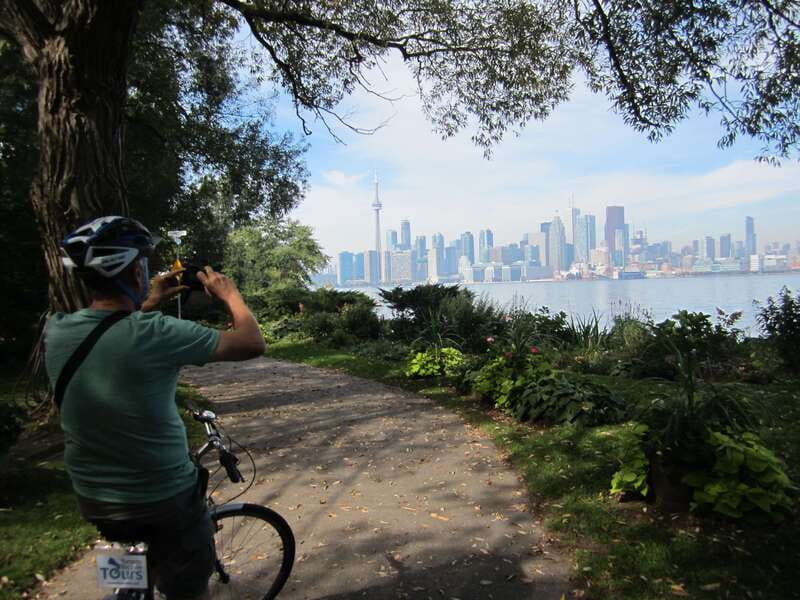
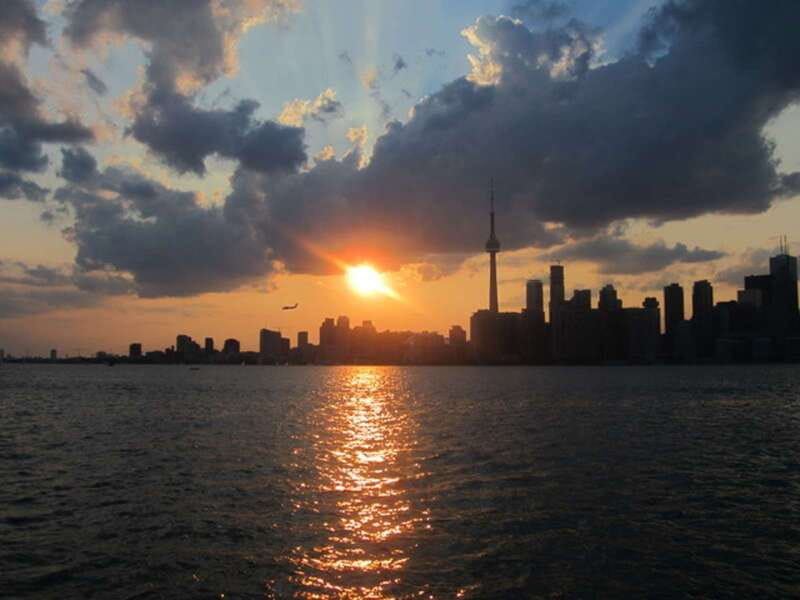
That last point is huge. Toronto’s skyline is one of the city’s big draws, but it can feel distant when you’re stuck indoors or moving through traffic. On the islands, you get the skyline as a background element—something that’s always there while you’re doing something active and unhurried.
Gibraltar Point Lighthouse and the beach-and-bay scenery
A signature stop is Gibraltar Point Lighthouse. This isn’t just a landmark; it’s a chance to slow down and look at how the islands meet Lake Ontario. You’re getting a classic coast-and-city contrast: a working-looking lighthouse vibe on the edge of water, with Toronto’s skyline in your broader field of view.
From a practical perspective, lighthouse areas often mean open sightlines. That’s where your camera actually earns its keep. It’s also where guides can tell you how the island has changed over time, which is part of the tour’s “why should I care?” ingredient.
After that, expect cycling through parks and along beach-adjacent areas. There’s mention of parks, beaches, and cottage neighborhoods, which means you’re not stuck with only one type of scenery. The islands can feel like a mini getaway without leaving the city’s orbit.
Royal Canadian Yacht Club: history and waterfront texture
Another highlighted area is the Royal Canadian Yacht Club. Even if you don’t tour any buildings, the waterfront character around yacht club zones gives you a different feel than the lighthouse and beaches. You’ll see how the island’s recreation side exists alongside the quieter park paths.
This is also where the guide storytelling becomes more than filler. The tour includes stories about key island people and events from roughly the last 200 years of island history. That makes the places you see feel connected instead of random photo stops.
I like this approach because it gives you handles. You’re not just looking at a pretty scene; you’re also learning what shaped the island—why people built where they did, how the islands evolved, and how the harbor story links back to Toronto’s growth.
Stories that move at a human pace (not a lecture)
A bike tour can go one of two ways: it’s either nonstop facts with no breathing room, or it’s “story time” that actually fits the ride. The best versions of this tour land on the second one, with guides who keep explanations tight and well-timed to what you’re seeing around you.
In the tour guide lineup, names that come up include Ryan, Mariana, Marie, Oscar, Sylvia, Mina, Diana, Brian, and Caitlyn, plus others like Terence and Lorraine for twilight tours. What these people have in common in the descriptions is that they pair practical safety with real island detail.
One small but meaningful perk: some guides take photos of the group during the tour. If that’s your kind of thing, ask your guide if they’ll send them afterward. Oscar is specifically mentioned in that context, and it’s the easiest way to walk away with images you might not get on your own.
Twilight vs morning: how timing changes the experience
This tour is offered as morning or twilight, and timing affects the “feel” more than the route itself. In the early morning, you tend to get the islands before crowds. People describe it as peaceful and quiet, which makes skyline views feel less like a snapshot and more like a calm moment.
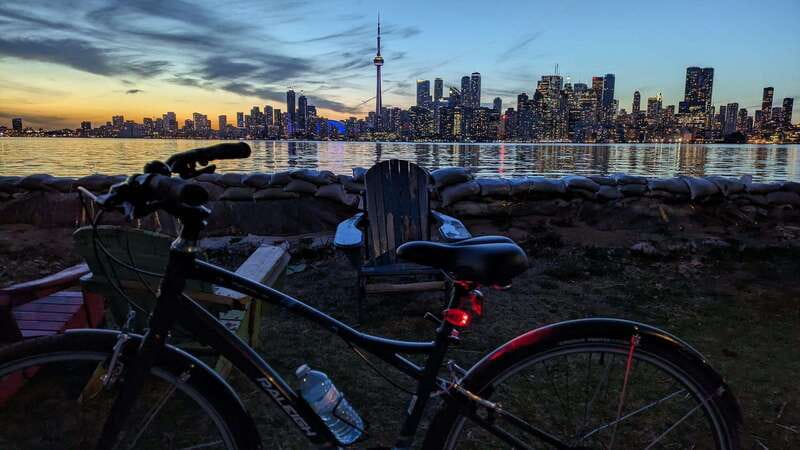
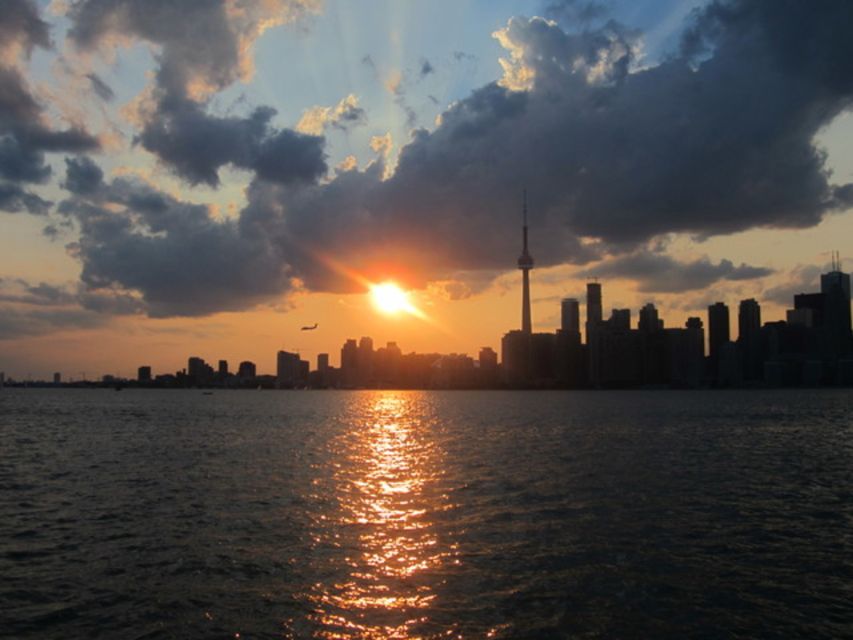
Twilight can be a different kind of payoff. You’re riding later, with softer light that’s great for photos and for that skyline background. One description even points out sunset views from the island as spectacular.
If you care about photos and atmosphere, choose based on what kind of light you want more. If you’re trying to keep the day stress-free, morning often wins because you can spend the rest of your trip with more energy.
What to bring (and what to plan for)
You’re provided water and snacks, so you don’t need to carry much for fueling. Still, plan for weather, because Lake Ontario can change the feel of a day quickly.
A few people mention chilly conditions and extra gloves being helpful, so think in layers: a light jacket you can remove on warmer stretches, and something that cuts wind if the breeze comes off the water. If rain rolls in, one guide is described as prepared for rain showers—so it helps to bring basic rain protection too, even if you hope you won’t need it.
On the bike side, you’ll have a helmet and a provided bicycle, with help sizing and fitting. That makes the tour lower effort than renting equipment and guessing whether it’s the right fit.
And do yourself a favor: wear comfortable shoes with good grip. Island paths and park edges can be smooth, but you’ll feel better if you’re not dealing with slippery soles every time the tour pauses.
Who this tour suits best (and who should think twice)
This ride is designed for beginner to advanced riders at an easy pace with plenty of stops. It’s a great choice if you want active sightseeing without tackling big hills or technical riding.
It’s also a smart pick if you’re in Toronto for only a few days and want a different view of the city than downtown walking. The skyline shows up repeatedly from the islands, and it’s the kind of contrast that makes your photos look like you left the urban core.
The main “think twice” moment is confidence at the start. Some descriptions suggest the meeting area means you may ride from the parking garage into city cycling lanes to reach the ferry. If you’re anxious around cars, or if you don’t like merging into any traffic environment, plan to lean on your guide and stay relaxed. One description notes that this segment can feel scary for an inexperienced cyclist, even though the guide vigilantly keeps everyone together.
Price and value: why $99 feels fair here
At $99 per person, the tour isn’t the cheapest way to spend a half-day in Toronto. But the value looks better when you list what’s included: bike + helmet, ferry ticket, water and snacks, and guided interpretation.
In a city like Toronto, renting a bike plus ferry access plus paying a guide for a focused route can add up fast. Here, the price bundles the key costs into one ticket, so you’re paying mainly for the time you can’t really buy back—having someone show you the best island angles, the lighthouse stop, and the waterfront pockets you might miss on your own.
Also, the 3.5-hour duration is long enough to feel like you got somewhere. Many short city tours feel like you’re constantly moving without settling. This one gives you pauses, photo stops, and a calmer rhythm once you’re on the islands.
Should you book Toronto Islands by bike?
If you want a half-day that feels like a real break from the city, I’d book it. The combination of ferry + bike + car-free island time is exactly the kind of format that makes Toronto more than just traffic and towers. You’ll get skyline views, lighthouse scenery, waterfront stops near the yacht club, and guide stories that help the island feel connected to the larger Toronto story.
Book it especially if:
- you’re comfortable riding a bike and want an easy pace
- you want more than one type of scenery (parks, beaches, cottages, landmark waterfront)
- you like guided photography stops and history context without long lectures
Hold off if:
- you’re very nervous riding near city traffic right at the start
- you want a strictly car-free experience from the moment you leave your starting point
If you’re in the sweet spot—curious, active, and ready for a calmer Toronto—this tour is a very solid use of your time.
FAQ
How long is the Toronto Islands bike tour?
The duration is 210 minutes, which is about 3.5 hours.
Is the ferry ride included?
Yes. The tour includes a ferry ticket.
What’s included in the price?
You get a bicycle and helmet, water and snacks, tour guides, and the ferry ticket.
Is the riding pace easy?
The ride is described as an easy pace with plenty of stops and is suitable for beginner to advanced riders.
Where do I meet the tour?
Meet in the parking garage approximately 50 meters south of Dundas on the west side of the street, then follow the yellow signs down to P2 level, section H.
Do I need to bring a helmet?
No. Helmets are provided, and helmets are mandatory.
Is the tour language English only?
Yes, the tour is offered with a live guide in English.
Are children allowed?
Children are welcome when accompanied by a parent or guardian.