REVIEW · TORONTO
Toronto: Heart of Downtown 3.5-Hour Bike Tour
Book on GetYourGuide →Operated by Toronto Bicycle Tours · Bookable on GetYourGuide
Bike lanes make downtown Toronto make sense. In 3.5 hours, you get a street-level look at the city’s major landmarks, plus stories that connect Toronto’s past, present, and future—without feeling rushed. I really like that the pace stays easy and the guides keep things safe and organized, like Carlos, who came with a team-minded approach, and Boxy, who made sure the group stayed together.
Second, I like the way the tour mixes big-name icons with real neighborhoods. You’ll roll past the CN Tower and Union Station, then switch gears into Chinatown, Kensington Market, and Queen Street West style streets. One possible drawback: you’re still riding through an urban grid, so if you hate the idea of traffic-adjacent bike lanes or you’re wearing stiff shoes, plan your clothing and mindset accordingly.
In This Review
- Key things I think you’ll care about
- Toronto on two wheels: what this tour gives you fast
- Meeting near Dundas: start location and the first 10 minutes matter
- Helmets, quiet streets, and what beginner riders should expect
- CN Tower, Royal York Hotel, and Union Station: the downtown backbone
- Chinatown and Kensington Market: street-level Toronto you can’t get from a bus
- Eaton’s Centre, Dundas Square, and Queen Street West: the commercial heart
- Art Gallery, OCAD, Massey Hall: culture between skyscrapers
- Hockey Hall of Fame, Rogers Centre, and Round House Park: sports and built form
- City Hall, St. Lawrence Market, and St. James Cathedral Square
- Flatiron building, Sherbourne Common, and Corus Quay: smaller surprises on the map
- Harbourfront, Lake, Sugar Beach, and the Entertainment District wrap-up
- What the included extras do for you (water, snacks, photos)
- How to dress and pack so you enjoy the ride
- Pace, distance, and safety reality check
- Should you book this Toronto downtown bike tour?
Key things I think you’ll care about
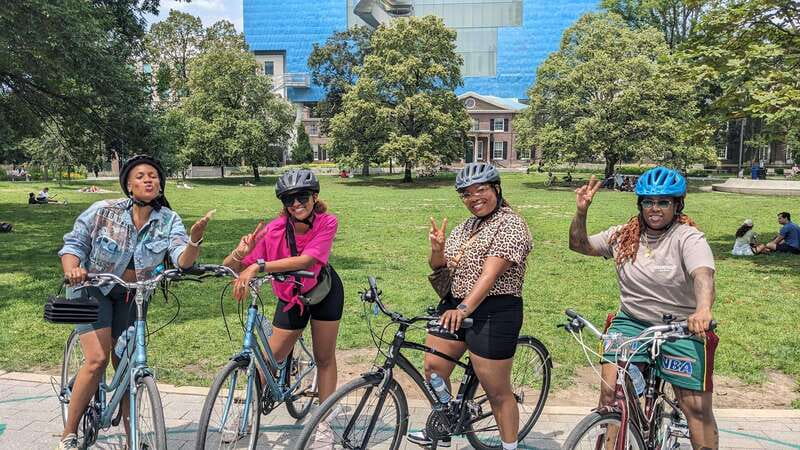
- Easy pace with frequent stops so you can look, listen, and take photos without sprinting to the next corner.
- Safety-first guiding on quiet routes that favor park paths and bike lanes, with helmets mandatory.
- A true orientation tour across transit hubs, markets, arts, sports, and the waterfront.
- Snack + water setup (and a water bottle holder on each bike) so you don’t burn out early.
- Language support in English, French, and Spanish with a live guide.
- Comfortable, well-maintained bikes mentioned across guides and multiple recent rides.
Toronto on two wheels: what this tour gives you fast
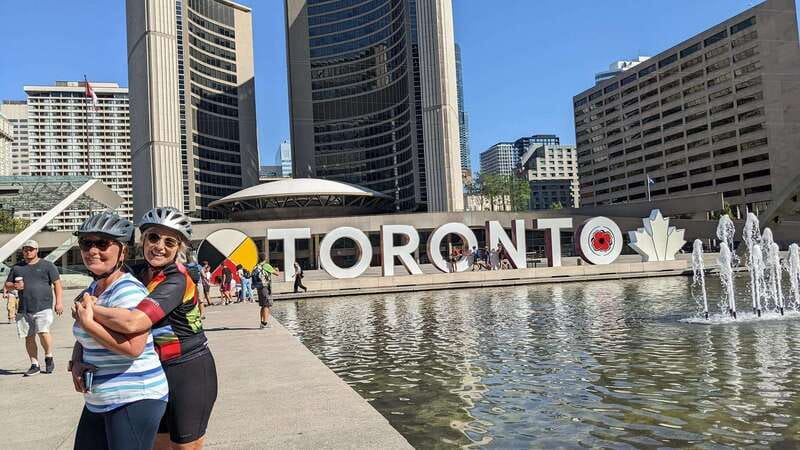
This is the kind of Toronto tour that makes your later days easier. Toronto is big, spread out, and full of layers—old neighborhoods, new towers, and waterfront that changes with the weather. Doing it by bike at an easy pace means you’re seeing the city the way it actually feels: at intersection level, with pedestrians around, and with skyline views that buses just don’t frame as well.
The tour is priced at $90 per person for 210 minutes, and you should think of that as paying for three things: local guide time, a traffic-aware route, and the convenience package. You’re not just renting a bike and hoping for the best. You’re getting a plan, water, snacks, and a helmet, which takes a bunch of small travel chores off your plate.
And because you’re on bikes, you cover ground faster than walking. In one recent ride, the total distance was described as about 15 km over roughly three hours, with plenty of stops to talk, photo, and reset your legs. That distance is very doable for most first-timers who can handle a bike in a city.
If you want a gentle first taste of downtown Toronto before you pick neighborhoods for deeper exploring, this is a smart way to start.
You can also read our reviews of more tours and experiences in Toronto.

Meeting near Dundas: start location and the first 10 minutes matter
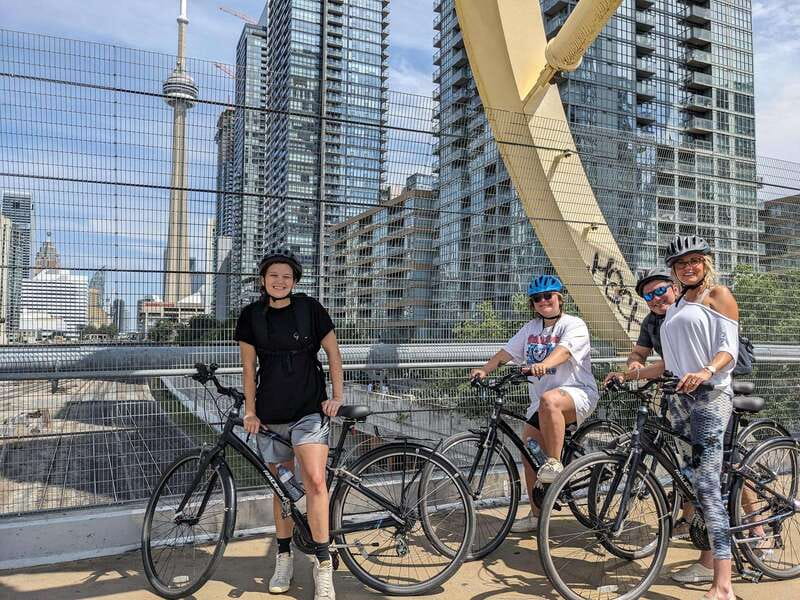
You’ll meet at a parking garage about 50 meters south of Dundas on the west side of the street. Enter the garage, then follow yellow signs down to the P2 level, section H.
This is one of those starts where reading signs beats guessing. One rider mentioned it took them about 5 minutes to find the location because they didn’t follow the signage immediately. You’ll make your life easier if you arrive a few minutes early and scan the garage signs on the way in.
If you’re unsure, you can call the local partner for directions. Also, keep your plan simple: bring only what you need, since you’ll have locker space for extra items once you arrive.
Helmets, quiet streets, and what beginner riders should expect
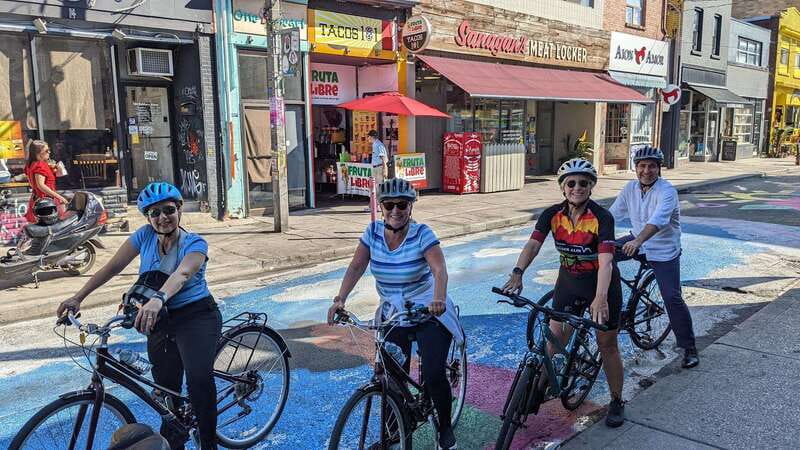
The tour is built to work for beginners and advanced riders. The pace is described as easy, and the route uses quiet streets, park paths, and bike lanes. Before you roll out, your instructor provides safety instructions, and helmets are mandatory (helmets are provided).
That matters because downtown Toronto can feel intense at street level. Here, the goal is not to test you. The goal is to move you through the city safely and keep you watching the road, not white-knuckling the handlebars.
A detail I really appreciate: each bike has a water bottle holder. Add the provided water and snacks, and you can ride without that “Oh no, I forgot to hydrate” moment.
What about group flow? Guides are clearly paying attention to the group. Multiple riders praised how guides kept everyone together and looked out for comfort. You might hear names like Carlos, Oscar, Ryan, Sydney, Consuela, Ryan again, and Marina/Mariana in praise—different personalities, same focus on keeping the ride comfortable and controlled.
CN Tower, Royal York Hotel, and Union Station: the downtown backbone
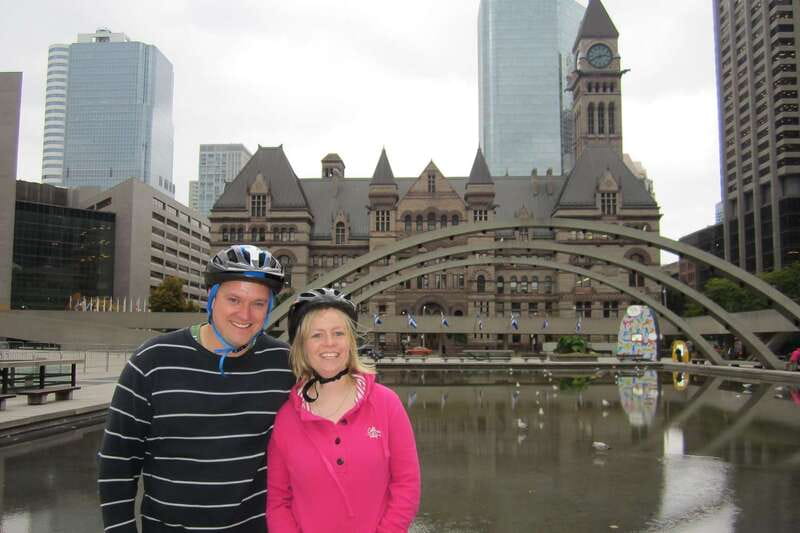
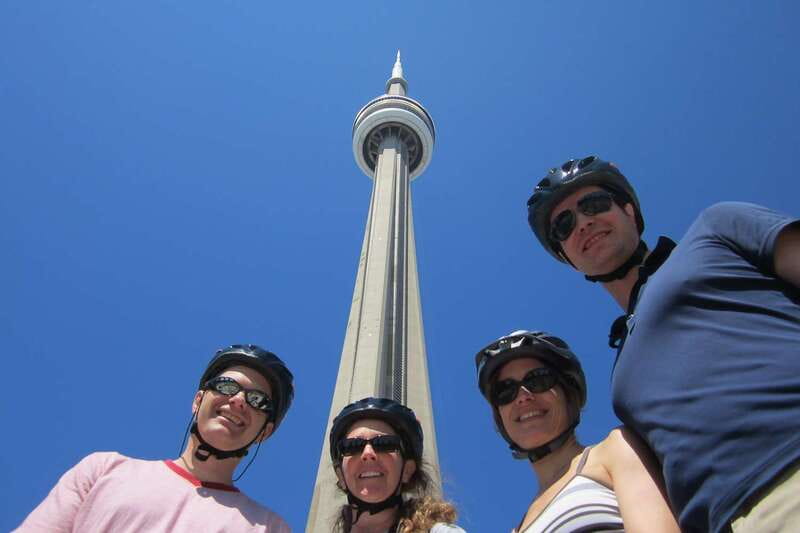
The tour starts by putting you in front of the major downtown anchors—places that define how Toronto moves. You’ll see CN Tower, then ride past the Royal York Hotel, and through the area around Union Station.
Why these stops matter: they’re more than “pretty buildings.” They’re landmarks for orientation. After this ride, you’ll understand where the main transit and the city’s big-view points sit relative to everything else you plan to do.
- At the CN Tower, the value is the immediacy. You get the tower in your field of view at street level, and that makes the skyline make sense when you’re back on foot later.
- The Royal York Hotel gives you a sense of Toronto’s grand-hotel energy—downtown scale, formal architecture, and that classic west-end-meets-finance feel.
- Union Station helps you connect the dots. Even if you don’t take a train, it’s one of those places that anchors the city. Once you’ve ridden past it, you’ll understand how downtown routes bend around it.
A practical note: don’t plan to linger too long at each stop during a 3.5-hour ride. The power of this tour is movement plus short photo breaks. Think “look, learn, continue.”
Chinatown and Kensington Market: street-level Toronto you can’t get from a bus
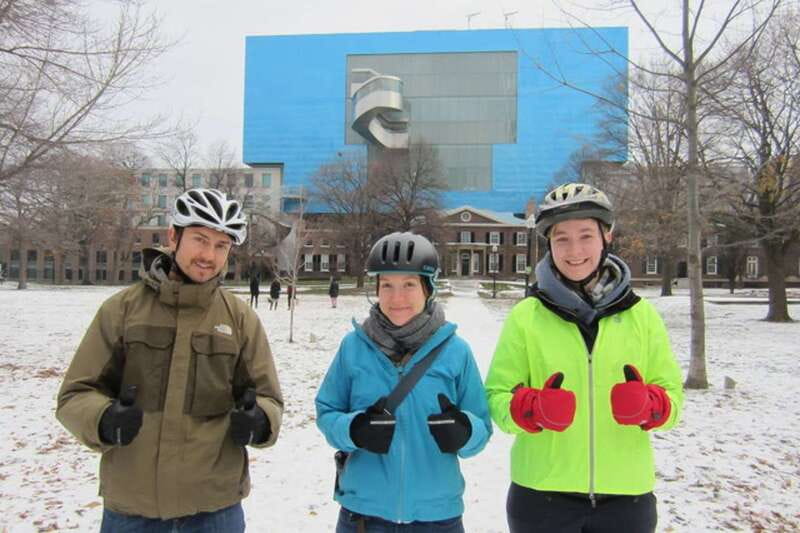
Then the tour shifts into neighborhood mode with Chinatown and Kensington Market. This is where the city feels like people live here, not just work here.
Chinatown is all about the street details—signage, shopfront rhythm, and the way blocks feel more human at bike speed than from a vehicle window. Kensington Market tends to give a different vibe: smaller-scale streets, eclectic energy, and a walking-and-browsing feel that pairs well with what you’re doing on the bike.
This part is also valuable because it’s the kind of area that can be awkward to explore by transit if you’re short on time. You’ll move through it without having to constantly backtrack, and you’ll get a sense of where you might want to return on a slower day.
One suggestion from a rider: make sure you keep a little time budget for quick snacks or a drink when you reach market areas. If you want to grab something to go, you’ll probably enjoy building that habit into your own schedule after the tour.
Eaton’s Centre, Dundas Square, and Queen Street West: the commercial heart
Next up are the big downtown public spaces and shopping corridors: Eaton’s Centre, Dundas Square, and Queen Street West.
These stops can feel like “tourist zones” if you only look at them from the sidewalk. But on a bike tour, they become useful. You see how pedestrians flow, where the big intersections pull people in, and which side streets make shortcuts and calmer routes.
- Dundas Square is a great place to see downtown density up close. It’s also a good visual reference point for later mapping.
- Eaton’s Centre helps you understand how Toronto’s downtown blends indoor/outdoor movement, especially when weather changes.
- Queen Street West gives you a sense of creative and commercial mixing—an area that often reads differently once you’ve cycled it rather than just passed it.
If you’re the type who plans meals carefully, this is also where you’ll start noticing where food and coffee options cluster.
Art Gallery, OCAD, Massey Hall: culture between skyscrapers
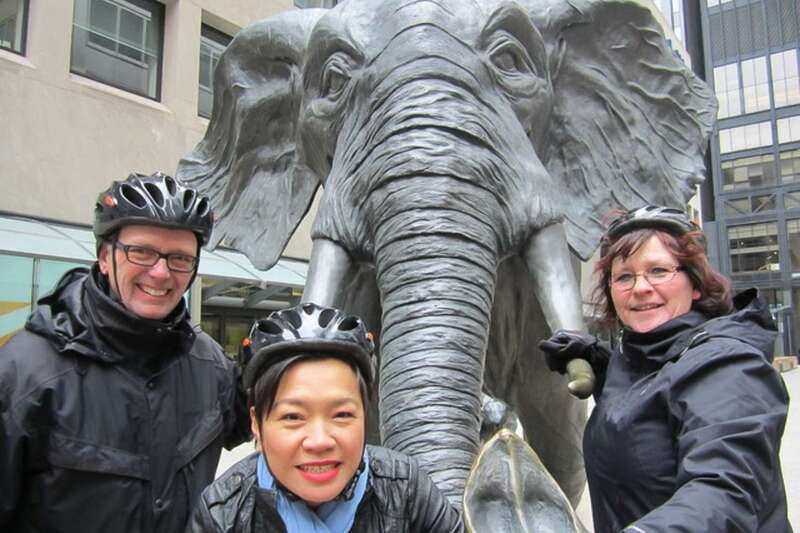
The tour includes Art Gallery of Ontario and College of Art and Design (OCAD), plus a stop near Massey Hall.
Why those are worth your time on a bike ride: arts institutions act like cultural magnets. On foot, you can feel the city’s art around you. On a bike, you can quickly link the art sites to the surrounding neighborhoods and transportation corridors.
You’ll also get a feel for how Toronto places performance culture near other downtown functions. Massey Hall is a good example: a venue that signals history and live entertainment, right in the middle of everything else.
A good tour guide will connect the dots—how these places fit together and what they represent for the city’s identity. Riders consistently praised guides for keeping facts interesting and the stops well-paced.
Hockey Hall of Fame, Rogers Centre, and Round House Park: sports and built form
This stretch leans into Toronto’s sports-and-venues identity with Hockey Hall of Fame, Rogers Centre, and Round House Park.
These stops are ideal for a first-timer because they’re instantly recognizable—even if you’re not a die-hard fan. You’ll see the scale of these venues and how they sit next to everyday city life.
- Hockey Hall of Fame makes for an easy “wow” stop because the sport is part of Toronto’s cultural language.
- Rogers Centre is a major downtown landmark. From street level, you’ll understand its presence.
- Round House Park adds a different texture—less “big stadium facade” and more of a distinct area feel you can notice as you ride through.
If you enjoy photos with real city context—people, streets, and skyline all in frame—this part is built for it. It’s also a nice reset if earlier stops felt too shopping-focused.
City Hall, St. Lawrence Market, and St. James Cathedral Square
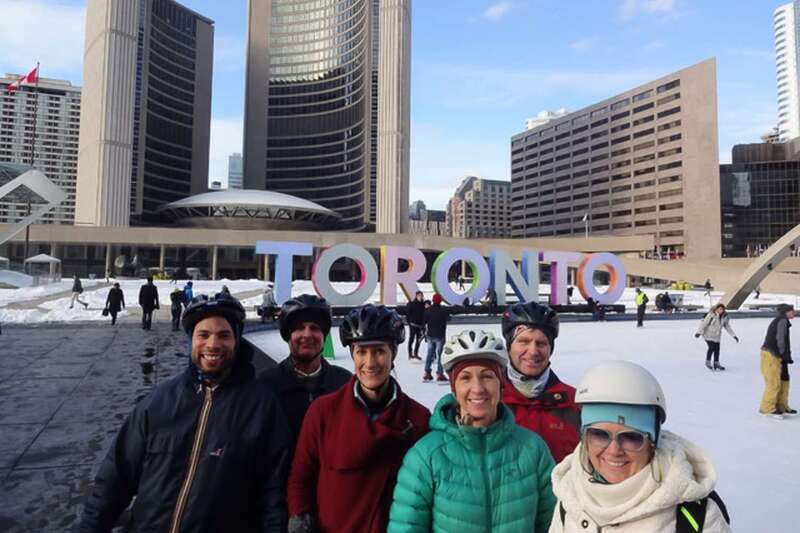
Then you move into civic and classic downtown spaces: City Hall, St. Lawrence Market, and St. James Cathedral and Square (including St. James Cathedral and the square area).
These stops are the “Toronto postcard” version, but with a bonus: you’ll see them as part of an actual route, not isolated sights.
- City Hall helps you grasp the downtown layout around government and public space.
- St. Lawrence Market is one of those places where the value is the atmosphere. Even if you don’t buy anything, you’ll understand why people build part of their day around it.
- St. James Cathedral and Square adds a sense of architectural presence and downtown gathering space.
One reason I like including markets and squares on a bike tour: it breaks the ride into human-scale moments. You stop, look around, and take in the place like you’d do on a personal walk.
Flatiron building, Sherbourne Common, and Corus Quay: smaller surprises on the map
The tour continues with Flatiron building, then toward Sherbourne Common, and Corus Quay.
These stops are great because they aren’t just the loudest names. You get to notice how the city creates shape and interest in the spaces between the biggest attractions.
- The Flatiron building gives you that distinctive “yes, that building” feel that helps you remember where you are.
- Sherbourne Common adds a public-space break from the long blocks, and it’s the kind of stop that makes the ride feel less mechanical.
- Corus Quay gives a different downtown identity—media/industry energy near water-adjacent views and city activity.
If you like travel that feels real, not just checklist tourism, these mid-route spots are where you start to feel the city’s rhythm.
Harbourfront, Lake, Sugar Beach, and the Entertainment District wrap-up
Finally, you head into the waterfront and evening-district territory: Harbourfront and Lake, Sugar Beach, and the Entertainment District.
This is where the bike tour makes practical sense. Toronto’s waterfront can change your entire impression of the city. By adding it to the route, you get the contrast: dense downtown blocks, then open views near the water.
- Harbourfront and Lake give you that big-city breathing space. It also gives you longer sightlines for photos.
- Sugar Beach is a fun end-of-ride type stop—comfortable, recognizable, and easy to enjoy without needing a huge time commitment.
- Entertainment District brings the day back toward the nightlife/culture zones, so you finish with a sense of where the city goes when the sun dips.
If you’ve got limited time, this closing stretch also helps you plan evening options. After the ride, you’ll know what area you’d rather explore on foot next.
What the included extras do for you (water, snacks, photos)
On paper, the inclusions are straightforward: bicycle and helmet, water, snacks, and tour guide(s). In practice, they remove the annoying friction that often ruins group tours.
You’re less likely to fade early. Your hands don’t cramp as fast because you’re not starving for energy. And the guided stories keep you from getting stuck at the “I know the name, but what is it?” stage.
One more nice detail: several riders praised guides for taking lots of free group photos at different stops, and in at least one case, riders received photos after the tour. That’s not something you should treat like a guarantee, but it’s a real perk when it happens.
How to dress and pack so you enjoy the ride
This tour is outdoors and weather-based, so dress for the bike ride, not for the idea of being fashionable. Avoid dress shoes or fancy clothing. Wear sunglasses and sunscreen. Bring a camera if you want photos at each stop.
You can travel light. There’s locker space for items you don’t want to carry. And because each bike has a bottle holder, you don’t need to rig a water plan.
If you’re nervous about riding in a city, the best comfort trick is simple: wear shoes that grip well and pants/shorts that won’t catch. Then focus on the group pace. You don’t have to be a pro cyclist.
Pace, distance, and safety reality check
This isn’t a slow stroller ride, but it’s not a workout grind either. It’s an easy pace with stops for chatting and photos, and routes use quieter streets and bike lanes.
Still, keep your expectations realistic. Some portions can feel like city cycling where you occasionally read traffic patterns and stay alert. Riders specifically praised guides for safety awareness and keeping everyone together, so if you do what they say and stay focused, you’ll be in good shape.
If your biggest concern is comfort, go with the easy-ride mindset. You’re here to get oriented, not to set personal speed records.
Should you book this Toronto downtown bike tour?
I’d book it if:
- you want a fast, street-level orientation for your first day or first full weekend
- you’re okay riding an urban bike route at an easy pace
- you want a guided mix of major landmarks + real neighborhoods like Chinatown and Kensington Market
- you like the idea of water, snacks, and helmets included so the day stays low-stress
I’d think twice if:
- you’re very uncomfortable with any city cycling, even on bike lanes
- you’re expecting a mostly off-road ride with zero traffic exposure
- you prefer wandering without stops, because this tour is designed around guided moments and scheduled sights
If you want to understand downtown Toronto quickly—where things are, how neighborhoods connect, and what’s worth coming back to later—this tour is a smart, value-packed choice.