REVIEW · TORONTO
Downtown Toronto Bike Tour
Book on Viator →Operated by Toronto Bicycle Tours · Bookable on Viator
Toronto downtown on two wheels. This small-group bike tour turns major sights into a ride you can actually understand, with a local guide steering you through neighborhoods like Chinatown and Kensington Market, plus waterfront time at Sugar Beach. The route is built for comfort, and the stops come with stories about what you’re seeing and why Toronto looks the way it does.
I especially like the easy pace. It feels made for real life: you can keep up, take photos, and still have energy for later plans. I also love that the guides (Ryan, Mariana, Carlos, Consuelo, Oscar, Mike, and others) focus hard on safety and group control, so even busy intersections feel manageable—plus the tour includes helmet, bike, water, and granola bars.
One thing to consider: downtown traffic and sidewalks can get intense. Even with a careful guide, you should be comfortable riding in a city where cars, bikes, and pedestrians all share the space.
In This Review
- Key things that make this tour work
- Hitting the downtown “greatest hits” without getting lost
- Where you start at Village by the Grange (and why that helps)
- CN Tower stop: seeing the skyline landmark up close
- Chinatown and City Hall: culture, design, and street-level energy
- Financial District ride-by: how downtown work life shapes the streets
- Kensington Market and St. Lawrence Market: two kinds of market energy
- Art Gallery of Ontario: why a museum stop feels different by bike
- Eaton Centre and the Entertainment District: shopping and nightlife zone
- Sugar Beach: a waterfront break that changes the mood
- Riding comfort, safety, and what to expect on real streets
- What’s included (and what you’ll still need to handle)
- Price value: why $93.35 can make sense for a first-time Toronto trip
- Who this tour fits best (and who should think twice)
- Should you book this Downtown Toronto Bike Tour?
Key things that make this tour work
- Small group, max 12 riders for a more personal experience and easier pacing
- 3.5 hours to cover big downtown landmarks without feeling rushed
- Comfort-first route that’s described as easy for all riders
- Market stops built in, including Kensington Market and St. Lawrence Market
- Photo stops plus real context, with guides sharing stories about culture and architecture
- Snacks and water included, so you’re not scrambling mid-ride
Hitting the downtown “greatest hits” without getting lost

Downtown Toronto is a big place. On foot, you can end up zig-zagging for hours, and by transit you still spend time waiting. This bike tour is a fast way to get your bearings while you’re moving between key areas, so the city starts to make sense by the time you finish.
You’re also not just chasing famous names. The route is designed around neighborhoods and the connections between them—how the Financial District feels different from what you get in Chinatown, how the Entertainment District changes the mood, and where the waterfront fits into the downtown picture.
The small-group size matters more than you’d think. With up to 12 riders, your guide can keep an eye on the whole line, adjust when pedestrians slow things down, and still keep the tour flowing at a steady rhythm.
You can also read our reviews of more tours and experiences in Toronto.


Where you start at Village by the Grange (and why that helps)
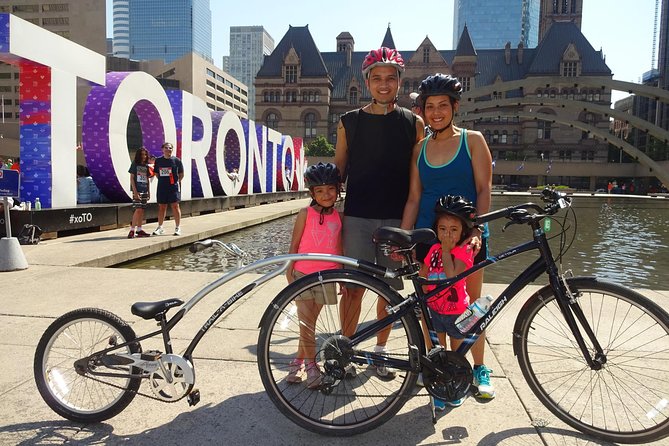
The meeting point is 124 St Patrick St, Toronto (near the Village by the Grange). Starting here puts you close to the middle of downtown, so the first stretch doesn’t waste time getting you to the real action.
The tour includes a meet-and-greet and a brief intro to Toronto before you ride. That opening is useful if you’re not coming in with a lot of local background, because it gives you a mental map before you start seeing buildings, parks, and street patterns change block by block.
At the end, you circle back to the same meeting area. That’s handy when you want to go straight to dinner afterward or hop into your next plan without playing navigation games.
CN Tower stop: seeing the skyline landmark up close
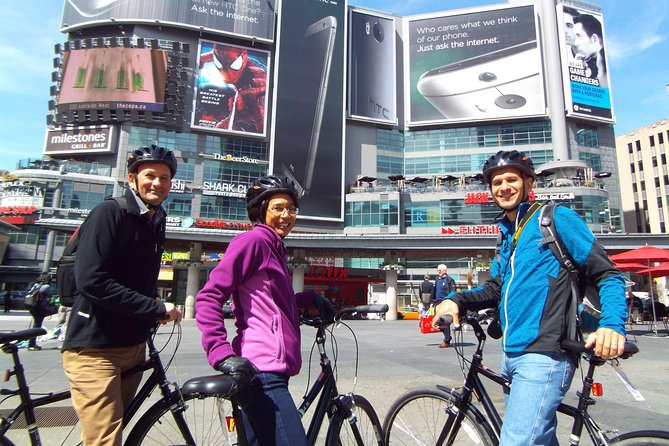
The first named stop is CN Tower. Even if you don’t plan to go up (the schedule lists admission as free for the stop), it’s the kind of landmark that instantly tells you where you are in the Toronto skyline story.
What makes this stop valuable on a bike tour is the timing and context. When your guide points out what you’re looking at, it stops being just a photo spot. You start noticing how downtown is laid out around major landmarks and sightlines, and how Toronto uses water and height to define its identity.
You’ll get insider stories about Toronto’s history, culture, and architecture here. Guides also tend to use the CN Tower area as a baseline: it’s easier to remember later details when you’ve already seen the big reference point.
Chinatown and City Hall: culture, design, and street-level energy
Next up is Chinatown, followed by Toronto City Hall. This combination works because it contrasts old and new in a very visible way. Chinatown brings the dense, human-scale streets; City Hall brings the bold civic architecture and the idea of Toronto as a designed, planned city center.
The Chinatown portion is more than “look around.” The tour is built around what the guide tells you as you ride and stop—stories that help you read the neighborhood instead of just passing it.
City Hall is the kind of place people photograph without fully understanding its role. On this tour, the explanation helps you see it as part of Toronto’s public life, not just a background building.
The itinerary lists admission ticket free for these key stops, so you’re not pressured to make quick decisions about entry fees. Even if the time window is short, you still get the purpose of the stop: learn the story, take a few photos, and roll on.
Financial District ride-by: how downtown work life shapes the streets
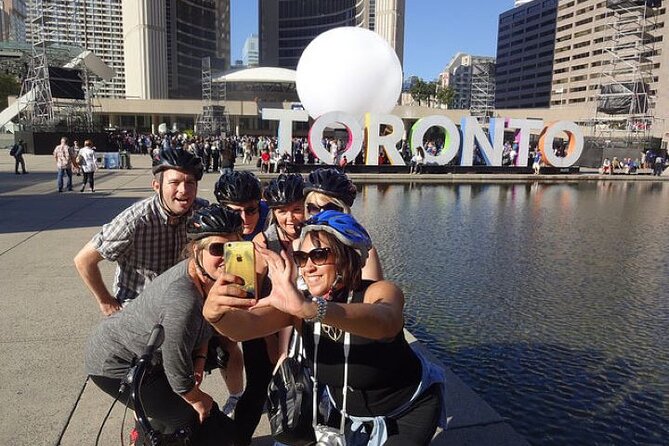
After City Hall you’ll hit the Financial District. This part can feel different fast: more office towers, more polished streetscapes, and a “systems” vibe to the way blocks connect.
From a bike-tour perspective, the value is speed plus perspective. You see a broad swath of the downtown core without the fatigue of walking, and your guide can explain what you’re seeing while you’re still in motion—so you don’t lose the thread.
One practical plus: the guide’s group management matters here. Downtown streets near major offices can get tricky with pedestrians, and your tour line needs clear coordination. The reviews consistently connect a good experience with safety focus, and this is exactly the section where that matters.
Kensington Market and St. Lawrence Market: two kinds of market energy
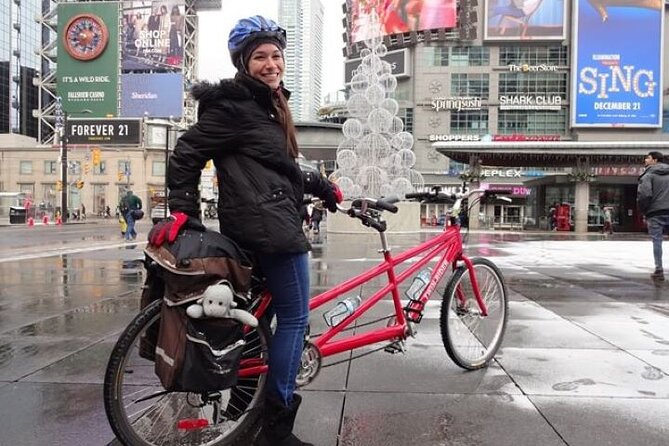
You get two market stops, and they’re intentionally different.
Kensington Market is one of the best places in Toronto to wander, and this tour gives you a quick taste (the schedule shows about 5 minutes). Even in a short stop, it helps you understand why people return—how the streets feel, how local businesses sit side-by-side, and how the neighborhood vibe differs from the corporate downtown zones.
Then comes St. Lawrence Market. Another short window (also listed around 5 minutes) gives you a snapshot of a classic Toronto market scene. The tour also builds in time to rest and consider grabbing food, but meals are own expense unless something is specified for your date.
Here’s the best way to use the market minutes: treat them as an orientation stop. If you’re the type who likes to explore later, you’ll leave with exactly what to look for on your next day in town. If you’re more hungry than curious, you’ll likely want to come back and spend longer once you’re off the bike.
Art Gallery of Ontario: why a museum stop feels different by bike
The Art Gallery of Ontario stop can surprise people who expected only streets and big monuments. It adds a calm, culture-focused pause in the middle of a downtown ride.
The timing is smart: you go from civic and commercial areas into a place where art and design shape the visitor experience. Even if you’re not going inside, a museum stop works as a mental reset. Your guide’s stories help you connect the building and surroundings to broader Toronto culture.
If you’re trying to plan your week, this is also a useful waypoint. Seeing the location during your ride makes it easier to decide whether you want to add museum time later.
Eaton Centre and the Entertainment District: shopping and nightlife zone
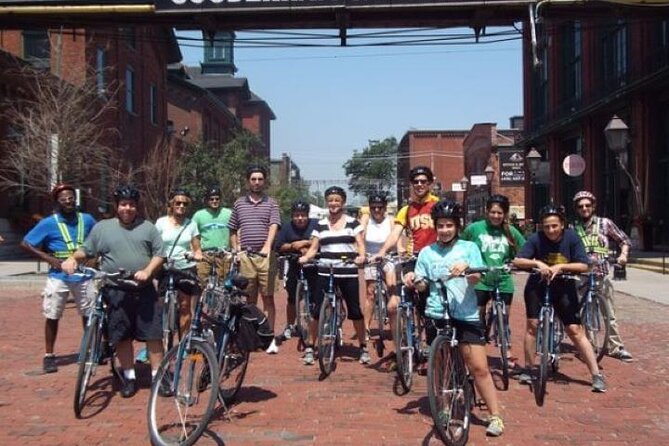
You’ll also stop at CF Toronto Eaton Centre, which is a major downtown anchor with a huge number of shops and restaurants. Again, you’re not expected to do a full shopping spree on a bike tour. Instead, the purpose is simple: understand where this area sits in the downtown ecosystem and what it’s like to move through it.
Then you’ll ride into the Toronto Entertainment District BIA area. The vibe shift here is real. This is where Toronto starts leaning into nightlife and late-day energy, and your guide’s stories help explain why this area pulls crowds and how the neighborhood functions.
If you want an easy “what should I do next” moment, this portion often helps. You’ll get the map in your head—where the activity cluster is, how to reach it later, and what kind of evening fits the neighborhood feel.
Sugar Beach: a waterfront break that changes the mood
The final named sightseeing stop is Canada’s Sugar Beach. Waterfront time matters because downtown can feel all concrete and corners. Sugar Beach gives you an open-air reset with water nearby, plus a different kind of Toronto atmosphere.
Even if your tour time is limited, this stop helps you round out the story of the city. Toronto isn’t just a skyline and downtown blocks; it’s also water, parks, and spaces where people linger.
From a comfort standpoint, the location also gives your legs and brain a breather. By the time you reach it, you’ve already covered a lot of ground, so the mood shift feels earned.
Riding comfort, safety, and what to expect on real streets
The tour is described as an easy route suitable for all riders, and the guides are trained to keep the group together. In practice, that means you’ll spend a lot of the ride learning how to stay calm in traffic flow—like where to position in the line, when to slow for pedestrians, and how to keep a steady rhythm.
The reviews repeatedly point to safety-conscious guidance and a pace that feels manageable, even for families. One family experience also noted they felt comfortable riding with a 10-year-old. That’s not a promise for every rider, but it matches the tour’s design goal: make downtown cycling feel doable.
Still, consider the tradeoff of any downtown ride. Sidewalks are busy. People step off curbs. A car or delivery vehicle can change the rhythm. The best outcome comes when you’re comfortable riding in a city environment and you follow the guide’s instructions closely.
What’s included (and what you’ll still need to handle)
Included are the essentials: a bike and helmet, plus water and granola bars. That’s a solid setup for a 3.5-hour tour because it reduces the “should I eat first?” stress.
Most stops are built around photos and stories rather than long museum or attraction visits. That means you’ll likely want to plan your meals around the tour, especially since market food is own expense.
What I’d recommend: bring your own small water bottle only if it comforts you, but don’t assume you’ll need it. The tour provides water, and the included snacks typically cover the “I need something now” moment.
Also, the guide may take photos along the way. Some groups report getting them later, so if you care about a specific shot for your timeline, take a few on your own too.
Price value: why $93.35 can make sense for a first-time Toronto trip
At $93.35 per person for about 3 hours 30 minutes, this isn’t the cheapest way to see downtown. But bike tours like this are often priced for the combination of guide time, equipment, and the efficiency of covering a lot of ground without you planning the route.
Here’s the value angle that matters for you:
- You don’t have to figure out the connections. The guide helps you understand what you’re seeing as you move.
- You get more than a photo run. The tour emphasizes history, culture, and architecture stories.
- You save energy. You cover many areas in one go, so you can spend the rest of your trip exploring in a targeted way.
If you’re visiting for a weekend or you want a “first view” that shapes your next day plans, this price can be easier to justify. If you already know downtown well and prefer total freedom, you might find other options cheaper.
Also note the small group limit of 12. In a bigger group, guides have less flexibility. Here, the format supports a more watchful ride.
Who this tour fits best (and who should think twice)
This tour is a strong match if you:
- want a first intro to downtown without spending your whole day commuting between landmarks
- like neighborhoods and stories, not just famous buildings
- prefer an organized, easy ride where safety and pacing are managed
It may take more consideration if:
- you’re very nervous about city cycling, because downtown streets mean constant attention
- you want long, unhurried time inside major attractions (this is built around short stops and guided context)
- you’re the kind of planner who needs zero “out-of-sync” moments, because any city ride can be affected by pedestrians and traffic flow
For families, the tour notes special bike seating options: child seats for ages 1–4 (limited availability) and trail-a-bike setups for ages 5–7 (also limited). You’ll want to advise your group’s ages at booking and mention your comfort level for city riding.
Should you book this Downtown Toronto Bike Tour?
I’d book it if you want a simple way to see downtown Toronto with context, good pacing, and a guide who keeps the group safe. The biggest strengths are the efficient route, the market stops that help you decide what to revisit, and the overall feel that this tour is designed for real riders, not just confident cyclists.
If you’re unsure, do a quick self-check: are you comfortable riding in an active city environment, and do you like learning as you go? If yes, this is a very practical way to kick off your Toronto days and come away with a map you can use later. If not, you might prefer a more stationary approach or a less traffic-heavy plan.