REVIEW · VALENCIA
Valencia: City Highlights Bike Tour
Book on GetYourGuide →Operated by MO'bike · Bookable on GetYourGuide
First, the best way to see Valencia fast. This 3-hour bike tour links 2,000 years of history—from Roman squares to futuristic architecture—while you keep your feet free for better photos. I like the way the stops feel thoughtfully paced, and I especially like the Turia Gardens ride, because it turns the day from sightseeing into something that feels relaxed. One thing to consider: you need to already know how to ride a bicycle, and the tour favors short photo stops over long indoor time.
You’ll start at MO’bike near Plaza del Ayuntamiento, get a solid bike plus safety gear, and follow a live local guide through the Old Quarter’s big hitters. Two things I really like are the guide-led storytelling at each landmark and the chance to mix classic Valencia with modern sights along the Turia Riverbed. A bonus from real on-the-ground experiences: guides like Marco are quick to fix problems—there’s even been a fast replacement bike when someone had an equipment issue, plus extra help when that went wrong.
If you want a low-effort, photo-friendly route with a mix of history, gardens, and architecture, this tour is a strong fit. If you’re expecting a slow roll with loads of museum time, you may feel a bit rushed since many stops are brief.
In This Review
- Key Highlights You’ll Actually Care About
- Getting Rolling at MO’bike in Central Valencia
- Mercado Central and La Lonja: Old Valencia in Motion
- Plaza de la Virgen, the Cathedral Area, and Roman-Era Clues
- Torres de Serranos: A Real View Stop Worth the Pause
- Turia Gardens: Valencia’s Green Lung From Bike Lanes
- City of Arts and Sciences: Modern Architecture With Context
- Cabanyal Quarter Break: Tapas and a Drink
- Pace, Comfort, and the Real Value of $28
- Who This Bike Tour Is Best For
- The Practical Checklist Before You Go
- Should You Book the Valencia City Highlights Bike Tour?
- FAQ
- FAQ
- How long is the Valencia City Highlights Bike Tour?
- Where does the tour start?
- Where does the tour end?
- Is the bike provided?
- Do I need to know how to ride a bicycle?
- What languages are the guides available in?
- Are museum entrances included?
- Is the tour suitable for wheelchair users?
- Are there food or drink stops included?
Key Highlights You’ll Actually Care About
- Old Quarter stops with quick, useful guidance, not just traffic-through photo moments
- Turia Gardens on dedicated bike lanes, a rare easy win in a big city
- UNESCO-listed La Lonja de la Seda and the Cathedral area, with context you can remember later
- Torres de Serranos for that classic skyline view over Valencia
- Modern City of Arts and Sciences architecture without needing to plan separate transport
- Tapas and a drink stop that breaks up the ride nicely in the Cabanyal area
Getting Rolling at MO’bike in Central Valencia
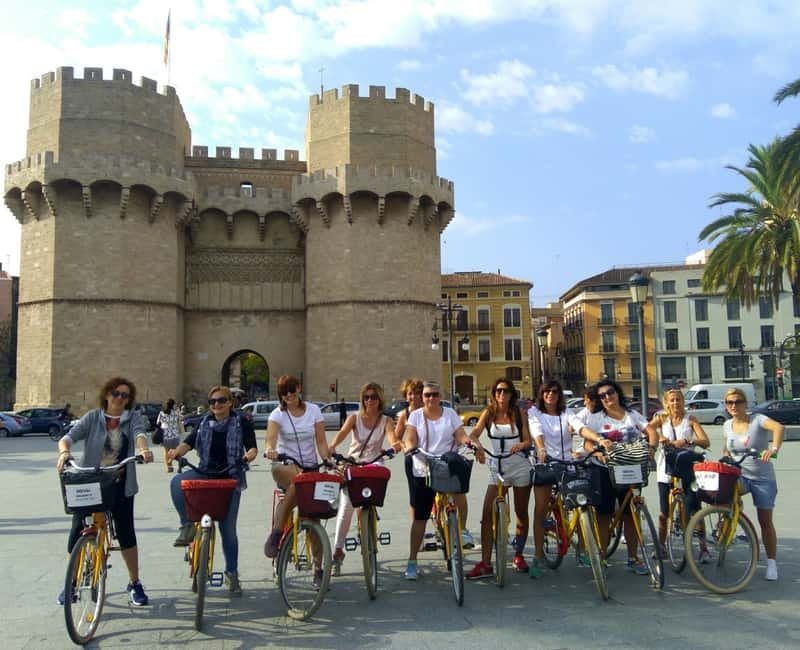
The tour starts at MO’bike, at Carrer del Músic Peydró, 7. The meeting spot is close to Plaza del Ayuntamiento and also near Estacion del Norte, so you won’t feel stranded if you arrive by train. In other words: you can show up, get sorted, and start seeing things fast.
You’ll get high-quality bikes and safety equipment, which matters in a city where you still have to stay alert. The bigger requirement is also simple: you must know how to ride a bike. There’s no “training wheels” vibe here, and the route includes both historic-center streets and calmer green-space cycling.
Guides run the tour in multiple languages (Spanish, English, Italian, Portuguese). If you end up with Marco or Maria, you’re in good hands—both are mentioned in past experiences for being helpful and clear, and for making the history click instead of sounding like a textbook.
You can also read our reviews of more tours and experiences in Valencia.
Mercado Central and La Lonja: Old Valencia in Motion
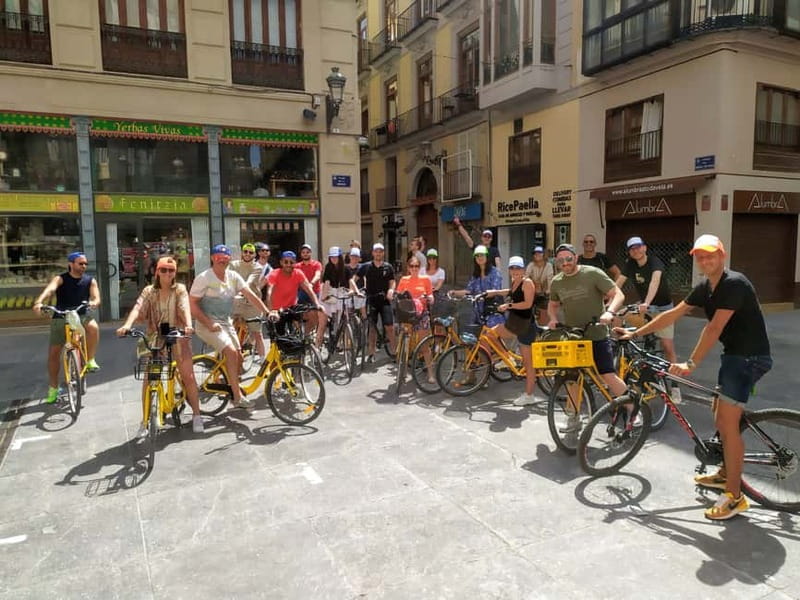
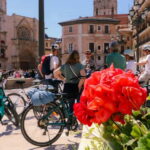
Right away, you’re pulled toward the city’s food and trading heart. The route begins near the Spain’s largest fresh food market, Mercado Central, which is one of those places where just being outside it already tells you a lot about daily Valencia. You’ll spend a short guided stop time, plus a photo pause, which works because the market itself is visually intense—easy to appreciate without needing hours.
Next comes Llotja de la Seda (La Lonja de la Seda), one of Valencia’s signature Gothic landmarks and UNESCO-listed. This is a key stop because the guide’s commentary helps you understand what you’re looking at—this wasn’t built for tourists. It was used for silk trade, which gives the building a purpose beyond architecture photos.
Here’s the practical advantage of a bike tour: you’re seeing major sites while they’re still fresh on your brain. On foot, you can wander too far between “wow” stops. On a bike, you keep momentum, but you still get moments to pause.
The potential drawback is also clear: many stops are brief. You’ll get context, but you won’t have time to linger for a deep self-guided museum-style visit.
Plaza de la Virgen, the Cathedral Area, and Roman-Era Clues
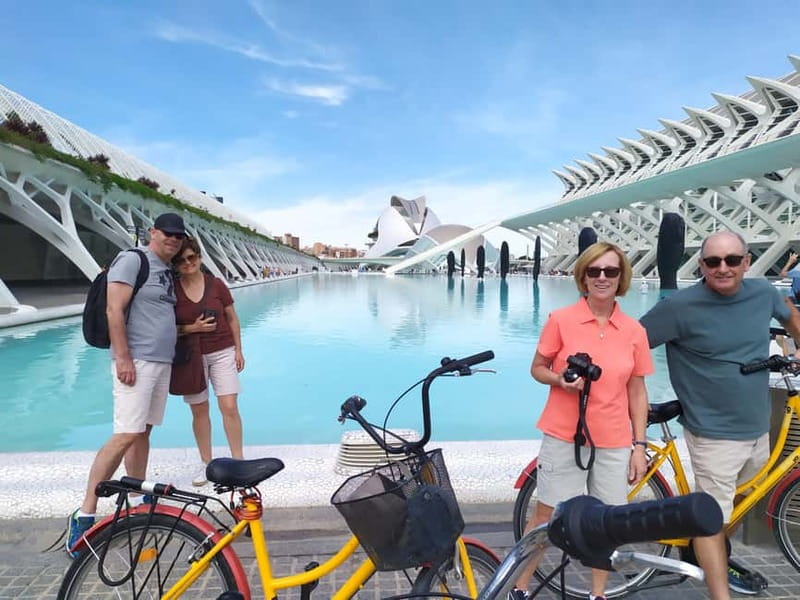
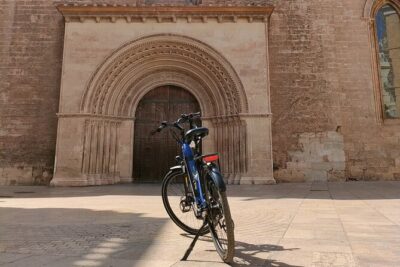
From the market area, the route shifts into classic Old Quarter squares. You’ll pass through places like Plaça de la Verge and the surroundings of Valencia Cathedral, with a stop-and-photo rhythm. One of the best parts of this style of tour is that you’re not just cycling through streets—you’re learning the “why this is here” behind what you see.
You also get time near Plaza Almoina, where you can spot archaeological treasures tied to the Roman era. That’s a satisfying moment because Valencia has layers, and a quick guided explanation helps you notice those layers instead of treating everything as just old buildings.
The route then moves toward Plaza de la Reina, where you can see both the Cathedral and the Tower of Miguelete from nearby viewpoints. Even if you don’t go inside (and museum entrance isn’t included), the combo of squares + tower views lets you picture the city’s historic core as a whole.
For photographers, these are good “stand in one spot and take multiple angles” stops. For everyone else, they’re good for getting oriented—this is where you learn what direction you’re looking at and why.
Torres de Serranos: A Real View Stop Worth the Pause
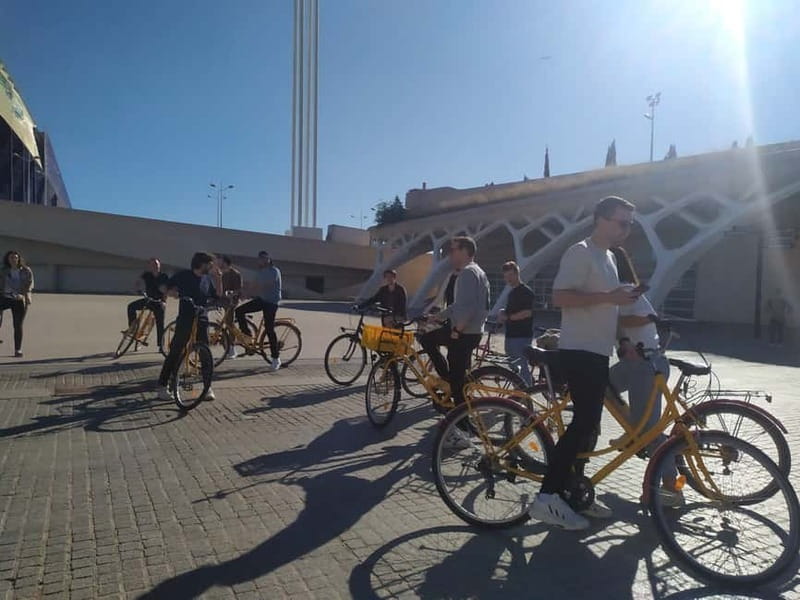
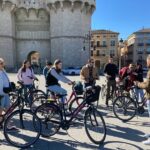
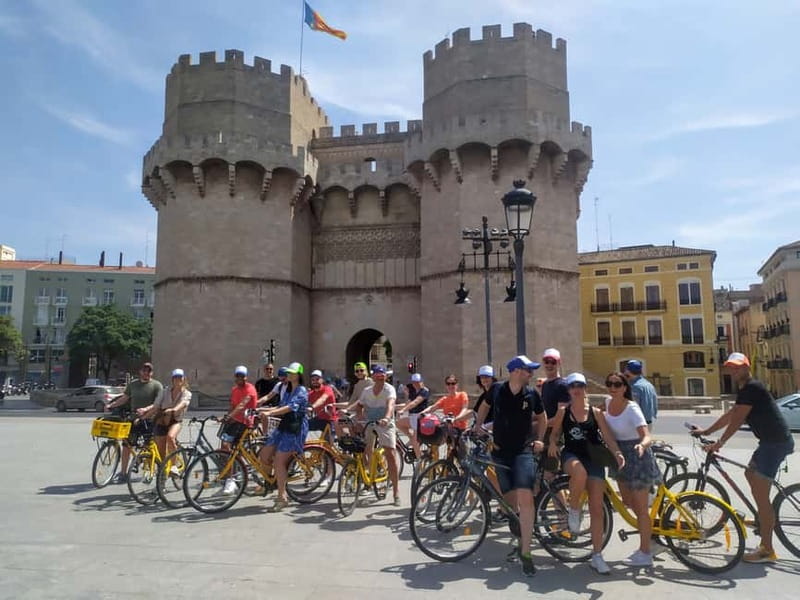
At Torres de Serranos, the tour slows down into a proper landmark moment. These towers were part of the former city wall, with two towers and viewing platforms. You can climb them for a small fee, and the payoff is the kind of skyline view that makes you understand Valencia’s layout.
This is also a smart stop because it connects past and present. You’re looking at a medieval defense structure, but you’re seeing a modern city around it. The guide’s commentary helps you place the tower historically, instead of treating it like just another impressive photo spot.
If you’re debating whether to do the climb, consider your energy. This tour is active. If you’re the type who wants the best view even at the cost of time, it’s worth it.
Turia Gardens: Valencia’s Green Lung From Bike Lanes
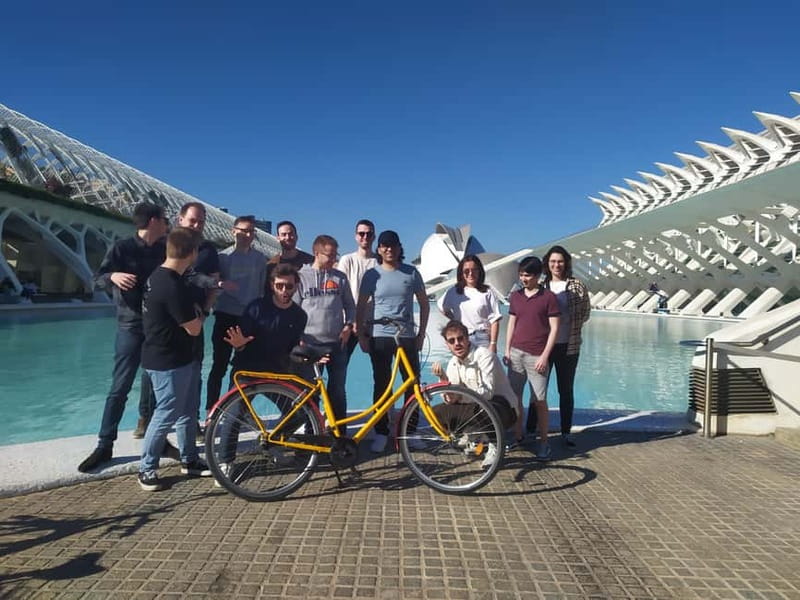
After the historic center, you shift into the calmer side of Valencia through Turia Gardens—the city’s green lung and one of Spain’s large urban parks. The route runs along the old riverbed of the River Turia, following bike-friendly paths for roughly 9 kilometers of park space.
This is the ride you’ll remember, even if the Old Quarter had more dramatic architecture. Riding through the park feels like a reset. Instead of constant turning and stopping in traffic, you get a smoother cycling rhythm and a break from the density of the old streets.
You’ll pass Palau de la Música before you reach the modern complex. For a lot of people, this transition is the moment they realize the tour isn’t only “old town sightseeing.” It’s also about how Valencia designed space for everyday life.
Even better: the route continues inside the park until you reach the better cycling lane area near the City of Arts and Sciences. That makes the big modern stop feel connected, not like a random detour.


City of Arts and Sciences: Modern Architecture With Context
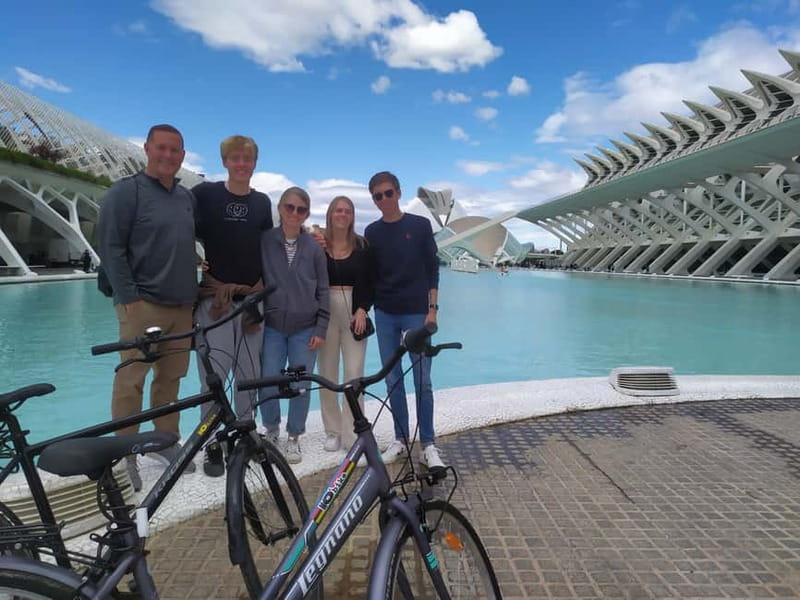
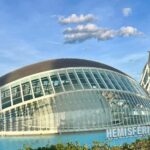
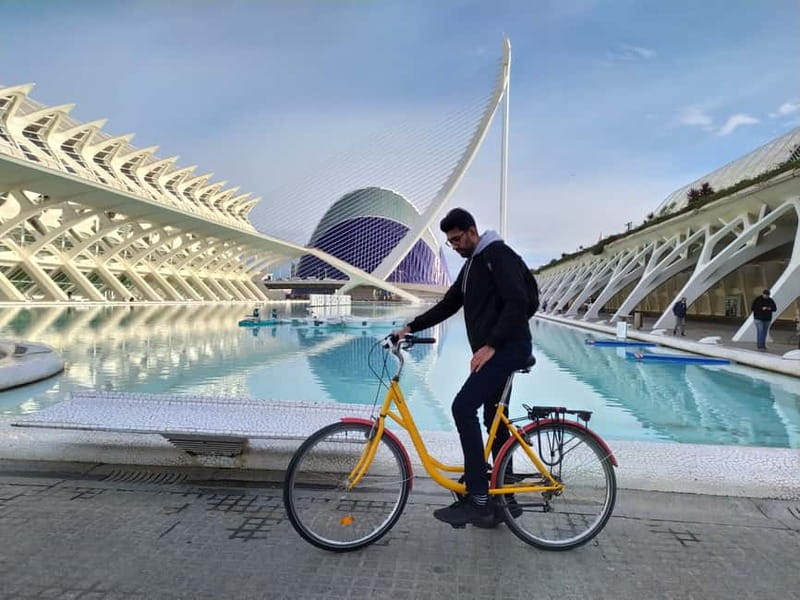
The City of Arts and Sciences is the big modern stop, built along the former riverbed area near the end of Turia. The complex is described as a scientific and cultural leisure area with striking architecture, and the tour gives you guided time plus a photo pause.
This stop works because you aren’t arriving here alone with a blank plan. You’ll get a quick story to connect the architecture with what the city wants to project: science, culture, leisure, and a future-facing identity.
There’s no museum entrance included, so you’re not planning full indoor exhibits as part of this ticket. That’s fine. Think of this as the outside architecture orientation plus the guide’s framing, so if you want to come back later for specific exhibits, you know what to target.
Cabanyal Quarter Break: Tapas and a Drink
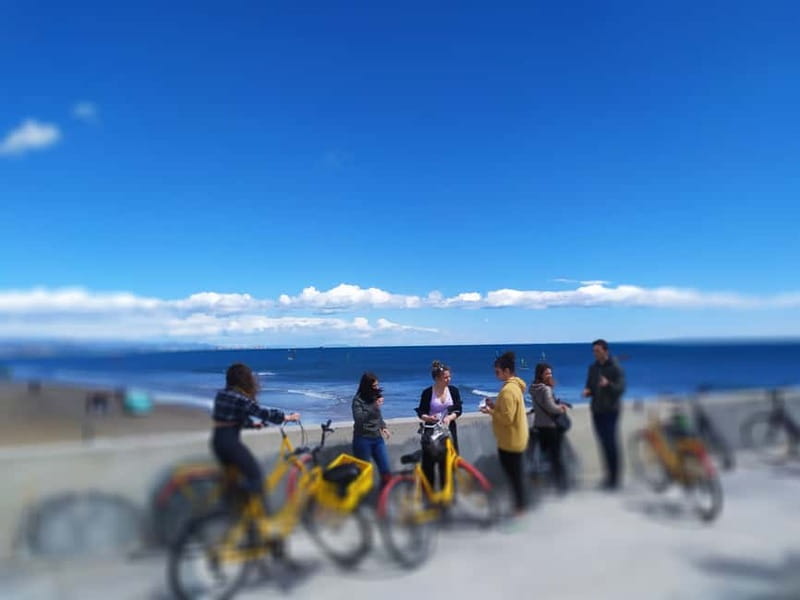
After Turia and the modern complex, the tour makes time for food and a social reset. You’ll stop to taste tapas and take a drink in the Cabanyal Quarter. This matters more than it sounds. A bike tour can get “ride, look, repeat” fast. The tapas break gives you a moment where you can slow down, chat, and just be in the neighborhood.
The Cabanyal area also adds a different Valencia tone compared to the Old Quarter and the ultra-modern City of Arts and Sciences. It’s where the tour feels more like a lived city rather than an architectural checklist.
One more named highlight here is Veles y Vents, an innovative architecture statement connected to hosting guests and spectators for the 32nd America’s Cup. That’s a useful detail because it explains why this building exists in the way it does—it’s tied to a specific international sports moment, not just aesthetics.
Pace, Comfort, and the Real Value of $28
At $28 per person for about 3 hours, this tour is built for efficiency without feeling like you’re being rushed through life. You’re paying for a guide, bike, safety gear, insurance coverage, and local commentary. You’re also getting stops that are spread across Valencia, which is expensive to replicate with taxis or multiple separate tours.
The “value” doesn’t just come from the price. It comes from the structure:
- Short guided stops help you understand what you’re seeing.
- The Turia bike section gives you a break from heavy walking.
- The route stitches together Old Quarter landmarks, garden cycling, and modern architecture in one coherent loop.
The pacing is active, though. If you love taking your time at cathedrals, markets, or towers, you’ll likely want to add solo time afterward. Also, since museum entrance isn’t included, you’ll probably spend your indoor time elsewhere.
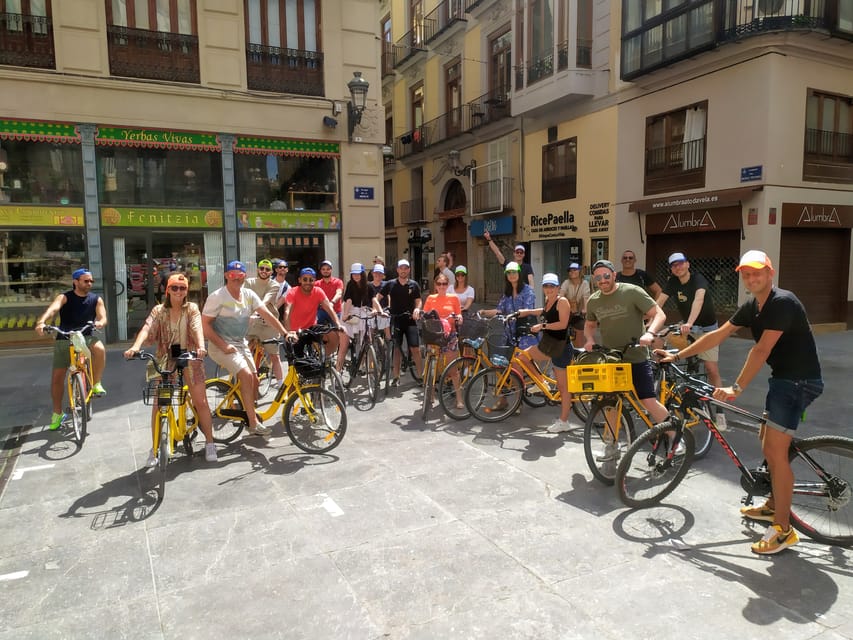
Small group size helps too. It’s easier to follow the guide and easier to get photo angles without feeling like you’re in a crowded parade.
Who This Bike Tour Is Best For
This tour fits best if you:
- want big-picture Valencia without planning separate transit for each area
- can comfortably ride a bike and don’t mind short photo-guided pauses
- like local storytelling that helps you read buildings as more than scenery
- want a mix: Old Quarter + gardens + modern architecture + tapas
It may be less ideal if you:
- need long museum time or extensive interior access
- don’t feel confident riding in a city setting
- need wheelchair accessibility (it’s not suitable for wheelchair users)
The Practical Checklist Before You Go
Bring comfortable shoes, because you’ll be stopping and shifting between bike and viewpoints. Add a sun hat and sunscreen—Valencia sun can be strong, especially when you’re in open areas during the ride. Wear comfortable clothes that let you move easily on and off the bike.
Also, be ready for a few moments where you’re focused on photos. This tour gives plenty of those, and the photo stop rhythm is part of the experience.
Should You Book the Valencia City Highlights Bike Tour?
I’d book this tour if you want a smart, scenic introduction to Valencia in one go. For many first-timers, it’s the perfect “orientation + standout sights” combo: Mercado Central and La Lonja for history and purpose, Torres de Serranos for classic views, Turia Gardens for the reset, and the City of Arts and Sciences plus Cabanyal for the modern and the local.
I’d skip it if you’re looking for slow museum-style immersion or if you’re not comfortable riding a bike. In that case, you’ll spend too much energy worrying about pace instead of enjoying the route.
If you do book, do it with one mindset: treat it as the guided backbone for your broader Valencia day. After the ride, you’ll know exactly where you want extra time.
FAQ
FAQ
How long is the Valencia City Highlights Bike Tour?
The tour lasts about 3 hours. Starting times vary, so you’ll want to check availability for the schedule.
Where does the tour start?
It starts at MO’bike, at Carrer del Músic Peydró, 7, 46001 València. It’s about a 2-minute walk from Plaza del Ayuntamiento and about 5 minutes from Estacion del Norte.
Where does the tour end?
The activity finishes by Playa de la Malvarrosa, and the operator also notes it ends back at the meeting point. Plan for a return to the central area after the ride.
Is the bike provided?
Yes. You’ll get a high-quality bicycle along with safety equipment.
Do I need to know how to ride a bicycle?
Yes. It’s essential that you know how to ride a bike.
What languages are the guides available in?
The live guide is available in Spanish, English, Italian, and Portuguese.
Are museum entrances included?
No. Museum entrance tickets are not included.
Is the tour suitable for wheelchair users?
No. It is not suitable for wheelchair users.
Are there food or drink stops included?
Yes. The route includes a stop to taste tapas and take a drink in the Cabanyal Quarter.
If you tell me your travel dates and whether you’re comfortable riding in the street, I can help you decide if this is the right match for your pace.