REVIEW · SEVILLE
Electric Bike Tour in Seville
Book on Viator →Operated by Rent a Bike Sevilla · Bookable on Viator
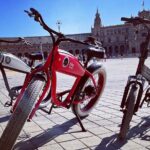
Seville’s stories roll by fast on electric wheels. I love the battery-powered boost that makes big sights feel doable, and I love the guide-led history that turns each stop into a clear little story. One possible drawback: the bikes can feel a bit large for very short riders, so double-check sizing for kids before you show up.
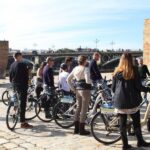
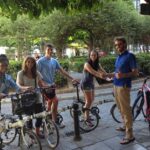
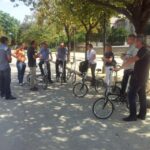
This is a 2.5 to 3 hour guided ride that covers major Seville highlights without spending the whole day walking. You start at Plaza de Santa Cruz, finish back there, and you’ll be riding through parks, squares, and the cathedral/alcázar area that most visitors only see at a walking pace.
In This Review
- Key Highlights You’ll Feel Immediately
- Getting Started at Plaza de Santa Cruz: How This Tour Works
- Electric Assist in Seville: The Real Comfort Factor
- Parque de María Luisa: Where the Tiles, Palms, and Doves Take Over
- Plaza de España: The 1929 Square That Explains Seville’s Architecture
- Torre del Oro and Triana Bridge: River History in Two Quick Stops
- Giralda and Seville Cathedral: From Minaret to Gothic Giants
- Royal Alcázar: Mudéjar Layers You Can Actually Stay Ahead Of
- Price and Value: What $48.06 Buys You
- Weather, Bikes, and Safety: Real-World Comfort Tips
- Should You Book This Seville Electric Bike Tour?
- FAQ
- How long is the Electric Bike Tour in Seville?
- What does the tour cost?
- Where do you meet for the tour?
- What’s included in the price?
- Are food and drinks included?
- Is the tour offered in English?
- Can I cancel for a full refund?
Key Highlights You’ll Feel Immediately
- Electric assist that helps you move through parks and monuments easily
- Guides like Veronica, Juan, Elena, Danny/Daniel, and Ben who focus on history and safety
- Parque de María Luisa with tiled fountains, pavilions, shaded paths, and lots of doves
- Plaza de España in a 1929-era architectural mix of Baroque/Renaissance/Moorish styles
- UNESCO heavy hitters in one route: Giralda, Seville Cathedral, and the Royal Alcázar
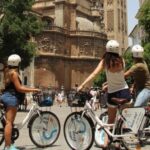
- Small-tour perks: bottled water, helmet, and your own group (private)
Getting Started at Plaza de Santa Cruz: How This Tour Works

You’ll meet in the Casco Antiguo at Plaza de Santa Cruz (Pl. de Sta Cruz, 41004 Sevilla). The whole experience runs about 2 hours 30 minutes to 3 hours, and it’s designed so you can cover a lot of ground without turning Seville into a painful leg workout.
This is offered in English, and it’s a private tour/activity, meaning it’s only your group. You also get a mobile ticket, plus bottled water, a helmet, and the bicycle itself—so you’re not scrambling right before you start.
If you’re planning around this, remember the schedule moves with city stops, so wear comfortable shoes. Also, food and drinks aren’t included, so if you’re taking this at a time when lunch is far away, bring a snack or plan one afterward.
You can also read our reviews of more tours and experiences in Seville.

Electric Assist in Seville: The Real Comfort Factor
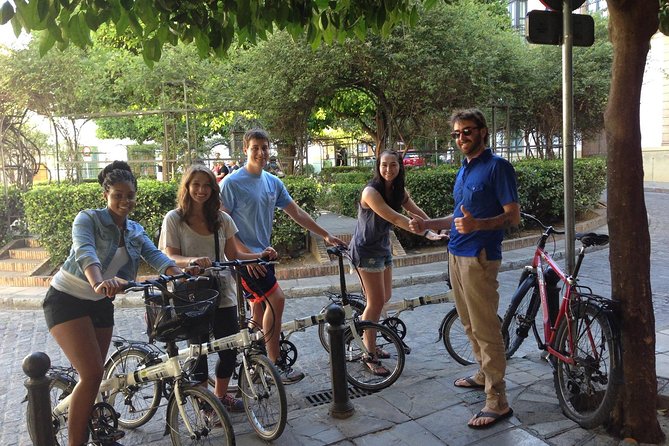
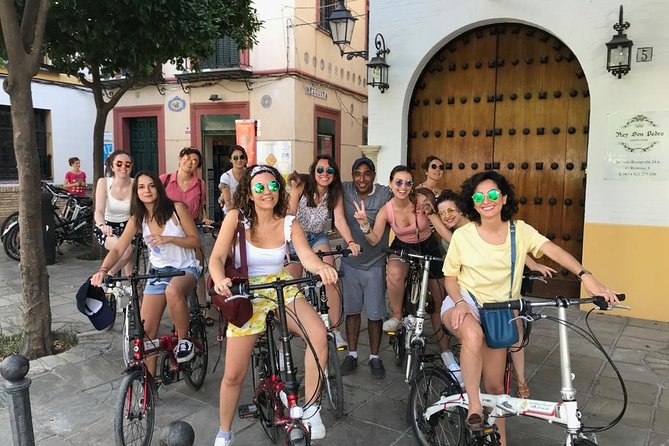
Seville is often walkable, but not exactly small. The big win here is the electric assist. A few guides and riders note that the ride can feel easy even without maximum help, but the motor gives you a buffer when you’re stopping, starting, or just want to keep energy for the sights.
One practical tip from the experience: ask to see how the bike’s electric features work right at the start. In rainy or cooler weather, that quick demo matters because you’ll be managing the bike while also listening and looking for the next turn.
There’s also a sizing reality. One review mentioned that a child was too small for the e-bikes and ended up on a standard bike. So if you’re traveling with kids (or shorter riders), confirm availability by height/fit early, not after you arrive.
Parque de María Luisa: Where the Tiles, Palms, and Doves Take Over
The tour begins with Parque de María Luisa, a park with a layered backstory and a layout that feels made for slow wandering. A big part of what you’re seeing comes from the former gardens of the Palace of San Telmo, donated to Seville in 1893 by Infanta Luisa Fernanda, Duchess of Montpensier, to become public green space.
Later, the architect Aníbal González began work in 1914 for the Ibero-American Exposition of 1929, held partly in the park. The center is the kind of place that looks like a set from a historical film: Moorish-influenced design, tiled fountains, pavilions, walls, ponds, benches, and exhedras.
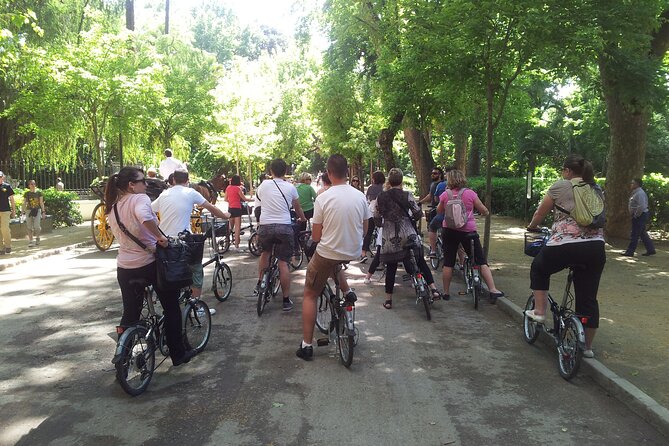
Why this stop is so good for an electric bike tour: the park paths let you glide through shaded areas and still absorb details. You’ll also hear about the park as a botanical garden with educational panels and both native and exotic species. And yes, it’s known for a large population of doves, so you’ll often see birds moving around as you pause for explanations.
A small consideration: even with electric help, parks are still parks—paths, corners, and stopping spots can slow the flow. Plan on the pace being purposeful, not rushed.
Plaza de España: The 1929 Square That Explains Seville’s Architecture
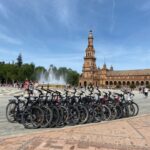
Next comes Plaza de España, inside the same Maria Luisa Park. This is Seville’s famous showpiece, built for the Ibero-American Exposition of 1929, and it’s a strong example of Regionalism Architecture that blends Baroque Revival, Renaissance Revival, and Moorish Revival (Neo-Mudéjar) styles.
The beauty of seeing it by bike is that you get the full spatial feel fast. You’re not just staring at one angle—you’re circling through a place that was designed for movement and gathering. It’s also a great moment to reset your eyes before the cathedral and alcázar area.
Time here is shorter than Parque de María Luisa, so if you’re the type who likes photographing every detail, accept that you’ll need to choose a focus: tiles, arches, or the overall layout.
Torre del Oro and Triana Bridge: River History in Two Quick Stops
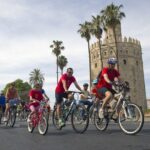
From the park-and-plaza zone, the route swings toward the river world. The Torre del Oro is a dodecagonal military watchtower built by the Almohad Caliphate to control access to Seville via the Guadalquivir River. Construction dates to the early 13th century.
What makes this stop click is the name: Torre del Oro, Tower of Gold, comes from a golden shine reflected on the river. That look is tied to the materials—mortar, lime, and pressed hay.
You’ll also learn how the tower changed roles. It served as a prison in the Middle Ages, and the structure reflects multiple periods: a dodecagonal lower level, an added upper level after the 1755 Lisbon earthquake, and later rebuilding by Sebastián Van der Borcht in 1760.
Then comes the Triana Bridge: the Puente de Isabel II (also called Puente de Triana). This metal arch bridge connects Triana with the city center and crosses the Canal de Alfonso XIII, one of the river arms that helps isolate Triana like an almost-island.
This bridge story matters because it’s about layers of engineering. It was completed in 1852 as the first solid bridge in Seville, replacing an older pontoon bridge made with boats. There was also an even earlier pontoon bridge connected to Moorish efforts starting in the 12th century, lasting for centuries with repairs.
If you’re hoping for a long stop to soak up the river views, you might want more time than the tour allows—but what you get is smart context without wasting the day.


Giralda and Seville Cathedral: From Minaret to Gothic Giants
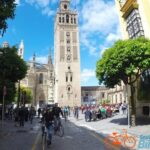
The ride eventually lands you at La Giralda, the bell tower of Seville Cathedral. This is one of those places where the architecture alone feels like a timeline. The Giralda began as the minaret for the Great Mosque of Seville in al-Andalus during the Almohad dynasty, with a Renaissance-style top added later by the Catholics after the Muslims were expelled.
The height is notable—104.1 meters—and it’s been a symbol of the city since the Middle Ages. It’s also part of the UNESCO World Heritage listing from 1987, alongside the Alcázar and the General Archive of the Indies.
Right after that, you’re at Seville Cathedral, a Roman Catholic church and also UNESCO-listed in 1987. The cathedral is the fourth-largest church in the world and the largest Gothic church. The scale isn’t subtle—its total area is listed at 11,520 square metres.
This tour doesn’t just point. It explains why it matters: the cathedral was the site of the baptism of Infant Juan of Aragon in 1478, and the royal chapel holds the remains of key figures like Ferdinand III of Castile, Alfonso the Wise, and Peter the Just. It also notes burials connected to Christopher Columbus and his son Diego.
A consideration here is simple: inside-the-cathedral time isn’t described in detail. You’ll likely get exterior views and guide explanation as the bike route sets you up, so if you want deep interior time, plan to go back later on foot.
Royal Alcázar: Mudéjar Layers You Can Actually Stay Ahead Of
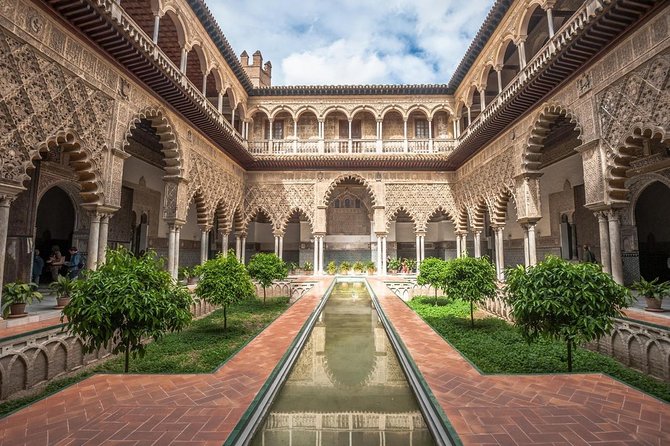
The route ends with the Royal Alcázar of Seville (Reales Alcázares). This palace site goes deeper than most visitors expect. It was built for King Peter of Castile on the location of an earlier Abbadid Muslim alcazar (residential fortress), destroyed after the Christian conquest.
Architecturally, it’s a standout for Mudéjar design in the Iberian Peninsula, while also showing Gothic, Renaissance, and Romanesque elements from different construction stages. That mix is exactly why the palace works for a bike tour: you’re not stuck with one viewpoint or one wall. The guide’s route helps you understand the layers before you ever go looking for details on your own.
One practical note: the upper storeys are still occupied by the royal family when they’re in Seville, and administration is by Patrimonio Nacional. That’s worth knowing so you can understand the palace as a working royal site, not just a static museum.
If you love architecture, this stop can make you hungry to return for a slower visit. The bike tour gives you direction; it doesn’t replace time for full exploration.
Price and Value: What $48.06 Buys You
At $48.06 per person, the price is about the balance you’d expect for a guided, multi-stop tour that covers a lot of walking distance. The key value isn’t just the bike—it’s the combination of:
- Local guide (history and navigation)
- Bicycle + helmet
- Bottled water
Food and drinks aren’t included, so you should treat this as the active part of your day and plan a meal around it. Also, hotel pickup and drop-off aren’t included, which means you’ll want to get yourself to Plaza de Santa Cruz on time using public transit or walking.
For the sites you cover—park highlights plus the cathedral/Giralda/alcázar zone—this format is a smart way to get the big picture fast. And with an overall rating of 4.7 and 97% recommended, it’s clearly resonating with people who want efficiency without losing context.
One booking tip: the tour is commonly reserved about 26 days in advance on average. If you’re traveling in peak season or on a busy weekend, book earlier so you’re more likely to get the slot you want.
Weather, Bikes, and Safety: Real-World Comfort Tips
This tour operates in all weather conditions, so dress for rain if rain is in the forecast. One review even called out riding through rain in the shade of Parque de María Luisa. You’ll be outside on a bike, so comfort matters.
As for safety and guidance, the feedback is consistent: guides are described as friendly, professional, and strong on directions. People specifically mention that the guide handled bike safety well and gave clear instructions on using the motor.
If you’re a first-time e-bike rider, treat the first few minutes as training time. Get comfortable with starting, stopping, and turning before you focus on photos.
Also keep expectations realistic. This is a move-and-learn style tour. You’ll get explanations at each major stop, but you won’t have a full museum day.
Should You Book This Seville Electric Bike Tour?
Book it if you want a fast, guided loop that takes you from Seville’s famous gardens and squares to the cathedral/alcázar area without burning an entire day on foot. It’s especially strong for couples, friends, and families who want history with less effort, and for first-timers who need help connecting the dots between sites.
Consider skipping or adjusting your plan if:
- You’re traveling with a very short child and need an e-bike fit confirmed ahead of time.
- You prefer long, slow interior time at the cathedral or palace and don’t want your tour pacing to be time-limited.
If you’re excited by the idea of riding through Seville’s key sights with a guide like Juan, Veronica, Elena, Danny/Daniel, Ben, or Alejandro, this tour is a solid way to start your trip and figure out what you want to return to later.
FAQ
How long is the Electric Bike Tour in Seville?
It’s about 2 hours 30 minutes to 3 hours.
What does the tour cost?
The price is $48.06 per person.
Where do you meet for the tour?
You meet at Plaza de Santa Cruz (Pl. de Sta Cruz, Casco Antiguo, 41004 Sevilla, Spain).
What’s included in the price?
Bottled water, a local guide, and use of the bicycle and helmet are included.
Are food and drinks included?
No. Food and drinks aren’t included.
Is the tour offered in English?
Yes, it’s offered in English, and it may be operated by a multi-lingual guide.
Can I cancel for a full refund?
Yes, you can cancel up to 24 hours in advance for a full refund.
If you want, tell me your travel dates and who’s in your group (adults/kids, any first-time e-bike riders), and I’ll suggest the best way to plan the rest of your day around these stops.