REVIEW · WASHINGTON DC
Washington DC: E-Bike Tour of the National Mall
Book on GetYourGuide →Operated by Unlimited Biking Washington DC · Bookable on GetYourGuide
Riding an e-bike along the National Mall turns a long walk into an easy loop. You’ll cover huge ground with pedal-assist help, then stop at big-name sights for photos and clear explanations.
I love the fact that the route is built for seeing a lot without burning your legs before you even reach the first monument. The pace is friendly, and the guide keeps the group moving so you don’t feel like you’re racing for your next stop.
One thing to consider: you’re mainly stopping for short photo and guided breaks, not extended time inside every memorial site.
In This Review
- Key highlights at a glance
- Getting your bearings fast on the National Mall
- Your e-bike setup: pedal-assist, helmets, and comfort checks
- Where you start: the 801 D St NW meetup near the US Navy Memorial
- Stop-by-stop along the National Mall: what each break gives you
- Thomas Jefferson Memorial: an early photo moment with big symbolism
- Martin Luther King Jr. Memorial: listen first, then shoot
- Korean War Veterans Memorial: a quieter stop that still hits
- Lincoln Memorial: the classic anchor for your DC mental map
- Vietnam Veterans Memorial: where your pause feels most important
- World War II Memorial: big scale, quick angles
- Washington Monument break: regroup time with photo focus
- Tidal Basin loop: MLK Jr, FDR, and Jefferson in one connected endgame
- Franklin Delano Roosevelt Memorial: one stop that’s worth revisiting
- Pacing, photo stops, and the main trade-off
- Who should book this e-bike National Mall tour
- Price and value: what you’re really buying for $89
- Should you book this National Mall E-Bike Tour?
- FAQ
- How long is the National Mall e-bike tour?
- Where do we meet for the tour?
- What’s included in the price?
- What’s the minimum age to join?
- What should I wear or bring?
- Is the tour suitable for pregnant women or young children?
- What if the weather is bad?
Key highlights at a glance
- E-bike pedal-assist makes long distances feel manageable while keeping you in motion
- Major National Mall stops from the U.S. Capitol to the Lincoln Memorial and out toward the Tidal Basin
- A guide who shares history, lore, and what’s going on around the museums
- Plenty of photo opportunities at iconic angles, including best-view spots you might miss on your own
- You’ll ride a mostly flat route, but you should still dress for comfort and fit
Getting your bearings fast on the National Mall
Washington DC’s National Mall can look simple on a map, then feel endless in real life. It’s wide, spread out, and packed with stops that pull your attention in ten directions at once. This 3-hour National Mall e-bike tour solves that problem by trading walking time for riding time, so you can actually enjoy the monuments instead of just surviving the distance.
The big win is that you get a “first pass” at the Mall’s layout: where the Smithsonian-area museum stretch sits, how the major memorials line up, and how the Tidal Basin area wraps the south end of the experience. For many first-time visitors, this is the difference between seeing a list of sights and understanding how the whole area connects.
At the price point (around $89 per person), you’re paying for more than the bike. You’re also buying your shortcut through confusion: a guide who times the route, stops at the places with the best photo vantage, and fills in context while you’re still fresh enough to listen.
You can also read our reviews of more tours and experiences in Washington Dc.



Your e-bike setup: pedal-assist, helmets, and comfort checks
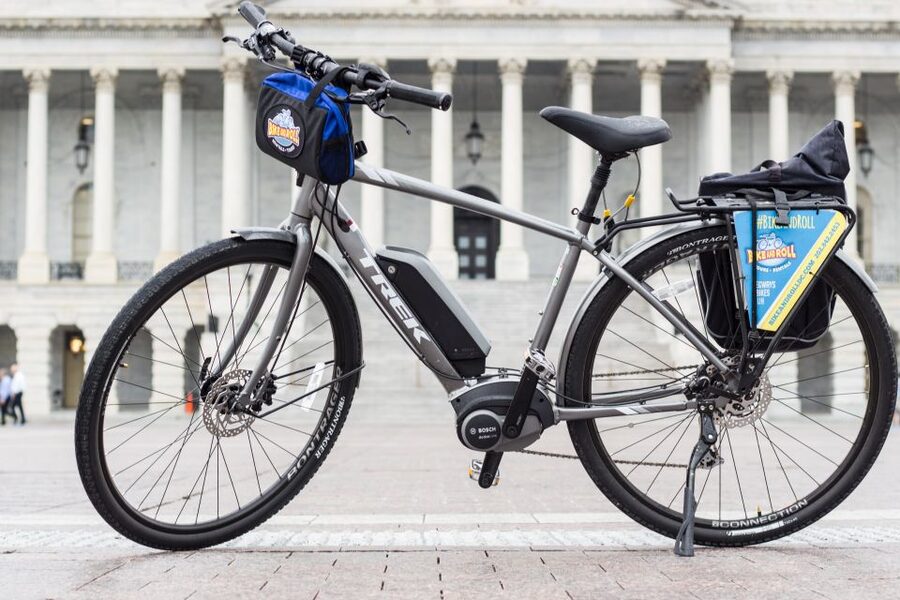
This tour includes an e-bike plus a helmet, and the key feature is pedal-assist. That means you’re not just “standing on a scooter” while the battery does everything. You’ll still pedal, but the bike adds power so the ride feels easier and your energy goes into enjoying the moment.
There are two practical comfort points I’d keep in mind:
- Bike power can feel different depending on bike size. One small complaint noted that larger e-bikes seemed to have less punch than smaller ones, which still worked out for people who wanted a bit more effort. If you’re sensitive to that, ask to test or check the fit before you roll.
- Bike fit matters. One spill story was blamed on a bike that was too big for the rider, which made it harder to put a foot down quickly. If you’re between sizes, speak up early and ask for the right height setup.
Also note that the ride environment isn’t totally uniform. The tour says there may be participants on standard non-electric bikes, so you’ll still experience some normal group-speed variation. The guide’s job is to manage that, and the group generally sticks together—but it’s still a shared ride.
Where you start: the 801 D St NW meetup near the US Navy Memorial
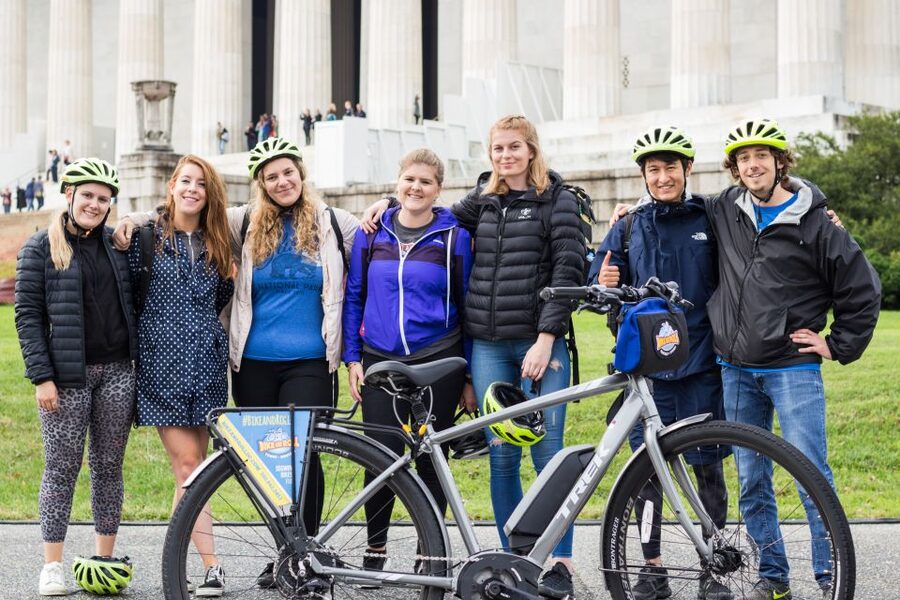
You meet at 801 D St NW by the US Navy Memorial Plaza. I like this start location for one reason: it’s a clear, recognizable anchor near the water-adjacent edge of the Mall area, so you’re not hunting around for a vague pickup spot.
Starting on the waterfront also helps mentally. You ease into the ride, get brief instructions about how to use the e-bike, and then the guide pulls you into the story of the Mall. From there, it becomes a steady chain of big landmarks instead of a scattered sightseeing scramble.
If you’re arriving from your hotel, give yourself a little extra time to check in. You’ll want to focus on bike adjustment and getting comfortable before you start moving through monument-heavy streets.
Stop-by-stop along the National Mall: what each break gives you
Most of the stops are built around a simple rhythm: arrive, get a quick guided moment, snap photos from a few angles, then roll on. That format is ideal for a first visit because you’re getting both the postcard view and the “why this matters” context.
Thomas Jefferson Memorial: an early photo moment with big symbolism
The tour route includes a photo stop and guided time at the Thomas Jefferson Memorial. This is the kind of stop where a short explanation works well. Even if you don’t go in, you’ll understand what you’re looking at and why it sits where it does in the broader DC narrative.
The practical value: you’ll get one of the Mall’s most recognizable silhouettes early enough in the day that it sets your expectations for what comes next.





Martin Luther King Jr. Memorial: listen first, then shoot
Next up is the Martin Luther King Jr. Memorial. The guided piece here is especially helpful because the site carries meaning that isn’t obvious just from walking past it. The tour format gives you a quick moment to connect the visuals with the story before you move on.
If you care about photos, this is also a good stop to slow down. The memorial is designed for viewing and interpretation, so even a brief pause can help you frame the shots more thoughtfully.
Korean War Veterans Memorial: a quieter stop that still hits
The tour includes the Korean War Veterans Memorial with a short photo and guided break. Short duration here can be a drawback if you want a deep, extended read of every element—but it’s also a good reminder that this tour isn’t just about endurance. It’s about seeing the whole map first.
You’ll likely appreciate the guide’s context most at sites like this, where the details reward attention even during a quick stop.
Lincoln Memorial: the classic anchor for your DC mental map
The Lincoln Memorial is one of the emotional centers of the Mall. In a walking-only day, it’s easy to reach Lincoln while tired and in a hurry. On a bike, you typically arrive feeling more ready—so you can actually take in the scale and capture iconic shots without feeling wrecked.
The tour keeps it practical: photo stop, quick guided explanation, then onward.
Vietnam Veterans Memorial: where your pause feels most important
The Vietnam Veterans Memorial comes next with its own photo stop and guided time. This is another site where context makes a difference. Even if you mainly view from the outside and capture a few images, you’ll get enough explanation to understand what you’re seeing and why people slow down here.
If you’re traveling with someone who wants to linger, this is one place you might want to note for a return trip later. The tour format prioritizes coverage, not extended stillness.
World War II Memorial: big scale, quick angles
The World War II Memorial is a strong stop for photos because it’s visually structured and easy to frame. You’ll get a guided moment, a short photo window, and then you move to the next major anchor.
It’s a good example of how this tour balances emotion, symbolism, and logistics. You’re seeing the main sites in a way that feels organized.
Washington Monument break: regroup time with photo focus
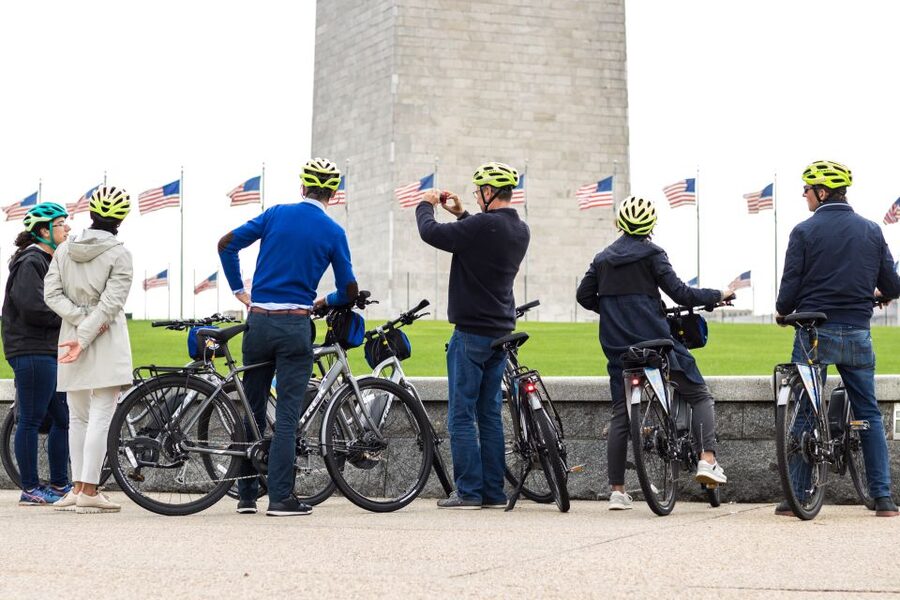
You’ll include Washington Monument in the route, with a longer break and photo stop window (about 20 minutes). I like the idea of a real regroup moment in the middle of the tour. It gives you a chance to catch your breath, adjust your helmet fit if needed, and do photos without feeling pressured to sprint.
This stop also helps you connect the dots. After Lincoln, Vietnam, and WWII, Washington Monument acts like a visual north star—so the rest of the route feels clearer when you ride toward the memorials near the Tidal Basin.
Tidal Basin loop: MLK Jr, FDR, and Jefferson in one connected endgame
The tour concludes by circling the Tidal Basin area and giving you a chance to experience the memorial cluster that surrounds it—specifically Martin Luther King Jr, FDR, and Jefferson Memorials.
This “loop” concept matters because those sites belong together geographically. If you approach them as separate stops on a walking day, it can feel disjointed. By the time you ride your loop, the whole area clicks: how the water, paths, and monuments relate, and why people treat this part of DC like its own mini-planet.
Franklin Delano Roosevelt Memorial: one stop that’s worth revisiting
You’ll also have time at the Franklin Delano Roosevelt Memorial. One of the most consistent notes from people who did this tour is that the Roosevelt Memorial is so engaging that they wanted more time to read and take it in properly. If that’s your style—slower, more text, more absorbing—plan to do a follow-up visit on your own after the tour.
The trade-off is clear: you cover more on the bike ride now, then you can decide later what deserves your second look.
Pacing, photo stops, and the main trade-off
The tour is designed to maximize coverage, and that creates a predictable trade-off: you’re not camping at each monument.
Most stops follow a short rhythm—photo plus guided time—so you’ll leave with a solid overview. But if you’re the kind of traveler who likes to sit, read, and soak in the details, you might feel the time constraints at a few sites (Roosevelt was the most specifically singled out example).
There’s also a physical reality worth planning for. One partner with an ankle surgery found stairs limiting at certain sites, and the tour worked best when viewed from outside. This isn’t a tour-breaking issue, but it’s a reminder: a bike tour gives you access to the overall area, yet it doesn’t remove the fact that some memorials involve steps if you want to go closer on foot.
My practical advice: use the guide moment to understand what you’re seeing, then pick one or two sites you want to return to. That way, you get the best of both styles—coverage now, deeper time later.
Who should book this e-bike National Mall tour
This tour fits best when you want three things at once:
- A fast orientation to the National Mall so future sightseeing makes sense
- Comfort on the move, with pedal-assist making long stretches easier
- A guided route that helps you find good viewing angles without building the whole day from scratch
It may be less suitable if:
- You’re traveling with kids under 16. The minimum age is 16, and ID is required.
- You’re pregnant. The tour says it’s not suitable for pregnant women.
- You need long, quiet time inside multiple memorials. The tour format is built around short breaks and continued riding.
One more small note that can affect how it feels: the group might include riders on standard bikes. If you’re very speed-sensitive or you want a strictly uniform e-bike pace, you should expect some natural variation with mixed rides.
Price and value: what you’re really buying for $89
At $89 per person for about 3 hours, the value is in the bundle: you get an e-bike, a helmet, and a professional guide who sets the route and provides on-the-ground context as you ride between major landmarks.
This is the kind of activity where you avoid the hidden costs of DIY sightseeing:
- less time figuring out where to start and how to connect major stops
- less energy spent on long walking stretches
- fewer moments of standing somewhere wrong for photos
Also, you’re paying for a guided way to use your limited time in DC. If you only have a day or two, this tour can function like a living map. It’s not about squeezing every detail into the schedule. It’s about helping you decide what to explore in depth afterward.
Should you book this National Mall E-Bike Tour?
Book it if:
- you want maximum DC landmarks in a short window
- you’d rather ride and learn than walk and rush
- you appreciate photo stops with explanation, then later you’ll return to what moves you most
Consider skipping or pairing it with a slower plan if:
- you need long stays at memorials for reading or quiet time
- you have mobility limits that make close-up stops and steps hard
- you’re in a situation where you can’t comfortably handle a bike and helmet setup
If you’re planning a first trip to Washington DC and you want the National Mall to make sense quickly, this e-bike format is a practical, efficient choice. You’ll come away with a clear sense of where everything sits—and you’ll know what to revisit once the excitement of the first pass wears off.
FAQ
How long is the National Mall e-bike tour?
The tour duration is 3 hours.
Where do we meet for the tour?
You meet at 801 D St NW, Washington DC 20004, right by the US Navy Memorial Plaza.
What’s included in the price?
Included are an e-bike, a professional guide, and a helmet.
What’s the minimum age to join?
The minimum age is 16. You’ll need to bring an ID.
What should I wear or bring?
Bring passport or ID, and wear closed-toe shoes. Open-toed shoes are not allowed.
Is the tour suitable for pregnant women or young children?
It is not suitable for children under 16 and pregnant women.
What if the weather is bad?
The tour may be cancelled if the weather makes for dangerous riding conditions.