REVIEW · WASHINGTON DC
Washington DC Cherry Blossoms By Bike Tour
Book on Viator →Operated by Unlimited Biking formerly Bike and Roll DC · Bookable on Viator
Pink blossoms, two wheels, and big DC views. I like the easy, 2-hour pace and I like that you get a guided circuit with real stops (not just passing by). The main drawback is timing: during the busiest bloom windows, you may spend more time navigating crowds than actually cruising.
You start at 701 D St NW and ride past the Tidal Basin and East Potomac Park with a professional guide, plus built-in photo moments at several of DC’s most famous memorials. The group is capped at 15, and the whole plan is designed so you don’t have to figure out the route while you’re trying to spot trees in bloom.
This tour runs from March 20 to April 11, with the peak bloom window typically listed as April 3–6. Book in that range and you’ll get the best look, but also the tightest crowds—book earlier or later and you can still find plenty of pink and white backdrops.
In This Review
- Key highlights you’ll care about
- The route: Tidal Basin and East Potomac Park without a long haul
- Stop-by-stop: from the first cherry trees to Jefferson’s view
- Japanese Lantern: where the first trees started
- FDR Memorial: The Pagoda and a gift of peace
- MLK Memorial: Mountain of Despair to Stone of Hope
- National Cherry Blossom Festival stop: a real pause in the action
- Jefferson Memorial: the Tidal Basin view you came for
- Ending point: back near the starting area
- Timing the blooms: peak April 3–6 vs. the shoulder days
- Biking in a crowd: what “easy” really means during cherry season
- Group size and guide style: how to get the most from up to 15 riders
- Bike comfort checks: helmets, seats, and electric-bike questions
- Price and value: is $65 a fair deal?
- Who should book this cherry blossom bike tour
- Should you book? My honest call
- FAQ
- How long is the Washington DC Cherry Blossoms by Bike Tour?
- What does the tour include in the ticket price?
- Where does the tour start and end?
- Is there a mobile ticket?
- What stop locations are included?
- Are the memorials visited by bike?
- Do you need to check in before the tour starts?
- Does the tour run during cherry blossom season only?
- Are kids welcome, and are kid attachments available?
- What happens if the weather is unsafe?
Key highlights you’ll care about
- A mellow Tidal Basin loop: aimed at a relaxed 2 hours, not an all-day workout.
- Classic memorial hits: FDR, MLK, and Jefferson are part of the route.
- Festival connection: you tour during the National Cherry Blossom Festival and pause at festival grounds.
- Small group size: max 15 bikes helps keep things controlled in a busy area.
- Kids options: toddler trailers and tag-a-longs are available with a child ticket.
- Helmet required: bikes + mandatory safety gear, which makes the ride feel more prepared.
The route: Tidal Basin and East Potomac Park without a long haul
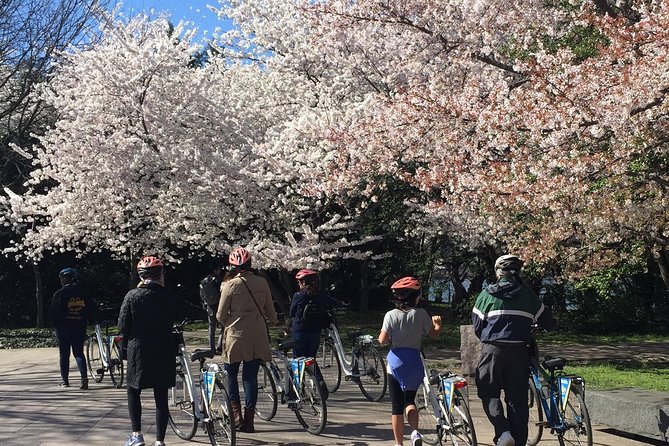
This tour is built around one idea: make the Tidal Basin area feel manageable. You’re riding through DC’s postcard spring zone—blooming cherry trees, the Potomac River channel area, and a string of major memorials—without trying to cover the entire National Mall.
After a check-in and bike fitting, your group sets off for about 2 hours. The pace is described as mellow, and that matters. In cherry blossom season, the real challenge isn’t hills or distance. It’s crowds, sidewalks, and intersections, all at once.
The route also focuses on making your stops land where the photos look best. You’re not just rolling past monuments; you’re stopping long enough to get your bearings, take pictures, and listen to the guide’s on-the-ground explanations.
You can also read our reviews of more tours and experiences in Washington DC.
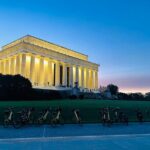
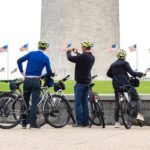
Stop-by-stop: from the first cherry trees to Jefferson’s view
Here’s what you’ll hit and why each stop is worth your time.
Japanese Lantern: where the first trees started
You begin with the Japanese Stone Lantern, tied to the site where the very first cherry trees were planted by First Lady Taft and Viscountess Chinda. This is a great opening because it gives you context for what you’re seeing before the crowds get fully loud.
Expect a short stop to learn what the lantern marks and how those early plantings connect to today’s festival energy. Admission is free, since this is an outdoor, walk-up kind of moment.
FDR Memorial: The Pagoda and a gift of peace
Next is the Franklin Delano Roosevelt Memorial. The big visual here is the Pagoda, described as a gift of peace, sitting along the banks of the Tidal Basin.
What you gain with a guided stop like this is the meaning behind the landmark. Without the explanation, it can be easy to see it as just another photo wall. With the explanation, you understand why that setting matters.
MLK Memorial: Mountain of Despair to Stone of Hope
The Martin Luther King, Jr. Memorial stop works because you get a walk-through viewpoint while your guide stays with the bikes out of respect, rather than riding through the memorial space.
You’ll have time to see the Mountain of Despair and the Stone of Hope. If time permits, this stop happens—so don’t assume it’s guaranteed on every departure.
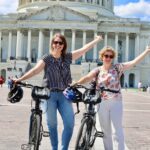
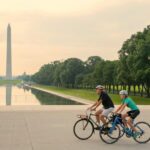
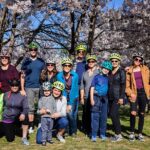
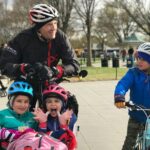
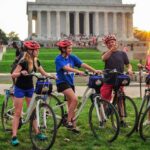
National Cherry Blossom Festival stop: a real pause in the action
About halfway through, you pause at the National Cherry Blossom Festival area for roughly 30 minutes. This is also where the tour connects to the festival itself: the operator is listed as an official tour provider and donates a portion of each ticket sale to the organization coordinating the celebration.
This pause is useful. Even if your goal is monuments, the festival setting is part of the experience. It’s also your moment to reset: water break, quick snack, and photos before you roll back toward the memorial string.
Jefferson Memorial: the Tidal Basin view you came for
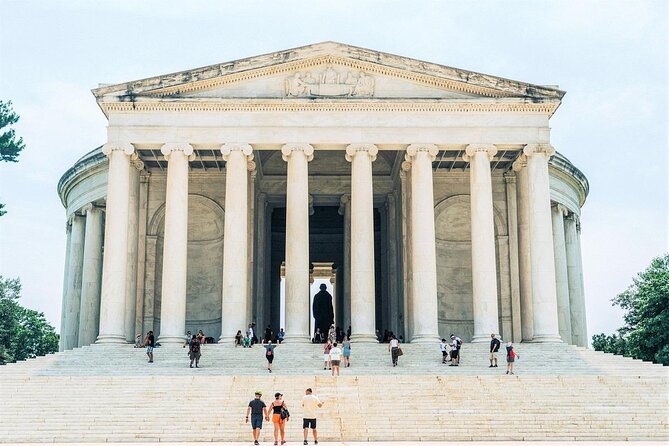
The Jefferson Memorial stop includes history plus a chance to view the cherry trees lining the Tidal Basin. This is where many people feel the “wow” hit—because Jefferson’s setting frames the trees in a way that’s hard to replicate from random angles.
You’ll get around 20 minutes here, enough time to walk a little, shoot photos, and still rejoin the group without feeling frantic.
Ending point: back near the starting area
The tour ends back at the meeting point. The route is described as ending at the Old Post Office Pavilion area, which is convenient because it drops you back into an area with plenty of food options and easy transit.
Timing the blooms: peak April 3–6 vs. the shoulder days
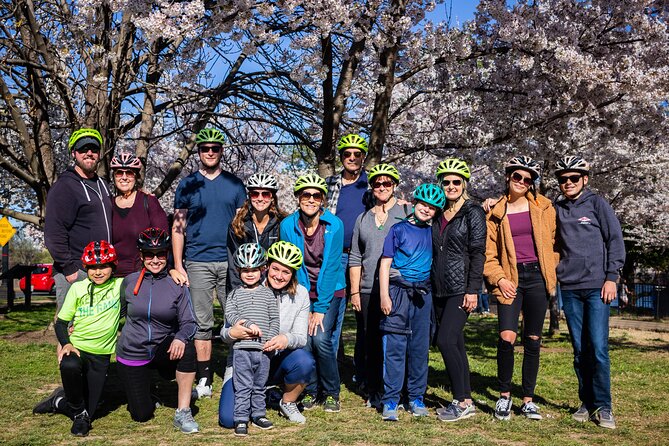
Peak bloom dates are listed as April 3–6 by the National Park Service. If you aim for those days, you’ll likely see the strongest tree coverage. You’ll also likely deal with more people than your bike instincts can handle.
Here’s the trade-off I’d plan for:
- Peak days: the trees look best, but you should expect tight pathways and lots of stop-and-go.
- Before/after peak: you might see fewer trees fully packed with blossoms, but crowds can be less intense and the ride may feel smoother.
Either way, you should still get fabulous photo opportunities. Even when blossoms aren’t at their maximum, the area stays pretty—and the guide’s context makes the visit feel less like a mad dash for pink trees.
Also, the tour runs March 20 to April 11. That window gives you flexibility if you’re traveling late or early in the season.
Biking in a crowd: what “easy” really means during cherry season
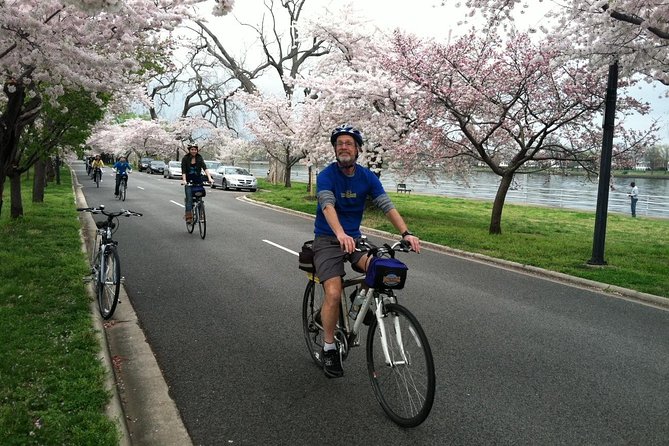
On paper, this is an easy 2-hour bike tour. In real life, cherry blossom crowds change the equation fast.
Several factors can affect how much you actually ride:
- Sidewalk and pedestrian-heavy sections: some parts may involve biking where people are walking shoulder-to-shoulder.
- You may end up walking your bike: if pathways get too crowded, you’ll pause and move on foot more than you expected.
- Intersections and crossings: the route includes areas where crossing safely takes attention and patience.
This is why timing matters so much. If you go during the busiest rush, it can become a bike tour in name only. That can be frustrating if you paid specifically for a smooth ride.
If you’re sensitive to crowd pressure, consider this strategy:
- Choose an earlier time slot when possible (if you have that option at booking).
- Stay close to the front so you can hear the guide and keep visual contact with the group.
- Wear comfortable shoes for short walks. Even if you plan to bike the whole way, you’ll be happier if you’re ready to step off.
Safety-wise, the tour is set up with helmets (mandatory) and a professional guide. Still, you should come in with realistic expectations for the peak festival chaos.
Group size and guide style: how to get the most from up to 15 riders
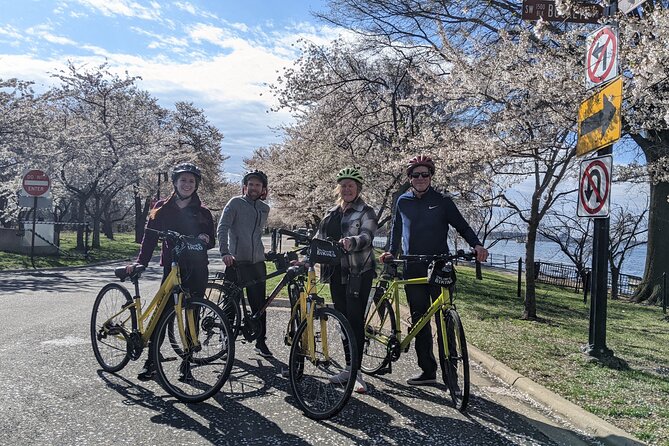
The tour is capped at 15 travelers, which is a good sign in a crowded zone. But even 13–15 can feel like a lot when you’re navigating tight sidewalks and people who are stopping for photos.
Guide style matters. In the feedback, different guides were singled out for being energetic and organized (names like Aiden, Wally, Bianca, Greg S., Greg H., and Dave show up). That’s a helpful clue: when the guide has a steady rhythm, the route feels smoother and the stops feel purposeful.
A practical tip for you: if you’re the type who likes to hear every detail, don’t hang back. When groups are split up by crowd flow, it gets hard to catch the guide’s audio. Staying closer makes it easier to follow the plan and not lose track when the route slows down.
Also, some participants mentioned that the guide will sometimes handle bike issues quickly. That’s good—but it’s another reason to plan for a ride that includes small delays. This isn’t a sprint.
Bike comfort checks: helmets, seats, and electric-bike questions
You get a bicycle included, and a helmet is mandatory. That’s exactly how it should be.
Comfort is mixed depending on the bike fit and seat. One review called out a seat as being among the worst they’d used, so I’d pay attention during fitting. If the seat height is off, your tour will feel longer than it needs to.
One more thing to check: electric bikes show up in feedback. Some people said they did not get enough assist on hills, and others reported e-bike issues. If you’re on an e-bike version, test the assist at the start, not halfway through the route. If it doesn’t respond as expected, ask immediately so you’re not stuck in stop-and-go traffic with a bike that feels heavier than it should.
If you’re bringing kids:
- toddler trailers and tag-a-longs are available
- you’ll need to purchase a child ticket and let the operator know in advance you want the attachment
That last point matters because spring schedules move fast, and you’ll want the setup ready before you meet.
Price and value: is $65 a fair deal?
At $65 per person for about 2 hours, you’re paying for three things: bike use, a professional guide, and a structured route through the festival zone.
It’s a fair value if:
- you want the highlights without spending time figuring out how to route yourself
- you like having context while you’re looking at memorials and the cherry tree story
- you plan to be in the Tidal Basin area anyway, so the guide saves you decision fatigue
It’s less of a bargain if your main goal is pure biking time with minimal crowd friction. During peak rush, some people said biking felt impossible and that the group spent too much time moving slowly, losing the point of riding.
So here’s my rule of thumb: if your travel dates are flexible, match your tour choice to your tolerance for crowds. If your dates are fixed around peak bloom, arrive with the mindset that you’re there for cherry blossom viewing and memorial stops, and the bike is the transport tool—not a quiet lane for cruising.
Who should book this cherry blossom bike tour
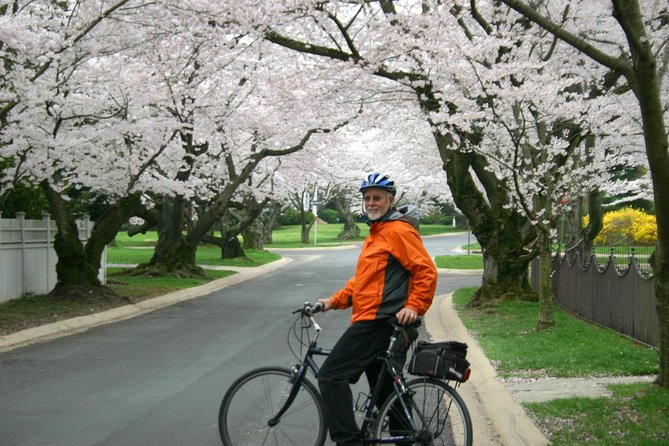
This tour fits best if you:
- have limited time in DC and want a tight, structured loop
- want to see major memorials plus cherry trees without planning every stop
- like a guided explanation while you take photos
- can handle short walks and crowded sidewalks with patience
It may be a weaker fit if you:
- want the experience to feel calm and traffic-free during peak bloom days
- expect dedicated bike lanes for most of the route (the area can get pedestrian-heavy fast)
- are very dependent on hearing lots of commentary from start to finish, since noise and crowd spacing can make that harder
For families: the ride can work well for a range of ages, especially with the kid attachments available. Just keep in mind that crowd conditions can turn any family-friendly plan into a slower-moving route.
Should you book? My honest call
If you’re coming to Washington, DC for cherry blossoms and you want an organized way to hit the Tidal Basin area plus the big memorials, this is a solid choice. The $65 price makes sense when you think of it as guided time in the right places, with the bonus of bike transport and included helmets.
I’d only hesitate if you’re booking right smack in the busiest rush and you’re expecting a smooth, mostly-on-bike ride. In that case, you might be happier paying $65 for the same highlights by walking, or booking for an earlier or later bloom window if you can.
If you do book, prep for crowds, stay near the front, and do a quick comfort check on your bike before you roll. Do that, and you’ll turn a chaotic spring day into a memorable one—pink trees, major memorials, and a route that keeps you moving in the right direction.
FAQ
How long is the Washington DC Cherry Blossoms by Bike Tour?
It lasts about 2 hours.
What does the tour include in the ticket price?
You get a professional guide, use of a bicycle, a mandatory helmet, and equipment for kids of all sizes and ages.
Where does the tour start and end?
It starts at 701 D St NW, Washington, DC 20004, USA. The activity ends back at the meeting point (near Old Post Office Pavilion).
Is there a mobile ticket?
Yes, the tour offers mobile tickets.
What stop locations are included?
The tour includes stops at the Japanese Lantern, the Franklin Delano Roosevelt Memorial, the Martin Luther King, Jr. Memorial (if time permits), a National Cherry Blossom Festival stop, and the Jefferson Memorial.
Are the memorials visited by bike?
The guide stays with the bikes out of respect, and you walk through memorial areas rather than riding through them.
Do you need to check in before the tour starts?
Yes. You must check in 15 minutes prior to departure time, and late arrivals may not be accommodated.
Does the tour run during cherry blossom season only?
It runs from March 20 to April 11.
Are kids welcome, and are kid attachments available?
Most travelers can participate. Toddler trailers and tag-a-longs are available, but you need to purchase a child ticket and let the operator know in advance.
What happens if the weather is unsafe?
The tour may be canceled if weather makes riding dangerous, and you’ll be offered a different date or a full refund.