REVIEW · WASHINGTON DC
Washington DC: Monuments by Night Bike Tour
Book on GetYourGuide →Operated by Unlimited Biking Washington DC · Bookable on GetYourGuide
Bike the Mall after dark—it changes everything. This guided ride trades daytime heat and crush for cooler air, wide-lit landmarks, and quick history stops that make the monuments feel more than postcard scenery. With guides such as Joe or Jose, the pace is relaxed, the facts are clear, and you still get time to see each site on foot.
I especially like the crowd-light evening timing and the chance to step inside the Lincoln and Jefferson Memorials. One heads-up: depending on the season, you might not get fully dark-lit photos at every stop, with the nicest lighting sometimes coming later in the loop.
In This Review
- Quick hits before you pedal
- Getting oriented at 801 D Street NW by the Navy Memorial
- The ride itself: easy effort, real time on the street
- Night lighting: when “lit up” depends on the season
- The loop through DC’s key landmarks, stop by stop
- Thomas Jefferson Memorial: starting with symmetry and river views
- Franklin Delano Roosevelt Memorial: moving from artful detail to shared national memory
- Martin Luther King Jr. Memorial: history you can feel while you move
- Korean War Veterans Memorial: a reflective pause built into a smooth ride
- Lincoln Memorial: the moment you can actually step inside
- Vietnam Veterans Memorial: the one many people want to study longer
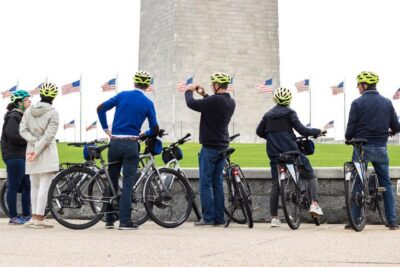
- Washington Monument: the skyline anchor and a built-in break
- White House: a photo stop with added city context
- Jefferson Memorial: finishing the story at the water’s edge
- What you actually learn: a guide turns monuments into a timeline
- Inside Lincoln and Jefferson: why that access is worth it
- Safety and comfort details that make the difference
- Kids and families: what’s supported
- Who should skip it
- Price and value: is $65 a fair deal for 3 hours?
- Should you book this Monuments by Night bike tour?
- FAQ
- How long is the Washington DC Monuments by Night bike tour?
- How far do you ride, and is it difficult?
- Where do I meet the tour?
- What’s included in the price?
- Are sandals or flip-flops allowed?
- Is the tour suitable for kids or toddlers?
Quick hits before you pedal
- Easy, mostly-flat 4-mile route makes this doable for many skill levels
- WWII, Korean War, Vietnam War, MLK, and FDR are all part of the loop with short time to explore
- Lincoln and Jefferson Memorial access lets you go inside, not just view from the path
- Reflective vest and safety light are provided, and helmets are mandatory
- White House viewpoints are built in, plus a view toward the President’s helicopter landing lawn
Getting oriented at 801 D Street NW by the Navy Memorial
Your tour starts at 801 D Street NW, Washington DC, right by the US Navy Memorial Plaza. That matters more than you’d think. This area puts you close to the rhythm of the National Mall and Tidal Basin sights, so you can settle in fast instead of spending your first 20 minutes figuring out where bike traffic and pedestrian flow meet.
You’ll be outfitted on-site with your bike and safety gear. Helmets are mandatory, and the tour provides reflective vests plus a safety light, which is practical in a city where you’ll be sharing the road (and paths) with other nighttime movement.
If you’re visiting DC for a short window, I like this setup because it’s one of those “first-night” activities that helps you understand where everything sits. Even if you already plan to hit museums, a loop like this gives you a physical map of the capital’s layout.
You can also read our reviews of more tours and experiences in Washington Dc.

The ride itself: easy effort, real time on the street
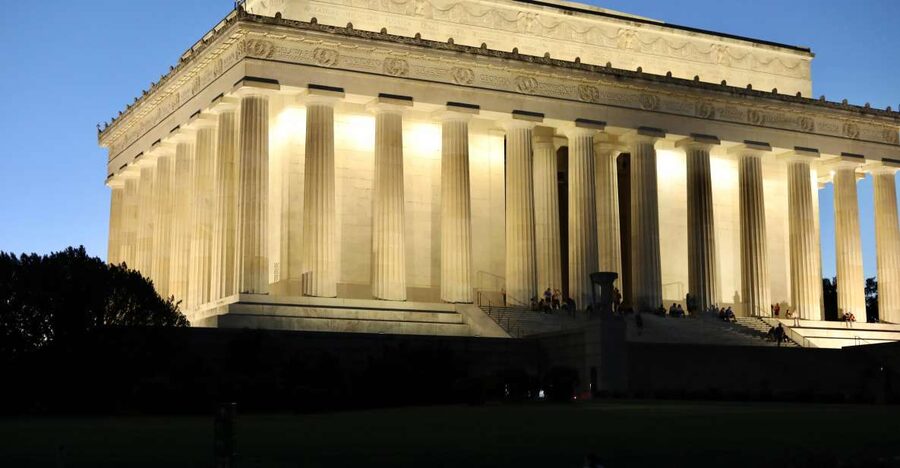
This is rated easy: roughly a 4-mile ride over mostly flat terrain. In a city that can feel like it’s all stairs and long walks, “flat and short” is a huge value. You’re not trying to conquer DC; you’re circulating through it.
You’ll also get to keep your energy for the stops. The design is built around short guided moments plus time to take photos and walk around. Many stops are timed so you’re not stuck at one site too long, but you also aren’t rushed through everything.
A small but meaningful detail: the tour emphasizes evening comfort. Cooler air at night is a real perk, especially if you’ve just spent the day walking around museums or monuments on foot.
Night lighting: when “lit up” depends on the season
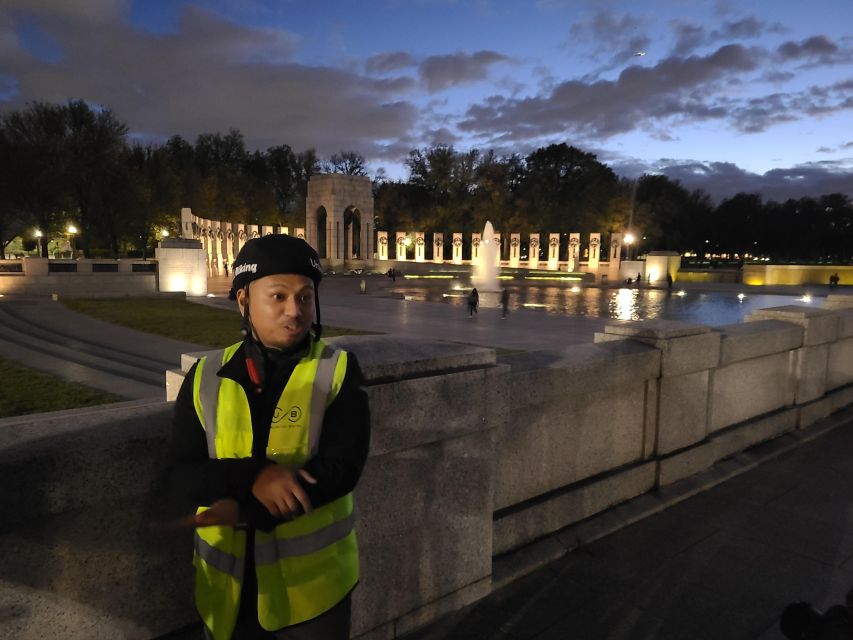
The tour’s big promise is monuments at their most striking—lit at night. In practice, lighting depends on when you start and how late sunset is for the time of year.
A practical way to think about it: you’ll likely see dramatic illumination, but if you book during a period when daylight lingers longer, you may ride through parts of the loop before every monument looks fully night-dramatic. If your priority is photos with lights blazing at every stop, you’ll want to pay close attention to the start time and the time of year.
If you care less about lighting and more about the feeling—cooler air, fewer crowds, a smooth way to cover ground—then the exact darkness level becomes less important. The evening calm is part of the payoff either way.
The loop through DC’s key landmarks, stop by stop
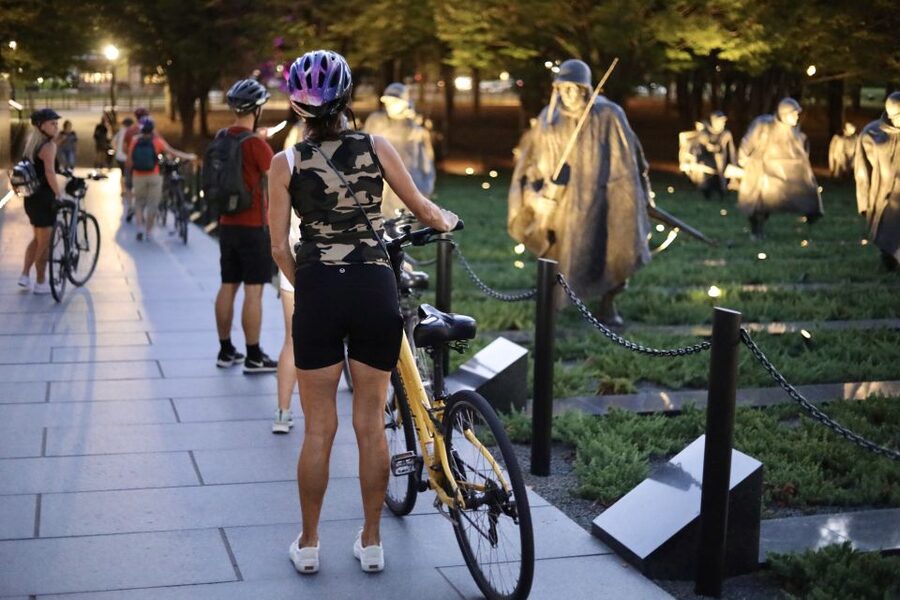
This tour focuses on the National Mall area and rides around the Tidal Basin. It’s a smart choice: these sights are close enough to connect into one ride, but different enough that the tour feels like a curated story instead of a single corridor.
Here’s what each stop is really like and what you should watch for.
Thomas Jefferson Memorial: starting with symmetry and river views
You begin with a photo stop and guided explanation at the Thomas Jefferson Memorial. Even when you’re not going inside yet, you’ll get a sense of the monument’s scale and how it sits in the broader DC sightline logic.
Best use of your brief time here: take a moment to look across the water/landscape edges, then lock onto the angles. Guides tend to frame what you’re looking at in terms of symbolism and design, which helps later when you compare it to Lincoln and the other memorials.
A potential drawback: since you’re just getting your bearings on bike, don’t plan to spend deep-time exploring on your own at this first stop. Use it to absorb the big picture.





Franklin Delano Roosevelt Memorial: moving from artful detail to shared national memory
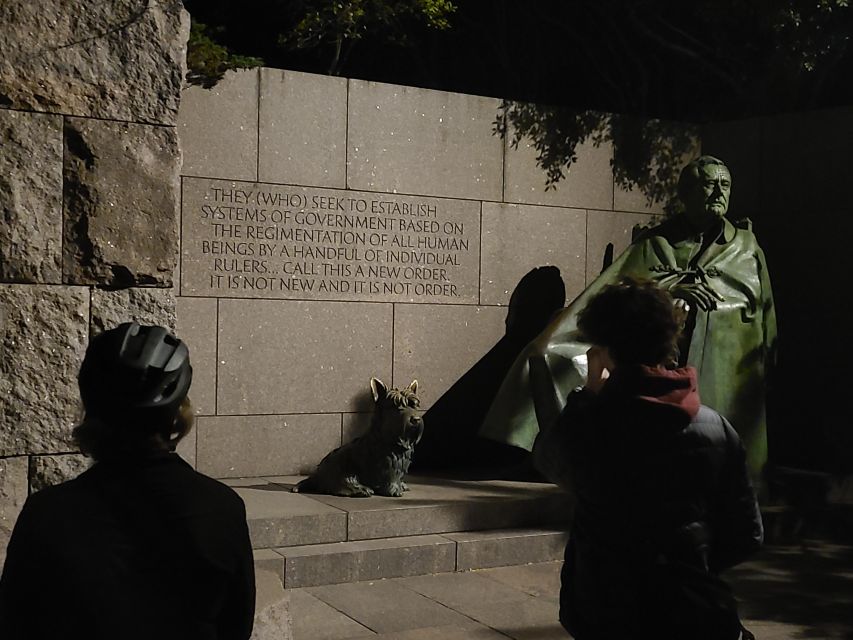
Next is a photo stop and guided walk-through at the Franklin Delano Roosevelt Memorial. This is one of those memorials where a guide can make the viewing feel easier. Instead of staring at individual features, you’ll get the “why” behind the structure and themes.
You’re on bike, so you’ll experience this differently than a museum crowd does. The value is that you glide from one story beat to the next, with just enough time to step in, look around, and keep going.
Martin Luther King Jr. Memorial: history you can feel while you move
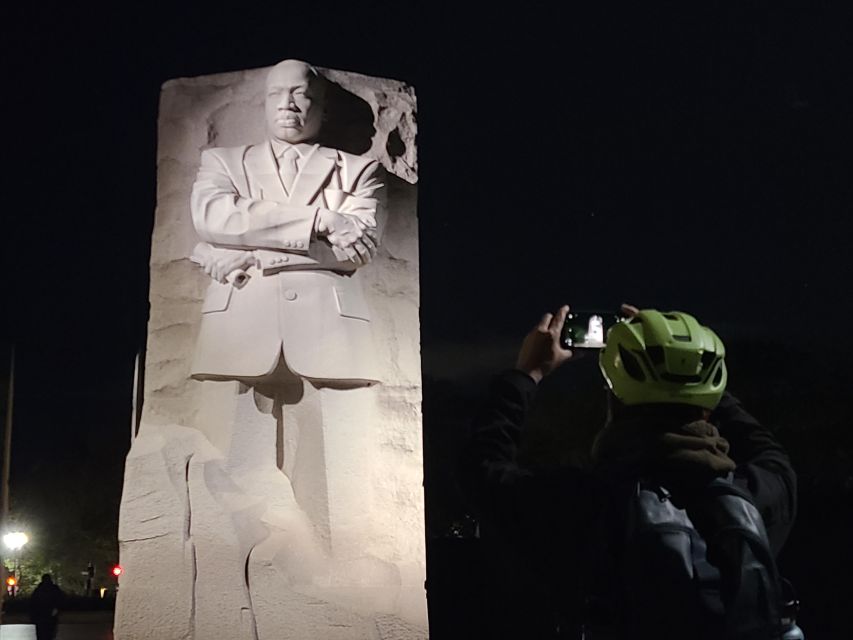
At the Martin Luther King Jr. Memorial, you get another short guided stop plus time to explore on foot. This stop often lands as the emotional anchor in the ride because it’s not only about what happened, but also about how the city chooses to remember it.
Practical tip: if you’re photographing, keep your settings simple. Night photography can turn into a headache fast. I’d rather you get one or two strong images while you’re there than spend your entire time fiddling with a camera.
Korean War Veterans Memorial: a reflective pause built into a smooth ride
The Korean War Veterans Memorial stop follows the MLK site. The flow matters. You’re not going from one major monument to another without a break; you’re getting pacing that lets the stories land.
The drawback here is also practical: if you’re with a larger group, you may want to plan your photo walk right away. The stop time is short, so commit early to where you want your best shot.
Lincoln Memorial: the moment you can actually step inside
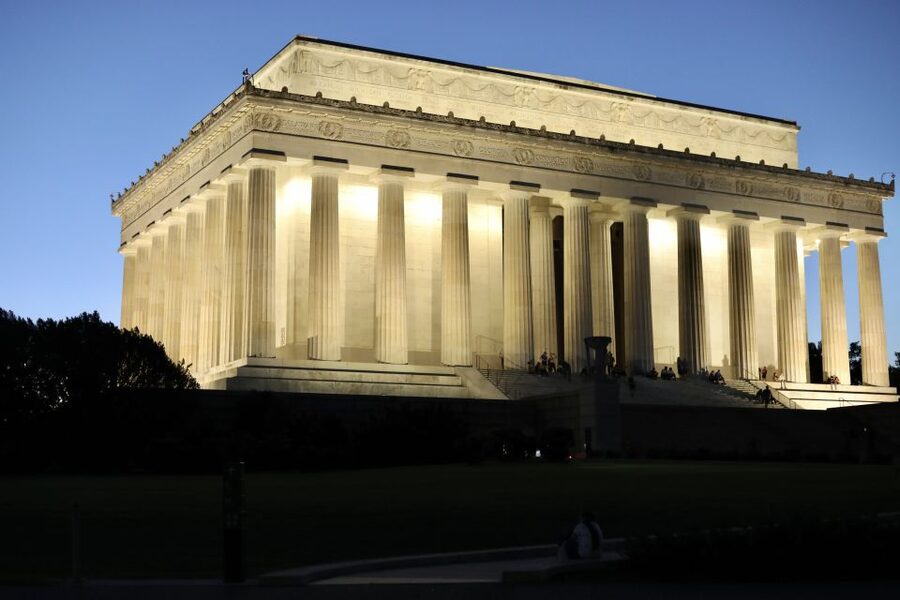
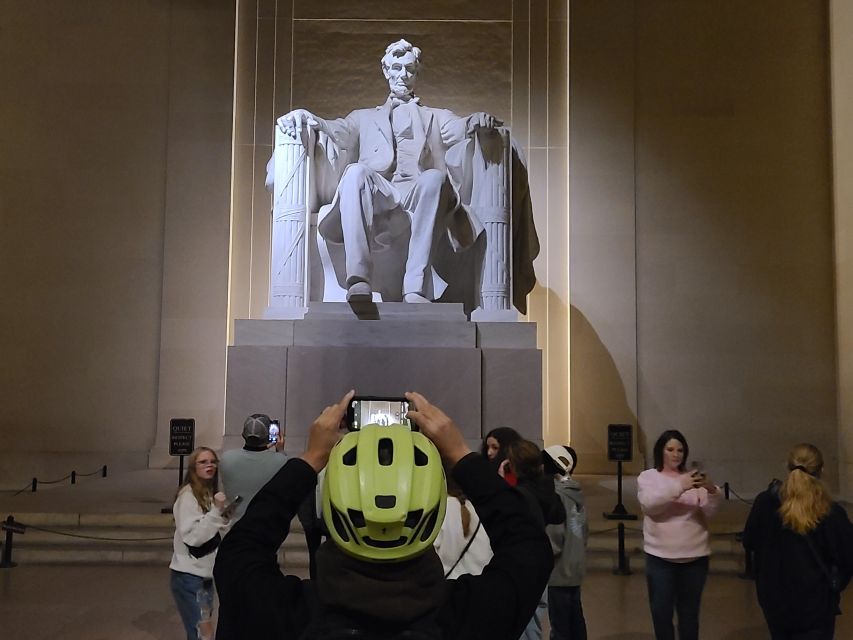
You’ll reach the Lincoln Memorial next, with photo stop, guided tour, and then a chance to step inside the memorial. This is a big deal. Viewing from the outside is one thing; seeing the scale up close is another.
If you’ve only seen Lincoln in photos, the interior view changes your sense of proportion and gravitas. It also gives you a break from cycling—your legs and your brain get to slow down briefly.
Vietnam Veterans Memorial: the one many people want to study longer
After Lincoln comes the Vietnam Veterans Memorial, again with guided context and time on foot. This is the kind of site where people often want more time than the tour provides. That doesn’t make the tour worse—it just means you should go in knowing the experience here will be part viewing, part learning, not a full-length memorial study session.
If you want to go deeper later, you’ll be glad you rode first. You’ll return to the site with a clearer sense of what you’re looking at.
Washington Monument: the skyline anchor and a built-in break
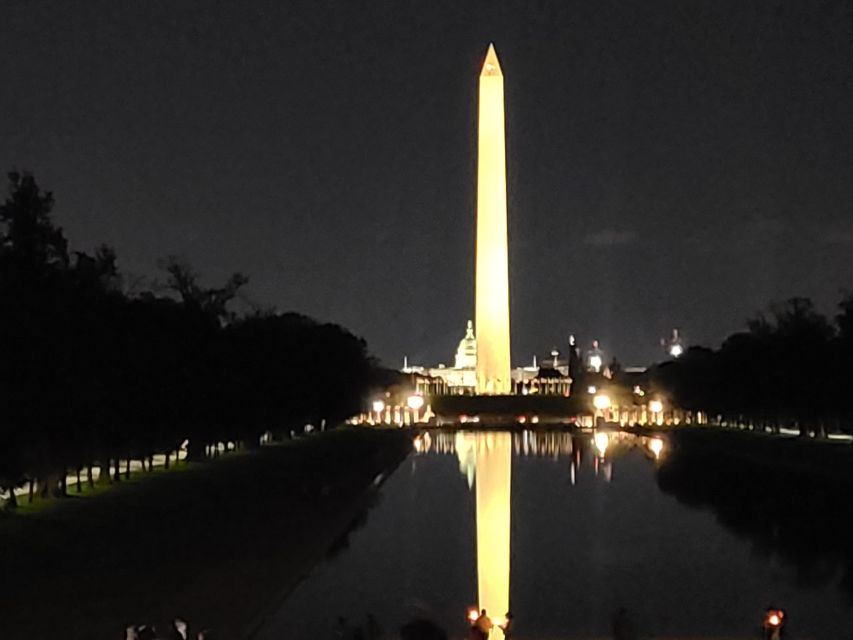
Then you hit the Washington Monument for a break time, with photo time and guided tour. This is where the route gives you a big “DC landmark orientation” moment. You can use this stop to compare distances, understand how the Mall stretches, and mentally connect the rest of the loop.
Because you’re also taking a break here, it’s a good time to hydrate and reset. Night ride fatigue can sneak in even when the pace stays easy.
White House: a photo stop with added city context
You’ll get a photo stop and guided tour at the White House area. You’re not just rolling past; you’ll learn some context and see viewpoints along the way, including a view toward the lawn where the president’s helicopter lands.
One real consideration: access and approach routes can sometimes change due to events and security logistics. In those cases, a good guide can still make your time worthwhile by pointing out other buildings and explaining what’s going on around the complex.
Jefferson Memorial: finishing the story at the water’s edge
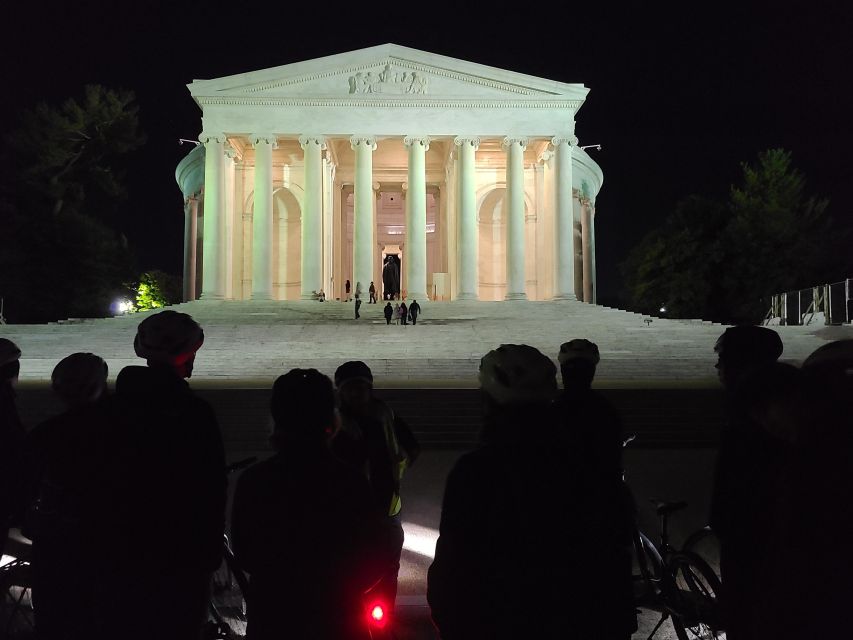
You arrive back near the Jefferson Memorial area, finishing the loop with photo time and a guided experience. This closing stop gives you a last look at the ideas you started with earlier, now with a better sense of where everything sits.
If you were watching the sky for full night lighting, the Jefferson end of the tour often becomes when conditions look best (again, season matters). Use this moment to capture your best wide-angle shots before you roll back.
What you actually learn: a guide turns monuments into a timeline
The monuments here cover major eras—World War II, the Korean War, the Vietnam War—and also the civil rights and presidential legacy tied to MLK and FDR. The power of a bike tour is that the “facts” don’t float around separately. They connect as you travel.
A strong guide approach (and what you should look for when you book) is short, clear framing before you wander on your own for those roughly 7–15 minute stop windows. The tour’s structure supports that: you get enough information to make what you’re seeing feel intentional, not random.
If your group includes teens, history-curious adults, or even people who usually power through monuments without slowing down, this format often works well because it gives everyone a reason to pay attention at each stop.
Inside Lincoln and Jefferson: why that access is worth it
Some DC monument tours let you view from paths. This one includes the chance to step inside the Lincoln Memorial and Jefferson Memorial. That’s more than a checkbox.
Inside, you experience scale differently. Lighting also tends to feel more dramatic once you’re under the memorial’s structure. And because you’re there briefly, you’re less likely to get tired and stop caring. You’ll still leave with memories that feel specific, not generic.
If you’re the type who wants a night activity that doesn’t turn into “just riding,” this is your proof. It gives you a tangible payoff beyond bikes and street views.
Safety and comfort details that make the difference
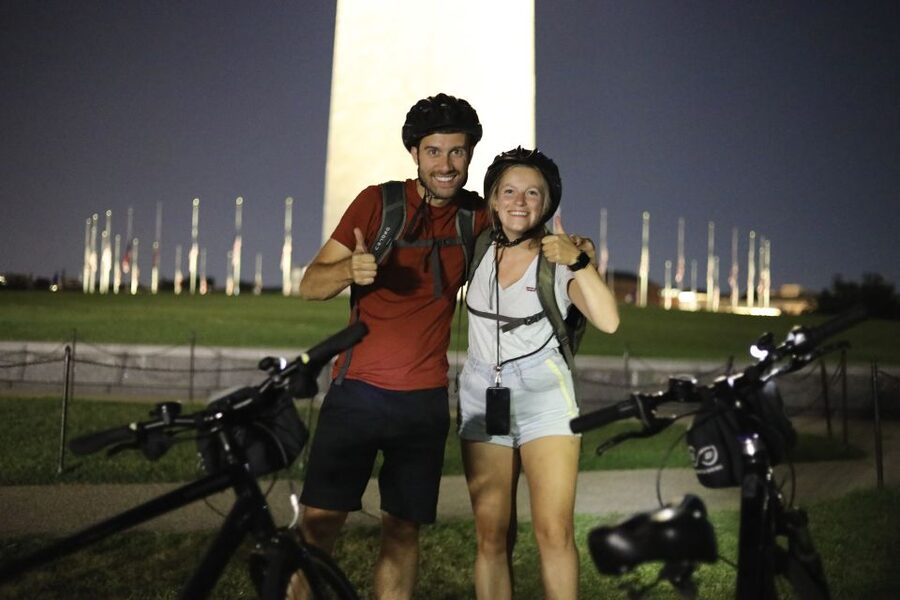
This tour isn’t an extreme biking challenge, but it still takes place in real traffic patterns and dark conditions. The provided reflective vest and safety light are there for a reason, and since helmets are mandatory, you won’t have to worry about the usual safety questions.
Also bring:
- Passport or ID card
- Comfortable shoes (not sandals or flip-flops)
If you’re not used to riding at night, wear shoes with grip and keep your pacing smooth at intersections. The tour is designed to be easy, but good habits still matter.
Kids and families: what’s supported
Toddler trailers and tag-a-longs for children are available for rent. That’s a helpful sign if your group includes younger kids who can’t bike the full route on their own.
Based on what the tour data says, this is also a great “first night in DC” activity because it helps kids and adults share the same experience without hours of museum time or long walking stints.
Who should skip it
The tour is listed as not suitable for pregnant women. If that affects you, you’ll need to choose a different style of tour that’s better matched to your comfort needs.
Price and value: is $65 a fair deal for 3 hours?
At $65 per person for about 3 hours, this isn’t a bargain in the sense of “cheap.” But it also isn’t priced like a luxury experience. It lands in a straightforward value zone when you break down what’s included:
- Bike rental
- Professional guide
- Helmet (mandatory)
- Reflective vest and safety light
- Time at multiple major monuments, including interior access at Lincoln and Jefferson
You’re paying for more than transportation. You’re paying for an efficient way to cover key sites without getting stuck in daytime crowds, plus you’re getting guided context that turns monuments into stories.
If you’d otherwise do these stops on your own, the total effort—routes, timing, and finding the right places to stop—would take more planning and more energy. Paying for a guided night loop often makes sense when you only have a day or two in DC.
Should you book this Monuments by Night bike tour?
I’d book it if you want:
- A low-effort way to see a lot of DC’s top monuments fast
- Evening atmosphere with fewer crowds and cooler temps
- Guided history stops that help you understand what you’re looking at
- Lincoln and Jefferson interior access, not just exterior photos
I’d think twice if:
- You care most about having every monument fully lit in photos at every stop, and you’re traveling in a period where it might still be daylight for part of the ride
- You have concerns about riding at night or need a different comfort level than the tour can accommodate
If you’re aiming for a fun first night activity that gives you both structure and freedom, this one is a strong pick. You’ll pedal through the capital, then walk away with DC’s major memorial themes connected in your head instead of scattered like a list.
FAQ
How long is the Washington DC Monuments by Night bike tour?
The tour duration is 3 hours.
How far do you ride, and is it difficult?
It’s an approximately 4-mile ride and is rated easy, covering mostly flat terrain.
Where do I meet the tour?
Meet at 801 D Street NW, Washington DC 20004, right by the US Navy Memorial Plaza.
What’s included in the price?
Included are the bike tour, a professional guide, bike rental, a mandatory helmet, and a reflective vest with a safety light.
Are sandals or flip-flops allowed?
No. Sandals or flip-flops are not allowed.
Is the tour suitable for kids or toddlers?
Toddler trailers and tag-a-longs for children are available for rent.