REVIEW · ZAGREB
Zagreb: 2.5-Hour Highlights Bike Tour
Book on GetYourGuide →Operated by Blue Bike Zagreb tours · Bookable on GetYourGuide
Riding through Zagreb by bike turns the city into something you can actually feel: the pace is relaxed, and the history comes at you from street level. I love the mix of major landmarks and lesser-known spots beyond the center, and I also like that the stops are frequent and flexible so you can linger. One thing to plan for: this is a bike tour, so you’ll want to be comfortable riding for about 150 minutes, even if you don’t need to be very fit.
The guides are a big part of the value. Names that show up in recent feedback include Alida, Alina, Bruno, and Fernando, and the common thread is clear—people leave with a sense of Zagreb that’s more personal than a facts-only walk. If you’re hoping for a hands-on food crawl or museum-heavy itinerary, this format is lighter than that, even though it hits key neighborhoods.
In This Review
- Key things I’d bank on before you go
- Why a Zagreb bike tour works better than shoe-leather pacing
- Getting oriented fast: starting at Blue Bike Zagreb near Ban Jelačić Square
- Nikola Tesla to the National Theatre: the city’s identity, right away
- Marshal Tito Square and the National Theatre/University area
- History stops that feel real: State Archives and the stories behind them
- Tkalčićeva Street, the Bloody Bridge, and the “Green Horseshoe” rhythm
- Dolac Market: the best quick taste of everyday Zagreb
- Stone Gate and Lotrščak Tower: classic Zagreb views without a long hike
- St. Mark’s Church: the stop everyone recognizes
- Gric Tunnel: the most hands-on moment on the route
- Bikes and pacing: what comfort looks like on a 2.5-hour tour
- Price and value: what you’re really paying for at $57 per person
- Who this bike tour is best for
- Should you book the Zagreb 2.5-Hour Highlights Bike Tour?
- FAQ
- How long is the Zagreb highlights bike tour?
- Where do I meet for the tour?
- Is the tour in English?
- What’s included in the price?
- Do I need to be very fit?
- Can I choose a shared or private tour?
- Is alcohol allowed during the tour?
- Can I cancel and get a full refund?
- Is there a reserve now, pay later option?
- What kind of sights are covered?
Key things I’d bank on before you go
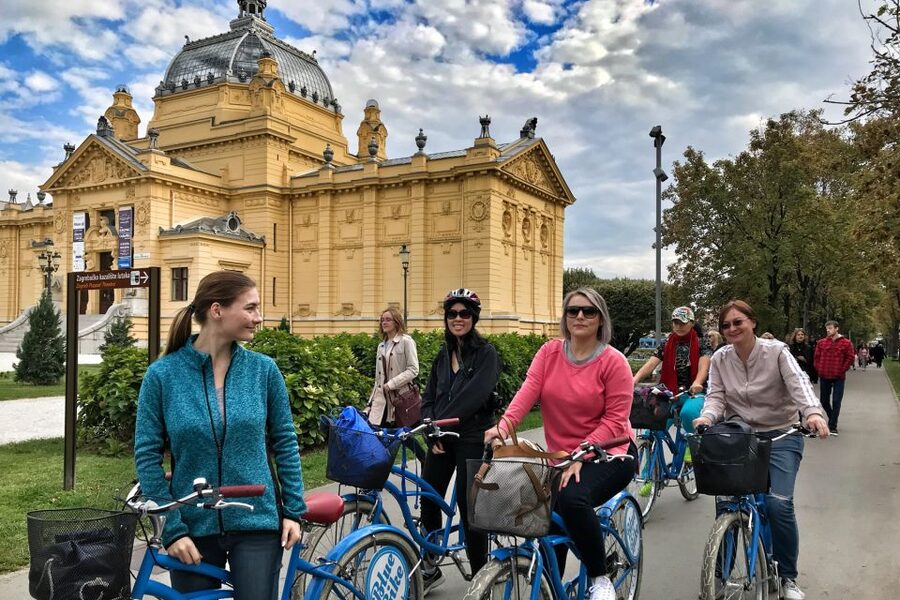
- A 150-minute highlights route that balances Lower and Upper Town vibes without feeling like a sprint
- Local guide storytelling that adds context, including how Zagreb and Croatia changed through major eras
- Landmarks with built-in “pause moments” like Dolac Market, St. Mark’s Church, and Lotrščak Tower
- A modern way to connect districts via streets you can’t really “get to know” from a bus stop
- Gric Tunnel includes more than passing by—you get a guided look and a walk-through segment
- You can choose shared or private so the experience matches your group style
Why a Zagreb bike tour works better than shoe-leather pacing
Zagreb is one of those cities where blocks feel short but the discoveries add up fast. The bike format helps you move between pockets of history—squares, viewpoints, and old-town streets—without your day collapsing into long waits and constant “where do we go next?” moments.
I also like that this doesn’t feel like a checklist where you stop, snap, and rush off. The route is built around frequent stops that let you decide how much time you want at each spot. That matters in Zagreb because so many of the best details are small: the look of a façade, the angle of a view, the character of a street.
And yes, it’s not pitched as a high-athletic challenge. You don’t need extra fitness, and the tour has been done by kids and elderly adults without issues. That’s a nice signal if you’re traveling with family or you just don’t want your vacation to double as a training plan.
You can also read our reviews of more tours and experiences in Zagreb.

Getting oriented fast: starting at Blue Bike Zagreb near Ban Jelačić Square
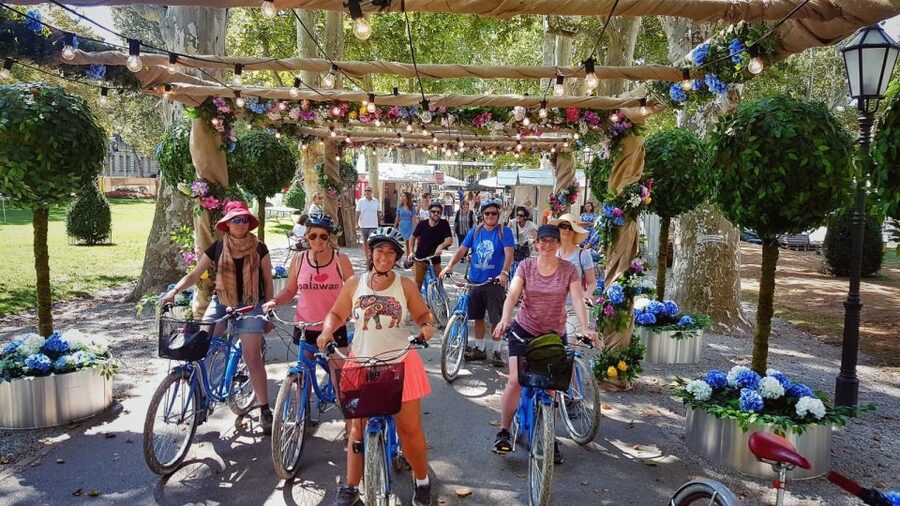
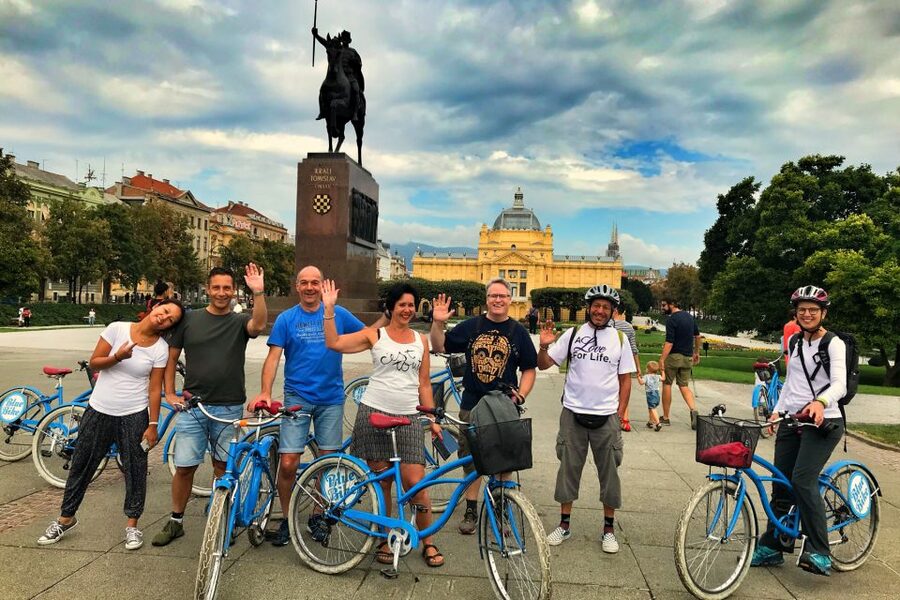
The meeting point is Trg bana Josipa Jelačića 15, with the Blue Bike Zagreb office tucked in an alley off the main square area. The note about the statue on the square pointing toward the office is more than cute navigation—it helps you avoid that first 20-minute scramble that ruins the start of a tour.
Once you’re set with your bike, you’ll be rolling through a mix of central sights and nearby segments, with a light cadence that keeps the ride from turning into “just getting there.” Guides also factor in traffic care and a comfortable pace, which is a recurring theme in the feedback.
If you want maximum value from the 2.5 hours, aim to arrive early enough to feel calm. When your brain is relaxed, you notice more.
Nikola Tesla to the National Theatre: the city’s identity, right away
A good highlights tour pulls you into Zagreb’s story quickly. This one starts by steering you toward recognizable anchors, beginning with the Nikola Tesla Monument. Even if you know Tesla mainly from the world beyond Croatia, it’s a smart early stop because it frames Zagreb as a city that pays attention to big ideas, not just old stone.
From there, you’ll glide toward the Croatian National Theatre area. The theatre zone sits in a larger cultural setting tied to major civic spaces, and it’s a quick way to see how Zagreb balances grandeur with everyday street life. The ride between stops matters here, too: bike time turns “I walked by that” into “I connected it.”
A practical note: each stop has a bike tour segment plus time on foot. Expect short outings where you can look, take a few photos, and ask questions, then remount and keep moving.
Marshal Tito Square and the National Theatre/University area
The tour also covers Marshal Tito Square, one of Croatia’s biggest and most beautiful squares, with the Croatian National Theatre and the University of Zagreb in the same orbit. Seeing it from the bike lane gives you a feel for the scale—then stepping in front of the buildings lets you appreciate details you’d miss at a distance.
History stops that feel real: State Archives and the stories behind them
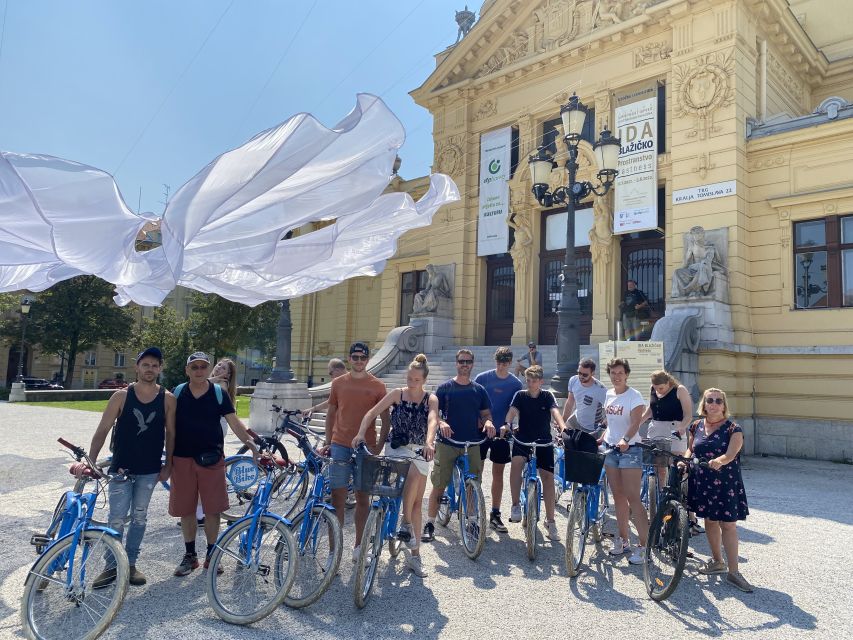
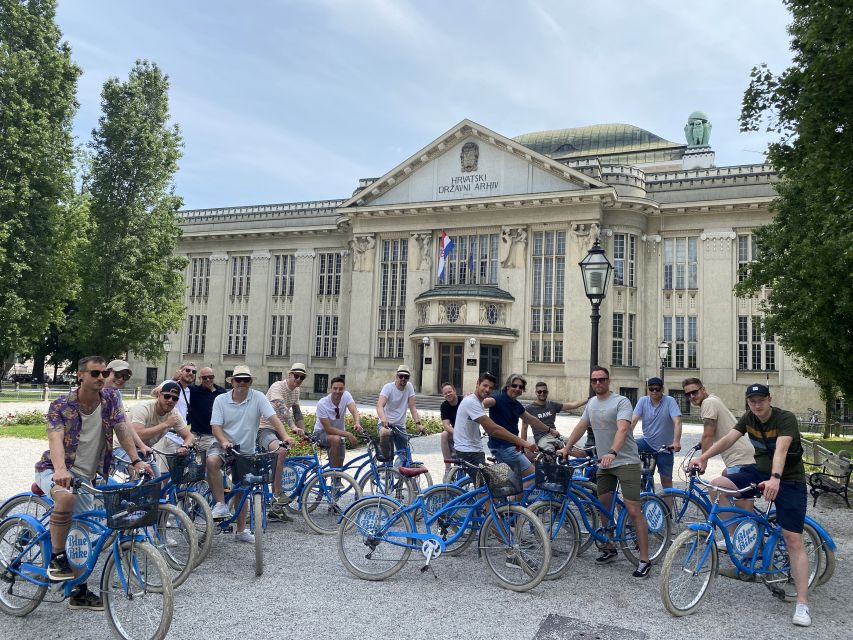
Not every history stop is a museum. Zagreb’s State Archives area gives you a sense of how documentation, institutions, and national identity get built into the city itself.
The point of including places like the Croatian State Archives isn’t just the building. It’s the narrative a local guide can attach to what you’re seeing: what Zagreb valued, what it defended, what it transformed. In feedback, guides are praised for a warm, proud style of explaining the city, and for adding honest context about Croatia’s past and shifts over time.
If you like history that’s tied to the street, this kind of stop works well. If you prefer your history to be strictly chronological and museum-based, you may want to pair this with at least one museum visit later.
Tkalčićeva Street, the Bloody Bridge, and the “Green Horseshoe” rhythm
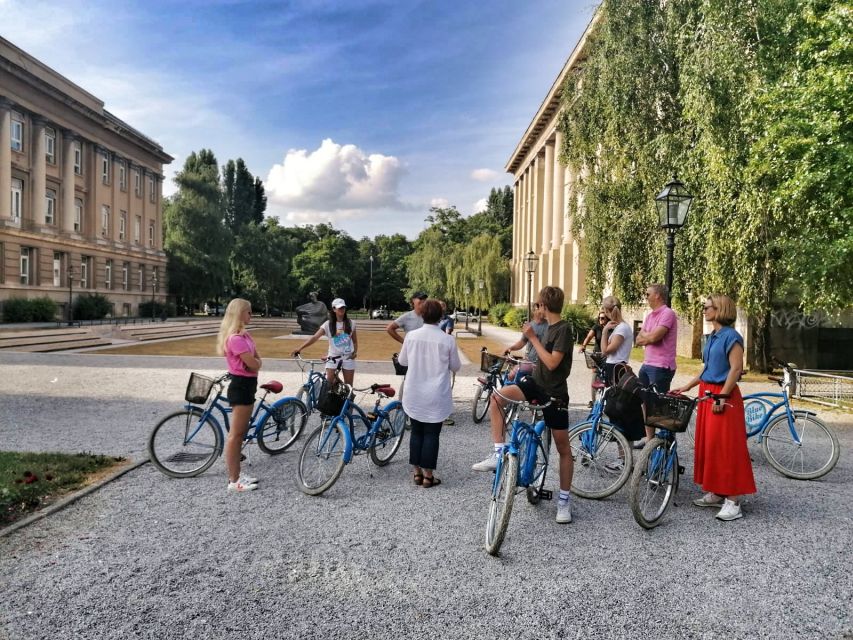
Zagreb’s Lower Town has a personality, and this tour doesn’t treat it as a blur of cafés. You’ll stroll down Tkalčićeva Street and cross the Bloody Bridge along the way. Those are exactly the kinds of elements that make a city feel lived-in, not staged.
The route also includes the Well of Life and the Green Horseshoe. Even without turning this into a lecture, these landmarks help you understand Zagreb’s layout: a blend of practical urban design and symbolic public spaces.
I like that you’re not rushing through these moments. Stops are frequent and you can take extra time if you’re interested. That flexibility is underrated on short city tours.
Dolac Market: the best quick taste of everyday Zagreb
Dolac Market is one of the most memorable stops on the route—part photo stop, part sightseeing time, and part “look around with your eyes” experience. Even if you don’t plan to buy anything, it’s where Zagreb feels most immediate: color, movement, and locals doing normal market things.
You get about 10 minutes here, plus the chance to visit and view the space at a comfortable pace. That’s enough time to orient yourself and understand why people talk about it.
If you do want to buy something, keep it simple and easy to carry. This is a bike tour, so you’ll want to avoid anything too messy once you’re back on the road.
Stone Gate and Lotrščak Tower: classic Zagreb views without a long hike
Next comes Stone Gate, with time for a photo stop and pass-by sightseeing. It’s a good bridge between the city’s layered past and the present-day street grid. You’ll get the sense that Zagreb is compact enough to be cyclical—modern life looping around older structures.
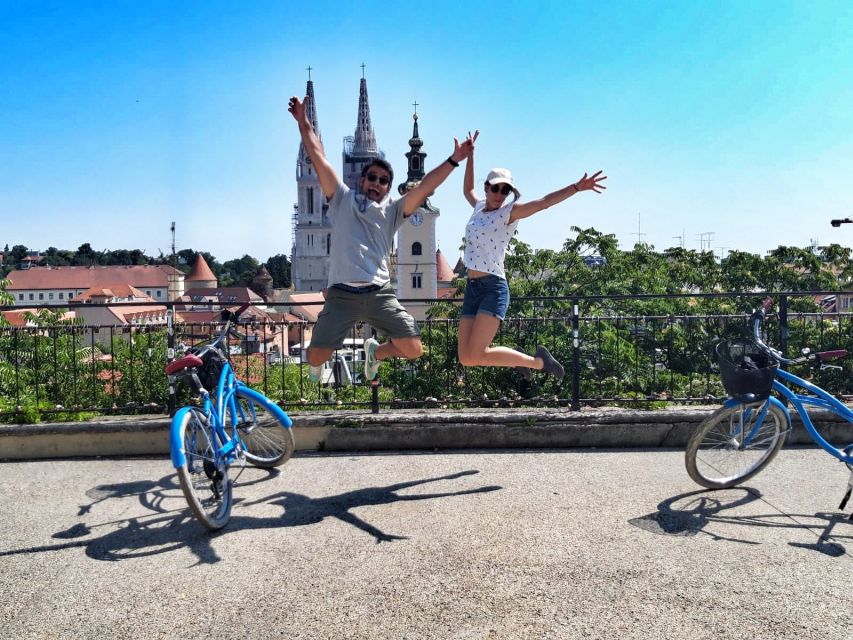
Then Lotrščak Tower arrives as a viewpoint moment. You’ll pause for photo ops and sightseeing, plus some scenic time on the way. This stop is a practical payoff: after several street-level moments, it helps to look out and understand the city’s shape.
If you’re the type who enjoys architecture and street geometry, these two stops do a lot of work in a short time.
St. Mark’s Church: the stop everyone recognizes
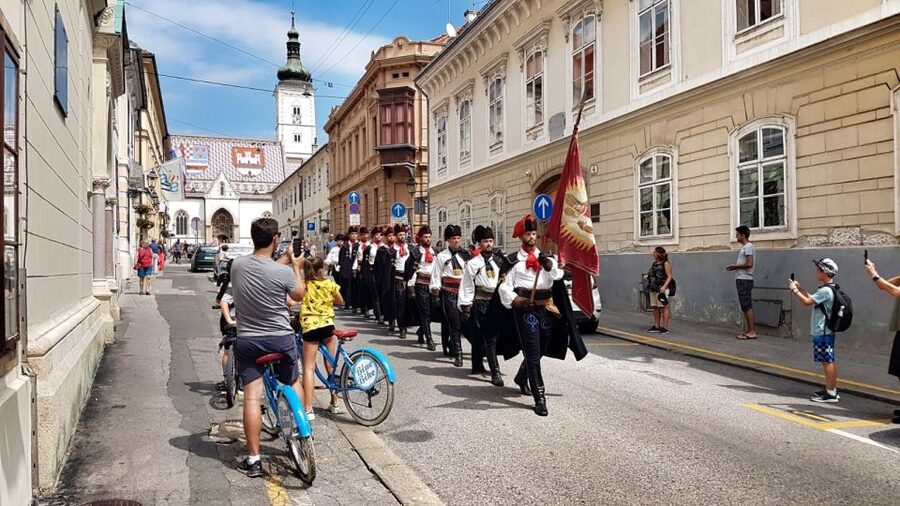
St. Mark’s Church is included with a photo stop plus time to visit and look around. This is one of those sights where you can learn a lot in just a few minutes if your guide points out the right details.
Because the time window is short, it’s smart to go in with a basic question in mind—like what’s significant about the church’s features and why it matters in Zagreb’s identity. Local guides who have lived through Zagreb’s history tend to frame these stops with personality, and recent feedback highlights exactly that kind of storytelling.
Gric Tunnel: the most hands-on moment on the route
If there’s a standout segment, it’s Gric Tunnel. You don’t just roll past it here. You get a photo stop plus a guided tour and a short walk segment.
That kind of stop changes the texture of the day. Outdoor highlights are visual, but a guided tunnel/walk segment adds a different kind of attention—closer, more focused, and often more memorable than another “look at the view” pause.
The tour structure also helps: you reach Gric Tunnel after several landmark stops, so by the time you arrive, you’re ready for something a little different.
Bikes and pacing: what comfort looks like on a 2.5-hour tour
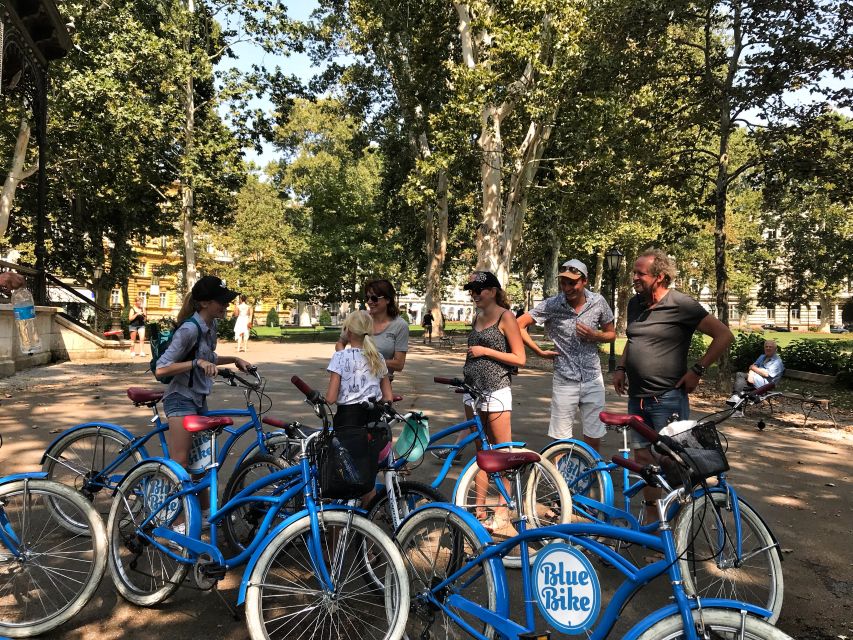
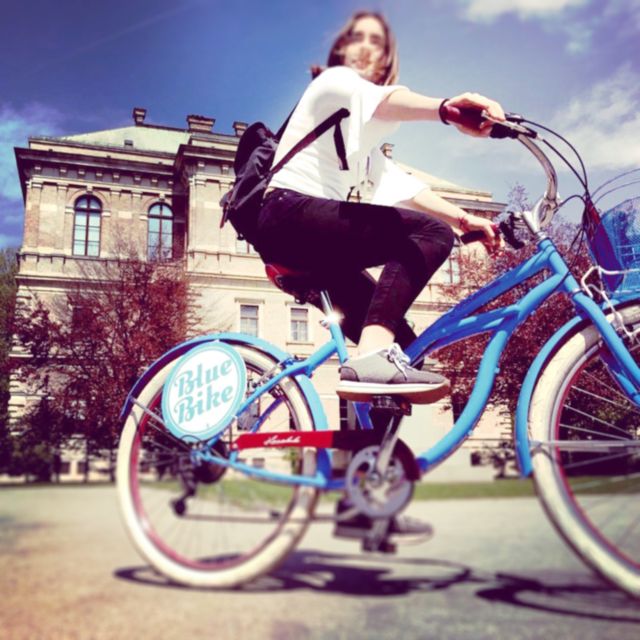
A lot of bike tours fail at the basics: uncomfortable seats, rushed timing, or chaos with traffic. The feedback for Blue Bike Zagreb’s operation leans the opposite way—bikes are described as in good condition, well maintained, and the saddle comfort gets called out in multiple notes.
Pacing also matters. Guides are praised for keeping a good rhythm on the bikes, including accommodating pace and traffic awareness. One review mentions a guide taking care about traffic and providing additional hints for where to go next. That kind of attention can make the difference between “fun ride” and “I felt safe the whole time.”
Also, you can choose between a shared and private experience. If you want quieter conversation and a more flexible Q&A flow, private is an easy match. If you’re social and enjoy meeting other visitors, shared can be great.
Price and value: what you’re really paying for at $57 per person
At $57 per person for 150 minutes, you’re paying for a package: bicycle + local guide + a route that connects multiple major sights without you having to plan every turn. The value isn’t just the number—it’s the time saved and the context added.
A self-guided bike ride could get you motion. But it won’t give you the narrative that local guides bring—especially the way guides frame Zagreb as a city shaped by big historical shifts. In the feedback, guides are repeatedly credited for warm, proud storytelling and for answering questions in a way that makes the city feel understandable quickly.
If your goal is a first-contact Zagreb orientation—getting your bearings and learning what matters—that’s where this price feels fair.
Who this bike tour is best for
This is a strong fit if you:
- Want a high-coverage overview in a short window
- Like history tied to streets and buildings, not only museums
- Prefer a lower-stress day than walking nonstop
- Travel with mixed ages (the tour has been done by kids and elderly adults)
It may be less ideal if you:
- Want a food-focused itinerary with lots of stops
- Prefer long museum time
- Are looking for a guaranteed heavy cultural program beyond outdoor landmarks and a tunnel segment
Should you book the Zagreb 2.5-Hour Highlights Bike Tour?
I’d book it if you’re trying to understand Zagreb fast and enjoy doing it from the saddle. The route hits the city’s recognizable anchors (St. Mark’s Church, Dolac Market, Lotrščak Tower) while also including story-friendly stops like Gric Tunnel and institutions that help explain Zagreb’s identity.
If you’re only in town for a day or two, this is an efficient way to start. And if you’re picky about comfort and guidance, the repeated mentions of bike condition, saddle comfort, and thoughtful pacing are reassuring.
If your travel style is more slow and deliberate, consider booking this early in your trip. Then you’ll know what to return to on foot later—because you’ll have a mental map, and more importantly, you’ll know what’s worth your attention.
FAQ
How long is the Zagreb highlights bike tour?
The tour duration is 150 minutes (about 2.5 hours).
Where do I meet for the tour?
You’ll meet at Trg bana Josipa Jelačića 15 (main square). The Blue Bike Zagreb office is in an alley, near where the statue on the square points.
Is the tour in English?
Yes. The live tour guide speaks English.
What’s included in the price?
The bicycle and a local guide are included.
Do I need to be very fit?
No. The tour isn’t described as requiring extra fitness, and it has been done by kids and elderly adults without problems.
Can I choose a shared or private tour?
Yes. You can choose between a shared or private experience.
Is alcohol allowed during the tour?
No. Alcoholic drinks are not allowed in the vehicle.
Can I cancel and get a full refund?
Yes. Free cancellation is available up to 24 hours in advance for a full refund.
Is there a reserve now, pay later option?
Yes. You can reserve now and pay later.
What kind of sights are covered?
You’ll see major Zagreb landmarks and areas such as Marshal Tito Square, the Well of Life, the Green Horseshoe, Tkalčićeva Street, the Bloody Bridge, Dolac Market, Stone Gate, Lotrščak Tower, St. Mark’s Church, and Gric Tunnel, plus other stops along the way.