REVIEW · SIEM REAP
Angkor Wat Bike Tour with Lunch Included
Book on Viator →Operated by Siem Reap Bike Tour · Bookable on Viator
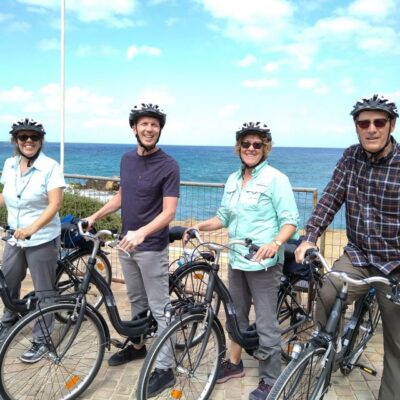
Morning wheels make Angkor feel personal. This Angkor Wat bike tour takes you through Angkor Wat and Angkor Thom areas on a small group ride, guided in English so you understand what you’re seeing. I especially like the small-group size, which keeps the pace human and the stops easier to manage.
I also like the value shape of the day: lunch is included, plus you get a bottle of water and a modern giant bike. You’re not just “getting transported,” you’re actively moving between major temple sights with enough time at each one to actually look. One drawback to plan for: the temple pass is not included, so your total cost depends on what you pay at the gate.
In This Review
- Key Things to Know Before You Ride
- Why Start With a Bike at Angkor Wat?
- Price and What Your $40 Covers (and Doesn’t)
- Getting to the Temples: Pickup, Timing, and Mobile Ticketing
- Stop 1: Angkor Wat With Time to Actually Look
- Stop 2: Bayon Temple and the Faces at Angkor Thom
- Stop 3: Ta Nei Temple for a Quieter Jungle-Edge Pause
- Stop 4: Ta Prohm and the Kapok-Tree Roots
- Lunch Included: A Real Meal Beat for Your Day
- The Pace: How an 8-Hour Temple Ride Feels in Practice
- Small Group Size: Why It Changes Your Experience
- Weather and Comfort Tips That Actually Matter
- Who This Tour Is Best For
- Should You Book This Angkor Wat Bike Tour?
- FAQ
- What’s included in the Angkor Wat bike tour price?
- Is the temple pass included?
- About how long is the tour?
- What time does the tour start?
- How many people are in the group?
- Do I need breakfast included in the tour?
- Is pickup from my hotel included?
- What about tickets—do I get anything on my phone?
- What happens if the weather is bad?
- Can I cancel for free?
Key Things to Know Before You Ride
- Small-group feel: From 2 up to about 7 on the group-size promise, with a cap listed at 10, so you won’t be lost in a crowd.
- English-speaking guide: You get context as you ride, not just photos and directions.
- Bikes and water included: Modern bike + bottled water means fewer worries on an all-day schedule.
- Four major temple stops: Angkor Wat, Bayon, Ta Nei, and Ta Prohm, with set time blocks for each.
- Lunch included: You’ll eat during the day instead of scrambling between sights.
- Weather matters: The tour requires good weather, and the operator offers a new date or refund if weather cancels it.
Why Start With a Bike at Angkor Wat?
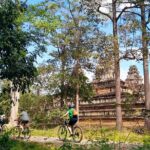
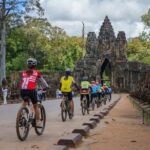
Angkor can feel overwhelming if you do it the usual way—bus, gate, crowd, quick photo, repeat. The bike format changes the tempo. You’re still visiting big-ticket monuments, but you’re also moving like you’re part of the Khmer landscape rather than just passing through it.
A guided ride also helps you notice details you’d miss standing in a line. When someone explains what you’re looking at—like the symbolism carved into the stone faces—you stop seeing temples as background and start seeing them as stories in architecture.
And because this is a small group, you get a better rhythm. You can ask a question, regroup without drama, and spend time at the right moments rather than rushing because the vehicle is waiting.
You can also read our reviews of more tours and experiences in Siem Reap.
Price and What Your $40 Covers (and Doesn’t)
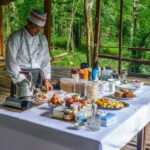
At $40 per person for an approx 8-hour day, the headline price is approachable—especially because the tour includes real “day-of” items: an English-speaking guide, modern giant bike, hotel pickup and drop-off, transportation, bottled water, and lunch.
The main thing not covered is the temple pass. That means the day’s true total is $40 plus the cost of entry for the Angkor temples you’re visiting. You’ll want to budget for that upfront so there are no surprises at the ticket booth.
Also, breakfast isn’t included. Since you’re starting in the morning (pickup is listed around 7:30am and the start time is shown as 8:30am), eat something before you head out unless your hotel already takes care of it.
Getting to the Temples: Pickup, Timing, and Mobile Ticketing
This tour is built around hotel pickup and drop-off, which is a big deal at Angkor. You don’t waste your best morning time hunting for meeting points, arranging rides, or trying to time tuk-tuk traffic.
You’ll be picked up at roughly 7:30am and the experience start time is listed as 8:30am. That early head start matters because you want to arrive ready to walk and look, not just catch up after the heat builds.
You’ll receive a mobile ticket for the experience, but the temple entry itself still requires a pass. The itinerary notes that you’ll go to the ticket booth early for temple visiting, with the process adjusted depending on whether you’ve already handled ticketing.
Stop 1: Angkor Wat With Time to Actually Look

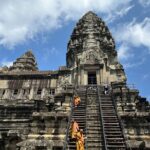
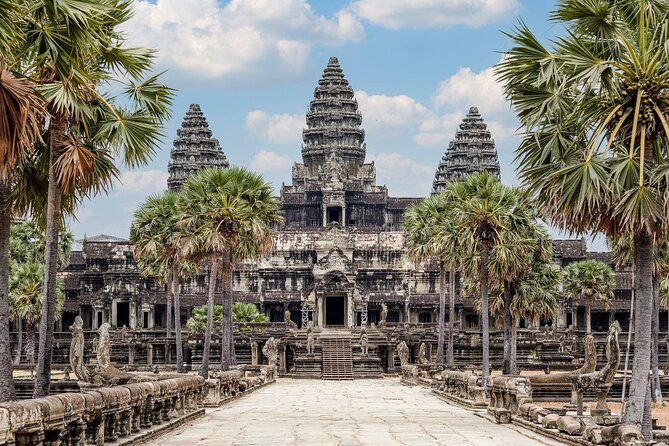
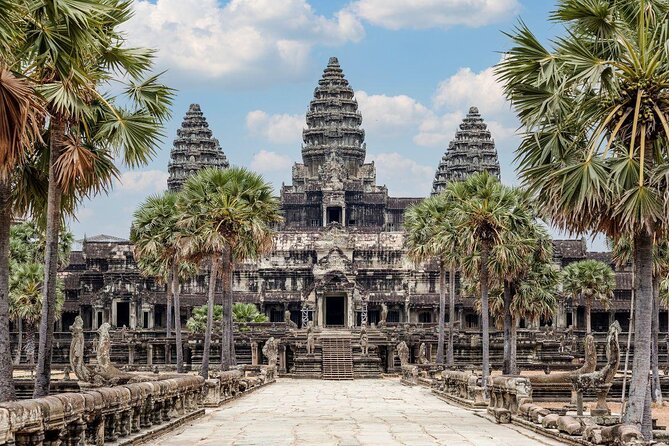
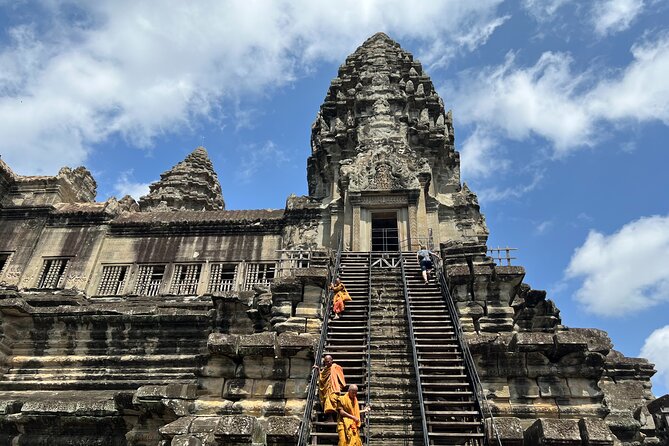
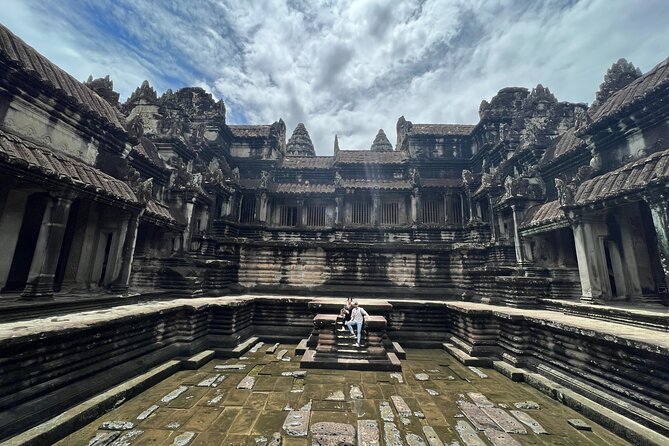
Angkor Wat is the anchor of the whole region, and you get real time here—about 2 hours at the start of the day. With that block, you can do more than skim the main sights. You can pause, trace the lines of the carvings with your eyes, and take in how the layout is meant to guide movement.
There’s also a practical advantage to starting here: you begin your day with the most famous temple, when you’re least tired. The tour is structured so you’re not saving Angkor Wat for late afternoon, when shadows get harsh and energy drains.
The schedule does note that you’ll head to the ticket booth to buy temple admission if needed. So plan to be patient at that early stage—then the ride and walking time can feel smooth.
Stop 2: Bayon Temple and the Faces at Angkor Thom
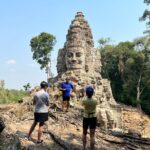
After Angkor Wat, you shift into Angkor Thom territory, targeting the south gate and then the Bayon Temple. Bayon gets special attention because it’s defined by those stone faces, tied to the spiritual world of the Khmer kings.
This stop is allotted 1 hour 30 minutes, which is a solid chunk for a major monument. It gives you enough time to circle viewpoints and understand what you’re seeing beyond the basic wow factor.
You’ll also learn the temple’s connections to Mahayana Buddhism and the king Jayavarman VII, and you’ll hear about the faces associated with Avalokiteshvara. That detail changes how the carvings land. Instead of just admiring stone expressions, you get a sense of why these faces appear again and again and what they were meant to communicate.
A balanced expectation: this is still one of the key sights, so you’ll want to move at a steady pace with your guide. The time is there, but you’ll get the best results if you keep your attention on the stories your guide points out.
Stop 3: Ta Nei Temple for a Quieter Jungle-Edge Pause
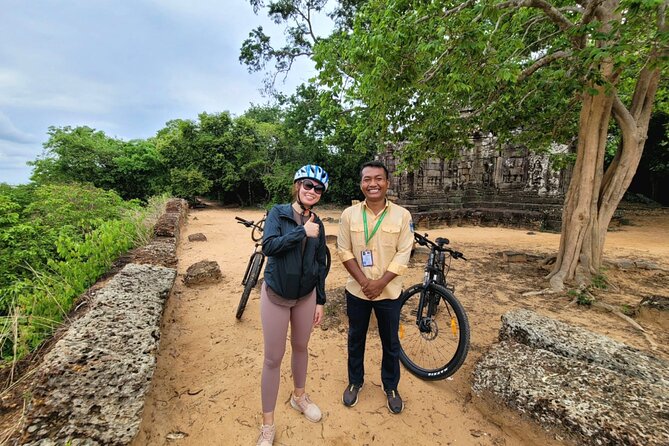
Next comes Ta Nei Temple, scheduled at about 1 hour. This is the kind of stop that breaks the pattern of the most famous monuments. It’s set along the route in the jungle area, and it feels different—more ruined, more grounded, and less “postcard-perfect.”
One nice bonus here is that the tour includes time to relax and enjoy local fresh fruits. That matters on a day like this. After hours of walking and biking, a fruit pause gives you hydration and a moment to reset without turning it into a full restaurant detour.
The “consideration” side is simple: a jungle-edge temple stop can mean uneven ground or more dust, depending on weather and recent conditions. Wear shoes you’re comfortable getting dirty. If you treat this as a relaxed breather, the time will feel rewarding rather than like an extra chore.
Stop 4: Ta Prohm and the Kapok-Tree Roots
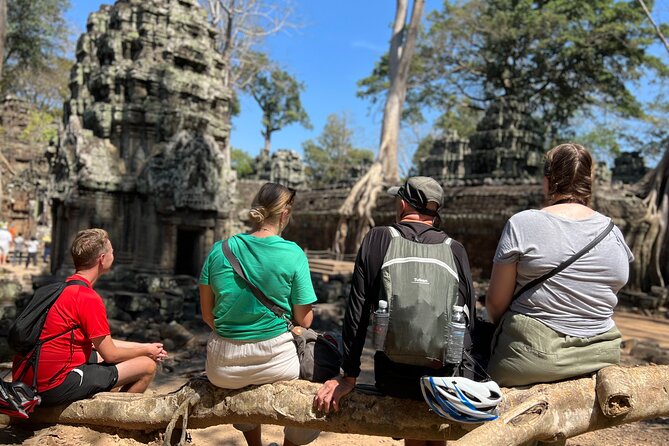
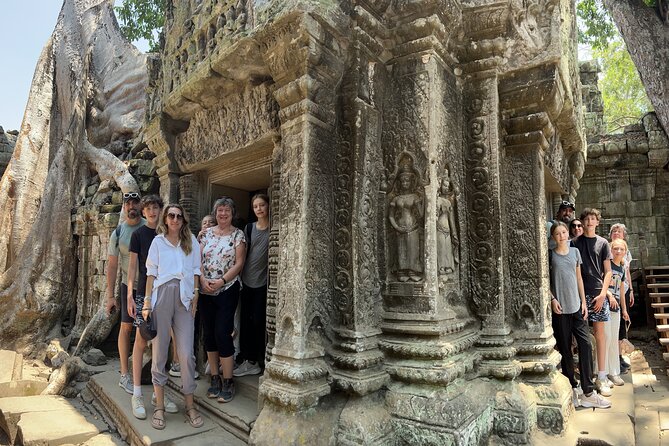
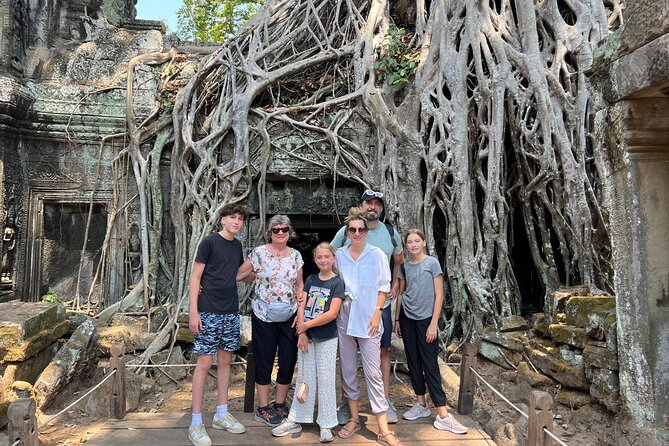
Then you head to Ta Prohm, with about 1 hour scheduled. This is the temple everyone recognizes because it was left as it was discovered, with kapok trees wrapping around and through the structure.
What I like about this stop on a bike tour is how the ride sets you up to experience the temple rather than just enter it. You arrive already in the right mood: noticing textures, shade, and the mix of stone and living roots. Once you’re inside the main area, the imagery hits harder because you’ve been traveling through the setting.
The itinerary calls out that kapok trees clasp the sanctuaries with mighty roots. That’s the kind of phrase that could sound dramatic—but standing there, you see why it’s used. Even if you’ve seen photos, your eyes will still be drawn to how the roots pull the architecture into a new form.
Plan for walking within the temple grounds. Even with a guide and a bike route between stops, you’ll still be on your feet enough that comfort matters.
Lunch Included: A Real Meal Beat for Your Day
Lunch is included, which is one of the smartest parts of this itinerary. You’re spending most of your day moving between temple zones, and the last thing you want is to hunt for food that’s convenient, quick, and not overpriced.
The tour notes lunch as part of the package, and one of the strongest themes from the experience write-ups is that the meal happens at local restaurants rather than a generic tourist setup. That’s the kind of choice that usually makes the day feel more authentic, and it’s built into the schedule instead of added on as an afterthought.
You’ll still want to keep it realistic: it’s a Cambodia temple day, not a food tour. But having lunch planned means you’ll get fuel, keep energy up, and avoid the “hangry spiral” that can happen when you’re mixing heat, walking, and cycling.
The Pace: How an 8-Hour Temple Ride Feels in Practice
The full day is listed as approx 8 hours, and the itinerary’s timing makes sense: Angkor Wat first (2 hours), then Bayon (1.5 hours), then Ta Nei (1 hour), then Ta Prohm (1 hour). That’s about 5.5 hours of temple time, leaving room for biking between zones, ticketing moments, and lunch.
This matters for you because it tells you the tour isn’t just a whirlwind. You get enough time at each stop to look closely, and you get the structure of a guide who keeps you on track.
It’s also a good match for travelers who want activity without going full endurance. Since modern bikes are provided, you’re not worrying about rentals or bike quality. The listing also says most travelers can participate, which suggests you’re not required to be a hardcore cyclist—just comfortable riding and walking.
Small Group Size: Why It Changes Your Experience
This tour is intentionally small. The group size is listed as a minimum of 2 and a maximum of 7, and another limit is listed at 10. Either way, it’s not a big bus group.
For you, that means:
- Easier communication with your guide in English.
- More flexible stop timing if you’re curious about carvings or photo angles.
- Less jostling when you want a quiet view of stone details.
- A more relaxed rhythm when regrouping after gates or paths.
It’s also safer and less stressful. Temple routes can involve crowds, uneven edges, and lots of people moving in different directions. A guide who’s managing a smaller group helps keep the day calm.
Weather and Comfort Tips That Actually Matter
The operator lists a clear condition: the tour requires good weather. If it gets canceled due to poor weather, you’ll be offered a different date or a full refund.
So treat this as a morning-and-day plan. Bring sun protection and plan for heat. You’ll have bottled water included, but you’ll still sweat. Wear breathable clothes and shoes that handle dust and uneven surfaces.
Also, expect an active day. Even with biking, you’re walking inside temple zones. If your knees or ankles don’t love uneven ground, take it slow at the temple stairs and ramps.
Who This Tour Is Best For
This is a great fit if you want:
- A guided, story-focused Angkor day, not just a sightseeing checklist.
- A more active approach than tuk-tuk sightseeing.
- A manageable group size where questions feel easy.
- Lunch included so you can keep your day flowing.
It’s less ideal if you hate biking or you want long, free time at one monument. This tour is structured with specific time blocks, so you’re trading some spontaneity for a well-timed route.
Should You Book This Angkor Wat Bike Tour?
Yes, if you want good value for a full Angkor day and you like the idea of moving between temples on a bike with an English-speaking guide. The combination of hotel pickup, modern bike, water, lunch, and a small-group pace is what makes the price feel fair.
Book it with one mindset: the $40 is only part of the story because you’ll still pay the temple pass separately. If you handle that in advance and show up ready for an active day, this tour is a smart way to see the big monuments while still feeling grounded in the Khmer world.
If you’re deciding between doing Angkor on your own versus with a guide, the guide-driven explanations—especially around Bayon, Jayavarman VII, and the Bayon faces—are the kind of added value that changes how the day sticks with you.
FAQ
What’s included in the Angkor Wat bike tour price?
The tour includes an English-speaking tour guide, bottled water, a modern giant bike, hotel pickup and drop-off, transportation, and lunch.
Is the temple pass included?
No. Temple passes are not included, and you’ll need to buy admission for temple visiting.
About how long is the tour?
The duration is listed as approximately 8 hours.
What time does the tour start?
The start time is listed as 8:30am, and pickup is noted at about 7:30am.
How many people are in the group?
The group is described as a minimum of 2 and a maximum of 7, and the experience listing also notes a maximum of 10 travelers.
Do I need breakfast included in the tour?
Breakfast is not included.
Is pickup from my hotel included?
Yes, hotel pickup and drop-off are included.
What about tickets—do I get anything on my phone?
The experience includes a mobile ticket.
What happens if the weather is bad?
This tour requires good weather. If it’s canceled due to poor weather, you’ll be offered a different date or a full refund.
Can I cancel for free?
Yes. You can cancel up to 24 hours in advance for a full refund.