REVIEW · CHIANG MAI
Chiang Mai Bicycle: Into The Lanna Countryside Guided Tour
Book on GetYourGuide →Operated by Chiang Mai Bicycle Tour · Bookable on GetYourGuide
Quiet roads beat Chiang Mai traffic fast. This guided Lanna countryside cycling tour trades city buzz for shaded lanes, rice paddies, and village life you usually only see from the inside. You’ll pedal past bamboo groves and orchards, then stop at places tied to local routines, like schools and small temples.
I like the balance here: easy riding (mostly flat) plus real cultural stops, not just photo moments. The other big win is the guide—locals with strong community connections who can explain daily Lanna traditions in plain, personal terms. One thing to consider: group logistics can vary, so if you hate crowds, ask ahead about the actual group size and how communication will work when you arrive.
In This Review
- Key highlights to look forward to
- Why this Lanna countryside ride feels like a real change of pace
- From Chiang Mai Bicycle to your first pedal stroke
- The cycling route: bamboo groves, rice paddies, papaya orchards
- School and temple stops: where the countryside gets personal
- Breaks, lunch, and snacks: don’t skip the food factor
- Guide quality: Wyn and Sun make the stories stick
- Group size and timing: the one thing worth confirming
- Bikes and the e-bike option: when THB 350 makes sense
- Who should book this tour (and who should skip it)
- Practical tips for a smooth ride in Chiang Mai Province
- Price and value: why $53 can be fair for what you get
- FAQ
- FAQ
- How long is the Chiang Mai Bicycle Lanna countryside cycling tour?
- Where do I meet for the tour?
- Is there an e-bike option?
- What’s included in the price?
- Do I need to be in good shape?
- Are hotel pickup and drop-off included?
- What languages are the guides?
- What should I bring?
- Is the tour okay if I can’t ride a bike?
- Should you book this Lanna countryside bike tour?
Key highlights to look forward to
- Quiet backroads through bamboo, rice fields, and village lanes instead of busy roads
- School and temple visits that connect the scenery to real community life
- Local guide stories with firsthand context for Lanna traditions
- Short breaks built in for water, photos, and small cultural stops
- Small-group feel—but confirm your date if you prefer fewer riders
- Optional e-bike upgrade for an easier ride (THB 350)
Why this Lanna countryside ride feels like a real change of pace
If your Chiang Mai days start to blur into temples-with-a-timetable, this tour is a reset. You go from the city’s constant motion to the countryside rhythm: slower roads, more shade, and the kind of “oh, this is how people live” moments that don’t happen when you’re rushing between landmarks.
What makes it work is the pairing of gentle cycling with community stops. The ride isn’t just scenery; it’s the way you reach places like local schools and village temples, and it turns daily routine into something you can actually observe—up close and at bike speed, not as a spectator from a bus window.
The route is designed for comfort. You’ll be on mostly flat ground, with support close by, so you’re not spending the whole tour fighting your bike. That’s a big deal in Thailand, where the heat and road conditions can vary. You’ll still get that satisfying “I did something” feeling, without it turning into a workout mission.
You can also read our reviews of more tours and experiences in Chiang Mai.
From Chiang Mai Bicycle to your first pedal stroke
The start is straightforward. You meet at the Chiang Mai Bicycle office (use the Google Maps pin if you’re arriving on your own). Expect a short drive—about 20 minutes—from the city to the traditional village area where the ride begins.
What I like about this setup is that it gets you out of town quickly, before you’ve burned energy on tricky navigation. You don’t need to think about route planning, and you don’t need to guess which side road is safe or scenic. You just show up, get geared up, and start moving.
Once you’re rolling, the pace slows down naturally. The early part of the ride is about settling in: wooden houses on stilts, palm-fringed lanes, and fields that look like they were placed for a postcard but feel lived-in. It’s a good way to get your bearings quickly.
The cycling route: bamboo groves, rice paddies, papaya orchards
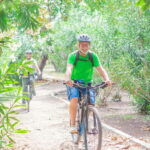
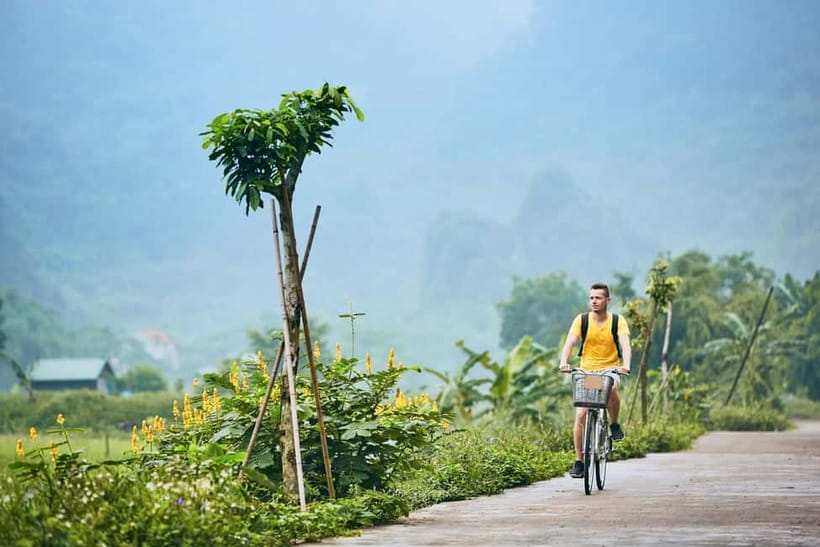
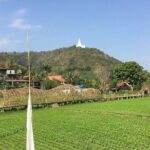
The heart of the tour is the ride through the Lanna countryside. You’ll cycle quiet backroads where the sound changes—less engine noise, more wind and birds. The scenery is a mix of agriculture and village edges:
- Bamboo groves and shaded paths, where the road feels cooler even on a warm day
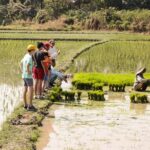
- Rice paddies, often flat and open, with that classic water-and-green rhythm
- Orchards, including papaya areas along the way
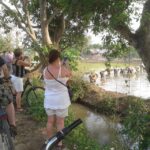
- Village lanes, where you’ll see everyday scenes like grazing animals and small roadside activity
The best part for most people is how “flowy” it feels. The route is mostly flat, so you’re not constantly climbing or braking. And support is always close, which matters if you’re less confident on a bike or simply don’t want to worry about mechanical issues.
Also, the ride is paced with stops. You’re not being dragged forward. You’ll have breaks for cool drinks, photos, and short visits that turn a moving road into a guided story.
School and temple stops: where the countryside gets personal
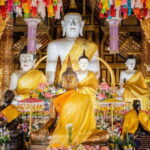
This is where the tour stops feeling like an outdoor activity and starts feeling like a cultural visit. Along the way, you’ll visit small places that connect to the community’s daily life—things like a local school and village temples.
You may also encounter small details that many visitors skip because they’re hard to find without local guidance. For example, you could see shrines connected to local traditions, including small funeral-related shrines. Even if you don’t know what you’re looking at, a guide who’s part of the community can explain the meaning behind what you see—why it’s built, who cares for it, and how it fits into Lanna life.
Why this matters: Thailand’s culture isn’t only in big, famous temples. It’s also in the small spaces people use every day—places of learning, community prayer, and local ceremony. Cycling gives you the chance to notice those places without the pressure of rushing through an indoor site.
These stops also help you understand the countryside as a living system. Fields aren’t just “nice views.” They’re part of a schedule, a family economy, and a set of traditions passed down through generations.
Breaks, lunch, and snacks: don’t skip the food factor
A lot of half-day tours skimp on food or treat it as an afterthought. Here, the meal is built in: you get a delicious local lunch if you’re on the morning option, and snacks if you’re on the afternoon option.
Along the route, you can expect additional drink breaks and light refreshments. One of the more memorable details is the presence of simple local snacks tied to stops along the way, including pancake rolls at the end on at least one ride.
Look at the food as part of the experience. It’s not just fuel; it’s also what locals share—typically simple, filling, and designed for an active day outdoors. If you’ve been eating primarily in Chiang Mai’s tourist areas, this is a chance to taste something more grounded.

Guide quality: Wyn and Sun make the stories stick
The guide can make or break this kind of tour, and you’ve got strong evidence of that here. Some rides are led by guides like Wyn, who gets praise for handling the route and making the ride informative. Other rides highlight guides such as Sun, with particular focus on agriculture and village life.
What you want from a guide on a cycling day is not just facts, but context. The best explanations in this kind of rural setting are the ones that connect what you see—rice fields, shrines, wood carving areas, school life—to how people live and work.
You’ll also appreciate the way guides handle communication and practical moments. If you’re the type who likes knowing what’s coming next, choose a time when you can arrive a few minutes early at the shop meeting point. That small habit helps you avoid stress if there’s any delay with coordination.
Group size and timing: the one thing worth confirming
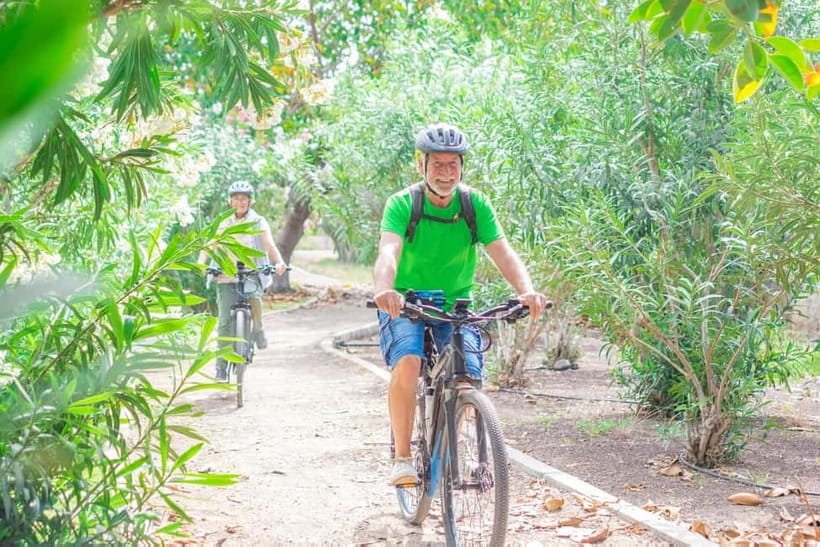
The tour is described as relaxed and suitable for all ages and fitness levels, and many riders experience it that way. But group size can matter more than you’d expect when you’re navigating village roads and occasional crossings.
There’s also a real-world consideration: pick-up timing and clear city-shop communication. A late arrival for collection, without clear notice, is something that can add frustration to your day. Another issue that can affect your comfort is group size turning larger than you might expect.
My advice: when you book, ask two direct questions:
1) How many riders will be in the group on my date?
2) What’s the plan for meeting up and moving out from the city shop?
If you prefer quiet riding with minimal crowding, those answers help you decide if this day will feel calm or chaotic.
Bikes and the e-bike option: when THB 350 makes sense
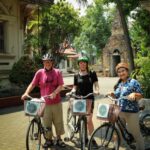
You’ll ride a good-quality mountain or comfort bike, plus you get a helmet. The tour includes drinking water and soft drinks, plus accident insurance, which is a practical safety net.
There’s also an e-bike upgrade option for an additional THB 350. If you’re traveling with limited stamina, have knee concerns, or just want to keep the day easy and scenic, the e-bike can be a smart choice. Even with a mostly flat route, heat and long leisurely riding can still feel tiring for some people. The e-bike option reduces that friction and keeps the focus on the villages and stops.
One caution from the ride comfort side: if you’re sensitive to bike fit, confirm the type you’ll receive. Some riders can find certain bike styles more comfortable than others, especially if they don’t ride often. A quick check and a proper seat height adjustment make a noticeable difference.
Who should book this tour (and who should skip it)
This tour is a strong fit if you want:
- An active half-day that isn’t exhausting
- A countryside look at rural life beyond the city center
- Local guide storytelling tied to agriculture and everyday culture
- A bike ride you can enjoy at a social pace, with breaks and drinks
It’s also a good choice for families and mixed groups because the route is mostly flat and support is close by.
Skip it if:
- You can’t ride a bike at all
- You’re expecting a workout-focused ride, because the emphasis is calm cycling and cultural stops
- You absolutely hate group crowds—just confirm group size first
If you’re someone who likes walking tours but wants a change of pace, this is a great middle ground. You get movement and views, plus guided meaning at the stops.
Practical tips for a smooth ride in Chiang Mai Province
You’re in Thailand countryside, so think sun and comfort.
Bring:
- Sunglasses
- Camera
- Sunscreen
- Comfortable clothes
What to plan mentally:
- It’s outdoors, so you’ll likely feel the heat even with shade. Start hydrated, and use every drink break.
- Wear clothes you don’t mind getting a little dusty, since you’re riding village roads.
- Don’t bring alcohol or drugs, since they’re not allowed on the tour.
Safety habits:
- Keep an eye on the person ahead and follow guide directions for crossings or busier moments.
- If you’re not confident riding in a group, choose the e-bike option. It makes your speed more predictable and reduces fatigue.
Price and value: why $53 can be fair for what you get
At $53 per person for a four-hour guided ride, the value comes from the combo of things that usually cost extra when booked separately: a local guide, a real countryside route, safety basics (helmet and insurance), and included food and drinks.
You’re not paying just for bike rental. You’re paying for:
- Guided access to places like local schools and temples
- Cultural interpretation that helps you understand what you’re seeing
- A structured half-day with water, soft drinks, and snacks or lunch
- A support system close to the route
If you need the e-bike, the THB 350 upgrade can be worth it because it changes the feel of the day. Instead of fighting energy, you’re free to enjoy the stops and the countryside pacing.
FAQ
FAQ
How long is the Chiang Mai Bicycle Lanna countryside cycling tour?
The tour lasts 4 hours.
Where do I meet for the tour?
You meet at the Chiang Mai Bicycle office. The meeting point is listed on Google Maps at this link: https://maps.app.goo.gl/VttzNf5JR41fb455A
Is there an e-bike option?
Yes. You can upgrade to an e-bike for an additional THB 350.
What’s included in the price?
Included are the cycling tour through Chiang Mai’s countryside, a local English-speaking guide, a high-quality mountain or comfort bike, helmet, drinking water and soft drinks, and accident insurance. Lunch is included for the morning tour, and snacks are included for the afternoon tour.
Do I need to be in good shape?
You don’t need to be a strong cyclist. The route is mostly flat and suitable for all ages and abilities, and support is always close by.
Are hotel pickup and drop-off included?
Hotel pickup is not included.
What languages are the guides?
The tour guide speaks English and Thai.
What should I bring?
Bring sunglasses, a camera, sunscreen, and comfortable clothes.
Is the tour okay if I can’t ride a bike?
No. It’s not suitable for people who can’t ride a bike.
Should you book this Lanna countryside bike tour?
I’d book it if you want a calm, meaningful half-day that mixes gentle cycling with real village stops—especially if you enjoy agriculture, small temples, and explanations that make rural life easier to understand. The price makes sense when you factor in the guide, included bike and safety basics, and the meal/snack.
But I’d be a little picky about timing and group size. If you’re sensitive to crowds or you dislike unclear meeting instructions, message ahead and ask how many riders are in your group and how pickup from the city shop will run. If that checks out, this is an excellent way to see Chiang Mai Province beyond the usual tourist circuit—quiet roads, friendly village moments, and a pace that actually lets you notice details.