REVIEW · NAHA
E-Bike Nature Tour in Shuri
Book on Viator →Operated by Discovery Bicycle Tours Okinawa / e-CHARIty Naha · Bookable on Viator
E-bikes make Shuri history feel close. I love the combo of easy electric riding plus real neighborhood scenery along rivers and springs, and I especially like how the guides keep things safe and simple with clear English and cool two-way-helmet communication. The one thing to plan around is weather and footing: you’ll be on uneven, sometimes rocky or waterside paths, so wear athletic shoes and don’t count on flip-flops.
You’ll start near Makishi Monorail Station, pick up your bike fast, get a short briefing, and then spend about 3 hours gliding between cultural stops and quiet nature pockets. The group stays small (up to 5), so it feels more like getting a local “how to walk and ride this area” education than a crowded sightseeing conveyor belt.
In This Review
- Key things you’ll notice on the ride
- Starting at Makishi Monorail: where the tour really begins
- Riverside Naha: the everyday scenery between big sights
- Shurigibocho’s stone steps: history you can feel in your legs
- Shuritobarucho spring: quiet nature with waterfowl and birdsong
- A seven-generation sweet stop: Ryukyu flavors as a cultural checkpoint
- Shureimon Gate in vermilion: the ceremonial moment
- Exploring Shuri Castle town on stone-path streets
- The hill view and the wind-down finish back into Naha
- Price and value: is $98.83 worth it for 3 hours?
- Who this tour suits best
- Quick practical tips before you go
- Should you book this Shuri e-bike nature tour?
- FAQ
- How long is the E-Bike Nature Tour in Shuri?
- What does it cost, and what’s included in the price?
- Where do I meet, and how close is it to public transit?
- What time does the tour start?
- How many people are in a group?
- Is the tour suitable for most travelers?
- What should I wear for this tour?
- What if the weather is bad?
- Can children ride?
Key things you’ll notice on the ride
- Max-5 group energy: you get more attention during the ride and for safety checks
- Two-way helmets: the guide can talk clearly while you’re moving through streets and paths
- Riverside daily life: you ride where traditional homes and modern buildings share the same block
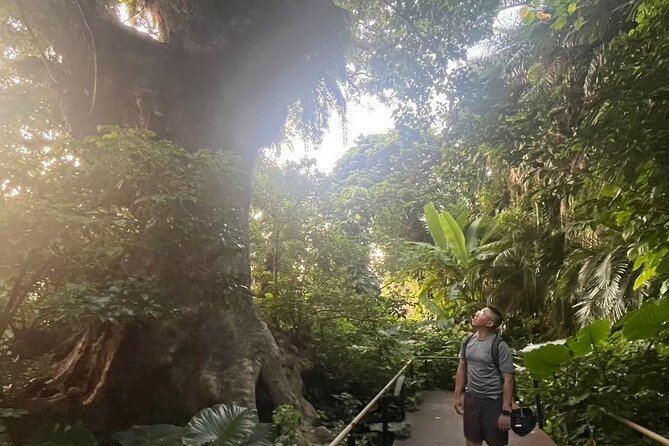
- Spring stops with bird sounds: the pace slows at the water sources, where nature is the main show
- Shureimon Gate photo moments: that vermilion ceremonial entrance is instantly recognizable
- Fun downhill at the end: you finish with wind-in-your-face momentum before heading back into Naha
Starting at Makishi Monorail: where the tour really begins
I like tours that start in an easy-to-find place, and this one does. You meet at 3-chōme-13-20 Makishi, Naha, at the e-CHARIty Naha Kokusai Street shop, which is about a 1-minute walk from Makishi Monorail Station. That matters, because it helps you avoid that last-minute panic of hunting for a tiny storefront after you’ve already had a long travel day.
At the shop, you’ll pick up the e-bike and get a quick safety and riding briefing. This is the part where the guide sets expectations: how to handle the bike, what to watch for, and how the group will move. The practical win is that you’re not just handed a bike and sent off. You also get a cycling helmet with two-way communication, which makes it easier to hear instructions even when you’re passing other people or rolling through busier streets.
The tour runs at 10:00 am and uses a mobile ticket, so you’ll want your phone charged and ready when you arrive. Everything is designed for a smooth start, and once you’re rolling, the ride feels like it’s building from neighborhood rhythm into Ryukyu-era landmarks.
You can also read our reviews of more tours and experiences in Naha.

Riverside Naha: the everyday scenery between big sights
One of my favorite ways to experience a city is to ride through the “in-between” spaces—the parts that don’t make it onto a postcard. Right after you begin, you move along the riverside where you can see traditional and modern houses side by side. You’re not just looking at scenery from a distance. You’re close enough to catch the small interactions that make a place feel alive, like locals responding with a warm smile when you greet them as you pass.
This section is a good warm-up for the e-bike. It lets your body settle into the rhythm of riding without immediately cramming history into every minute. If you’re visiting Naha and Shuri for the first time, this is the kind of start that helps you get oriented fast—where the water runs, how streets bend, and how the neighborhoods flow toward the Shuri area.
There’s also a mindset shift you’ll feel here. Instead of thinking of Shuri as one big attraction, you start seeing it as a living area where daily life and nature overlap. That’s exactly what makes the tour feel different from a straight-line bus itinerary.
Shurigibocho’s stone steps: history you can feel in your legs
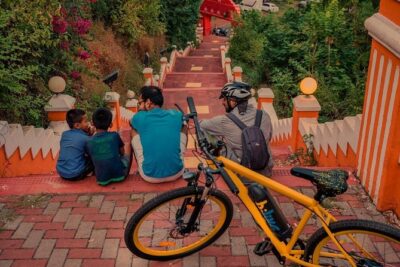
As the monorail hum hangs overhead in the background, you’ll reach Shurigibocho, a quieter pocket just off the main drag. This is where the ride turns a little more “old street” and less “main road.” You’ll descend stone steps and pass through areas with trees and a deep sense of stillness.
The value here is not just the view. It’s the change in atmosphere. Naha can feel energetic near transportation hubs, but these stone-step stretches slow the whole experience down. On an e-bike, you still get the freedom of motion, but you’re also stepping into spaces that feel carved by time—narrower, slower, and more human-scale.
If you’re sensitive to stairs, you should know this part involves descending stone steps (and you’ll likely need to dismount or ride carefully depending on the exact spot). Wear shoes with grip and keep a steady pace. The e-bike does the heavy lifting, but your feet still need to be confident on stone.
Shuritobarucho spring: quiet nature with waterfowl and birdsong

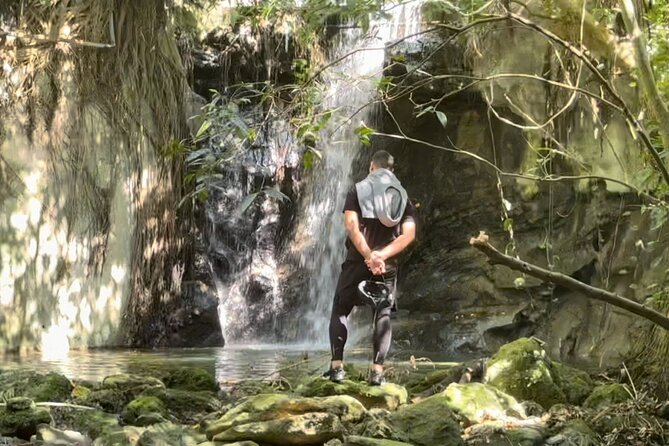
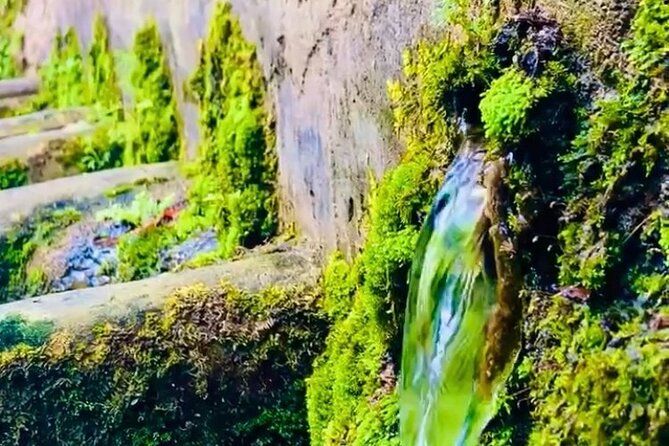
Next comes another spring area at Shuritobarucho, described as something special because waterfowl gather from depths of the forest. Practically, what you’ll notice is the shift to sound. The tour slows in these spots so birdsong becomes the main soundtrack, and you get a breather away from traffic noise.
This is one of the best moments to let the e-bike do what it’s good at. You’re not straining your way up and down hills—your effort stays manageable—so you can actually pay attention to what’s around you: the water, the surrounding greenery, and the quiet feel of the area.
It’s also a reminder that Okinawa’s story isn’t only written in buildings. Water systems and springs shape how communities grew, where people walked, and where nature stayed close. These stops are short, but they change your whole understanding of the region.
Do keep an eye on footing here. Because the route may involve water-adjacent and rocky areas, the shoe rule isn’t just a suggestion. It’s the difference between enjoying the stop and constantly worrying about where your foot lands.
A seven-generation sweet stop: Ryukyu flavors as a cultural checkpoint
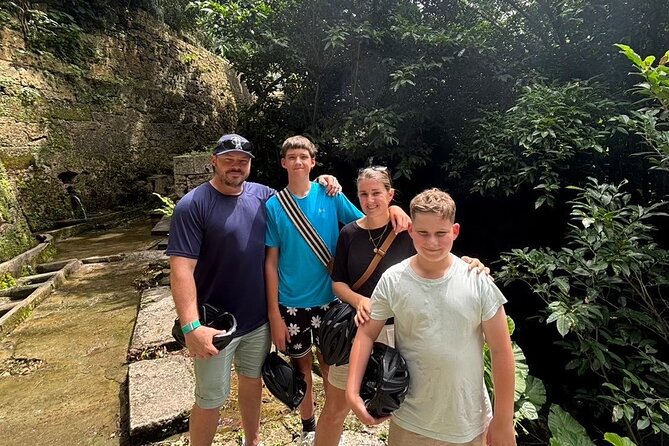
After the nature pauses, the tour gives you a very human, very edible kind of history. You’ll visit a shop that preserves recipes passed down through 7 generations since the Ryukyu Kingdom era, where artisans handcraft Ryukyu traditional sweets.
This works as more than a snack stop. It’s a culture check-in: you taste a local legacy, then you look around and understand that this area isn’t only about ruins and gates. It’s also about crafts, routines, and what gets made daily.
You may be tempted to rush through this part to catch up on riding time. Don’t. Take your time. The sweets help reset your energy before you move into the most iconic Ryukyu landmarks, and it gives you something to remember beyond photos.
One practical note: the tour doesn’t include camera mounts or a mobile phone holder. If you plan to take photos on the move, plan how you’ll carry your phone safely. A lot of riders simply wait until they stop at viewpoints or calm streets.

Shureimon Gate in vermilion: the ceremonial moment
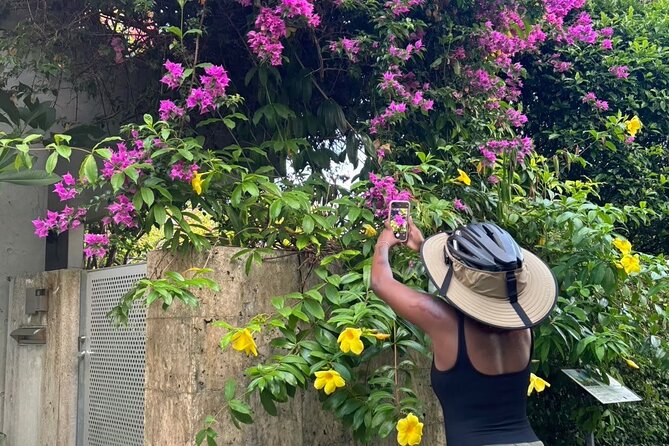
Then you hit the big symbolic highlight: Shureimon Gate. This gate is one of Okinawa’s most recognizable ceremonial entrances, painted a striking vermilion. It was also called Ue no Ayamon- Ii no Ayashō by common people—a phrase you’ll likely hear mentioned in the guide’s explanation.
What I like about this stop is how it feels like a threshold. You’re not just admiring a structure; you’re stepping into the mental geography of the Ryukyu Kingdom capital area. You understand that this gate wasn’t built for scenery alone—it marked movement, authority, and ceremony.
Photography is naturally a big draw here, but the real win is what the guide helps you notice: the balance in the design, the symbolism, and why locals treat this landmark as more than a tourist stop.
If you want a smooth photo session, position yourself thoughtfully. The best shots come from spacing your angle rather than from leaning too close to other people. Also remember the tour is moving on schedule, so keep your time focused: a couple minutes of quiet looking, a couple photos, then back to the ride.
Exploring Shuri Castle town on stone-path streets
After Shureimon, you’ll slowly descend a hill and get an overlook of Naha City. Red roofs, guardian figurines, and stone pillars are scattered around, and the experience encourages you to spot patterns rather than just stare at rooftops.
Then the tour continues into the Shuri Castle town feeling, especially around Shrikinjocho Stone-Path Road. This is the capital area of the Ryukyu Kingdom, and you walk through streets with cobblestones, temples, and sacred shrines. Even from an e-bike, this section feels more like slow travel: you’re moving through an area built for walking and careful attention.
This is where the value of having a guide really shows. Without context, you’d still see nice streets. With context, you learn what you’re looking at and why it matters, down to how the streets and sacred spaces create a map of the past.
The downside is time and pace. Short stops mean you have to choose what you pay attention to. I’d treat this like a sampler. If you fall in love with one lane or one shrine, you can always come back later on your own after the tour ends.
The hill view and the wind-down finish back into Naha
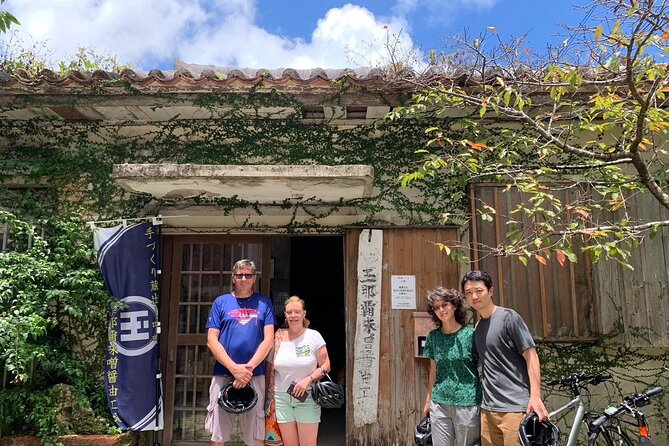
The final energy shift is the downhill ride back toward the meeting point. This is the fun part: wind in your face, momentum building, and the feeling that your effort earlier paid off. You’ll end back at e-CHARIty Naha Kokusai Street, where you return the bicycles and wrap up the tour.
What I like here is that you’re not left stranded. Once you’re done, you still have time to enjoy Naha on your own. You’ve already learned how the area connects—so your next steps feel easier, whether that means grabbing lunch, wandering shopping streets, or just returning to the monorail with confidence.
Price and value: is $98.83 worth it for 3 hours?
For $98.83 per person (with a mobile ticket and an average booking window of about 33 days ahead), the value comes from how much is included and how small the group stays. You’re getting:
- e-bike use and a cycling helmet
- a guide who keeps the ride organized and safe
- time at multiple cultural and nature stops
Even though the tour duration is about 3 hours, it covers a lot of emotional distance: city-to-nature-to-Ryukyu-landmark-to-streets-and-springs in one run. If you’ve ever tried to do this area on foot without getting exhausted, you’ll understand why the e-bike matters.
The one “value check” is this: if you truly hate riding through residential areas and short historical stops, you might find it less satisfying than a single museum-focused outing. But if you like the feeling of moving through real neighborhoods—seeing water, steps, gates, and craft culture—the cost starts to make sense fast.
Who this tour suits best
This is a strong fit if you:
- want an easy-access way to connect Naha and Shuri landmarks without overplanning
- like guided pacing so you don’t miss important details
- enjoy small group travel (max 5) and clear communication
- want nature moments that aren’t just a quick photo and go
It may be less ideal if you:
- struggle with stone steps or uneven surfaces
- can’t follow basic riding safety instructions
- are only interested in one or two famous spots and nothing else
Quick practical tips before you go
- Bring athletic shoes; avoid high heels and sandals. The route may include rocky and water-adjacent areas.
- If you plan to film or photograph, remember phone mounts and camera mounts aren’t included.
- Expect the course order to be flexible depending on road conditions and opening hours.
- Weather matters. The experience requires good conditions, and severe weather can trigger plan changes (you’ll be contacted the day before in those cases).
Should you book this Shuri e-bike nature tour?
If you want a tour that feels like local movement instead of a checklist, I’d book it. The small group size, the two-way helmet setup, and the mix of riverside life, quiet spring stops, and Ryukyu landmarks make it a memorable way to connect Naha with Shuri without grinding your legs all day.
I’d skip it only if your priority is a single “must-see” site and you dislike any biking on uneven ground. Otherwise, this is a smart value buy for anyone who wants to ride, learn, and still have energy left to explore Naha afterward.
FAQ
How long is the E-Bike Nature Tour in Shuri?
It runs for about 3 hours.
What does it cost, and what’s included in the price?
The tour costs $98.83 per person and includes bike use, a cycling helmet, a cycling guide, and bike rental.
Where do I meet, and how close is it to public transit?
You meet at 3-chōme-13-20 Makishi, Naha, Okinawa 900-0013, at e-CHARIty Naha Kokusai Street. It’s about a 1-minute walk from Makishi Monorail Station.
What time does the tour start?
The start time is 10:00 am.
How many people are in a group?
The tour has a maximum of 5 travelers.
Is the tour suitable for most travelers?
Most travelers can participate.
What should I wear for this tour?
Wear athletic shoes or similar footwear and avoid high heels or sandals. The route may involve waterside and rocky areas.
What if the weather is bad?
The experience requires good weather. If it’s canceled due to poor weather, you’ll be offered a different date or a full refund. If precipitation probability exceeds 70% or severe weather occurs, plans may change and you’ll be contacted the day before.
Can children ride?
Children aged 1 to 5 can have a child seat attached to the parent’s bicycle. You should consult staff for details.