REVIEW · NAHA
Naha: Guided E-Bike Tour of the 12 Zodiac Temples
Book on GetYourGuide →Operated by イーチャリティ那覇国際通り本店 · Bookable on GetYourGuide
Shuri has a way of making you slow down, then look closer. This guided e-bike loop through the zodiac temples in Naha turns backstreets into a story you can actually follow, and it’s an easy win thanks to electric bike help and helmet intercom so your group stays connected. I also love the photo moment at the Shureimon Gate, because it’s Okinawa in one striking red frame.
One watch-out: you must be comfortable cycling for the full experience—people who can’t ride a bike won’t be a good fit, and you’ll want comfortable shoes and water because you’ll be out for about 3 hours.
In This Review
- Key Things I’d Prioritize Before You Go
- Why Shuri’s Zodiac Temples Work So Well on an E-Bike
- Meeting at ダイショウビル and Getting Your Bike Fit Right
- Shuri Kannondo: Ryukyu Guardian Temples and Red-Temple Details
- Ankoku-ji to Shureimon Gate: Ancient Gates, Gajumaru Trees, and a Photo Moment
- Daruma Temple and Seikoji: Health Prayers, Pregnancy Wishes, and Jizo Statues
- Saki Kasahigawa Miracle Spring and Sogenji Royal Mausoleum Calm
- Guides, Safety, and the Helmet Intercom That Actually Helps
- What to Wear and Bring (So the Tour Feels Easy)
- Price and Value: Is $95 Worth 3 Hours?
- Who This Tour Fits Best (and Who Should Skip)
- Should You Book This Shuri E-Bike Zodiac Temple Tour?
- FAQ
- How long is the Naha guided e-bike tour of the 12 zodiac temples?
- How much does the tour cost?
- Where is the meeting point?
- What’s included in the price?
- Are meals and drinks included?
- What language is the tour guide available in?
- Do I need to be able to ride a bike?
- What should I bring?
- Is there any weather-related plan change?
- Is there a small-group size limit?
Key Things I’d Prioritize Before You Go
- Small group capped at 5 people, so you get real explanations instead of a drive-by rundown
- E-bikes plus helmet intercom, which makes it easier to hear your guide and coordinate on the move
- A clear temple route with the zodiac theme, so the stops feel connected, not random
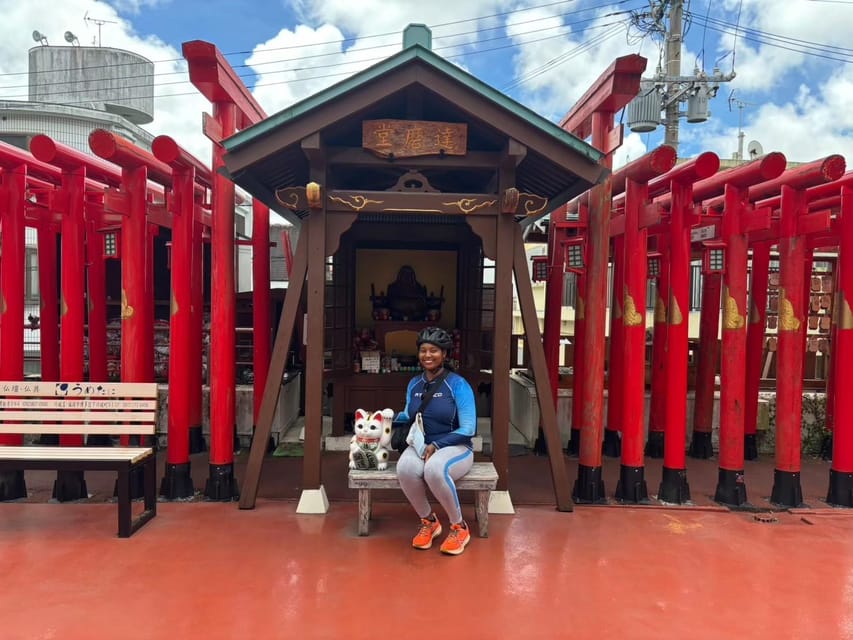
- Big visual highlights in red, especially at Shuri Kannon and Daruma Temple
- A pause for Saki Kasahigawa’s miracle spring, where the tour slows down and you can feel the place
- Gajumaru trees and ancient gates at multiple stops, so you keep seeing the same sacred “symbols” come back
Why Shuri’s Zodiac Temples Work So Well on an E-Bike
Shuri isn’t just one monument you park near and photograph. It’s lots of shrines, temple precincts, and side-street moments packed into a neighborhood where walking can get long fast—especially once you include getting around different hills and distances.
That’s exactly why the e-bike format clicks. You can cover ground without arriving sweaty and frustrated, and your guide can keep the momentum while still giving you time to look closely at carvings, gates, and statues. If you care about “why” something matters (not just “what” it looks like), a guided loop like this is a smart use of time.
The tour also feels practical: it’s about 3 hours, it’s small-group, and it’s built around a sequence of stops you can actually connect to Okinawa’s history and spiritual traditions.
Meeting at ダイショウビル and Getting Your Bike Fit Right
You meet at a shop location next to the post office, about a 5-minute walk from Monorail Makishi Station. The tour starts and ends at the same place, so you don’t need to worry about a complicated pickup.
Before you roll out, you’ll get fitted with an electric bike and receive a helmet with an intercom system. The intercom is more than a gadget—it helps when you’re moving through traffic-adjacent streets and don’t want to keep turning around to hear everyone.
Also note the tour isn’t just a “bike all day” situation. The route includes short transfers by pedicab/rickshaw between some temple areas, so your day has a bit of rhythm: ride, pause, transfer, then ride again. That helps keep the experience comfortable even if some sections feel steeper than they look on a map.
Shuri Kannondo: Ryukyu Guardian Temples and Red-Temple Details
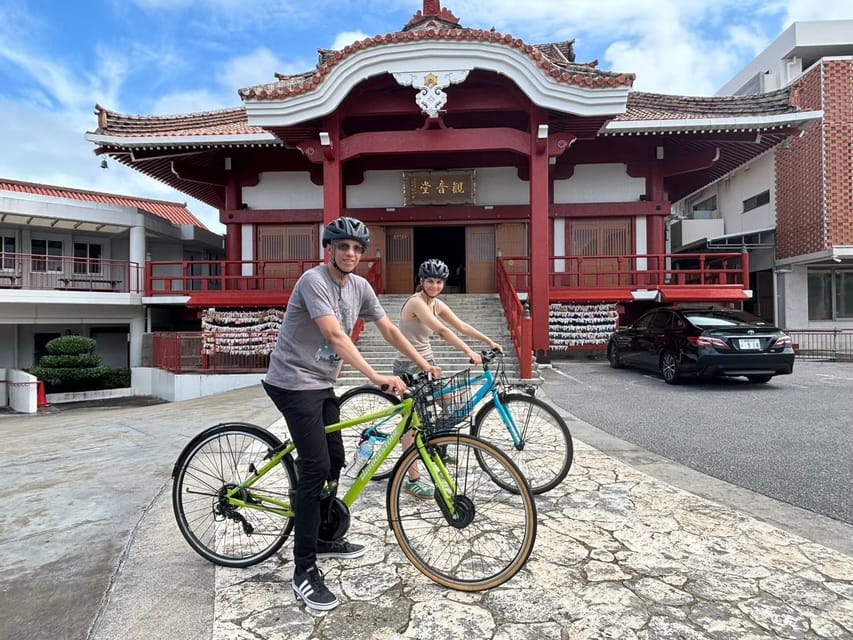
Your first temple stop is Shuri Kannondo, also known as Shuri Kannon Temple. This is a guardian temple associated with the Ryukyu Kingdom, and that context matters because it explains why the architecture and decoration feel so intentional—not random “tourist temple” scenery.
What I’d focus on here is the visual storytelling:
- Look for the carvings and decorations on the temple
- Notice the way the temple presents itself in bright red
- Take in the views of Shuri from the temple area
This is the kind of stop where your brain starts linking places. From here, the tour becomes easier to understand because each next site feels like a chapter rather than a checklist.
If you’re the type who likes photos, this is also a great early moment to get your bearings and test your camera settings—because later gates and structures give you more “big frame” shots.
Ankoku-ji to Shureimon Gate: Ancient Gates, Gajumaru Trees, and a Photo Moment

Next comes Ankoku-ji Temple, a local stop that feels quieter and more neighborhood-like. One of the tour’s strengths is how it balances “signature sights” with places that are less obvious to find on your own.
At Ankoku-ji, you’ll want to pay attention to:
- The traditional houses nearby, which help you understand the area’s lived-in character
- An ancient gate
- A large gajumaru tree, which shows up as a recurring spiritual and cultural symbol in Shuri
Then you’ll hit the Shureimon Gate. This is one of those places where the symbol is the point. It’s known as a symbol of Okinawa, and the tour builds in a specific photo moment: take a picture with your bike in front of the striking red gate.
This is also a good reminder that a guided tour can make you stop at the right time. Without someone routing you there, you might get close, but miss the exact framing moment that makes the gate photo work.
Daruma Temple and Seikoji: Health Prayers, Pregnancy Wishes, and Jizo Statues
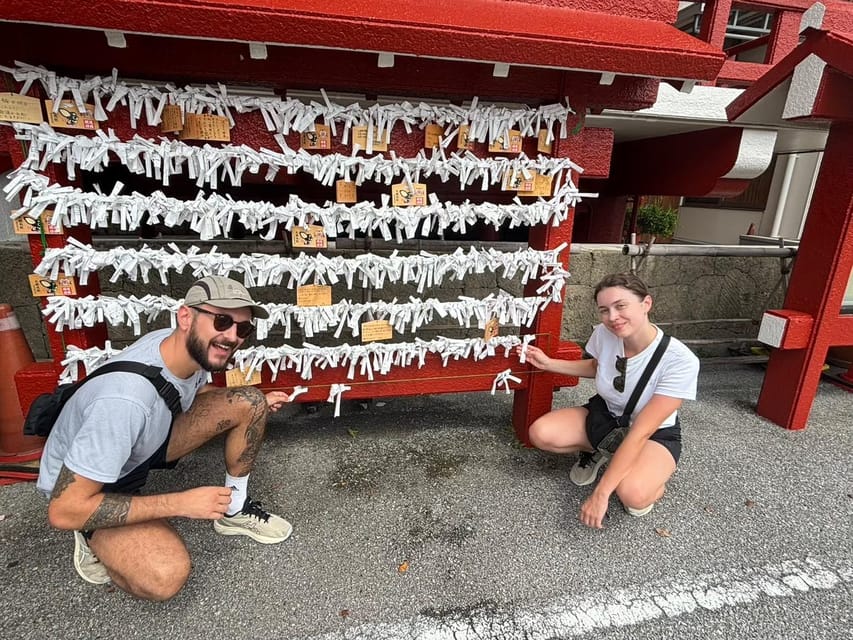
Daruma Temple is one of the tour’s most emotionally resonant stops. It’s popular for prayers connected to health and pregnancy, and the energy of the place comes through fast—especially because the visuals are bold and unmistakable.
Here’s what you’ll see and why it matters:
- Striking red daruma dolls
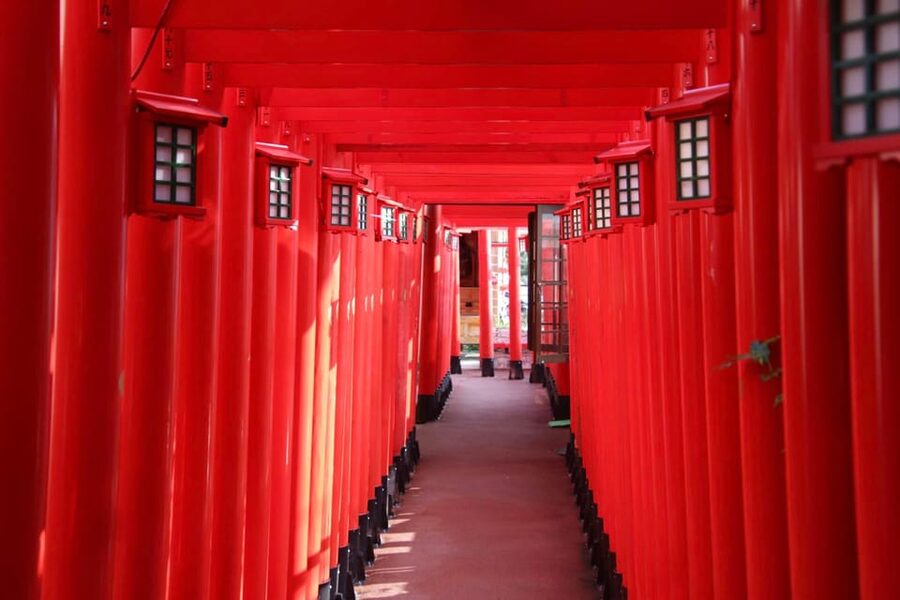
- A torii gate that gives the area that shrine-and-temple crossover feeling
Then the tour continues to Seikoji Temple, which shifts the mood toward calm. You’ll find a peaceful temple with a sacred atmosphere, plus a mix of traditional elements and more modern buildings.
At Seikoji, the tour highlights:
- Jizo statues (the kind of small details you’ll appreciate only if someone points out what you’re looking at)
- A modern building present in the temple space, which helps you see how these traditions live in the present, not behind a museum case
If you’ve ever felt like temples are either all ceremony or all sightseeing, this pairing is helpful. Daruma gives you meaning and ritual visuals, and Seikoji slows you down so you can actually notice the atmosphere.
Saki Kasahigawa Miracle Spring and Sogenji Royal Mausoleum Calm
After the more image-heavy temple stops, you’ll get a very different kind of experience: Saki Kasahigawa, a miracle spring said to flow from deep in the forest.
This stop works because it asks you to do something simple—pause. You can feel the history in the flowing water, and the setting gives your day a reset. It’s also an easy break point if you’ve been photographing and biking hard.
Finally, you’ll reach Sogenji Temple, a former royal mausoleum. If you like history that feels physical—gates, trees, and the air inside a temple park—this is a strong closing note.
At Sogenji, the tour focuses on:
- The gate structure
- Another gajumaru tree
- The “pure air” feeling of the park space (the kind of atmosphere you notice more when you’ve been moving for hours)
It’s a good ending because it’s quiet and reflective, after you’ve already seen the more outward-looking sights like Shureimon.
Guides, Safety, and the Helmet Intercom That Actually Helps
This is a tour where the guide makes a real difference. In recent experiences, guides like Maki, Maria, Hiro, Jojo, Qwan, and Reiji have been singled out for being kind, friendly, and organized, with explanations that help the temples make sense instead of becoming labels.
You’ll also notice a pattern in the best feedback: guides keep you safe and keep you comfortable. One big theme is navigation—your guide helps you understand how to move and how to handle traffic while staying with the group.
The helmet intercom is worth mentioning again because it’s part of the safety and fun equation. People can communicate without shouting. And for a small group, it helps everyone stay on the same page when you’re stopped at a gate or crossing a street.
Your guide will also check in during the ride. In one account, the guide was attentive about staying hydrated, which is exactly what you want in Okinawa’s sun once you’re cycling.
What to Wear and Bring (So the Tour Feels Easy)
You’ll be cycling for a few hours, plus short transfers, so treat it like a light active day.
Bring:
- Comfortable shoes (no sandals or flip-flops)
- Water
- Sunscreen and a hat, especially if the sun is strong
Not allowed:
- Sandals or flip-flops
Also, smoking isn’t allowed during the tour. It’s one of those rules that makes sense when you’re riding close together.
One more practical note: if precipitation probability is above 70% or weather turns severe, the plan may change and you’ll be contacted the day before. So it’s smart to keep this tour flexible in your schedule.
Price and Value: Is $95 Worth 3 Hours?
At $95 per person for about 3 hours, you’re paying for more than bike rental. You’re paying for:
- An electric bike that helps with hills
- A guided route built around specific temple stops
- A helmet with intercom (which isn’t just “nice,” it supports group coordination)
- Time saved by having someone route you through side streets you’d likely miss
If you tried to do this on your own, you’d need good local knowledge for the temple sequence, and you’d probably spend time figuring out how to get between areas efficiently. Here, the structure is done for you.
For the money, the key value is that you don’t just get movement—you get interpretation. You’ll learn what you’re looking at at Shuri Kannon, why the Daruma Temple is tied to health and pregnancy prayers, what Saki Kasahigawa represents, and why Sogenji is worth treating as a closing scene.
Who This Tour Fits Best (and Who Should Skip)
This tour is a great match if you:
- Can ride a bike comfortably
- Want history and spiritual context, not just photos
- Like small groups and clear guidance
- Prefer active sightseeing that still feels manageable
It’s not the best choice if you:
- Can’t ride a bike (the tour isn’t suitable for you)
- Want a fully hands-off experience where nothing requires cycling effort
A bonus: if you’re the type who worries about “will I find this place,” Shuri’s side streets can be tricky. Having a guide makes the difference between seeing a neighborhood and just passing through it.
Should You Book This Shuri E-Bike Zodiac Temple Tour?
I’d book it if you want a structured, meaningful way to experience Shuri in one afternoon without exhausting yourself. The e-bikes do the heavy lifting, the intercom keeps things smooth, and the stops have enough variety—carvings and red gates, prayers and statues, plus a spring and a royal mausoleum—to make the day feel complete.
If you’re on the fence, make your decision based on one thing: your confidence on a bike. If you’re comfortable cycling, this is one of the easiest ways to see a lot of Okinawa depth in just 3 hours.
FAQ
How long is the Naha guided e-bike tour of the 12 zodiac temples?
The tour lasts about 3 hours.
How much does the tour cost?
It costs $95 per person.
Where is the meeting point?
The meeting point is a shop next to the post office, about a 5-minute walk from Monorail Makishi Station.
What’s included in the price?
You get an electric bicycle rental and a guided tour with a helmet that has an intercom system.
Are meals and drinks included?
No. Meals and drinks are not included.
What language is the tour guide available in?
The guide is available in English, Chinese, and Japanese.
Do I need to be able to ride a bike?
Yes. People who cannot ride a bike are not suitable for this tour.
What should I bring?
Bring comfortable shoes and water. Sunscreen and a hat are also recommended.
Is there any weather-related plan change?
Yes. If the precipitation probability exceeds 70% or in case of severe weather, the plans may be changed and you will be contacted the day before.
Is there a small-group size limit?
Yes. The group is limited to 5 participants.
![Cortona - eBike tour and wine tasting in the Val di Chiana [+40€] - Meeting at C.a. Barullo and getting your ride sorted fast](https://2.iwantbiketours.com/wp-content/uploads/cortona-ebike-tour-and-wine-tasting-in-the-val-di-chiana-40e-400x267.jpg)