REVIEW · DENVER
Explore Denver by E-bike Guided Tour
Book on Viator →Operated by Mitch · Bookable on Viator
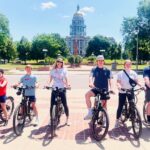
One of the fastest ways to learn Denver is by bike. This e-bike tour mixes famous spots (Union Station, the Colorado State Capitol) with street art alleyways and neighborhood history, all at a relaxed speed.
I like how the tour is paced for real sightseeing—your time is split between a safe intro, short rides, and guided history at each stop. I also like the small group size (max 6), which makes it easier to ask questions and stay together. The main consideration is that you should be comfortable riding for stretches; the tour asks for moderate physical fitness and runs best in good weather.
In This Review
- Key things I’d prioritize on this Denver e-bike tour
- Getting your bearings on Blake St. before you roll
- RiNo Art District and the Denver Walls alleyways
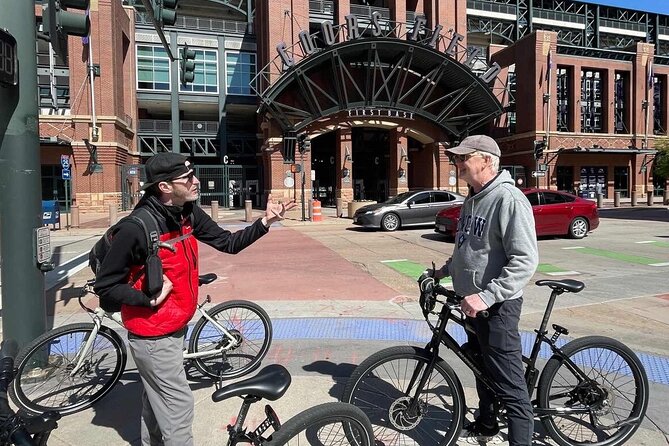
- Coors Field: why this stadium matters beyond baseball
- Denver Union Station: a classic landmark with a human story
- Larimer Square: the oldest block feel
- Colorado Convention Center and the blue bear photo moment
- The Colorado State Capitol and the Mile High City nickname
- Capitol Hill mansions and the Molly Brown connection
- Cheesman Park and a famous ghost story
- Five Points: African American history, redlining, jazz, and meaning
- Back to RiNo for the murals you’ll remember
- What the 3-hour pacing feels like in real life
- E-bike comfort tips for a smooth ride
- Value check: $75 for a guided loop, not a hit-and-run
- Who should book this Denver e-bike tour
- Quick booking reality and weather note
- Should you book it?
- FAQ
- How long is the Explore Denver by E-bike Guided Tour?
- Where does the tour start?
- What is the price per person?
- Is admission required at the stops?
- What language is the tour offered in?
- Do I need prior e-bike experience?
- What fitness level is required?
- How big is the group?
- What happens if the weather is poor?
Key things I’d prioritize on this Denver e-bike tour
- RiNo Denver Walls alleyways: street art you can get close to, not just view from a distance
- A guide who brings the city to life: clear, detailed stops with time to ask questions
- Mostly easy riding: designed for an approachable experience on e-bikes
- Smart downtown + neighborhoods mix: icons plus Five Points history in one loop
- Photo-friendly timing: multiple stops aimed at landmarks and recognizable city backdrops
Getting your bearings on Blake St. before you roll
The tour starts at 3270 Blake St, and it ends back there, which is a nice reset if you want to keep exploring on your own afterward. Expect an intro that covers safety guidelines and e-bike instruction before you set off. In other words, you’re not thrown into traffic chaos; you get set up first.
The format matters. Total time is about 3 hours, but the day doesn’t feel like one long pedal grind. You’ll spend roughly 1 hour and 15 minutes actually biking between stops, and about 1.5 hours total at stops with guided history. That pacing makes it feel like a walking tour plus wheels. You get the context without standing around too long.
Because the group is small (up to 6), you can actually hear the guide at each stop, and you’re less likely to feel like a number. It also helps if you’re new to e-bikes; the instruction at the beginning is there for a reason.
Quick practical note: Denver can feel warmer than you expect because of elevation and direct sunlight. I’d plan to wear layers you can adjust mid-ride, even if the morning feels cool.
You can also read our reviews of more tours and experiences in Denver.

RiNo Art District and the Denver Walls alleyways
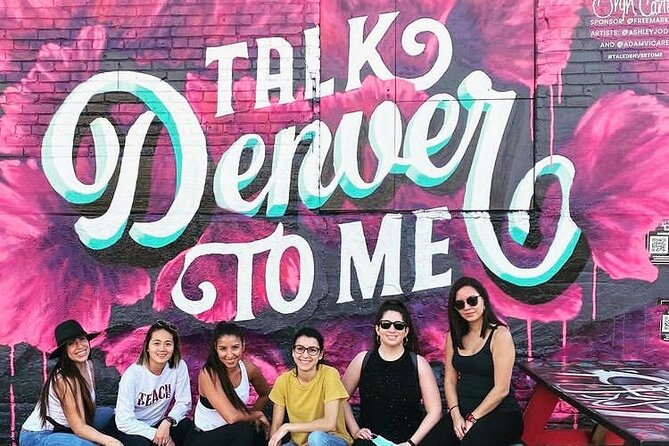
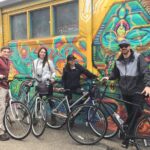
RiNo is where Denver leans into its street-art identity, and the tour commits to it in a big way. The highlight is the Denver Walls experience across back alleyways in RiNo—an annual festival with many murals tucked where you’d normally only walk if you had a local map.
You’ll get two chances to be in RiNo on this tour:
- First, you start with a quick mural-alley stop focused on Denver Walls
- Later, you return for a longer, more “bring your camera” walk through the alleyways
What makes this valuable is the access and proximity. Murals are one thing when they’re at the edge of a street. They’re another when you’re standing inside the alley rhythm—close enough to notice the small details and how the art connects to the block. This tour is set up so you’re not just driving past color; you’re moving slowly enough to look.
If you’re the type who loves photography, this is the part of Denver that can eat your attention in a good way. It’s also one of the stops where you’ll feel the tour’s “local knowledge” factor most clearly—this is the kind of area you can miss if you’re only doing the obvious downtown sights.
Coors Field: why this stadium matters beyond baseball
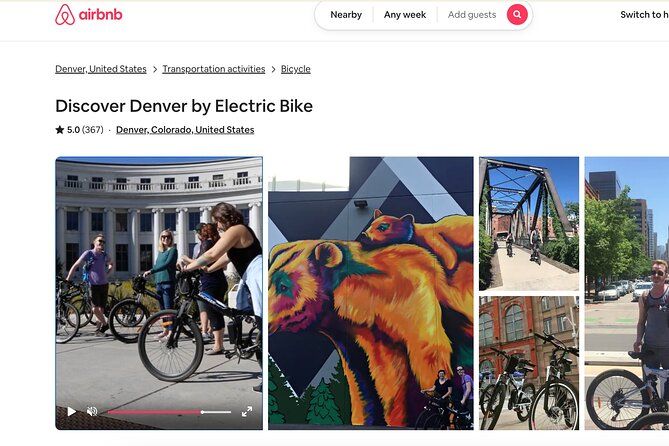
Next you stop outside Coors Field, home of the Colorado Rockies. This is a short stop, so don’t expect a deep stadium tour. Instead, think of it as a quick story: how this kind of major venue reshapes a city—economically, culturally, and physically.
The practical value here is simple. You’ll look at a place you probably already recognize and leave with a clearer sense of why it’s part of Denver’s modern identity. For many visitors, sports stadiums feel like isolated landmarks. Here, the tour gives you enough context to see how that “icon” links into the city’s growth and daily life.
Denver Union Station: a classic landmark with a human story
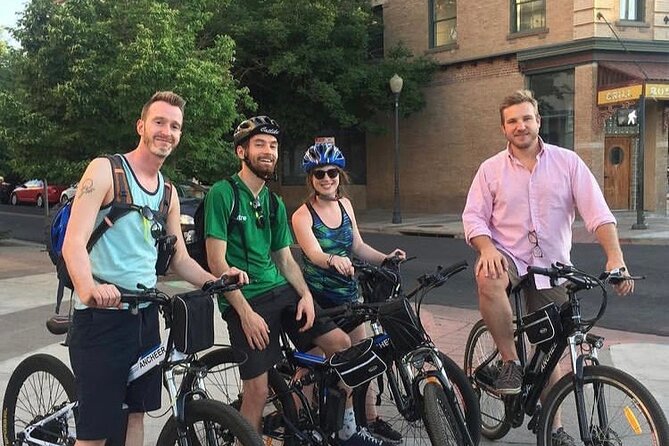
Then you roll to Denver Union Station. This stop is designed to do two things: point out the architectural and historic significance, and explain why the station is still emotionally tied to locals.
Union Station is one of those places that can look “just transit” if you hurry past it. On this tour, you’re there long enough to pick up the why behind the building and to understand how it became part of Denver’s heart. The stop is brief, so you won’t get stuck—your guide keeps it moving while still giving you a usable story.
If you’re spending more days in the city after the tour, Union Station becomes easier to read once you know what shaped it.
Larimer Square: the oldest block feel
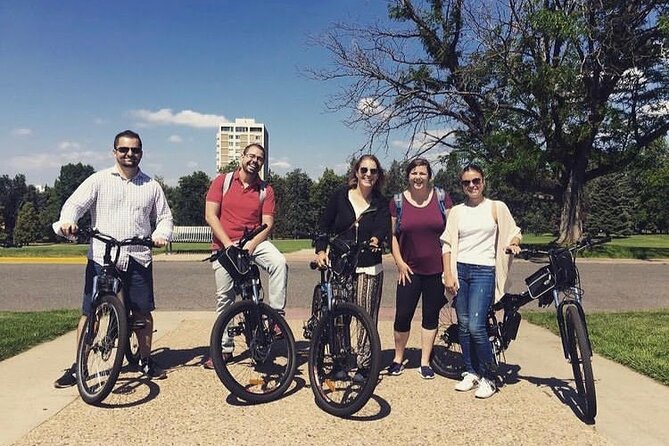
At Larimer Square, you get a stop that leans into Denver’s early days—covering the history of Denver’s formation and the first official settlement area. This is one of those stops where the tour helps you connect present-day Denver streets to older roots.
Larimer Square today is known for its historic streets and atmosphere, but the value of being on an organized e-bike loop is that you’re not guessing. You learn what to look for and why the block carries extra meaning. It’s an easy, quick history hit that doesn’t drain your energy.
Colorado Convention Center and the blue bear photo moment
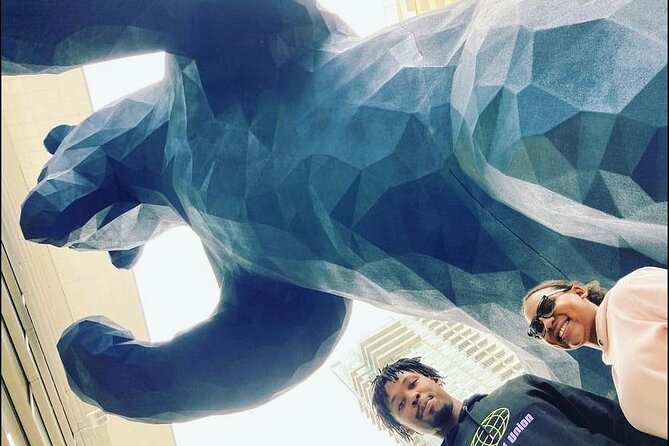
Denver has plenty of public art, and this stop is built around one of its most recognizable pieces: the big blue bear outside the Colorado Convention Center. You’ll stop for about 10 minutes, which is just enough time to grab photos and get a sense of how Denver uses visible art in everyday city space.
If you care about photography and fun urban details, this is a smart pause. It’s also a reminder of something Denver does well: blending “official” landmarks with playful, accessible art you can spot without a ticket.
The Colorado State Capitol and the Mile High City nickname
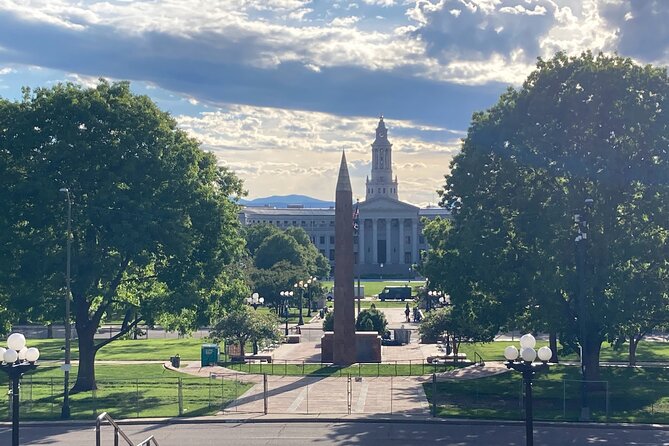
At the Colorado State Capitol, you’ll get the golden dome moment plus the story behind Denver’s nickname: The Mile High City. This is one of the big sightseeing stops, and the tour uses it to connect politics, identity, and place.
The dome gives you the visual anchor, but the real payoff is understanding how Denver branded itself and why that branding stuck. Even if you don’t plan to visit the Capitol interior, you’ll still walk away with a clearer “why this matters” explanation.
Capitol Hill mansions and the Molly Brown connection
Next is Molly Brown House Museum—and the tour uses it as a bridge into Capitol Hill and the broader story of Denver’s influential residents. You’ll also bike through the neighborhood to see turn-of-the-century brownstone-style mansions, so this isn’t just museum talk.
The Molly Brown story is a powerful one because it ties Denver to a global event: her role during the infamous sinking of the Titanic and her impact on the city’s political and social climate. It’s the kind of history that makes a place feel less like a set of buildings and more like people with choices and consequences.
For visitors who like history that connects to big headlines, this stop hits. For visitors who just want scenic streets, you still get a nice neighborhood sweep on e-bike.
Cheesman Park and a famous ghost story
Then comes Cheesman Park, where the tour shifts into folklore. Denver has a reputation for spooky park stories, and here you’ll hear the most famous ghost story tied to the area.
This stop is only around 10 minutes, so it’s not meant to be a long lecture. It’s more of a quick “only in Denver” moment that adds character to the day. If you enjoy local legends, you’ll like the way the tour uses a green space to tell a story you’d never get from a basic guidebook.
If you’re not into ghost stories, treat it as light texture—then use the park’s atmosphere to take a breather before heading into the city’s deeper cultural stops.
Five Points: African American history, redlining, jazz, and meaning
Five Points is the neighborhood stop that carries the most weight emotionally. You’ll learn about Denver’s African American history, including the effects of redlining and segregation. The tour also highlights Denver’s jazz culture, and you’ll make a stop at one of the area’s most culturally relevant hotels.
This is also where you may notice the guide’s personality and opinions in the presentation. One review noted that the guide sometimes shares personal views about cultural and political topics. That’s not necessarily a deal-breaker, but if you prefer your history strictly factual and neutral, keep that in mind.
Still, this stop is valuable because it doesn’t treat Five Points like a postcard. You get enough context to understand why the neighborhood matters, and you see how culture can persist even when systems tried to restrict it.
If you’ve got limited time in Denver, this part keeps the tour from becoming only shiny landmarks and mural photos.
Back to RiNo for the murals you’ll remember
The tour ends in RiNo again, circling back to the Denver Walls festival murals across multiple back alleyways. This is described as the most popular stop, and honestly, it’s easy to see why.
By now, you’ve already learned how to “read” the day—short rides, quick landmark anchors, then deeper story time. RiNo at the end feels like payoff. Your cameras will be warmed up, your legs feel settled into e-bike rhythm, and you’ll be ready to focus on the art rather than the logistics.
If you only have one small window for street art in Denver, this tour is designed so you don’t miss the best viewing experience.
What the 3-hour pacing feels like in real life
The best part about this tour’s timing is that it doesn’t pretend Denver is a walking-only city. You cover enough ground to hit major landmarks and meaningful neighborhoods, but you’re not rushed between stops.
Here’s the practical way to think about it:
- You start with 15 minutes of safety and e-bike instruction
- Then you spend about 75 minutes biking between locations
- And you get about 90 minutes total at stops for guided history
That mix usually works well for first-time visitors because it balances movement with explanation. You get context without turning it into a classroom, and you get to see Denver in “quarters” rather than isolated points on a map.
Also, the maximum group size of 6 is a big deal for comfort. In a larger group, short stops can turn into crowd control. Here, it’s easier for the guide to adjust pace and keep everyone oriented.
E-bike comfort tips for a smooth ride
Even with e-bike help, there are still a few things that can make or break the experience:
- Wear layers and plan for sun. One tip from recent riders: with elevation and sunlight, it can feel about 5–10 degrees warmer than you expect.
- Treat the intro as important. The whole point of the safety and instruction block is to make the rest of the tour feel easy.
- Use the small-group advantage. Ask your guide questions when you’re stopped. It’s easier to get specific answers when you’re not competing with a crowd.
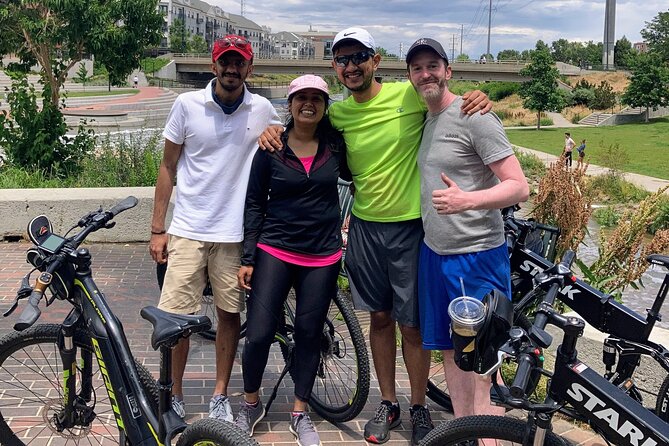
The e-bike itself is part of the value equation. Multiple riders commented on bike quality, describing them as new, light, and in great condition. That matters because a good bike reduces fatigue and makes you feel confident sooner.
Value check: $75 for a guided loop, not a hit-and-run
At $75 per person for about 3 hours, the value is strongest if you want more than just transportation through the city. You’re paying for:
- guided storytelling at multiple stops
- an organized route connecting downtown icons to RiNo and Five Points
- a small group experience
- the e-bike instruction that helps you feel comfortable fast
If you were to do these stops on your own, you’d spend time figuring out where to go and how to connect the dots. This tour does that work. You still enjoy the city, but you don’t burn time researching every alley and neighborhood story.
And since many stops don’t require paid entry (the stops listed are marked free), you’re not forced into “pay-to-see” budgeting to make the tour worth it.
If you’re short on time and want your Denver trip to start with a real foundation, this is a solid use of one half-day.
Who should book this Denver e-bike tour
This tour fits best if you:
- want a fast way to understand Denver’s key districts
- like street art but also want real context, not only photos
- prefer guided history without standing still for hours
- want an approachable ride, especially if it’s your first time on an e-bike
It may be less ideal if you:
- need a super gentle, fully flat walk-only plan
- dislike any guide commentary that includes personal takes on cultural or political issues (the Five Points topic can bring that out)
Quick booking reality and weather note
This experience requires good weather. If it gets canceled due to poor weather, you should expect either a different date option or a full refund. Also, it’s typically booked around 14 days in advance, so if your schedule is firm, don’t wait too long.
Should you book it?
I’d book it if you want Denver in one loop: murals in RiNo, big landmarks downtown, and a meaningful neighborhood stop in Five Points, all on an e-bike with a small group and a guide who clearly loves the city. The $75 price makes sense when you factor in the guided stops, the instruction, and the way it connects sights into a coherent story.
If your must-have is a museum-only itinerary, this isn’t that. But if you want the kind of Denver introduction that helps you know where to go next, this is a smart first move.
FAQ
How long is the Explore Denver by E-bike Guided Tour?
The tour is about 3 hours total.
Where does the tour start?
It starts at 3270 Blake St, Denver, CO 80205, USA, and it ends back at the meeting point.
What is the price per person?
It costs $75.00 per person.
Is admission required at the stops?
The listed stops are shown as free admission.
What language is the tour offered in?
The tour is offered in English.
Do I need prior e-bike experience?
You’ll get a safety and e-bike instruction introduction at the start, and the ride is designed to be approachable for people with moderate physical fitness.
What fitness level is required?
The tour says travelers should have a moderate physical fitness level.
How big is the group?
The tour has a maximum of 6 travelers.
What happens if the weather is poor?
This activity requires good weather. If it’s canceled due to poor weather, you’ll be offered a different date or a full refund. You can also cancel for free up to 24 hours in advance for a full refund.