REVIEW · HANOI
Explore Hanoi Old City By Cycling Tour With Small Groups
Book on GetYourGuide →Operated by Go Asia Travel · Bookable on GetYourGuide
A bike ride in Hanoi can be oddly calming. This small-group cycling tour threads together Ho Chi Minh areas, Red River sights, and quiet banana plantations with an English-speaking guide’s story of how the city ticks, plus the fun locals-and-coffee stops. I especially like the mix of classic landmarks and everyday streets, and I really like the way the guide helps you handle Hanoi road chaos. One drawback to plan for: you do not go inside the Ho Chi Minh complex, so you’ll only see it from outside.
I also appreciate how the route starts with easier riding near West Lake before you roll into busier, more chaotic traffic zones. The group stays small (max 8), bikes are provided, and you get egg coffee included—so you’re not just burning calories, you’re also building a solid picture of Hanoi in one afternoon.
Keep in mind you’ll be on a city bike for about 4 hours. Comfortable shoes matter, and this isn’t set up for wheelchair users or for anyone bringing strollers or drones.
In This Review
- Key things that make this Hanoi cycling tour worth your time
- Entering Hanoi the practical way: a 4-hour bike route built for real streets
- Meeting point in Hanoi Old Quarter: 20 Hang Muoi or 24 Hoi Vu
- West Lake, Tran Quoc Pagoda, and Truc Bach: an easy intro before the city bites
- Long Bien Bridge to Banana Island: the Red River Delta moment you’ll talk about later
- B-52 lake area and Ba Dinh Square: big landmarks, managed access, fast stories
- Hanoi Citadel walls and the old railway: history you can feel under your wheels
- Coffee stop and local food flavors: egg coffee plus options for bun cha and more
- Hanoi Old Quarter lanes, Dong Xuan Market, Cua Bac gate, and Hanoi Church
- Bat Trang pottery village: when the ceramics ticket is your choice
- Price and value: what $34 really covers (and what might cost extra)
- Who should book this Hanoi cycling tour
- Should you book this Hanoi Old City by Cycling tour?
- FAQ
- Where does the tour start?
- How long is the tour?
- What’s the group size?
- Is there an English-speaking guide?
- What’s included in the price?
- Are drinks and lunch included?
- Can I visit the Ho Chi Minh complex inside?
- Do I need to pay for attractions like Hoa Lo Prison or the Stilt House?
- What should I bring and wear?
- Is this tour wheelchair friendly, and are strollers allowed?
Key things that make this Hanoi cycling tour worth your time

- Long Bien Bridge and the Red River Delta: you pedal from major river landmarks into greener back paths.
- Banana Island ride: narrow lanes through banana plantations and vegetable gardens feel like a world switch.
- West Lake first, traffic later: the timing helps you get confident before the busier stretches.
- Real Hanoi road skills: guides such as Nam, Andy, Minh, Amy, and Velvet are praised for safety coaching and clear English.
- B-52 lake area stop: a memorable pause on the way between landmarks and local life.
- Egg coffee at Famous coffee: included, and it’s one of those Hanoi-only tastes you’ll actually remember.
Entering Hanoi the practical way: a 4-hour bike route built for real streets

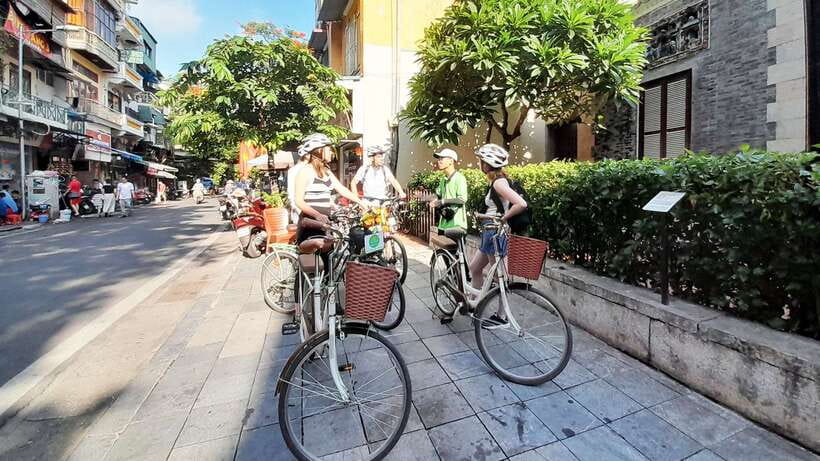
This tour is set up for people who want more than a checklist of sights. You’ll cover a lot in four hours, but the pace and planning still make sense: start in the Old Quarter area, get briefed on safety, and then ride through sections of Hanoi that most visitors only see from taxis or on foot.
The heart of the experience is how the guide turns the city into a lesson you can feel. One reason guides like Nam and Andy get such strong feedback is that they don’t just point at buildings. They help you understand where you are in Hanoi’s past and how the present street life works—so the trip doesn’t turn into a fast photo run.
And yes, Hanoi traffic is a thing. This tour doesn’t pretend otherwise. Instead, it helps you cross it with a system: staying aware, moving predictably, and knowing where the bike route makes things easier. The small group size (up to 8) also helps the guide keep control and adjust when roads get tricky.
You can also read our reviews of more tours and experiences in Hanoi.



Meeting point in Hanoi Old Quarter: 20 Hang Muoi or 24 Hoi Vu
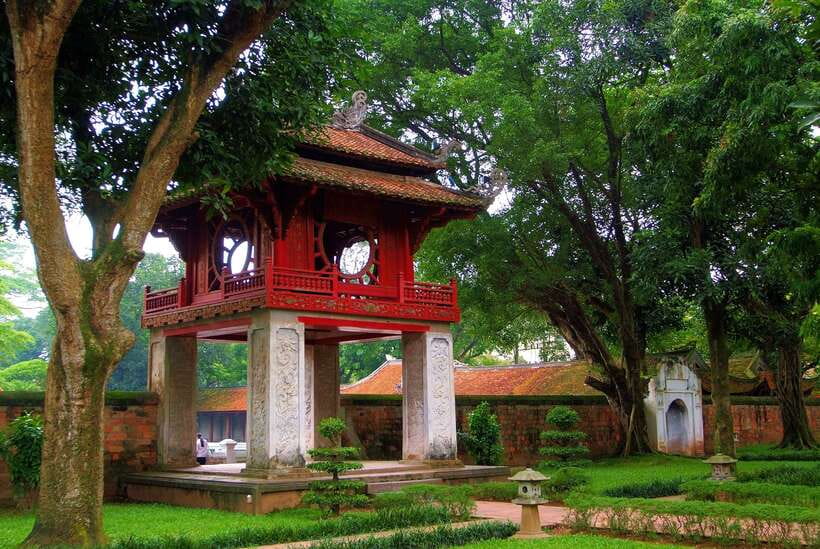
Your ride starts in the Old Quarter area, typically with meeting at 20 Hang Muoi street or 24 Hoi Vu street. If your hotel is inside the Old Quarter, pickup is arranged directly from the hotel area. If you’re staying outside it, the practical move is to be ready at 20 Hang Muoi by 8:00am.
That early start matters. In the morning, the air around West Lake tends to feel fresher, and the roads are still active but less chaotic than later. It’s also the time window when the tour can comfortably add the slower banana-plantation lanes without rushing.
Before you roll, the guide gives safety instructions for biking through Hanoi. This is one of those details that sounds boring until you’re actually in the traffic. Then you’ll be glad you got the road coaching before you’re dodging scooters like a pro-in-training.
West Lake, Tran Quoc Pagoda, and Truc Bach: an easy intro before the city bites
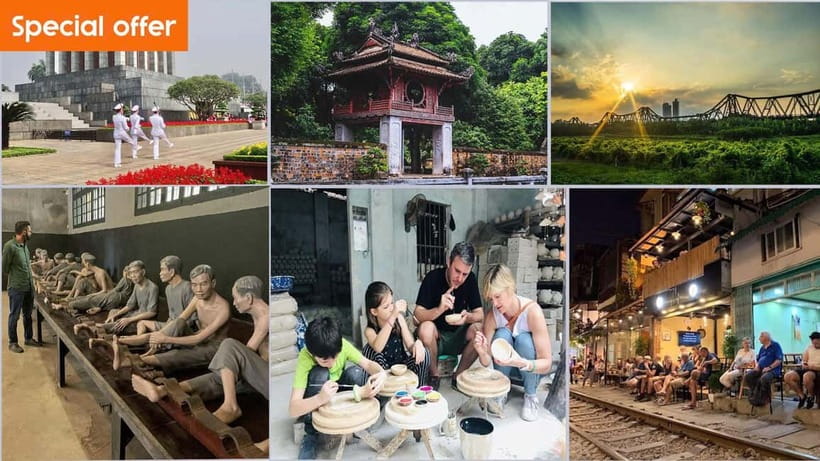
A smart part of the itinerary is how it begins near West Lake. You start with tree-lined streets and a calmer feel just a short ride away from the busier Old Quarter. It’s a good “warm-up zone” that helps you get used to the bike, the group spacing, and the local rhythm of moving through streets.
From there, you head toward Tran Quoc Pagoda and the Truc Bach lake area. These spots aren’t just scenic. They act like a contrast switch: you go from modern street energy to lakeside calm, and it helps you see Hanoi as more than one tight district.
The practical benefit for you is confidence. You’ll learn how your guide handles intersections and how the group moves as one unit before you hit the more intense traffic stretches.
Long Bien Bridge to Banana Island: the Red River Delta moment you’ll talk about later
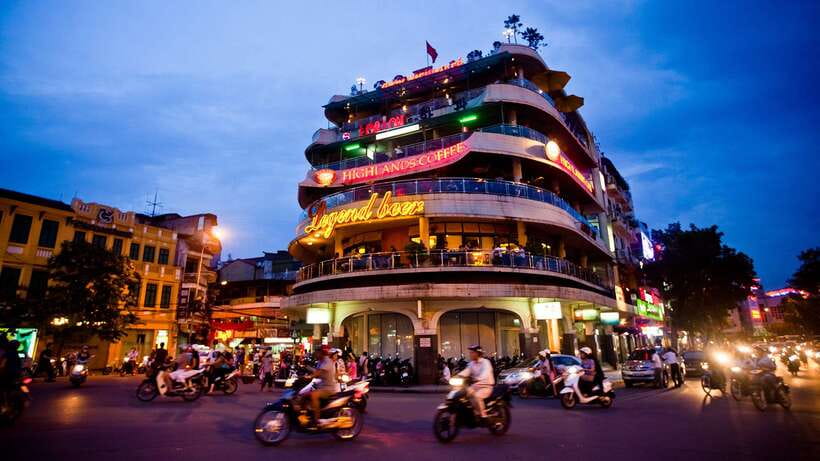
One of the most praised parts of this tour is the shift from city to countryside. You pass the Long Bien Bridge and then head into a calmer world along narrow paths through banana plantations and vegetable gardens. That’s Banana Island, placed right in the fertile Red River Delta landscape.
This is where the ride feels different from a walking tour. You aren’t just looking at greenery—you’re moving through it. The paths are tight, so you feel the texture of how people live and farm outside the main tourist grid.
Then there’s the visual sweep. Reviews highlight the ride across the bridge and the contrast of busy city sounds against quieter plantation lanes. It’s one of those “wait, we’re really here” moments that sticks, because it’s not the kind of place most visitors stumble into on their own.
B-52 lake area and Ba Dinh Square: big landmarks, managed access, fast stories
After the greener section, you work your way back toward major historical and political landmarks.
You’ll visit the B-52 lake area and pass around key formal spaces near Ba Dinh Square, where you’ll see old French-era houses along the route. This portion is a history lesson delivered by motion. Instead of reading about Hanoi’s turning points, you can actually see how different eras shaped the city’s layout.
You also pass the mausoleum area connected to Ho Chi Minh. Here’s the important practical note: you only stand outside the Ho Chi Minh complex for viewing and photos. You do not go inside. That’s not a problem if you’re expecting a city-cycle orientation with landmark moments. It just means you should not plan on museum-level access through this tour.
The value in this section is that your guide ties what you’re seeing to the story of Hanoi—how the city’s power centers evolved, and what the surrounding streets are telling you today.





Hanoi Citadel walls and the old railway: history you can feel under your wheels
Next comes one of those “Hanoi is weird in a good way” highlights. You get to the Hanoi citadel area and its historic exhibits, including viewing the Hanoi Flag Tower and a military base. Even if you don’t love museums, seeing these structures in the context of your ride gives them a new frame.
Then you move toward the old train railway, where heritage buildings and street life overlap in a way Hanoi does best. This is the zone linked with Train Street, and it’s one of the reasons people keep picking cycling tours in Hanoi instead of sticking to walking routes.
If you like photography, you’ll appreciate the angles. On a bike, you can flow with the street instead of pausing every 20 seconds to check where your feet are going. You’ll still stop for key moments, but you keep that moving sense of place.
Coffee stop and local food flavors: egg coffee plus options for bun cha and more
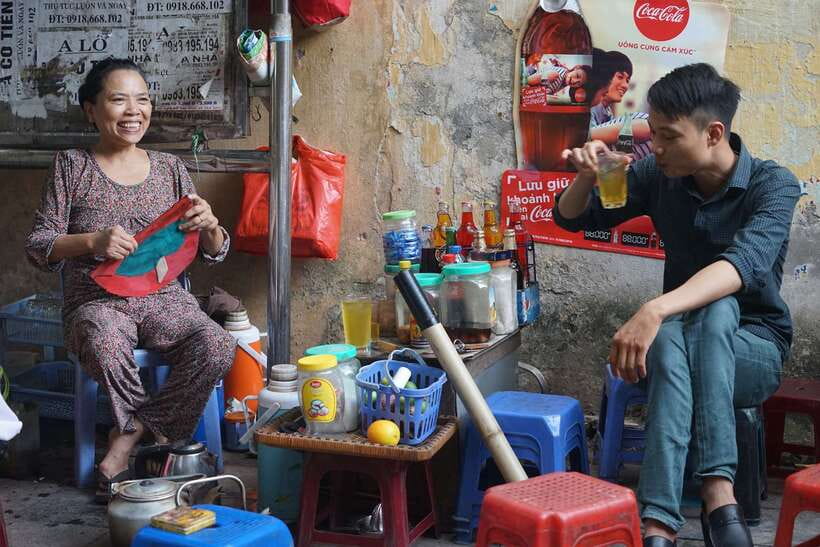
You’ll get a local break that isn’t just for show. Egg coffee is included, served at Famous coffee. This is a Hanoi classic, and it matters that it’s part of the tour rather than an optional detour. You get the taste without needing to hunt down the right place on your own.
The tour also includes tasting opportunities for the kinds of meals Hanoi is known for. Expect stops tied to Vietnamese favorites such as bun cha, pho bo, or banh mi options, depending on what’s practical that day. Lunch is not included, so you should plan on using the food stops as guidance and add your own drink or full meal if you’re hungry after four hours of cycling.
One more small thing I like: the coffee and food moments help slow down the story. After traffic and landmark stops, you get a human pause—something real, something you can taste, and something that gives the tour its personality.
Hanoi Old Quarter lanes, Dong Xuan Market, Cua Bac gate, and Hanoi Church
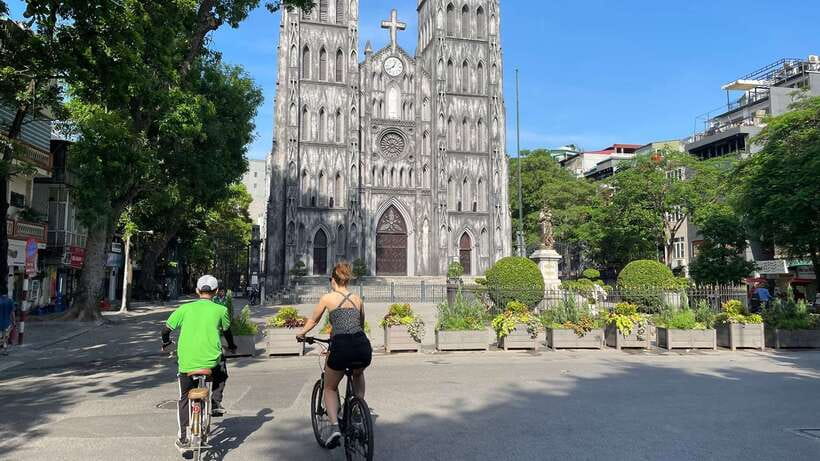
Not every stop is famous worldwide, and that’s a good thing. You’ll pass through and around places that help you understand how Hanoi functions day to day.
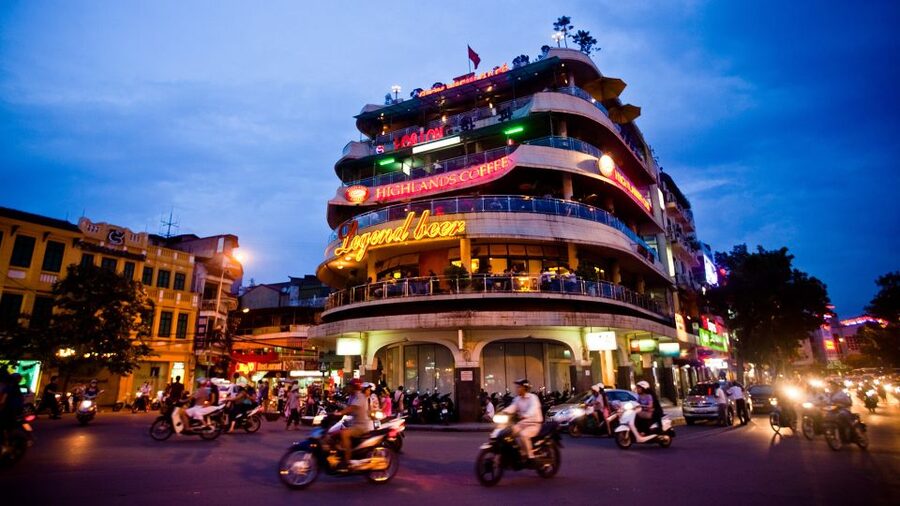
Along the way, you’ll see the Old Quarter streets, Dong Xuan Market, Cua Bac gate, and Hanoi Church. These are the kinds of landmarks that can feel random if you’re walking without context. On a bike tour, you get a route logic: why you’re there, what era it represents, and how it connects to the next stretch.
This section is also where the guide’s English storytelling style really matters. Guides like Amy and Velvet are repeatedly praised for explaining what you’re looking at in clear, entertaining ways. That turns these passes into more than just scenery.
Bat Trang pottery village: when the ceramics ticket is your choice
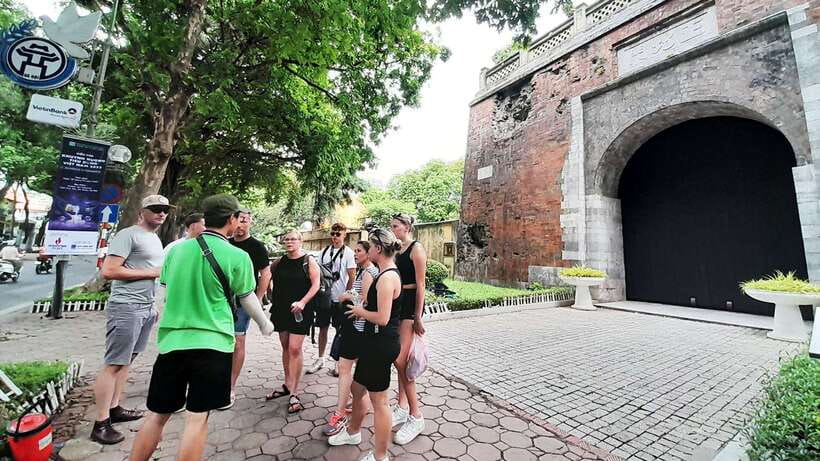
The tour includes time near Bat Trang Pottery Village. One detail that’s important for planning: entrance to certain ticketed activities is not always included. A ceramics sample, if you choose to do it, has a listed cost of 70,000 VND.
So think of Bat Trang as a chance to see the pottery world and decide how much hands-on you want. If you’re the kind of person who likes making a small souvenir with a real story, that extra ticket can be worth it. If not, you can still enjoy the area just by watching how pottery culture fits into the everyday.
Price and value: what $34 really covers (and what might cost extra)
At $34 per person, this tour can be good value if you care about transportation + guide time + a structured route. You’re not just paying for “a bike.” You’re paying for an English-speaking guide, a city bike, entrance fees as applicable, a bottle of water, and egg coffee.
That said, a couple costs can show up depending on which sites you want to go into on the day. The tour info lists ticket prices for places such as:
- Ho Chi Minh Stilt House: 40,000 VND
- Hoa Lo Prison: 50,000 VND
- Temple of Literature: 70,000 VND
- Ceramics sample at Bat Trang: 70,000 VND
Also expect government tax of 10% to apply, and drinks and lunch aren’t included (tips for the guide aren’t included either).
Holiday surcharges are also listed: on specific peak dates, there’s an extra 200,000 VND per person paid directly on the trip. If your dates line up with Tet or those holiday periods, this is the kind of extra you’ll want to budget.
In other words: the base price gets you a strong core experience, but your final total can climb a bit if you add major ticketed sites or pay for a pottery activity.
Who should book this Hanoi cycling tour
This tour suits you if you want:
- A small-group ride (max 8) with an English-speaking guide.
- A mix of major landmarks and local-feeling streets.
- The chance to ride through Banana Island and then back into city history.
- Help with traffic, especially if you’ve never biked in Hanoi.
It may not suit you if:
- You need wheelchair access.
- You rely on baby strollers or baby carriages (not allowed).
- You’re planning to bring a drone (not allowed).
The practical “bring” list is short: comfortable shoes. That’s it. But wear shoes you can walk in too, because you’ll stop at several points and do some photo moments on your feet.
Should you book this Hanoi Old City by Cycling tour?
Yes, I’d book it if you want a fast, friendly way to get oriented and actually experience Hanoi’s contrasts. The route does something smart: it pairs landmark sightseeing with real street texture, and it gives you that memorable ride from bridge views into banana plantations. The egg coffee included at Famous coffee is a bonus, not a trick.
Skip it only if you hate bikes, you’re uncomfortable with city traffic, or you want guaranteed inside access to the Ho Chi Minh complex (this tour keeps you outside for photos).
If you want Hanoi in one afternoon—with history, flavors, and motion—this is a strong pick.
FAQ
Where does the tour start?
Pickup is included if you’re staying in the old quarter area. If you’re staying outside that area, you should meet at 20 Hang Muoi street by 8:00am.
How long is the tour?
The duration is 4 hours. Starting times depend on availability.
What’s the group size?
It’s a small group limited to 8 participants.
Is there an English-speaking guide?
Yes. The guide is English-speaking.
What’s included in the price?
Included items are an English-speaking guide, 1 complimentary bottle of water per person, egg coffee/local home-made coffee at Famous coffee, and a city bike plus entrance fees and the bike park fee.
Are drinks and lunch included?
No. Drinks and lunch are not included. You may have food stops tied to local options, but you’ll need to handle drinks and any full meal separately.
Can I visit the Ho Chi Minh complex inside?
No. You only stand outside the Ho Chi Minh complex for watching and photos. You do not go inside.
Do I need to pay for attractions like Hoa Lo Prison or the Stilt House?
Some ticketed sites can require extra payment. The tour info lists costs for places such as Ho Chi Minh Stilt House, Hoa Lo Prison, and Temple of Literature, plus a ceramics sample option at Bat Trang.
What should I bring and wear?
Bring comfortable shoes.
Is this tour wheelchair friendly, and are strollers allowed?
It’s not suitable for wheelchair users. Baby strollers and baby carriages are not allowed, and drones are also not allowed.
If you tell me your travel dates and whether you prefer more landmark time or more countryside riding, I can help you decide if this route matches your style.