REVIEW · MEXICO CITY
Mexico City; ART NACO : Murals & Street Art Bike Tour
Book on Viator →Operated by Poray · Bookable on Viator
Murals roll by faster on a bike. This ART NACO street art tour uses a slow, guided ride to show you parts of Mexico City you’d likely miss on foot, with small-group size and a real neighborhood pace. I like how the focus stays on the art itself—plus the social reasons murals matter—without turning into a lecture.
I also love that the tour is built to keep you comfortable and fueled: you get a bike fitted to you, bottled water, and street food snacks (with options for different diets). The guides I saw referenced—Alberto, Gaby, Iván, Eduardo—also seem to bring the murals to life with stories, and the group support helps you cross busy streets without feeling like you’re winging it.
One thing to consider: bike condition and guide English can vary a bit. A review I read noted weaker brakes and odd shifting on one bike, and another mentioned that English wasn’t perfectly fluent—so I recommend you ask your guide to confirm your bike feels safe right away.
In This Review
- Key points at a glance
- Street Art on Two Wheels: What This Tour Really Shows
- Price and Logistics: What Your $60.56 Buys
- Safety on Mexico City Streets (and Why the Group Size Matters)
- Route Choice: North vs South Changes the Neighborhood Story
- Stop-by-Stop: Poray to Obrera and Doctores Street Art
- Pushkin Garden Break and the Rome Chic Pause
- Juárez and Cuauhtémoc Murals: Alameda Techniques and Diego Rivera Links
- Street Food Snacks: Included, Flexible, and Often the Best Part
- Guides Make the Difference: Alberto, Gaby, Iván, and Eduardo
- Biking Feel: Slow Pace, Real Riding, and Bike Condition Checks
- Who This Tour Fits Best (and Who Might Prefer Something Else)
- Practical Tips Before You Book and Ride
- Should You Book ART NACO: Murals & Street Art Bike Tour?
- FAQ
- How long is the Mexico City ART NACO bike tour?
- What does the tour cost?
- Where does the tour start, and where does it end?
- Is hotel pickup included?
- Are bikes provided?
- What group size should I expect?
- Is the tour available in English?
- What’s included besides the bike tour?
- Can kids join?
Key points at a glance
- Small group (max 10) with extra staff support for safer street crossings
- Bike rental + bottled water + street food snacks included in the price
- Street art route across real neighborhoods like Guerrero, Obrera, Doctores, Juárez, and Cuauhtémoc
- Stops tied to major street art milestones, including the Antique Toy Museum and a festival legacy
- Route choice between north and south changes the neighborhoods you cover
- You end back at the meeting point after about 3 hours in the saddle
Street Art on Two Wheels: What This Tour Really Shows
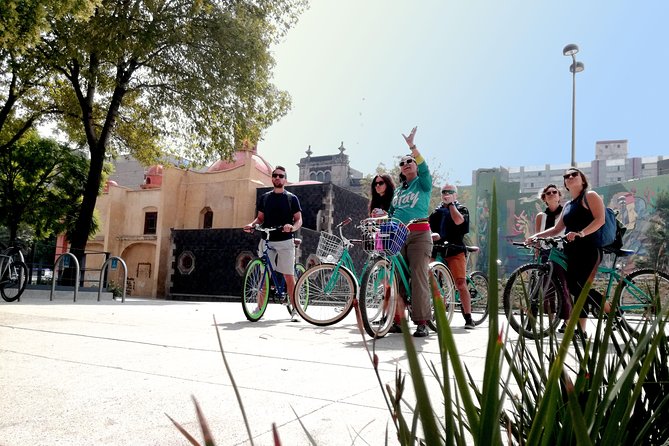
Mexico City street art isn’t just decoration. It’s a public conversation—about identity, protest, community pride, and creativity that keeps evolving city block by city block. This tour is a good way to see that conversation because you ride through the actual neighborhoods where the walls speak.
The best part is how the bike keeps you moving while the guide keeps you grounded. You’re not sprinting between landmarks. You’re gliding at a slow enough pace that you can actually look closely at textures, styles, and placement on buildings.
And because it’s designed for a small group, the tour feels more like following a local art-minded friend than joining a big bus tour line-up. The route also deliberately goes past the most obvious tourist circuit.
You can also read our reviews of more tours and experiences in Mexico City.

Price and Logistics: What Your $60.56 Buys
At about $60.56 per person for roughly 3 hours, you’re paying for three things at once: an in-the-streets guide, bike rental fitted to you, and food. That combination is what makes this feel like value rather than just “transport to murals.”
Here’s what you should know before you go:
- The tour is small-group (maximum 10).
- It runs about 3 hours, starting at 10:00 am.
- It does not include hotel pickup or drop-off, so you’ll want to get to the meeting point on your own.
- You’ll start and end at Av. P.º de la Reforma 24-1, Colonia Centro, Cuauhtémoc, 06040 (the end is back at the same meeting place).
One more practical detail: the tour notes say it’s near public transportation. That’s a relief in Mexico City, where routes can shift fast and taxis can be unpredictable.
Safety on Mexico City Streets (and Why the Group Size Matters)
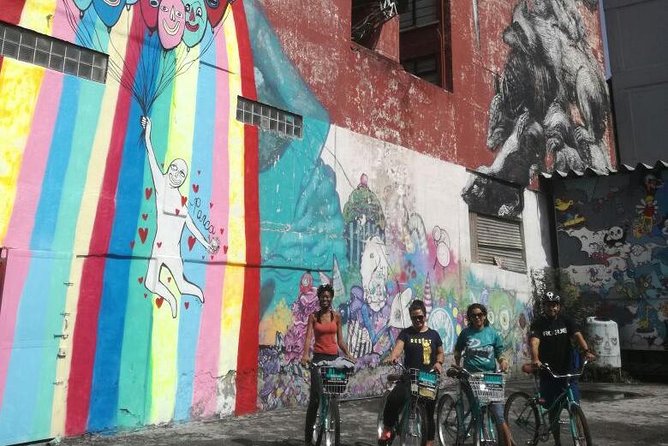
If you’ve ever looked at Mexico City traffic and wondered how anyone stays calm on a bike, you’re not alone. The key here is the structure and staffing.
Multiple reviews point out that there’s real effort to manage crossings. Some groups mention having two guides and a dedicated staff member helping with traffic. That matters because the hard part of biking here isn’t cruising on quieter roads—it’s crossing at the wrong second.
Also, the tour is slow-paced and controlled. That helps you read the street art without arriving at each stop sweaty and stressed. Your job is basically: pedal, look, listen, and follow instructions.
Route Choice: North vs South Changes the Neighborhood Story
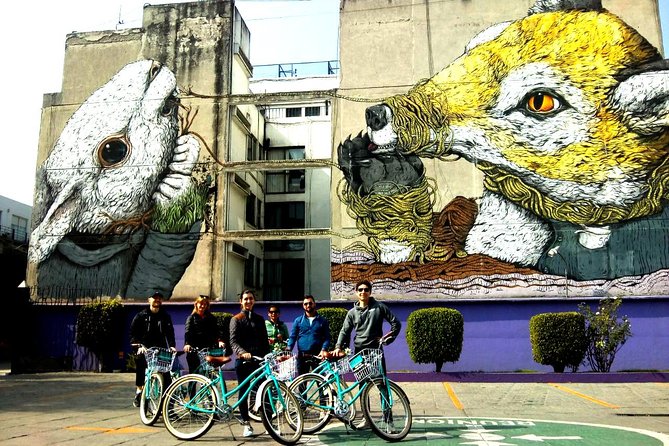
You get a choice of two routes—north or south. That’s not a small detail. It can change the neighborhoods you’ll ride through and the mix of what you see.
- If you pick a route that leans toward areas tied to Mexico City’s older urban fabric, you’ll likely get more of that “how the city grew” context threaded through the art.
- If you pick the other direction, you may see different mural concentrations and a different flavor of street art conversations.
If you’re torn, I’d choose based on what you like most: the mural-heavy blocks vs. the broader neighborhood history angle. Either way, the tour is set up to stay cohesive for the full 3 hours.
Stop-by-Stop: Poray to Obrera and Doctores Street Art
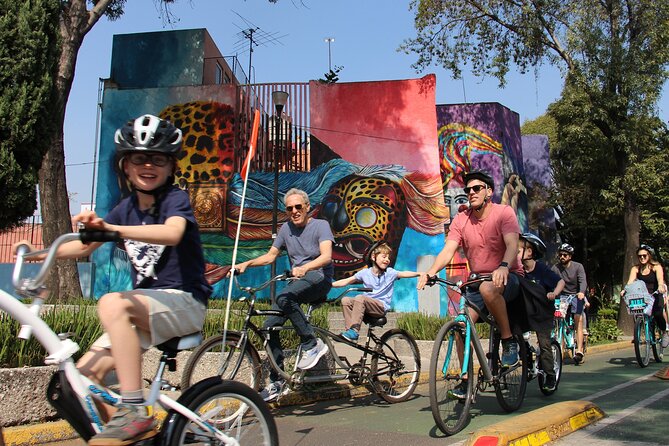
The tour sets you up in the wider Centro area and then pushes into neighborhoods that feel more like you’re stepping into everyday Mexico City than sightseeing.
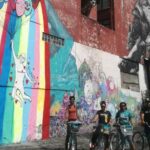
You start with Poray and ride through Colonia Guerrero and Lagunilla, including the non-tourist center. The point of this first stretch is to get your bearings on how these neighborhoods work—where people live, what gets foot traffic, and what kinds of walls artists choose.
From there, you head into Obrera and Doctores, where you visit major works tied to the Antique Toy Museum. This museum is connected to an early street art moment: it’s described as home of the first Street Art Festival in 2011, and the legacy is still part of the community’s energy.
Why that matters: when you’re only chasing Instagram-worthy walls, you miss the “why now” behind mural culture. A festival legacy adds context—this isn’t just one-off graffiti. It’s community involvement with institutions that helped legitimize street art.
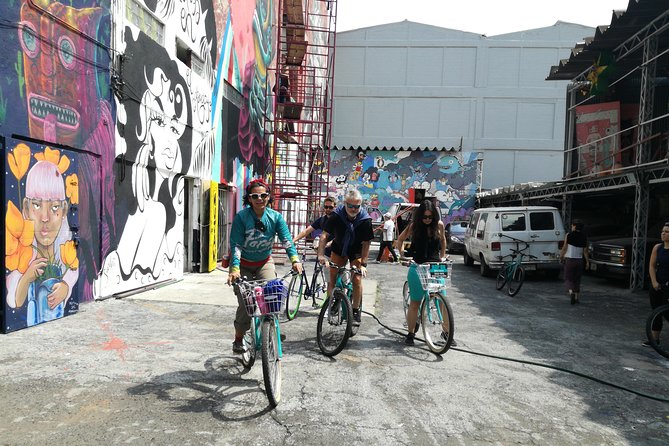
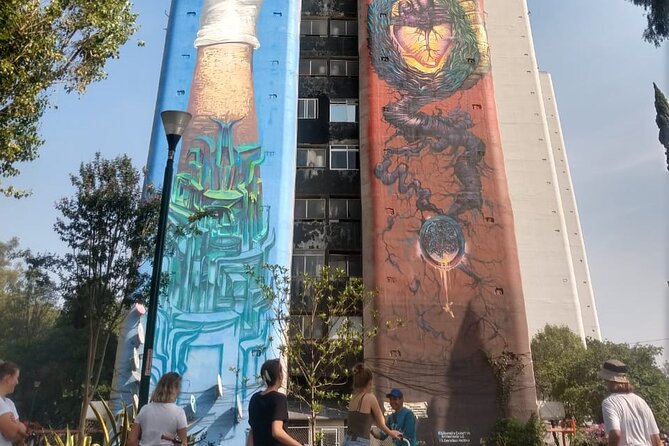
At this stage, you’ll also likely notice how artists layer styles—some pieces feel graphic and loud; others use characters and color fields; some murals blend in architectural details so the building becomes part of the artwork. This is the zone where you start to see how street art can be both personal expression and public message.


Pushkin Garden Break and the Rome Chic Pause
Between mural clusters, there’s a break at Pushkin Garden. This is more than a bathroom and water moment. It’s a reset point where you can slow your brain down and actually absorb what you just saw.
The tour description also mentions getting to know Rome Chic during this pause. In practice, this kind of stop is about pacing—street art tours can load too much visual input at once. By splitting the tour into sections with a real breathing space, you’ll remember more when the murals start again.
If you’re sensitive to crowds, this is also a good time to step away from the bikes and stand still for a minute. You’ll see more when you stop moving.
Juárez and Cuauhtémoc Murals: Alameda Techniques and Diego Rivera Links
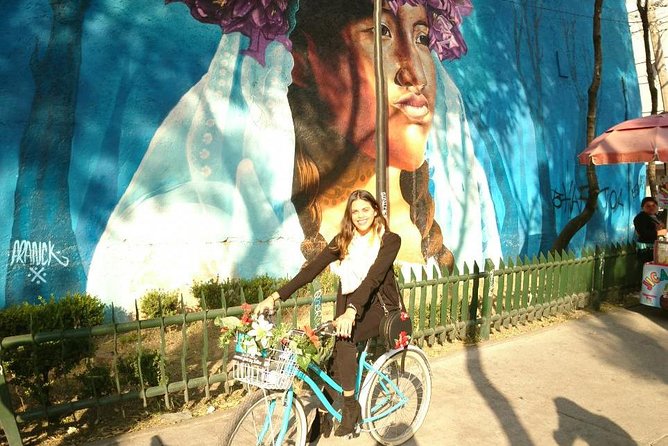
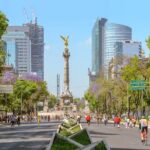
After the garden break, the ride crosses into Juárez and Cuauhtémoc. This is where you get to admire some of the largest murals, and the tour notes mention Alameda techniques and a connection to the Diego Rivera Mural.
Even if you don’t already know Diego Rivera’s place in Mexican mural tradition, the guide’s role here is to connect the dots. Rivera-style public art is about scale and message; street art today often carries that same impulse—just with different tools, different artists, and a more modern urban language.
This portion also gives you a sense of how murals can change a street’s feel. When walls become artwork at big scale, the neighborhood doesn’t just host art. It becomes art’s stage.
There’s also the practical side: by this point, you’ll feel comfortable on the bike. You’ve learned the rhythm of the group, the pace, and how crossings work. Then the big mural visuals land harder.
Street Food Snacks: Included, Flexible, and Often the Best Part
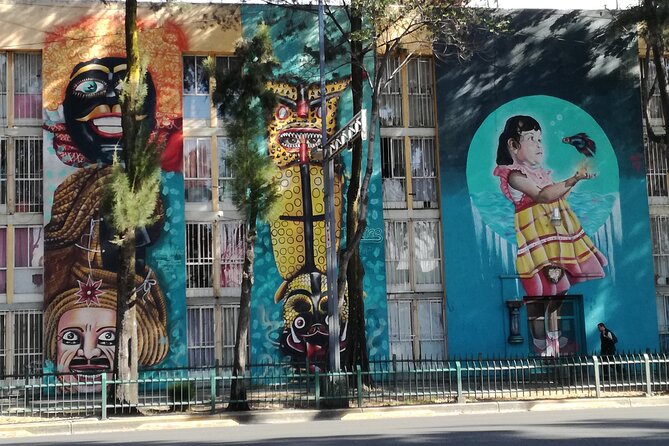
The tour includes street food snacks, and the menu is designed to cover lots of preferences and diets. The listed options include tacos, queqas, tlacoyos, gorditas, chilaquiles, and more.
What I like about this approach is simple: street art tours can become snack-less culture marathons. Here, eating is part of the experience, and it’s timed so you don’t crash halfway through.
A couple of details that stand out from reviews:
- People specifically praised taco stops and a known local street food stand for lunch-like flavor.
- At least one review called out vegan street food as a nice option.
If you have a dietary restriction, this is exactly where you want to ask early. Don’t assume the first stop will match your needs. But because the tour says there are options for different diets, it’s a good sign that they plan for it rather than treating food like an afterthought.
Guides Make the Difference: Alberto, Gaby, Iván, and Eduardo
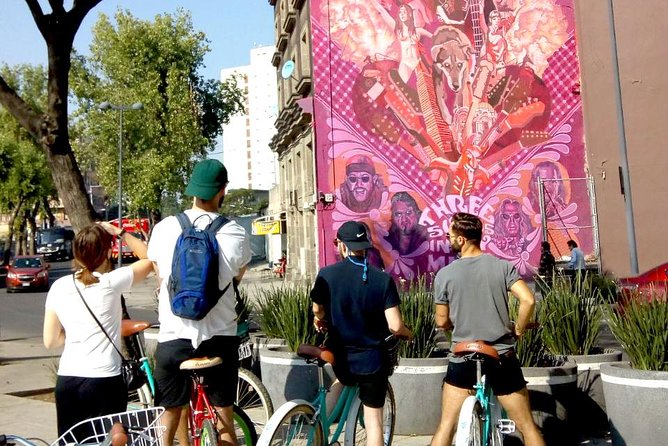
This tour is guided, and the guide quality shows up in the reviews in a very concrete way: safety management, storytelling, and the ability to point out details you’d never notice on your own.
Names that came up include:
- Alberto: praised for kindness, patience, and a strong sense of local context.
- Gaby: praised for explaining cultural significance and keeping the group safe on busy streets.
- Iván: praised for passion, history context, and for making the art feel connected to real neighborhoods.
- Eduardo: praised for being personable and knowledgeable, plus for local food/lunch.
One practical note: if your Spanish is limited, stick with the English option and still plan to use a few gesture-based cues if something gets lost. A review mentioned that one guide’s English wasn’t fluent—so it’s smart to be flexible.
Biking Feel: Slow Pace, Real Riding, and Bike Condition Checks
You should expect real riding, not just a casual stroll. Still, the pace is described as slow enough that you don’t feel crushed by the effort.
That said, bike quality can be a variable. One review mentioned brakes that felt weak and gears that shifted randomly on one bike. Another mentioned a couple of bikes had minor issues before better ones came out.
So here’s my practical suggestion:
- At the start, roll the bike a little, test the brakes, and shift through the gears once.
- Tell the staff right away if something feels off. Don’t wait until you’re already with the group.
This won’t ruin the tour if handled early. It just helps you start with confidence.
Who This Tour Fits Best (and Who Might Prefer Something Else)
This is a strong choice if you:
- Like street art murals and want the meaning behind them, not only the visuals.
- Prefer neighborhoods over big monuments.
- Want a hands-on way to see Mexico City without doing everything by foot.
- Appreciate a small group where you can ask questions.
It’s also a good family option. One review mentioned taking teens and everyone having a great time, with guides keeping the group safe.
You might skip (or choose carefully) if:
- You need perfectly maintained bikes and want zero surprises.
- You’re expecting a tour where language will always be crystal clear and detailed at every stop. English is offered, but guide fluency can vary.
Practical Tips Before You Book and Ride
A few small moves make a big difference on a bike tour in Mexico City:
- Wear shoes you’re comfortable walking in after riding. Street art stops often mean looking at walls up close.
- Bring a water-friendly mindset. The tour includes bottled water, but you’ll still feel better if you pace yourself.
- Be ready for traffic guidance. Staff helps, but your job is to stay alert and follow group instructions.
- Plan your schedule: the tour is about 3 hours at 10:00 am, and it ends back at the meeting point.
Also, tours like this tend to fill. The booking pattern shows it’s commonly reserved about 16 days in advance on average. If you have specific dates, it’s worth reserving early.
Should You Book ART NACO: Murals & Street Art Bike Tour?
Yes, if you want a Mexico City experience that’s active but not exhausting, artistic but still grounded in context. This is one of those tours where the format actually helps: biking lets you cover more ground, and the guide keeps the art meaningful.
You’ll probably love it most if you’re the kind of traveler who enjoys neighborhoods—Guerrero and Lagunilla’s real street feel, Obrera and Doctores’ mural density, then the bigger mural moments crossing toward Juárez and Cuauhtémoc. Add included street food snacks and a small-group setup, and it starts to look like a smart deal rather than a pricey gimmick.
If you’re picky about bike condition or need extremely fluent English at all times, do a quick bike check at the start and go in with flexibility. The overall experience still lands very high, with a 4.9 rating and strong recommendation rate.
FAQ
How long is the Mexico City ART NACO bike tour?
The tour lasts about 3 hours.
What does the tour cost?
The price is $60.56 per person.
Where does the tour start, and where does it end?
It starts at Av. P.º de la Reforma 24-1, Colonia Centro, Cuauhtémoc, 06040 Ciudad de México, CDMX, Mexico and ends back at the same meeting point.
Is hotel pickup included?
No. Hotel pickup and drop-off are not included.
Are bikes provided?
Yes. You get a bicycle that’s fitted to you.
What group size should I expect?
It’s a small group with a maximum of 10 people.
Is the tour available in English?
Yes, it’s offered in English, and it may be operated by a multi-lingual guide.
What’s included besides the bike tour?
You’ll get a local guide, bottled water, and street food snacks.
Can kids join?
Children must be accompanied by an adult. The child rate applies only when sharing with 2 paying adults.