Pedal past Milan’s biggest sights fast. This guided ride strings together Duomo, La Scala, Sforza Castle, Brera, and even Roman leftovers, with photo stops and real context as you roll through the city.
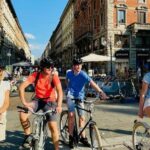
I love that the tour includes your bike and helmet, plus the pace feels beginner-friendly for most people. I also like how the route jumps between old-world power and newer Milan, so you get the contrast in just a morning. One thing to consider: parts of Milan’s streets are bumpy and tight, so expect some cobblestone/brick sections and a few crowded pedestrian moments.
In This Review
- Key highlights worth knowing before you go
- Why a Milan bike tour is the shortcut to perspective
- Price and value: what you really get for $47.16
- Meeting point and timing: starting at Via Vetere, 11 at 10:00 am
- Porta Ticinese to Teatro alla Scala: where the tour sets the tone
- Duomo area moments: what to notice while you’re cycling nearby
- Brera’s artsy streets to Sforza Castle: the historical swing of the route
- Porta Nuova and modern Milan architecture: the skyline reset
- Parco Sempione and Roman remnants: green pause and ancient clues
- How the ride feels in real life: bikes, road surfaces, and group size
- The guide makes the tour: who you might ride with
- Who this Milan bike tour suits best
- Should you book this Milan bike tour?
- FAQ
- How long is the Milan Bike Tour?
- What’s included in the price?
- Do I need an e-bike?
- What time does the tour start and where is it located?
- Is the tour offered in English?
- What are the age and height requirements?
- How many people are in the group?
Key highlights worth knowing before you go
- Bike-and-helmet included: You start riding right away without hunting down rentals.
- A guide keeps it moving: Stops come with explanations, not just nameplates.
- Old Milan + new Milan in one loop: Duomo and Sforza sit next to modern skyline sights.
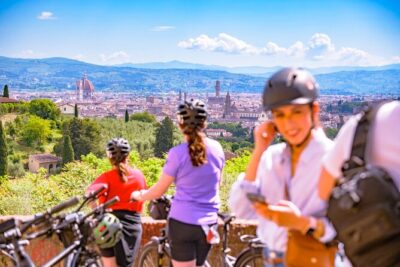
- Photo breaks built into the route: You don’t have to speed past the good angles.
- Cobblestones and pedestrian zones: You’ll likely feel the road a bit, especially in the center.
Why a Milan bike tour is the shortcut to perspective
Milan can feel like two cities. There’s the marble-and-gold postcard side, then there’s the working-city rhythm of apartments, offices, schools, and shops. A bike tour is one of the easiest ways to see both without burning hours walking between far-apart stops.
What makes this ride work is the structure. You’re not just hopping from landmark to landmark. You’re cycling through recognizable neighborhoods that show how Milan grew: ancient ruins and medieval muscle, then artsy side streets and modern architecture. The guide also helps you read what you’re seeing, so each stop clicks into a bigger story instead of becoming a random stop on a checklist.
If you’re the type who likes to get your bearings quickly, this is a strong choice. It’s also a nice option when you only have a day or two, because the route covers a lot of territory at a relaxed pace.
You can also read our reviews of more tours and experiences in Milan.
Price and value: what you really get for $47.16
$47.16 for about 3 hours 15 minutes sounds modest until you look at what’s included. Here’s the practical value: you get a guided route through central Milan, plus bike and helmet rental. That removes the biggest “hidden costs” of biking—rental logistics and the stress of figuring out what to do next.
You can also ride an e-bike if you want (it’s listed as available for €15 per person). That’s useful if you want extra comfort or if your legs prefer to save energy for Duomo stairs or cathedral-area wandering later.
Also, the itinerary’s stops are marked as free admission. That doesn’t mean you’ll be inside every building (the tour is built for riding and sightseeing), but it does mean you’re not paying for entry fees just to see the route’s core sights from the right viewpoints.
Bottom line: the value comes from efficiency plus guidance. You’re paying for someone to connect the dots while you cover distance without needing to plan every turn.
Meeting point and timing: starting at Via Vetere, 11 at 10:00 am
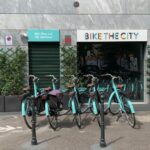
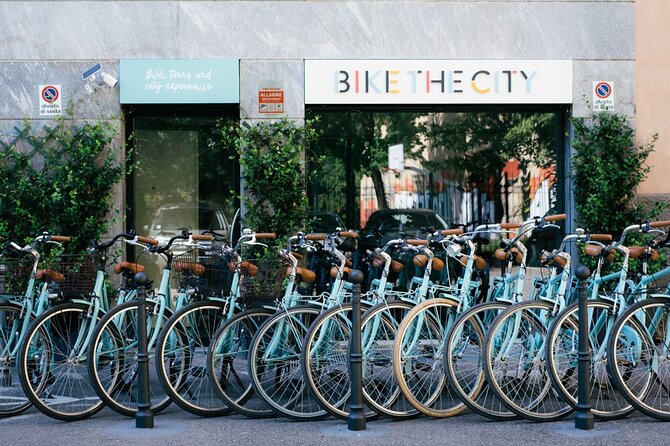
The tour starts at Via Vetere, 11, 20123 Milano, and it runs from 10:00 am. It ends back at the same meeting point, so you’re not stuck figuring out a new exit plan.
It’s also described as near public transportation, which matters in Milan where taxis can be slow and parking can be a headache. If you arrive a few minutes early, you’ll have time to get your bike sorted and settle in before the safety briefing.
You’ll receive a mobile ticket, so have your phone ready when you arrive.
Porta Ticinese to Teatro alla Scala: where the tour sets the tone
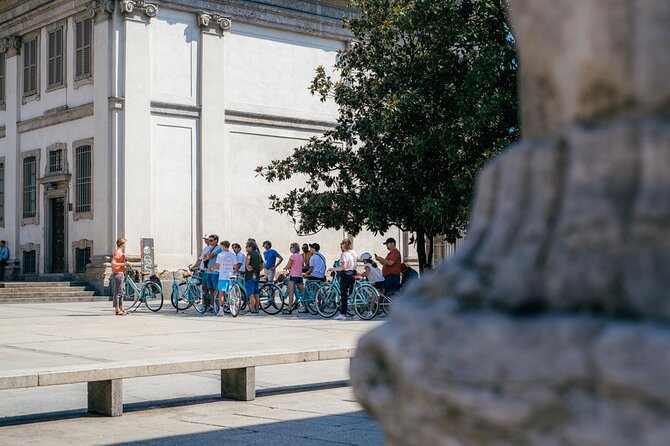
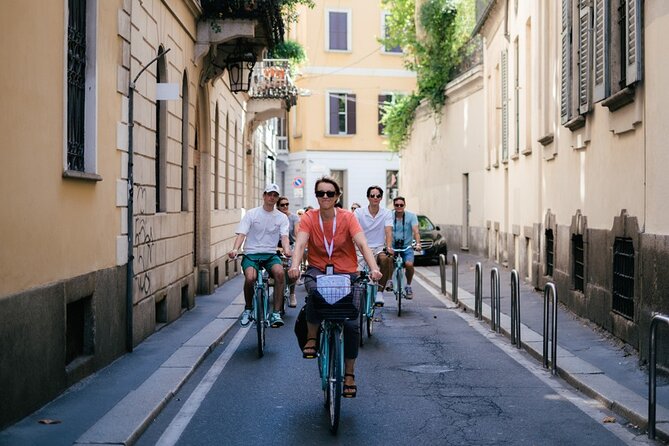
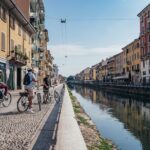
The ride begins in Porta Ticinese, tied to the name of the historic city gate. This start matters because it places you in a real Milan neighborhood right away. You’re not immediately dropped into the postcard center—you warm up through streets with character first.
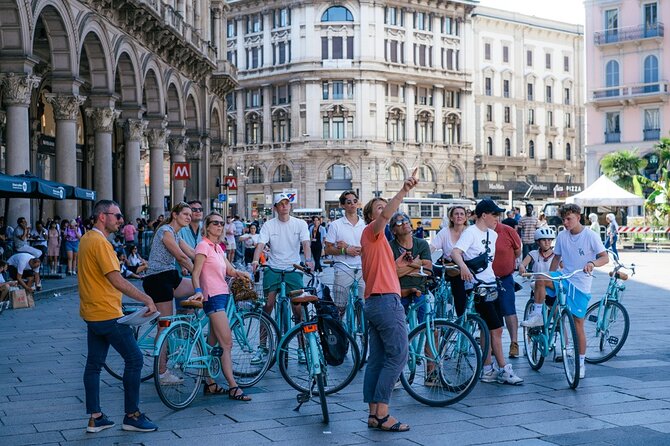
From there, the tour threads into the downtown sightseeing zone, including the area around the Duomo and the nearby cultural corridor. You’ll pass the Royal Palace, the Museo del Novecento, and the Vittorio Emanuele Gallery as part of the Duomo stop area. Even if you don’t go inside, cycling past these places gives you the feel of how Milan organizes its center: grand squares, museum blocks, and elegant walkways that channel foot traffic.
Then comes Teatro alla Scala. You’ll see it from the outside and get the stories behind the theatre—how it became a symbol of Milanese class and sophistication. This is one of those stops where the exterior view is enough, because the guide’s narration is what makes it memorable.
A practical note: this portion of the ride is where you’ll likely notice the most pedestrians and the tightest shared space. If you’re comfortable navigating around walkers, you’ll be fine. If you’re nervous in crowds, arrive with extra patience.
Duomo area moments: what to notice while you’re cycling nearby
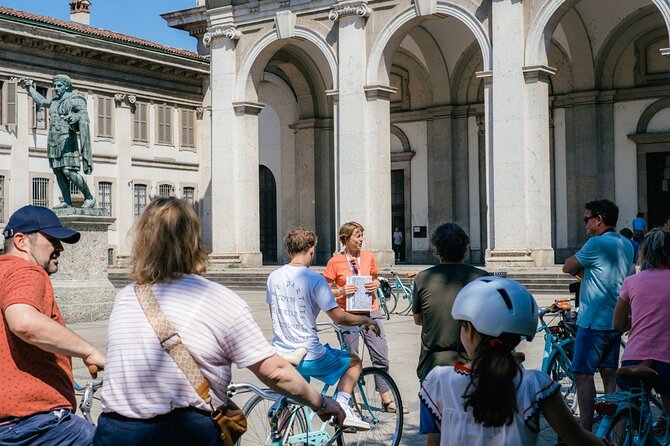
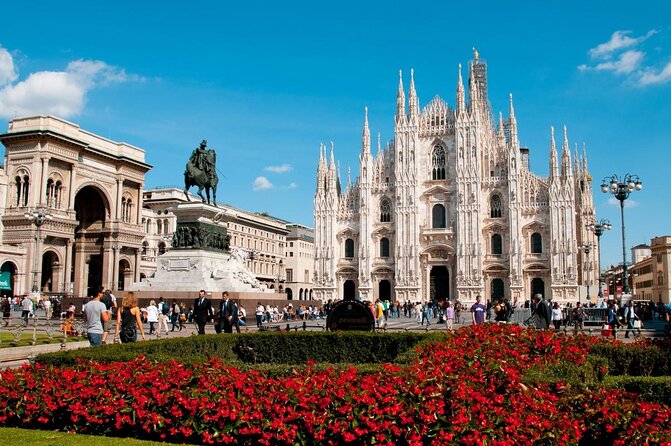
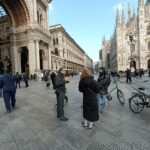
The Duomo di Milano stop is the centerpiece. You’ll get a look at the astonishing Gothic cathedral, and the guide shares background on how it was built and what to look for in the façade.
Even if you only have a quick viewing time, you can still make it count. As you roll past, try to notice:
- the scale of the façade details
- how the surrounding streets open up toward the cathedral area
- how the area feels like a destination magnet for locals and visitors alike
This is also a good moment to take photos from multiple angles, because cycling keeps you moving just enough to find better sight lines than standing in one spot.
Brera’s artsy streets to Sforza Castle: the historical swing of the route
After Scala, the tour heads into Brera, one of Milan’s most character-heavy neighborhoods. You’ll ride through streets lined with historic houses and churches, and the guide points out why Brera feels different from the more official-feeling center.
Brera’s charm isn’t just aesthetic. It’s the maze of lanes and the sense of craft—small artisan workshops tucked along the route. You also get the Pinacoteca area in the mix, even if you’re just seeing it from outside, so your mental map of Milan fills in: art isn’t a single museum stop here, it’s part of the neighborhood identity.
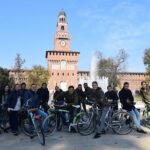
Then you reach Castello Sforzesco. This stop has serious “Milan power” energy. You’ll see the fortress and hear how it connects to the Sforza era, including the fact that Leonardo da Vinci was called to Milan in 1482 by Ludovico il Moro and worked there. Even if you already know the name, the castle setting makes the story feel grounded in place.
Inside the castle area, you’ll also get a slowdown moment before moving on. Many guides use this part of the tour to help you catch your breath after busier streets.
Porta Nuova and modern Milan architecture: the skyline reset
Leaving Brera behind, the tour transitions into Porta Nuova, where the city shifts into contemporary shapes. This is where you trade the dense historic blocks for newer architecture, and it changes your sense of Milan fast.
You’ll cycle past landmarks and architectural features like:
- Palazzo Lombardia
- Biblioteca degli Alberi
- Unicredit tower
- Bosco Verticale
This segment is a highlight for architecture lovers. It’s also a useful reality check: Milan isn’t only museums and old stones. The newer city blocks show the modern ambition right in the middle of the same urban fabric.
One possible drawback here is timing and crowding. Modern Milan areas can still be busy, and if your group is large, you may want to keep your comfort in mind while cycling around intersections and foot traffic.
Parco Sempione and Roman remnants: green pause and ancient clues
After Castello Sforzesco, the route heads to Parco Sempione, described as the city’s green lung. You’ll get a breather in the park, including the Peace Arch area. This pause matters because it breaks up the density of the center and gives your body a chance to reset before the final stretch.
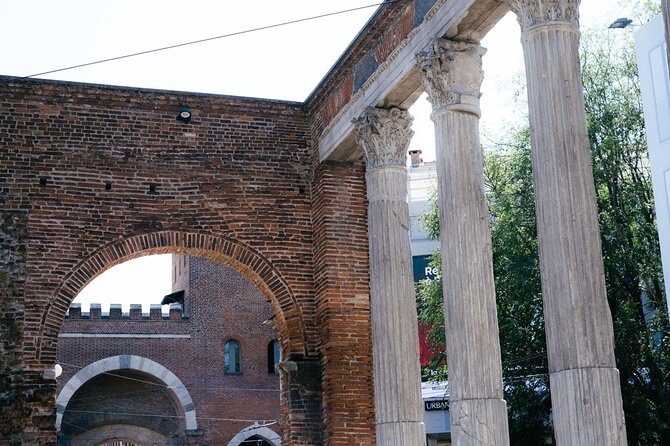
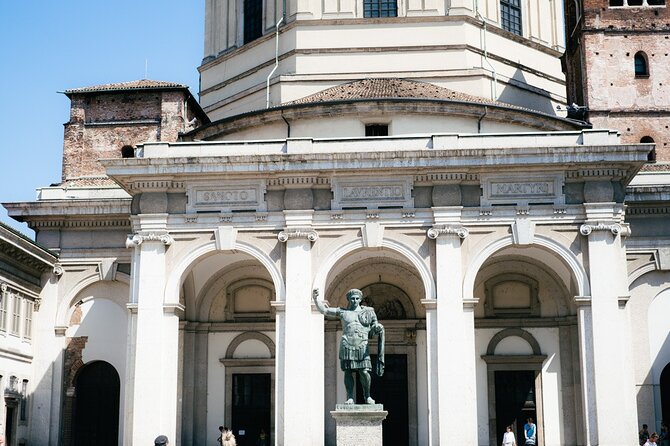
The tour then returns toward the Colonne di San Lorenzo, where you’ll see Roman ruins connected to Milan’s Imperial-era past. These are the oldest Roman ruins in Milan, and they give you a clear reminder that this city’s story didn’t start with the cathedral.
If you’re the kind of person who likes linking timelines, this is a satisfying ending. Gothic architecture, Renaissance power, Roman engineering—Milan stacks centuries in a way that makes your brain do less guessing and more understanding.
How the ride feels in real life: bikes, road surfaces, and group size
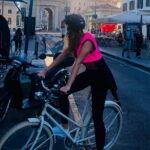
A bike tour only works if the logistics feel calm. Overall, this one is designed to be an easy cycling experience—most riders find it manageable because the ride is paced and the route is planned to hit big points without nonstop sprinting.
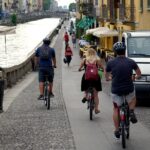
That said, Milan has street surfaces that can be rough on bike tires. Expect some cobblestone and brick road sections. Even when there are dedicated bike paths, they may not be fully smooth. This can mean more vibration than you’d get on a perfect paved bike lane at home.
Your comfort will also depend on group size. The tour has a maximum of 30 travelers, and some riders have felt that when groups are on the larger side, the experience can feel crowded in pedestrian-heavy zones. If you prefer low-friction cycling with lots of space, that’s your main risk factor.
The good news: the guide-led format helps. The safest tours keep everyone together, and you get stop-and-go moments for photos and explanations, rather than constant threading through traffic.
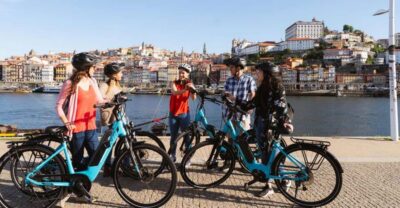
Bike comfort is another factor. Reviews note the bikes are in good condition and often described as basic (including one-gear style). That’s fine for a mostly flat route, but if you hate feeling every bump, you might want to consider the e-bike option when it’s available.
Also worth noting: you get bike bags for your belongings, so you’re not awkwardly carrying stuff in your hands while trying to take photos or listen.
The guide makes the tour: who you might ride with
One of the biggest reasons people recommend this tour is the guide experience. Different guides lead different days, but names that come up include Paolo/Paulo, Sandra, Angelo, Marco, and Simone/Simon.
Across guides, the pattern is consistent: clear safety instructions at the start, friendly pacing, and history tied to what you’re seeing right then. You’ll also find that questions get answered, and the guides tend to keep the group comfortable with breaks. Reviews also mention practical details like water stops in the shade and even the occasional fun treat such as gelato, plus raincoats when weather turns.
Who this Milan bike tour suits best
This tour is a strong match if:
- you want an efficient orientation to Milan’s top sights in one morning
- you like walking-and-reading less and riding-and-learning more
- you’re comfortable with a guided group format and short photo stops
- you enjoy architecture and neighborhood contrast, not just one landmark
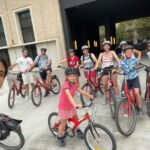
It’s especially appealing for families too. The minimum age is 9 years, and you might see kids in the group because the ride is described as easy and paced with safety in mind.
You should also be aware of the bike sizing note: for riders between 135 and 155 cm, you need to email to reserve a suitable bike since availability is limited.
Should you book this Milan bike tour?
Book it if you want the fastest, most coherent way to see Milan’s highlights without spending your whole trip mapping transport and figuring out timing. The included bike-and-helmet rental plus the guide-led history make it feel like a planned morning, not just a ride with random stops.
Skip it or think twice if:
- you dislike cycling near crowds or on narrow streets
- you’re sensitive to rough road surfaces like cobblestones
- you want a super quiet, small-group experience (group size can be up to 30)
If your goal is to get your bearings fast, understand why Milan looks the way it does, and still have energy left for a cathedral climb or a café stop afterward, this is a very solid choice.
FAQ
How long is the Milan Bike Tour?
The tour runs about 3 hours 15 minutes.
What’s included in the price?
Bike and helmet rental are included.
Do I need an e-bike?
E-bikes are available only subject to availability for an extra €15 per person. The standard bikes are included.
What time does the tour start and where is it located?
It starts at 10:00 am at Via Vetere, 11, 20123 Milano MI, Italy.
Is the tour offered in English?
Yes, it is offered in English.
What are the age and height requirements?
Minimum age is 9 years. Riders between 135 and 155 cm need to email to reserve a suitable bike, since availability is limited.
How many people are in the group?
The tour has a maximum of 30 travelers.