REVIEW · MEXICO CITY
Mexico City E-Bike Tour with a taco and churros stop
Book on Viator →Operated by CDMX Electric Bike Tours · Bookable on Viator
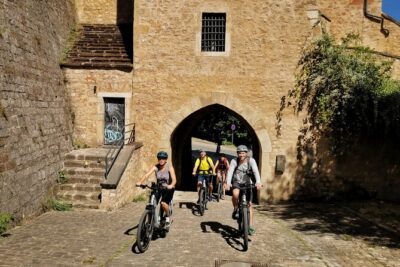
E-bikes turn CDMX chaos into motion. This half-day ride connects big landmarks and classic neighborhoods with electric assistance and a max of 9 people, so you can cover a lot without feeling like you’re sprinting between stops. You’ll roll past major sights along major streets and through calmer local blocks, with food breaks built in.
I especially like the way the tour gives you an instant “map in your head.” Roma Norte and Condesa-style streets make you feel the city’s personality, while Reforma and the core monuments give you the orientation you need for the rest of your trip. I also like the small-eat stops, including a taco stop plus churros, which keeps the energy up without turning the whole ride into a food crawl.
One thing to consider: riding is not a quiet bike path the whole time. Even with separated lanes, you may have moments of close proximity with traffic, and some stops are short—so you’ll want to pay attention when your guide gives context.
In This Review
- Key highlights worth planning around
- A 4-hour e-bike loop that gives you a real sense of the city
- Roma Norte: architecture, movie fame, and an easy start
- El Paseo de la Reforma and the Revolution Monument: see power up close
- Alameda Central and Bellas Artes: park calm and opera-house views
- Zócalo and El Ángel: Mexico City’s pulse points
- Museo Nacional de Antropologia area: watching the voladores show
- Polanco taco break at Taquería El Turix: where the ride earns its appetite
- Chapultepec Park and the Castillo: green time plus skyline views
- How the guides handle safety and the pace (and where it can feel tricky)
- Price and value: why $70 can make sense
- Who should book this, and who might want to reconsider
- Before you ride: practical tips that match how the day works
- Final call: should you book this e-bike tour?
- FAQ
- How long is the Mexico City e-bike tour with taco and churros stops?
- Where does the tour start and end?
- What food is included?
- Do you enter the museums at Monumento de la Revolución Mexicana or Palacio de Bellas Artes?
- How big is the group, and is it offered in English?
- What should I expect if the weather is poor or I need to cancel?
Key highlights worth planning around
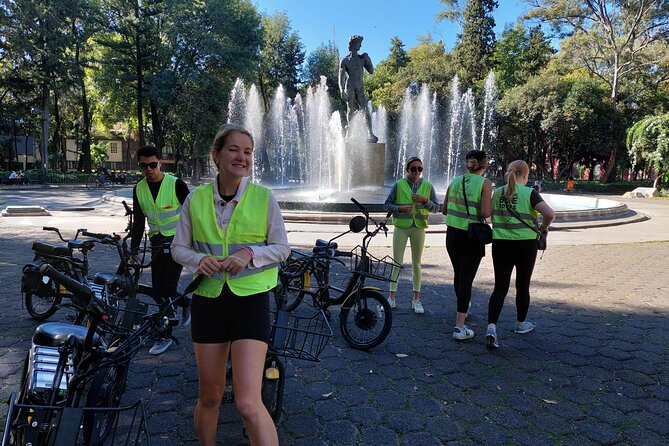
- Max 9 riders keeps the pacing human and the safety talk actually usable
- Roma Norte to Polanco covers very different sides of CDMX in one morning
- Reforma and monument photo stops let you see the big icons without waiting for tickets
- Taco and churros break is part of the experience, not an optional detour
- Chapultepec area riding brings you into a greener mood before you hit the next landmark
A 4-hour e-bike loop that gives you a real sense of the city
Mexico City is huge, and that’s the trick: a first visit can feel like you’re constantly choosing between “worth it” and “too far.” This tour is built to solve that. In about 4 hours, you get a connected route across multiple neighborhoods and major districts, with electric assistance doing the heavy lifting.
The practical magic is that your legs stay fresh enough to enjoy stops, not just endure them. You’ll get to move through long avenues like El Paseo de la Reforma, then switch gears to parks and central squares where the vibe changes fast. It feels like someone handed you the city’s main chapter headings and said, Start here, then go back for your favorite parts later.
You’ll also get standard tour-day structure without feeling locked into a museum schedule. Several highlights are free photo stops, and you don’t need to be a history buff to get something out of it—just willing to look up and listen for a few minutes at each stop.
You can also read our reviews of more tours and experiences in Mexico City.

Roma Norte: architecture, movie fame, and an easy start
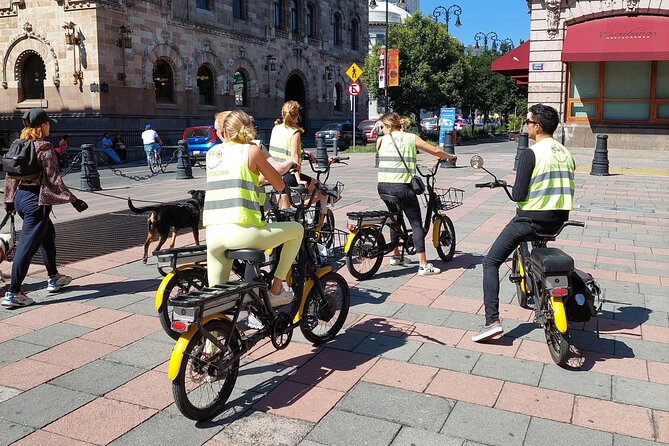
The ride begins in Roma Norte, one of the classic early-20th-century neighborhoods shaped during President Porfirio Díaz’s era. The big draw here isn’t one single building—it’s the mix. You’ll pass streets where different architectural styles sit side by side, which gives the neighborhood a walkable, “every corner is a postcard” feel.
This is also where the guide’s job matters, because Roma Norte can look like a pretty neighborhood until someone points out why it matters. It’s known for its restaurant and bar scene, and it’s closely linked with the worldwide attention that came from Alfonso Cuarón’s film Roma.
Practical win: starting here means you ease into the rhythm of e-biking before you hit Mexico City’s heavyweight landmarks. The tempo feels friendly. One short stop gives you time to orient yourself while the group gathers momentum.
El Paseo de la Reforma and the Revolution Monument: see power up close
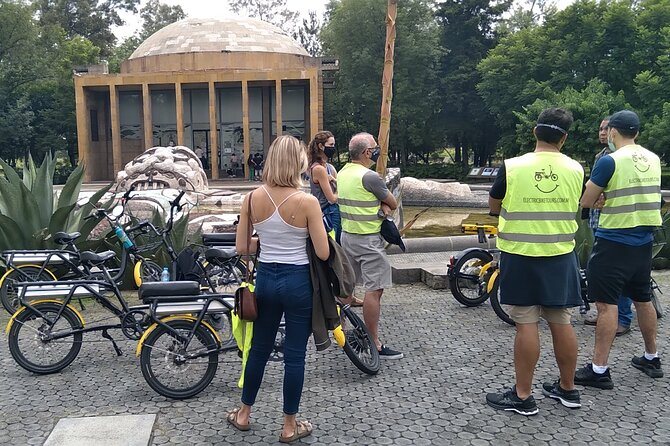
After Roma Norte, you’ll spend time on El Paseo de la Reforma—Mexico City’s signature avenue for monuments and national symbolism. The value here is that you’re seeing a long stretch of the city’s identity in motion. You don’t need to “pick one statue.” The ride naturally strings them together.
One of your monument/photo stops is Monumento de la Revolución Mexicana. The stop is short, and that’s on purpose: this tour doesn’t treat the monument like a full-ticket museum visit. You’ll learn about its significance and get a good photo moment, but you won’t be entering the museum inside it.
That trade-off can be a plus. If you want a quick hit of meaning and a great backdrop for pictures, this works. If you want a deep, ticketed museum experience at each site, you’ll likely need a separate visit later.
Alameda Central and Bellas Artes: park calm and opera-house views
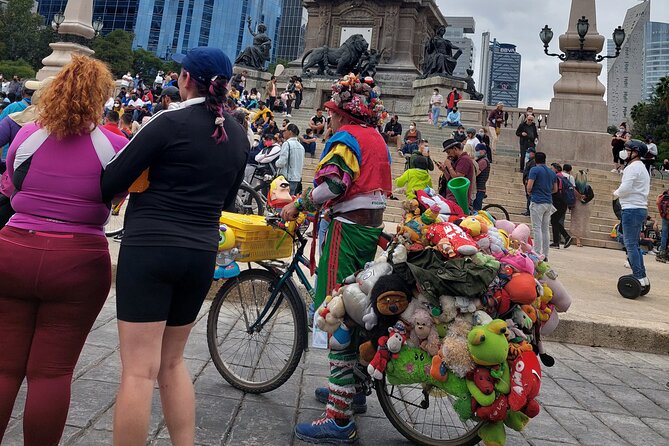
Next comes Alameda Central, described as the oldest public park in the Americas. On a bike, a park stop is a breather. You’re not just sightseeing—you’re getting a reset from the traffic-and-avenue energy.
Alameda Central also gives you classic city texture: statues, fountains, and monuments in a space that invites slower strolling. Even a short pause can feel like a moment to breathe and take a few photos without the pressure of keeping up at every turn.
Then you’ll head toward Palacio de Bellas Artes, Mexico City’s famous opera house. The tour doesn’t include going inside. You’ll admire the architecture and get the story behind why it’s such a major cultural landmark. That exterior-only format is useful because it keeps the tour moving, and you can still do a deeper Bellas Artes visit on another day if you want.
Zócalo and El Ángel: Mexico City’s pulse points
The route continues through the center, where you’ll first visit the first city square area tied to the Origin of Mexico City, and then you’ll reach the Zócalo / Plaza de la Constitución. The Zócalo is huge, and it can feel like sensory overload if you arrive at random. This tour helps because you’re not just dropping in—you’re arriving with context and a timeline for what to notice.
You’ll take time to absorb the square’s scale and energy. Expect it to feel like the city’s shared living room: people moving, conversations happening, and landmarks all around you.
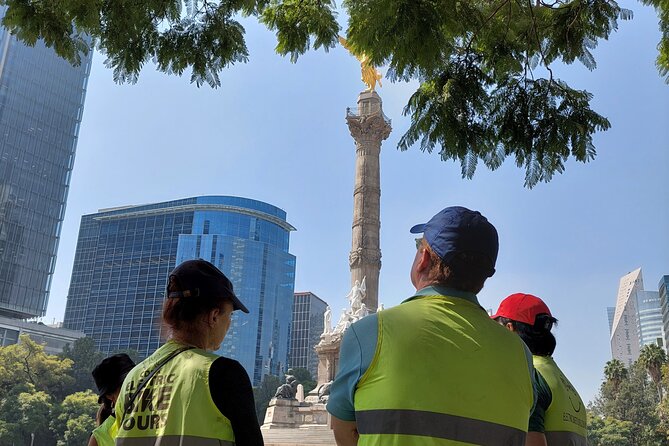
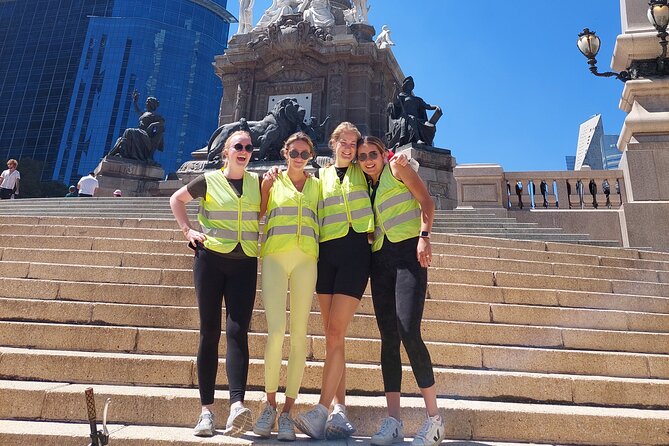
Then there’s El Ángel de la Independencia. This is one of those places you recognize instantly from photos, but seeing it in person gives it a different weight. You’ll make a stop for photos and learn why the monument is tied to Mexican patriotism and freedom, including how it becomes a celebration focal point when Mexico’s soccer team wins.
This part of the tour is where your “I get it now” moment can happen. You see the centerline of Mexico City’s identity: power, nation, memory, and public gathering.



Museo Nacional de Antropologia area: watching the voladores show
One of the most memorable parts of the tour is the stop connected with voladores de Papantla at the Museo Nacional de Antropologia. You’ll watch the flying dancers ritual as part of the experience, which gives the ride a cultural heartbeat that doesn’t feel like a classroom lesson.
The ritual is performed by a group of “flying dancers” who climb a tall pole and then descend spinning while they move down to the ground. It’s short-form but powerful. Even if you know nothing about it going in, it tends to catch your attention fast because it’s physical and mesmerizing.
A key detail: this stop is for witnessing the performance, not a full museum “all day” plan. If you want to go deeper into anthropology after, you can. But as part of a half-day e-bike tour, it’s a smart add-on.
Polanco taco break at Taquería El Turix: where the ride earns its appetite
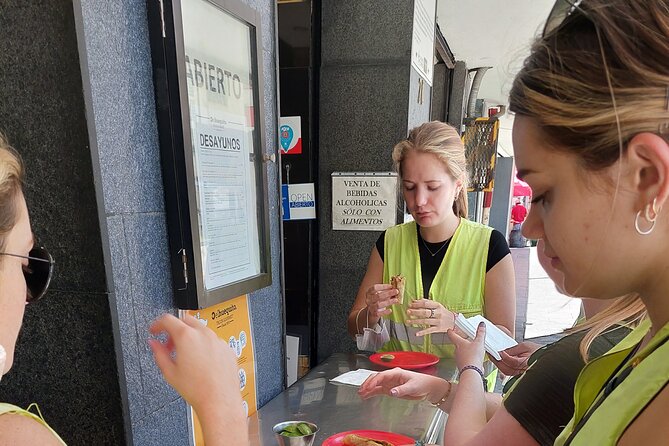
After monuments and parks, you hit the stomach part of the plan: a taco stop in Polanco. Polanco is one of the city’s trendier, more expensive-feeling neighborhoods, and it can be a bit of a culture shock after the historic center. On the bike, it’s a smooth transition.
The tour’s food stop is at Taquería El Turix, known for Yucatecan-style tacos. The point isn’t just eating something good (though it matters). It’s getting a local-style meal that gives you something specific to remember, not just a generic taco experience.
You’ll have around 20 minutes here, which is enough time to eat without turning it into a long sit-down. I like this pace because you stay part of the group rhythm—and you don’t lose half the tour to waiting for food.
Chapultepec Park and the Castillo: green time plus skyline views
The ride rounds into Bosque de Chapultepec, which is described as one of Mexico City’s major “lungs”—a large park that makes the city feel less concrete-heavy. Riding through Chapultepec is a nice contrast to the central monuments. Your senses reset: more trees overhead, more open space around you, and a calmer feeling even when you’re still moving through a big city.
You’ll also get to see Chapultepec Castle close up. The tour includes time for that viewpoint, not just a pass-by photo. The route also mentions leaving through the Puerta de los Leones area along Avenida Reforma, which helps connect the park back to the main city grid.
One small realism point: park closures can happen. In one recent experience, a section of Chapultepec Park was closed and the guide still managed to get the group access. That’s exactly why having a guide matters on a bike day—you want someone who can adjust without making you feel lost.
How the guides handle safety and the pace (and where it can feel tricky)
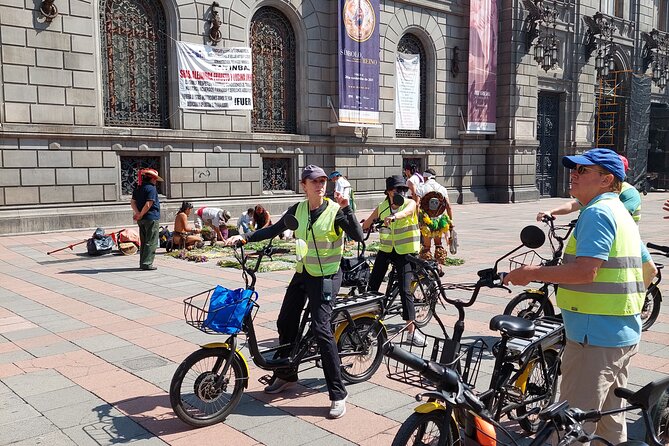
A bike tour lives or dies on two things: instruction and traffic judgment. This tour leans on both. You’ll get guidance on how to ride the e-bike, and multiple guides (people like Eduardo, Sergio, Jose, Sebastian, and Adriana show up in the experiences shared) are described as friendly and focused on navigating the city safely.
Most riding is planned in sections where you’ll have more space, but you should not expect a fully car-free route. One caution that’s worth taking seriously: there can be moments where the bike traffic gets close to cars. If you’re an anxious rider, you’ll want to listen carefully during the safety talk and keep a steady speed.
Also, be aware that the tour’s “guided” style can vary by day and by guide. The overall format includes history and explanations, but some people have described shorter or more minimal commentary during parts of the ride. So don’t book expecting every minute to be a narrated story. Book expecting a strong overview, good stops, and enough context to point you toward what to explore later.
Price and value: why $70 can make sense
At $70 per person for about 4 hours, this is priced like a city tour that’s doing more than walking. You’re paying for electric assistance, a small-group experience (max 9), and a route plan that threads together neighborhoods and icons without requiring you to map everything yourself.
Value-wise, the tour also includes a food component: a taco stop where the price is noted as included, plus churros as part of the overall taco-and-churros theme. Many of the major stops are admission free in the way this tour handles them (photo stops, short visits, exterior views). That keeps the day from turning into “ticket math.”
The best way to judge value is to compare the outcome. This tour tries to leave you with:
- a sense of where Roma/Condesa/Polanco fit into the city
- photo-ready landmark knowledge for Reforma, Zócalo, and El Ángel
- at least one memorable meal stop rather than random snack searching
If that’s what you want on day one, $70 often feels fair. If you’re looking for a long museum immersion, you’ll probably prefer standalone tickets and longer timed visits.
Who should book this, and who might want to reconsider
This tour is a great fit if you’re:
- in Mexico City for a limited time and want a fast overview
- curious about multiple neighborhoods without spending hours commuting
- not trying to train for a road cycling event
- excited about classic landmarks plus a real food stop
It’s also a smart choice at altitude stress level. One review mentioned altitude concerns around 2,400 meters and the need for enough water. E-bikes help with leg fatigue, but your body still needs hydration. On a ride like this, I’d treat water as non-negotiable.
I’d reconsider if:
- you’re very sensitive to riding near traffic at close quarters
- you expect long, slow explanations at every stop
- you’re hoping for fully guided museum interiors everywhere (this tour focuses on exteriors and specific ritual viewing)
Before you ride: practical tips that match how the day works
Start by planning for a day with movement. Even with electric help, you’ll spend time riding between stops and doing quick transitions. Wear comfortable clothes and shoes suited to biking. If you’re sensitive to sun or sudden temperature shifts, bring layers you can handle.
Also, don’t go into the day assuming you’ll get the exact amount of water you personally want. One person specifically reported water felt insufficient for the duration and altitude. Even if your day goes smoothly, build in your own hydration plan.
If you can, ask your guide early how the day is paced for your group. Guides are the ones who handle timing, route adjustments, and group safety rhythm. A couple minutes of early clarification can save frustration later.
And if you’re coming on a day with road closures for pedestrians or biking, you might find the ride feels easier and calmer on key avenues. That’s not guaranteed, but it has happened on some Sundays.
Final call: should you book this e-bike tour?
Yes, I’d book it if your priority is a high-success overview of Mexico City in one morning. You’ll see the big core landmarks—Reforma, Revolution monument area, Alameda Central, Bellas Artes exterior views, Zócalo, El Ángel—plus neighborhoods like Roma Norte and the modern-district feel of Polanco. The bonus is that you also get a real food moment with tacos and churros, and a cultural stop tied to voladores de Papantla.
Skip it only if you’re expecting a slow-paced, fully narrated deep dive with long museum time, or if traffic anxiety would make biking stressful. For everyone else, this is a smart way to get oriented fast, eat well, and decide what you want to revisit once you’re back on your own.
FAQ
How long is the Mexico City e-bike tour with taco and churros stops?
It runs for about 4 hours.
Where does the tour start and end?
The meeting point is Zacatecas 3, Roma Nte., Cuauhtémoc, 06700 Ciudad de México, CDMX, Mexico. The tour ends back at the meeting point.
What food is included?
You’ll have a taco stop and a churros stop during the tour.
Do you enter the museums at Monumento de la Revolución Mexicana or Palacio de Bellas Artes?
No. The tour notes that you won’t enter the museum inside the Revolution monument, and you won’t enter Palacio de Bellas Artes either—you’ll admire it from the outside.
How big is the group, and is it offered in English?
The group is capped at a maximum of 9 travelers, and the tour is offered in English.
What should I expect if the weather is poor or I need to cancel?
The tour requires good weather. If it’s canceled due to poor weather, you’ll be offered a different date or a full refund. You can cancel for a full refund up to 24 hours in advance.