REVIEW · MILAN
Milan: Bike tour of the city
Book on GetYourGuide →Operated by AllRide Milan · Bookable on GetYourGuide
Milan makes more sense from a bike seat. I love how the route strings together the center’s biggest sights with actual riding streets (not just quick photo stops), and I love the Rossignoli bikes and small-group size that keep the experience personal. One thing to consider: this tour is for people who can bike well enough, and it’s not aimed at low-fitness riders.
You’ll start and end at Allride – Bike Tour Milan, meet by a fountain in a tree-lined square, then get a live guide in English or Italian telling stories as you pedal from Porta Nuova through Brera, Navigli, and the Duomo area back to base.
In This Review
- Key highlights you’ll care about
- What 55.80 buys you in Milan (and what it doesn’t)
- Rossignoli bikes and the pacing that keeps you from feeling lost
- Starting at Allride: where you gather and how the tour kicks off
- Porta Nuova and Brera: getting your Milan legs in the first hour
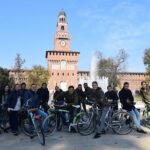
- Piazza della Scala and Sforza Castle: the center at a riding pace
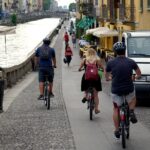
- Navigli and Porta Ticinese: canals and street atmosphere, without the long walk
- Milan Cathedral and the fashion quarter: seeing the Duomo area with context
- Villa Necchi Campiglio and Parco Indro Montanelli: a calmer reset
- Back at Allride: what to do after the tour
- Who this bike tour is best for
- Should you book this Milan bike tour?
- FAQ
- FAQ
- How long is the Milan bike tour?
- What’s the group size?
- What languages are the guides?
- What’s included in the price?
- Where do I meet, and where does the tour end?
- Do I need to know how to ride a bike?
- Is the tour suitable for children?
- What if I cancel last minute?
Key highlights you’ll care about
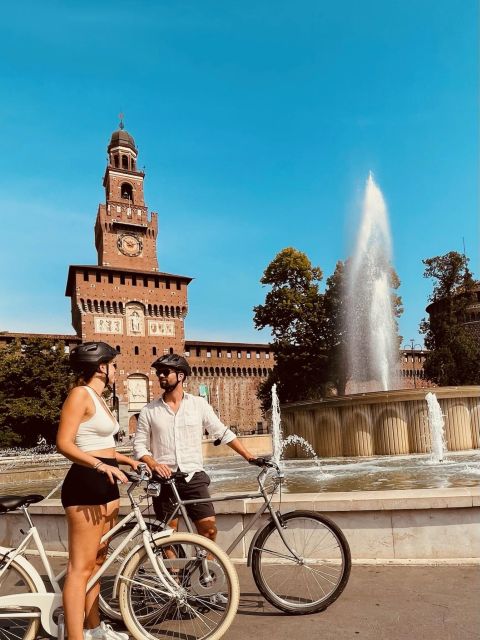
- Rossignoli bicycles + helmet: you’re rolling on a proper city bike, not a rental that feels sketchy.
- Small groups capped at 10: you stay close enough for questions and picture stops.
- Local guide energy: the guide is built for the city, with stories and route tweaks based on how the group feels.
- Classic center-to-canals itinerary: Porta Nuova, Brera, Scala area, Sforza Castle, Navigli, Duomo, and more—covered in one go.
- Two-guides support on some rides: you may ride with one guide up front and one keeping an eye on the group behind.
What 55.80 buys you in Milan (and what it doesn’t)
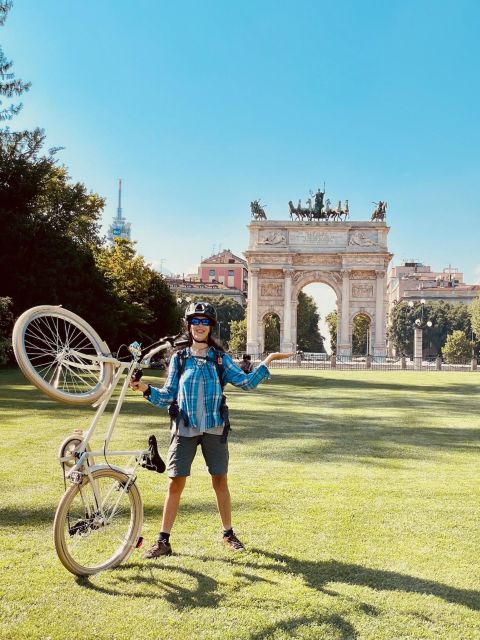
At $55.80 per person for about 3.5 hours, you’re paying for a simple formula: bike + helmet + a live guide doing the heavy lifting. The value lands when you treat this as a shortcut to orientation. Milan is big, spread out, and easy to misread if you only walk. A bike tour gets you moving, but still lets you stop, look, and ask why something matters.
This isn’t a “drive-by the famous stuff” deal. The whole pitch here is that you’re riding with Milanese natives—people who know which streets feel pleasant, where the ride flows, and how to connect neighborhoods without wasting your energy. The included helmet also matters. Even if you’re an experienced cyclist, having the right setup makes the ride feel easier.
What it doesn’t include: you’re not signing up for a slow, museum-by-museum crawl, and you’re not paying to be carried around. You’ll be pedaling for most of the 3.5 hours. If you’re hoping for a stroller-style sightseeing pace, this isn’t that.
You can also read our reviews of more tours and experiences in Milan.
Rossignoli bikes and the pacing that keeps you from feeling lost
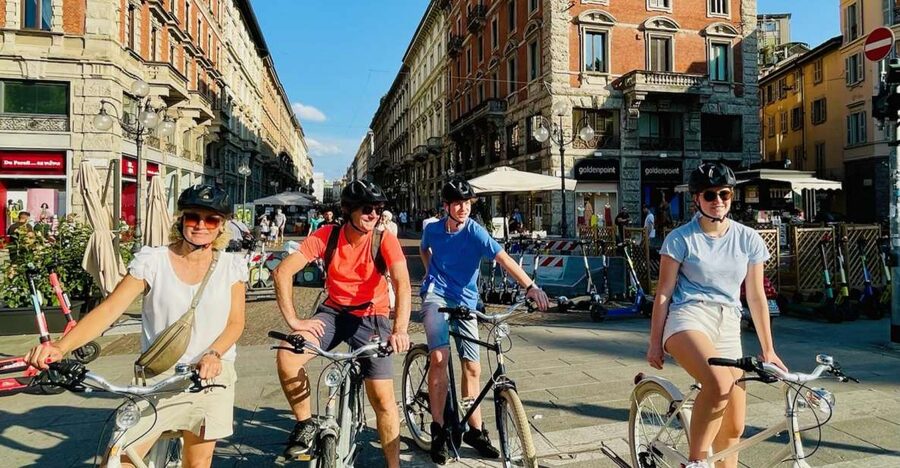
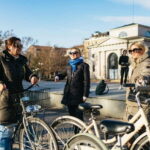
The most practical part of this tour is also the most underrated: the bike. You’ll ride premium Rossignoli bicycles, which generally means stable handling and comfort you can trust on city streets. Add the helmet, and you can focus on enjoying the ride instead of worrying about gear.
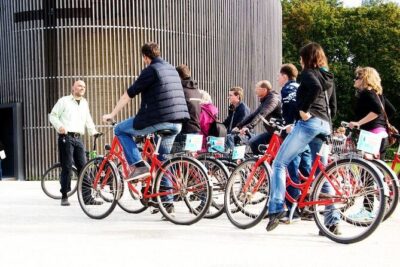
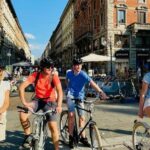
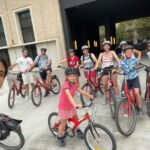
The second practical win is how they keep the group together. With small groups (limited to 10), the tour doesn’t turn into a slow-moving parade of strangers. I like that because it means you can actually talk with the guide, ask questions, and keep your bearings. One detail that really stood out in how this tour is run: on some rides there are two guides—one up front and one rear—so the whole group stays connected.
Your pace is usually set to match the group. That’s good for first-timers and also for visitors who want structure without getting rushed. The only drawback is the obvious one: you must be able to ride a bike. If you’re hesitant or clunky on two wheels, you’ll feel it quickly during a central-city route.
Starting at Allride: where you gather and how the tour kicks off
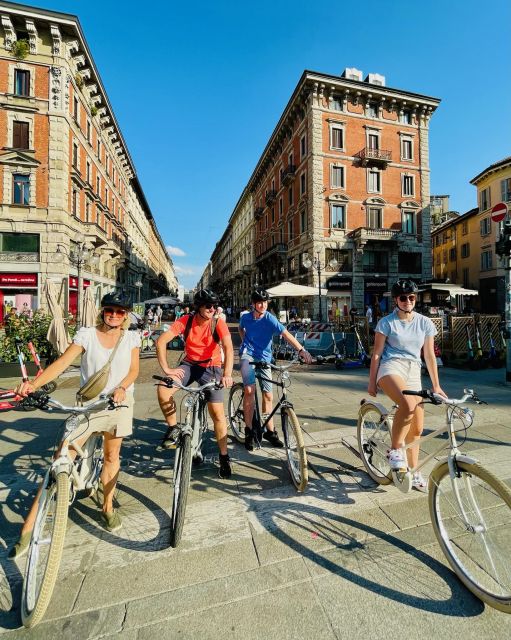
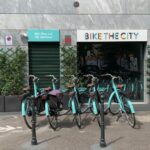
You meet at Allride – Bike Tour Milan, at a fountain in the middle of a tree-lined square. That’s a friendly setup because it’s easy to spot and easy to regroup. It also helps you settle in right away—your tour doesn’t start with a long intro lecture or complicated transit.
From there, you get moving through the city center on a route that balances main areas with rideable streets. The structure is built for flow: short segments, then a stop to absorb what you’re seeing. Expect the guide to share stories, curiosities, and anecdotes while you ride, so the tour feels like a moving conversation rather than a stop-and-start checklist.
One more thing I like about this kind of start: it makes it easy to plan the rest of your day. Since you return to the same meeting point, you can pop off whenever you want—lunch, coffee, or a museum—without adding extra logistics.
Porta Nuova and Brera: getting your Milan legs in the first hour
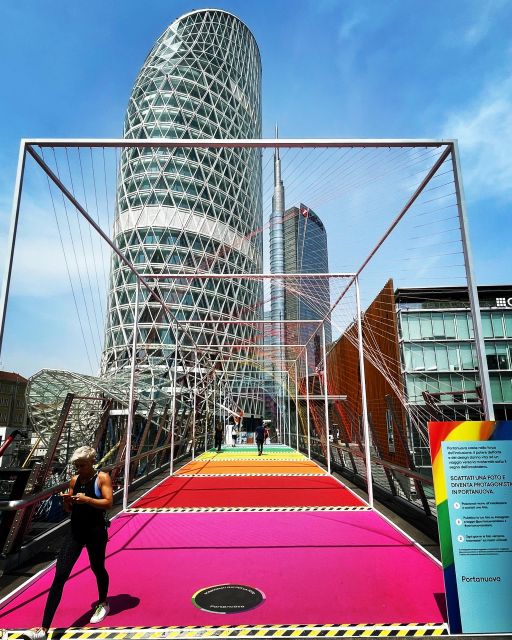
The tour’s early rhythm matters, and Porta Nuova and Brera do a nice job of easing you into the city. You start with a brief Porta Nuova segment (about 15 minutes), then head into Brera for around 30 minutes.
Why this pairing works: Porta Nuova gives you that “we’re really in Milan” feeling early, while Brera adds a more intimate, neighborhood scale as you settle into your pace. This is where you start to feel how the guide thinks. You’re not just following a straight line. You’re moving with purpose—enough time to get impressions, but not so long that you feel stuck.
What to watch for: pay attention to how the guide handles turn-offs and crossing points. Even if you’re comfortable riding, watching the guide’s timing helps you feel confident for the rest of the route. It’s also a good moment to ask a question. Early in the ride, guides are more likely to match their explanations to what you’re most curious about.
A possible drawback here is that it’s the part of the tour where you’ll most notice if you’re not at ease on a bike. If you’re wobbly at low speed or get stressed in traffic-like areas, focus on steady pedaling and breathing. The rest of the tour will feel easier once you’re locked into rhythm.
Piazza della Scala and Sforza Castle: the center at a riding pace
After Brera, you roll toward Piazza della Scala (about 15 minutes) and then Sforza Castle (about 15 minutes). This is the “Milan looks like a postcard, but you’re still moving” stretch.
Two things make this section valuable for you:
- You get major landmarks in a compact time window, without walking back and forth across the city.
- The guide’s stories land better when you can see the surrounding streets. Buildings don’t feel isolated; they feel placed.
The 15-minute timing per stop also keeps the day from dragging. You’ll have enough time to look, line up a photo, and get context from the guide, but you won’t spend half the tour waiting while others catch up.
If you’re the type who likes to linger for 30–60 minutes at big sights, this might feel fast. You’ll likely want to come back later on foot after the tour. But as an orientation move—and a way to get those iconic images early—it’s hard to beat.
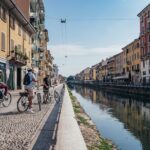
Navigli and Porta Ticinese: canals and street atmosphere, without the long walk
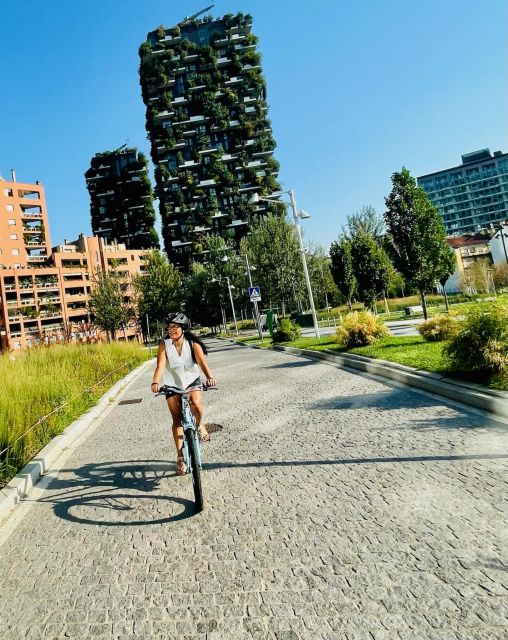
Then comes one of the tour’s most fun-feeling parts: Navigli (about 30 minutes) and Porta Ticinese (about 15 minutes). This is where the ride shifts character. You’re still in the center, but the atmosphere changes, and the route gives you time to feel it.
Why I think this works well for many visitors: Navigli-area sightseeing can be a lot on foot. You get crowds, delays, and lots of time spent stopped. Here, you’re moving through it, so you can keep momentum while still getting those “Milan in real life” vibes.
Navigli for 30 minutes is long enough to soak up street scenes and get a sense of the area, while still fitting the rest of the itinerary. It’s also a section where you might find the group wants a couple of extra minutes for pictures. The small group size helps here. The ride doesn’t turn into a bottleneck of strangers.
Tradeoff: because it’s a lively area, you’ll want to stay alert and ride smoothly. That’s not a complaint about the tour—it’s just city cycling logic. If you’re confident, it’s a blast. If you’re nervous, keep your eyes up and don’t fight the bike. Let it roll.
Milan Cathedral and the fashion quarter: seeing the Duomo area with context
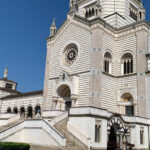
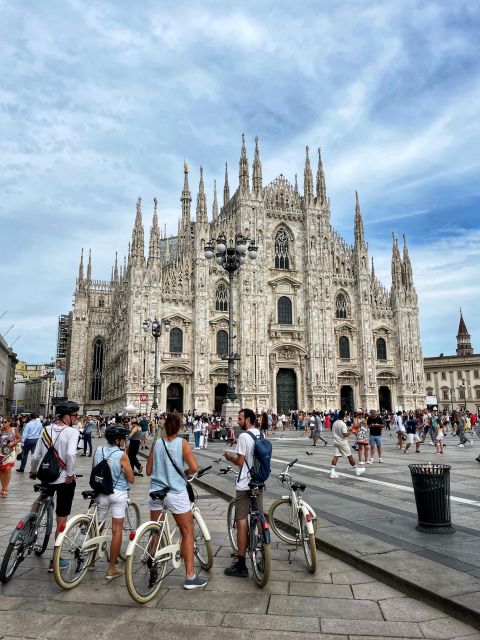
Next up is Milan Cathedral (around 30 minutes), followed by Quadrilatero della moda (about 15 minutes). This is the “big landmark moment,” then a quick shift into the fashion quarter’s shopping-and-streets energy.
The guide’s job here is crucial. If you walk to the Duomo and then wander, it’s easy to feel overwhelmed. On a bike tour, you get a route that keeps you oriented. You’re not only looking at the main sight—you’re also seeing how the area connects to surrounding neighborhoods and streets.
The 30-minute Duomo block gives you time to get your photos and take in the area without turning it into a bottleneck. Then you flow to the fashion district in a way that feels connected, not random. In practice, that makes the city feel legible. You start understanding Milan as parts that connect, not a list of disconnected stops.
A drawback worth noting: if your goal is ultra-detailed, slow sightseeing at the cathedral area, 30 minutes may not feel like enough. But as part of a 3.5-hour “cover the center” plan, it’s a strong use of time.
Villa Necchi Campiglio and Parco Indro Montanelli: a calmer reset
The last main sightseeing cluster is Villa Necchi Campiglio (about 30 minutes) and Giardini Pubblici Indro Montanelli (about 15 minutes). This is a nice contrast after the dense, big-sight stretches.
I like this pairing because it helps you avoid the fatigue that can hit on city tours. You get a breather zone where the tour can slow down in feel, even if you’re still biking. It’s a smart move late in the tour: you’re not only hitting famous points; you’re also giving your brain a softer landing.
This part is also where a good guide earns their keep. You’re moving through streets and public spaces, and the guide can help you notice details you’d likely miss if you were just rushing from one Instagram shot to the next. Even without getting overly technical, those kinds of observations make the tour feel worth repeating in your head later.
If you want a warning: you’ll finish this section and you may wish you had extra time. That’s a sign the tour did its job. Don’t treat this as your only look at these areas. Use it as a teaser, then come back at your own pace later.
Back at Allride: what to do after the tour
The ride ends back at Allride – Bike Tour Milan. Getting back to the starting point matters because it keeps your day simple. You can grab lunch nearby, find a museum, or just continue exploring the neighborhoods you liked most.
One small tip I’d give you after any bike tour like this: pick one area from the route and return to it on foot. You’ll understand it better now, and you’ll notice things you didn’t have time for during the ride. Brera? Navigli? The Duomo area? Each one hits differently once you’re not on a timer.
Also, if you got a chance to talk with the guide, use that momentum. Ask what’s closest to your next plan, and what’s worth seeing at a slower pace. The best part of these tours is the knowledge you take with you—not just the landmarks you pass.
Who this bike tour is best for
This works best if you:
- Can comfortably ride a bike in a city setting.
- Want a structured, efficient way to see a lot of central Milan in a morning or early day.
- Prefer a small-group vibe where you can actually interact with the guide.
- Like learning through stories while moving, not only stopping for photos.
It’s not for you if:
- You can’t ride a bike confidently.
- You’re traveling with kids under 14, or you don’t meet the minimum height of 4 ft 9 in (150 cm).
- You have low fitness levels that might make 3.5 hours of cycling stressful.
Should you book this Milan bike tour?
Yes—if you want an honest-to-goodness introduction to central Milan and you’re comfortable biking. For $55.80, the combination of a quality Rossignoli bike, a helmet, and a live guide is a strong deal, especially compared to paying separately for bike access plus guided orientation.
Book it now if you:
- Want to cover Brera, Navigli, and the Duomo area without wasting half your day on transit.
- Like small-group tours with room for questions and photos.
- Prefer route planning done for you, but with a human touch.
Skip it (or choose a different style) if you:
- Need a slow, walking pace.
- Aren’t comfortable riding yet.
- Expect every stop to be long and unhurried.
FAQ
FAQ
How long is the Milan bike tour?
The tour lasts about 3.5 hours.
What’s the group size?
The group is small, limited to 10 participants.
What languages are the guides?
The live guide speaks English and Italian.
What’s included in the price?
You get a Rossignoli bicycle, a helmet, and a guide.
Where do I meet, and where does the tour end?
Meet at Allride – Bike Tour Milan, by a fountain in the center of the tree-lined square. The tour ends back at the same meeting point.
Do I need to know how to ride a bike?
Yes. It’s not suitable for people who can’t ride a bike.
Is the tour suitable for children?
No. It’s not suitable for children under 14.
What if I cancel last minute?
You can cancel up to 24 hours in advance for a full refund, and you can also reserve now and pay later.