REVIEW · MILAN
Milan: Guided Bike Tour
Book on GetYourGuide →Operated by Segway Bike Walk Tour CITY GUIDED TOUR · Bookable on GetYourGuide
Milan by bike feels like cheating traffic. I love the way the tour brings you right up to Sforza Castle and into the inner courtyards, and I love the photo-ready break by Darsena and the canals. One thing to weigh: this is real cycling for 3 hours, so you’ll want steady, comfortable footwear and a good attitude for getting around on a bike.
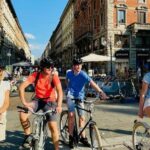
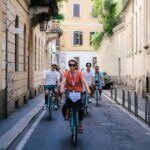
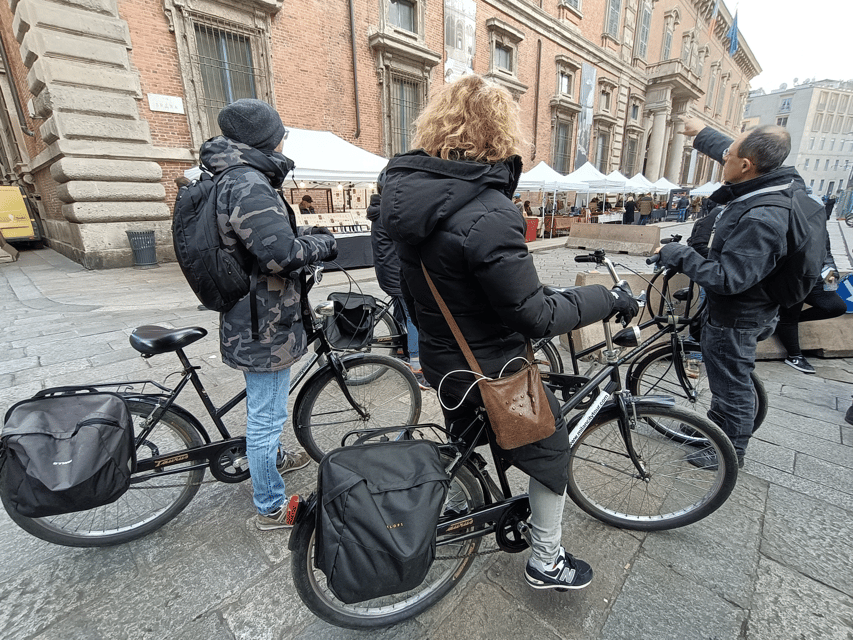
You’ll glide through the center in a small group (up to 8 people) with a live guide in French or English, plus a helmet. The best part is the pace: it’s relaxed, with time for photos at the big landmarks like La Scala Square, Galleria Vittorio Emanuele, and the final stop at Duomo Square.
In This Review
- Key highlights
- Why Milan’s monuments feel different from the bike
- Getting started at Cargo bike store (and what to expect on the ride)
- Sforza Castle courtyards: more than a photo backdrop
- Peace Arch, Darsena, and the canal-lock views for camera lovers
- San Lorenzo to Roman columns: the “you’re really in Milan” stretch
- Basilica di Sant’Ambrogio and the Roman ruins via Brisa
- Piazza Affari and L.O.V.E.: modern Milan in one quick, sharp stop
- Mercanti Square, La Scala Square, and Galleria Vittorio Emanuele
- Duomo Square photo session: ending with Milan’s big finale
- Price and value of a 3-hour guided bike tour in Milan
- Quick practical tips before you ride
- Should you book this Milan guided bike tour?
- FAQ
- How long is the Milan guided bike tour?
- How big is the group?
- What languages does the guide speak?
- What’s included in the price?
- Is hotel pickup or drop-off included?
- Where is the meeting point, and where does the tour end?
- Is the tour suitable for everyone?
- What should I bring, and do I need an ID?
- Can I cancel and get a refund?
Key highlights
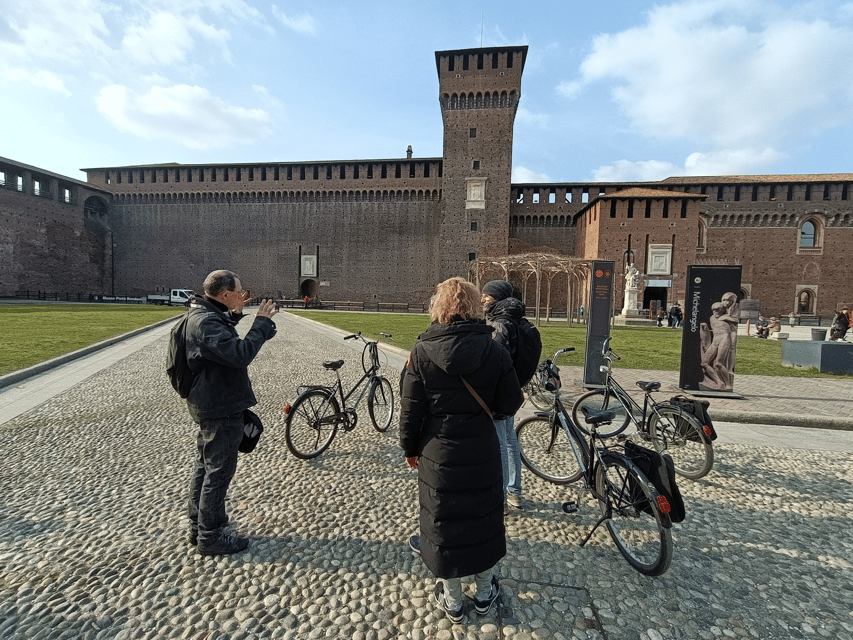
- Sforza Castle inside access: outside views plus a guided walk into the courtyards and what to look for.
- Darsena + canals photo loop: Peace Arch, canal views, and spots where your camera actually gets something.
- A compact classic-to-modern mix: San Lorenzo, Roman columns, Sant’Ambrogio, then L.O.V.E. by Maurizio Cattelan.
- Small-group comfort: limited to 8 participants, so you’re not sprinting to keep up.
- Big Milan icons in one ride: La Scala Square, Galleria Vittorio Emanuele, and Duomo Square to finish.
Why Milan’s monuments feel different from the bike
Walking Milan is great, but biking changes the rhythm. You cover distance without feeling like you’re doing a checklist marathon, and you get more “city” between monuments. That matters in Milan, where you’re going from grand squares to tight historic streets and then into modern business areas without it feeling random.
What I especially like is how the route stitches together eras. You get the solemn pull of churches and Roman remains, then you roll into places that feel contemporary right away, like the L.O.V.E. installation. The guide also frames what you’re seeing so it clicks in your head, instead of feeling like stone you pass through on the way to the next stop.
You can also read our reviews of more tours and experiences in Milan.
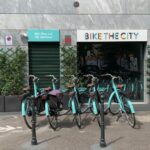
Getting started at Cargo bike store (and what to expect on the ride)
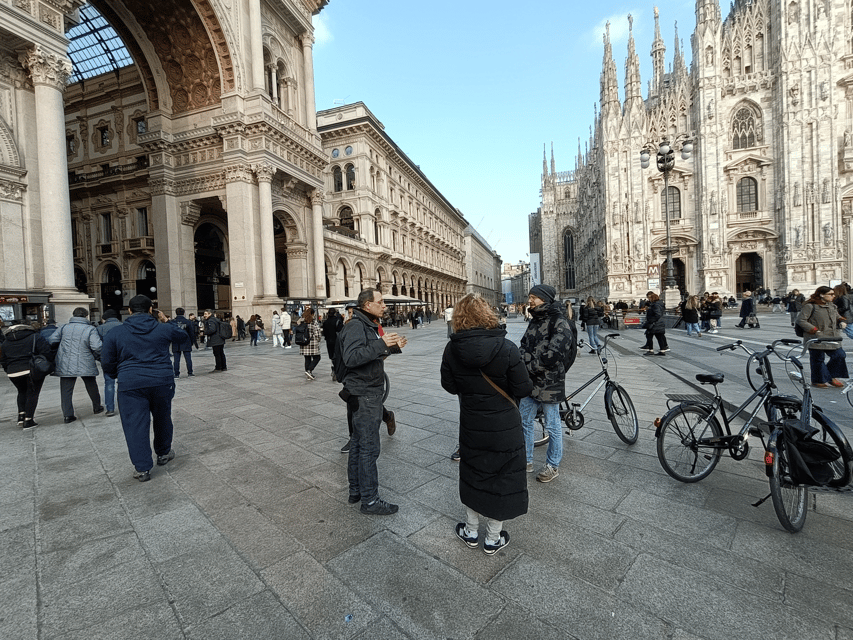
The meeting point is straightforward: meet at the Cargo bike store, and the tour ends back at the same place. There’s no hotel pickup or drop-off, so you’re doing a clean “show up and go” start.
Bikes and helmets are included, and you bring your own comfortable shoes. That shoe detail is not boring—it affects how enjoyable the whole ride stays. You’ll be doing short stops, hopping off for photos, and walking a bit near landmarks, so trainers or comfy walking shoes are the safe bet.
A small group of up to 8 also affects the vibe. You’re more likely to actually hear the guide’s explanations instead of fighting for space, and it’s easier to pause without the whole line getting stretched out. In the feedback I paid attention to, guides like Katharine and Emilio stood out for keeping things calm and not rushing people when it was time to look and take photos.
Sforza Castle courtyards: more than a photo backdrop
Sforza Castle is the anchor stop, and the tour uses it well. You start with a look at the outside, then you go in to see the inner courtyards with explanations about the art and history you’re surrounded by.
Here’s why I think this works: castle exteriors are impressive, but courtyards are where you start to understand how a place like this functions. You’re not just viewing walls—you’re seeing the structure from the inside and getting help interpreting what you’re looking at. If you’ve ever felt museum captions are too vague, a guide-led stop like this tends to make the visual details line up.
One practical note: you’ll want to be ready for short walk-and-stop moments even though you’re biking. The courtyard time is part of the value, so give yourself a little patience for getting off the bike and staying present.
Peace Arch, Darsena, and the canal-lock views for camera lovers
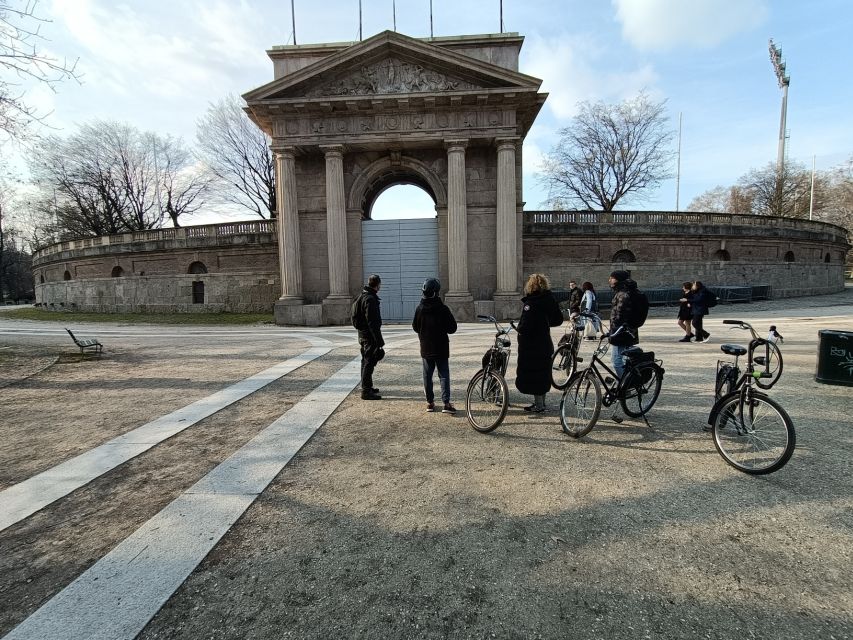
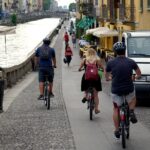
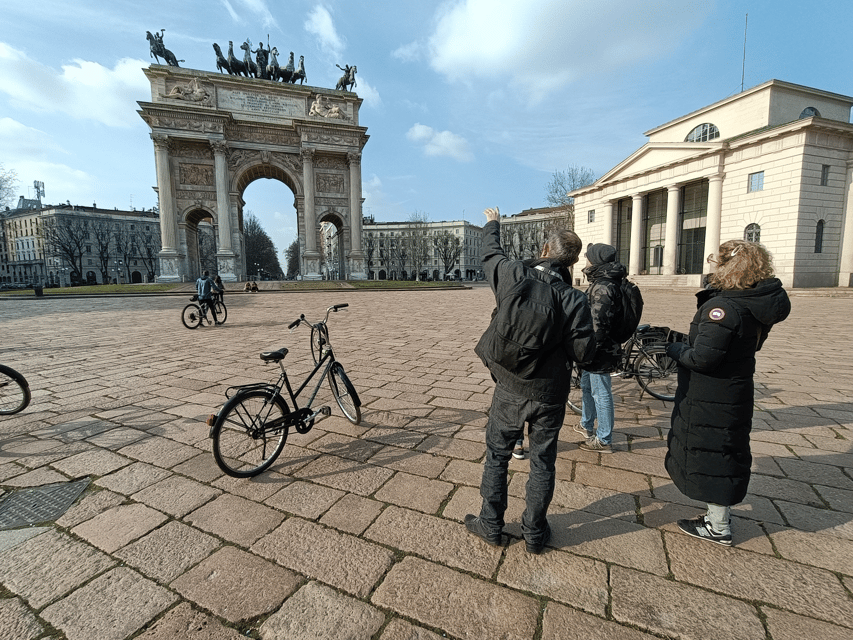
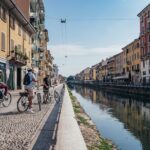
After the castle, the tour shifts into Milan’s water-and-city edges. You’ll see the Peace Arch, then head toward Darsena and the canals for a few photo stops—exactly the kind of break where you can step back, frame the scene, and soak up the mood.
If you like photos that look like you actually got off the beaten path, this section is the payoff. Central Milan can feel all monuments and traffic noise, but canal areas bring a different texture. You’re also moving while the city changes around you, which makes the photos feel more like a story than separate snapshots.
The tour also includes that mix of “look up” and “look around” angles—so you’re not only shooting facades. You get moments where buildings meet water, and your camera finally has something layered to work with.
San Lorenzo to Roman columns: the “you’re really in Milan” stretch
Next you roll to San Lorenzo and the Roman columns. This is one of those stops that’s easy to overlook if you’re only hunting for the famous names, but it’s a strong reminder that Milan has older roots than people expect.
What I like here is the pacing. You’re not stuck in one spot for a long time, yet you get enough time to orient yourself—where the monument sits, how the area feels, and what makes these Roman elements meaningful in the broader story of the city.
Then you keep going toward Basilica di Sant’Ambrogio. That transition matters: you’re moving from Roman scale and stone shapes into a church setting where you can feel how different time periods shaped the same city. It’s the kind of mental contrast you don’t get when you visit landmarks one-by-one in separate days.
Basilica di Sant’Ambrogio and the Roman ruins via Brisa
Basilica di Sant’Ambrogio is the kind of place that rewards attention, and the tour builds that habit in you. The guide helps you understand what you’re seeing rather than treating it like a quick look.
From there, you head to Roman ruins via Brisa. This is a good spot to remember that “ruins” aren’t always dramatic piles of stone from a movie. Sometimes they’re quietly present in the urban fabric, and that’s exactly why a guided bike tour helps: you’re moving through context, not just stopping at one isolated point.
Potential drawback: if you’re expecting every stop to be long and deep like a museum visit, this isn’t that format. It’s a guided ride with stops designed for rhythm—enough to learn and photo, not enough to linger for hours.
Piazza Affari and L.O.V.E.: modern Milan in one quick, sharp stop
Then you jump into a very Milan moment: Piazza Affari and the L.O.V.E. contemporary art installation by Maurizio Cattelan. This part of the tour feels like a change of gear.
Piazza Affari brings you into the business-squared atmosphere, and L.O.V.E. is the kind of artwork that’s instantly recognizable once you see it. You get a short stop for photos, which is perfect for this kind of installation because the meaning is communicated visually fast. You don’t need an hour to appreciate it, but you do benefit from the guide pointing out what to notice so your photo isn’t just a record—it becomes your memory trigger later.
Also, this is where the small-group size helps again. When you’re getting in and out quickly for a photo moment, you don’t want a crowd, and up to 8 people keeps it manageable.
Mercanti Square, La Scala Square, and Galleria Vittorio Emanuele
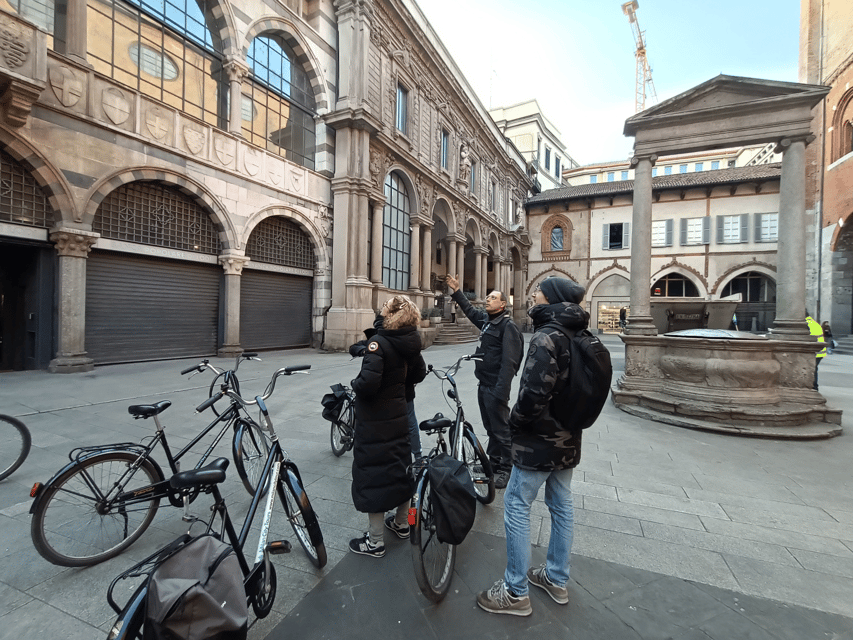
As the tour continues, you hit the classic Milan “walk-from-your-bike” landmarks. Mercanti Square first, then La Scala Square, and then the Galleria Vittorio Emanuele—steps that feel old-world in the best way.
La Scala Square and Galleria Vittorio Emanuele are both famous for a reason, but the bike tour does something that independent touring often misses: it positions you to see these places as part of a larger urban flow. You’re not just arriving at a landmark. You’re arriving with context—what’s nearby, how the streets shape movement, and how Milan’s design language changes block to block.
A small heads-up: these areas can be busy around peak hours. The tour format helps because you’re cycling between them, not fighting your way across the entire city on foot. Still, keep your patience for a bit of crowd energy when you park the bike for a photo and quick look.
Duomo Square photo session: ending with Milan’s big finale
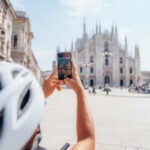
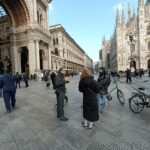
The final photo session happens at Duomo Square. This is a smart place to end, because Duomo is the monument your brain can’t stop imagining once it’s in view. Even if you’ve seen it in pictures before, there’s something about the scale when you’re there—and the bike tour approach helps you arrive feeling like you’ve earned the moment.
Try to keep your camera accessible for the last stop, since this is one of the best “stand back and frame it” opportunities. Also, consider your energy level. Three hours is enough to see a lot, but if you’re wearing brand-new shoes, this is where you’ll start noticing. Comfortable footwear earlier on will pay off now.
Price and value of a 3-hour guided bike tour in Milan
At $55.80 per person for a 3-hour tour, the value hinges on what you actually get for the time. You’re not just renting a bike and rolling around. You’re getting a live guide, use of the bicycle, and a helmet, with a small group limited to 8.
For first-timers, that combo matters. Milan is easy to get a little lost in, and it’s even easier to walk by important stuff without realizing it. A guided loop that covers major monuments plus Roman-era stops plus modern art means you’re paying to buy time and clarity.
It’s also good value because the “included” items reduce friction. Helmet included is a nice touch for comfort and safety, and bike use removes the hassle of figuring out where to rent and how to manage it while sightseeing.
What’s not included is equally important: no hotel pickup or drop-off. If you’re staying far from the Cargo bike store area, plan your connection so you don’t end up stressed before the tour even starts.
Who this tour is best for
- People who want a concentrated highlights circuit without overplanning.
- Travelers who like learning the why behind what they see, not just the what.
- Anyone who prefers bike paths and quieter streets over constant stop-and-go walking.
Who should think twice
- Pregnant women, since the tour is not suitable.
- Anyone over 254 lbs (115 kg), due to the stated weight limit.
- People traveling with luggage or large bags, since luggage is not allowed.
Quick practical tips before you ride
Bring comfortable shoes. That’s the main clothing advice, but also think about your comfort around photo stops. You’ll be stepping off the bike and moving short distances, so avoid shoes that take time to break in.
Leave luggage at your hotel. The tour specifically says luggage or large bags aren’t allowed, and carrying extra weight isn’t worth it anyway when you’re trying to enjoy the city.
And keep it simple on behavior: intoxication isn’t allowed, and unaccompanied minors aren’t allowed. If you’re bringing someone under 18, make sure they’re accompanied by their legal guardian.
One small but important admin point: everyone needs an ID card and a copy of the payment or voucher if booked online. It’s the kind of thing that can cause delays if you don’t have it ready.
Should you book this Milan guided bike tour?
I think it’s a smart booking if your goal is to see a lot of Milan’s “core” in one smooth, guided sweep. The biggest reasons to say yes are the combination of Sforza Castle courtyards, the canal-and-Darsena photo segment, and the way the route ties together old Milan and modern Milan without making it feel random.
Book it especially if you like tours that move at a relaxed pace and still give you real takeaways. The guides highlighted in the feedback, like Katharine and Emilio, are described as attentive, generous with time, and good at answering questions in a calm way.
Skip it if you want a slow, museum-style experience at every stop or if you’re not comfortable with active cycling for a full 3 hours.
If you want, tell me what month you’re going and where you’re staying in Milan, and I’ll suggest a simple pre-tour plan (so you arrive relaxed and get the most out of the photo stops).
FAQ
How long is the Milan guided bike tour?
It lasts 3 hours.
How big is the group?
The tour is limited to 8 participants.
What languages does the guide speak?
The live guide speaks French and English.
What’s included in the price?
Your tour includes the tour guide, use of a bicycle, and a helmet.
Is hotel pickup or drop-off included?
No. Hotel pickup and drop-off are not included.
Where is the meeting point, and where does the tour end?
You meet at the Cargo bike store, and the tour ends back at the same meeting point.
Is the tour suitable for everyone?
It is not suitable for pregnant women. There is also a weight limit of 254 lbs (115 kg). Luggage or large bags aren’t allowed.
What should I bring, and do I need an ID?
Bring comfortable shoes. You must have an ID card, and if you booked online, bring a copy of the payment or voucher.
Can I cancel and get a refund?
Yes. You can cancel up to 24 hours in advance for a full refund. You can also reserve now and pay later (pay nothing today).