REVIEW · BARCELONA
Private discovery bike tour of Barcelona
Book on Viator →Operated by Visites Guidées de Barcelone · Bookable on Viator
Barcelona by bike feels like cheating. In a tight 3 hours, you’ll get a clean hit of the old city, Gaudí landmarks, and the waterfront with easy cycling and a guide who can keep you moving without rushing. I love how the route strings together big architectural stops (Roman walls to modernist masterpieces) in a logical loop. One thing to consider: a few major sights do not have admission included, so if you want to go inside, you’ll need to plan for separate tickets.
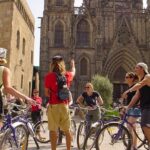
The starting point is simple: Plaça Reial in Ciutat Vella, and the tour ends right back where you began. In the real world, that matters because you can fit this early in your stay and use it to orient yourself fast. Based on guide feedback, I also like that Jean-Pierre is patient and willing to make small adjustments if you ask, like steering the ride toward the beach on request. The only real drawback I’d watch for is that one review noted the guide was sometimes hard to hear, so if you prefer strong audio clarity, pick a spot near the front of the group.
In This Review
- Quick Takeaways: What Makes This Barcelona Bike Tour Work
- Why a Private Bike Tour Is a Great First Move in Barcelona
- Price and Value: $48.37 for 3 Hours of Major Sights
- The Ride Experience: Low-Effort Cycling, Big City Views
- Meeting at Plaça Reial: Your Tour’s Launch Point
- Stop 2: Placa de Sant Jaume and the Power Center
- Catedral de Barcelona: Gothic-Neo Gothic Meets Roman Remains
- Palau de la Música Catalana: Modernism You Can Hear
- La Mansana de la Discordia: Three Icons, One Block
- La Pedrera (Casa Milà): Gaudí’s Heavyweight on Passeig de Gràcia
- Sagrada Família: The Big Must-See (With Separate Ticketing)
- Arco di Triunfo and the Universal Exposition Story
- Parc de la Ciutadella: Green Space With Museums and Old Infrastructure
- Port Olímpic and the Seaside Change of Pace
- How Guides Like Jean-Pierre Make It Feel Personal
- What You’ll Learn Along the Route (Beyond the Photo Stops)
- Who This Tour Is Best For
- Tips to Get the Most From Your 3 Hours
- Should You Book This Barcelona Bike Tour?
- FAQ
- How long is the private discovery bike tour of Barcelona?
- How much does it cost?
- Is the tour private?
- Where does the tour start?
- What language is the tour offered in?
- Are tickets included for all the major sights?
- What happens if the weather is bad?
Quick Takeaways: What Makes This Barcelona Bike Tour Work
- A high-impact 3-hour loop that covers Ciutat Vella, Passeig de Gràcia, and the coast without exhausting your legs.
- Jean-Pierre’s flexible guiding style, with room for small custom tweaks when you ask.
- Modernism plus Gothic, connected in one ride, not in separate days.
- Low-energy biking and safety-first pacing, which makes it doable for many people.
- A mix of free and ticketed highlights, so you can budget for entries where you care most.
- You finish back at Plaça Reial, which makes the rest of your day easier to plan.
Why a Private Bike Tour Is a Great First Move in Barcelona
Barcelona can be a lot on your feet. Between narrow streets, crowded pedestrian zones, and confusing intersections, it’s easy to waste time just figuring out where to go next. This private discovery bike tour helps you cut through that friction because the guide leads the route and keeps you on track.
The private part is also underrated. You don’t have to match someone else’s pace, and the guide can slow down when you want photos or explanation. In reviews, Jean-Pierre comes up again and again for being professional, friendly, and good at tailoring the experience for different groups, including families and visitors on a first visit.
Finally, it’s a short duration. At about 3 hours, it’s long enough to see the main storylines of the city, but short enough that you still feel fresh afterward.
You can also read our reviews of more tours and experiences in Barcelona.
Price and Value: $48.37 for 3 Hours of Major Sights
At $48.37 per person for roughly 3 hours, you’re paying for three things at once: a local guide, guided navigation, and bike time. That’s often where bike tours earn their keep, because you’re not just buying sightseeing—you’re buying time and stress reduction.
You also get strong “coverage density.” The itinerary stacks big-name moments like Sagrada Família and La Pedrera with nearby neighborhood context. Instead of doing one landmark, walking back, then repeating the pattern, you’re moving through connected areas efficiently.
One note on costs: several stops do not include admission tickets (Catedral de Barcelona, Palau de la Música Catalana, La Pedrera, and Sagrada Família). That means you might still pay extra if you decide you want to go inside. The good part is you can treat the tour as the orientation layer, then choose which interiors are worth your ticket money.
The Ride Experience: Low-Effort Cycling, Big City Views
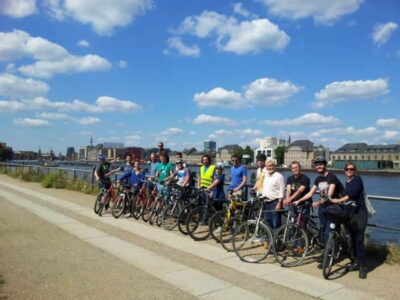
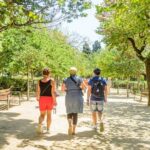
This tour is built for an easy pace. Reviews describe the ride as low energy, comfortable, and suitable for many people, with the city feeling bike-friendly due to dedicated bike lanes. Barcelona isn’t flat everywhere, but the guidance and routing seem to focus on keeping the biking part manageable.
You’ll likely spend most of the time cycling between stops rather than stopping constantly. Reviews also mention an easy flow through the streets with frequent story stops, which is how you avoid the trap of sitting on a bike for long stretches with no payoff.
Crowds are real in central Barcelona. One review mentions getting used to biking through busy pedestrian areas. That’s not a dealbreaker, but it is a good reason to choose a morning slot if you can, since you’ll usually face fewer people.
Meeting at Plaça Reial: Your Tour’s Launch Point
You start at Plaça Reial in Ciutat Vella. This is a smart meeting choice because it’s visually striking, easy to recognize, and built for people-watching even before the ride begins.
In the center is the Font de les Tres Gràcies, and nearby you’ll spot two distinctive streetlamps designed by Antoni Gaudí. The guide can use that as a quick warm-up moment—how Barcelona mixes grandeur, design detail, and street life in the same frame.
It’s also a practical anchor for you. If you’re staying nearby, this starting point makes it easy to stroll in, meet the guide, and then use the rest of your day without a complicated commute.
Stop 2: Placa de Sant Jaume and the Power Center
Next up is Placa de Sant Jaume, the political heart of Barcelona. Here you can see the Catalan government palace area and the Barcelona city hall setting, which gives context for how the city’s identity has shaped its culture and architecture.
This stop is short, but it’s useful. A lot of visitors arrive in Barcelona thinking it’s only Gaudí and beaches. Places like Placa de Sant Jaume remind you this city runs on civic pride and distinct regional history.
If you like quick context, this is the type of stop that helps your later museum visits make more sense. You’re not just looking at buildings; you’re learning what they represent.

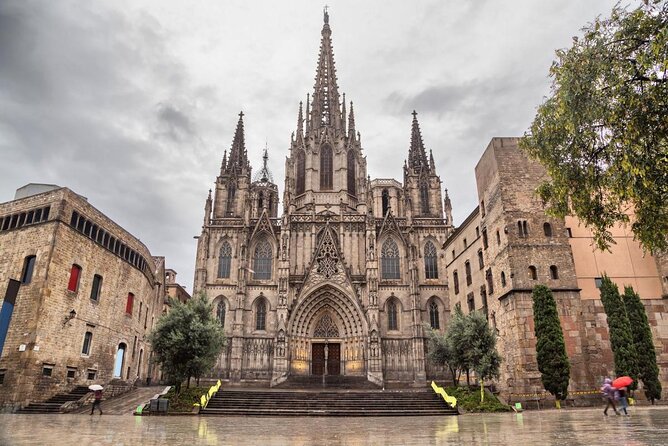
Catedral de Barcelona: Gothic-Neo Gothic Meets Roman Remains
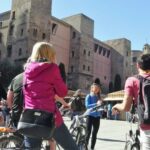
At the Catedral de Barcelona (the Santa Creu i Santa Eulàlia cathedral), you’re stepping into a style mix: a largely Gothic and neo-Gothic cathedral. The front area (parvis) also includes remnants of Roman walls, which is one of those “wait, this used to be older than this?” moments.
Important budget note: admission is not included here. That doesn’t make the exterior viewpoint any less valuable, but it does mean you should decide ahead of time whether you want to pay for interior access.
Even if you don’t go in, this stop pays off because it gives you a baseline for what Gothic Barcelona looks like—so when you later see modernist landmarks, you notice the shift in style and ambition.
Palau de la Música Catalana: Modernism You Can Hear
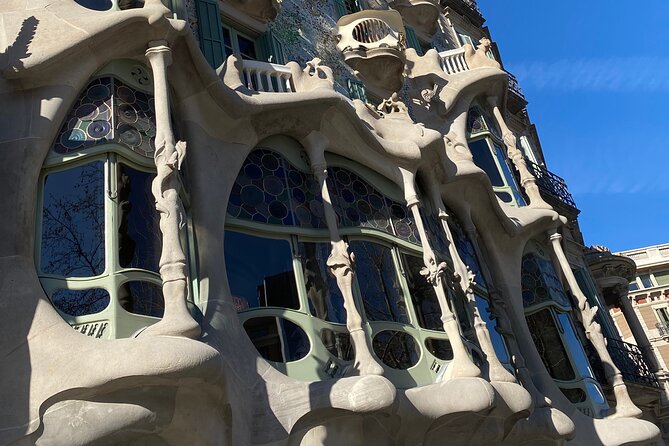
The Palau de la Música Catalana is one of those buildings that looks like it was designed by someone who refused to accept plain. It was created by architect Lluís Domènech i Montaner, and it’s UNESCO-listed since 1997.
Admission isn’t included, so you’ll likely spend your time observing and absorbing from outside or with limited viewing time. Still, the exterior alone is enough to understand why this place is famous.
Why this stop matters on a bike tour: it breaks your mental pattern. You start with Gothic and Roman layers, then you jump into Catalan modernism, which is a totally different language of design—more ornamental, more playful, and more emotionally expressive.
La Mansana de la Discordia: Three Icons, One Block
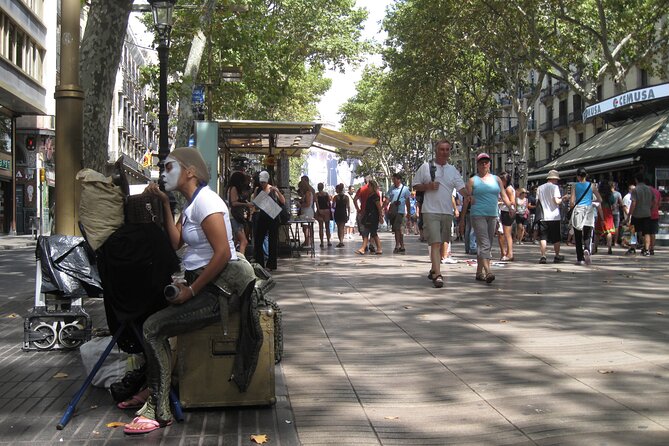
Then you reach the Mansana de la Discordia on Passeig de Gràcia. This is a tight cluster of prestigious modernist buildings that lets you compare styles in a very small space.
You’ll see Casa Batlló (Antoni Gaudí), Casa Ametller (Josep Puig i Cadafalch), and Casa Lleó i Morera (Lluís Domènech i Montaner). The value here isn’t only that they’re famous—it’s that the guide can point out what makes each one feel different while still belonging to the same modernism family.
This stop is also fast, which is good because you won’t feel stuck staring at the details for too long. If you’re the type who loves architecture, you’ll probably want to come back later for deeper study, but this tour sets the hook.
La Pedrera (Casa Milà): Gaudí’s Heavyweight on Passeig de Gràcia
La Pedrera, also known as Casa Milà, is a huge stop in both name and scale. It’s described as Antoni Gaudí’s last realization and one of his most important and imposing works.
Admission isn’t included, so again: expect time to look and absorb rather than fully tour the interior unless you arrange tickets separately. For most people, that’s fine. Exterior viewing here is impressive enough to cement why Gaudí changed the way people think about building form.
This is also a logical bike-tour moment because Passeig de Gràcia is a main artery of the city. You’re in the “wow” zone for architecture, then you’ll be able to transition toward other parts of Barcelona without losing momentum.
Sagrada Família: The Big Must-See (With Separate Ticketing)
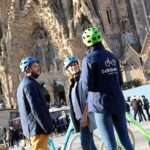
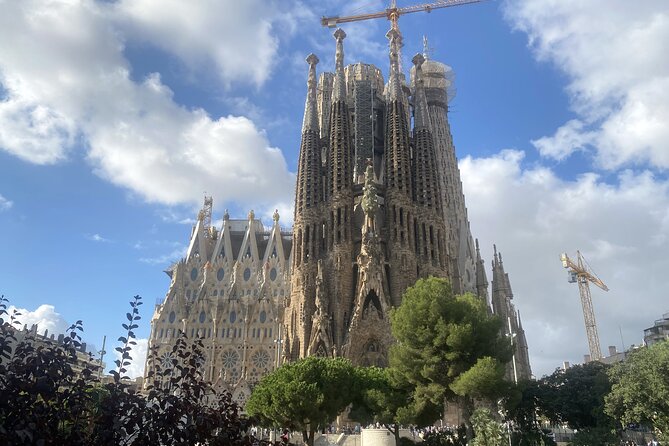
Sagrada Família is the tour’s headline monument. It’s described as Gaudí’s most important work, and it’s still unfinished. Even if you’ve seen photos, the scale tends to surprise people in person.
Admission is not included, so you won’t be spending your paid tour time inside as part of the deal. That said, this is still the best place on the route to stop and really let the structure land.
Why I think this stop is especially good on a bike tour: you see the rest of the city building blocks around it—Gothic layers, modernism blocks, and then the sea edge—so Sagrada Família stops feeling like an isolated postcard.
If Sagrada Família is a top priority for you, plan your follow-up visit soon after this tour while your mental map is fresh.
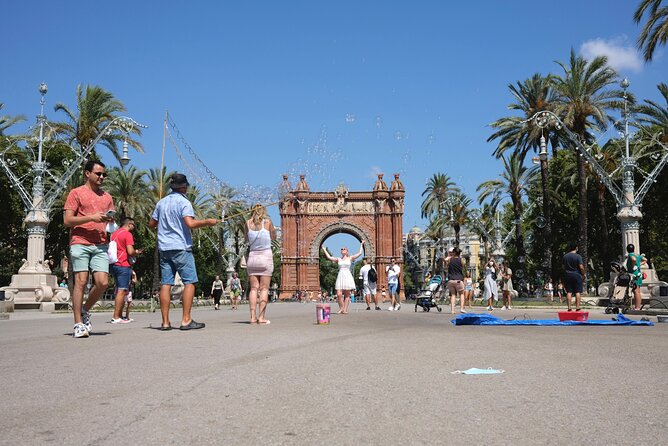
Arco di Triunfo and the Universal Exposition Story
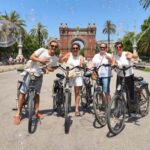
Next comes the Arco di Triunfo, an entrance portal tied to Barcelona’s first Universal Exposition held in the Parc de la Ciutadella. This is one of those landmarks that you can miss if you’re only chasing Gaudí.
It’s short and sweet in time, but it adds a historical thread: Barcelona as a city that presented itself to the world, not just a city that grew quietly around older neighborhoods.
This kind of stop is part of what makes the tour feel like discovery. You’re not only ticking off monuments; you’re learning how different eras left their fingerprints.
Parc de la Ciutadella: Green Space With Museums and Old Infrastructure
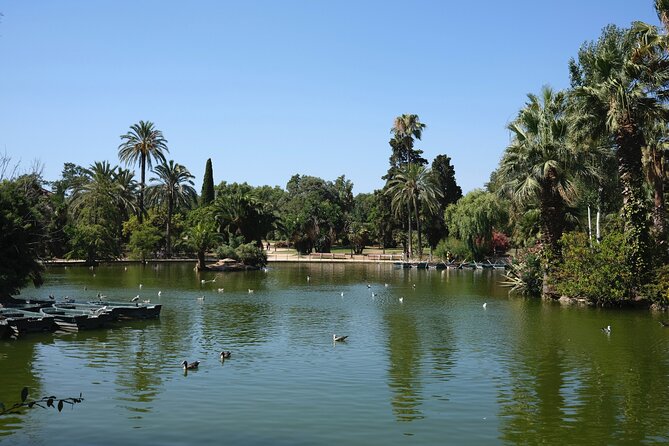
Then you roll into Parc de la Ciutadella, a park built on what used to be a citadel area. After the citadel was dismantled at the end of the 19th century, it became a park with lots of preserved buildings and new features.
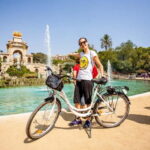
You’ll pass highlights like a greenhouse (serre), an ombrière shade structure, and a variety of museum options, including a Natural Sciences museum and a Geology museum. The park also includes a zoo and a well-known fountain.
Admission isn’t required for the park itself, so you get value from this stop even if you don’t enter any specific buildings. It’s also a useful breathing moment after concentrated city-center architecture.
Port Olímpic and the Seaside Change of Pace
After the park, the tour shifts to the coast with Port Olímpic, then onward to promenades along the waterfront.
Port Olímpic gives you the sports-and-future energy vibe, and from there you head toward Platja de Sant Sebastià for a sea walk along the Barceloneta area. You’ll also get a look at Port Vell (the old port), which is a different mood—more historic, more “working city.”
This is the part many people don’t plan enough time for. A lot of Barcelona itineraries do a beach day, then forget that the ports are part of the city’s identity. Here, you get them as part of the same learning arc.
One review also points out that the guide can adjust and take you to the beach if you request it. If you care about sand and salt air, this flexibility can be a big bonus.
How Guides Like Jean-Pierre Make It Feel Personal
Jean-Pierre’s name appears across many five-star comments, and the themes are consistent: he’s friendly, very knowledgeable, patient with questions, and good at keeping you safe while biking.
The most useful practical lesson from the reviews: he doesn’t treat the tour like a rigid script. People requested small changes, and he made room for it—like steering the route to show more beach time.
There’s also one caution from a review that the guide was sometimes hard to hear due to being soft spoken. That doesn’t mean the tour isn’t good. It just means you’ll get more out of it if you position yourself where you can comfortably hear the explanations.
What You’ll Learn Along the Route (Beyond the Photo Stops)
The itinerary is basically a city story in motion.
You start with a Catalan street-life centerpiece at Plaça Reial, then shift to the civic power zone at Placa de Sant Jaume. From there, you move into older religious and architectural layers at Catedral de Barcelona, including Roman remnants. You then jump into modernism and see how architects like Gaudí and Domènech i Montaner shaped Barcelona’s identity in the late 1800s and early 1900s.
Finally, you end with the coast—ports and beaches—so Barcelona feels like a complete city rather than a museum of buildings. This is why bike tours can beat walking tours: you keep context while covering more ground.
Who This Tour Is Best For
This is a strong choice if you want a first-day orientation. Reviews specifically mention it as an ideal introduction, especially for people with limited time who still want the main highlights.
It also fits families with older kids and groups who prefer an active but not punishing activity. One review notes the experience is low energy and can be enjoyed by all, which matches the short ride-and-stop rhythm you’ll get.
You might also like this tour if you’re the type who wants both famous landmarks and less obvious city layers like Roman wall remnants and Universal Exposition history.
Tips to Get the Most From Your 3 Hours
Here’s how to make this tour pay off.
- Bring a comfortable layer. It’s outdoors, and mornings can feel cooler even in summer.
- If you care about interiors, decide ahead which non-included stops you’ll ticket for later: Catedral, Palau de la Música Catalana, La Pedrera, and Sagrada Família.
- Use the tour to learn the city structure. After you finish at Plaça Reial, you’ll be able to navigate the rest of your days with less guesswork.
- If you want beach time, ask for that kind of adjustment early. The guide has shown willingness to tweak the route.
Should You Book This Barcelona Bike Tour?
I’d book it if you want a guided, low-stress way to see a lot of Barcelona in a single afternoon. The combination of major architecture stops, Roman-to-modernism context, and a final shift to the ports makes it feel like a real survey of the city rather than a string of unrelated photo moments.
I’d think twice if your top priority is going inside multiple big sights during the same outing, because several key venues have admission not included. In that case, you’ll still get huge value from the exterior and explanations, but you’ll want a separate plan for interior tickets.
If you like moving through cities by bike and you want an organized way to spot the places you’ll revisit later, this tour is an easy yes.
FAQ
How long is the private discovery bike tour of Barcelona?
It lasts about 3 hours.
How much does it cost?
It’s $48.37 per person.
Is the tour private?
Yes. It’s a private tour/activity, meaning only your group participates.
Where does the tour start?
The tour starts at Plaça Reial in Ciutat Vella, 08002 Barcelona.
What language is the tour offered in?
The tour is offered in English.
Are tickets included for all the major sights?
No. Admission tickets are not included for the Catedral de Barcelona, the Palace of Catalan Music, La Pedrera, and the Basilica de la Sagrada Familia. Some other stops list admission ticket as free.
What happens if the weather is bad?
The experience requires good weather. If it’s canceled due to poor weather, you’ll be offered a different date or a full refund.