REVIEW · BIG ISLAND OF HAWAII
Self-Guided GPS Audio E-Bike Tour Hawaii Volcanoes National Park
Book on Viator →Operated by Bikevolcano.com · Bookable on Viator
Craters and lava, without the car stress. I love the self-guided freedom—the route is built so you can cruise at your own pace instead of timing everything to a group. I also like that the ride is designed to be mostly paved and downhill/level, so it feels active without turning into an all-day endurance test.
What really makes this tour work is the way the GPS audio storytelling adds context as you pedal past the park’s big geology moments. You’ll get guided narration while you roll from rainforest to vents, crater rims, lava viewing areas, and even on foot stops like the Thurston Lava Tube.
One caution: the tour depends on a functioning smartphone with the GPS audio app, and phone battery drain can be real. If your phone isn’t ready before you arrive, you’ll feel it fast.
In This Review
- Key highlights worth planning for
- Price and what you actually get for $159
- Getting set up at Bike Volcano and choosing the right frame
- The GPS audio app: how to make it work (and not lose your day)
- The ride profile: what downhill and paved paths actually feel like
- Stop 1: Hawaii Volcanoes National Park and the crater-rim ride
- Volcanic heat, lava tubes, and what you’re really seeing
- Stop 2: Nahuku Crater quick hike and Thurston Lava Tube walk
- Stop 3: Kīlauea Visitor Center as your science-and-culture anchor
- Stop 4: Keanakakoi Crater Overlook and the bike-only view game
- Comfort, weather, and what to wear so you don’t freeze or slip
- Who this tour is best for (and who should choose another plan)
- Value check: what you’re really paying for
- Should you book the self-guided GPS e-bike tour?
- FAQ
- How long is the self-guided GPS audio e-bike tour?
- What time do the tours start?
- How much does it cost, and is the park entrance fee included?
- Do I need a smartphone for the GPS audio?
- What should I wear or bring?
- Are there age or weight limits?
Key highlights worth planning for
- Mostly easy riding: downhill and level segments dominate, with paved paths that feel manageable even when you’re not training for a bike race
- GPS audio on the move: mythology and geology are timed to the sights so you don’t just see lava—you understand it
- Bike-only style access: you can reach viewpoints and trail segments that are harder to get to by car (and often not practical by foot)
- Two big “get out of the saddle” moments: Nahuku Crater and the Thurston Lava Tube walk
- Staff support before you roll: setup, orientation, and live assistance help you start confident
- Phone prep matters: download and charge ahead, and plan for battery use on the app
Price and what you actually get for $159
At $159 per person for a half-day GPS e-bike adventure, this is priced like a premium activity—but it also includes a lot that usually costs extra on the Big Island. You’re not just renting a bike. You’re getting the e-bike setup, helmet and lock, a staged start with an orientation, and the free GPS audio tour app—all aimed at letting you cover ground without battling parking or driving the whole loop yourself.
Do note the part that can surprise people: the Hawaii Volcanoes National Park entrance fee is not included. You’ll need to plan for an additional $15 per person paid separately.
Also budget for the security deposit vibe. There’s a $1,500 pre-authorized equipment deposit per party. It’s not the same as paying cash on the spot, but it can affect your available card balance.
You can also read our reviews of more tours and experiences in Big Island of Hawaii.
Getting set up at Bike Volcano and choosing the right frame
Your tour starts at Bike Volcano on Old Volcano Rd (Volcano, HI). Arrive with enough time to get through orientation and fit adjustments, because getting comfortable matters for a smooth ride. One detail I’d take seriously: they ask for your name and height for a reason. Riders who are tall recommend making sure you’re in the right frame size.
You’ll get:
- an electric comfort hybrid bicycle, plus a helmet and lock
- a shaded canopy staging area for safety talk and equipment orientation
- secure parking and restroom access
- live human operator assistance while you start and get your bearings
I like the practical tone of this setup. You’re not thrown onto the bike trail cold. You’re taught what you need to know for that day’s conditions—especially important because Kīlauea’s summit area can be cool and rainy even when lower elevations feel sunny.
The GPS audio app: how to make it work (and not lose your day)
This is a self-guided tour, so your phone is your guide. You’ll need a fully charged, functioning smartphone to run the GPS audio app. The app is free, but your device is the engine.
Here’s the part that can make or break the experience:
- Expect phone battery drain while using the GPS audio. Plan for it.
- Audio can be a little technical. Some riders found that at certain points, the audio playback wasn’t as straightforward as it should be and had to be handled separately.
- Don’t treat this as a download-on-arrival situation. If your phone can’t connect to the internet or the app isn’t set up correctly beforehand, you may lose your narration.
My best advice: charge fully before you leave and make sure the app is ready before you’re out on the route. If you’re coming from the hotel with a low battery and spotty service, stop and fix that before your pickup time.
The ride profile: what downhill and paved paths actually feel like
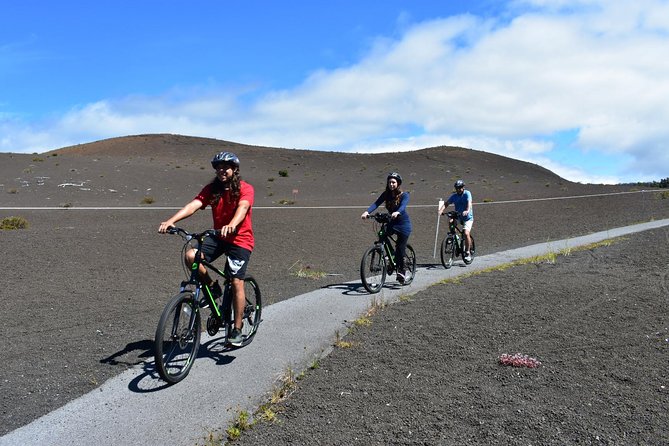
This tour is built for comfort and control. The plan is designed so that nearly all roads and paths are downhill, level, and paved. Translation: you can spend your energy looking around and absorbing the environment, not constantly working the brakes.
You’ll still feel some effort. Even with e-bike assist, there are a few hills and you’ll need to steer, shift, and balance on paved and gravel-adjacent sections. Because of that, this isn’t a great fit for brand-new cyclists.
One safety note from real-world experience: if it’s raining, roads can get slick. Slow down, follow the rules, and don’t assume you can take corners at the same speed as on a dry day.
Stop 1: Hawaii Volcanoes National Park and the crater-rim ride
This is the core of your day. You pick up your e-bike at 9:30 AM for the morning slot or 12:30 PM for the afternoon slot (afternoon requires a minimum of 4 riders). From there, it’s a short pedal ride (less than a mile) to the park’s bike trail entrance, then you transition onto trails designed for e-bikers.
What makes this part worth your time is the way it strings together big volcanic themes:
- Native Hawaiian fern rainforest ride segments
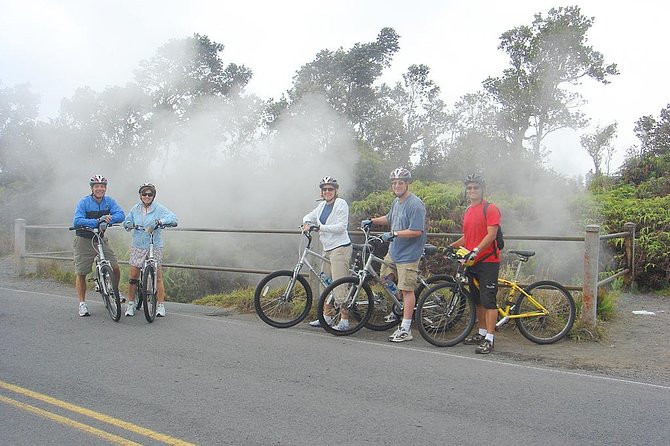
- steam vents where you can feel the heat
- massive craters and dramatic rim views
- stark volcanic fields that make the geology feel immediate
You’ll also pass through scenic areas that are described as less traveled and closed to many other types of guided tours. That’s a big deal on busy park days. You’re not stuck waiting for the next car to find parking or watching the same packed viewpoint from the same angle.
Lunch also happens around here, at Volcano House, with views toward the crater. Even if you don’t go wild on “long lunch breaks,” it’s a strong spot to reset before your next moves.
Volcanic heat, lava tubes, and what you’re really seeing
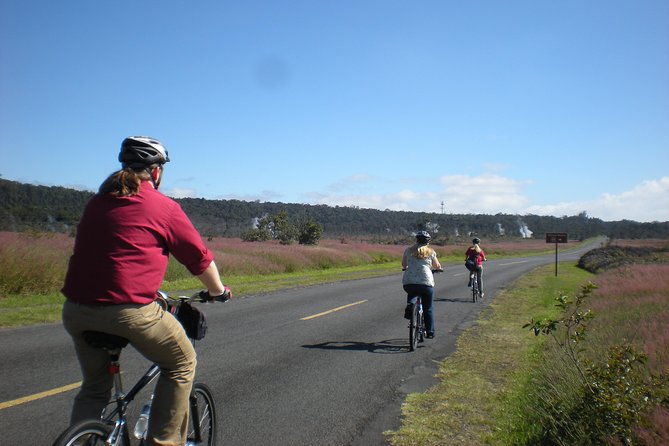
Even when you’re just riding past an overlook, this tour is trying to show you how the park works. The narration isn’t random. It’s timed to key sights so you learn what you’re looking at: how volcanic activity shapes landforms, and how the park’s cultural stories connect to what you’re seeing.
One practical benefit: getting multiple angles of the same volcanic features on a bike. Driving gets you snapshots. Pedaling gives you a slow sweep of the scene—especially along the crater rim sections where views open and shift as you move.
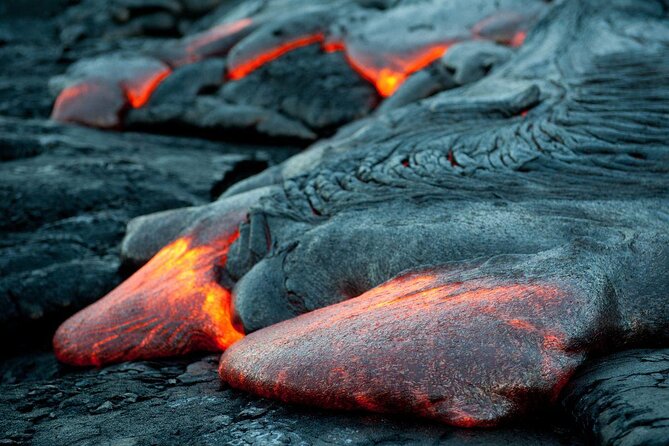
On rare conditions, you may even see active lava flowing into the sea. That’s not something you can plan on—but the fact that the route is designed to put you near meaningful vantage points means you’re in the right neighborhood when the volcano cooperates.
Stop 2: Nahuku Crater quick hike and Thurston Lava Tube walk
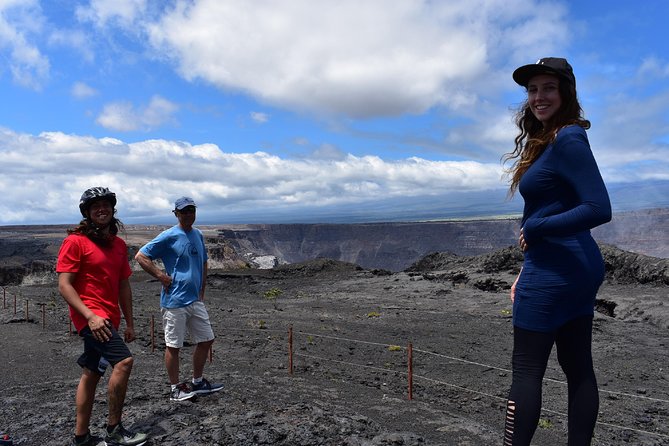
There’s a short on-foot piece built in, and it’s one of the best ways to “ground” the day. You start with a loop hike through rainforest to Nahuku Crater (about 15 minutes). The crater is known for a mix of native flora, including Hapu’u fern among other unique plants.
Then you continue to Thurston Lava Tube, where you step inside a massive cave formed by ancient lava. Inside, the temperature and sound change. That’s the point. The narration has a second audio lecture here, timed for the tube walk, so you’re not just strolling into darkness—you’re learning what shaped those passages.
You’ll also want to slow down for photos. The openings and cave walls can be a bit mesmerizing, and this stop is iconic enough that you’ll likely want a few shots without rushing.
Drawback to note: this tube section is “short,” but it still means walking inside a cave after time on the bike. If you want maximum seating time, you may feel it. If you’re okay mixing pedal and short hikes, this is where the tour gets memorable fast.
Stop 3: Kīlauea Visitor Center as your science-and-culture anchor
Between the riding and the big cave moment, the Kīlauea Visitor Center helps you connect the dots. You’ll find exhibits explaining the geological forces shaping the island, wildlife, and the cultural heritage tied to Pele, the volcano goddess.
I like visitor centers for one reason: when you learn a few key ideas up front, the whole park starts making more sense. Maps and history-like explanations can help you later decide what to revisit on a second day.
Even though this is a self-guided e-bike experience, the visitor center adds real structure to your understanding. It’s also a good place to ask questions of rangers if you have them before continuing.
Stop 4: Keanakakoi Crater Overlook and the bike-only view game
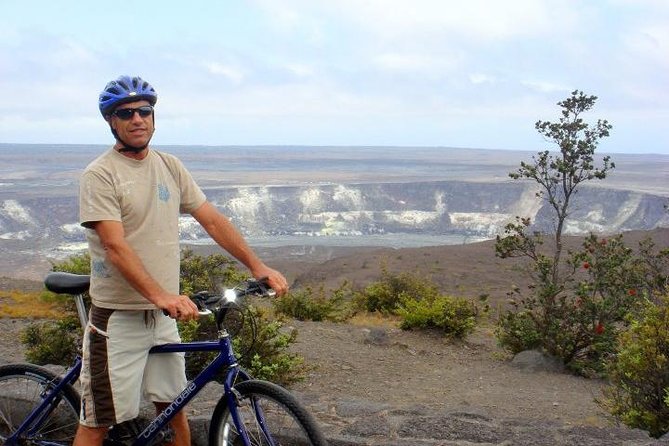
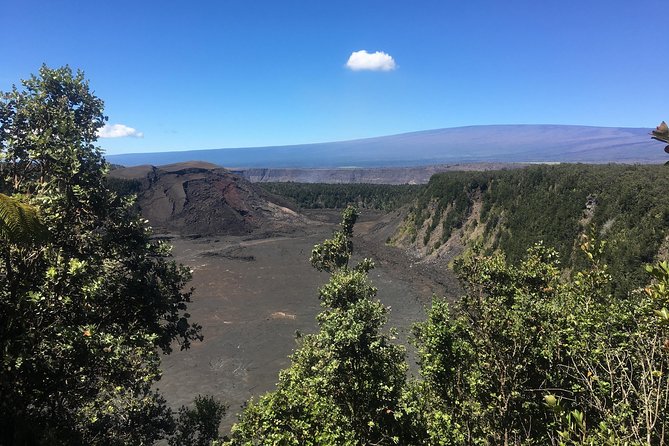
This is your “wow” finale area. Keanakakoi Crater Overlook is accessible only by bike or foot on this self-guided route, which means you’re not stuck in a drive-by routine. From here, you get panoramic views of Halemaʻumaʻu Crater, tied to Madame Pele.
The highlight is the potential to see lava fountains over 1,000 feet tall, plus a best lava viewing area positioned across from the crater where you can get closer views of active volcanic activity (when conditions allow).
How it feels: you’ll likely ride through forest sections along a 2-mile bike trail, including areas of koa and ʻōhiʻa forests, then shift into a volcanic-view zone where the ground and air feel different. The narration adds context, including stories connected to basalt quarrying and ecological insights.
Because it’s bike-accessible, it’s also a big practical win. Many visitors see volcano views from limited car pull-offs. Here, you can position yourself better and get more angles without repeating the same parking-lot viewpoint.
Comfort, weather, and what to wear so you don’t freeze or slip
Layering is not optional advice at Kīlauea’s elevation. Summit temperatures (about 4,000 feet) can be 12 to 15 degrees cooler than sea level, and it can be rainy and chilly at any time of year.
Bring:
- layered clothing
- closed-toed shoes (required)
- a hat, sunscreen, and sunglasses
- a rain jacket if the weather turns (rain jacket can be purchased at the Kilauea General Store)
E-bike comfort tip: don’t dress like you’re going to the beach. You want clothes you can move in, with breathable layers you can add or remove.
And if rain shows up: ride slower, brake smoothly, and treat wet pavement like it has less grip than you expect. One rough crash story in the broader experience world is enough to remind you that wet roads can change everything.
Who this tour is best for (and who should choose another plan)
This tour is a strong fit if you:
- want to explore the park at your own pace
- like structured narration but don’t want a rigid group schedule
- are comfortable riding an e-bike and making basic bike control decisions
- want to avoid parking and keep your day flexible
It’s also a great “half-day win.” You get a lot of park coverage, then you still have the rest of the day for other Big Island plans—beach time, another hike, or dinner without racing the clock.
But skip it or choose a different style if you’re:
- a brand-new cyclist (you need to be able to steer, shift, and balance confidently on gravel and paved terrain)
- under 15 years old
- over 270 lbs
- traveling with a smartphone that can’t run the GPS audio app reliably (or you don’t want to manage battery)
Value check: what you’re really paying for
You’re paying for three things that are hard to replicate on your own:
- A controlled route designed for e-bikes, so you spend less time guessing and more time exploring.
- Narration timed to what you’re seeing, so the park becomes meaningful instead of just scenic.
- Support and setup, which saves time and prevents the start-of-day chaos that happens when you’re renting and figuring out routes alone.
Some riders also praise how the bikes feel powerful enough that you don’t feel like you’re constantly fighting the hills. Others call out how the staff makes the start smooth—people like Gwen(dolyn), Chris, Pretty, Aaron, Lauren, and Matt show up in positive stories for friendly guidance and setup help.
If your phone is unreliable and you hate dealing with app tech, the value drops. If your phone is ready and you’re comfortable pedaling with breaks, the value climbs quickly.
Should you book the self-guided GPS e-bike tour?
I’d book it if you want an active-but-manageable way to see Hawaii Volcanoes National Park without turning the day into a parking hunt. The combination of e-bikes, GPS audio storytelling, crater-rim riding, and the Thurston Lava Tube walk is a smart “half-day plan” that still leaves room to roam later.
I’d think twice if:
- you don’t want to rely on a smartphone for narration
- you’re a true beginner cyclist
- you’re not comfortable slowing down in wet conditions
If you can handle those two issues—phone readiness and bike confidence—this is one of the best ways to feel the volcano up close while keeping the schedule in your control.
FAQ
How long is the self-guided GPS audio e-bike tour?
It’s approximately 4 hours 30 minutes.
What time do the tours start?
You can pick up your e-bike at 9:30 AM for the morning tour. The afternoon tour starts at 12:30 PM (it requires 4 riders minimum).
How much does it cost, and is the park entrance fee included?
The tour price is $159.00 per person. The Hawaii Volcanoes National Park entrance fee is not included, and it’s $15.00 per person.
Do I need a smartphone for the GPS audio?
Yes. A fully charged, functioning smartphone is required to use the GPS audio app.
What should I wear or bring?
Wear layered clothing, closed-toed shoes, and bring things like a hat, sunglasses, and sunscreen. A rain jacket can be purchased at the Kilauea General Store. You’ll also want a camera.
Are there age or weight limits?
Yes. It’s not available for cyclists under 15 years old, and it’s not available for persons weighing over 270 lbs.